Category Archives: Private

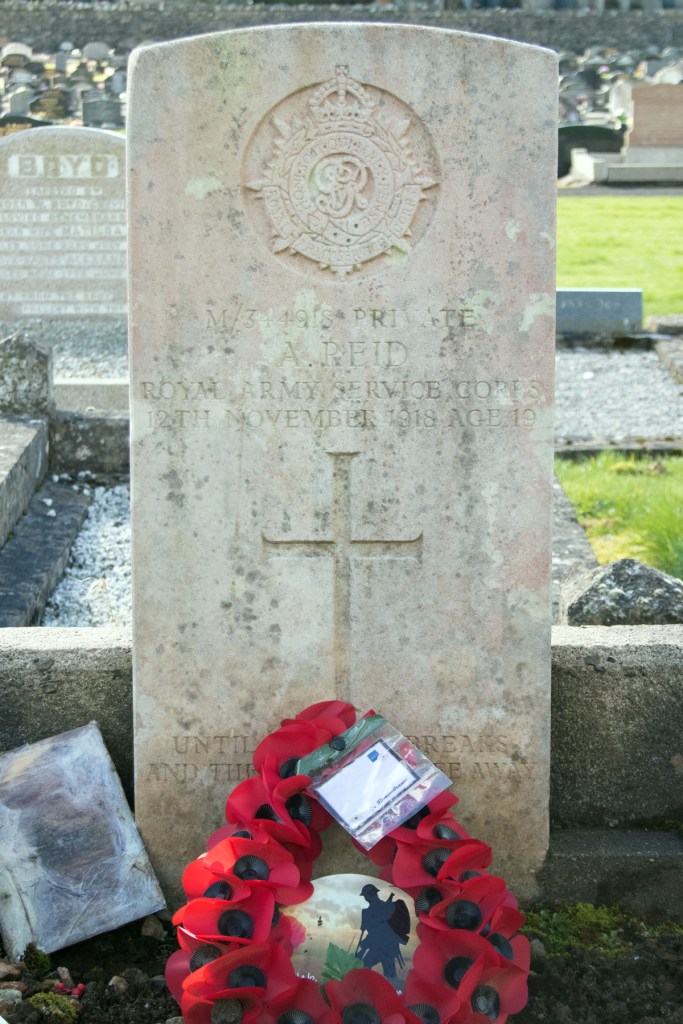
Private Wilfred le Breton

Private Wilfred le Breton

Wilfred John le Breton was born in Trinity, Jersey, on 25th August 1888. The fifth of eleven children, his parents were Thomas and Mary Ann le Breton. Mary died in 1898, and the family pulled together to support each other. Thomas was a mason, and when he finished his schooling, Wilfred followed suit.

On 8th January 1916, Wilfred married Louisa Allo. The daughter of a labourer from St Lawrence, she was working as a domestic servant when the couple wed: Wilfred, by this point was employed as a plasterer.

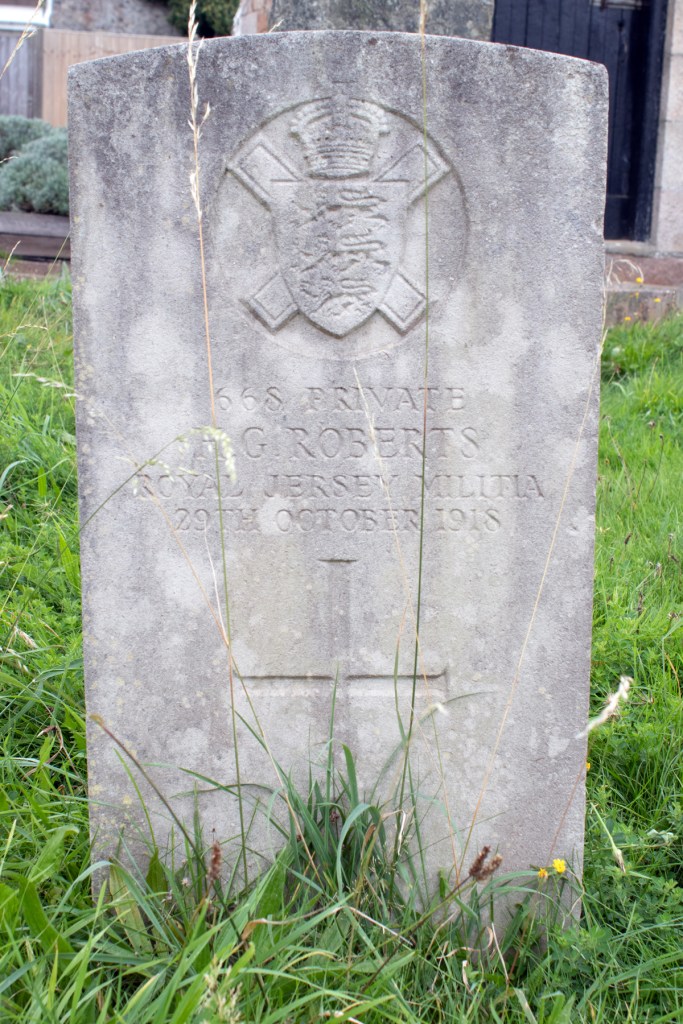
At this point, Wilfred’s trail goes cold. War was raging across Europe, and he enlisted in the Royal Jersey Militia. Private le Breton remained stationed on the island, but his specific role is unclear.

The next document relating to Wilfred’s life is that of his passing. He died on 23rd November 1916, at the age of 28 years old. The cause of his demise is unclear.

Wilfred John le Breton was laid to rest in Trinity Churchyard, Jersey. His exact grave is unknown, but a Commonwealth War Graves Commission headstone commemorates his life.


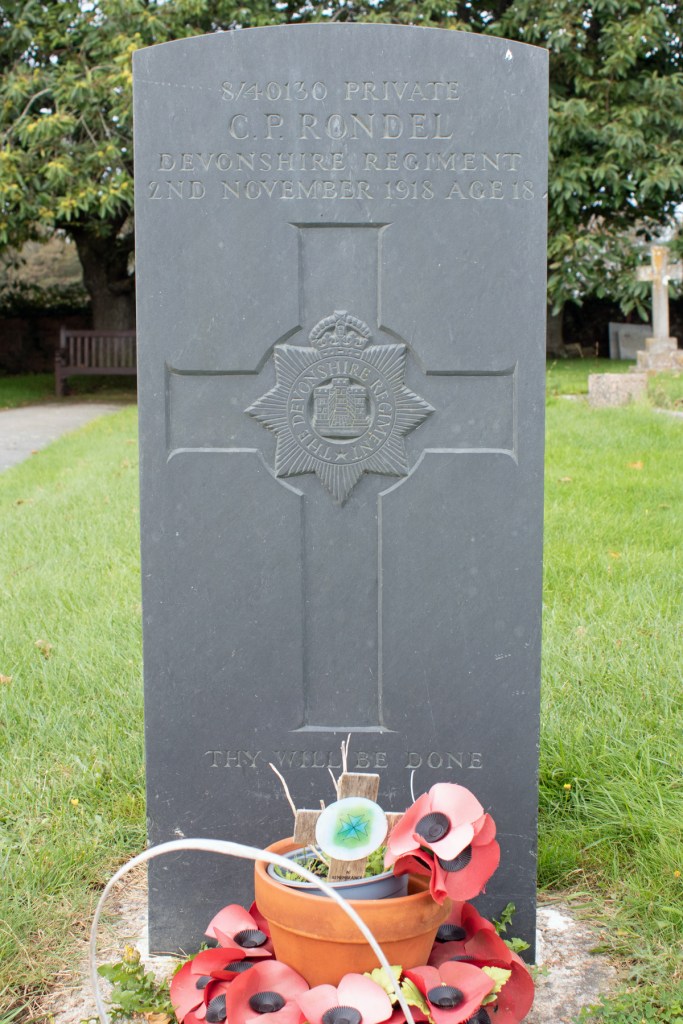
Private Clarence Rondel

Private Clarence Rondel

Clarence Philip Rondel was born in 1900 in St Lawrence, Jersey. One of twelve sibling, nine of whom survived childhood, his parents were John and Louisa Rondel. John was a farmer and by the time of the 1911 census, the family had moved to St John’s to take up a new post, a lot of the family pitching in to help out.

When war came to European shores, Clarence was keen to play his part. Too young to enlist when hostilities were declared, it was not until the spring of 1918 that he was able to join up. Private Rondel was assigned to the 53rd (Young Soldier) Battalion of the Devonshire Regiment.

Clarence was sent to England for training, and was based at the Rollestone Camp on Salisbury Plain, Wiltshire. The barracks were breeding grounds for illness and disease, and Private Rondel was not to be immune. He contracted pneumonia, and was admitted to the camp’s hospital. The condition got the better of him, and he passed away on 2nd November 1918: he was just 18 years of age.

The body of Clarence Philip Rondel was taken back to Jersey for burial. He was laid to rest in St John’s New Cemetery, not far from where his family still lived.


Private Christopher Runnalls

Private Christopher Runnalls

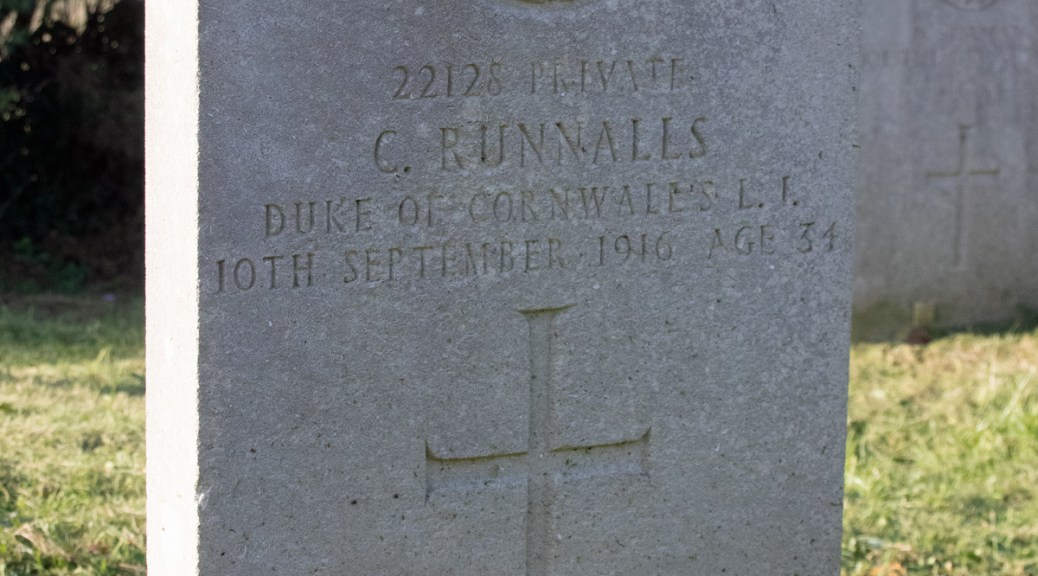
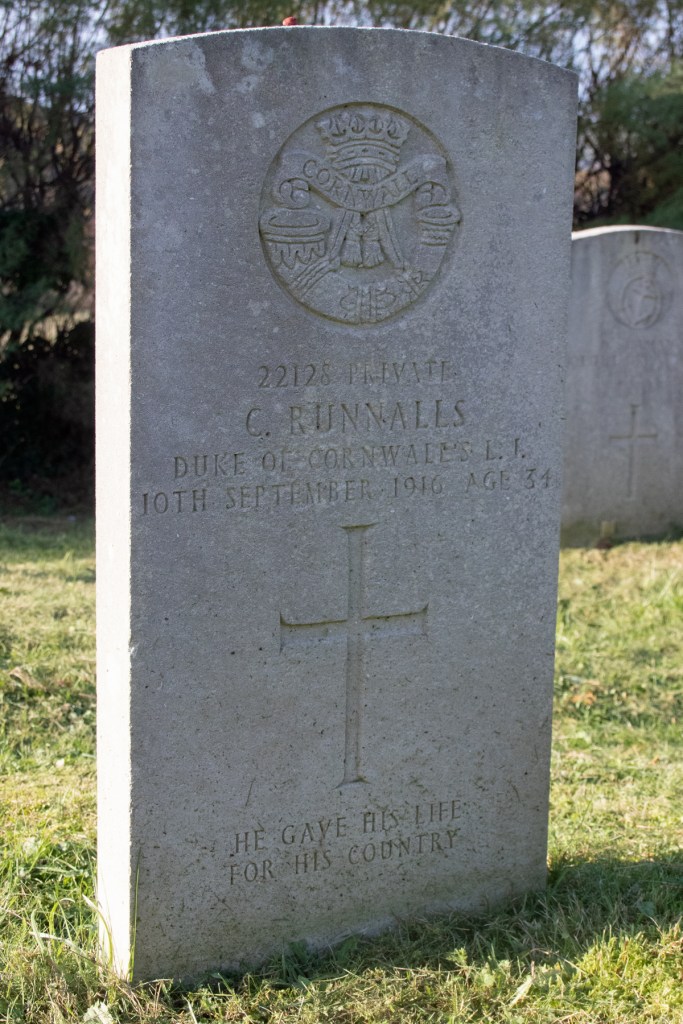
Christopher Runnalls was born in the village of Cardinham, Cornwall, in 1892. The fourth of five children, his parents were game keeper John Runnalls and his wife, Mary. Christopher – who was better known by the nickname Kitt – didn’t follow in his father’s footsteps, instead finding work as a stone mason when he finished his schooling.

Kitt moved to St Minver, near Wadebridge, for work and, in 1907, he married Susan Buse. The couple set up home in a small cottage in the village, sharing their home with Susan’s niece, Vivian.

When war was declared, Kitt stepped up to play his part. He enlisted in the Duke of Cornwall’s Light Infantry, and, as a Private, was assigned to the 10th (Service) Battalion, also known as the Cornwall Pioneers. He soon found himself on the Western Front and, in the summer of 1916, was caught up in the Somme.

Pte. Kitt Runnals [sic], of the DCLI, who was wounded in France on August 10th, and was brought to Leeds Great Northern Hospital, died at that institution on September 10th. The body was brought to St Minver and buried at [St Enodoc’s Church] on Thursday, the 14th.

[He] was one of the most respected men in the parish. He was a mason by trade. When war broke out he thought it his duty to join up. He was a member of the United Methodist Church. He leaves a widow but no family.

Newquay Express and Cornwall County Chronicle: Friday 22nd September 1916

Christopher ‘Kitt’ Runnalls was 34 years old when he passed. He lies at rest in the peaceful landscape of St Enodoc’s Church, Cornwall.


Private William Profitt

Private William Profitt

William James Profitt was born on 20th August 1894 in Collingwood, Victoria, Australia. The oldest of ten children, his parents were Cornish-born Francis Profit and his Australian wife Mary.

Little information is available about William’s early life. When he finished his schooling, he found work as a salesman, and this is the work he was doing when war was declared in Europe.

William felt duty bound to serve his King and Empire, and, on 5th July 1915, he enlisted in the Australian Imperial Force. His service records confirm that he was just 5ft 2.5ins (1.59m) tall, weighing 8st 4lbs (52.6kg). He was noted as having cark brown hair, blue eyes and a fresh complexion: he had a scar on his left cheek.

After initial training, Private Profitt arrived in Alexandria, Egypt. He was assigned to the 23rd Battalion of the Australian Infantry and, by 30th March 1916, he was in France. William’s unit was one of the many to become entrenched at the Somme, having been evacuated from Gallipoli just weeks before he had arrived in Europe.

On 2nd August Private Profitt was admitted to a camp hospital in Boulogne with a sprained ankle. The medical report noted the injury as trivial, having occurred when, on ‘being relieved from trenches [he] slipped and fell into an old German dugout.’ By 21st August he was back with his unit, now based in Etaples.

Just a week later, William was sent to a casualty clearing station in Rouen, having been shot in his right elbow. Less trivial an injury this time round, he was medically evacuated to Britain for treatment, and was admitted to the Cambridge Military Hospital in Aldershot, Hampshire.

Private Profitt’s injury should not have been a life-threatening one, but septicaemia set in. His condition worsened, and he passed away on 25th October 1916. He was just 22 years of age.

With William James Profitt’s family more than 10,000 miles (17,000km) away, it was not possible to him to be buried at home. Instead, his body was taken to the peaceful and picturesque graveyard of St Michael’s Church in Rock, Cornwall, close to where his father’s family still lived.


Private William Profitt
(from findagrave.com)

William’s grave shares a dedication with Charles Profitt, who died just a fortnight after him.

John Walter Charles Profitt – better known as Charles – was born in the summer of 1894 Geelong, Victoria, Australia. The oldest of three sons to William and Harriet Profitt, it is likely that his father was William’s uncle, and that the two siblings had both travelled to Australia to earn their fortunes.

Working as a teacher at the time, Charles enlisted just days after his cousin, joining the 6th Field Ambulance unit. His service records show that he had dark brown hair, grey eyes and a fresh complexion, no dissimilar to William. Standing 5ft 8ins (1.73m) tall and weighing 10st 6lbs (66.2kg), it is clear that his side of the family had markedly different genes.

Private Profitt arrived in France on 27th March 1916, and his dedication to the role showed when he was promoted to the rank of Lance Corporal in August.

On 9th November he was badly wounded while carrying out his duties, receiving a severe gun shot wound to his abdomen. He was admitted to the 1st Anzac Medical Station, but died of his injuries just two days later. He was just 22 years of age.

Lance Corporal Charles Profitt was laid to rest in Heilly Station Cemetery to the south of Méricourt-l’Abbé. He is commemorated with his cousin, William, in St Michael’s Church, Rock.


Lance Corporal Charles Profitt
(from findagrave.com)

Private Richard White

Private Richard White

Richard Ezra Baron White was born in the autumn of 1886 in the Cornish village of St Minver. The third of four children, his parents were Joseph and Zillah White. Joseph was a ship’s carpenter by trade, and Richard served an apprenticeship as a woodworker. By the time of the 1911 census, however, the Whites were working as farmers on the outskirts of the village.

When war was declared, Richard stepped up to serve King and Empire. It is unclear when he enlisted, but he joined the Gloucestershire Regiment, and was attached to the 3rd (Reserve) Battalion. Private White was based in Kent during the conflict, his unit being attached to the Thames and Medway Garrison.

Richard survived the conflict, but the winter of 1918/19 was to prove his undoing. He contracted pneumonia, and was admitted to the military hospital in Aylesford. The condition was to get the better of him: he passed away on 20th February 1919, at the age of 33 years.

The body of Richard Ezra Baron White was taken back to Cornwall for burial. He was laid to rest in the peaceful graveyard of St Menefreda’s Church in his home village, St Minver.


Private George Buse

Private George Buse

George Henry Buse was born in the Cornish village of St Minver in 1880. One of four children, his parents were Richard and Angelina. Richard was an agricultural labourer, but his son followed a different trade, finding employment as a stonemason.

In the summer of 1904, George married a woman called Mary. They went on to have a daughter, Olive, who was born in 1906, and set up home in Splatt, on the outskirts of the village.

When war came to Europe in the summer of 1914, George stepped up to play his part. He enlisted by the summer of 1916, and joined the 2nd Battalion of the Devonshire Regiment. Private Buse’s unit served on the Western Front, but it is unclear whether he fought overseas.

By the winter of 1916, George had fallen ill. He contracted pneumonia, and was admitted to the military hospital in Devonport, Devon. The condition was to prove too severe, however, and he passed away on 28th January 1917: he was 36 years of age.

George Henry Buse was brought back to Cornwall for burial. He was laid to rest in the peaceful graveyard of St Menefreda’s Church in St Minver.


Private Charles Hibbs

Private Charles Hibbs

Charles James Hibbs was born in the summer of 1895 the fifth of nine children to James and Emily Hibbs. James was a groom from Dorchester, Dorset, but the family were first raised in Bere Regis, where Charles was born, before moving to Amesbury, Wiltshire, by 1900.

When he finished his schooling Charles found work as an under boot for a local hotel. When war came, however, he stood up to play his part. Unfortunately, full details of his service are lost to time, but he had joined the Somerset Light Infantry by January 1917. Assigned to the 11th Battalion, Private Hibbs soon found himself barracked in Tankerton, Kent.

While there, Charles seemed to keep himself to himself, rarely mixing with any of his colleagues. His seniors did not appear to think a great deal of him. Towards the end of May, things had come to a head for Private Hibbs:

Charles James Hibbs… was found at a quarter past three on Wednesday afternoon lying dead by the downstairs front door of his billet at Buena Vista, Tankerton Road, with his right hand under the breech of the rifle and the muzzle pointing to his right shoulder.

Whitstable Times and Herne Bay Herald: Saturday 2nd June 1917

The subsequent inquest shone a harsh light on the Edwardian attitude towards mental health. In the week leading up to Charles’ suicide, he was pulled off patrol a couple of times for absentmindedness.

Deceased’s manner was very strange and his companions complained of him and said he was very strange the whole time…

He would lean about over the bannisters and one could not get any sense of reason out of him. He would not associate with his comrades in any way. If I [Sergeant Edward Risden] asked him whether there was anything the matter he would pull himself together and say “I’m all right, sergeant.” He would then be all right for a few minutes and then wander away from his comrades.

The Coroner – Did you think he was not quite right in his mind? – That was my opinion.

Whitstable Times and Herne Bay Herald: Saturday 9th June 1917

Private Hibbs was sent to see the Medical Officer, but was sent back to his unit and advised to stick to light duties.

One of Charles’ colleagues, Private Harold Prosser, was billeted him the night before he killed himself:

At 1:30am… [Prosser] heard deceased moving about in the next bed to him and the he got up in bed. Witness got a match and lit the gas. Deceased put on his trousers, boots, and hat and told [Prosser] to get back to bed and put the gas out. [Prosser] left the gas on and deceased sat on the bed for about half an hour smoking and kept saying “Yes, sir.” The deceased mentioned by name his father and mother and all his relations an then got up and said “Yes, this time I am going to do it.” Deceased went to the rifle rack and [Prosser’s colleague, Private Middleton] awoke then and told him to let the rifles alone or he would report him. Deceased then took his hand off the rifle rack and said “All right” and went back and sat on the bed again. He was still smoking. He had his eye fixed on the same rifle for about half an hour after that and then he undressed and went to bed.

Whitstable Times and Herne Bay Herald: Saturday 9th June 1917

Private Prosser then went to sleep in another room because, as he told the Coroner, he did not feel safe being in the same one. A report was made to Private Hibbs’ corporal the next morning and, when asked by the Coroner if he thought Hibbs “was a little off his head”, Harold replied “Yes, the previous day he sat in bed talking to himself all day. I asked him what was the matter and he said ‘I am all to pieces.'”

In summing up, the Coroner did show some sympathy towards Charles’ actions:

…while no military regulation might have been infringed he did think people should understand that it was most important to tell the doctor the symptoms of a patient. It not only applied to military patients, but to civilian patients. If the medical officer on [the morning of 30th May] had had the facts reported to him of the strange behaviour of the deceased during the night he would most probably have placed him in hospital and the man might have received such treatment there or elsewhere that would have got him back into a sane condition.

Whitstable Times and Herne Bay Herald: Saturday 9th June 1917

At the inquest, the jury recorded a verdict of suicide during temporary insanity. Private Hibbs died on 30th May 1917: he was just 21 years of age.

Charles James Hibbs’ body was taken back to Wiltshire for burial. He was laid to rest in Amesbury Cemetery, not far from where his grieving family lived.


Private Samuel Smith

Private Samuel Smith

Samuel Herbert Smith was born on 15th March 1886 in Liverpool, Lancashire. He was one of six children to parents Henry – a road labourer for the local council – and Elizabeth.

There is little concrete information about Samuel’s early life. While the 1901 census confirms he was employed as an apprentice, the writing is not legible enough to identify the trade he was in. A later record suggests he spent two years in the Royal Engineers, although, again, no supporting documents evidences this.

Samuel married a woman from South Wales. Her details are lost, but his war pension record gives the name Mrs SH Smith, and gives her address as 34 Albany Street, Newport, Monmouthshire.

It would seem that Samuel was keen to build a bigger and better life for the couple, and left Britain to find work overseas. By 1914 he was living in Valcartier, Quebec, and working as a bartender. War was declared in the summer of that year, however, and he immediately stepped up to serve his country.

Samuel enlisted in the Canadian Expeditionary Force on 23rd September, and was assigned to the 13th Battalion of the Canadian Infantry. His service records suggest he cut a striking figure: he stood 6ft 1in (1.85m) tall and weighed 168lbs (76.2kg). He had light brown hair, hazel eyes and a medium complexion, and his records note that he had a crossed hands tattoo on his right arm.

His unit set sail for England and, by the end of October, Private Smith was installed at Bustard Camp on Salisbury Plain, Wiltshire.

An enquiry was led into the death of Samuel Herbert Smith… Private Smith was travelling… in a motor car, and while the car was passing over uneven ground he fell into the road and was almost instantaneously killed.

George William Hincks, a private in the Canadian Force… was driving from Salisbury… in a motor car, which was meant to carry a machine gun, and was, therefore, open at the sides. Private Smith was seated next to [him] and was inclined to be rather sleepy. He had travelled in the train from Liverpool on the previous day. hey had gone some distance on their journey when deceased said “I want to get out of this.” [Hincks] said “Sit still, Bert. We will be soon be there,” Smith smiled and said “Oh, all right.” Almost immediately the car jolted on a rough piece of road, and Smith pitched on his head in the road. The car was immediately stopped, and [Hincks] went back to him and found him lying with his knees up, on his back, with wounds in his head. He was dead. [Hincks] returned to Salisbury and reported the occurrence to superior officers. The road on which fatality happened was rough and had been badly cut up, more especially at the place where deceased fell from the car.

Salisbury and Winchester Journal: Saturday 31st October 1914

The accident occurred on 29th October, Private Smith was just 28 years of age.

Samuel Herbert Smith’s widow was unable to cover the cost of bringing her husband back to Wales for burial. Instead, he was laid to rest in Amesbury Cemetery, not car from Bustard Camp.


Private Henry Preece

Private Henry Preece

The early life of Henry George Preece is a challenge to piece together.

The Commonwealth War Graves Commission give his father’s name as Edwin Preece, and suggest that the was the landlord of the George Hotel in Milverton.

The Army Register of Soldier’s Effects give the sole beneficiary of Henry’s estate as his sister Bessie.

The census record of 1911 appears to link the three members of the family, but give only a tenuous connection to Somerset. Edwin was a Coachman from Nunney, but the family – including Edwin’s wife Elizabeth, and two children, Henry and Bessie – were all living in Bayford, Hertfordshire, where the siblings had been born in 1900 and 1902 respectively.

It seems likely that the Preece family moved to Somerset not long after the census was taken, and this is potentially when Edwin took up his new role in Milverton.

War broke out in 1914, and Henry stepped up to play his part. He enlisted in the Devonshire Regiment, and was assigned to the 2nd Battalion. Full service details are lost to time, but Private Preece had joined up by April 1918.

Henry’s trail goes cold again at this point. He was admitted to a military hospital in Chatham, Kent, in the autumn1918, although the reason for this is unclear. He passed away there on 29th October: he was just 19 years of age.

The body of Henry George Preece was taken back to Somerset for burial. He was laid to rest in the graveyard of St Michael’s Church in Milverton.


Private William Whaites

Private William Whaites

William Whaites was born on 12th April 1879 in Milverton, Somerset. One of nine children, his parents were George and Anne Whaites. George was an agricultural labourer, and that is work that all of his sons went into at some point.

By the time of the 1911 census, George and Anne were living at Court Bottom in the village, with three of their adult sons – William included – living with them – and doing farm work.

When war was declared, William was called upon to play his part. He enlisted at some point after October 1915, joining the Somerset Light Infantry. Assigned to the 3rd (Reserve) Battalion, Private Whaites was sent to the unit’s base in Devonport, Devon, for training.

Army barracks were cramped places, and often breeding grounds for illness and disease. William was not to be immune to this, and, in the spring of 1916, he contracted pneumonia. He was admitted to the military hospital in Devonport, but quickly succumbed to the condition. He died on 21st April 1916, having just turned 37 years of age.

William Whaites’ body was taken back to Somerset for burial. He was laid to rest in the graveyard of St Michael’s Church in his home town, Milverton.