Category Archives: Rifleman

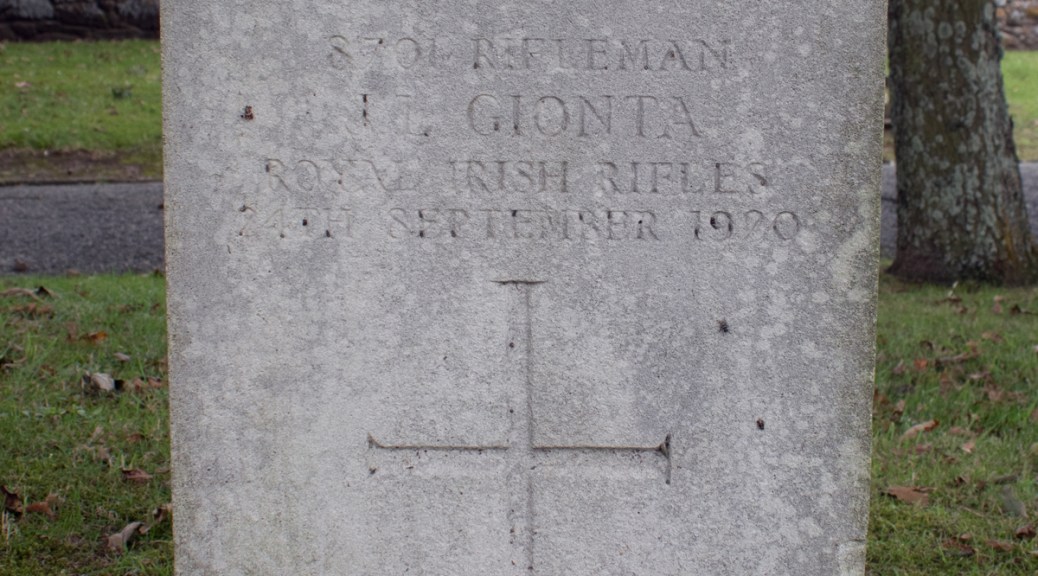
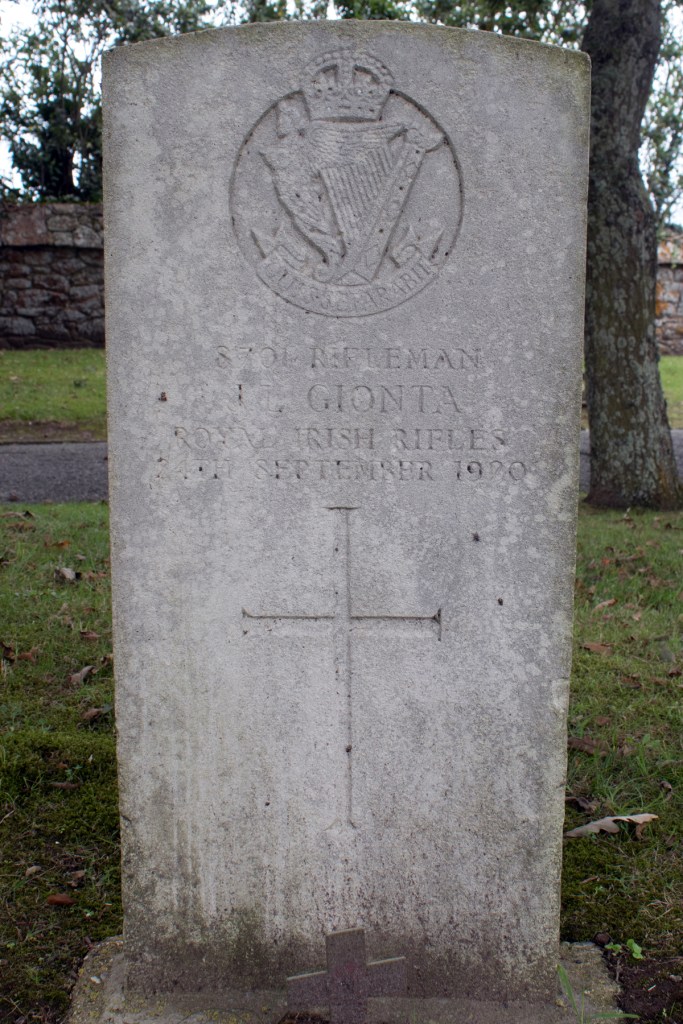
Rifleman Joseph Gionta

Rifleman Joseph Gionta

Joseph Marie Louis Gionta was born on 7th January 1897 in St Ouen, Jersey. He was the oldest of three children to Matthieu and Marie Gionta. Marie has been married before, and so her two children – Joseph’s older stepbrothers – made up the household.

Shoemaker Matthieu passed away when Joseph was just a teenager. By the time of the 1911 census, Marie was living in two rooms in St Ouen’s, supported by her five children. She was working as a charwoman, while her two children from her first marriage were farm labourers, bringing in three probably meagre wages to the family home.

When war broke out, Joseph stepped up to play his part. Initially enlisting in the Royal Jersey Militia, his unit was absorbed by the 7th (Service) Battalion of the Royal Irish Rifles shortly after he joined up. Rifleman Gionta’s service records confirm he was 5ft 3.5ins (1.61m) tall, and that he was 19 years old when he enlisted.

Joseph’s battalion served in France from December 1915, and he spent the next ten months overseas. In October 1916, he returned to the UK, and was transferred to the regiment’s 4th (Extra Reserve) Battalion, serving in Ireland.

Towards the end of 1917, Rifleman Gionta became unwell, contracting tuberculosis. This led to his medical discharge from the army on 29th January 1918, and he returned to the Channel Islands. At this point, his trail goes cold, and it is not until the autumn of 1920 that he resurfaces.

Joseph Marie Louis Gionta passed away on 24th September 1920: he was 23 years of age. A cause of death is unclear, although the likelihood is that it was related to the lung condition that he picked up while on active duty. He was laid to rest in the peaceful St Ouen’s Churchyard in Jersey.


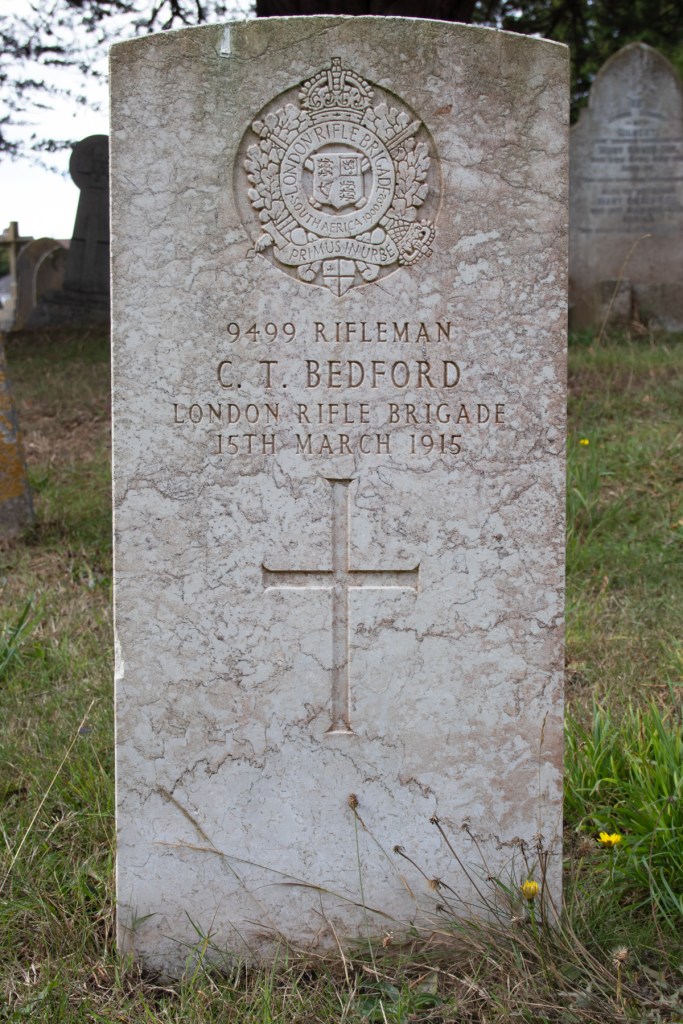
Rifleman Conrad Bedford

Rifleman Conrad Bedford

Conrad Thomas Bedford was born on 8th August 1891 in Bowes Park, Middlesex. The younger of two children, his parents were Thomas and Clara Bedford. Thomas was a bank clerk, who had a strong focus on education and, after his untimely death in 1899, aged just 40, Clara was keen to ensure that her only son received the best.

Conrad was educated at Seaford College in Sussex, and was boarding there at the time of the 1901 census. Whilst there, he served in the College Cadet Corps, which was attached to the Royal Sussex Engineers, and by the time he left, in 1909, he had taken the rank of Corporal.

When he completed his schooling, Conrad found work as a clerk in the London Joint Stock Bank, and soon volunteered for the London Rifle Brigade. When war broke out, he willingly stepped up to serve his country, and became attached to the regiment’s 5th Battalion.

The 1/5th (City of London) Battalion (London Rifle Brigade), to give the London Regiment’s unit it’s full title, fought on the Western Front, and Rifleman Bedford arrived in the Wallonia region of Belgium on 4th November 1914.

Early in 1915, Conrad was based near Ploegsteert, when, at around 2am on 27th February, he was shot in the right shoulder. He was medically evacuated to Britain, and admitted to the American Women’s War Hospital, in Paignton, Devon. While his injury was treated, sepsis set in, and Rifleman Bedford succumbed to it: he passed away on 15th March 1915, at the age of 23 years old.

Surprisingly, Clara did not bring her son back to London, where she was living. Instead, Conrad Thomas Bedford was laid to rest in Paignton Cemetery, not far from where he had breathed his last.


Riflemen Conrad Bedford
(from ancestry.co.uk)

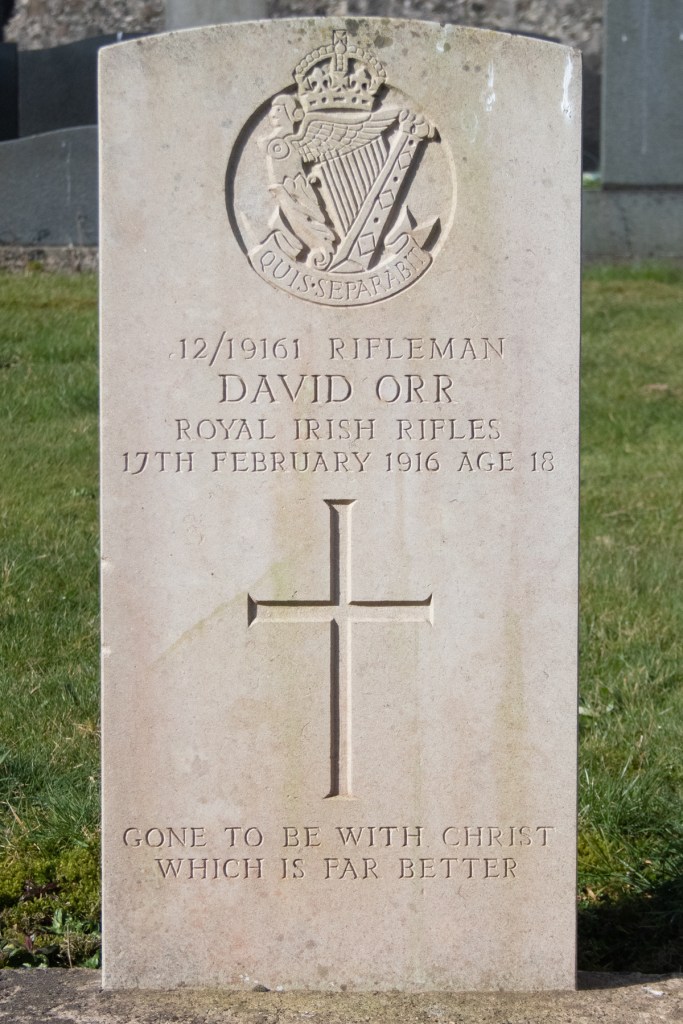
Rifleman David Orr

Rifleman David Orr

David Orr was born in Ballymena, County Antrim, in 1897, one of five children to William and Annie Orr. William was employed as a railway porter but, when Annie died in the early 1900s, he took on work as a dealer.

By the time of the 1911 census, David, who was now 13 years old, had taken a job as a message boy. War was coming to Europe, however, and he felt it his duty to serve his King and Country.

David joined the Royal Irish Rifles, and was attached to the 18th Battalion. He “was one of the first in [the] district to join the Ulster Division when it was formed in September 1914, and began his training at Cleggan Camp. He was subsequently transferred with his regiment to Clandeboye, where he completed his training…” [Ballymena Weekly Telegraph: Saturday 26th February 1916]

Rifleman Orr’s unit arrived in France on 5th October 1915, but was only overseas for a matter of months.

While serving in the trenches, he was stricken by illness, and was eventually sent back to England and underwent treatment in the 4th London General Hospital, Denmark Hill, and at the Wallace Field Convalescent Home, Croydon. His condition improved somewhat, and he was afterwards transferred to Victoria Barracks, Belfast; but the improvement was, unfortunately, only of a temporary nature…

Ballymena Weekly Telegraph: Saturday 26th February 1916

David Orr passed away on 17th February 1916: he was 18 years of age. He was laid to rest in Ballymena New Cemetery, not far from where his family still lived.


Rifleman David Orr
(from britishnewspaperarchive.co.uk)

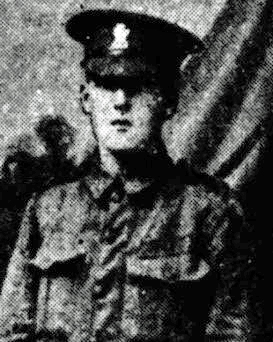
Rifleman Walter Knight

Rifleman Walter Knight

Walter George Knight was born on 27th December 1887 and was the older of two children to George and Mary. George was a gardener from London, Mary had been born in Devon, but it was in Weston-super-Mare, Somerset that they settled down to raise their family.

On 11th October 1910, Walter married Rosa Burford at St Saviour’s Church. While listed as a spinster, Rosa had two children by this point – Phyllis and Lionel. A later document records Walter as their stepfather, but their full parentage is unclear.

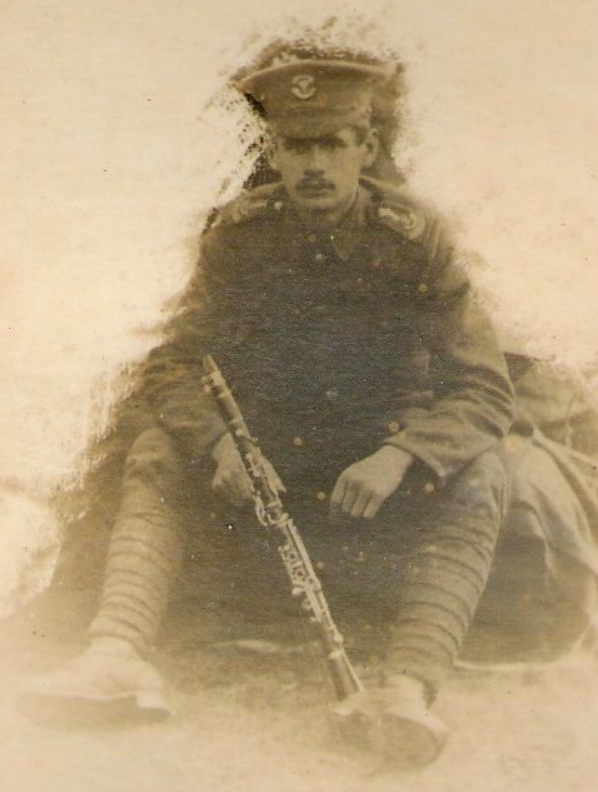
The marriage certificate notes Walter’s trade as a musician, but the following year’s census shows a more reputable trade, as he had taken to working as an insurance agent. He and Rosa had set up home in Cranleigh Road, Bridgwater, by this point, in a small terraced house they shared with the two children and Rosa’s widowed father, William.

By the summer of 1914, war was brewing over European shores, and Walter was quick to step up and support his country. He enlisted in the army on 14th October, joining the Somerset Light Infantry. He spent a year with the regiment, before transferring to the 22nd Wessex & Welsh Battalion of the Rifle Brigade.

By January 1916, Rifleman Knight found himself sailing for the Eastern Mediterranean, spending the next year in Egypt and Salonika. It was while he was overseas, in the spring of 1917, that he became ill and, having contracted tuberculosis, he returned to the UK.

Walter’s condition meant he was no longer fit for the army: he was formally discharged from the Rifle Brigade on 16th April 1917, having served for two-and-a-half years. He was admitted to the Cheddon Road Sanatorium in Taunton, the aim being to help manage his condition.

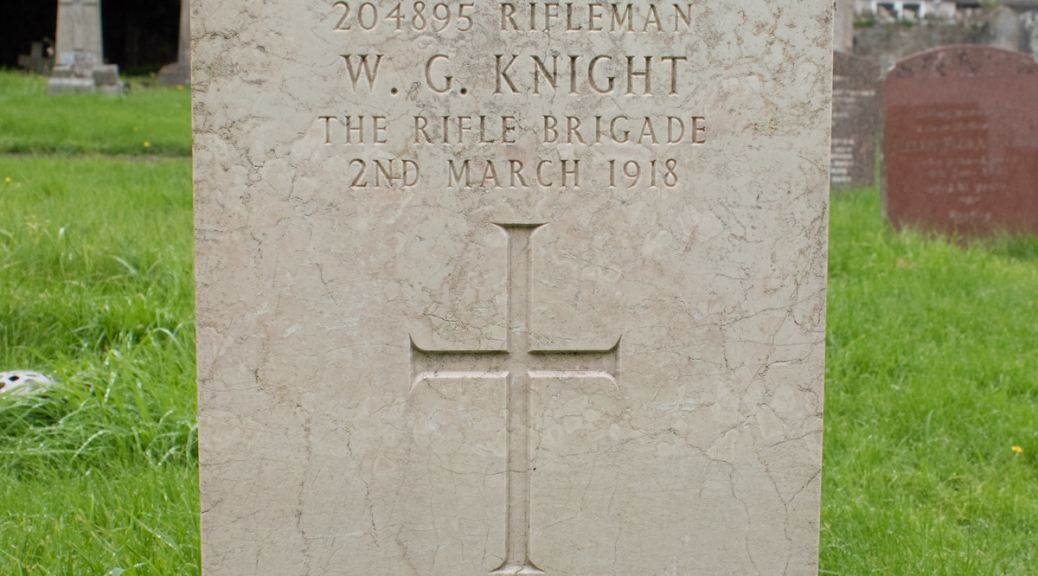
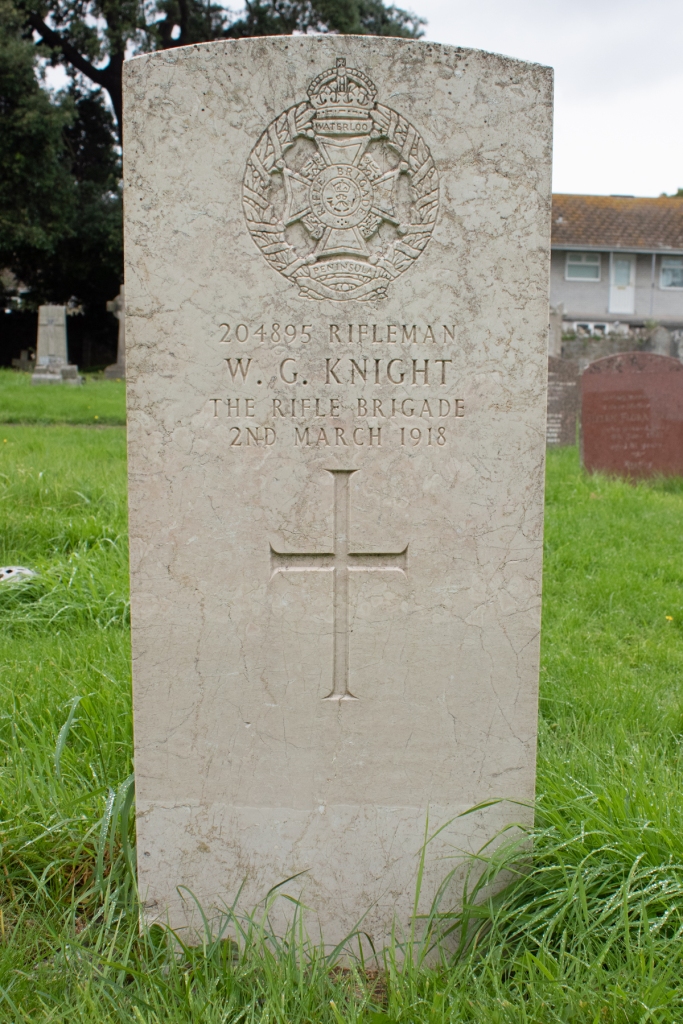
Rosa and the children had moved from Bridgwater by this point, settling in a small house in Ravensworth Terrace, Burnham-on-Sea. It is likely that Walter came here to visit the family during good spells in his health. The lung condition was to get the better of him eventually, however, and he passed away on 2nd March 1918, at the age of 30 years old.

Walter George Knight was laid to rest in the peaceful Burnham Cemetery, a short walk from where his grieving family lived.


Rifleman Walter Knight
(from findagrave.com)

Rifleman Reginald Murdin

Rifleman Reginald Murdin

Reginald John Murdin’s early life is one of contradictions. Born in 1899, his parents were George White and Lily Murdin, and he is recorded with both surnames in documents from the time. George was a iron ore labourer from Northamptonshire, and is was in Woodford, near Kettering, that the family were raised.

When he finished his schooling, Reginald followed George into iron ore and, by the time war broke out he was in the employ of the Islip Iron Company Ltd. Keen to play his part, Reginald enlisted in the King’s Royal Rifle Corps on 29th January 1916.

While it’s not possible to fully identify Rifleman Murdin’s service, he was certainly caught up on the Western Front by the autumn of 1918. It was here that he was injured by “a shell which burst about two yards from him, wounding him severely in the thigh.” [Midland Mail: Friday 15th November 1918]

Reginald was medically evacuated to Britain for treatment, and was admitted to the Bath War Hospital in Somerset. Sadly, his wounds were to prove to severe, and he passed away on 2nd November 1918: he was just 19 years of age.

Reginald John Murdin was laid to rest in the sweeping grounds of Bath’s Locksbrook Cemetery.


Rifleman Reginald Murdin
(from britishnewspaperarchive.co.uk)

Private Joseph Curtis

Private Joseph Curtis

In the war grave section of Locksbrook Cemetery in Bath, Somerset, is a headstone dedicated to a Private J Curtis, of the King’s Liverpool Regiment, who passed away on 3rd January 1921. The Commonwealth War Graves Commission confirms that Joseph Curtis had transferred to the 430th Company of the Labour Corps at some point.

Little additional information is available for Joseph Curtis. Only one service document remains, his Medal Roll Index Card. This gives the dates of his service – 22nd February 1915 to 17th October 1918 – but no other identifying details.

Without a year or place of birth, it is not possible to track down any census records. As Bath was the location of both a War Hospital and one for army pensioners, his burial in a cemetery nearby is no guarantee that the city was ever his home. There is also no report of Private Curtis’ passing or funeral in any available contemporary newspapers.

The life of James Curtis is destined to remain a mystery, therefore, taken with him when he was laid to rest.


Rifleman Walter Radford

Rifleman Walter Radford

Walter Samuel Radford was born in the summer of 1899, the oldest of eight children to William and Florence Radford. William was a farm labourer from Churchstanton, Somerset, but by the time Walter was born, the family had moved to Chedzoy, near Bridgwater.

Chedzoy was also where William’s parents lived, and the two families’ cottages were just three doors apart. Oddly, even though he was the oldest child, Walter was raised by his grandparents, Frank and Anna, and is recorded as living with them in both the 1901 and 1911 censuses.

Walter was just 15 years old when war came to Europe, and so was too young to enlist. He bided his time, though, and had joined up by the summer of 1918. He was assigned to the 1st Battalion of the Royal Irish Rifles, and was sent to the Western Front in the closing months of the conflict.

Caught up in the final advance in Flanders, Rifleman Radford was injured, possibly during the action of Ooteghem. He was medically evacuated to Britain for treatment, but died of his injuries while admitted to a hospital in London. He passed away on 26th November 1918, aged just 19 years old.

Walter Samuel Radford was brought back to Somerset for burial. He was laid to rest in the peaceful graveyard of St Mary’s Church in Chedzoy.


Interestingly, while Walter’s pension ledger gave his father, William, as the recipient, the Army Register of Soldiers’ Effects noted his grandmother, Anna, as the recipient of his belongings.


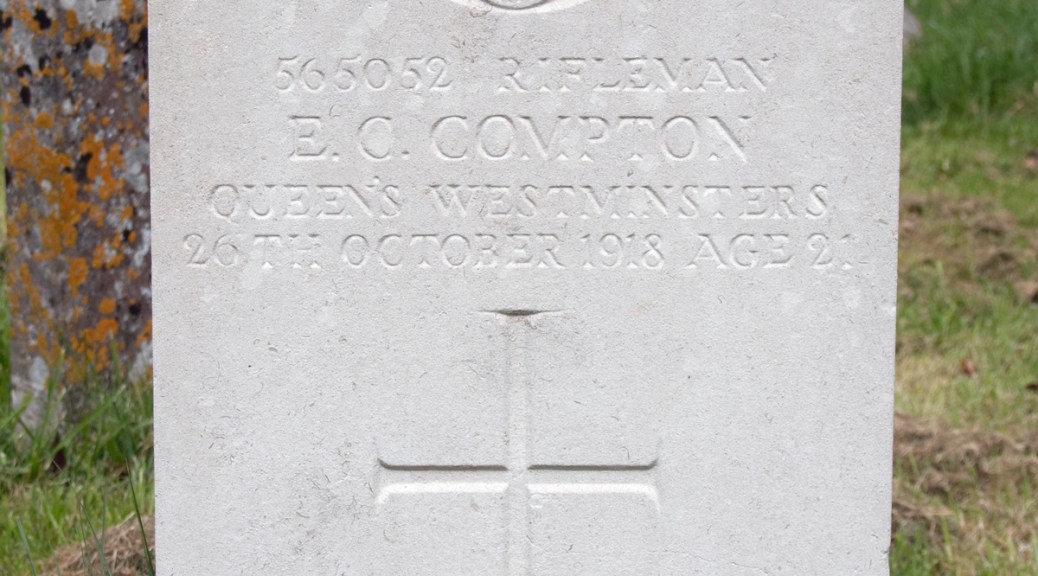
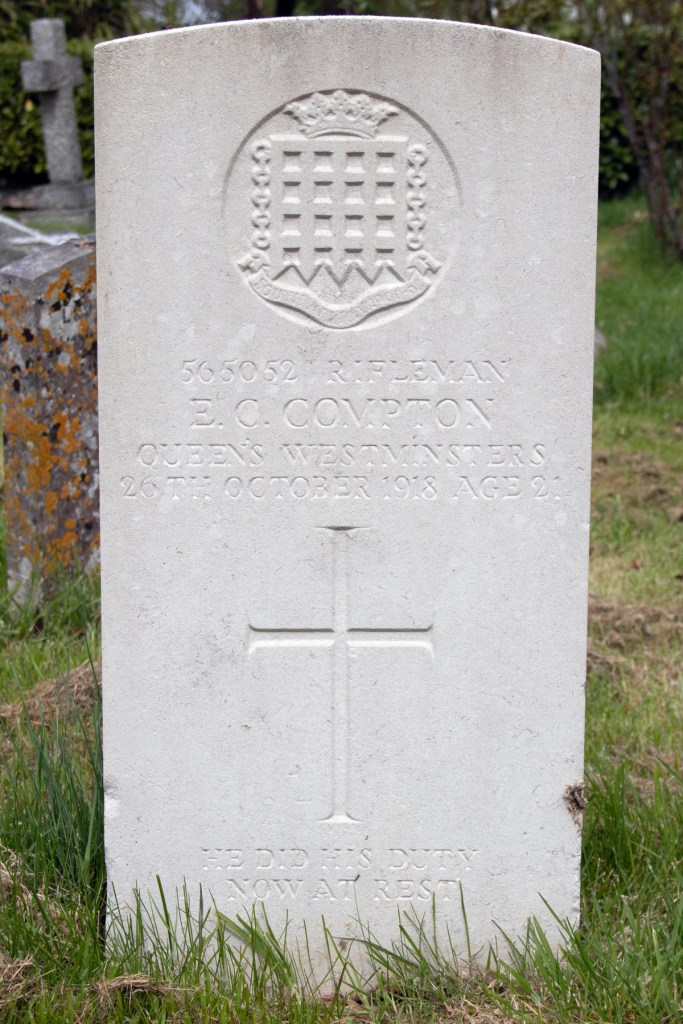
Rifleman Edward Compton

Rifleman Edward Compton

Edward Charles Compton was born in Islington, Middlesex on 4th July 1897, the only child to Charles and Ada Compton. Charles was an agent for the Prudential Insurance company, and the family lived on Devonshire Road, with Charles’ aunt, Mary.

When he finished his schooling, on 7th July 1911, Edward found work as a clerk for the North African Mission. When war came to European shores, he was eager to serve his King and Country. He enlisted on 10th September 1914, and was assigned to the 11th (Reserve) Battalion of the London Regiment.

Rifleman Compton’s service records confirm that he was 5ft 8ins (1.73m) tall, with good vision and physical development. He wasn’t formally mobilised until the summer of 1916 and, after training, he was transferred to the 16th (County of London) Battalion, also known as the Queen’s Westminster Rifles. He was sent to France on 19th December 1916.

Edward would have been involved in the German retreat to the Hindenburg Line in the spring of 1917, and the First and Third Battles of the Scarpe in April and May. At the end of July he returned to Britain and, while the reason for this is unclear, it seems that his health was suffering.

On 24th September 1917, Rifleman Compton was medically discharged from the army, after three years and fifteen days’ service. The cause for this isn’t documented, but there is no evidence that he was wounded, so it is likely to have been an illness of some description.

Edward returned to Islington and on 20th October 1918, he married Emily Backholer. She was a farmer’s daughter from Paignton, Devon, and was registered as living there when the couple’s banns were read during October.

Tragically, Edward and Emily’s marriage was not to be a long one: he died in Kelston, near Bath, Somerset, on 26th October 1918, less than a week after his wedding. He was just 21 years of age.

Edward Charles Compton was laid to rest in the graveyard of St Nicholas’ Church in Kelston, Somerset.


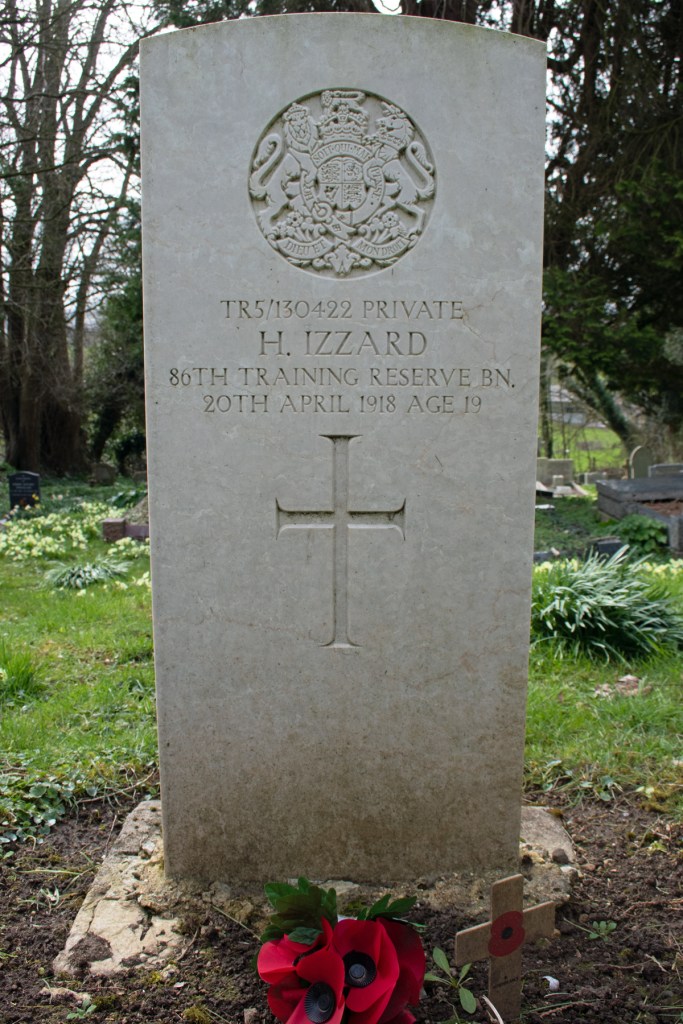
Private Harry Izzard

Private Harry Izzard

Harry Izzard was born early in 1900, in Chiswick, London and was one of six children to Albert and Florence Izzard. Albert was a groom, but when he died in 1905, Florence, left with a young family to raise, remarried. Things seem not to have gone well between Harry and his stepfather, Richard Warren, and he soon found himself resident of the Church Army Home in London.

In 1914, his schooling complete, he was sent to the village of Clandown in Somerset, where he was employed at the local colliery. He seemed to have flourished in his new life, and he “made friends with all he came in contact with, being of a bright and cheerful disposition and associated with the football club, Wesleyan Young Men’s Bible Class and an ardent temperance worker.” [Somerset Guardian and Radstock Observer: Friday 26th April 1918]

Harry was one of the village’s batch of miners passed for the Army ballot, but seemed eager not to wait to be officially called up. On the day of the ballot, he instead joined up voluntarily, enlisting in the 86th Training Reserve Battalion.

On enlistment he was sent to Clipstone Camp, Notts, where he quickly made friends. He, however, was placed on the sick list… and underwent [an] operation for appendicitis from which operation he never recovered.

Somerset Guardian and Radstock Observer: Friday 26th April 1918

Private Izzard died on 20th April 1918, aged just 19 years old, a life of new promise cut tragically short. His connection with Clandown, and his disconnection from his family in London, was such that his body was brought back to Somerset for burial.

Harry Izzard was laid to rest in the quiet Holy Trinity Churchyard, his sister Mabel being the only family member represented at the service.


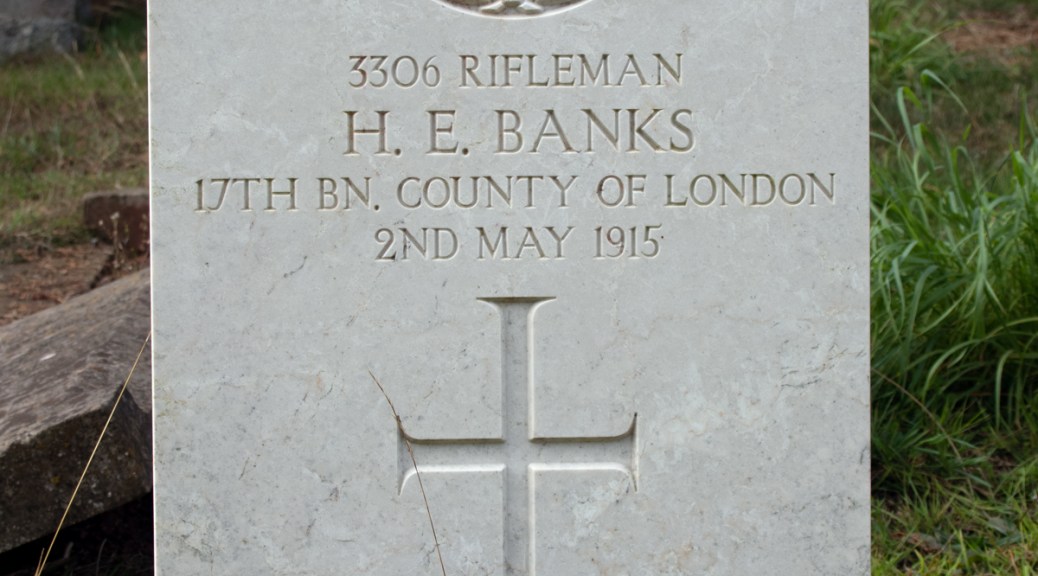
Harry’s older brother Herbert Izzard also served in the army. He had found work as a laundry labourer when he left school, and went on to marry Maud Woodage on 14th February 1915. The couple had a daughter, Winifred, later that year.

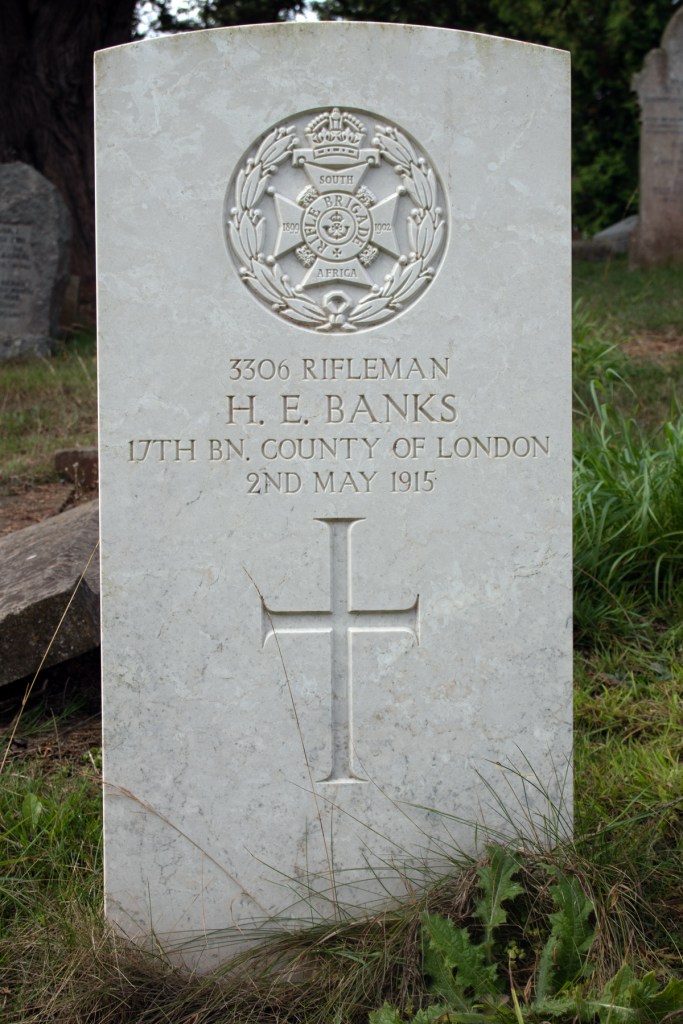
Herbert enlisted in the London Regiment as a Rifleman, and was assigned to the 17th Battalion, also known as the Poplar and Stepney Rifles. He soon found himself in France and was killed at the Somme on 19th April 1916. He is buried at the Cabaret-Rouge British Cemetery in Souchez.

Tragically, Herbert’s widow died in Oxfordshire in December 1918, leaving young Winifred an orphan at just three years old. She went on to live a long life, dying in 1997, at the age of 81.


Lieutenant Edward Bending

Lieutenant Edward Bending

Edward Owen Bending was born early in 1891, one of seven children to Edward Bending, who was from Bath, Somerset, and Emma, who came from Castle Cary.

Edward Sr worked on the railways, and the family moved across the county with his work: the 1891 census recorded them living in Edington, while he worked as a signalman in nearby Ashcott; ten years later, the family had moved to Bridgwater with his job. The 1911 census return recorded the Bendings as living in Station House, Wellow, with Edward now employed as the station master.

Edward Jr, who was sometimes known by his middle name to avoid confusion with his father, was also employed at the station, where he was working as a clerk. War was coming to Europe, however, and he stepped up to play his part for King and Country.

Edward enlisted in the King’s Royal Rifle Corps as a Rifleman, and was attached to the 60th Rifles. Full details of his military service are lost to time, but a contemporary newspaper report notes that he served both in the Balkans and in France. During his time in the army, he was promoted to the rank of Lieutenant, but contracted an illness, and was invalided out of service.

Whatever his illness, it was to get the better of him: Lieutenant Bending passed away at home on 24th January 1919. He was just 28 years of age.

Edward Owen Bending was laid to rest in the peaceful Wellow Cemetery, overlooking the village where his family still lived.


Edward’s was a family plot. When his younger sister Winifred died just three years later, she was buried with him. When his mother, Emma, passed away in 1924, she was laid to rest in a neighbouring plot.


Edward Bending Sr lived on until 1938. The newspaper report of his funeral, gives an insight into the family man he was:

A native of Combe Down, where his father carried on business as a tailor, Mr Bending spent all his working days in the employ of the Somerset and Dorset Railway. For a time he worked as a reliefman, and later was appointed stationmaster at Cole, being transferred in 1907 to Wellow, where he took part in all the village activities.

In 1920 he was transferred to Stallbridge, Dorset, but after about four years there had to relinquish work just before reaching retiring age, owing to an attach of rheumatoid arthritis. Since then he had been unable to get about and he stayed with his eldest daughter at Reading for a time.

For the past seven years he had stayed at the residence of his younger daughter at Burnham-on-Sea. Unfortunately the malady affected his sight, and for eight years he had been blind, yet throughout his last years his cheerful disposition never failed him, and he was his old self to the last, being keenly interested in his wireless, which brought him such happiness.

His wife died in 1924, and his younger son, Lieut. Edward Owen Bending, King’s Royal Rifle Corps, lost his life in the war; his name is to be found on the War Memorial at St Julian’s Church.

Mr Bending’s elder son, Hubert Alan Bending, is head master of St Julian’s school, Shoscombe. He is also survived by two of his four daughters.

Somerset Guardian and Radstock Observer: Friday 24th June 1938

While Wellow Station was a bustling place, it is highly likely that Edward Jr would have known Leonard Luke, one of the porters at the time Edward Sr was station master. Leonard also went off to war, and his story can be found here.