


Walter Ricks Treliving was born in Bridgwater, Somerset, in 1876, the middle of three children to James and Elizabeth Treliving. James was a commercial traveller in the drapery trade, and this is something his son followed him into.
According to the 1891 census, Walter was a pupil at the Commercial Traveller’s School in Pinner, Middlesex, which was, in effect, a boarding school-cum-children’s home for the children of commercial travellers and orphans.
Commerce was obviously engrained into Walter by this point and, after leaving school, he followed his father into the trade of trading. He travelled with his work, frequently boarding with others; in 1901, the census recorded him as living lodging with his maternal aunt Annie Ricks.
Love beckoned, however, and in 1904, Walter married Mabel Broadrick, the daughter of a Unitarian Minister from Worcestershire. The couple set up home in Weston-super-Mare and had a daughter, Beryl, two years later.
Things were not to go smoothly, however, as an article in the Western Daily Press were to show:
In the Divorce Court yesterday, a case was heard in which Mr Walter Treliving, a commercial traveller of Weston-super-Mare, petitioned for a divorce from Mabel Annie Treliving, on the ground of her misconduct with Mr Charles E Rust, an engineer. The case was undefended.
Mr Treliving said he was married on the 13th August 1904 at Bridgwater, and afterwards lived at Weston-super-Mare. There was one child of the marriage. The married life was happy until May 1913, when his wife told him that she cared for someone else.
In July 1913, his wife went away to Manchester on a visit, and when she came back she told him she had stayed with Mr Rust at the Grand Hotel… He forgave her for that, and took her away for a holiday to Lynton. He then discovered that she was still corresponding with the co-respondent, and afterwards that she was meeting him again.
On the 13th September his wife left him, and he heard that she had gone to Khartoum with the co-respondent. He received a letter from her, in which she said:
“Dear Walter. The divorce papers have come. Of course I cannot defend the case, nor he. So you have it all in your power. I hope you will be happy now you are free. If eve I came back to England, may I see Betty [sic]? I cannot marry Mr R. She will not divorce him. I do not know what I shall do now. I hope you will be happy if you marry again, as I hear you will. Oh! if you had only held out one hand to save me, how different it might have been. I am a broken woman. Yesterday, when the petition came, I realised it. You are fully paid back for all your sufferings. Enjoy your victory. Your wife.”
Petitioner said it was not his intention to marry again, as his wife suggested. He had done everything in his power to induce her to remain with him.
Western Daily Press: Thursday 1st April 1915
A decree nisi was granted to Walter and he was awarded costs.
Sadly, it has not been possible to track Walter’s military history. That he enlisted is evident; he joined the Royal Army Service Corps, and rose through the ranks to become Second Lieutenant Treliving. The divorce proceedings did not identify him as serving in the army, so it seems likely that he joined up at some point after April 1915 – his age and his status as a single father seem further proof of this assumption.
Walter returned to Bridgwater in October 1918 to attend his mother’s funeral. Elizabeth had contracted influenza and, sadly, after returning home Walter also caught and succumbed to it. He died on 11th October 1918, at the age of 42.
His probate confirms two beneficiaries; his sister Hilda Treliving, and another woman, Kate Symons, presumably as guardians and trustees for Beryl.
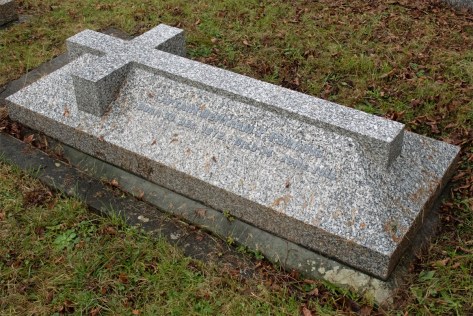
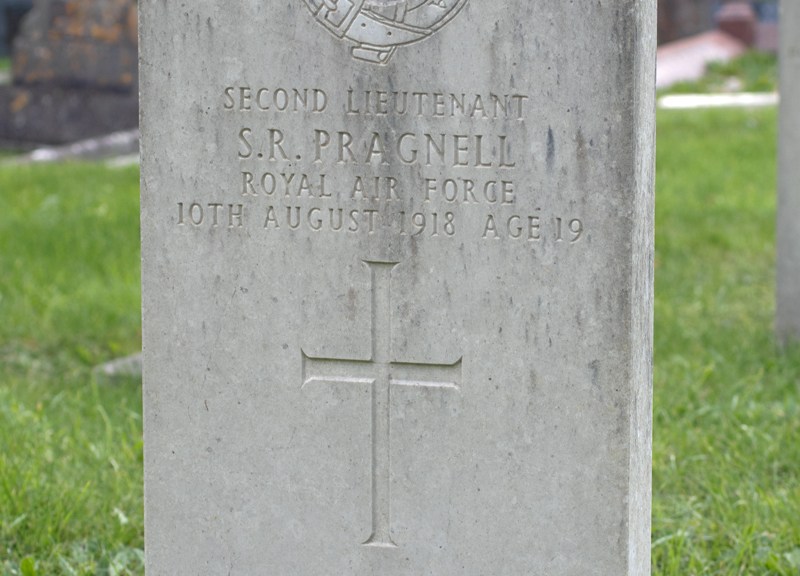
Walter Ricks Treliving lies at rest in the Wembdon Road Cemetery in his home town of Bridgwater, Somerset. He had been buried on the same day as Elizabeth, the mother whose funeral he had returned to attend.





 Death and Service