Tag Archives: Manchester Regiment

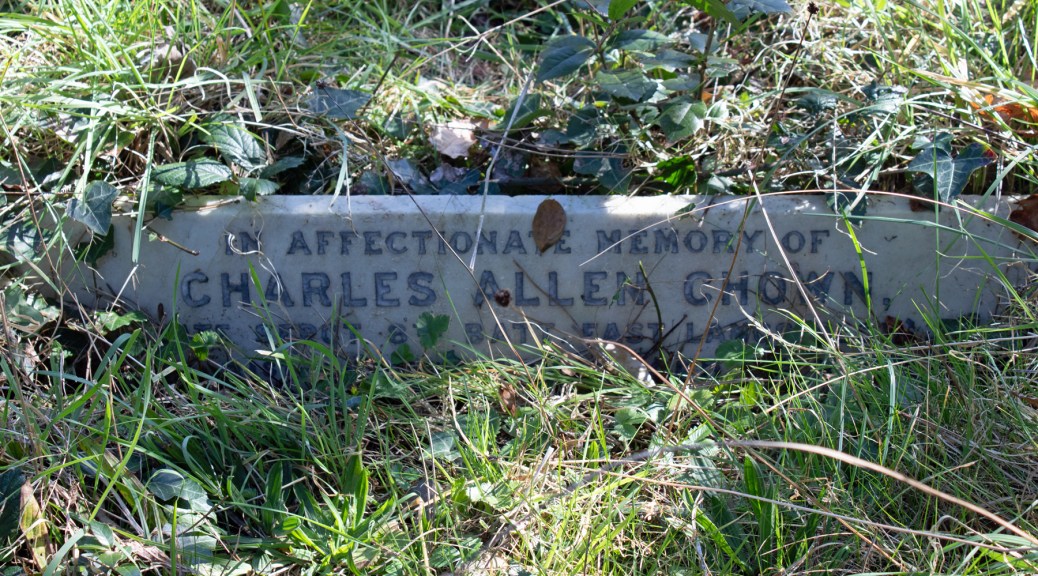
Sergeant Charles Chown

Sergeant Charles Chown

Charles Allen Chown was born in the Sussex village of Lyminster, at the start of 1882. The tenth of eleven children, his parents were Samuel and Mary Chown. Samuel was a general labourer, and when he passed away in 1898, Charles and his siblings rallied to support his now widowed mother.

The 1901 census found Mary, Charles and his brother Jesse living at 32 Lennox Road, Worthing, West Sussex. Jesse was employed as a brickmaker, while Charles had found work as a solicitor’s clerk. The family had two boarders, Helen and Rosie Bulbeck, and Charles’ niece, Minnie, was also staying with them.

Away from work, Charles was a music lover, and joined the local operatic society. In 1904 he appeared in a local version of Iolanthe, his “piece of portraiture being described as one of the successes of the occasion, for his facial play was good, and the drolleries of the character were displayed in an each and natural manner.” [Worthing Gazette: Wednesday 12th September 1917] In the following year’s Mikado, he took the role of the Lord High Executioner, and he was noted as being a “born comedian, with the most mobile countenance and a singularly dry form of humour…” [Worthing Gazette: Wednesday 12th September 1917]

By the time of the 1911 census, Charles had moved on with work, and moved out of home. Taking a room at 7 Tarring Road, Worthing, his landlords were Harold and Rose Ward. Still employed as a clerk, he was now employed by one of the estate agents in the town, although it is clear that his passion was elsewhere. When he joined up in the autumn of 1914, he gave his trade as musician.

Charles enlisted on 7th October 1914 in Ashton-under-Lyme, Lancashire. What took him north is unclear, although a theatre tour is a possibility. His service records note that he was 5ft 8.5ins (1.74m) tall and weighed 138lbs (62.6kg). He had dark brown hair, brown eyes and a sallow complexion.

Initially assigned to the Manchester Regiment, Private Chown was soon transferred to the 8th (Service) Battalion of the East Lancashire Regiment. He was obviously dedicated to his job: by the end of October 1914 he had been promoted to Lance Corporal, and within six weeks he rose to Sergeant.

In July 1915, Charles’ unit was dispatched to France. That autumn, they remained based near Tilques, in Northern France, but Sergeant Chown’s health was beginning to suffer. After just three months overseas, he was medically evacuated to Britain to receive treatment for pleurisy, and was hospitalised in Chatham, Kent.

When he recovered, Sergeant Chown was reassigned to the 10th Battalion of the East Lancashire Regiment, before being transferred to the 47th Training Reserve Battalion in September 1916. That winter, however, his health received a setback, and he contracted tuberculosis. He would spend the first half of the following year in hospitals in Aldershot in Hampshire, Sutton Veny in Wiltshire and, from May 1917, the 3rd Southern General Hospital in Oxford.

Sergeant Chown’s health would continue to deteriorate, and he was formally discharged from the army on 6th July 1917. He returned to Worthing, and his mother’s home, 2 Montague Place. Charles would eventually succumb to his medical condition, and he passed away on 31st August 1917, at the age of 35 years old.

The body of Charles Allen Chown was laid to rest in the family plot in Broadwater Cemetery, Worthing.

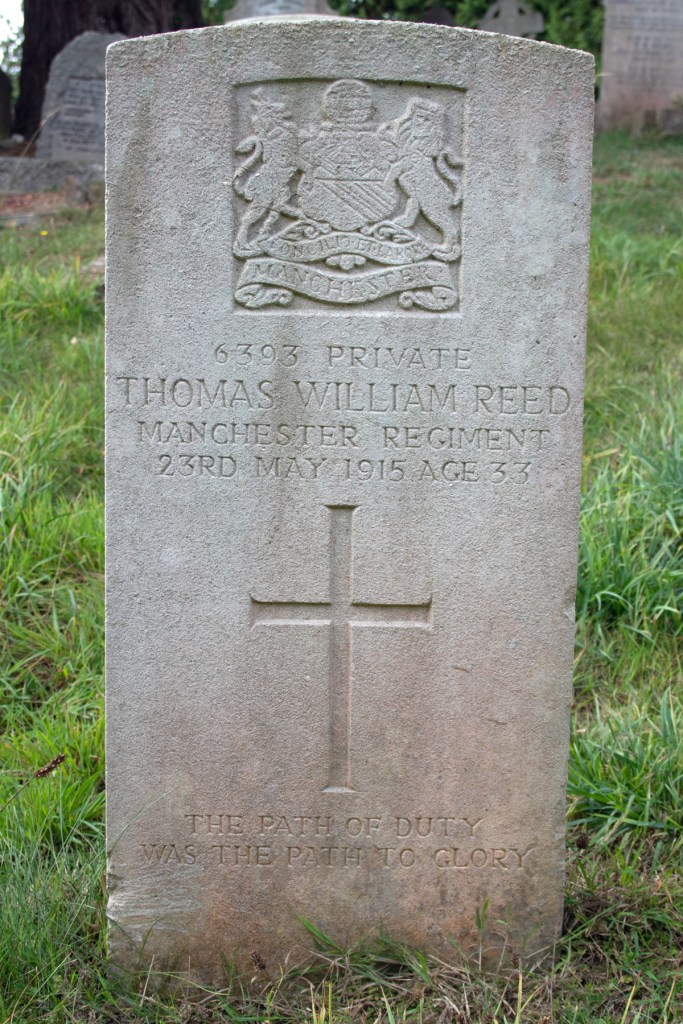
Private Thomas Reed

Private Thomas Reed

Thomas William Reed was born in 1883 and was one of nine children to George and Catherine. George was a general labour and he and his wife were born in Alton, Hampshire. It was in South London, however, that they raised their family.

Thomas found work as a house painter when he completed his schooling. The 1911 census recorded him as being the only one of his siblings still living in the family home, 16 Valentine Row in Blackfriars.

When war came to Europe, Thomas stepped up to play his part. Full service records have been lost to time, but from what remains it is clear that he had enlisted in the army in the opening months of the conflict. Private Reed was assigned to the Manchester Regiment and, as part of the 2nd Battalion, would have quickly found himself on the Western Front.

Thomas’ time in the army was to be tragically brief. By the spring of 1915 he was back in Britain, hospitalised in Devon with nephritis, or inflamed kidneys. His condition worsened, and he passed away on 23rd May: he was 32 years of age.

Thomas William Reed was laid to rest in Paignton Cemetery, not far from the Devon hospital in which he had breathed his last.


Serjeant Cecil Whitehead

Serjeant Cecil Whitehead

Details of Cecil Whitehead’s early life as lost to time. Born in 1882, he was the son of Henry and Annie Whitehead, from Openshaw in Manchester. There are no census returns for the family, so it is not possible to discover any more of their background.

The Commonwealth War Graves Commission confirm that Cecil wed a woman called Annie Ellis. His pension ledger notes four children: John, Cecil, Annie and Catherine, who died in 1917.

When war broke out, Cecil stepped up to serve his King and Country. He enlisted in the Manchester Regiment, and was assigned to the 3rd/8th Battalion. This was a reserve unit, based on home soil, and there is no evidence that Cecil spent any time overseas.

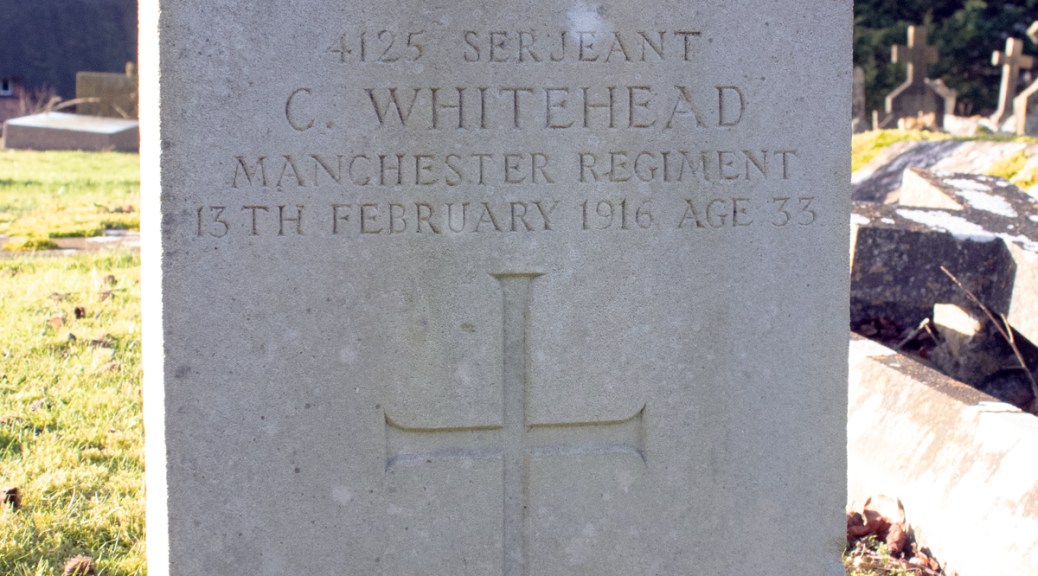
Cecil rose to the rank of Serjeant, by the winter of 1915, Cecil was billeted near Codford in Wiltshire. It was while he was here that he fell ill, contracting pneumonia. The condition was to prove too much for his body to bear, and he passed away on 13th February 1916, at the age of 33 years old.

Annie appear to have been unable to fund bringing her husband back to Manchester for burial. Instead Cecil Whitehead was laid to rest in the quiet graveyard of St Mary’s Church in Codford.


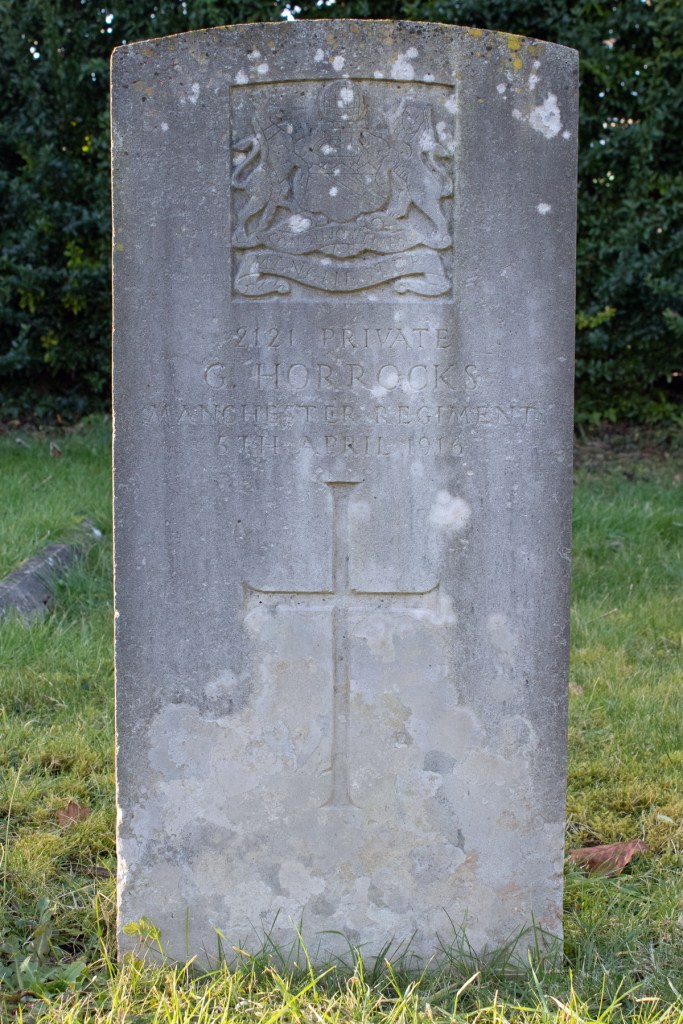
Private Granville Horrocks

Private Granville Horrocks

Granville Horrocks was born in Heywood, Lancashire in around 1872. His early life is difficult to piece together, but by the time of the 1901 census, he was living with his widowed mother, Jane Horrocks, and his wife of a year, Mary.

The family were living in Rock Street, Oldham, where Granville was working as a labourer in an ironworks. Mary was also working, and was employed as a cotton reeler in one of the local mills.

Granville and Mary went on to have five children – Mary, Lilian, Ellen, Wilfred and Jessie. The 1911 census records the family living in two rooms in Bloom Street, Oldham. Granville was employed as an iron turner in the local factory, while Mary remained at home to look after the house and the family.

Conflict broke out in Europe in the summer of 1914, and Granville opted to serve his King and his Country. Sadly, full details of his service are lost to time, but it is clear that he had enlisted in the Manchester Regiment by the autumn of 1915. Private Horrocks was assigned to the 10th Battalion, which saw active service at Gallipoli, and it is likely that Granville spent time in that part of the Mediterranean.

Private Horrocks’ army pension ledger provides details of his passing. The date was 5th April 1916, and the cause given was “suicide by drowning whilst of unsound mind due to disease contracted on [active service].” Little additional information is available about the incident and, surprisingly, there is nothing reported in contemporary newspapers.

Granville was based near Wylye, Wiltshire, when he took his life. He was around 44 years old at the time. Finances must have limited Mary’s options regarding his burial: rather than being taken back to Oldham, he was laid to rest in the peaceful graveyard of St Mary’s Church in the village where he passed.


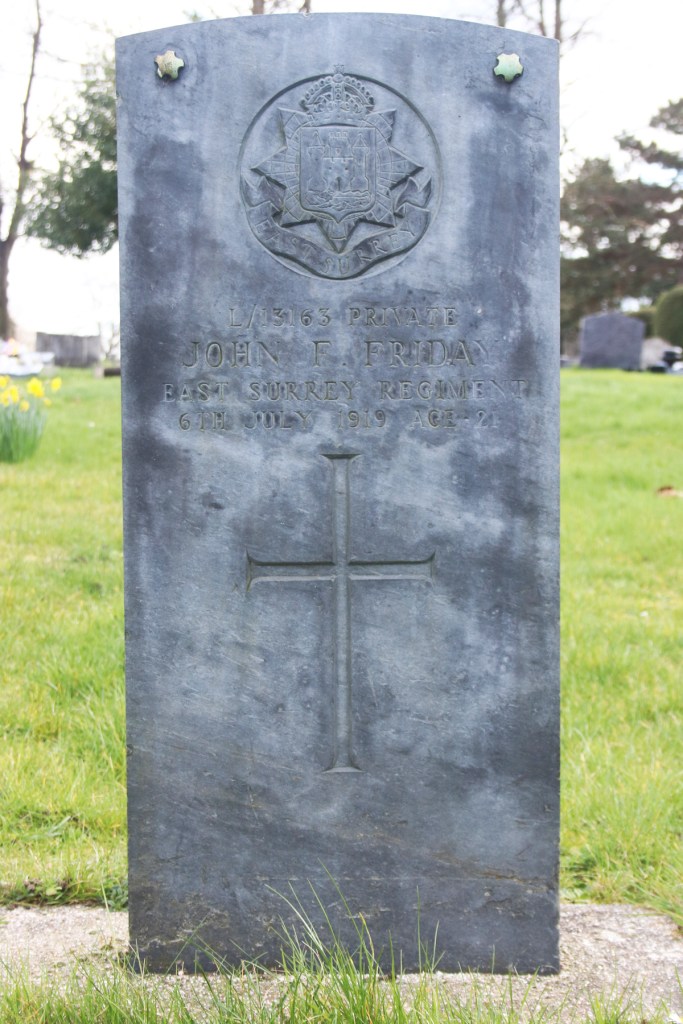
Private John Friday

Private John Friday

John Francis Friday was born in June 1898 to John and Laura Friday from Gillingham in Kent. Laura passed away when John Jr was only ten years old, and his dad remarried, meaning John Jr had eight full and half siblings. John Sr was a farm labourer, and the family lived on the river front in Gillingham, Kent.

John’s military service seems a bit of a challenging one. A letter to Gillingham Police Station dated November 1916 stated that he had not received his call up papers, but that he would present himself that day for enlistment.

John eventually enlisted on 27th December 1916; his joining records show that he was 18 years and six months old, and stood at just under 5ft 3ins (1.57m) tall. He also noted that his preference was to be assigned to the Royal Engineers.

Private Friday initially joined the Manchester Regiment, and, while serving on the Western Front, seemed to have a bit of a rebellious streak in him. He was pulled up on misdemeanours such as neglect of duty on at least five occasions before being admitted to hospital in Calais in December 1917, suffering from trench foot. After serving some further time in England, he again found himself in France in the summer of 1918.

On 11st March 1919, he was transferred to the East Surrey Regiment, and was shipped back to England at the beginning of April. Sadly, it looks like John was stricken by poor health; he passed away on 6th July 1919, having contracted pneumonia. He was just 21 years old.

John Francis Friday lies at rest in the Woodlands Cemetery in his home town of Gillingham in Kent.