Tag Archives: motorcycle

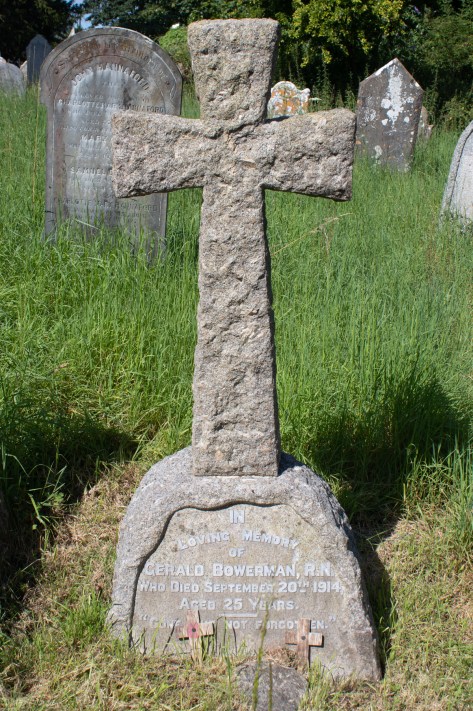
Engine Room Artificer 3rd Class Gerald Bowerman

Engine Room Artificer 3rd Class Gerald Bowerman

A distressing fatality, involving the death of a member of the crew of HM destroyer “Rifleman”, and injury to two others, occurred at the harbour where his ship was on Saturday night. A party of four – one civilian and three Navy men – were on a motor cycle and side-car on their way to Provost Matthews’ Quay, from which the sailors were to join their ship. The cyclist, who was controlling the machine in the darkness of the night, failed to observe that the bridge at the dock gates was open to allow a vessel to pass out to sea. The motor cycle collided with the obstruction, with the result that the machine and side-car swerves round, and plunged headlong into the well from which the bridge swings.

The result of the accident was that Gerald Bowerman (25), engine-room artificer, fractured his skull, while his two ship-mates, Charles Morrice, chief engine-room artificer, and James Fulthorpe, engine-room artificer, were somewhat severely injured. Deceased belonged to Buckfastleigh, his residence being the Mechanics’ Arms.

[Western Times: Friday 25th September 1914]

Gerald Bowerman was born in Buckfastleigh, Devon, on 30th October 1888. The youngest of four children, his parents were James and Augusta Bowerman. James was a jack-of-all-trades, with the 1891 census noting that he worked as a grocer, coal dealer and cab proprietor, with his wife assisting in the business.

James seemed to seek out new opportunities, and, by the time of the next census, taken in 1901, the family had moved to Exeter, and were running the Red Cow Inn at the foot of St David’s Hill.

Gerald’s older brother, Harold, joined the navy in 1906, and his sibling was not to be outdone. By 1910, James and Augusta had moved back to Buckfastleigh, and were running the Mechanic’s Arms. Gerald, however, was drawn to the sea and gave up his employment as a fitter and turner to enlisted in the Royal Navy on 14th September 1910. His service records show that he was 5ft 6ins (1.68m) tall, with brown hair, brown eyes and a fresh complexion.

Engine Room Artificer 4th Class Bowerman was first sent to HMS Vivid, the Royal Naval Dockyard in Devonport, for his training. He joined the battleship HMS Bellerophon in February 1911, and she would be his home for the next two years.

After another short spell in Devonport, Gerald transferred to HMS Caesar, then to the depot ship HMS Blake, to which he was assigned on 30th August 1913. The following month he was promoted to Engine Room Artificer 3rd Class, and would remain on board Blake through to the outbreak of war the following year.

Engine Room Artificer Bowerman’s ship was based in Aberdeen when the motorcycle accident occurred. He was just 25 years of age when he died, on 20th September 1914.

Gerald Bowerman’s body was taken back to Devon for burial. He was laid to rest in the graveyard of Holy Trinity Church in his home town of Buckfastleigh.

Lieutenant Basil Scott-Holmes

Lieutenant Basil Scott-Holmes

Basil Scott-Holmes was born on 2nd February 1884 in the Somerset village of Wookey. The oldest of two children, his father was Liverpool-born Thomas Scott-Holmes and his wife, Katherine. When Basil was born, Thomas was the vicar of St Matthew’s Church, Wookey, but by 1901, he had risen to the role of clergyman – and subsequently Chancellor – at Wells Cathedral.

Basil’s pedigree stood him in good stead. Initially educated in Llandaff, South Wales, he subsequently attended Sherborne School in Dorset. Sent up to Cambridge, he studied history at Sidney Sussex College.

After leaving university, Basil spent time in Europe learning German and French. He was then assigned the role of Assistant Commissioner in North Nigeria but, after a year there he was invalided home taking up a teaching role at the Bristol Grammar School in 1912.

In July 1913, Basil married Barbara Willey, a surgeon’s daughter from Reigate, Surrey. The marriage record shows that Basil was registrar for an architectural association by this point; the couple went on to have two children, daughters Annette and Prudence.

When the war broke out, he was obviously keen to do his bit. In September 1914 he enlisted in the Royal Army Service Corps, before gaining a commission in the King’s Royal Rifle Corps a couple of months later. In the spring of 1916, Lieutenant Scott-Holmes had been seconded to the Machine Gun Corps, although it is unclear whether he served abroad during any of his time in the army.

On the evening of 24th October 1916, Lieutenant Scott-Holmes was riding in a motorcycle sidecar through central London, on the way back to camp. A local newspaper picked up the story:

…they stopped when going through Wandsworth to re-light the near light, and in the dark a motor omnibus ran into them, and Lieutenant [Scott-Holmes], who was strapped in the side-car, was, with the car, flung across the road. He died as he was being taken to Wandsworth Hospital. At the subsequent inquest, a verdict of “accidental death” was returned.

Central Somerset Gazette: Friday 3rd November 1916

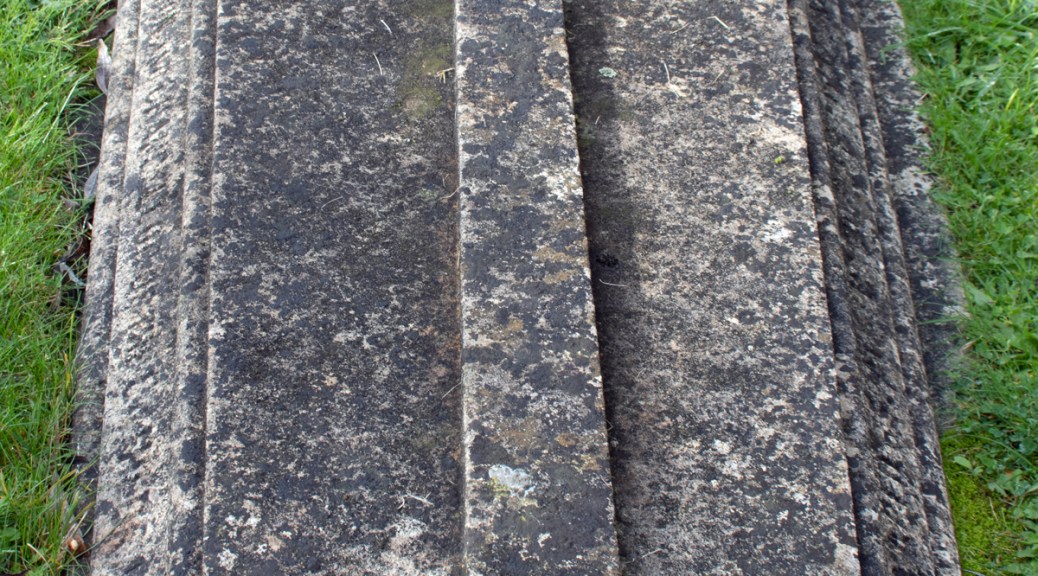
Basil Scott-Holmes was just 32 years old. His body was brought back to Somerset; he was laid to rest in the cemetery at Wells Cathedral.


Larger memorial image loading...
Basil Scott-Holmes
(from ancestry.co.uk)

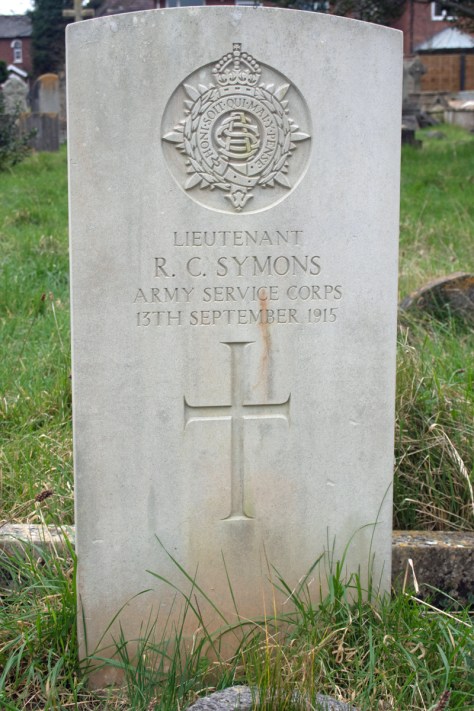
Lieutenant Rudolph Symons

Lieutenant Rudolph Symons

Rudolph Clifford Symons was born in the autumn of 1887, one of ten children to Clifford and Clara Symons. Clifford ran a brick and tile manufacturer’s and later became a town councillor in the family’s home of Bridgwater in Somerset.

By the time of the 1911 census, Rudolph had become the works manager for his father, but war soon beckoned.

Sadly, Rudolph’s full military record has been lost to time, but he enlisted in the Royal Army Service Corps early on in the conflict and was promoted to Lieutenant at the end of September 1914. He was involved in recruiting new soldiers, and it was following one of these meetings that he was involved in an accident.

The local media picked up the story:

On Friday night, while riding through St Jon Street on his motorcycle, to which a side-car was attached, he collided with a horse and light waggon… Lieutenant Symons appears to have been struck by one of the shafts in the region of the heart, and was rendered unconscious. He was at once conveyed to his home, where he was medically attended and was subsequently removed to the nursing home on Friarn Street. On the following day a specialist was called in, and an operation performed, but the injuries were of so severe a character that death ensured on Monday.

Taunton Courier and Western Advertiser: Wednesday 22nd September 1915

The coroner reported that Rudolph had died from an internal haemorrhage and the inquest recorded a verdict of accidental death, and exonerated the waggon driver – a dealer caller Wyatt – from all blame.

Lieutenant Symons was a popular man, a vocalist in the Bridgwater Amateur Operatic Society, and was also heavily involved in the local annual Guy Fawkes celebrations.

He died on 13th September 1915, aged 27 years old, and lies at rest in the Wembdon Road Cemetery in his home town.