Tag Archives: Training Reserve Battalion

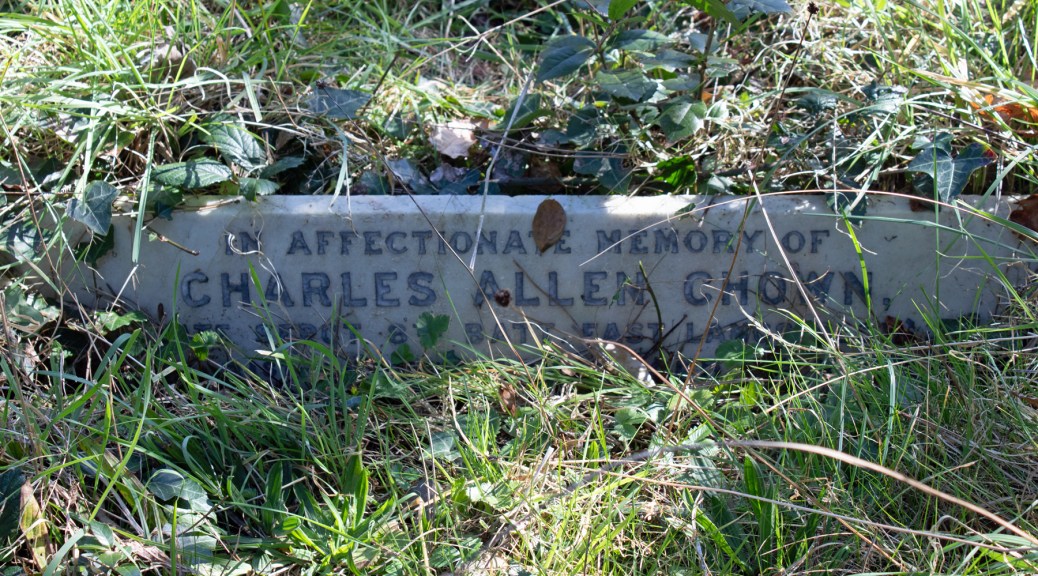
Sergeant Charles Chown

Sergeant Charles Chown

Charles Allen Chown was born in the Sussex village of Lyminster, at the start of 1882. The tenth of eleven children, his parents were Samuel and Mary Chown. Samuel was a general labourer, and when he passed away in 1898, Charles and his siblings rallied to support his now widowed mother.

The 1901 census found Mary, Charles and his brother Jesse living at 32 Lennox Road, Worthing, West Sussex. Jesse was employed as a brickmaker, while Charles had found work as a solicitor’s clerk. The family had two boarders, Helen and Rosie Bulbeck, and Charles’ niece, Minnie, was also staying with them.

Away from work, Charles was a music lover, and joined the local operatic society. In 1904 he appeared in a local version of Iolanthe, his “piece of portraiture being described as one of the successes of the occasion, for his facial play was good, and the drolleries of the character were displayed in an each and natural manner.” [Worthing Gazette: Wednesday 12th September 1917] In the following year’s Mikado, he took the role of the Lord High Executioner, and he was noted as being a “born comedian, with the most mobile countenance and a singularly dry form of humour…” [Worthing Gazette: Wednesday 12th September 1917]

By the time of the 1911 census, Charles had moved on with work, and moved out of home. Taking a room at 7 Tarring Road, Worthing, his landlords were Harold and Rose Ward. Still employed as a clerk, he was now employed by one of the estate agents in the town, although it is clear that his passion was elsewhere. When he joined up in the autumn of 1914, he gave his trade as musician.

Charles enlisted on 7th October 1914 in Ashton-under-Lyme, Lancashire. What took him north is unclear, although a theatre tour is a possibility. His service records note that he was 5ft 8.5ins (1.74m) tall and weighed 138lbs (62.6kg). He had dark brown hair, brown eyes and a sallow complexion.

Initially assigned to the Manchester Regiment, Private Chown was soon transferred to the 8th (Service) Battalion of the East Lancashire Regiment. He was obviously dedicated to his job: by the end of October 1914 he had been promoted to Lance Corporal, and within six weeks he rose to Sergeant.

In July 1915, Charles’ unit was dispatched to France. That autumn, they remained based near Tilques, in Northern France, but Sergeant Chown’s health was beginning to suffer. After just three months overseas, he was medically evacuated to Britain to receive treatment for pleurisy, and was hospitalised in Chatham, Kent.

When he recovered, Sergeant Chown was reassigned to the 10th Battalion of the East Lancashire Regiment, before being transferred to the 47th Training Reserve Battalion in September 1916. That winter, however, his health received a setback, and he contracted tuberculosis. He would spend the first half of the following year in hospitals in Aldershot in Hampshire, Sutton Veny in Wiltshire and, from May 1917, the 3rd Southern General Hospital in Oxford.

Sergeant Chown’s health would continue to deteriorate, and he was formally discharged from the army on 6th July 1917. He returned to Worthing, and his mother’s home, 2 Montague Place. Charles would eventually succumb to his medical condition, and he passed away on 31st August 1917, at the age of 35 years old.

The body of Charles Allen Chown was laid to rest in the family plot in Broadwater Cemetery, Worthing.


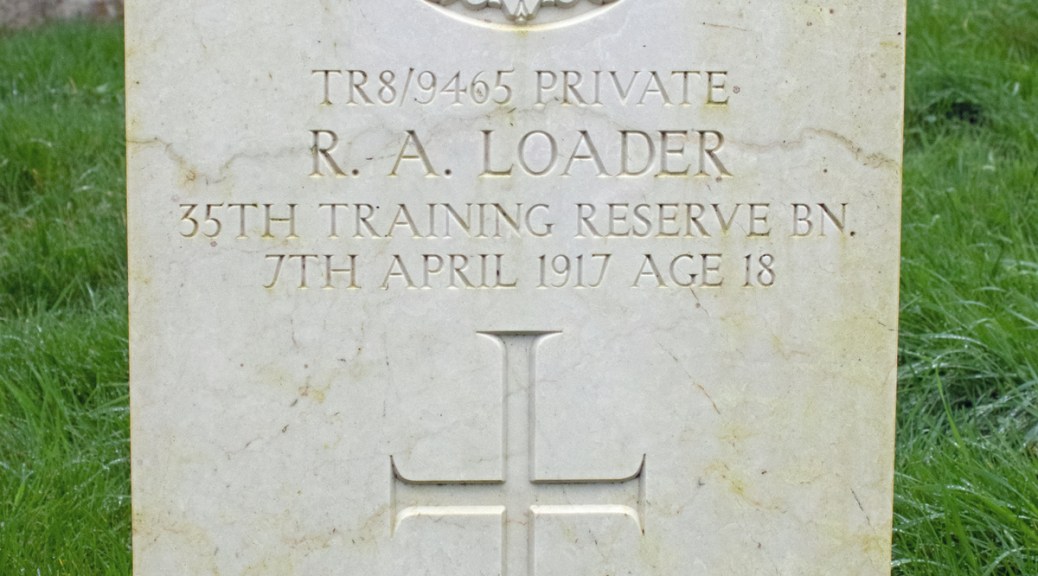
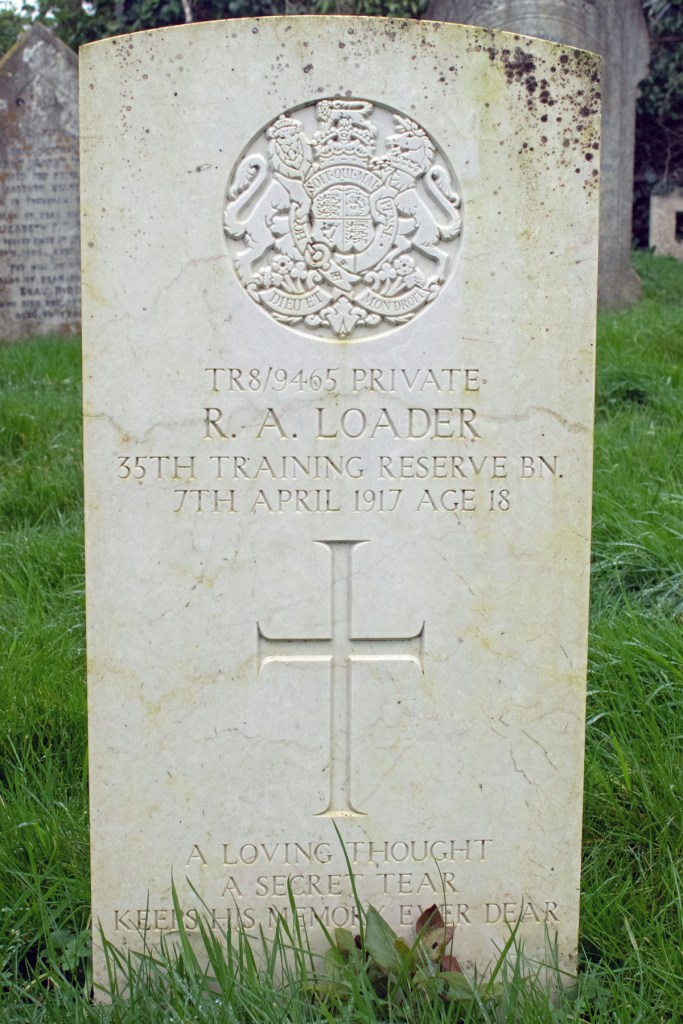
Private Reginald Loader

Private Reginald Loader

Reginald Alfred Loader was born in the autumn of 1898, and was the eighth of nine children. His parents – Robert and Amelia – both came from the Dorset village of Lillington, and this is where they raised their family.

Sadly, there is little specific information on Reginald’s life. When war broke out, he stepped up to play his part, and enlisted in the Training Reserve Battalion at some point after October 1916. His unit, the 35th Battalion, was based in Wool, Dorset, but there is no further information about his time there.

The only other concrete information about Private Loader confirms his passing. He died in hospital – through causes unknown – on 7th April 1913. He was just 18 years of age.

Reginald Alfred Loader’s body was taken back to Lillington for burial. He was laid to rest in the graveyard of St Martin’s Church in the village.


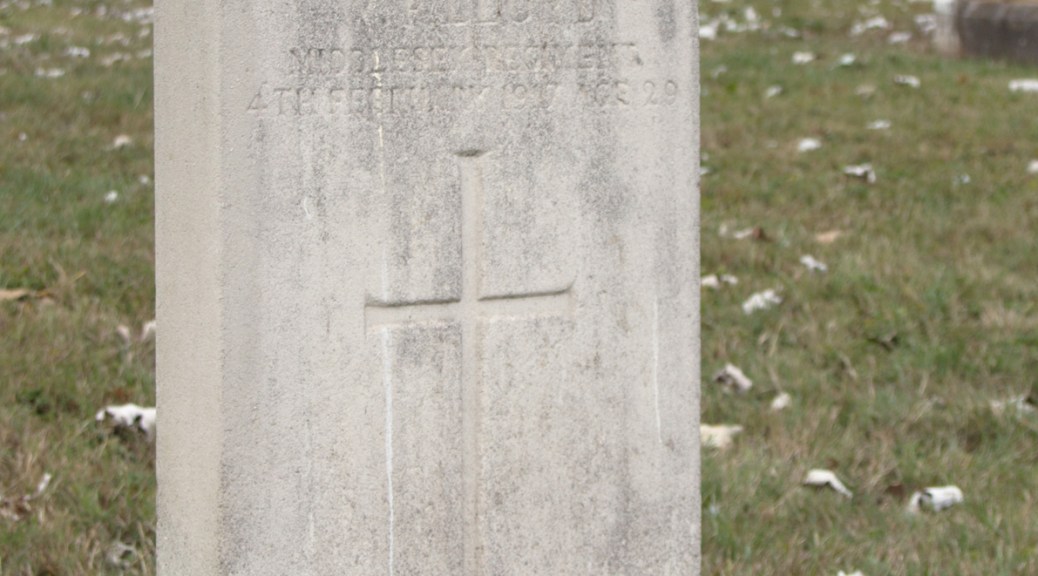
Company Quartermaster Serjeant William Lloyd

Company Quartermaster Serjeant William Lloyd

Much of the life of William F Lloyd is destined to remain lost to time.

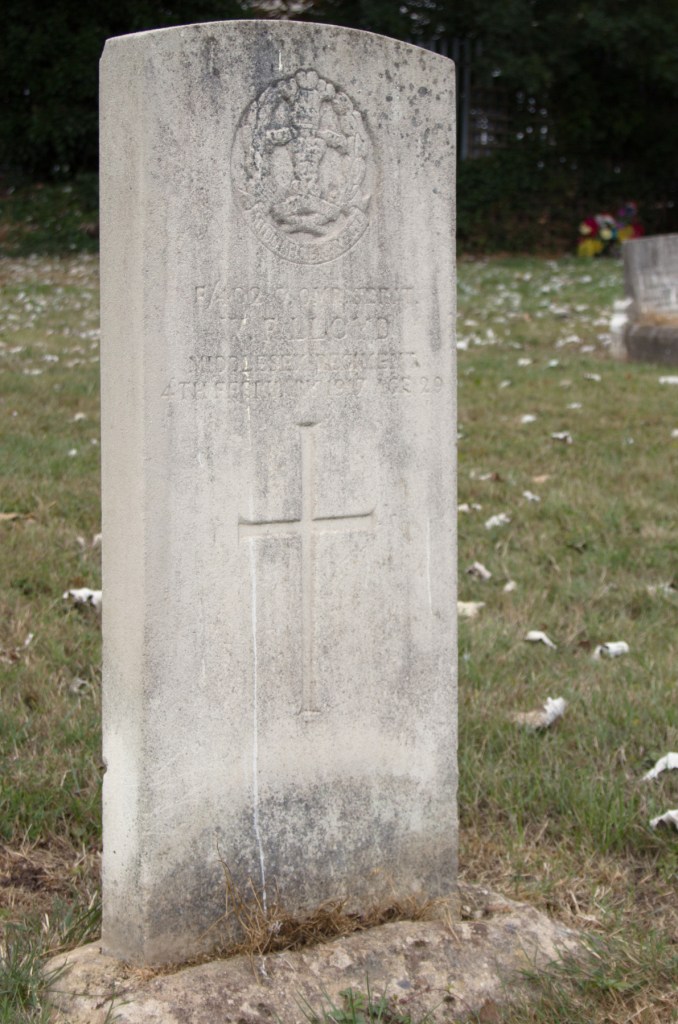
Buried in Streatham Park Cemetery, Surrey, his entry on the Commonwealth War Graves Commission register states that he was a Quartermaster Sergeant in the Middlesex Regiment, and had transferred to the 101st Training Reserve Battalion. It also confirms that he was the son of Mrs Annie Shane, of 24 Paulet Road, Camberwell.

The only document relating to William’s military service – his Pension Ledger record – adds a bit more detail. It records that he died from appendicitis on 4th February 1917. He was 29 years old when he passed. This document gives his mother’s name as Mrs Annie Lloyd, so it would seem that she re-married at some point after his passing.

There do not appear to be any potential census records for William, certainly not for a William F Lloyd, although to achieve the rank of Quartermaster Sergeant by age that he did would suggest he had enlisted prior to the First World War. It may be, therefore, that he was overseas at the time the census returns were taken.

Sadly, there is little more information that can be uncovered. William F Lloyd retained his anonymity after death, and he lies at rest in the large grounds of Streatham Park Cemetery.


Private James Fone

Private James Fone

James Walter Fone was born in Crewkerne, Somerset, late in 1878. The sixth of seven children, his parents were Edward and Emma Fone. Edward was an insurance agent who had moved the family to Yeovil by the mid-1880s.

When James left school, he found work as a clothier’s assistant. Emma died in 1906, and he moved to Bristol. By the time of the 1911 census, he was employed by, and boarding with, James Johnstone.

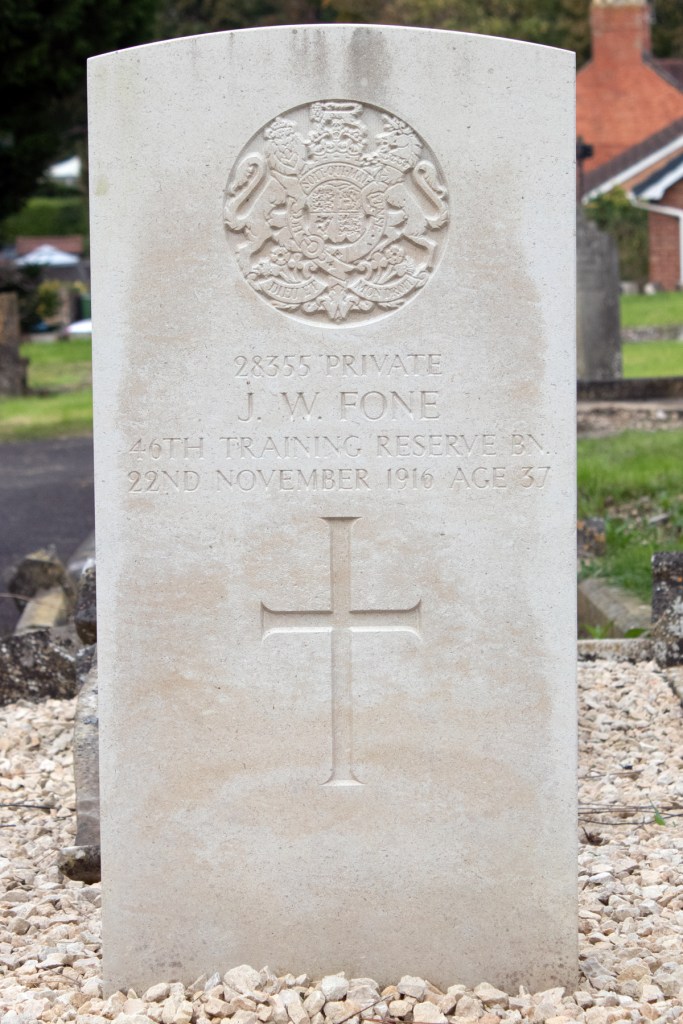
Details of James’ life become a bit sketchy from here on. He enlisted in the army when he received his call-up in the autumn of 1916. Joining the 46th Training Reserve Battalion, Private Fone was sent to a camp near Swanage in Dorset.

Barracks at this point in the war were tightly packed, and breeding grounds for illness and infections. James was not to be immune to this, and came down with cerebrospinal meningitis. He was admitted to the camp hospital, but died there on 22nd November 1916, at the age of 37 years old.

James Walter Fone’s body was brought back to Somerset for burial. He was laid to rest in Yeovil’s sweeping cemetery.


Private Joseph Staddon

Private Joseph Staddon

Joseph Frederick Staddon was born at the start of 1899, the oldest of seven children to John and Mary Ann Staddon. John was a farmer from Luccombe in Somerset, and it was in this small village that the family were born and raised.

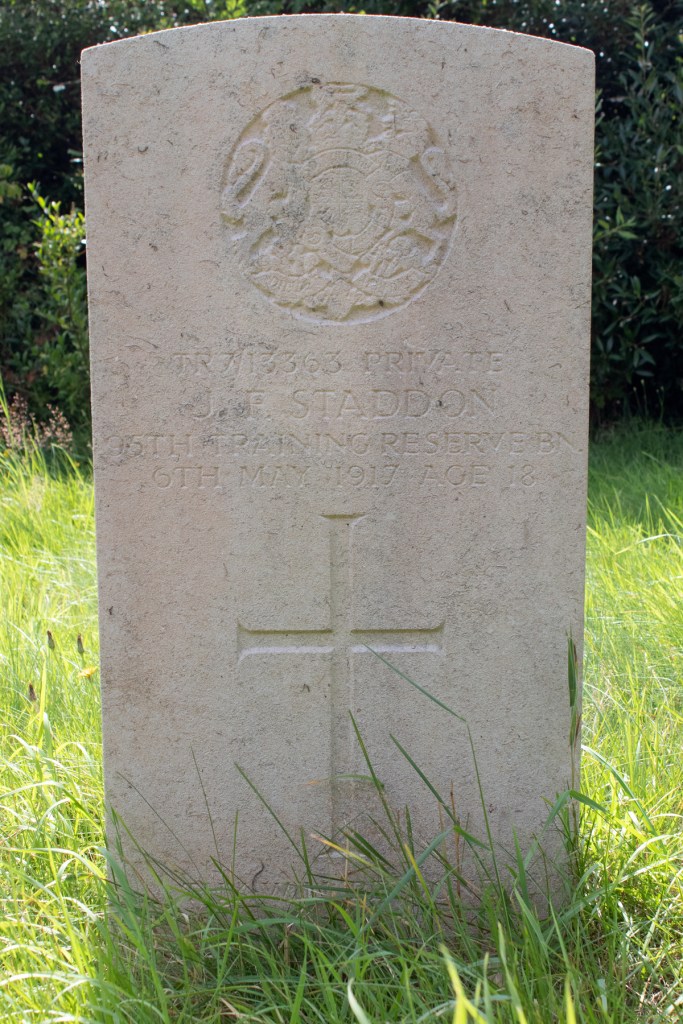
There is little documentation to expand on Joseph’s life. He enlisted in the Duke of Cornwall’s Light Infantry when he turned 18, and was initially attached to the 95th Training Reserve Battalion.

Private Staddon was barracked in Chiseldon, Wiltshire, but his time in service was not to be a lengthy one. Admitted to a military hospital near the camp, he passed away from what was probably an illness on 6th May 1917. He was just eighteen years of age.

Joseph Frederick Staddon’s body was brought back to Somerset for burial. He was laid to rest in the cemetery extension to St Mary’s Church, Luccombe.


Tragedy was to strike again when, ten months after his son’s passing, John also died. Mary was left picking up the pieces, while supporting her six remaining children, the youngest of whom, Dorothy, was not even two years old.

The family survived, Mary running the farm with her oldest boy, Edward. She passed away on 4th August 1937, at the age of 63 years old.


Private Arthur Thorne

Private Arthur Thorne

Arthur Reginald Vellacott Thorne was born at the start of 1899 in Bridgwater, Somerset. One of six children, his parents were Sidney and Bessie Thorne. Sidney was a butcher and, by the time of the 1901 census, the family had moved to Chichester, West Sussex, where he had found employment in a sausage factory.

The Thornes’ time on the south coast was not to last long: they had moved to Timberscombe, back in Somerset, by the time Sidney and Bessie’s youngest child, daughter Ivy, was born in March 1908. Tragically their happiness was not to last for long: Sidney passed away in October that year, aged just 35 years old.

With six children under the age of 12 to raise, times would have proved tough for Bessie. Her oldest child – Arthur’s older brother, Sidney – went to live with his paternal uncle’s family in Taunton, and began learning the butchering trade. Bessie took on the role of caretaker at Timberscombe School where her five younger children were being taught.

Being a butcher was not Sidney’s chosen career path. When he turned 17, in March 1914, he enlisted in the Coldstream Guards, lying about his age to do so. Six months later he was promoted to the rank of Lance Corporal and attached to the 3rd Battalion. With war having been declared in Europe, he soon found himself on the Front Line, fighting in the First Battle of Ypres.

Over the next couple of years, Lance Corporal Thorne remained on the Western Front. He was killed in fighting on 15th September 1916: he was just 19 years of age. Sidney’s body was never identified: he is commemorated on the Thiepval Memorial in Picardie.

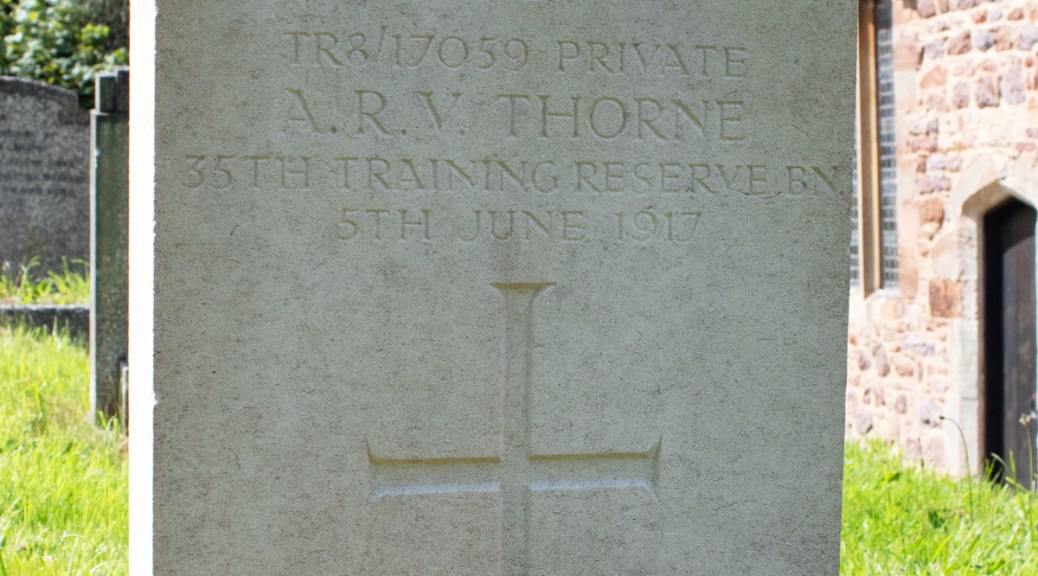
Arthur’s trail had gone cold at this point, but when he turned 18 years old, his brother having passed just months before, he too was called up. Assigned as a Private in the 35th Training Reserve Battalion, he was sent to Bovington Army Camp in Dorset for his induction. While there, in the cramped conditions of the military barracks, he fell ill. He was admitted to the Salisbury and District Isolation Hospital, which treated infectious diseases, and this was to be where he passed away. Private Thorne was just 18 years of age, and Bessie had lost her two oldest boys.

While Sidney’s remains were never recovered, Arthur Reginald Vellacott Thorne was brought back to Somerset to be laid to rest. He was buried in the peaceful graveyard of St Petrock’s Church in Timberscombe, not far from his father.


Bessie was to our live four of her children. Her youngest two sons, Edwin and Cecil, were to die too young. Cecil passed away in Timberscombe in May 1922, when he was just 16. Edwin died in November 1929, at the age of 26 years old.

Bessie lived on until 1958, passing away in Minehead when she was 84 years of age.


Private Richard Gould

Private Richard Gould

Richard Francis Gould was born in the autumn of 1893 in Wraxall, Somerset. One of fifteen children, his parents were Devon-born farm labourer and carter John Gould and his wife Mary, who came from Bristol.

When he left school, Richard found work as a domestic gardener, and this is what he was doing when he met Ada Archer. She was a nurse from Bristol, and the couple married in Knowle on 17th August 1908. They set up home in Bedminster, and went on to have three children: Edith, born late in 1909; Richard Jr, born in 1915; and Ronald, who was born the following year.

When war broke out, Richard was drawn to serve his country. Sadly, most of his service records have been lost to time, so it’s impossible to piece together a complete record of his time in the army. He was initially attached to the 36th Training Reserve Battalion, but was soon transferred. Attached to the 599th Agricultural Company of the Labour Corps, Private Gould was based in Somerset.

It was while serving in the autumn of 1918, that Richard fell ill. Having contracted pneumonia, he was hospitalised, but the condition proved too much, and he passed away on 19th October, at the age of 34 years old.

Ada and the children were living in the Somerset village of Long Ashton by this point, but it was in the graveyard of the local church – All Saints’ – that Richard Francis Gould was laid to rest.


Private Richard Gould
(from ancestry.co.uk)

Private Herbert Webber

Private Herbert Webber

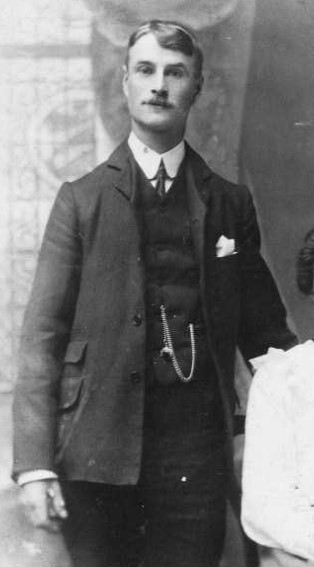
Herbert Alfred Webber was born on 22nd October 1898 in Yatton, Somerset. The younger of two children, his parents were Ernest and Ada. Ernest was a platelayer for the Great Western Railway and, by the time of the 1911 census, the family had moved to Keynsham, near Bristol. With Herbert and his sister still at school, they had taken in two boarders – railway porters Walter Prince and Victor Coombs – to help bring in a little money.

When Herbert left school, he found work at a local chemist, but as soon as he turned 18, he signed up to serve his King an Country. Assigned to the 94th Training Battalion, Private Webber was sent to the Chiseldon Camp in Wiltshire to begin his career.

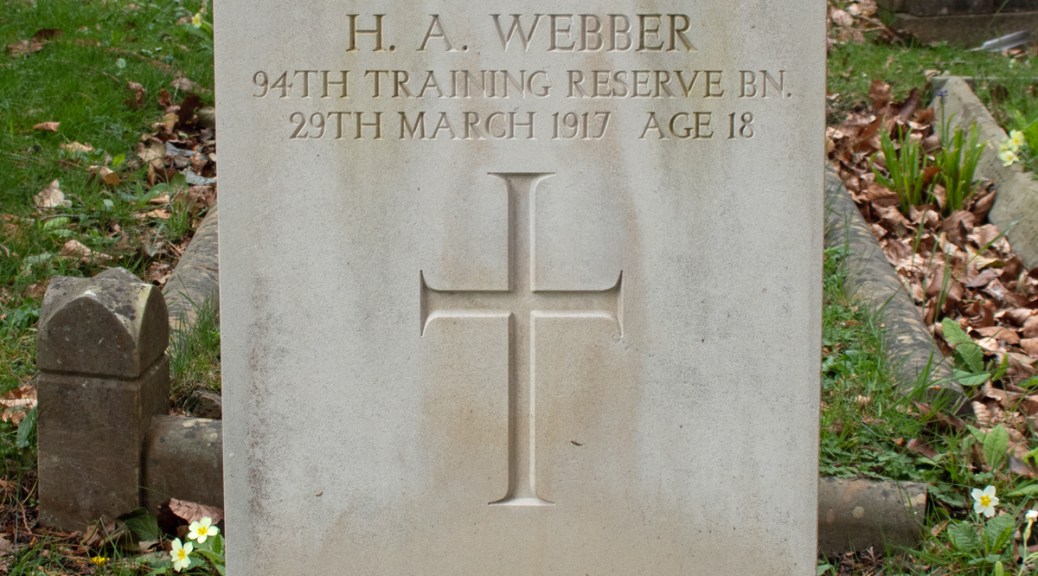
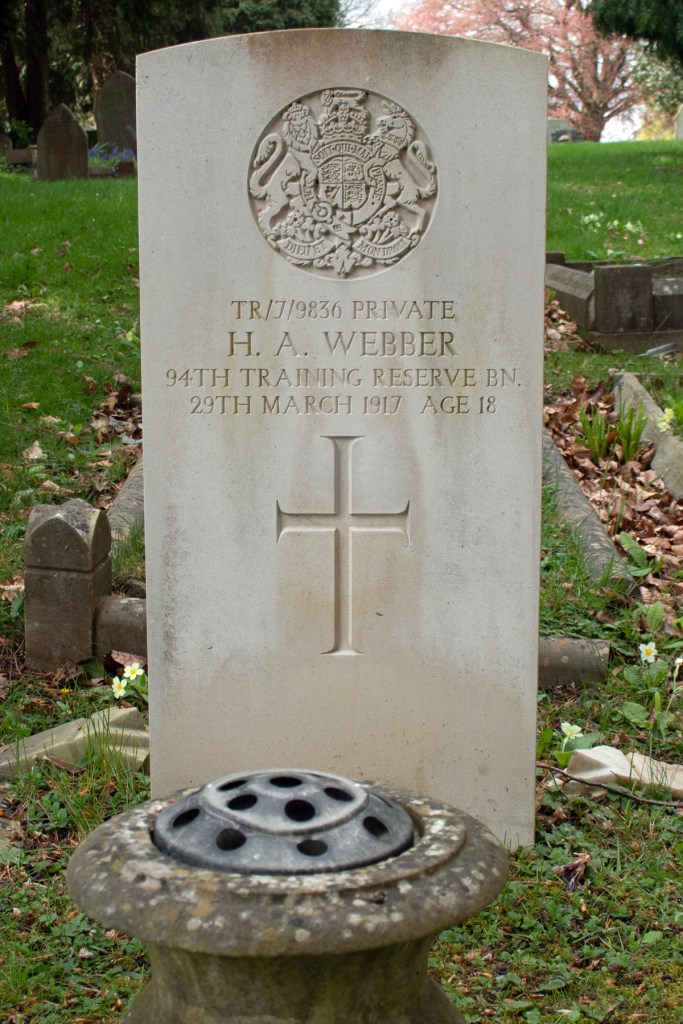
Tragically, Herbert’s was not to be a long service. Within a month of arriving at camp near Swindon, he fell ill, and was admitted to an Isolation Hospital in the town. While the condition he had contracted is unclear, it was one to which he would succumb. He passed away on 29th March 1917, aged just 18 years old.

Herbert Alfred Webber was brought back to Somerset for burial. With the family having moved to Bath with Ernest’s work, he was laid to rest in the city’s Twerton Cemetery.


Private Herbert Webber
(from britishnewspaperarchive.co.uk)

Private Arthur Thomas

Private Arthur Thomas

Arthur Reuben Thomas was born in Banwell, Somerset, on 27th September 1899. The older of two children, his parents were blacksmith Edwin Thomas and his wife, Mary.

Little information about Arthur’s life is documented. At the time of the 1911 census he was still a schoolboy, and it is likely that he helped his father out in the smithy when he finished his education.

By this point war was raging across Europe, and it is likely that young Arthur was keen not to miss out. Details of any military service are lost to time, but it seems possible that he joined up as soon as his age allowed.

Private Thomas was assigned to the 53rd (Young Soldier) Battalion of the Hampshire Regiment, and sent to Rollestone Camp on Salisbury Plain, Wiltshire, for training.

Sadly, Arthur’s time in the army seems to have been a short one. He was admitted to a camp hospital in nearby Tidworth, suffering simply from ‘disease’, and it was from this that he passed away on 6th January 1918. He was just eighteen years of age.

Arthur Reuben Thomas’ body was brought back to Somerset for burial. He was laid to rest in the quiet graveyard of St Andrew’s Church in his home village of Banwell.


Private Ivan Day

Private Ivan Day

Ivan George Day was born in the summer of 1898, the oldest of three children to George and Emma Day. George was a brick and tile maker from Weare in Somerset and it was here that he and Emma raised their young family.

When Ivan finished his schooling, he found work as a postman, but, with war raging across Europe, he seemed keen to play his part. In February 1917, he enlisted in the army and was assigned to the 93rd Training Reserve Battalion. His service records show that he was just 5ft 3ins (1.6m) tall and weighed 121lbs (54.9kg).

Private Day was sent to Chiseldon Camp, to the south of Swindon in Wiltshire and, tragically, this move to cramped army barracks was to prove his undoing. Within four weeks of arriving, Ivan was admitted to the camp’s hospital, having contracted measles and pneumonia. Less than a week later, the conditions had gotten the better of him. He passed away on 3rd April 1917, at just eighteen years of age.

Ivan George Day’s body was brought back to Somerset for burial. He was laid to rest in the peaceful graveyard of St Gregory’s Church in his home village of Weare.


Tragedy was to strike the Day family again when, George died eighteen months later, aged 51 years old. Emma lived until 89 years old, passing away in Weston-super-Mare in the summer of 1955.


Ivan was not the only Somerset soldier to succumb to pneumonia at Chiseldon Camp that spring. Private Charles Oborne, died from the same condition a few days before Ivan was admitted to the hospital. Private Everett Ferriday, of the 94th Training Battalion, passed away in the same hospital on the same day as Ivan, also from pneumonia.

You can read their stories by following the links above.