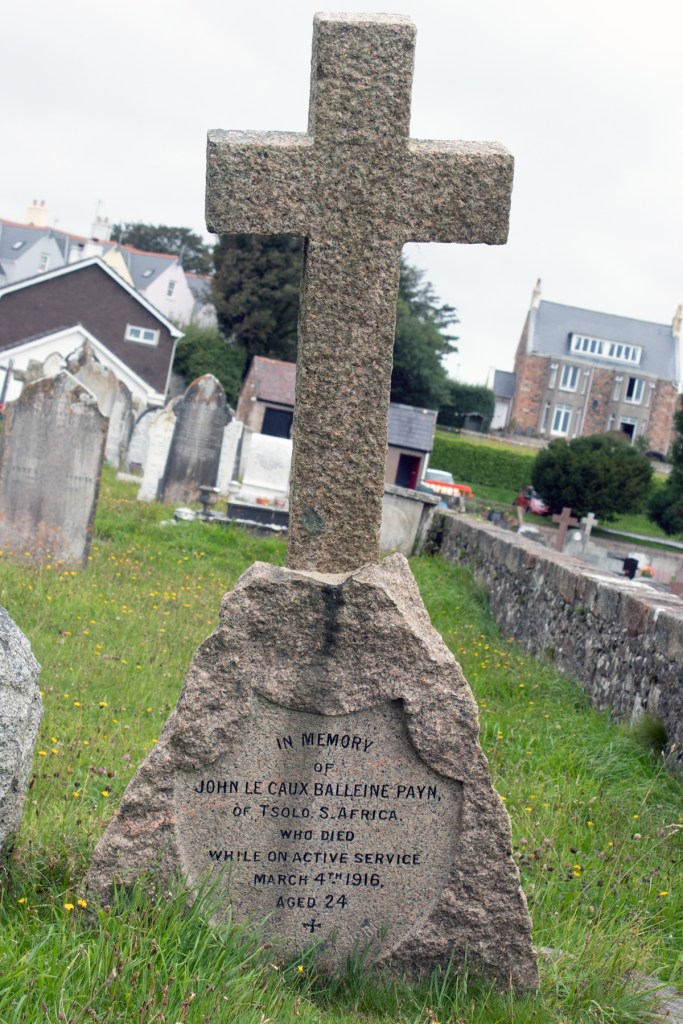
John le Caux Balleine Payn was born in South Africa in 1892. The sixth of seven children, his parents were Jersey-born Philip Payn and his wife, Mary, who came from the Eastern Cape.
There is tantalisingly little information available about John’s life. When war was declared in Europe, he answered the call from King and Empire, and enlisted in the South African Infantry. His regiment – the 1st – fought in North Africa and at the Somme, but it is not clear when and where he was based.
It is likely that Private Payn either had a base in the UK, or that he was hospitalised there following an illness or an injury. He passed away, through causes unconfirmed, on 4th March 1916. He was just 24 years of age.
It was impractical to repatriate John le Caux Balleine Payn’s body to South Africa for burial. Instead, he was laid to rest close to his father’s family, in St Martin’s, Jersey.
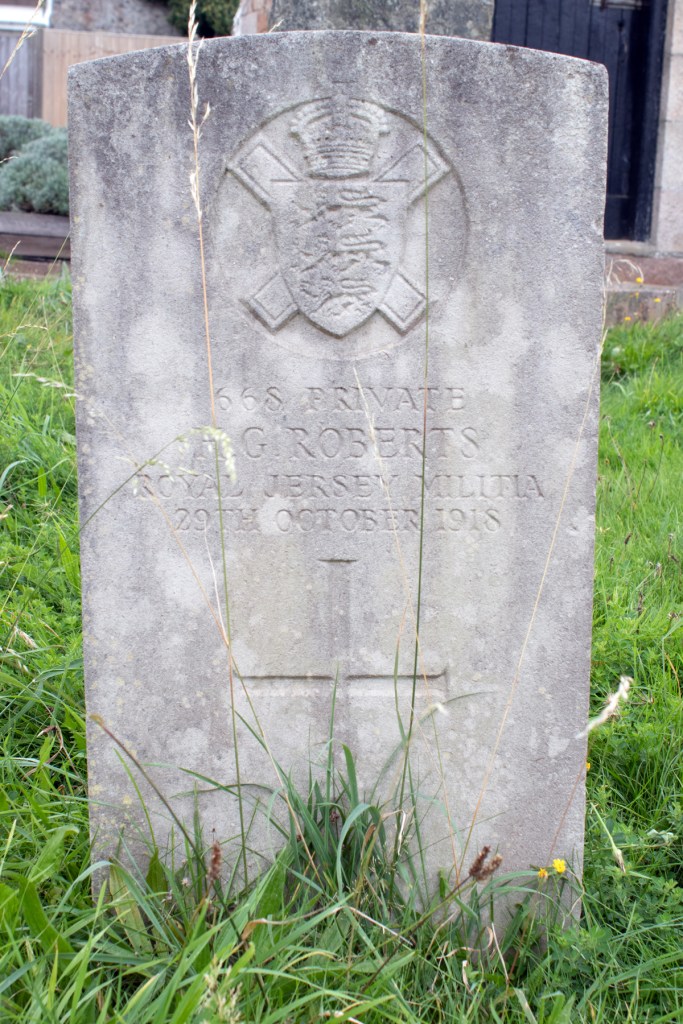
The life of Henry George Roberts is destined to remain shrouded in mystery.
His entry in the Commonwealth War Graves Commission records reads: “ROBERTS, Pte. HG, 668, Royal Jersey Garrison Bn. Channel Islands Militia. 29th Oct, 1918. In North-West corner [St Martin Churchyard]”, but there are no details of his next-of-kin.
No related military records are available for him, and, without Henry’s age an online search identifies too many results to be of any practical use.
Private Roberts lies at rest in the peaceful churchyard, his life lost in the mists of time.
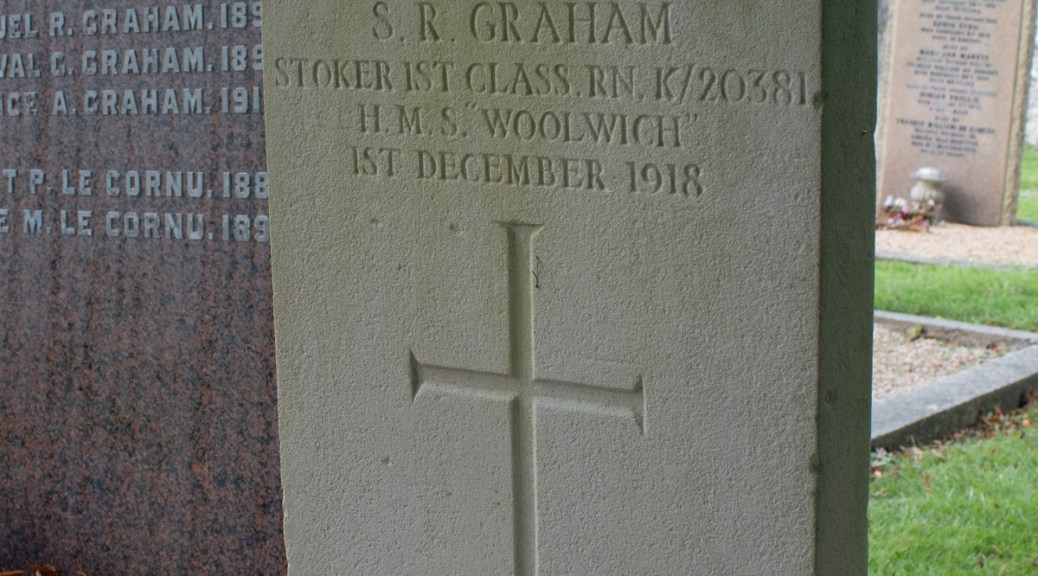
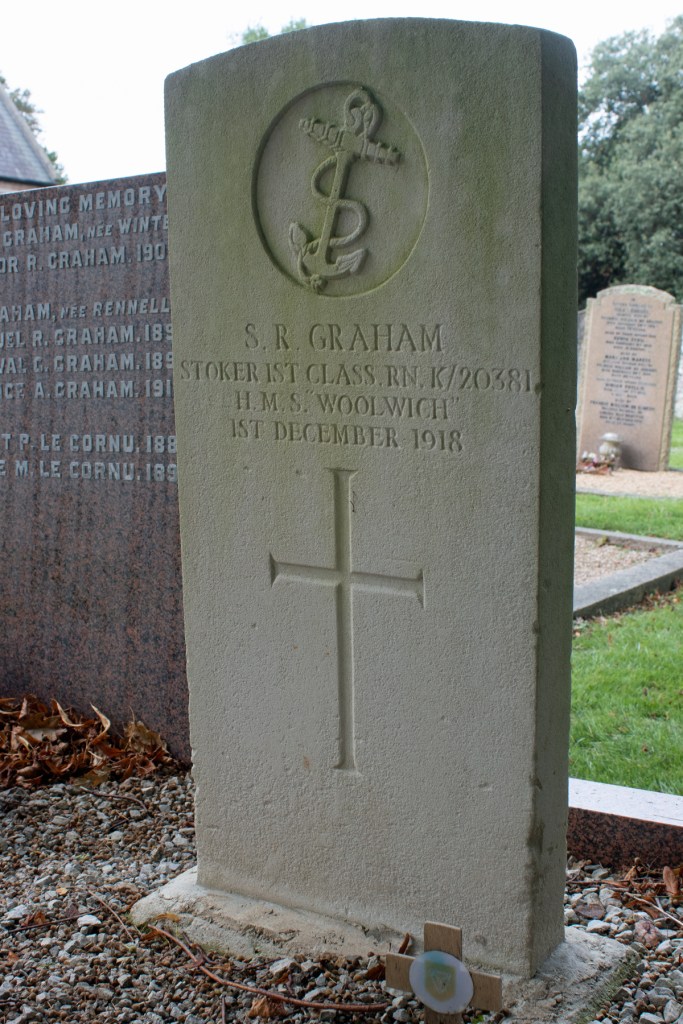
Samuel Robert Graham was born in Cork, Ireland, in 1895. He was one of six children to Samuel and Alice Graham. Samuel was a postman from Liverpool, while Alice had been born in St Helier, Jersey.
Information about Samuel Jr’s early life is scarce: the 1901 census found Alice and the children visiting her mother in Jersey, while he husband is missing from census records. The next return in 1911 recorded Samuel Sr, Alice and three of their children living in the Trinity area of Jersey, but Samuel Jr is missing.
On 9th September 1913, Samuel Jr enlisted in the Royal Navy. He had been working as a blacksmith, and sought a career at sea. His service records show that he was 5ft 5ins (1,65m) tall, with brown hair, hazel eyes and a fresh complexion.
Stoker 2nd Class Graham signed up for a period of twelve years’ service. Based at HMS Victory, the Royal Naval Dockyard in Portsmouth, Hampshire, his first formal posting was on board the cruiser HMS Bristol. He remained on board for nearly two years, and was promoted to Stoker 1st Class in the process.
During the First World War, Samuel served on two more ships and, by the end of the conflict, he was based at HMS Columbine, the naval base at Port Edgar on the Firth of Forth, Scotland. He fell ill while barracked there, and was admitted to the Royal Naval Hospital in nearby Queensferry. Whatever Stoker 1st Class Graham’s condition, it was to prove too severe: he passed away on 1st December 1918, at the age of 23 years old.
Samuel Robert Graham’s body was taken back to Jersey for burial. He was laid to rest in Trinity Churchyard, not far from where his family still lived.
Wilfred John le Breton was born in Trinity, Jersey, on 25th August 1888. The fifth of eleven children, his parents were Thomas and Mary Ann le Breton. Mary died in 1898, and the family pulled together to support each other. Thomas was a mason, and when he finished his schooling, Wilfred followed suit.
On 8th January 1916, Wilfred married Louisa Allo. The daughter of a labourer from St Lawrence, she was working as a domestic servant when the couple wed: Wilfred, by this point was employed as a plasterer.
At this point, Wilfred’s trail goes cold. War was raging across Europe, and he enlisted in the Royal Jersey Militia. Private le Breton remained stationed on the island, but his specific role is unclear.
The next document relating to Wilfred’s life is that of his passing. He died on 23rd November 1916, at the age of 28 years old. The cause of his demise is unclear.
Wilfred John le Breton was laid to rest in Trinity Churchyard, Jersey. His exact grave is unknown, but a Commonwealth War Graves Commission headstone commemorates his life.
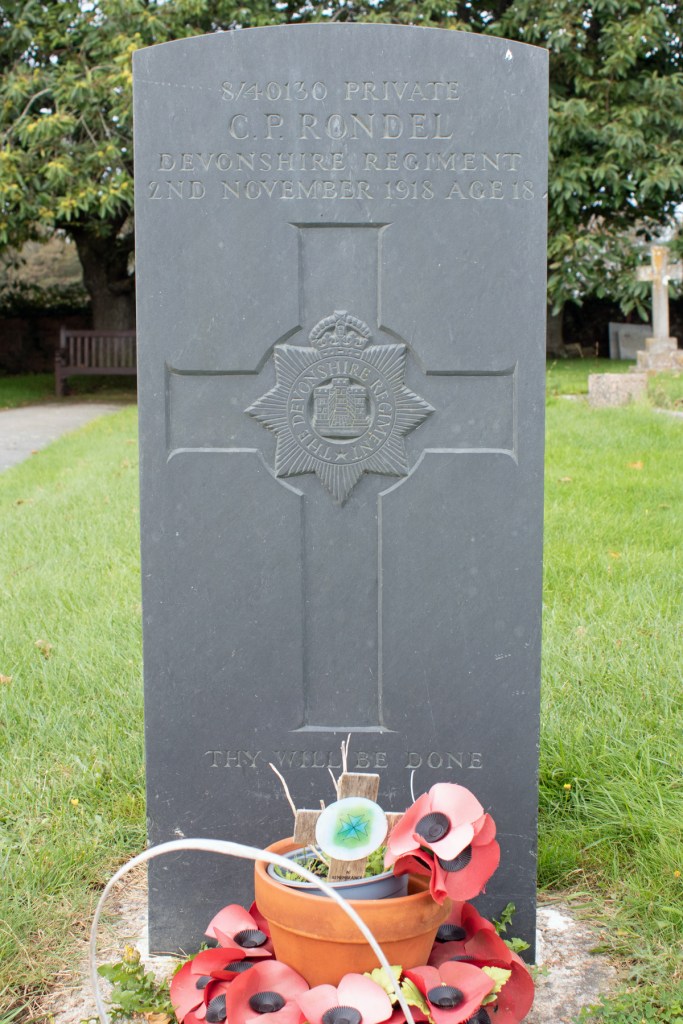
Clarence Philip Rondel was born in 1900 in St Lawrence, Jersey. One of twelve sibling, nine of whom survived childhood, his parents were John and Louisa Rondel. John was a farmer and by the time of the 1911 census, the family had moved to St John’s to take up a new post, a lot of the family pitching in to help out.
When war came to European shores, Clarence was keen to play his part. Too young to enlist when hostilities were declared, it was not until the spring of 1918 that he was able to join up. Private Rondel was assigned to the 53rd (Young Soldier) Battalion of the Devonshire Regiment.
Clarence was sent to England for training, and was based at the Rollestone Camp on Salisbury Plain, Wiltshire. The barracks were breeding grounds for illness and disease, and Private Rondel was not to be immune. He contracted pneumonia, and was admitted to the camp’s hospital. The condition got the better of him, and he passed away on 2nd November 1918: he was just 18 years of age.
The body of Clarence Philip Rondel was taken back to Jersey for burial. He was laid to rest in St John’s New Cemetery, not far from where his family still lived.
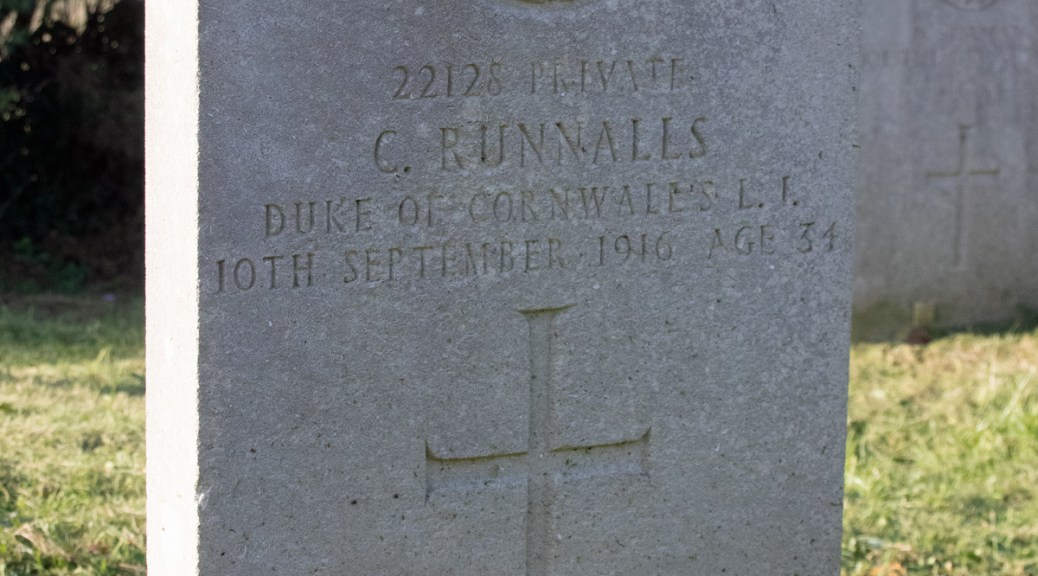
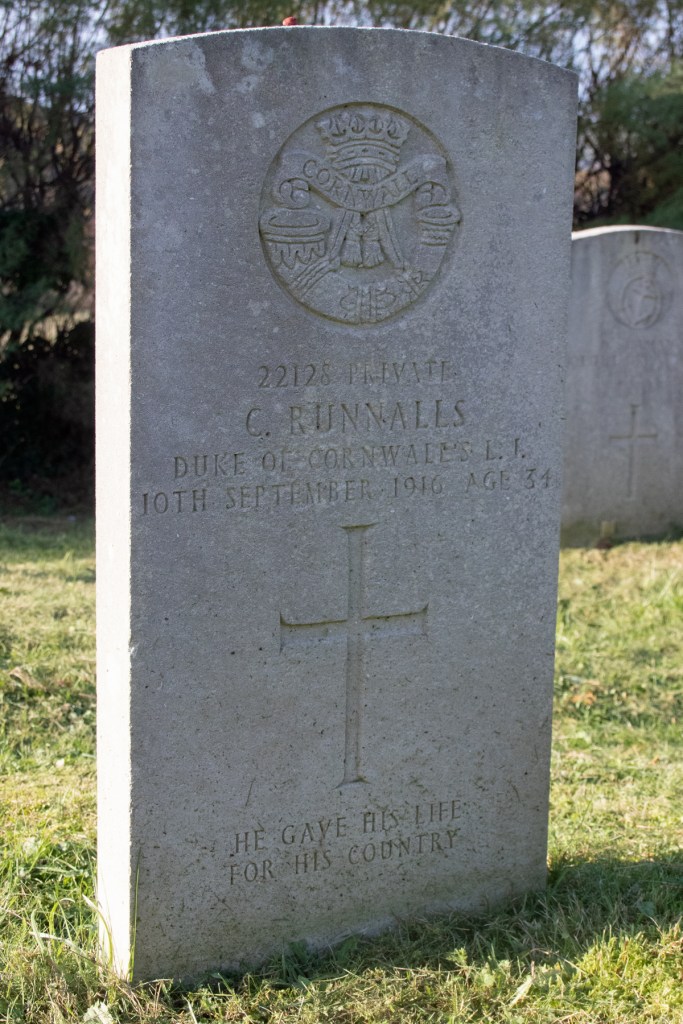
Christopher Runnalls was born in the village of Cardinham, Cornwall, in 1892. The fourth of five children, his parents were game keeper John Runnalls and his wife, Mary. Christopher – who was better known by the nickname Kitt – didn’t follow in his father’s footsteps, instead finding work as a stone mason when he finished his schooling.
Kitt moved to St Minver, near Wadebridge, for work and, in 1907, he married Susan Buse. The couple set up home in a small cottage in the village, sharing their home with Susan’s niece, Vivian.
When war was declared, Kitt stepped up to play his part. He enlisted in the Duke of Cornwall’s Light Infantry, and, as a Private, was assigned to the 10th (Service) Battalion, also known as the Cornwall Pioneers. He soon found himself on the Western Front and, in the summer of 1916, was caught up in the Somme.
Pte. Kitt Runnals [sic], of the DCLI, who was wounded in France on August 10th, and was brought to Leeds Great Northern Hospital, died at that institution on September 10th. The body was brought to St Minver and buried at [St Enodoc’s Church] on Thursday, the 14th.
[He] was one of the most respected men in the parish. He was a mason by trade. When war broke out he thought it his duty to join up. He was a member of the United Methodist Church. He leaves a widow but no family.
Newquay Express and Cornwall County Chronicle: Friday 22nd September 1916
Christopher ‘Kitt’ Runnalls was 34 years old when he passed. He lies at rest in the peaceful landscape of St Enodoc’s Church, Cornwall.
John Leslie Mably was born on 21st May 1899, the only son to Elizabeth Janie Mably. Elizabeth lived with her widowed mother and two older brothers, in the Cornish parish of St Minver.
There is scant information available for John’s short life. The 1911 census showed that he was still at school, and when war broke out, he enlisted in the Royal Engineers, although the date for this happened is unclear. Sapper Mably was assigned to the 69th Division Signal Company, but records do not confirm whether he served overseas or on home soil.
At some point later in the conflict, John was in Yorkshire, as he was admitted to the general hospital in Sheffield. Again, details are sketchy, and it is not possible to identify if he was based in the area, or medically evacuated there from overseas. Either way, it was in the hospital that he breathed his last, passing away on 15th August 1918, at the age of just 19 years old.
John Leslie Mably’s body was taken back to Cornwall for burial. He was laid to rest in the picturesque setting of St Michael’s Churchyard in the village of Rock.
William James Profitt was born on 20th August 1894 in Collingwood, Victoria, Australia. The oldest of ten children, his parents were Cornish-born Francis Profit and his Australian wife Mary.
Little information is available about William’s early life. When he finished his schooling, he found work as a salesman, and this is the work he was doing when war was declared in Europe.
William felt duty bound to serve his King and Empire, and, on 5th July 1915, he enlisted in the Australian Imperial Force. His service records confirm that he was just 5ft 2.5ins (1.59m) tall, weighing 8st 4lbs (52.6kg). He was noted as having cark brown hair, blue eyes and a fresh complexion: he had a scar on his left cheek.
After initial training, Private Profitt arrived in Alexandria, Egypt. He was assigned to the 23rd Battalion of the Australian Infantry and, by 30th March 1916, he was in France. William’s unit was one of the many to become entrenched at the Somme, having been evacuated from Gallipoli just weeks before he had arrived in Europe.
On 2nd August Private Profitt was admitted to a camp hospital in Boulogne with a sprained ankle. The medical report noted the injury as trivial, having occurred when, on ‘being relieved from trenches [he] slipped and fell into an old German dugout.’ By 21st August he was back with his unit, now based in Etaples.
Just a week later, William was sent to a casualty clearing station in Rouen, having been shot in his right elbow. Less trivial an injury this time round, he was medically evacuated to Britain for treatment, and was admitted to the Cambridge Military Hospital in Aldershot, Hampshire.
Private Profitt’s injury should not have been a life-threatening one, but septicaemia set in. His condition worsened, and he passed away on 25th October 1916. He was just 22 years of age.
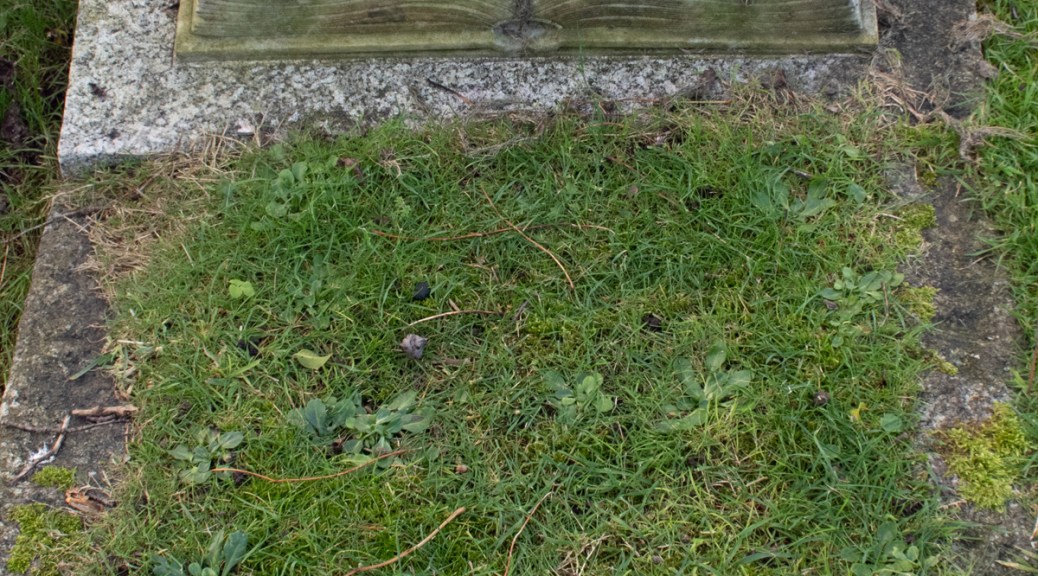
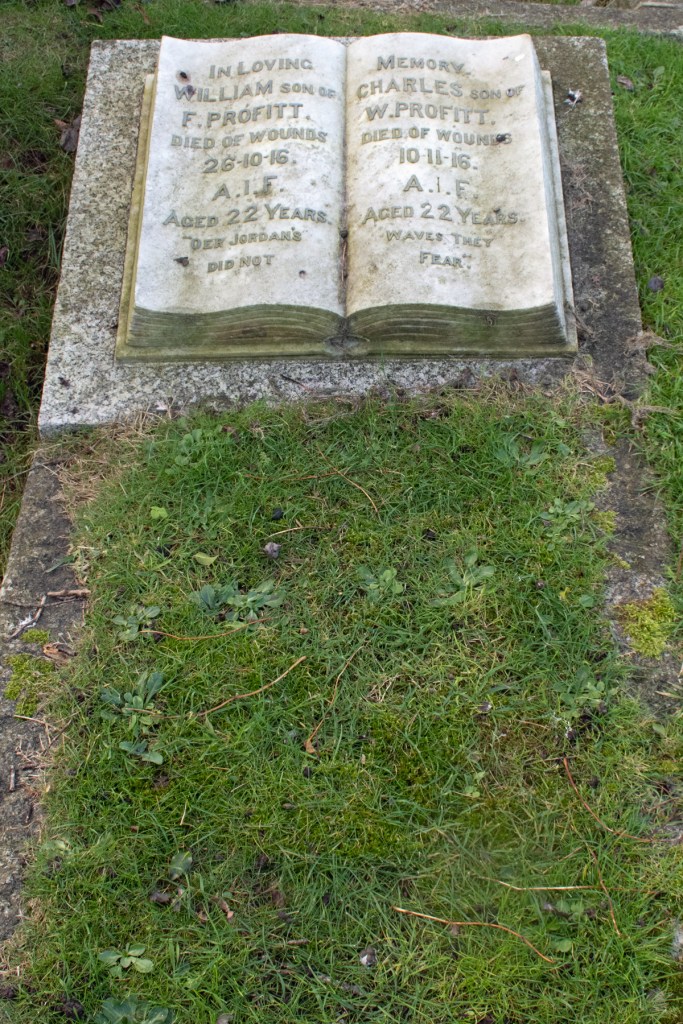
With William James Profitt’s family more than 10,000 miles (17,000km) away, it was not possible to him to be buried at home. Instead, his body was taken to the peaceful and picturesque graveyard of St Michael’s Church in Rock, Cornwall, close to where his father’s family still lived.
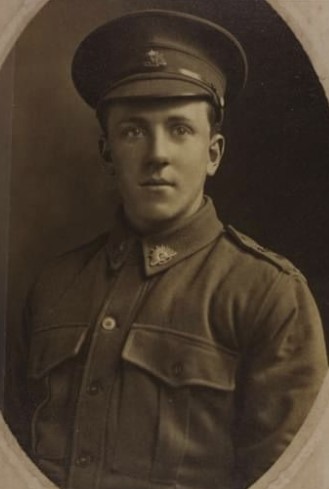
Private William Profitt (from findagrave.com)
William’s grave shares a dedication with Charles Profitt, who died just a fortnight after him.
John Walter Charles Profitt – better known as Charles – was born in the summer of 1894 Geelong, Victoria, Australia. The oldest of three sons to William and Harriet Profitt, it is likely that his father was William’s uncle, and that the two siblings had both travelled to Australia to earn their fortunes.
Working as a teacher at the time, Charles enlisted just days after his cousin, joining the 6th Field Ambulance unit. His service records show that he had dark brown hair, grey eyes and a fresh complexion, no dissimilar to William. Standing 5ft 8ins (1.73m) tall and weighing 10st 6lbs (66.2kg), it is clear that his side of the family had markedly different genes.
Private Profitt arrived in France on 27th March 1916, and his dedication to the role showed when he was promoted to the rank of Lance Corporal in August.
On 9th November he was badly wounded while carrying out his duties, receiving a severe gun shot wound to his abdomen. He was admitted to the 1st Anzac Medical Station, but died of his injuries just two days later. He was just 22 years of age.
Lance Corporal Charles Profitt was laid to rest in Heilly Station Cemetery to the south of Méricourt-l’Abbé. He is commemorated with his cousin, William, in St Michael’s Church, Rock.
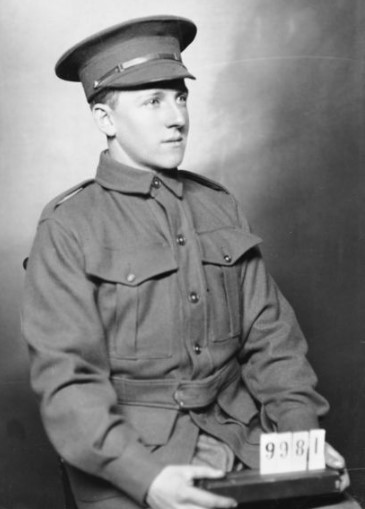
Lance Corporal Charles Profitt (from findagrave.com)
Angus MacIver was born in 1887 in the isolated hamlet of Geshader (Geisiadar), on the Isle of Lewis, Scotland. His parents were Murdo and Marion MacIver, and he was one of seven children.
Detail of Angus’ early life are a challenge to uncover. It would seem that he worked with boats when he completed whatever schooling he undertook. Given Geshader’s proximity to the coast, it is likely that Murdo was a fisherman, and that his three sons – Angus included – followed suit.
By the time war broke out in 1914, Angus had joined the Canadian Merchant Navy. He held the rank of Sailor: records suggest that he would have been an Able Seaman, had he been in the Royal Navy.
In the spring of 1918, Sailor MacIver was serving on board the SS Tagona, a Canadian steamer, ferrying goods across the Atlantic. The ship was en route for Glasgow, having sailed from Bilbao, Spain, and, on 16th May she was passing close to the North Cornish coast. Five miles (8km) from Trevose Head, Tagona was torpedoed by the German submarine U-55, and sank. Eight crew members, including Angus, drowned. He was 31 years of age.
The body of Sailor Angus McIver washed ashore in the Camel Estuary: the remains were identifiable, but his family were unable to bring him back to Lewis. Instead, he was laid to rest in the peaceful graveyard of St Menefreda’s Church in St Minver, Cornwall.
Richard Ezra Baron White was born in the autumn of 1886 in the Cornish village of St Minver. The third of four children, his parents were Joseph and Zillah White. Joseph was a ship’s carpenter by trade, and Richard served an apprenticeship as a woodworker. By the time of the 1911 census, however, the Whites were working as farmers on the outskirts of the village.
When war was declared, Richard stepped up to serve King and Empire. It is unclear when he enlisted, but he joined the Gloucestershire Regiment, and was attached to the 3rd (Reserve) Battalion. Private White was based in Kent during the conflict, his unit being attached to the Thames and Medway Garrison.
Richard survived the conflict, but the winter of 1918/19 was to prove his undoing. He contracted pneumonia, and was admitted to the military hospital in Aylesford. The condition was to get the better of him: he passed away on 20th February 1919, at the age of 33 years.
The body of Richard Ezra Baron White was taken back to Cornwall for burial. He was laid to rest in the peaceful graveyard of St Menefreda’s Church in his home village, St Minver.








 Death and Service