Sidney Edgar Crabb was born in the autumn of 1898 in the Dorset village of Chedington. One of ten children, his parents were shepherd-turned-farm labourer John Crabb and his wife, Mary.
Little information is available about young Sidney’s life. He was still at school when the 1911 census was taken, and was too young to enlist when war was declared in the summer of 1914. He enlisted in the Dorsetshire Regiment no earlier than October 1916, and was sent to Warminster for training.
The only other record for Private Crabb confirms his passing. He died from bronchial pneumonia while in hospital near his army camp in Warminster, Wiltshire, on 3rd April 1917. He was just 18 years of age.
Sidney Edgar Crabb’s body was taken back to Dorset for burial. He was laid to rest in the graveyard of St Mary’s Church, in his home village of Halstock. While only five of his siblings survived childhood, Sidney was the only one to pass away as a result of the conflict.
Edward Victor Davies was born in the Weston area of Bath, Somerset, in the summer of 1897. The second of four children, and the only boy, his parents were Walter and Emily Davies.
Walter was a park keeper who died when Edward was just 9 years old. By the time of the 1911 census, Emily was working as a caretaker for a solicitor’s office, while her sone was a boarding student at the Duke of York’s School in Guston, Kent. This army school had more than 500 students, with a staff of 100 to train them. It is unclear whether Edward went voluntarily, or whether he was sent there by his mother’s employers because he was fatherless.
War came to Europe in the summer of 1914, and Edward stepped up to play his part. Unfortunately, his service records have been lost to time, so it is unclear whether he went straight into the army after finishing his education. However, given that he held the rank of Serjeant by the end of the conflict, it seems likely that his military career began before the start of the First World War.
Edward – who was better known as Ted – joined the Wiltshire Regiment, and was assigned to the 2nd Battalion. His unit spent time on the Western Front, but there is no evidence whether or not he served overseas. He survived the war, but subsequently fell ill, as so many servicemen did:
DAVIES – March 28th, Sergeant Edward Victor (Ted) Davies, 2nd Wiltshire Regiment, at the Royal Military Hospital, of pneumonia, following influenza, aged 22 years.
[Bath Chronicle and Weekly Gazette – Saturday 03 April 1920]
Edward Victor Davies was laid to rest in the sweeping grounds of Bath’s Locksbrook Cemetery, not far from where he had grown up.
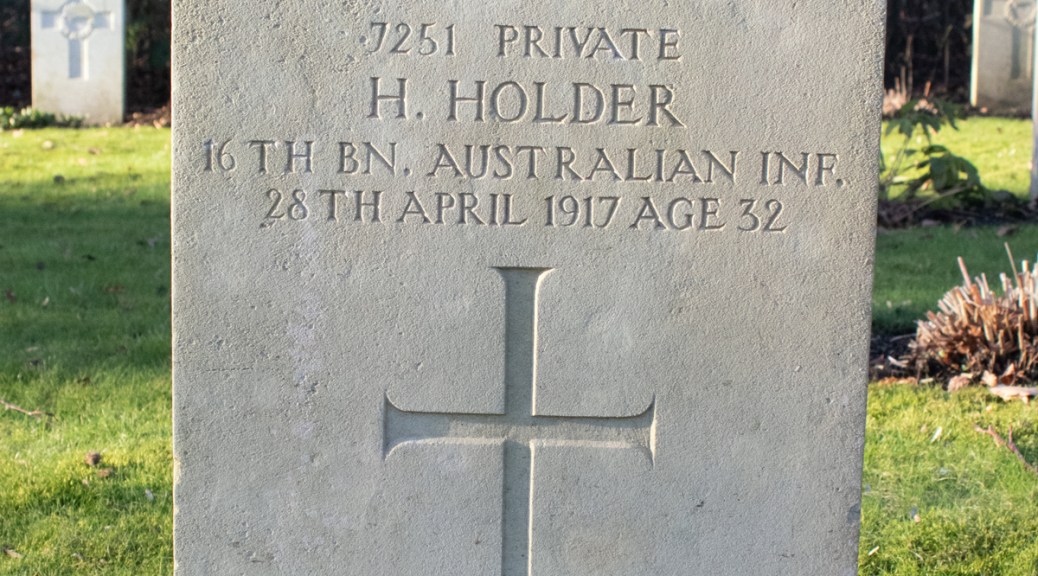
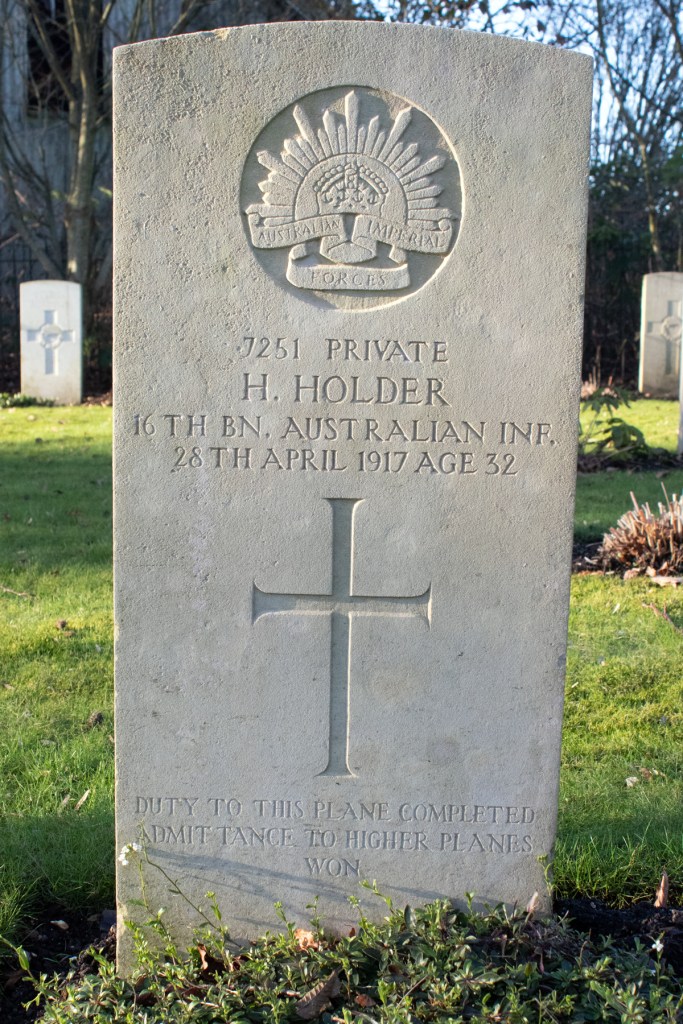
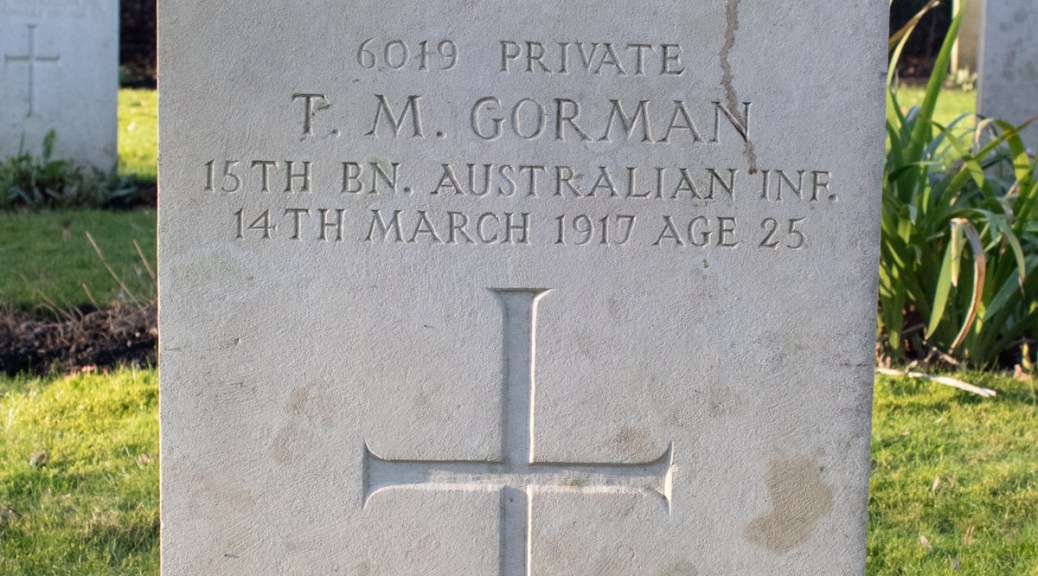
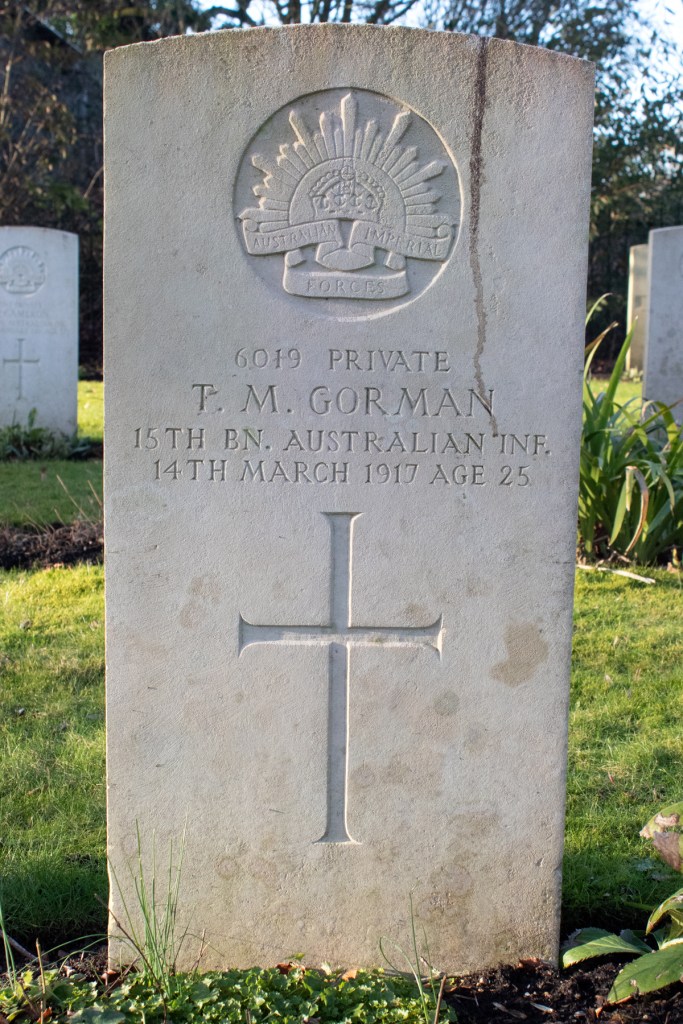
John Albert Wetzlar was born in Bendigo, Victoria, Australia, in the spring of 1895. One of four children, his parents were Ernest and Annie Wetzlar.
Little information about John’s life is available, and most of the detail that can be pieced together comes from his First World War service records. These confirm that he was working as a clerk when he enlisted on 14th July 1915. John’s medical record shows that he was 5ft 4.5ins (1.63m) and weighed 8st 5lbs (53kg). He had brown hair, blue eyes and a fresh complexion.
Private Wetzlar set sail for Europe on 8th February 1916, arriving with his unit in Alexandria, Egypt, six weeks later and landing in Marseille, France, on 31st March. Attached to the 23rd Battalion of the Australian Infantry, by the end of June, he found himself on the front line.
On 22nd August 1916, John’s unit was caught up in fighting, and he was wounded by shrapnel in his right leg. He was admitted to the 4th Australian Field Ambulance unit, before being transferred to the No 1. Canadian General Hospital in Etaples. His injuries required more care, however, and he was medically evacuated to Britain, and was sent to the 2nd General Hospital in Manchester.
Private Wetzlar spent the next six months recuperating, only re-joining his unit back in France on 10th March 1917. Back on the Western Front, he was promoted to Lance Corporal on 9th June, and to full Corporal four months later.
In January 1918, John was transferred back to Britain. Details are sketchy, but it may be that his experience was used to help train new recruits, as he was billeted at Tidworth Camp in Wiltshire. He remained on British soil until May, when he was sent to the Western Front for a third time.
Corporal Wetzlar’s time in France was to be fated. On 1st September 1918, John was wounded a second time, when he received a gun shot injury to his right leg once more. Medically evacuated back to Britain, he was admitted to Bath War Hospital in Somerset. The injury was severe enough to warrant an operation, and the damaged limb was amputated.
During his recovery, Corporal Wetzlar contracted influenza and pneumonia and, tragically, given what he had been through, these were to prove fatal. John died on 23rd October 1918: he was 22 years of age.
Thousands of miles from the home he had left nearly three years before, John Albert Wetzlar was laid to rest in the military section of Bath’s sweeping Locksbrook Cemetery, alongside other from his homeland.
Details of Fred Maynard’s early life are a challenge to piece together. His First World War service records give his age as 44 years old when he enlisted in September 1914, and confirm his place of birth as Melksham, Wiltshire.
A newspaper report of his funeral gives the name of three brothers – Charles, Frank and Arthur – while only one census return, from 1881, provides a potential match for the family. This suggests Fred’s parents were iron fitter Alfred Maynard and his wife, Deborah, and gives the family’s address as Waterworks Road in Trowbridge.
Fred joined the army in the autumn of 1888. Initially assigned to the Gloucestershire Regiment, he had transferred to the Wiltshire Regiment by the following spring. Private Maynard showed a commitment to duty: in December 1890 he was promoted to Lance Corporal, rising to Corporal in the summer of 1893.
Fred was stood down to reserve status after his seven years’ active duty, but was recalled to the army in December 1899, when war broke out in South Africa. Promoted to Serjeant, he was sent to fight in the Boer War, and was mentioned in dispatches on 2nd April 1901 for special and meritorious service in South Africa. He was stood back down to reserve status in October 1901.
On 21st November 1895, Fred had married Louisa Card. The couple set up home in Trowbridge, but soon moved to London. They went on to have six children: Ernest, Nora and Leslie, who were all born in the London; and Arthur, Martha and Stuart, who were born in Cardiff, the family having moved to Wales by 1910.
The army was not finished with Fred, however, and, within weeks of war breaking out in the summer of 1914, he was called back into service. Given the rank of Serjeant again, he was attached to the South Wales Borderers. Fred was 44 years of age by this point, his service records confirming that he stood 5ft 8ins (1.73m) tall, weighed 164lbs (74.4kg) and had brown hair and hazel eyes.
Attached to one of the regiment’s depots, it seems unlikely that Fred saw service overseas this time around. He was discharged from the army on 1st September 1916 and this seems to have been on medical grounds. Later documents suggest that Serjeant Maynard had been diagnosed with carcinoma of the pylorus, or stomach cancer.
Fred returned to Cardiff, but his time back home was to be short. He was admitted to the Lansdown Road Military Hospital, and passed away on 23rd November 1916. He was 46 years of age.
It seems that Fred’s brother’s had some sway in his funeral. Instead of being laid to rest in Cardiff, where Louisa and the children were living, he was, instead, buried in the Locksbrook Cemetery, Bath, Somerset. His sibling Charles, who was a sergeant in Bath City Police, lived in the city, as did another brother, Frank.
Fred’s headstone also commemorates his and Louisa’s son, Leslie. He had joined the army in the 1920s and, in the summer of 1943, was in Yorkshire, undergoing officer training.
The death of an officer cadet through the accidental discharge of a rifle whose bolt had jammed was described at an inquest…
Captain WH Price said he was in charge of an exercise on the moors which involved the used of small arms and the firing of live ammunition. A squad of cadets lay on the ground in front of a trench firing over a range. All finished firing except Cadet Frank Holroyd, who said his bolt had hammed while firing a second round. [Price] told him to release the bolt by knocking the cocking piece up and back.
This attempt failed, and he told Holroyd to get back into the trench, turn the rifle magazine upwards, place the butt on the side of the trench, and kick the bolt down with his foot. While Holroyd was doing this he noticed Maynard standing in the trench about 4ft away from Holroyd and on his right-hand side.
Captain Price said he saw the rifle was pointing down the range when Holroyd kicked the butt. The cartridge suddenly exploded and Maynard dropped into the trench, shot in the head, and was dead when they reached him.
[Bradford Observer: Saturday 19th June 1943]
Officer Cadet Leslie Maynard was 36 years of age when he was killed. His body was taken back to Somerset for burial: he was laid to rest in the same grave as Fred, father and son reunited after 27 years.
Louisa remained somewhat elusive as time wore on. Fred’s military records confirm that she had moved from Cardiff to the Isle of Wight by 1922. By the time of her son’s death, she was living in Sidcup, Kent.
William Cooper was born in Mobberley, Cheshire, in 1894. Little information is available about his family life, but records suggest that his father was called John.
The first document that can be attributed to William is the 1911 census. This recorded him as living in Newton Hall Lane in Mobberley, with his widowed aunt and two cousins.
William’s trail goes cold again at this point, and can be picked up again when war broke out in the summer of 1914. He enlisted early on, joining the Cheshire Regiment. Attached to the 10th (Service) Battalion, his unit moved to Codford on the edge of Salisbury Plain, Wiltshire, by September.
William Cooper… was taken suddenly ill while on parade on Sunday morning at 8.30, and dropping out of the lines, was carried to the Army Medical Corps tent in the Chitterne Road, but on arrival there death had already taken place.
Lieutenant Spraight, of the Army Medical Corps, stated having examined the body of deceased, want he came to the conclusion that death was due to asphyxia and an epileptic fit.
[Devizes and Wilts Advertiser: Thursday 1st October 1914]
Private William Cooper died on 27th September 1914: he was just 20 years old when he died. It seems that his family were unable to cover the cost of the funeral: he was laid to rest in the peaceful graveyard of St Mary’s Church, Codford, his headstone being erected by his comrades in the battalion.
Much of George Fenn’s life is destined to be lost to time. Born in Bristol, Gloucestershire, in the summer of 1878, details of his parents are unknown. His was a common name in the late Victorian period, and census returns from the time identify at least two men born in the area around the same time.
The first document that can be directly connected to George is the 1911 census. This recorded him living at 13 Tankards Close in Clifton, where he was working as a dock labourer. His is noted as having been married to Minnie since 1902. The couple had one child, a son called William who was six years old.
When war broke out, George was quick to enlist. Full details of his service are lost, but he had certainly joined the Bedfordshire Regiment by the end of 1914. Attached to the 7th (Service) Battalion, by the start of the following year, his unit had moved to Salisbury Plain in anticipation of being sent to the Western Front.
George seems to have made his mark in the army, and he was soon promoted to the rank of Lance Corporal. In the spring of 1915, he contracted pneumonia, however, and was admitted to the military hospital in Codford, Wiltshire, close to where his unit was based.
Sadly, the condition was to prove Lance Corporal Fenn’s undoing: he passed away on 1st June 1915, at the age of 36 years of age.
George Fenn was laid to rest in the peaceful churchyard of St Mary’s, Codford, not far from where he had passed away.
George’s entry on the Army Register of Soldiers’ Effects and his Pension Ledger card shed a little more light on the family he had left behind. The first divides his belongings between his widow, Minnie, and the guardian of his child, Mrs Sarah Clarke. George’s pension ledger gives Sarah’s address as 14 Tankard’s Close, Bristol, and confirms that he was, in fact, separated from Minnie when he passed.
Alexander Coverdale Short was born in the Yorkshire village of Nafferton in the autumn of 1890. One of twelve children, his parents were labourer Benjamin Short and his wife, Emily.
Benjamin died in 1908, and the following year Emily remarried, to widow William Jefferson. He was a clerk for the council in neighbouring Driffield but, by the time of the 1911 census, the family had moved to Sculcoates, near Kingston-upon-Hull, where he had taken up employment at an auctioneer’s.
The 1911 census found the extended family living at 44 Hopwood Street in Hull, a seven-room property. William and Emily headed the household, sharing the house with William’s son Alfred, Alexander and four of his sisters, Alexander’s nephew, two boarders and two visitors – another of Alexander’s sisters and her son.
Alexander was employed as a bricklayer’s apprentice by this point, but at some point found alternative employment working for the North Eastern Railway Company. War was on the horizon, however, and he had enlisted in the Northumberland Fusiliers by the spring of 1915.
Private Short was attached to the 17th (Service) Battalion (North Eastern Railway Pioneers) and, by August 1915, his unit had moved to Codford, Wiltshire, on the edge of Salisbury Plain.
Knowing a trip across the English Channel was likely imminent, before he left Yorkshire, Alexander married Dora Harrison. The daughter of a butcher, she had been born and raised in Sculcoates.
Alexander’s time in the army was not to be a long one. Within a matter of months, his health began to deteriorate, and on 25th October 1915, he died of heart failure at Codford Military Hospital. He was just 24 years of age.
Finances appear to have prevented Private Short’s family from bringing their son and husband home. Instead, Alexander Coverdale Short was laid to rest in the peaceful St Mary’s Churchyard in Codford.
In a corner of the peaceful St Mary’s Churchyard in Codford, Wiltshire, is a headstone dedicated to L/17062 Gunner K Marsh. He served in the Royal Field Artillery, and passed away on 5th January 1916.
Gunner Marsh’s entry in the Army Register of Soldier’s Effects gives his first name – Kei – and that of his widow – Edith. The parish record for his funeral giving an age of 34 years old, and from here it is possible to piece together some of his family’s past.
Kei was born in Burnley, Lancashire, in the autumn of 1882, and was the son of engineer Alfred Marsh. He and Edith married in 1907, and were living with her widowed mother, Sarah, and their three children, John, Sarah and Edith, by the time of the 1911 census. The house – 30 Thorn Street in Burnley – was crowded. Along with the Marshes, Sarah also had her other six children living with her: a total of eight adults and four children sharing four rooms in the small terraced house.
Kei was working as a miner by this point, but had enlisted in the Royal Field Artillery by the summer of 1915. He acted as a Gunner in the 32nd Division Ammunition Column, although it is unclear whether or not he spent any time overseas.
By the end of 1915, Gunner Marsh had been admitted to the military hospital in Codford. The cause of his admission is unclear, but it was to be one that he was to succumb to: he passed away on 5th January 1916. Kei lies at rest in the quiet Wiltshire churchyard.
In a quiet corner of St Mary’s Churchyard, Codford, Wiltshire, is a headstone dedicated to L/17006 Gunner W Smith of the Royal Field Artillery. His pension ledger confirms that he passed on 14th January 1916 from osteomyelitis, a bone infection, contracted whilst on active service.
The document gives Gunner Smith’s first name – Willie – and that of his widow, Ada, who lived at 157 Gisburne Road, Barnoldswick, Yorkshire. Their only child, Winifred, had been born on 22nd March 1914.
The couple’s marriage certificates are not available, while the 1911 census return shows at least three Willie Smiths in the Barnoldswick area. It is not possible, therefore, to uncover more of his family’s past.
Willie Smith had enlisted in the Royal Field Artillery by the summer of 1915. He acted as a Driver in the 32nd Division Ammunition Column, although it is unclear whether or not he spent any time overseas.
Gunner Smith was based on Salisbury Plain by the winter of 1915. He was admitted to the Military Hospital near Codford with the infection he had contracted, and succumbed to is on 14th January 1916. He was laid to rest in the peaceful country churchyard, the burial records confirming he was 26 years of age.
James McEwan was born towards the end of 1879 in Bury Lancashire. He was the older of two children to James and Mary McEwan. James Sr was a foundry worker, who died in the 1890s, leaving his widow to raise their two sons.
By the time of the 1901 census, all three members of the household were earning money: Mary was employed as a cotton card room hand in a mill; James was a wringing machine fitter, while his younger brother, Peter, was a printer’s apprentice.
The next census, in 1911, found James still living at home with his mother. He was now employed as a labourer in the local railway goods yard, and his maternal aunt, Annie, was living with them, working as a rover in the local mill.
When war broke out, James stepped up to serve his country. Full details are lost to time, but it is clear that he enlisted in the Lancashire Fusiliers, and was attached to the 4th/5th Battalion. This was a service and training unit, and Private McEwan did not spend any time overseas.
In the winter of 1915, James was based on Salisbury Plain, Wiltshire. While billeted there, he contracted bronchial pneumonia, and was admitted to a camp hospital. Sadly the condition was to prove too much for his body to bear, and he succumbed to it on 26th December 1915. He was 36 years of age.
It seems that Mary was unable to afford to bring her sone back to Lancashire. He was laid to rest in the peaceful St Mary’s Churchyard, in Codford, Wiltshire, not far from where he had breathed his last.