Tag Archives: 1916

Private William Hicks

Private William Hicks

William John Hicks was born in the village of Northlew, Devon, in the spring of 1886 and one of seven children to John and Sophia Hicks. Both of his parents were born in the village, and that was where John found employment as a farm labourer.

By the time of the 1901 census the family had moved to the southern side of Dartmoor, and were living in Wolborough, near Newton Abbot. William had left school, and was also employed, working as a grocer’s porter in the town.

In December 1908, William married Maud Alice Wotton, and the couple set up home near the town’s station. They went on to have a son, also called William, who was born the following year. By this point, William had found more secure employment, and was working as a wagoner for a flour mill.

War was approaching Europe, and when the time came, William joined up to play his part. He enlisted in the Army Veterinary Corps, and there is no doubt that his pre-war employment stood him in good stead for the role. There is little information about Private Hicks’ military service, but it is clear that he had joined up by March 1916, and, for some part at least, was based in Hampshire.

Sadly, the other other available information relating to Private Hicks is that confirming his passing. He died, of causes unknown, on 19th September 1916, in Aldershot, where he was billeted. He was 30 years old.

William John Hicks’ body was brought back to Devon for burial. He was laid to rest in the graveyard of St Mary’s Church in Woborough.

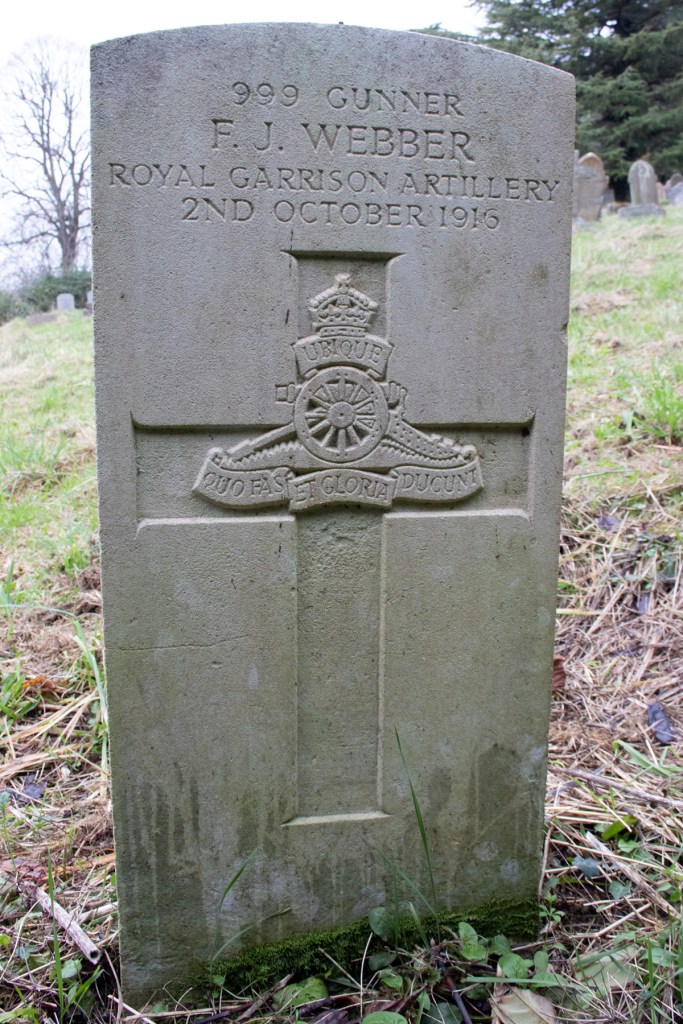
Gunner Frederick Webber

Gunner Frederick Webber

Frederick James Webber was born on 6th July 1889, and was one of nine children to Charles and Mary Webber. Charles was a machinist and wheel turner from Wolborough, near Newton Abbot in Devon, and it was in the village that Frederick and his siblings were born and raised.

The year 1902 was to prove tragic for the Webber family as Mary and two of Frederick’s siblings – Charles, who was 16, and Olive, who was 11 – all died. While there is nothing to confirm causes of death, or whether the three were related, there was a smallpox outbreak in Devon at the time, so it seems likely that the family were drawn into the tragedy.

Charles remarried three years later, to local widow Mary Harper; the couple would go on to have two children of their own. Frederick, by this point, seemed keen to make his own way in the world, and found work on the railways. The 1911 census records him as lodging with the Batten family in Penzance, Cornwall, where he was earning a living as a carriage cleaner.

On 4th September 1915, Frederick married Hannah Mary Annear (née Williams). She was nine years older than him, and was a widow with three children. The couple set up home in Redruth, Cornwall, and may have married as, with war raging across Europe, Frederick was on the verge of being called up.

Full details of Frederick’s military service are not available, but it is clear that he joined the Royal Garrison Artillery at some point in early 1916. Assigned to his adopted home county of Cornwall, he nevertheless needed training, and, for this, he was sent to the B Battery of the 1st Anti-Aircraft Brigade in the North East.

It was while here, that Gunner Webber contracted endocarditis. He was admitted to the Jeffery Hall Hospital in Sunderland, but the condition got the better of him, and he passed away on 2nd October 1916, aged just 26 years old.

Frederick James Webber was brought back to Devon for burial. He was laid to rest in graveyard of St Mary’s Church in Wolborough, where his father and family still lived.


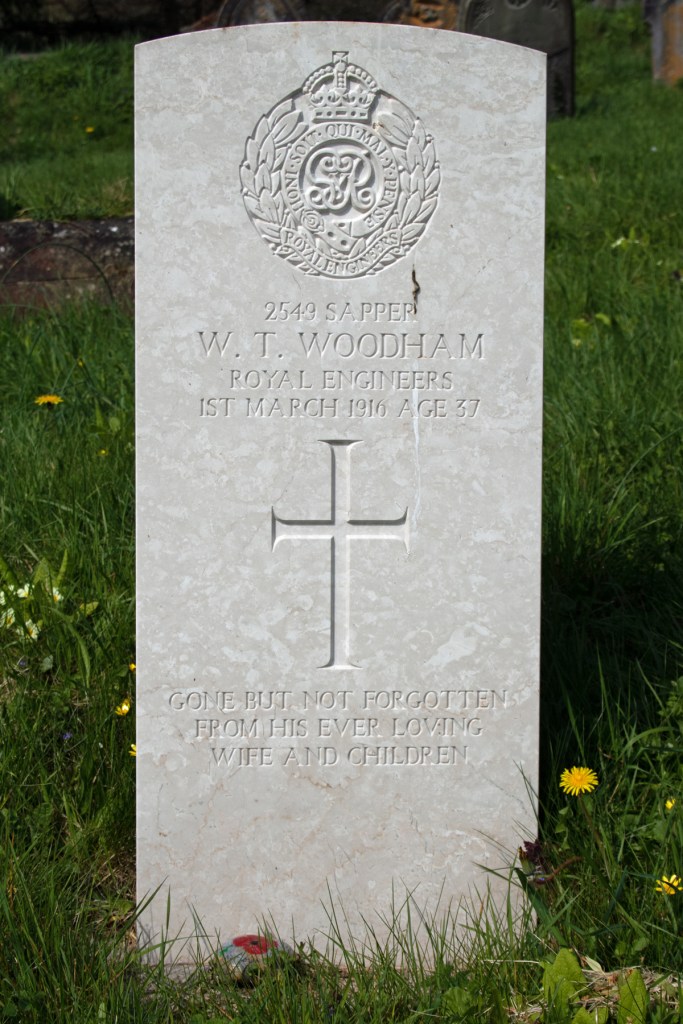
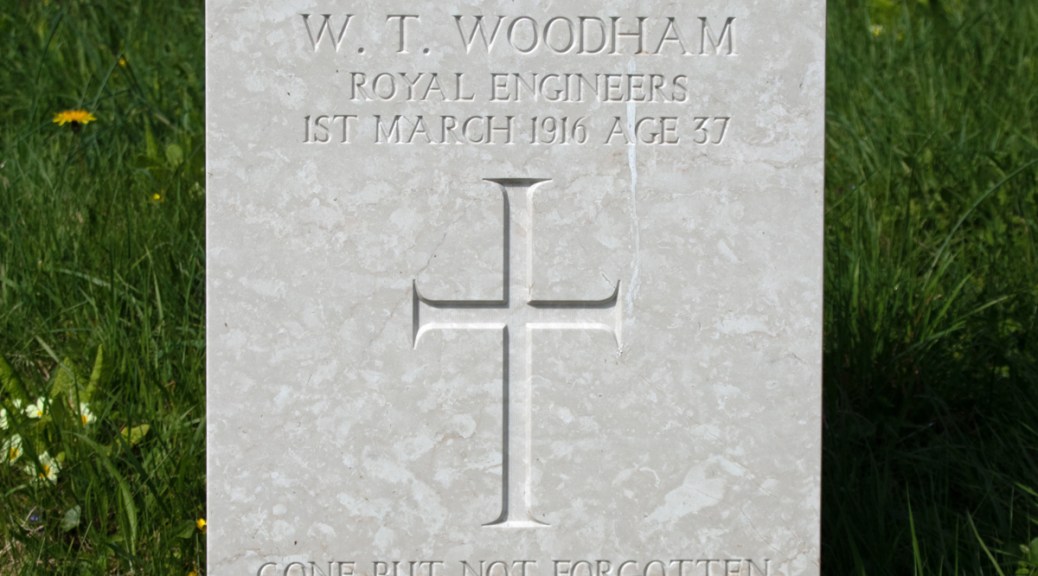
Sapper William Woodham

Sapper William Woodham

William Thomas Woodham was born at the end of 1877 in Peasedown St John, Somerset. One of four children, his parents were coal miner and pit worker William Thomas and his wife, Sarah. The young family quickly moved from Peasedown to nearby Radstock to set up home.

William Jr did not immediately follow his father to the mine: instead, when he left school, he found work as a cowherd for a local farm. By the time of the 1911 census, however, he was recorded as being a colliery stoker.

The following year, William married Matilda Gulliford. She was a local coal miner’s daughter: the couple went on to have three children, Gwendoline, Stanley and Irene.

In his spare time, William volunteered for the Somerset Light Infantry and, when war broke out, he was formally placed on reserve – mining was one of the reserved occupations. However, in June 1915, he transferred to the Royal Engineers, and was sent to the Military Barracks at Taunton for training.

Sapper Woodham was due to be sent to France in the spring of 1916, but started feeling unwell. He was admitted to the Taunton Military Hospital, suffering from pneumonia on 20th February, but his condition worsened. He passed away at the hospital on 1st March 1916, aged 38 years old.

William Thomas Woodham’s body was brought back to Radstock; he was laid to rest in the graveyard of the town’s St Nicholas’ Church.


Sapper William Woodham
(from britishnewspaperarchive.co.uk)

Rifleman Frederick Partridge

Rifleman Frederick Partridge

Frederick George Partridge was born on 26th May 1890 in Kingsteignton, Devon. He was one of ten children to clay cutter George Partridge and his wife, Anna. George passed away in 1903, but Frederick left school, and also found work as a cutter, helping to pay his way at home.

When was came to Europe, Frederick was keen to play his part. He enlisted on 18th November 1915, and was assigned to the King’s Royal Rifle Corps as a Rifleman. His service records show that he stood 5ft 9ins (1.75m) tall and weighed 145lbs (66kg). He was of good physical development, but had slightly flat feet.

After his initial training, Rifleman Partridge was sent to France, arriving in April 1916. His regiment soon found itself on the front line and, that summer, was firmly ensconced at the Somme. Sadly, Frederick was not to escape injury – he received a gun shot wound to his left thigh on 2nd September.

The wound was serious enough for him to be medically evacuated back to England for treatment. He was admitted to the Royal Victoria Hospital in Netley, near Southampton, but died of his injuries on 12th September 1916. He was just 26 years of age.

Frederick George Partridge was brought back to Devon for burial. He was laid to rest in the graveyard of St Michael’s Church in Kingsteignton.


Bombardier Harold Cornall

Bombardier Harold Cornall

Harold William Cornall was born on 16th August 1890 in Kingsteignton, Devon. He was the oldest of six children to William and Elizabeth Cornall. William worked as a carter and labourer for a tannery in the town, and, when he left school, this was where Harold also went for work.

In the autumn of 1912, Harold married Hilda Potter, from nearby Newton Abbot. The couple set up home and went on to have one child, a daughter called Winifred.

War broke out and, on 29th August 1914, Harold enlisted in the Royal Field Artillery. He was assigned to the A-Battery of the 90th (Howitzer) Brigade and was given the rank of Bombardier. He soon found himself in the thick of battle, as the brigade was sent to The Somme.

Bombardier Cornall was injured in the spine by some shrapnel, and medically evacuated to England in June 1916. Sadly, his injuries led to him becoming paralysed, and he passed away at the King George’s Hospital in London on 20th August 1916. He was just 26 years of age.

Harold William Cornall’s body was brought back to Devon; he was laid to rest in the graveyard of St Michael’s Church in his home town of Kingsteignton.


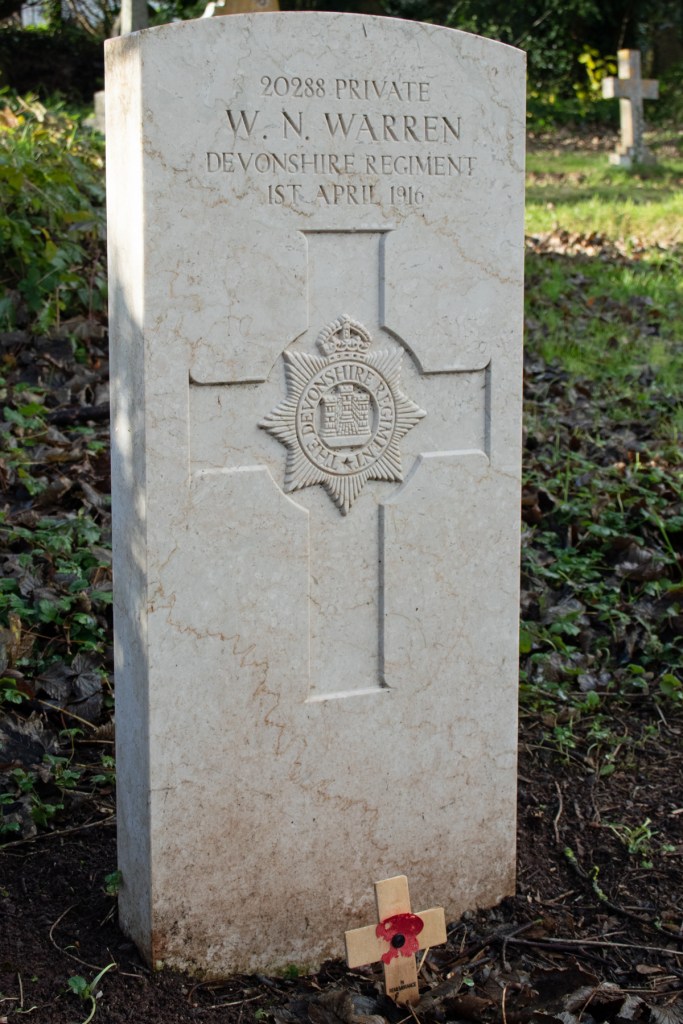
Private William Warren

Private William Warren

William Norrish Warren was born in Ashburton, Devon, on 24th April 1882, one of eight children to William and Irena Warren. William Sr worked as a woodsman and a farm labourer, and agriculture was a trade into which his son also went. There is a record that he found work as a railway porter, but this seems to have been only for a short while, and he soon resigned.

In the spring of 1915, William Jr married Olive Emmett, a carter’s daughter from the town. The couple went on to have a son, Alfred, who was born the following year.

War was on the horizon, however, and William enlisted, joining the 9th Battalion of the Devonshire Regiment by October 1915. He was given the role of Private, and, while full service details are not available, he definitely spent time abroad.

Private Warren was fighting on the Front in the spring of 1916, when, on 10th March, he was badly injured. He was medically evacuated to England and admitted to the Netley Hospital near Southampton for treatment. Sadly, his internal wounds proved too severe and he passed away from his injuries on 1st April 1916. He was just 33 years old.

William Norrish Warren’s body was brought back to Ashburton for burial. He was laid to rest in the graveyard of the town’s St Andrew’s Church.


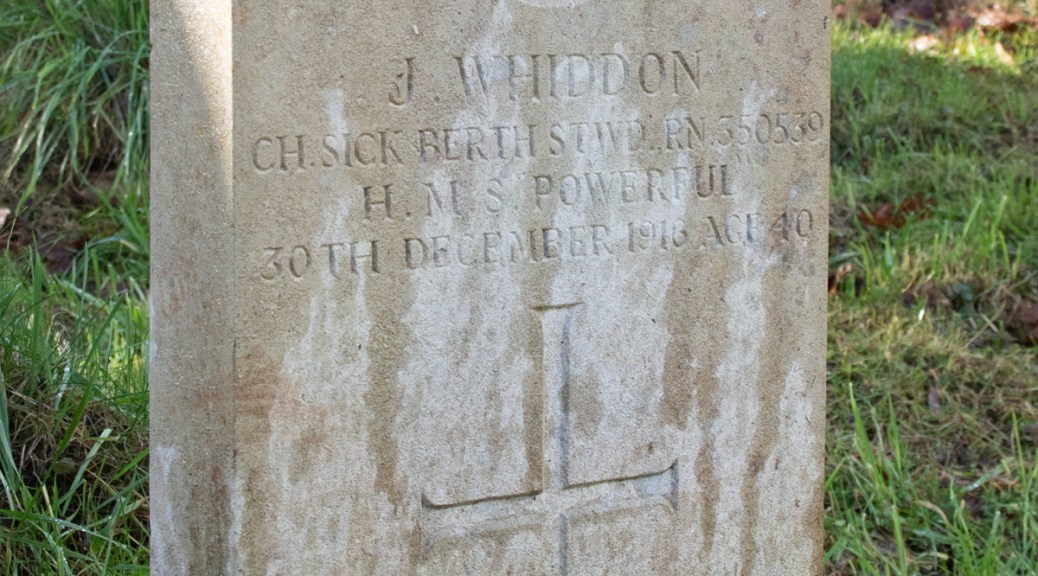
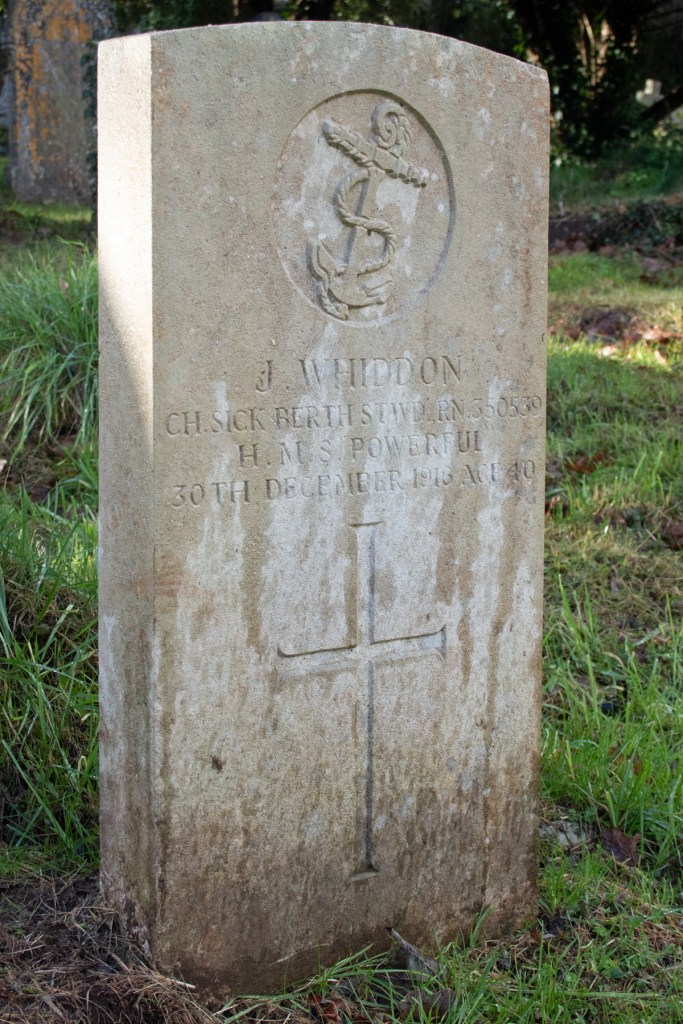
Chief Sick Berth Steward John Whiddon

Chief Sick Berth Steward John Whiddon

John Whiddon was born on 15th January 1876 in the Devon town of Ashburton and was one of seven children to John and Elizabeth Whiddon. John Sr was a general labourer, but when he left school, his son found work as a baker’s apprentice.

John was keen to better himself and so, at the age of 21, he enlisted in the Royal Navy. His service records confirm that he enlisted on 21st July 1897 for a period of 12 years. He was recorded as standing 5ft 6in (1.67m) tall, with light brown hair, blue eyes and a fair complexion.

John’s role was as a Sick Berth Assistant and, over the next few years he had a number of different postings. While some were on sea-going vessels, the majority of his time on shore. He served at the Haslar Hospital in Portsmouth, Plymouth Hospital and at HMS Vivid, the Royal Naval Dockyard in Devonport.

Sick Berth Assistant Whiddon certainly worked hard, though, and this paid off. In 1902 he was promoted to Sick Berth Steward and, in 1909, when his contract came to an end, he volunteered to stay on. Over the next seven years, John continued to do his duty, both on shore and at sea, and was again promoted, this time to Chief Sick Berth Steward.

At some point John married a woman called Catherine; sadly there is no information about her, other than that she had passed away by 1916.

In the autumn of 1916, John was serving on board HMS Powerful, when he contracted pneumonia. He was brought ashore and admitted to the Royal Naval Hospital in Plymouth, but sadly passed away from the illness on 30th December 1916. He was 40 years of age.

John Whiddon was brought back to Ashburton for burial. He lies at rest in the graveyard of St Andrew’s Church there.


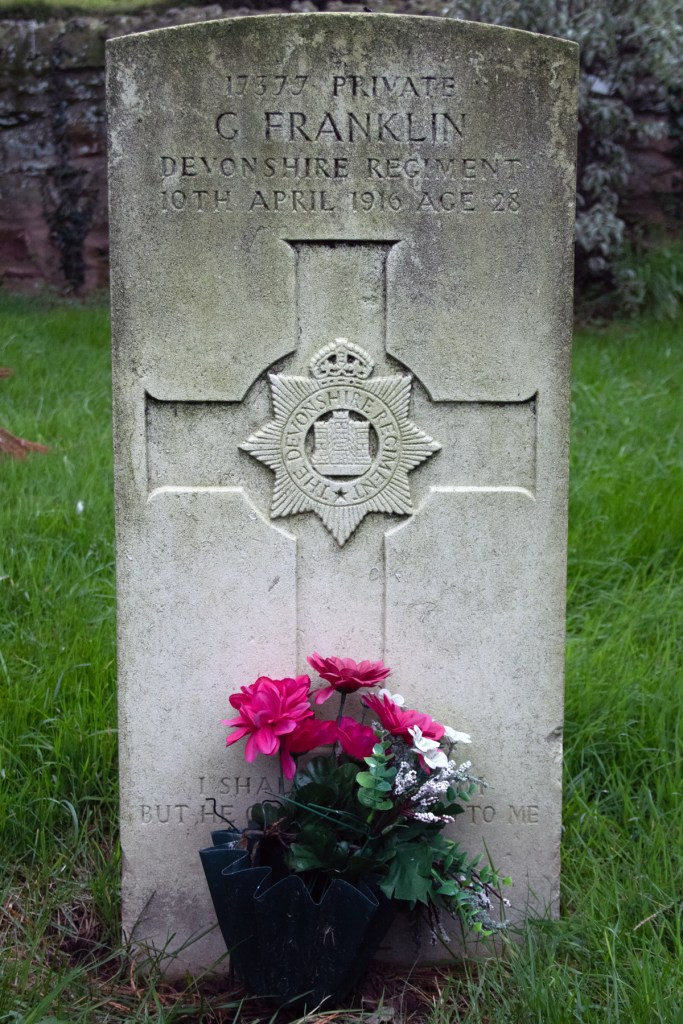
Private George Franklin

Private George Franklin

George Franklin was born in the autumn of 1887, one of eleven children to James and Eliza. James was a farm labourer from North Newton, Somerset, and this is where the young family were raised. Given the rural location, it is no surprise that, when he left school, George followed his father and became an agricultural labourer.

When war came to Europe, George was keen to play his part. Full details of his military service are not available, but he enlisted in the Devonshire Regiment as a Private. Little information is available about his role or where he was posted, and, sadly, the next set of documents relate to his passing.

Private George Franklin died on 10th April 1916, having been suffering from cerebro-spinal fever – meningitis. He was just 28 years of age. He was laid to rest in the graveyard of his village church, St Peter’s in North Newton.


Private Roderick Smith

Private Roderick Smith

Roderick Morgan Smith was born on 14th April 1896 in Upton Park, Essex. One of twin sons to Francis and Frances Smith, he had three siblings altogether. Francis is absent from the two census returns on which Roderick features, but the documents confirm that Frances – who was a certified teacher – was married, so he may have been elsewhere at the time.

By the time of the 1901 census, the family had moved from East London to Monmouthshire, where Roderick’s mother was teaching at the school in the village of Wonastow. Ten years later, they had moved across the River Severn to Withycombe in Somerset, not far from where Frances had been born. Other records show that they subsequently moved to Bath, then to Weston-super-Mare.

When war broke out, Roderick was keen to join up. He enlisted as a Private in the Durham Light Infantry, and was assigned to the 7th Battalion. He was sent to France in the spring of 1915, and would have been involved with his regiment at Ypres and the Somme.

It was at the Somme that Private Smith was gassed and wounded. Full details are not recorded, but they were enough for him to be medically evacuated to England. He was admitted to the military hospital in Taunton, but passed away on 7th May 1916. He was just 20 years of age.

Roderick Morgan Smith was brought to Weston-super-Mare and laid to rest in the town’s Milton Road Cemetery.


Roderick’s twin, Frank Morgan Smith, also played his part in the First World War. He enlisted in the Bedfordshire Regiment as a Private, and was assigned to the 7th Battalion. He also found himself embroiled at the Somme, and he too was wounded.

Sadly, Frank’s wounds were too severe for him to be repatriated to England; he died in a French hospital on 3rd December 1916, also aged 20 years old. He was laid to rest at the Wimeraux Cemetery.


Private John Payne

Private John Payne

John Spencer Payne’s life is a bit of a challenge to piece together, as there is little documentation available. He was born in 1894 in the village of Overton-on-Dee, near Wrexham and was one of two children to Charles and Elizabeth Payne. John was christened in Tenby, Pembrokeshire, at which point, his father’s trade was ‘gentleman’.

The next available document for John is the 1911 census. This records him as living in Weston-super-Mare, Somerset, where he was working as a bank clerk. He was living in Severn Road, to the south of the town centre, with his now-widowed mother, his older sister and his maternal aunt.

War came to Europe in 1914, and, while there is limited information about John’s service, it is clear that he had enlisted by September 1915. He joined the Royal Gloucestershire Hussars as a Private and was assigned to the 2nd/1st Battalion.

The battalion was a second-line unit, that remained in England until late in the war, when it transferred to Ireland. By the spring of 1916, it had become a cyclist unit although, with no other documentation for Private Payne, it is impossible to determine how or when he served.

Sadly, too, the only other document about Private Payne’s life is the confirmation of his death. He passed away at home on 10th February 1916, although the cause of his death is not recorded. He was just 22 years old.

John Spencer Payne was laid to rest in the Milton Road Cemetery in Weston-super-Mare.


Private John Payne
(from findagrave.com)