Tag Archives: 1917

Private Osbourne Winch

Private Osbourne Winch

Osbourne Ethelbert Winch was born in Kent in 1888, one of three sons to Ernest and Ann Winch. Being the eldest, he inherited his unusual combination of names from his grandfathers – Osbourne on his mother’s side and Ethelbert on his father’s.

Osbourne had moved out of the family home by the time of the 1911 census, and, when war broke out, was quick to enlist. His records show that he was a tall man – standing at 5ft 10ins (1.78m) and he was declared fit for territorial service.

Private Winch joined the 45th Provisional Battalion, before moving to the Royal East Kent Mounted Rifles (also known as the Buffs) in 1916. Soon to be posted to the Front Line, Osbourne married Elsie Taylor in March that year, and he was posted in April.

Along with the move to the Buffs, Private Winch received promotions, first to Lance Corporal and then to Corporal. He again transferred to the Base Depot at Etaples in December 1916 and, for some reason, he reverted to being Private. His records confirm this was “under Para 12.VV.W.L.9/Geb No 5080 (AGI)”, although I have not been able to established what this means. There is no mention of disciplinary behaviour in his records, so whether this was because of the transfer to the depot, I cannot say.

Either way, he was transferred to the Front again on 13th December 1916, and remained on the Cavalry rate of pay.

Private Winch remained at the Front for a number of months. On 19th April 1917, possibly while involved in the Nivelle Offensive, he received gunshot wounds to the head and right hip. He was moved to a hospital in Béthune in northern France, where his hip was operated on.

Osbourne was transferred back to the UK on the Hospital Ship Cambria for medical treatment. His medical report from the UK hospital makes for grim reading:

Private states that he lay out for 2 days before being brought in. Gun shot wound head and right hip 19.4.17. Op on hip at Béthune – bad cough on admissions and moist sound in chest. Large septic wound over right hip exposing iliac crest and much comminution of ilium [breakage of the hip bone]. Acute pneumonia developed and patient grew steadily worse.

Medical Report: E Hamilton-Browne, Military Hospital, Endell Street, London WC

Private Osbourne Winch died at 4pm on 30th April 1917. He was 28 years old. He lies at peace in the graveyard of St Bartholomew’s Church in his home village of Bobbing in Kent.

Private Henry Thurley

Private Henry Thurley

Henry Edward Thurley was born in 1895, the tenth of twelve children to George and Charlotte Thurley. George was a brickmaker from Enfield, Middlesex, and the family moved around to follow his work.

Born in Sheerness, Kent, by the 1901 census, Henry was living with his family in Shoeburyness, Essex. Ten years later, the family had relocated back in Kent, and Henry had joined his father in the brickmaking business, while also working as a waterman – working on boats in the nearby Medway estuary.

When the Great War came, Henry was quick to enlist. He joined the East Kent Regiment – also known as “The Buffs” – in August 1915. After his initial training, Private Thurley was sent to France as part of the British Expeditionary Force.

Private Thurley was wounded on 6th March 1916, receiving gunshot wounds to his right foot, head and eyes. He was sent home to recover, but within a couple of months, he was back on the front line, serving for King and country again.

Henry was wounded again on 16th January 1917; this time is was his right eye that was affected, and he was shipped back to the UK and admitted to Merryflats War Hospital in Glasgow. His wounds appeared more serious this time, and he succumbed to them at 3:50pm on 1st February 1917. He was just 21 years old.

Private Henry Thurley was buried in the churchyard of St Mary the Virgin in his home village of Upchurch in Kent.

Private Bridges Baker

Private Bridges Baker

Bridges Baker, also known as James, was born in Oare, near Faversham, Kent, in January 1874. He was the third of six children to Bridges Baker Sr and his wife Caroline. Bridges Sr was a bricklayer, and this was a trade that Bridges Jr and his older brother both went into.

He soon made the decision to seek new opportunities, however, and left England to emigrate to Canada in 1903.

Private Baker enlisted in the Canadian Expeditionary Force in Calgary. It was 22nd June 1915. Now known as James Baker, he was 40 years old and he cited his mother, Caroline, as his next of kin.

Baker’s actual service is lost to history; all I have been able to ascertain for certain is that he died on 15th February 1915.

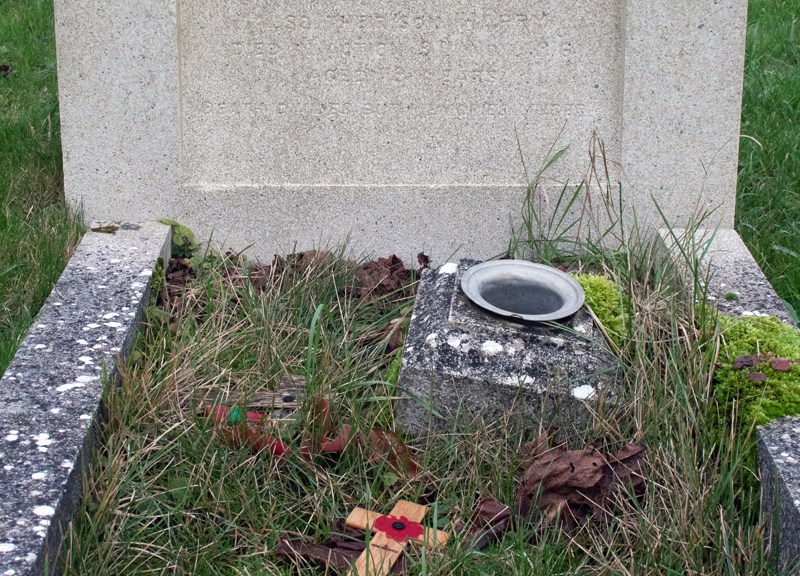
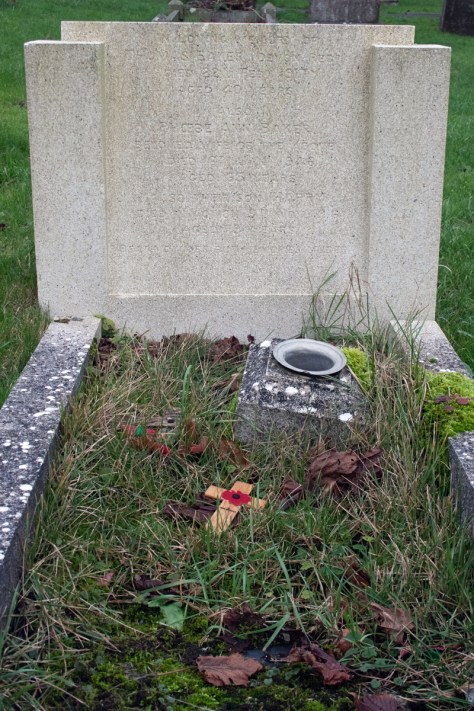
Private Bridges Baker lies at rest in the graveyard of St Margaret’s Church, in his home town of Rainham, Kent.