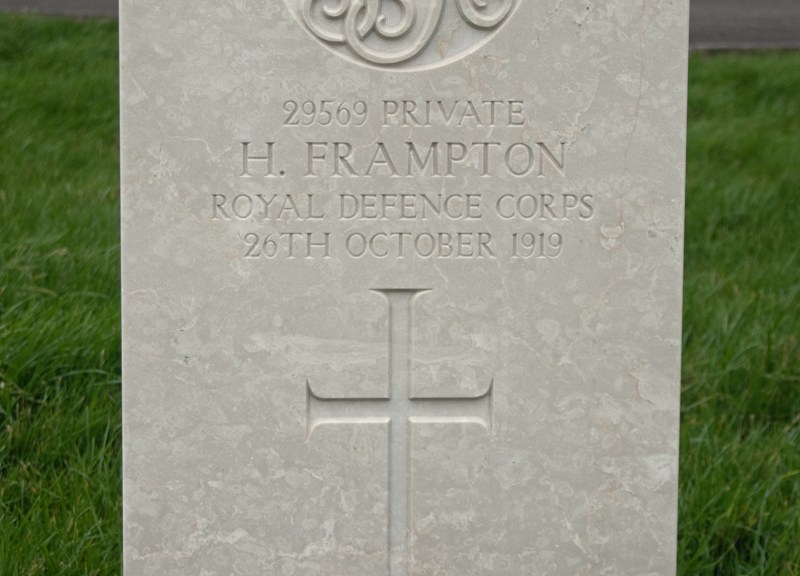
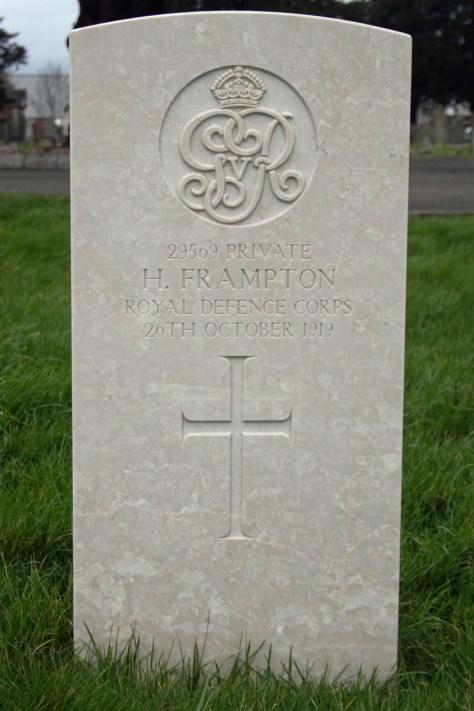
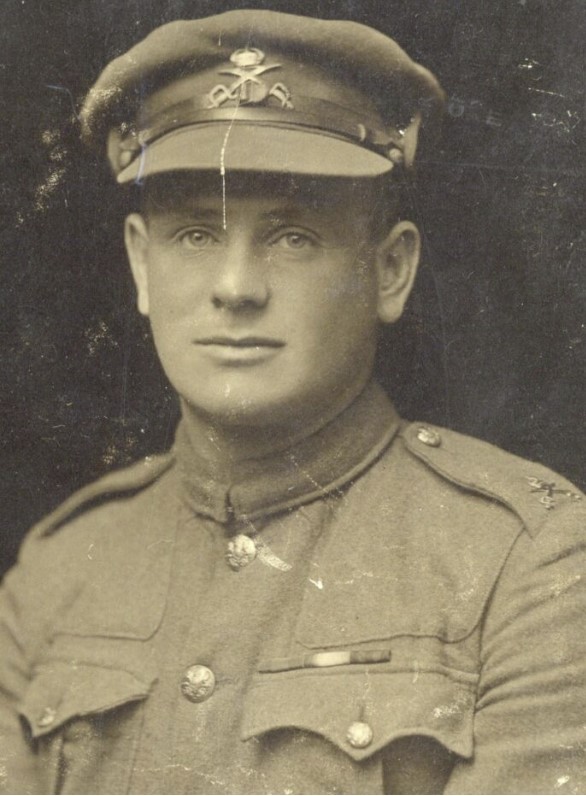
Arthur Henry “Harry” Frampton was born in 1882, the oldest of six children to Henry and Alice. Henry Sr worked as a clerk and cashier in a shoe factory in Bridgwater, while Harry and his brothers also initially followed that line of work.
In the autumn of 1908, Harry married Emma Jane Lee, who was originally from Crediton in Devon. The couple went on to have two children, Rose and John, and, by the time of the next census, the family were living in a small house in the middle of Bridgwater. Harry, by this time, was working as a general labourer.
War broke out, and Harry was quick to enlist. Initially assigned to the Somerset Light Infantry in December 1914, Private Frampton was transferred to the Royal Defence Corps after two years’ service.
He was part of the army’s territorial force, and it seems likely that his transfer to the RDC may have been on medical grounds. He had been admitted to Castlemount Military Hospital (in Dover) a couple of times, suffering from “rheumatism and debility”.
Private Frampton’s later medical report stated that he was a frail man, with an accentuated heartbeat, which gave rise to fainting. He had no appetite and suffered from insomnia, and, according to the report, was “quite unfit to perform the duties of a soldier”.
Ultimately, this led to Harry being medically discharged from the army, and he was demobbed on 10th March 1917, after just over two years’ service.
Little is known about Harry after his discharge form the army. His pension record confirms that he passed away on 26th October 1919, having suffered from dyspepsia (indigestion) and debility. He was 37 years old.
Harry Frampton lies at rest in the St John’s Cemetery in his home town of Bridgwater, Somerset.
The early life of Charles Willcox is a bit of a mystery. From fragments of information, we can determine that he was born in 1893 and had a brother called Edmund and a sister called Beatrice. His mother was a Mrs S Willcox, who, by the early 1920s was living in Johannesburg, South Africa.
Piecing together the tiny pieces of information online, it seems likely, therefore, that his parents were Frank and Sarah Willcox. Frank was a cabinet maker and upholsterer, he and Sarah were from Bridgwater in Somerset, and they had eleven children.
By 1895, Frank had moved the family from Somerset to Cardiff; Charles was the last of the siblings to be born in England. The family did eventually move to South Africa – alongside Sarah, both Beatrice and Edmund lived and died there in their later years.
Back to Charles and, once the Great War started, he was quick to enlist. He joined the Somerset Light Infantry in August 1914, and had a narrow escape in October of that year. The Bridgwater Mercury reported that he was in the trenches and had had a near miss when his backpack was hit by a shell.
Corporal Willcox was wounded at Ypres in November, when a piece of shrapnel hit him in the shoulder, went through the lung and had to be cut out of the centre of his back. He was expected to make a full recovery within a year. Charles was also awarded the Distinguished Conduct Medal for his actions in the battle.
In September 1915, Sergeant Willcox received another award; the Russian Cross & Order of St George; the BridgwaterMercury noted that Charles was the first man from the town to be awarded both this and the DCM. The town’s mayor also subsequently presented him with a gold watch and chain on behalf of the town.
Promotion continued for Charles, and, by 1917, he had been elevated to Company Sergeant Major. He was heavily involved in recruitment for the Somerset Light Infantry, and it is likely that, standing at a strapping 6ft 4ins (1.93m) tall and weighing in at 17st (107kg), he would have been the perfect advert for the battalion.
When the war came to a close, things quietened down for him. A keen sportsman – he played rugby for Somerset – he had been a gym instructor in the army, and had taken up boxing around 1912. He entered a novices’ boxing competition in Southampton in December 1919, and found himself up against Seaman Merrilees, from the HMS Hearty.
In the fight, Charles received a body blow and a blow to the jaw, he fell to the floor, landed awkwardly and was knocked out. Attended to by doctors in the sports club, he was sent to Charing Cross Hospital when he did not regain consciousness after a couple of hours.
At the hospital, bruising was reported to Charles’ eye and cheek, but no skull fracture was found. They operated on him, two pieces of bone were removed, and a large clot on the left-hand side of his brain discovered. Sadly, the operation did no good, and Charles died that afternoon, the 4th December 1919. He was just 26 years old.
His death was recorded as concussion and a cerebral haemorrhage, attributed to the fall he had had in the ring. An inquest was held, although one report suggests a verdict of accidental death, while another states excusable homicide by misadventure.
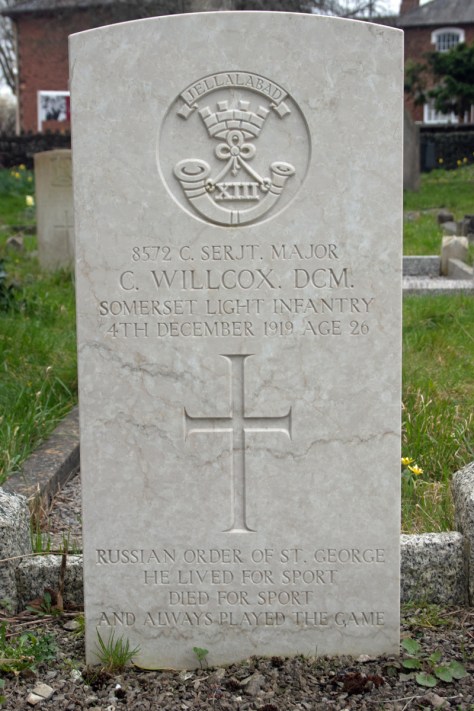
Charles Willcox lies at rest in the Wembdon Road Cemetery in his home town of Bridgwater in Somerset. His gravestone remembers that he lived for sport, died for sport and always played the game.
Serjeant Major Charles Willcox (from wembdonroadcemetery.com)
Robert Roberts was born in Liverpool in November 1887 the youngest of two children to Robert and Alice Roberts.
The New World beckoned for the Roberts family, and they set sail for Canada when Robert Jr was just 4 years old. The family settled in the city of Regina, Saskatchewan.
Little is recorded about Robert Jr until October 1911, when he married a Quebecois woman called Edna Webber. The young couple went on to have two children, a daughter, One, and a son, George.
In April 1916, he enlisted in the Canadian Expeditionary Force. His trade was noted as a Lumberman, and his record notes that Robert had already served as part of the 95th Saskatchewan Rifles.
Joining the 224th Battalion, Robert was shipped to England in May 1916. He transferred to the Canadian Forestry Corps in November, reaching the rank of Staff Sergeant, and was assigned to the company’s Base Depot in Sunningdale, near Windsor.
When the war ended, demobilisation was still a way off for a lot of soldiers, particularly those from the Commonwealth. Robert was transferred to Stirling, and was appointed Quartermaster Sergeant (responsible for supplies and stores) for 121st Company.
On 28th January 1919, Robert was admitted to the Royal Infirmary in Stirling with influenza and double pneumonia. Sadly, he passed away just over a week later, breathing his last on 6th February 1919. He was 33 years old.
Robert Roberts lies at peace in the Wembdon Road Cemetery in Bridgwater, Somerset.
There is no evident connection between Robert and Bridgwater, so why this was chosen as his place of rest is a mystery. It is likely that there was some sort of family connection, but that cannot be definitely established.
Alfred Charles Walters was born in March 1900, one of six children to Alfred and Sarah Walters from Bridgwater, Somerset. Alfred Sr was a labourer in a brickyard, and the family lived in the centre of the town.
When war broke out, Alfred seemed very eager to be involved. Lying about his age (giving his date of birth as 26th August 1898), he enlisted in the Royal Naval Reserve. Training in Portsmouth – on HMS Victory II, HMS Excellent and HMS President III – he was assigned to the SS Tanfield.
The steamer was heading out of London en route for Bombay and Karachi in April 1918, and was making its way west through the English Channel. On 15th April, it was located and tracked by the German U-Boat UB74, under the command of Ernst Steindorff. The German fired a torpedo, which hit and crippled Able Seaman Walters’ ship. Thankfully, there was no loss of life, and the Tanfield managed to limp back to port.
Little else remains of Able Seaman Walters’ military life. In February 1919, he was admitted to the Dreadnought Seaman’s Hospital in Greenwich, suffering from influenza and bronchial pneumonia. Sadly, he succumbed to the disease, passing away on 20th February 1919. He was just 18 years old (although his military record and gravestone give him as 19).
Alfred Charles Walters lies at peace in the Wembdon Road Cemetery in his home town of Bridgwater, Somerset.
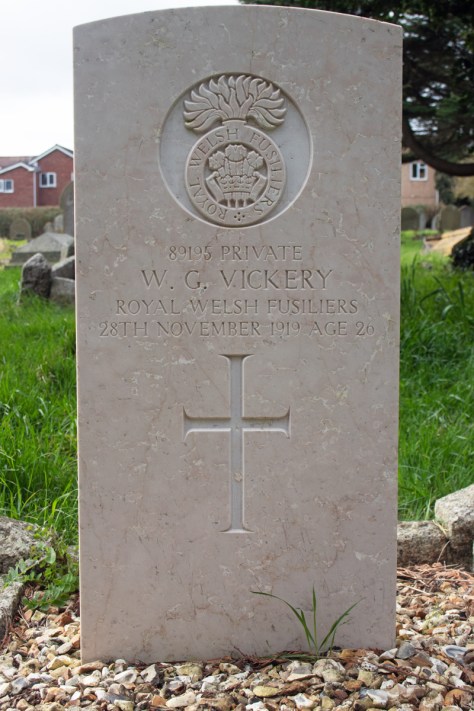
William George Vickery was born in the summer of 1894, the youngest of three children to George and Mary Vickery. George was a labourer in a brickyard, and this is work that his son followed him into once he left school.
William seems to have progressed with work as, by the time he enlisted for military service, he was recorded as a miner, working in the collieries of South Wales. Initially joining up in February 1916, is seems like his job gave him a level of protection for a couple of years at least; he was not formally mobilised by the Royal Welch Fusiliers until May 1918.
Initially serving on the home front, Private Vickery was shipped to France in September 1918, serving two months there, before returning home. William was eventually discharged from the army on medical grounds; having contracted tuberculosis while on active duty.
There is little information about William after his discharge. It seems likely that his health deteriorated, however, as he died just a year later, on 28th November 1919. He was just 26 years of age.
William George Vickery lies at rest in the Wembdon Road Cemetery in his home town of Bridgwater, Somerset.
Stanley James Southwood was born in 1896, the oldest of six children to John and Florence Southwood from Bridgwater, Somerset. John was a labourer and ship’s mate, while Stanley, who was the only boy in the family, started work loading barrows in a brickyard.
Military life was pulling Stanley, however. According to another researcher, he enlisted in the Special Reserves of the Somerset Light Infantry in October 1912. Six months later he joined the regular army, and was there when the war began.
While I have not been able to corroborate this information, it appears that Southwood was reported missing on 11th September 1915, after being wounded in the chest. He was taken prisoner of war, and, while being held, he developed tuberculosis in both lungs.
After his release (no documents confirm when this was) he was discharged from the army as medically fit to continue. He was in a military hospital at the time – the beginning of November 1918 – suffering from tuberculosis, which had been exacerbated by the chest wound he had received three years earlier. At the time he was discharged, he had the rank of Lance Corporal.
Sadly, it seems that Stanley never fully recovered from his wartime experience. He died on 8th September 1919 from consumption (tuberculosis), aged just 23 years old.
Stanley James Southwood lies at rest in the Wembdon Road Cemetery in his home town of Bridgwater in Somerset.
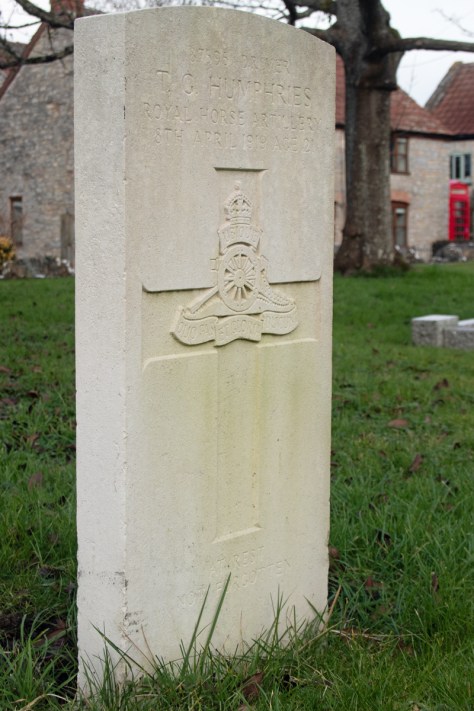
Thomas George Edward Humphries was born in November 1897, one of six children to George and Annie Humphries, from North Wootton in Somerset. George was a farm labourer, and had been married to his wife for 19 years before her untimely death in at the age of 40.
When war came, Thomas was just 16 years old. He enlisted quickly, though, joining the Royal Horse Artillery as early as the summer of 1915. Driver Humphries joined the 120 Brigade of the Royal Field Artillery, which was one of the many Howitzer brigades moving the large long-barrelled field guns along the front line.
Given the high use of horses during the way, and that Thomas was a Driver, it is likely that his role would have been guiding the animals in his care – this may also account for why his gravestone gives his troop as the Royal Horse Artillery.
Little remains of Thomas’ service records; he was awarded the Victory and British Medals and well as the 1915 Star, so would have been in the thick of the fighting and seen action on the Western Front.
When it comes to his passing, again details are scant. His pension records simply state that he died of ‘disease’, and he passed in the military hospital in Southwark, South London. Again, given when he died and the lack of any contemporary media report on his passing, it seems likely that the cause was a lung condition – influenza, pneumonia or tuberculosis – but that is a presumption on my part,
Whatever the cause, Driver Humphries died on 8th April 1919, aged just 21 years old.
Thomas George Edward Humphries lies at rest in the quiet graveyard of St Peter’s Church in his home village of North Wootton.
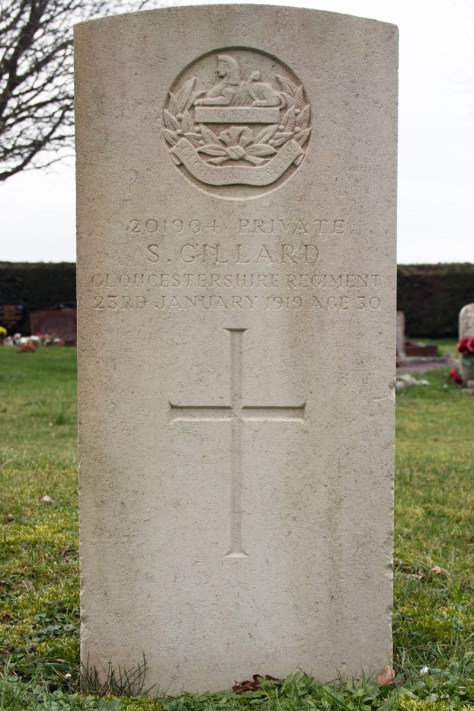
Sydney Gillard was born in October 1888, one of eight children to Charles and Lily. Charles was a stonemason, and this is the trade that Sydney and his older brother Harry also followed.
When war broke out, he enlisted in the Gloucestershire Regiment; Private Gillard’s troop, the 1/4th (City of Bristol) Battalion, were initially based in Swindon, before moving to Maldon in Essex. They were posted to France in March 1915, eventually being shipped to Italy in November 1917.
While Sydney’s military records do not confirm when he enlisted or where he served, that he saw fighting is beyond any doubt because his war pension records confirm that he died from his wounds.
Sydney Gillard passed away on 23rd January 1919, at the age of 31. He lies at rest in the cemetery of his home village of Othery, Somerset.
Ossian Emanuel Richards was born in Westonzoyland, Somerset, in December 1897. He was the youngest of two children and his parents – Emmanuel and Jane – were farmers in the area.
Ossian enlisted later in the war, joining the RAF in June 1918. While little detail of his service is available, he had been a fitter before joining up, so it may well have been on the mechanical side of things that he was involved.
After nine months’ service, Ossian has been promoted to Corporal, and, with the war over, he was transferred to the RAF Reserves in March 1919.
Sadly, as with many young men of his generation, Corporal Richards succumbed to the flu pandemic that followed the war. He died on 15th September 1919, aged just 21 years old.
Ossian Emanuel Richards lies at rest in the cemetery of his home village of Westonzoyland.
Alfred Henry Richards was born in 1891, the oldest of five children to William Henry Richards and his wife Jane. William (who was known as Henry) worked in the local paper mill, and this is a trade that his two sons – Alfred and Leslie – were to follow as well.
Paper making was a driving force in this part of Somerset during the Victorian era, employing a large number of people in Wells and the nearby village of Wookey, which is where Alfred and his siblings were born.
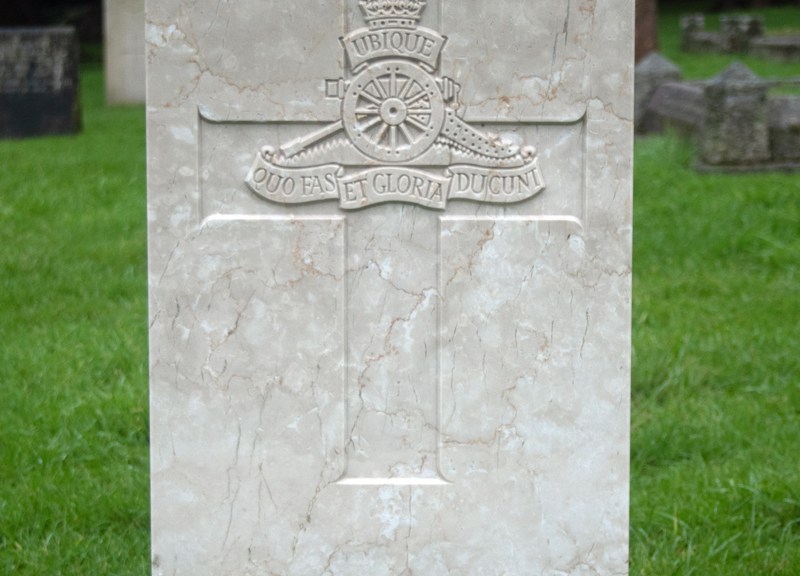
Details of Alfred’s military service are sketchy. He enlisted as a Gunner in the Royal Horse Artillery, although when during the war this happened is unknown.
His troop – the 18th Brigade, 1st Somerset Royal Horse Artillery – was stationed in the UK for the first couple of years of the war, before serving in the Middle East. Again, I have not been able to confirm how much of this service Gunner Richards was involved in.
Alfred returned to Somerset after being demobbed, but within a few months of the end of the war, he succumbed to double pneumonia. He passed away on 1st March 1919, aged just 28 years old.
Alfred Henry Richards lies at rest in the cemetery in Wells, Somerset, not far from his home.