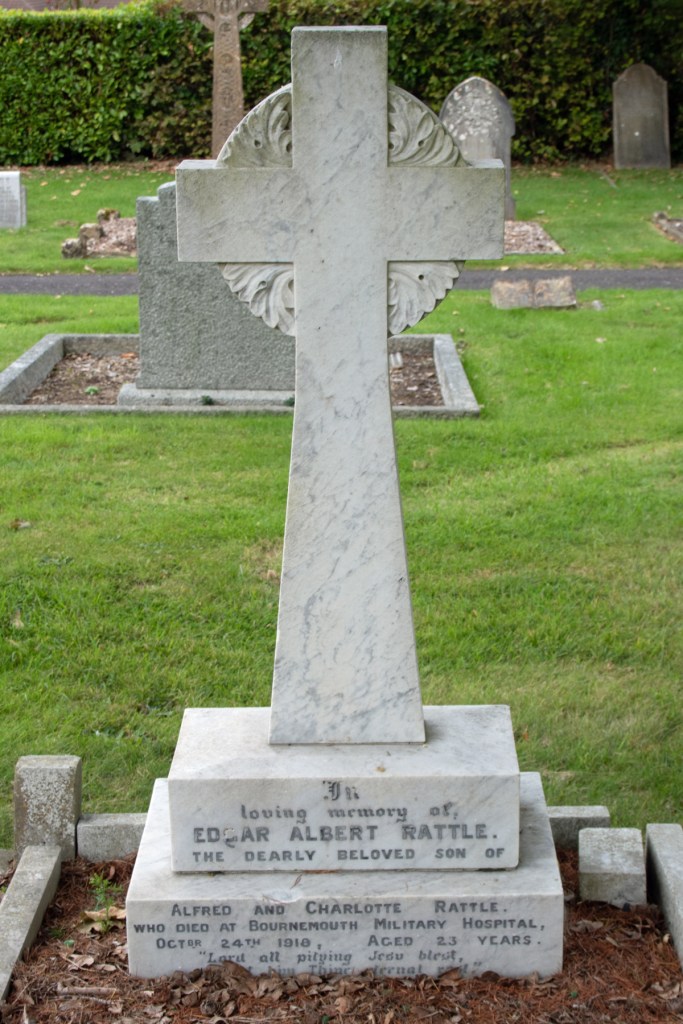
Edgar Albert Rattle was born in Yeovil, Somerset, in 1895, the youngest of three children to Alfred and Charlotte Rattle. Alfred was a railway porter from Yatton, who raised his family in a cottage near the centre of the town.
When he left school, Edgar found employment as an accounts clerk; by the time of the 1911 census, Alfred has moved from being a porter to collecting passengers’ tickets; the family lived in a terraced house next to the station where he worked.
War was on the horizon by now and, although Edgar’s full service records are no longer available, the documents that do remain give an indication as to his time in the army.
Private Rattle enlisted in the early stages of the war; he joined the Somerset Light Infantry in October 1914, although it is not clear which battalion he was assigned to. Later in the conflict, he had been attached to the Labour Corps, and spent some time working on a farm in Ilchester.
It was while in Ilchester in October 1918, that Edgar had some leave, and travelled to Dorset. He was taken down with pneumonia and admitted to the Bournemouth Military Hospital, but subsequently died, breathing his last on 24th October 1918. He was just 23 years of age.
Edgar Albert Rattle’s body was brought back to Yeovil for burial. He lies at rest in the town’s cemetery.
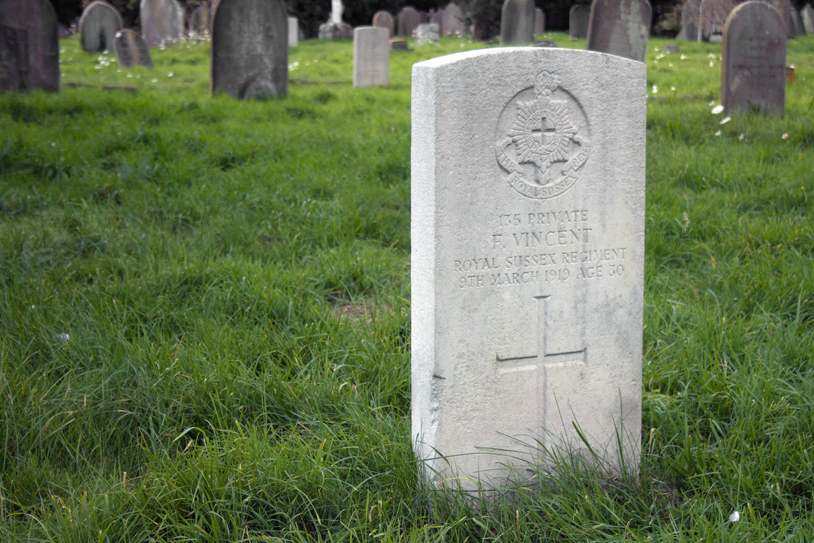
Fred Vincent was born in Crewkerne, Somerset, in 1889, one of seven children to Charles and Elizabeth Vincent. Charles was a dairyman, and, over the years, the whole family helped out in the business. This seemed a transitory business – over the years, the family moved around Dorset and, by the time of the 1911 census, were living in Wiltshire.
Frustratingly, after that document, Fred’s trail goes quiet. He married a woman called Dorothy, and at some point the couple moved to Worthing, West Sussex, although there are no records to confirm dates for either of these.
When war broke out, Fred enlisted in the Royal Sussex Regiment. Documents are again lacking, so it is impossible to tell which battalion he served in, or whether he was based at home or abroad. Private Vincent did subsequently transfer to the Labour Corps, although again, dates and the location of his service are not available.
Sadly, Fred has disappeared into the mists of time. He and Dorothy were living in Worthing when he passed away on 9th March 1919, at the age of 30 years old. There is nothing in contemporary newspapers to suggest that his passing was anything out of the ordinary.
Fred Vincent lies at rest in the Broadwater Cemetery of his adopted home town of Worthing.
William Thomas Cole was born in the spring of 1897, the youngest of three children to John and Caroline Cole. John was a bank cashier from Gillingham in Dorset, while Caroline was born in Battersea, London. By the time of William’s birth, however, the young family had settled in the Dorset town of Blandford.
John was a man with ambitions for himself and his family. The 1911 census records him and Caroline living in Axbridge in Somerset, where he was now a bank manager. William, meanwhile, was a student in Wareham, Dorset, and was lodging at a boarding house in the town.
There is little documented about William’s military service. His gravestone confirms that he had originally enlisted in the Dorsetshire Regiment, but had subsequently joined the Royal Air Force, when it was formed in April 1918. By the time of his death, he had reached the rank of Lieutenant, so it would seem that his John’s ambitious nature had rubbed off on his only son.
William’s death was reported in a number of contemporary newspapers:
Lieutenant WT Cole and First Air Mechanic H Keates were killed while flying in South Essex last night. They were both in the same machine, which nose-dived and crashed into the ground. Cole’s home is at Shaftesbury, Dorset, and Keates’ at West Wood Grove, Leek, Staffordshire.
Dundee Evening Telegraph: Thursday 24th October 1918
Lieutenant Cole was flying in Hornchurch, Essex, and was in an Avro 504K bi-plane. He was just 21 years old when he died on 23rd October 1918. There is little further information about the accident, but highlighting the real danger in aviation at the time, this was one of eight fatal plane crashes across the UK that day alone.
The body of William Thomas Cole was brought back to Shaftesbury, where his parents were by then living. He was laid to rest in the Holy Trinity Churchyard in the town.
Reginald Robert Foot was born at the beginning of 1888 in Shaftesbury, Dorset, the oldest of three children to Robert and Annie Foot. Robert was a tailor from the town, who brought up his young family in the comfort of well-known surroundings.
When he left school, Reginald found work as a carpenter and joiner. He was a keen, if over-eager, sportsman, and played for Shaftesbury FC. In May 1906, he was reported for ‘cheeky’ behaviour towards the referee in one match.
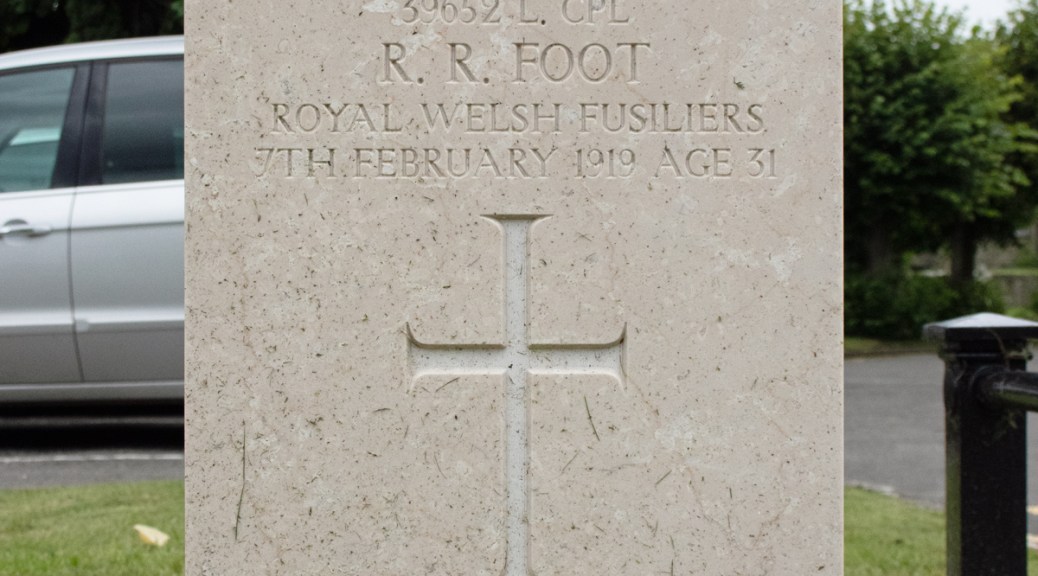
In the lead up to the Great War, he also spent some of his his spare time in the Territorial Army and, when war broke out, he was keen to continue doing his bit. He joined the Royal Welch Fusiliers as a Private in December 1915 and, by the time he was shipped out to France in January 1917, he had been promoted to the rank of Lance Corporal.
After a year on the Western Front, Reginald returned to the United Kingdom and, once the Armistice had been declared, his unit was shipped to Ireland. He fell ill while he was out there, and, in January 1919 was admitted to a military hospital in Ireland.
Sadly, the lung conditions he had contracted – influenza and pneumonia – were to get the better of him, and he passed away on 7th February 1919. Lance Corporal Foot was 31 years old.
The body of Reginald Robert Foot was brought back to Dorset; he lies at rest in the Holy Trinity Churchyard in the town of his birth, Shaftesbury.
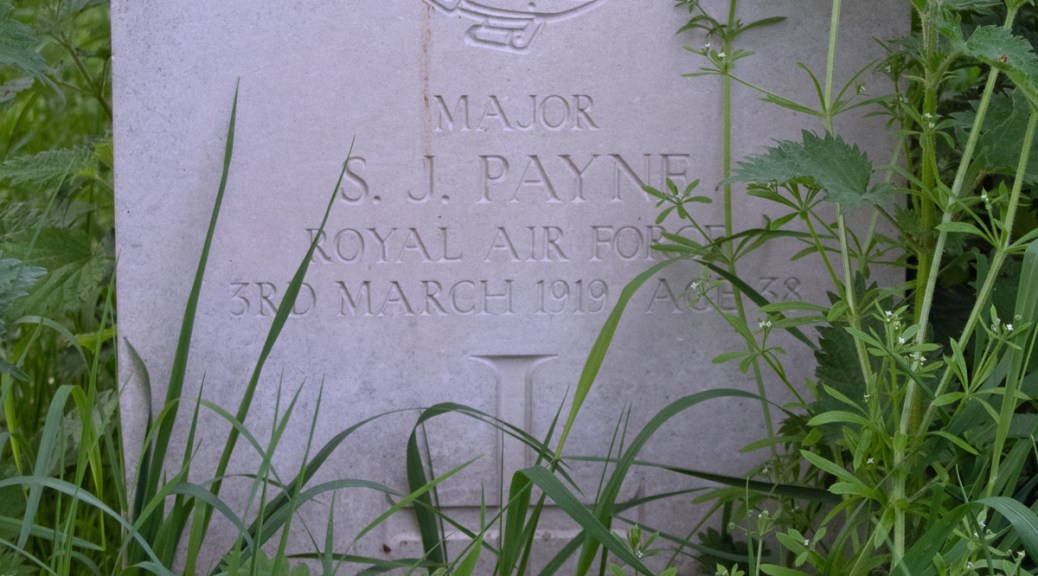
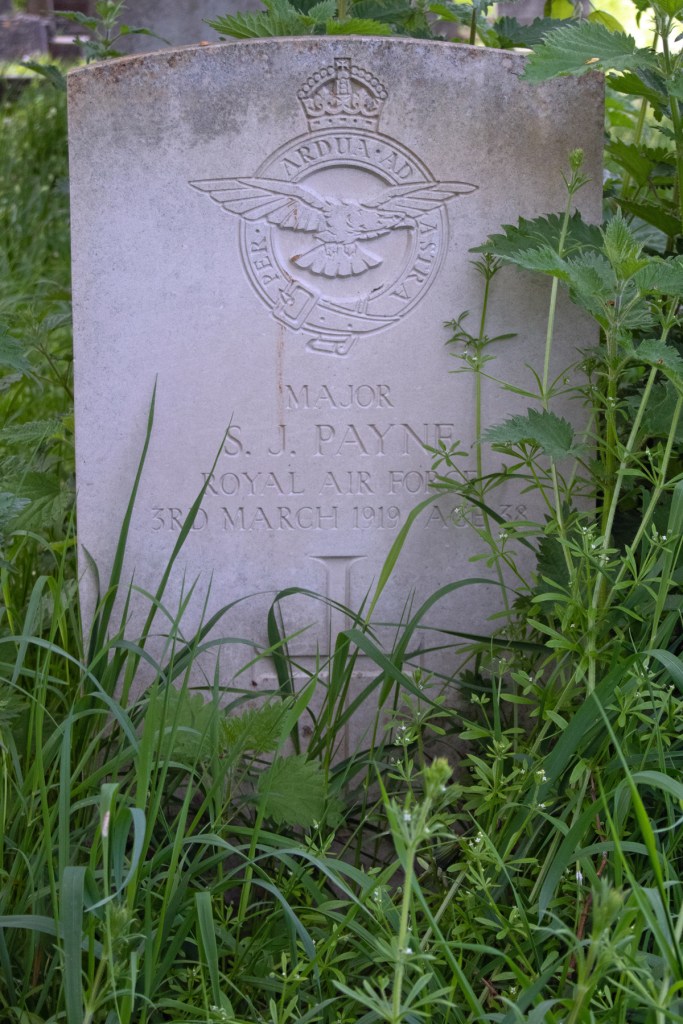
Stanley James Payne was born towards the end of 1882, one of eleven children to Stephen and Elizabeth Payne. Stephen was a leather salesman from Essex, who had moved his family to Weston-super-Mare in Somerset in around 1880.
Stanley seems to have been drawn in to a military life from an early age. In January 1900, he enlisted as a Private in the Somerset Light Infantry, and the 1901 census listed him as living at the Raglan Barracks in Devonport, near Plymouth.
Military service took Private Payne to India, where he served for six years. His success and ambition were clear; in 1906 he was promoted to first to Corporal and then to Sergeant. By 1911 – and now back in England – as a Lance Sergeant, Stanley was working as a military clerk at the Royal Horse Artillery Barracks in Dorchester, although he was still attached to the Somerset Light Infantry.
Stanley’s ambition and sense of adventure continued; by July 1912 he had made the transfer over to the newly-formed Royal Flying Corps, as a Sergeant.
It was while he was based in Dorchester that he met Winifred Bell. She was the daughter of a local council worker, and the couple married in the town in September 1912. Stanley and Winifred went on to have a daughter, Doris, who was born in July 1914.
War had arrived in Europe, and on 7th October, the now Warrant Officer Payne was shipped to France. During his nine months on the Western Front, he was mentioned in despatches and received the Croix de Guerre for his gallantry. The local newspaper also reported that he:
…had also the honour of being presented to the King on the occasion of His Majesty’s last visit to the front, and at a home station had also been presented to Queen Mary.
Western Daily Press: Saturday 8th March 1919
Returning to England on 1st June 1915, he was again promoted to Lieutenant and Quartermaster, although here his military records dry up. By this time, he had been in the armed forces for more than fifteen years, but his military records seem to confirm this as the last day of his service.
The next record for Stanley confirms his passing. Admitted to the Central Air Force Hospital in Hampstead with a combination of influenza and pneumonia, he died on 3rd March 1919. He was just 36 years of age.
Brought back to Weston-super-Mare, where his now widowed father was still living, Stanley James Payne was laid to rest in the Milton Cemetery in his home town.
Stanley’s gravestone gives his rank as Major. While there is no documented evidence of any additional promotions after June 1915, the rank is the equivalent of Quartermaster in the Army Reserve. It seems likely, therefore, that the end date of his military service marked the start of his time in the reserves.
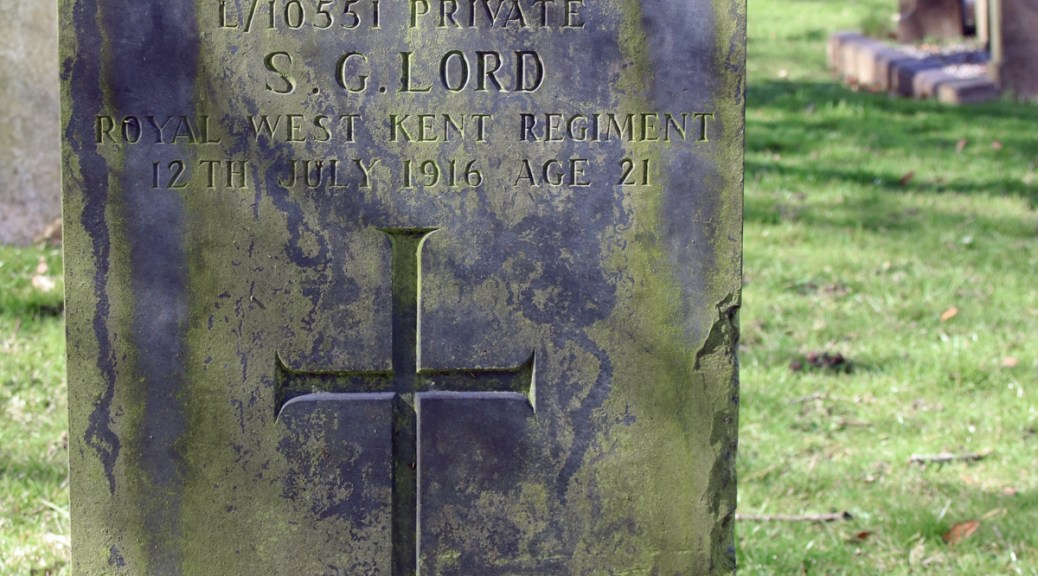
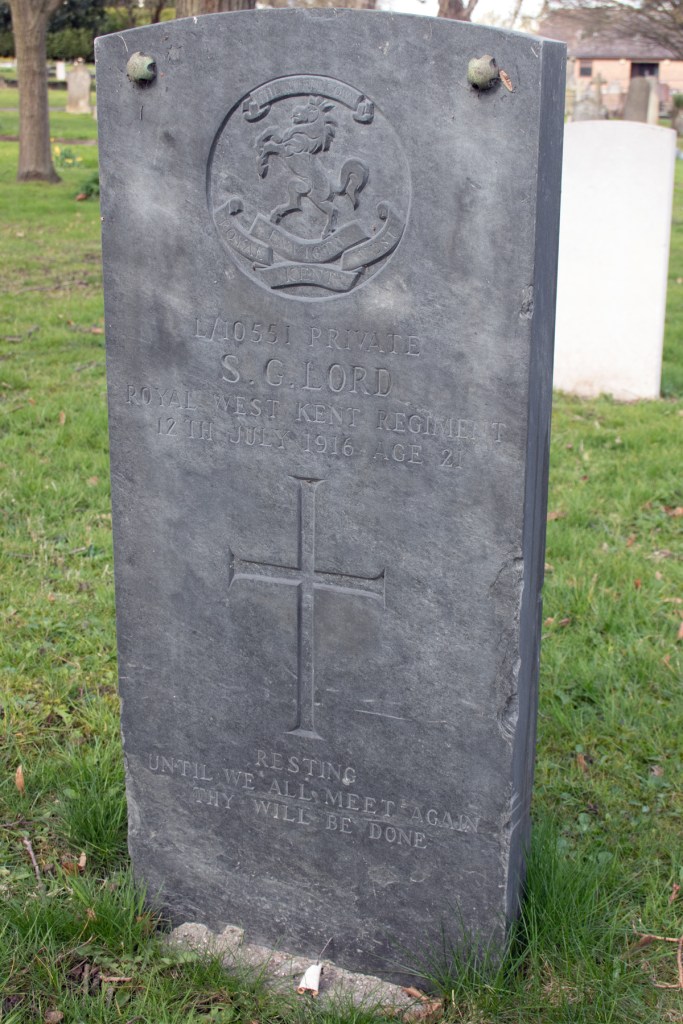
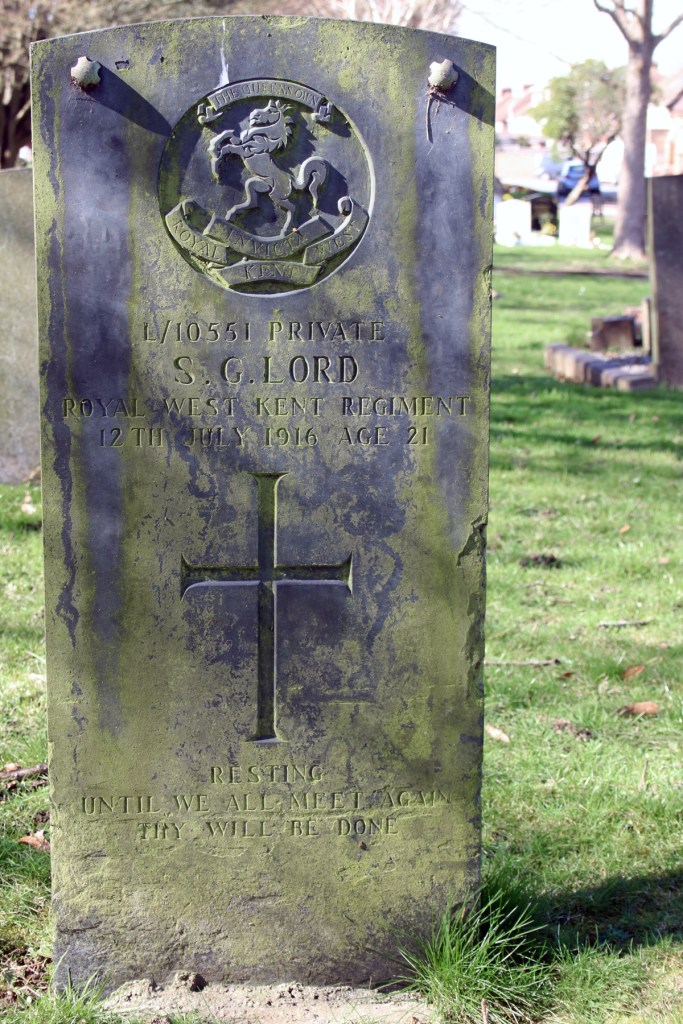
Sidney George Lord was born on 29th March 1895, one of six children to Sidney and Clara Lord. Sidney Sr was a shipwright from Bideford in Devon, and he brought the family to Kent, presumably for work at the Naval Dockyard in Chatham.
Sidney Sr passed away in 1912 and his son left school, finding work as a plumber’s apprentice. War was on the horizon, however and he was keen to do his bit as soon as possible. Sidney Jr enlisted in November 1914, joining the Queen’s Own Royal West Kent Regiment.
After his initial training, Private Lord was sent to the Front on 22nd April 1915, serving in France with his regiment for just over a year. Towards the end of this time he became anaemic, and was shipped back to England for treatment.
Private Lord was admitted to the Yeatman Hospital in Sherborne, but sadly succumbed to his anaemia a matter of weeks later. He passed away on 12th July 1916, having not lung turned 21 years of age.
Sidney George Lord was laid to rest in the Woodlands Cemetery in Gillingham, Kent, close to where his father was buried.
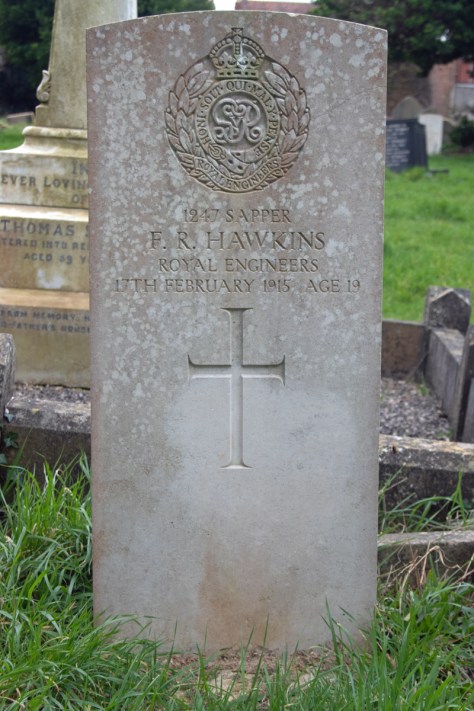
Francis Ralph Hawkins was born in Somerset in March 1895 and was one of twelve children to Charles and Jane Hawkins. Charles was a police sergeant and the family lived in Bishop’s Lydeard, a village to the west of Taunton.
By the time of the 1911 census, Charles had retired from police work, and was operating as a licenced victualler in nearby Bridgwater. While Jane was supporting her husband running the business, Francis was apprenticed to a local clothier.
When war broke out, Francis was quick to enlist – he joined the Royal Engineers, and was appointed a Sapper. He wasn’t with the company for that long, however, as by February he had been admitted to the Red Cross Hospital in Christchurch, Dorset, with a fever.
Sadly, he was not to recover; Sapper Hawkins passed away from spinal meningitis on 17th February 1915. He was just 19 years of age.
Francis Ralph Hawkins lies at rest in the Wembdon Road Cemetery, Bridgwater.
Tom Hallett Walter Rawlings was born in 1896, the eldest of six children (and only son) to Walter and Jane Rawlings. Dorset-born Walter had worked as a carpenter and a groom, and Tom had joined him as a stable lad by the time of the 1911 census.
By the time he enlisted in July 1915, Tom’s work with all things equine helped land him a role in the Royal Army Service Corps as a Saddler. His role was backed up as he had previously been apprenticed to Ernest Cottle, a saddler in Blandford, Dorset.
Initially he worked on the Home Front, but he was posted to France as part of the British Expeditionary Force in January 1916, as part of the 1st Company.
Saddler Rawlings’ time overseas was brief; within three months of being shipped overseas he had contracted phthisis (also known as tuberculosis), and he was sent home for treatment on 22nd April 1916.
His health reached the point where he was discharged as being medically unfit on 12th June, and within a matter of weeks, Tom has passed away.
Tom Hallett Walter Rawlings died on 20th June 1916; he was 19 years old. He lies at rest in the cemetery of his home town, Sherborne.
Tom’s father Walter also entered the army as worked in the Royal Army Service Corps. While records of his military career are not immediately evident, it seems that he survived the war, although he may have been discharged in 1919 having fallen ill with malaria.
Harold Stanley Russell was born in 1895, the third of six children to carpenter Henry Russell and his wife Mary. The family lived in Sherborne, Dorset, and this is where Harold grew up; by the time of the 1911 census, he was working as a hairdresser in the town.
While Harold’s military records are not readily available online, his last few weeks can be determined through the local press of the day.
He enlisted in the Dorsetshire Regiment in the summer of 1915, but was attached to the Wiltshire Regiment when battalions went to France in May 1916.
Lance Corporal Russell’s Lieutenant wrote to his parents to report on Harold’s injury:
[He] was wounded by a bomb on the morning of July 28th while on duty in the trenches. “At the moment of writing I do not know if it is a very serious case, but I do know he will lose the use of his left hand. He was a most popular fellow, and always willing to do his part nobly with a brave heart, and nothing grieved me more than to see him in pain. His wants were immediately attended to, and I suppose by now he is under treatment in the hospital. He is being well cared for, and the authorities will let you know how he is progressing.
Western Gazette, Friday 4th August 1916
A week later, the newspaper reported an update:
Lance-Corporal Harold Russell… is now at the Leicester Military Hospital in a critical condition. His parents were telegraphed for on Friday last, and visited him. They found he had been very seriously wounded by a bomb whilst on duty in the trenches in France. His injuries are in the chest and right arm, while his left hand has been amputated. [He] was acting platoon-sergeant at the time he was wounded, and had taken part in three battles. After being wounded he walked one and a-half miles to the dressing-station, but afterwards collapsed. His parents returned to Sherborne on Tuesday as he was slightly better, but were telegraphed for again on Wednesday.
Western Gazette, Friday 11th August 1916
The day of the second article, Lance Corporal Harold Russell lost his fight for life, dying in a Military Hospital in Leicester. He was just 21 years old.
The next week, the young soldier featured in the newspaper again, with an 80-line report on his funeral being featured on the Roll of Honour page.
Harold Stanley Russell lies at rest in the cemetery of his home town, Sherborne.
Arthur Palmer was born in Bicester in 1889 to groomsman George Palmer and his wife Annie. Arthur was the eldest of five children, five boys and one girl.
By 1911, the family had moved to Dorset, where George continued to work as a groom. His son, Arthur, had also gone into domestic service, and was a footman. Presumably this was under the same employ as his father, although the records do not confirm this.
This is where the trail for Arthur Palmer dries up.
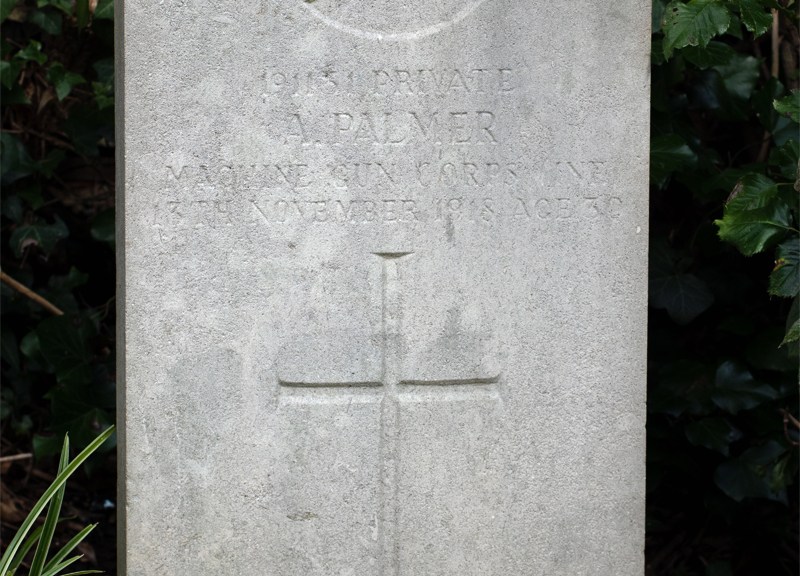
From his gravestone, we know he served in the Machine Gun Corps (MGC). The Register of Soldiers’ Effects confirms he was in the 3rd Company; this was formed in January 1916, so Private Palmer can only have enlisted after that date.
Online research only brings up MGC military service records for an Arthur George Palmer, who lived in Kettering. However, this Private survived the war, so could not be the one buried in Dorset. There is nothing in contemporary newspapers to suggest that there was anything untoward or unusual about his passing.
All I can say for certain is that Private Arthur Palmer died at the Cannock Chase Military Hospital on 13th November 1918.
He lies at rest in Sherborne Cemetery, Dorset. He was 30 years old.









 Death and Service