Tag Archives: meningitis

Private Harold Spackman

Private Harold Spackman

Harold John Spackman was born on 24th May 1897 and was the youngest of two children to Frederick and Eliza Spackman. Frederick was a cowman from Wiltshire, and the family were raised on a farm in Manningford Bohune, near the village of Pewsey.

Harold was educated at Woodborough School, and found work as a nurseryman when he completed his schooling. When war broke out, he was quick to enlist, and joined the 10th (Service) Battalion of the Devonshire Regiment on 17th September 1914.

Private Spackman’s unit was sent to Somerset for training, and it was here, in cramped, busy barracks, that he contracted meningitis. He was admitted to the Red Cross Hospital in Bath, but succumbed to the condition on 12th March 1915. He was just 17 years of age.

Harold John Spackman was laid to rest in Bath’s Locksbrook Cemetery. His was a joint funeral with another Private from his unit, Albert Matthews, who had died on the same day in the same hospital.


Private Harold Spackman
(from findagrave.com)

Private Herbert Smart

Private Herbert Smart

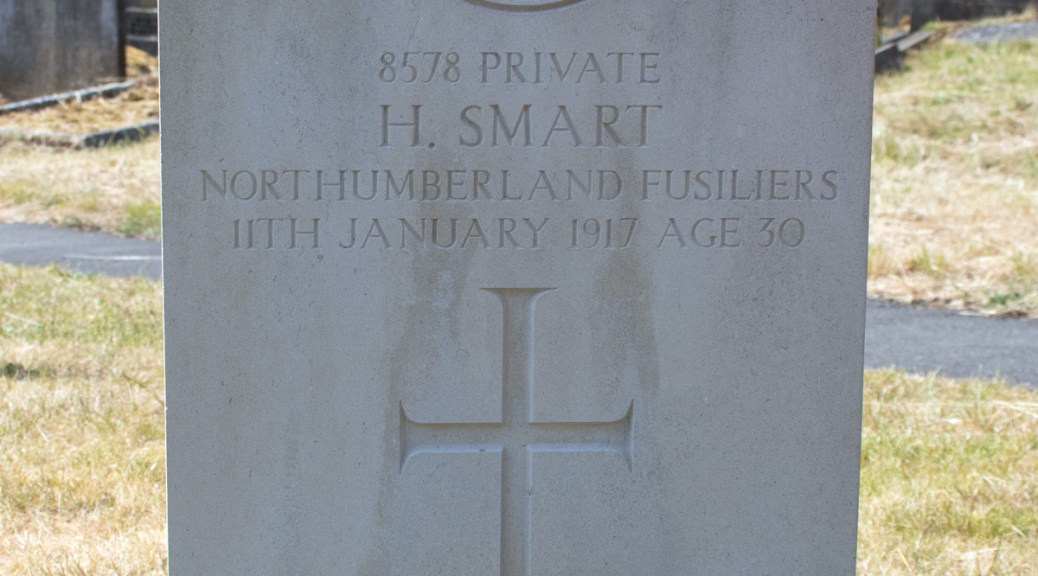
Herbert – or Bertie – Smart was born on 9th February 1885, and was the middle of five children to John and Lucy. John worked as a gardener and the family were raised in the Kent town of Sidcup.

By the early 1900s, Bertie had moved to London, and had settled in Islington, Middlesex. He was working as a fruiterer and, on 19th May 1907, he married Lucy Purton, a policeman’s daughter from the east of the capital.

The couple set up home in Kensington, and went on to have four children: Frank, Herbert, Kathleen and Frederick. The 1911 census found the family renting three rooms in a tenement at 36 Netherwood Road. They were sharing their home with Lucy’s younger brother, Frederick.

When war broke out across Europe, Bertie was called upon to play his part. Full service details have been lost to time, but it is clear that he enlisted in the second half of 1916, and was assigned to the Northumberland Fusiliers. Attached to the 2nd/4th Battalion, it seems that he may have been sent to the South West for training.

Private Smart’s time in the army was not to be a lengthy one. He came down with cerebrospinal meningitis, and was admitted to the War Hospital in Bath, Somerset. The condition was to get the better of him: he passed away was still admitted, on 11th January 1917. He was 31 years of age.

Herbert Smart was laid to rest in the sweeping grounds of Bath’s Locksbrook Cemetery.


These were tragic times for the Smart family. Lucy’s brother died just four months after her husband, and Lucy herself passed away in February 1918. In just over a year, the four children – Frank, Herbert, Kathleen and Frederick – had become orphans.


Engine Room Artificer James Donnelly

Engine Room Artificer James Donnelly

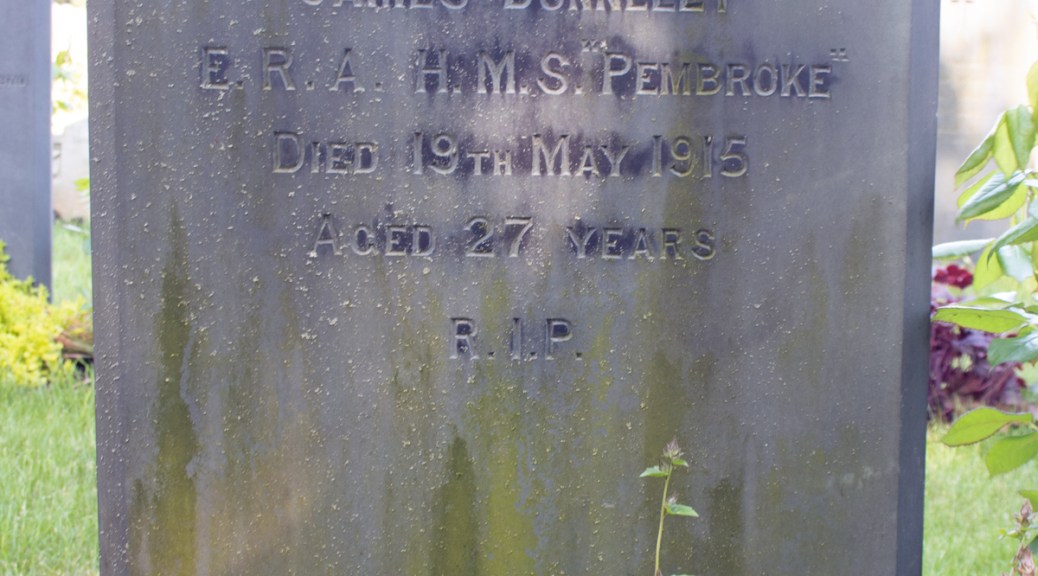
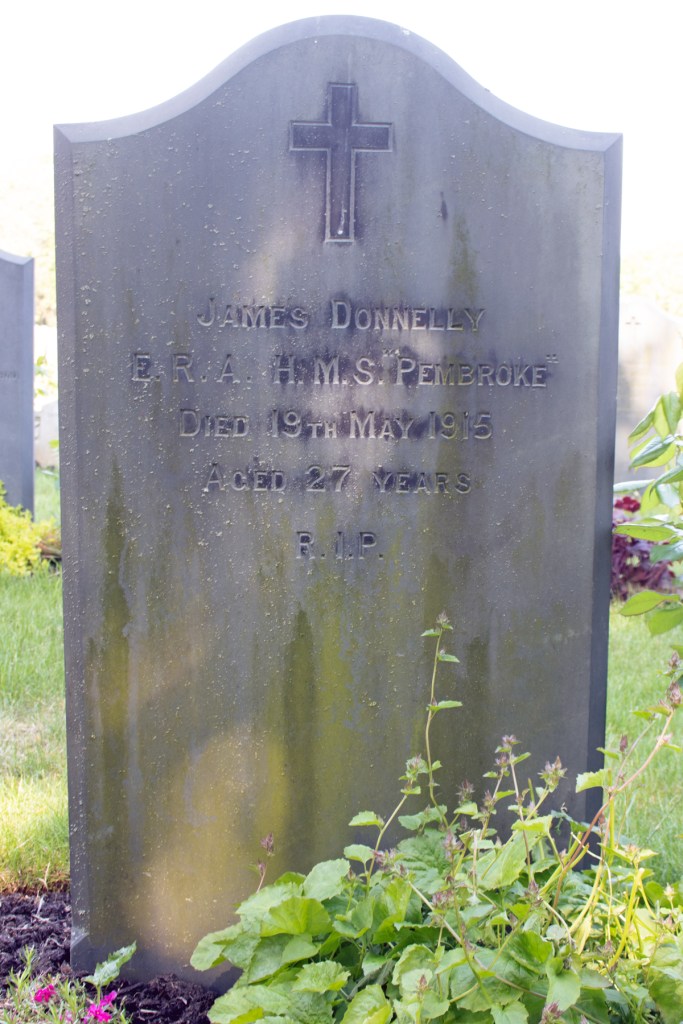
James Donnelly’s life is a challenging one to pin down. Based on the Commonwealth War Graves Commission information, he was born in 1888 in Cappagh, County Tyrone, Northern Ireland, and was the son of Owen and Mary Donnelly. Unfortunately, there are no baptism or census records to expand on his family background.

Military records are equally sparse. James enlisted in the Royal Navy as an Engine Room Artificer 4th Class. He was assigned to HMS Pembroke, the Royal Naval Dockyard in Chatham, Kent; given how early in the conflict, and his position at the lower end of the ERA rankings, is it likely that he was posted there for training.

James’ time in the military was to be brief. He was admitted to the Royal Naval Hospital in Chatham, suffering from cerebrospinal meningitis. The condition was to prove severe: he succumbed to it on 19th May 1915, at the age of 27 years old.

Finances may have prevented the Donnelly family from bringing their boy back home. Instead, James was laid to rest in the Roman Catholic section of Woodlands Cemetery, Gillingham, not far from the naval base at which he had served.


Engine Room Artificer James Donnelly
(from findagrave.com)
Private John Turner

Private John Turner

John Francis Turner was born on 24th March 1899 in the St Ouen region of the Channel Island of Jersey. He was the only surviving child of Francis and Eugenie Turner, his older brother, Francis Jr, having passed away before John was born.

Francis was a farm labourer, but when John finished his schooling, he found work as a carpenter. When war broke out across Europe, he was conscripted to play his part and, on 31st March 1917, he enlisted in the army.

Private Turner was noted as being 5ft 5ins (1.65m) tall and weighing 115lbs (52kg). His medical records show that his vision was defective, but not so bad as to exclude him from service, but he was also found to have flat feet.

John was assigned to the Royal Army Medical Corps, and was sent to Blackpool, Lancashire, where he was attached to the local depot. He spent the next two years in the army, although his time was not without incident.

In December 1917, he was confined to barracks for five days for overstaying his pass by more than eight hours. This seems to have been Private Turner’s only misdemeanour, however, and there is nothing to suggest anything other than good service.

John’s time in the army does not seem to have been limited to home soil, and, in the spring of 1919, he was attached to one of the Russian convoys ferrying aid and supplies overseas. On his return, however, he fell ill, and on 2nd February, he was admitted to hospital in Edinburgh, suffering from pleurisy.

Private Turner was to remain in hospital for the next few months. He slowly recovered, but then contracted meningitis, and, with his body already weakened by illness, this was to prove his undoing. He passed away on 23rd June 1919, aged just 20 years of age.

John Francis Turner’s body was taken back to Jersey for burial. He was laid to rest in the peaceful churchyard of St Ouen’s.


Boy 1st Class Sidney White

Boy 1st Class Sidney White

Sidney James White was born on 9th April 1899 in Bath, Somerset. The second of six children – and the oldest son – his parents were Sidney and Ann White. Sidney Sr was a butcher by trade and, by the time of the 1911 census, the family were living in Walcot Buildings in the city.

Sidney Jr was only 15 years of age when war came to Europe. However, he was still keen to do hit bit and, on 13th October 1915, he gave up his job as a fitter’s mate and enlisted in the Royal Navy. As he was underage, he was given the rank of Boy 2nd Class, his service records showing that he was 5ft 7.5ins (1.61m) tall, with brown hair, blue eyes and a fresh complexion.

Boy 2nd Class White was dispatched to the ship HMS Impregnable for his initial service. Moored in Devon, she was a training vessel, used to school young recruits in the art of seamanship. In May 1916, Sidney was promoted to the rank of Boy 1st Class, but his time in the Royal Navy was to be cut tragically short.

Holed up in cramped billets, disease often ran rife in military barracks, and Sidney was not to be immune. He contracted meningitis, and was admitted to the Royal Naval Hospital in Plymouth. While initially appearing to recover, the condition was to prove too severe, and his young body succumbed on 18th June 1916: he was just 17 years of age.

Sidney James White’s body was brought back to Somerset for burial. He was laid to rest in a shady spot in Bath’s sweeping Locksbrook Cemetery.


Private Robert Perham

Private Robert Perham

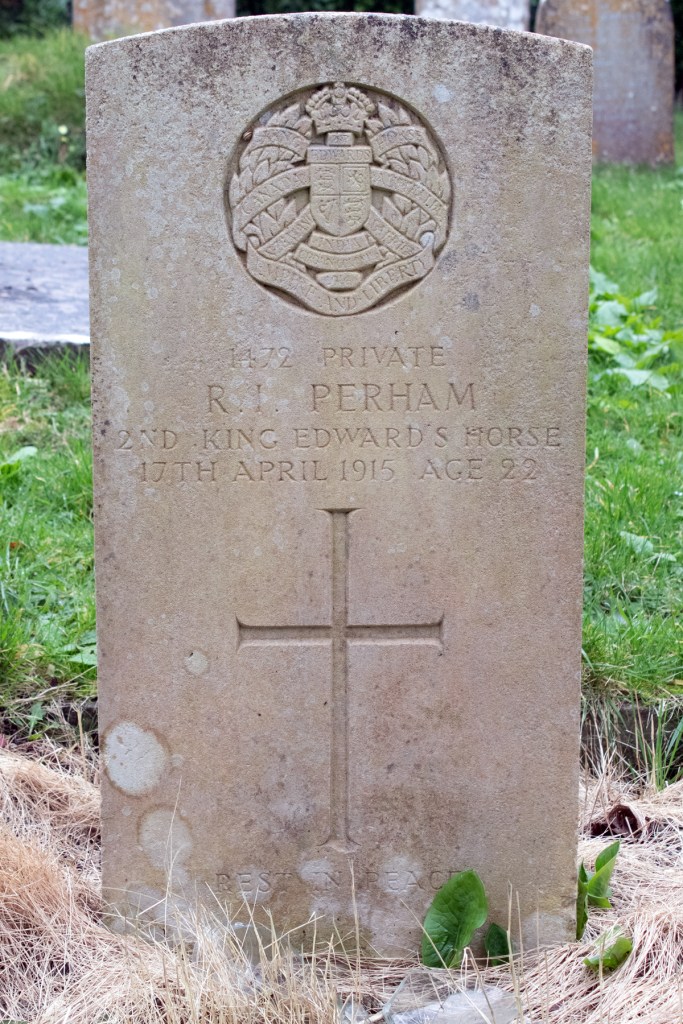
Robert Ivor Perham was born in the Dorset village of Purse Caundle in the autumn of 1892. The oldest of eight children – and thirteen years older than his youngest sibling – his parents were farmers Thomas and Annie Perham.

Thomas took the family where the work was: the 1901 census found them living at Manor Farm in West Chelborough, Dorset. Ten years later, they had moved north in the county, to Ryme Intrinseca. Robert was helping his father on the farm by now, his seven siblings all still being at school.

Robert saw an opportunity for farming to give him an adventure and, on 27th March 1913, he set off for Australia to work as a ranch hand. His time in the Antipodes was to be cut short, however, when, in the summer of 1914, war broke out in Europe. He made the lengthy journey back to Britain to serve his King, and was assigned to the 2nd King Edward’s Horse regiment.

Private Perham’s time in the army seemed not to have been a lengthy one. Full details of his service are lost to time, but it is likely that he arrived back in Blighty in the early weeks of 1915. He quickly fell ill – from ‘spotted fever’, or meningitis – and was admitted to the 2nd Eastern General Hospital in Brighton, Sussex. Sadly, it was a condition to which he would succumb: Robert passed away on 17th April 1915, at the age of 22 years old.

The body of Robert Ivor Perham was taken back to Dorset for burial. He was laid to rest in the peaceful graveyard of St Hippolyte’s Church in Ryme Intrinseca.


Boy Mechanic William Mackay

Boy Mechanic William Mackay

William James Mackay was born in Bath, Somerset, on 2nd January 1900. The son of a woman called Matilda, the following year’s census found him living as a nurse child in the home of John and Elizabeth Logie. The household was made up of the Logies, their five children, a boarder, and another nurse child, Harold Fellows.

The next census, taken in the spring of 1911, shows a change in circumstances for the family. Matilda and William were living in the Walcot area of the city, with Matilda’s husband, William Smith. The document suggests that the couple had been married for twelve years, but this would not account for the younger William’s original surname. The census return states that he had taken the name of Smith as well, and there was a fourth resident in the household, widow Elizabeth Clarke.

War came to Europe in the summer of 1914, and William Jr was keen to step up and play his part. Because of his age he was unable to enlist immediately, and it was not until the start of 1917, that he was able to enlist.

William – who had returned to the name Mackay by this point – was working as a clerk when he joined the Royal Naval Air Service (RNAS) on 23rd January 1917. His service records show that he enlisted as a Boy Mechanic, and that he was 5ft 8.5ins (1.74m) tall. He had brown hair, brown eyes and a fresh complexion.

Boy Mechanic Mackey was assigned to HMS Daedelus, one of the RNAS shore-based facilities: it was here that he was to receive his training over the spring and summer. Military barracks were notoriously cramped and hotbeds for illness and disease, and William was not to be immune to health issues. He contracted cerebrospinal meningitis within months of arriving at the base, and passed away on 5th August 1917. He was just 17 years of age.

William James Mackay was brought back to Somerset for burial. He was laid to rest in the sweeping grounds of Bath’s Locksbrook Cemetery.


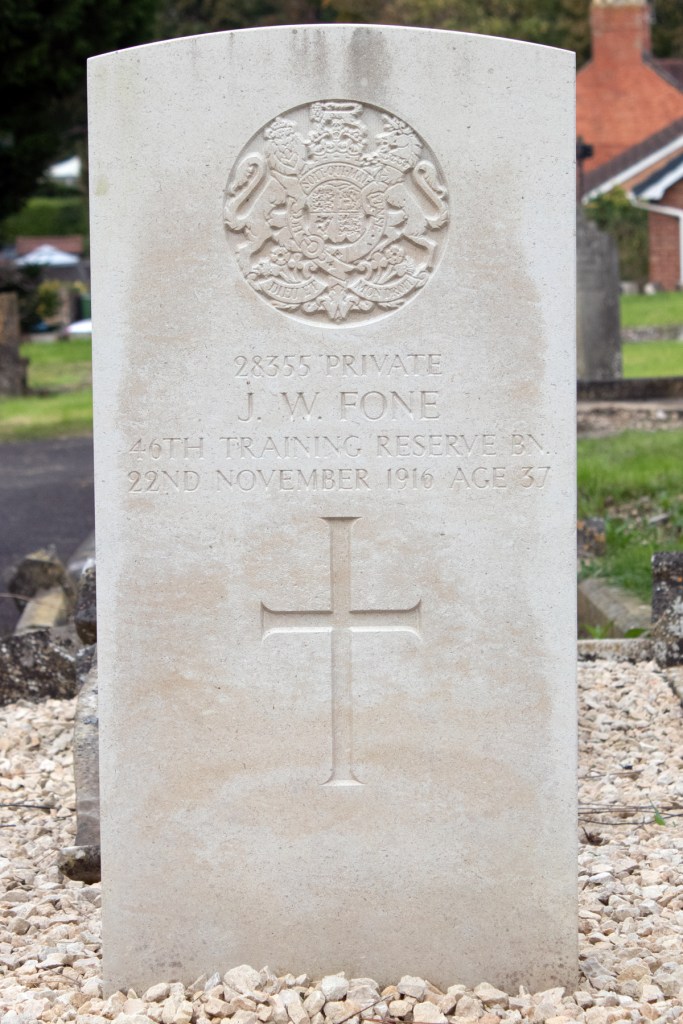
Private James Fone

Private James Fone

James Walter Fone was born in Crewkerne, Somerset, late in 1878. The sixth of seven children, his parents were Edward and Emma Fone. Edward was an insurance agent who had moved the family to Yeovil by the mid-1880s.

When James left school, he found work as a clothier’s assistant. Emma died in 1906, and he moved to Bristol. By the time of the 1911 census, he was employed by, and boarding with, James Johnstone.

Details of James’ life become a bit sketchy from here on. He enlisted in the army when he received his call-up in the autumn of 1916. Joining the 46th Training Reserve Battalion, Private Fone was sent to a camp near Swanage in Dorset.

Barracks at this point in the war were tightly packed, and breeding grounds for illness and infections. James was not to be immune to this, and came down with cerebrospinal meningitis. He was admitted to the camp hospital, but died there on 22nd November 1916, at the age of 37 years old.

James Walter Fone’s body was brought back to Somerset for burial. He was laid to rest in Yeovil’s sweeping cemetery.


Private Edward Browning

Private Edward Browning

Edward John Browning was born in the autumn of 1897 in the Somerset village of Over Stowey. The youngest of five children, his parents were blacksmith-turned-farmer John Browning and his wife, Alice.

By the time of the 1911 census, the family had moved to nearby Colepool Farm in Stogursey. Edward’s older brothers were all supporting their father on the farm, while, at 13 years of age, he was still to complete his schooling.

Details of Edward’s military life are scarce. When war broke out he enlisted, and joined the 3rd (Reserve) Battalion of the Somerset Light Infantry. His troop served on home soil, moving to Derry/Londonderry, Northern Ireland, by November 1917, and Belfast by the following spring.

Private Browning survived the conflict but had fallen ill by the summer of 1919. He was admitted to the Purdysburn Military Hospital in Belfast. He was suffering from cerebrospinal meningitis, and this was to claim his young life. He passed away there on 9th July 1919, at the age of just 21 years old.

The body of Edward John Browning was brought back to Somerset for burial. He was laid to rest in the peaceful graveyard of St Andrew’s Church in Stogursey.


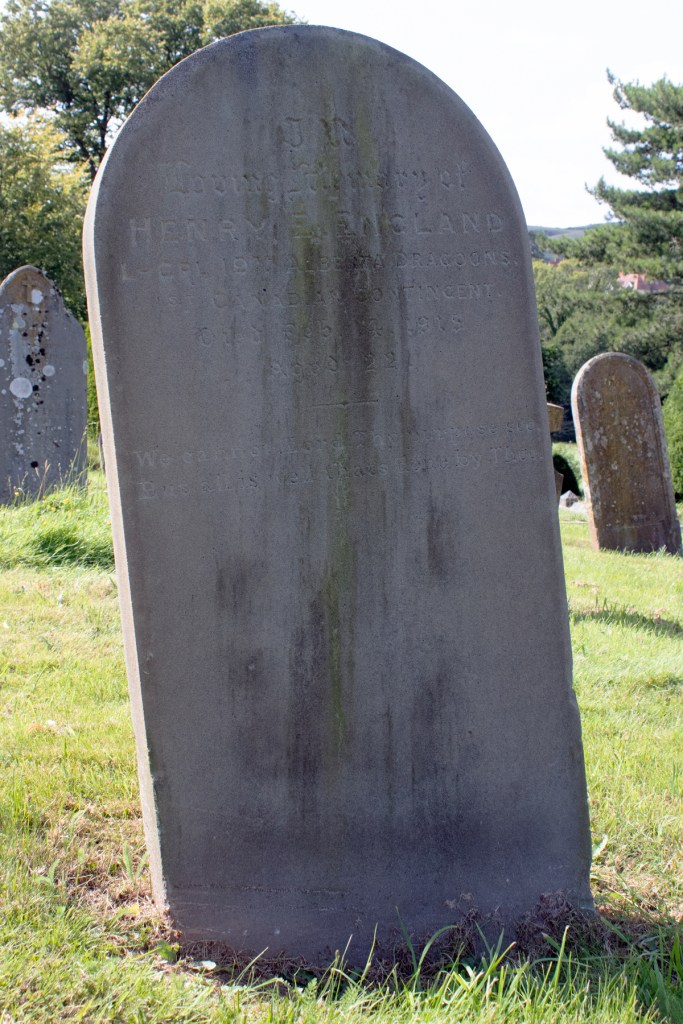
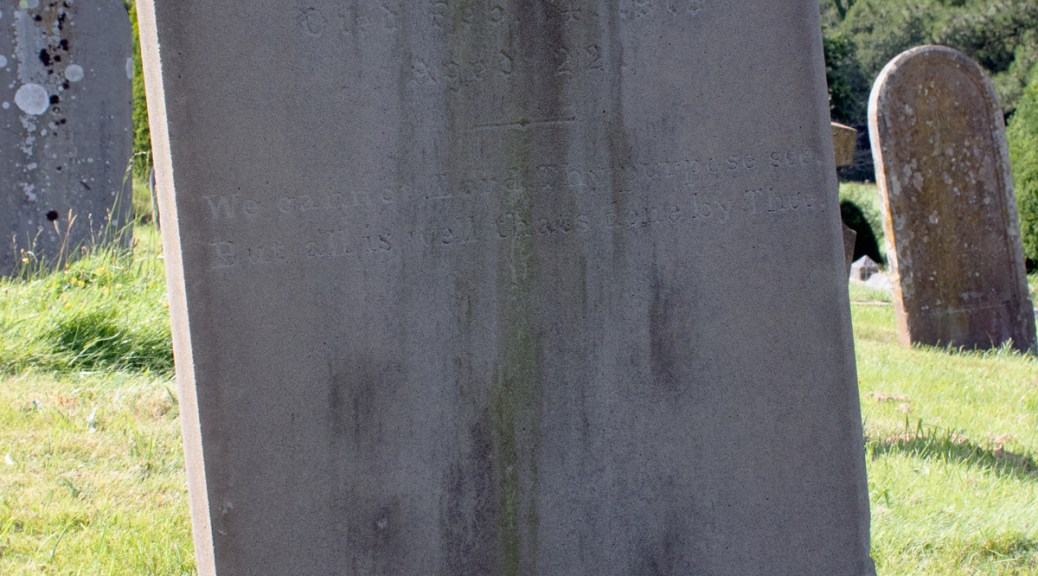
Private Henry England

Private Henry England

Henry Edward England was born in Gloucestershire on 7th October 1893. One of seven children, his parents were Charles and Unity England. Charles was coachman and groom to Sir Charles Cuyler, and the family were raised in Bristol.

There are gaps in Henry’s life that are a challenge to fill. He seems to have sought to better himself, emigrating to Canada and becoming a bank clerk in Quebec.

When war broke out, Henry was quick to enlist. He joined up on 21st September 1914, becoming a Private in the 19th Battalion of the Alberta Dragoons. His service records show that he was 5ft 8ins (1.73m) tall and weighed 140lbs (63.5kg). He was noted as being of average physical development with dark hair, brown eyes and a dark complexion.

Private England returned to home shores by December 1914, at which point he transferred to the 6th (Reserve) Battalion of the Canadian Infantry. His troop proceeded to Tidworth Camp in Wiltshire, on the edge of Salisbury Plain.

Army barracks at this time were melting pots: hundreds of men from different parts of the world cramped together in small billets proving breeding grounds for illness and disease. Henry was to prove a victim of the conditions: in the winter of 1914, he contracted meningitis. Admitted to the camp hospital, he was to succumb. Private England breathed his last on 14th February 1915, aged just 21 years of age.

Henry Edward England’s body was taken back to Somerset for burial. He was laid to rest in the sweeping vista of Minehead Cemetery, not far from where his family now lived.