Category Archives: story

Ordinary Seaman Cecil Bowyer

Ordinary Seaman Cecil Bowyer

Cecil Henry Bowyer was born in October 1900, the oldest of four children to Harry and Bessie Bowyer. Harry was a carter and, at the time of the 1901 census, the family lived in a small house in the middle of Bridgwater, with Harry’s sister, Bessie’s mother and an additional boarder.

Bessie was keen to earn her way, becoming a musical instrument dealer, while her husband moved on to work as a foreman for a coal merchant. By this time, the family had moved round the corner from their former home, and Harry and Bessie lived there with Cecil, his younger siblings Leslie, Henry and Doris, and another boarder.

Harry found himself before the Bankruptcy Court in 1913. By this time, he was carrying on business as a gramophone and cycle agent, as well as his carter business. Bad debts and living expenses were his downfall, however, and he found himself with a deficiency of £83 15s 5d. The examination was declared closed, according to the Wells Journal, but no outcome was reported.

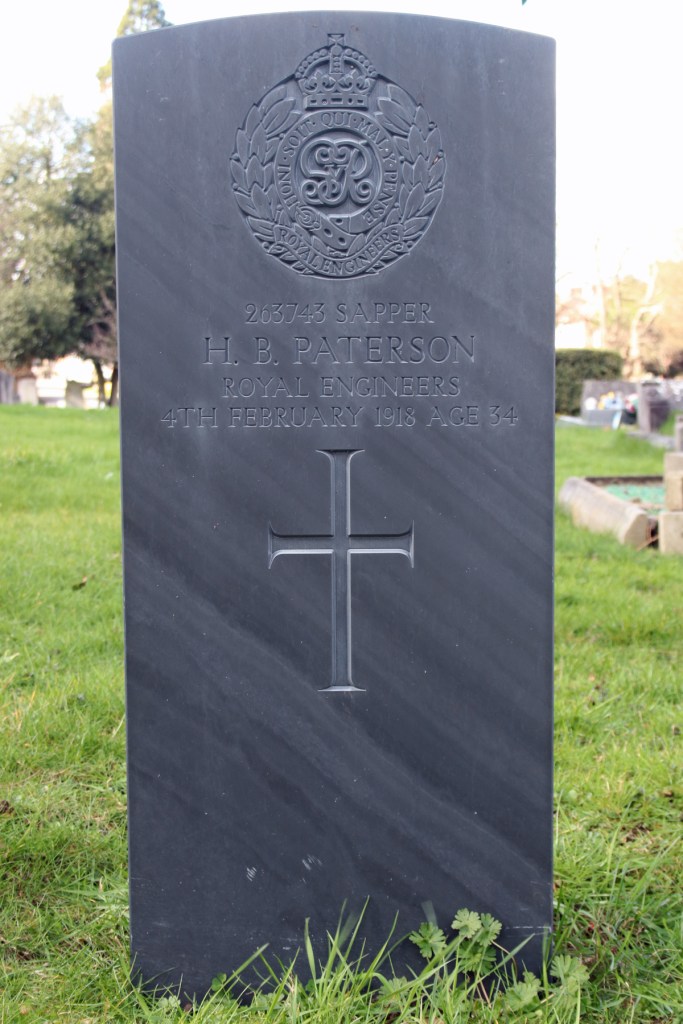
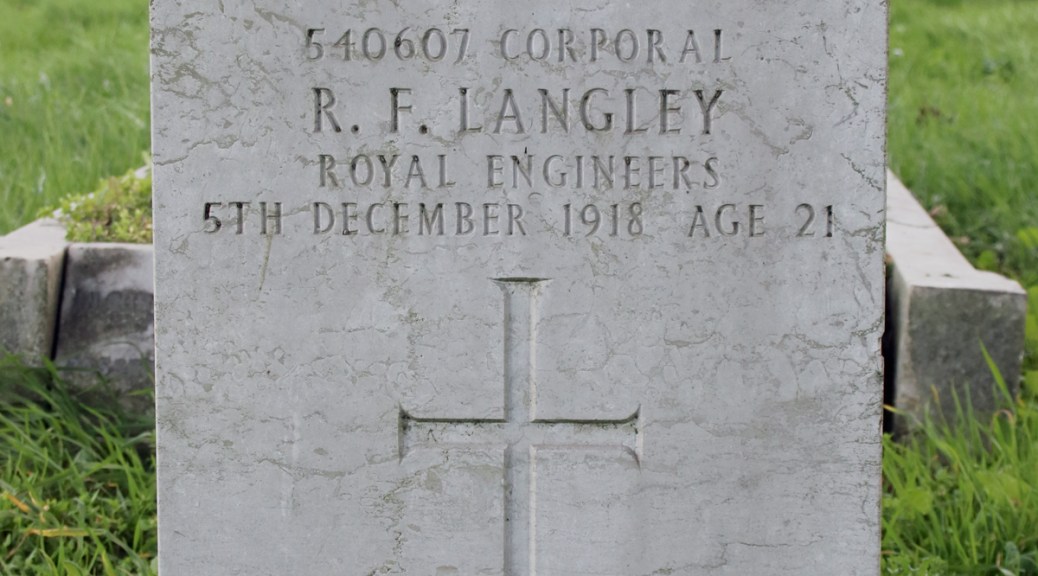
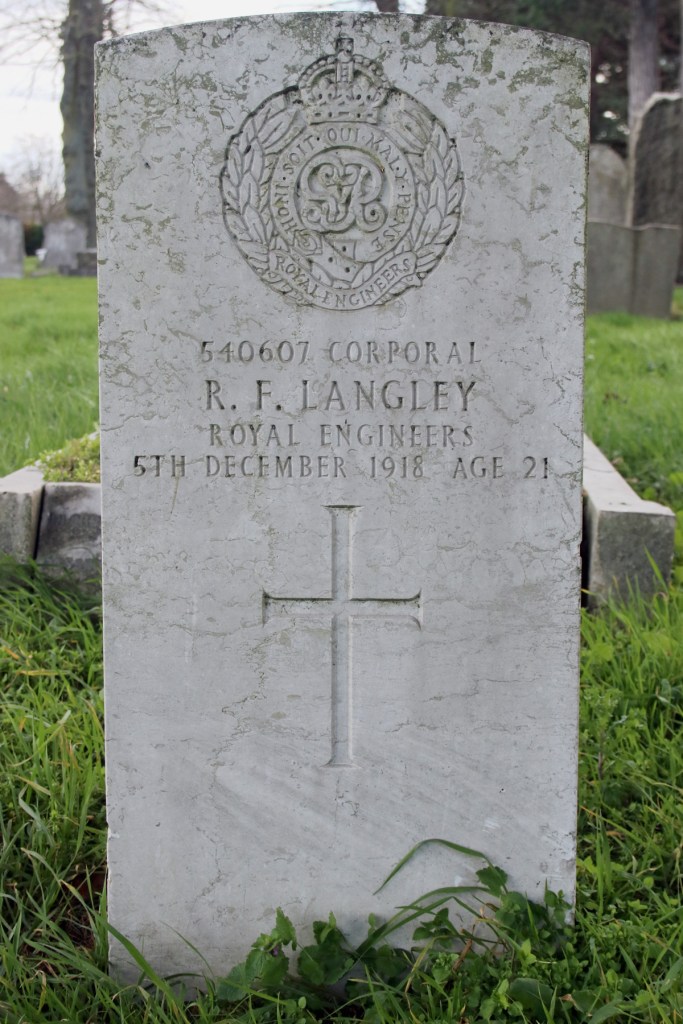
War was looming, and the family did their bit. Harry joined up, enlisting in the Royal Engineers as a sapper. He was shipped to Salonica, Greece, where he served for much of the war.

Cecil, however, chose the seafaring route. He had to wait until he came of age before enlisting, however, and so it was late September 1918 before he joined the Royal Naval Voluntary Reserve. He started his training at the training base in Crystal Palace, but was only there for a couple of weeks before he fell ill.

Contracting pneumonia, Ordinary Seaman Bowyer was admitted to hospital, but sadly this took him quickly, and he passed away on 11th October 1918 He had just turned 18 years old.

Cecil Henry Bowyer was brought back to Bridgwater to be buried; he lies at rest in the Wembdon Road Cemetery there.


Serjeant Henry Cummings

Sergeant Henry Cummings

Henry Cummings was born in the village of Wembdon, near Bridgwater in Somerset in 1876. The son of agricultural labourer John and his wife Jane, Henry was one of six children.

When he left school, Henry followed his father into agricultural labouring, as his older siblings had done before him. Jane had died when Henry had just reached his teens, so he continued to live with his widowed father, and was recorded there as late as the 1911 census.

On 4th August 1912, he married Sarah Palmer in Wembdon Parish Church; Henry was 36 by this point, and his new wife was 30. They couple may not have thought they could have children, as they went on to adopt a girl, Edith, who was six years old when they had married.

From a military perspective, it appears that Henry had initially tried to enlist in 1908. Based on his service records, it seems that he was not accepted at that point, but when war broke out, things were a different matter. He joined the Army Service Corps on 6th January 1915, attaining the rank of Sergeant.

Henry’s service was to be cruelly short, at just 85 days. Hospitalised in Rugby, Sergeant Cummings passed away from cerebrospinal meningitis on 6th April 1915. He was 38 years old.

Henry Cummings was brought back to Bridgwater for burial, and lies at rest in the Wembdon Road Cemetery there.


In September 1915, Sarah gave birth to a baby girl, Irene. Henry was never to see his little girl, and, tragically, may not even have known he was to be a father.


Photo courtesy of ancestry.co.uk

Able Seaman Alfred Walters

Able Seaman Alfred Walters

Alfred Charles Walters was born in March 1900, one of six children to Alfred and Sarah Walters from Bridgwater, Somerset. Alfred Sr was a labourer in a brickyard, and the family lived in the centre of the town.

When war broke out, Alfred seemed very eager to be involved. Lying about his age (giving his date of birth as 26th August 1898), he enlisted in the Royal Naval Reserve. Training in Portsmouth – on HMS Victory II, HMS Excellent and HMS President III – he was assigned to the SS Tanfield.

The steamer was heading out of London en route for Bombay and Karachi in April 1918, and was making its way west through the English Channel. On 15th April, it was located and tracked by the German U-Boat UB74, under the command of Ernst Steindorff. The German fired a torpedo, which hit and crippled Able Seaman Walters’ ship. Thankfully, there was no loss of life, and the Tanfield managed to limp back to port.

Little else remains of Able Seaman Walters’ military life. In February 1919, he was admitted to the Dreadnought Seaman’s Hospital in Greenwich, suffering from influenza and bronchial pneumonia. Sadly, he succumbed to the disease, passing away on 20th February 1919. He was just 18 years old (although his military record and gravestone give him as 19).

Alfred Charles Walters lies at peace in the Wembdon Road Cemetery in his home town of Bridgwater, Somerset.


Private Roland Roberts

Private Roland Roberts

Roland Roberts was born in September 1896, one of three children – all boys – to Albert and Minnie Roberts.

Minnie, who was originally from Yeovil, had married Walter Shury, a Londoner, in 1874, and the couple had six children together. Walter then went on to have four children with Alice Norwood, and the couple married in 1898. Minnie, meanwhile, had met Albert Roberts, who was from Dundalk in Ireland, and, while no marriage seems to be confirmed, the couple had three boys, including Roland. (It is pure speculation, but as Minnie’s maiden was also Roberts, this might have provided a good enough cover for any divorce or re-marriage.)

Albert had been a Band Sergeant in the 4th Hussars, and continued that passion by becoming a music teacher Travel was also definitely in his blood: the couple’s first child, Willie, was born in South London, Roland was born in Somerset, and his younger sibling, Glencoe, was born in Penzance, Cornwall. Albert’s musical success led him to become bandmaster for the Penzance Town Band. Sadly, it was not all positive for him; in 1901, Minnie passed away, and in the same year, Willie also died, at the tender age of six.

It was the military that drew Roland in, and, in 1910, aged just 14 years old, he enlisted in the Coldstream Guards. According to the following year’s census, he was stationed at the Ramillies Barracks in Aldershot, and held the rank of Boy.

Differing from the naval rank of the same name, lads of 14 or over could serve in any regiment as musicians, drummers, tailors, shoemakers, artificers or clerks, and all were ranked as boys. It seems likely, therefore, that his father’s enthusiasm for music served him well.

When war broke out, he was of fighting age, and, as part of the “Old Contemptibles”, he was involved in the Battle of Mons, the first major confrontation for the British Expeditionary Force.

During the war, Private Roberts took part in some of the most severe fighting on the Western Front, was wounded three times, as well as being gassed. He was also recommended for the DCM for gallantry in action.

He transferred to the Labour Corps, and spent time doing land work in Somerset. It was here that Roland met and married Gladys Pyne, whose family was from Bridgwater, and the couple tied the knot in March 1918.

Sadly, it was during this war service that Private Roberts contracted influenza and pneumonia and he passed away as his in-laws’ home on 10th November 1918, the day before the Armistice was signed. He was just 22 years old.

The local newspaper reported on Roland’s continued gallantry in its article on his funeral:

[Roland] held the medal of the Royal Humane Society for saving a woman’s life.

He was also the hero of an incident that occurred in Bridgwater a few weeks ago, when he succeeded in checking the career of an infuriated bull through pluckily catching the animal by its horns.

His disposition was always most cheerful, and although suffering from his [war] wounds a good deal, he never complained.

The Cornishman: Wednesday 27th November 1918

Roland Roberts lies at rest in the Wembdon Road Cemetery in his adopted home town of Bridgwater, Somerset.


Private Henry Morgan

Private Henry Morgan

Henry Morgan was born in 1892 in Bridgwater, Somerset. He was the oldest of two children, both boys, to Charles Morgan and his wife Ellen. Charles managed the local collar works, making collars for shirts.

While Henry’s younger brother, Herbert, followed his dad’s business, according to the 1911 census, Henry was learning the farming trade. This was to stand him in good stead, and in 1912, he emigrated to Australia, to become a farmer.

Henry settled in Gunnedah, New South Wales, but was called up when war broke out. He enlisted in May 1916 and joined the Australian Machine Gun Corps. His troop left Australia on the ship Borda in November 1916, arriving in Plymouth two months later, and he finally reached France in March 1917.

Initially part of the 9th Machine Gun Battalion, Private Morgan transferred to the 3rd Machine Gun Corps in April 1918. Involved in the Allied defence of the German Spring Offensive, he was caught up in a gas attack and injured.

Wounded on 17th April 1918, Henry was evacuated back to England and admitted to the Voluntary Aid Detachment Hospital in Cheltenham. Sadly, Private Morgan was not to recover, and he died from his injuries on 8th May 1918. He was just 25 years old.

Henry Morgan lies at rest in the Wembdon Road Cemetery in his former home town of Bridgwater, Somerset.


Driver Stanley Pearce

Driver Stanley Pearce

Stanley Arthur Robert Pearce was born in September 1895, the fourth of five children to Edwin and Rosetta Pearce from Bridgwater, Somerset. Edwin was a painter and sign-writer, and it was in the creative trades that his children followed.

Stanley’s eldest brother Clifford became a gardener; his next oldest Edwin Jr was a mason’s labourer; while his older sister Dorothy became a cardboard box maker. By the time of the 1911 census, when Stanley was 16, he was listed as a painter’s errand boy, presumably helping out his father.

War was on the horizon, and Stanley was keen to do his bit. In October 1914, he enlisted, becoming a Driver in the Royal Army Service Corps. Assigned to the 662nd Heavy Transport Company, he was based in London. There was still time for visits home, however, and the local Bridgwater newspaper reported on an ASC football match in which Driver Pearce was involved in October 1915.

By this time, Stanley had met Flossie Vickery, from nearby North Petherton. The couple married the following year, and had two children, Ada and Geoffrey.

In 1916, Driver Pearce’s battalion was shipped off to Salonica in Greece, as part of the British Expeditionary Force in the Balkans. While there, he contracted malaria and dysentery, and was evacuated back to England for treatment in September 1918.

Driver Pearce recovered well enough to enjoy a month’s recuperation, but fell ill again, with a recurrence of malaria, combined with influenza and pneumonia. He was admitted to the Brook War Hospital in South East London, but sadly not recover, and passed away on 10th November 1918, a day before the Armistice was signed. He was just 23 years old.

Stanley Arthur Robert Pearce lies at rest in the Wembdon Road Cemetery in his home town of Bridgwater.


Stanley’s older sister Dorothy – the cardboard box maker – contracted influenza around the same time as her brother and, tragically, died just five days after him. The siblings were buried in a joint funeral at the cemetery.


Private James Godden

Private James Godden

James Godden was born in the autumn of 1879. The youngest of six children to Charles and Mary Ann Godden, the family lived in Bridgwater, Somerset. Charles was a labourer and, while his older brothers followed in a similar vein, by the time of the 1901 census, aged 21, was listed as a hairdresser.

James married Hester Addicott in 1906, and the couple had three children – Ruby, Leslie and Freda. Hairdressing may not have been that well paid; according the to 1911 census, the young family had four boarders, ranging from 17 to 60 in age.

War was on its way, and James enlisted at the end of 1914. Initially joining the Somerset Light Infantry, he was soon transferred to the Army Cyclist Corps. Sadly, full details of his military service are not readily available, but it seems likely that he was part of the company’s First Line, who saw service overseas.

Private Godden served three years before being medically discharged from the army. His discharge records give a startling insight into his health.

Originated at Chiseldon Camp: April 12th 1917.

He is in a condition of violent excitement, talks without ceasing and suffers from insomnia. Refuses solid food, but will take a little milk. Not result of, but aggravated by, strain of ordinary military service.

Permanent total incapacity. Treatment in an asylum required.

Cause of discharge: Medically Unfit – Acute Mania

James Godden: WW1 Pension Records

James was admitted to the Somerset & Bath Asylum in the village of Codford, near Taunton. For good or bad, his time there was brief. Within a couple of weeks, he contracted bronchitis. Sadly, James was to succumb to this, and passed away on 29th April 1917. He was 27 years of age.

An additional twist in the tail came from the local newspaper report on his passing:

Somerset Athlete Killed

The death is reported of a former well-known athlete in the person of Mr James Godden, who before joining the Army carried on business as a hairdresser at Bridgwater. The deceased, who was 37 years of age, enlisted in December 1914, and was subsequently transferred to a cycle corps. He death occurred at a Somerset institution after a short illness. The deceased was well known throughout the West of England as a crack cyclist, and competed at big athletic meetings at Exeter, Plymouth, Bath and Bristol, in addition to local sports. He had won altogether over 400 prizes. He leaves a widow and three children.

Wells Journal: Friday 4th May 1917

James Godden lies at rest in the Wembden Road Cemetery in his home town of Bridgwater, Somerset.


James Godden, celebrated on an Ogden’s Cigarettes card
(with thanks to John Boyland)

Lieutenant Rudolph Symons

Lieutenant Rudolph Symons

Rudolph Clifford Symons was born in the autumn of 1887, one of ten children to Clifford and Clara Symons. Clifford ran a brick and tile manufacturer’s and later became a town councillor in the family’s home of Bridgwater in Somerset.

By the time of the 1911 census, Rudolph had become the works manager for his father, but war soon beckoned.

Sadly, Rudolph’s full military record has been lost to time, but he enlisted in the Royal Army Service Corps early on in the conflict and was promoted to Lieutenant at the end of September 1914. He was involved in recruiting new soldiers, and it was following one of these meetings that he was involved in an accident.

The local media picked up the story:

On Friday night, while riding through St Jon Street on his motorcycle, to which a side-car was attached, he collided with a horse and light waggon… Lieutenant Symons appears to have been struck by one of the shafts in the region of the heart, and was rendered unconscious. He was at once conveyed to his home, where he was medically attended and was subsequently removed to the nursing home on Friarn Street. On the following day a specialist was called in, and an operation performed, but the injuries were of so severe a character that death ensured on Monday.

Taunton Courier and Western Advertiser: Wednesday 22nd September 1915

The coroner reported that Rudolph had died from an internal haemorrhage and the inquest recorded a verdict of accidental death, and exonerated the waggon driver – a dealer caller Wyatt – from all blame.

Lieutenant Symons was a popular man, a vocalist in the Bridgwater Amateur Operatic Society, and was also heavily involved in the local annual Guy Fawkes celebrations.

He died on 13th September 1915, aged 27 years old, and lies at rest in the Wembdon Road Cemetery in his home town.


Engine Room Artificer George Millard

Artificer George Millard

George Edmund Millard was born in 1887, one of seven children to Edmund and Annie Millard, from Bridgwater, Somerset. Edmund was an engineer by trade, something George’s elder brother followed him into.

Sadly, little of George’s life remains documented. He enlisted in the Royal Navy, in January 1915, working as an Engine Room Artificer (or engineer). Stationed in Kent, his initial training was at HMS Pembroke II base on the Isle of Sheppey.

Artificer Millard spent nine months on HMS Dido, which formed part of the Royal Navy’s force based in Harwich. At start of 1916, he was transferred back to HMS Pembroke II. This may have been for health reasons, as he was subsequently discharged with tuberculosis in April.

George’s records finish there, and it is likely that he succumbed to his lung condition after an 18-month fight. He died at home in Bridgwater on 26th January 1918, aged 21 years old.

George Edmund Millard lies at rest in the family grave at the Wembdon Road Cemetery in his home town of Bridgwater.


Private Arthur Bloomfield

Private Arthur Bloomfield

Arthur Henry Bloomfield was born on 19th December 1888, the youngest of six children. His parents, agricultural labourer and carter William and his wife Mary, raised the family in the small Norfolk village of East Harling, which was about halfway between the larger towns of Thetford and Diss.

Arthur married Rose Howlett in November 1911; the couple had two children – Margaret and Frederick – who became siblings for Rose’s daughter, Violet.

While Arthur’s military records are scarce, it is evident that he enlisted in the 9th Battalion of the Royal Irish Rifles. Private Bloomfield’s troop fought at a number of the key skirmishes on the Western Front, including the devastating (for the battalion) Battle of Albert in 1916.

A year later, the 8th and 9th Battalions were caught up in the Battle of Messines and it was here that Private Bloomfield met his fate. His pension records show that he was killed in action on 7th June 1917. He was 28 years old.

Arthur Henry Bloomfield lies at rest in the Lone Tree Military Cemetery in Mesen, West Flanders, Belgium.


Interestingly, Arthur’s pension records only cite his beneficiaries as Rose, Margaret and Frederick. This may go further in confirming that Violet was not his daughter.


Arthur Henry Bloomfield was my great great uncle.


Photo courtesy of Commonwealth War Graves Commission.