Category Archives: unknown

Sapper John Gage

Sapper John Gage

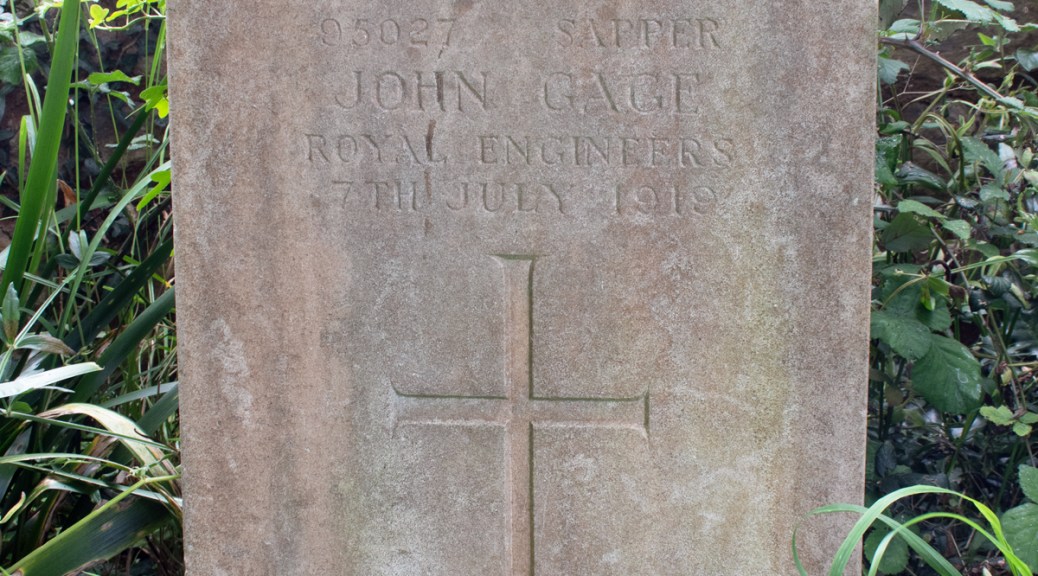
The life of John Gage seems destined to remain a mystery. His grave lies in a quiet corner of St Andrew’s Churchyard in West Hatch, Somerset. The Commonwealth War Graves Commission registration reads:

GAGE, Spr. John, 95027. “G” Depot Coy. Royal Engineers. 7th July 1919. Son of John Gage; husband of Lucy Gage, of Canal Cottage, Wrantage, Taunton. Born at Axminster, Devon.

There is no date of birth for John, and, while there is a possible census return for 1891, with a John Gage Sr and Jr living in the Axminster area, in isolation it is not concrete enough to connect to the man lying in St Andrew’s Churchyard.

The Army Register of Soldiers’ Effects confirms Lucy as John’s widow, but again no marriage documents remain to give a date for the nuptials or ages for the bride and groom. The document does confirm that Sapper Gage had been serving in the Royal Engineers for more than six months at the time of his passing, and that he died in a military hospital in Taunton.

There are no contemporary newspapers that report on John’s passing, which would indicate that is was nothing out of the ordinary, or connected directly to the war – through injury, for example. This might suggest, therefore, that John passed away though illness, although this cannot be confirmed either way.

Sapper John Gage’s life is set to be lost to time, therefore. He lies in the graveyard of St Andrew’s Church in West Hatch. Nearby is another grave, that of Lucy Gage, who died in 1942.
Private Frederick Stone

Private Frederick Stone

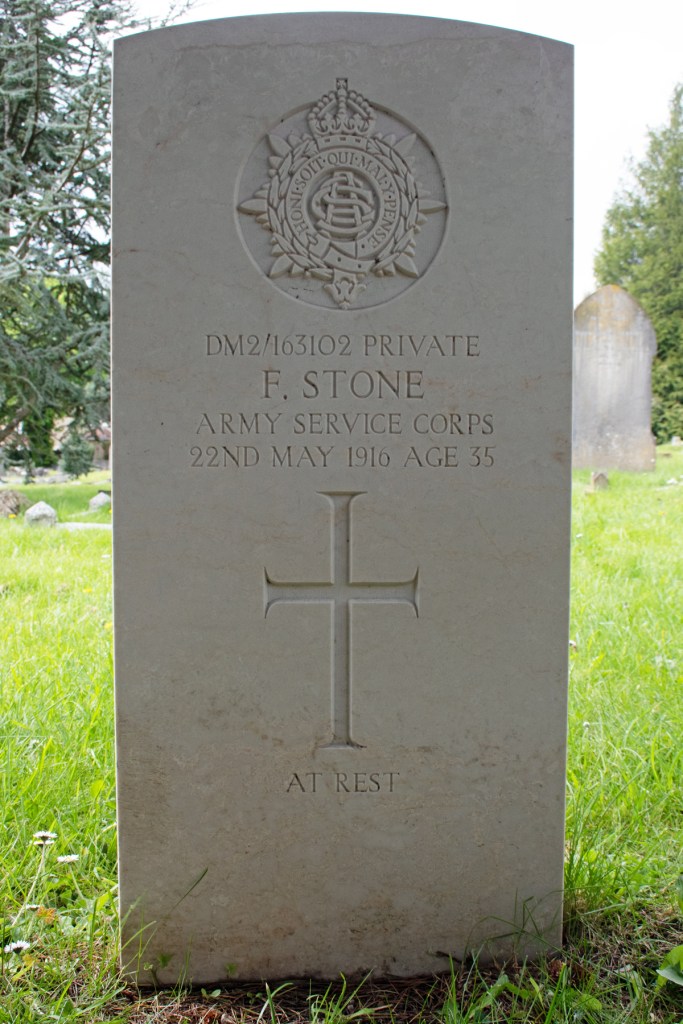
A lot of the life of Frederick Stone is destined to remain shrouded in mystery. His grave lies in the St Michael’s Cemetery, Bath, Somerset. The headstone confirms that he was a Private in the (Royal) Army Service Corps when he passed away on 22nd May 1916, at the age of 35.

The Commonwealth War Graves Commission give a little more information – he was the husband of Millie Stone, who lived at 9 Mount Road, Englishcombe. Private Stone was attached to the 623rd Mechanical Transport Company.

The 1911 census records a Fred and Millie Stone living at 22 Paragon, Bath, a twelve room Georgian terraced house near the centre of the city. Fred is listed as a gas maker for an ice factory, while Millie, who was eight years older than her husband, is noted as being a boarding house keeper. They couple were recorded as having been married for two years, and they had a seven month old daughter, Emily.

There is no marriage record for the couple, nor a baptism record for Emily, so it is not possible to glean any further information. There are four Bath-born Fred/Frederick Stones in the 1901 census, so again confirming which relates to the Private lying in the city’s cemetery is a challenge.

Private Frederick Stone’s death is not reported in the contemporary newspapers and so seems not to have been out of the ordinary. He was laid to rest in St Michael’s Cemetery, at peace.


Rifleman Edward Compton

Rifleman Edward Compton

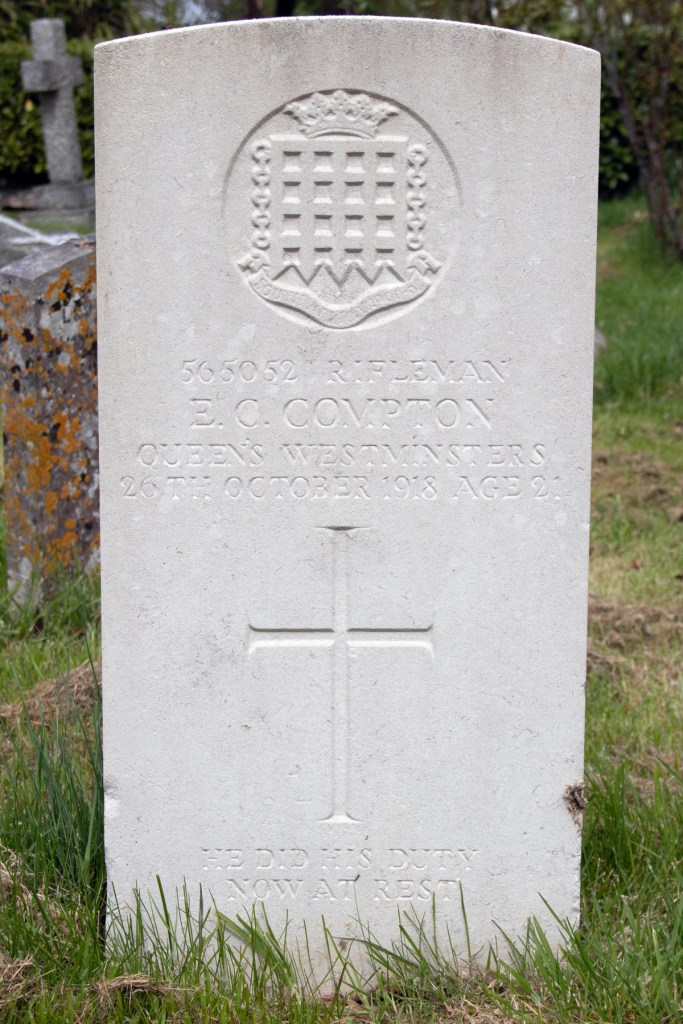
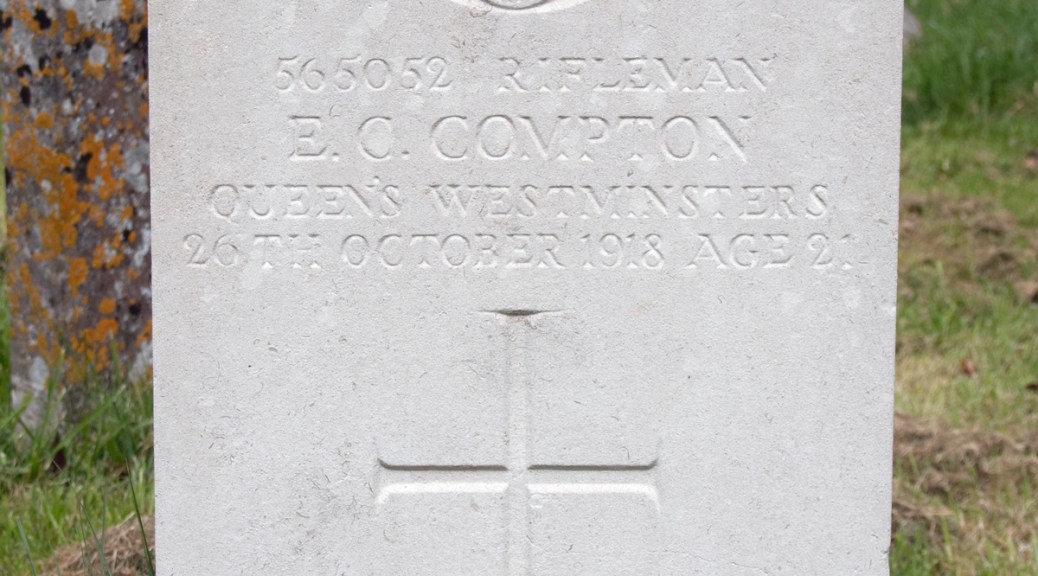
Edward Charles Compton was born in Islington, Middlesex on 4th July 1897, the only child to Charles and Ada Compton. Charles was an agent for the Prudential Insurance company, and the family lived on Devonshire Road, with Charles’ aunt, Mary.

When he finished his schooling, on 7th July 1911, Edward found work as a clerk for the North African Mission. When war came to European shores, he was eager to serve his King and Country. He enlisted on 10th September 1914, and was assigned to the 11th (Reserve) Battalion of the London Regiment.

Rifleman Compton’s service records confirm that he was 5ft 8ins (1.73m) tall, with good vision and physical development. He wasn’t formally mobilised until the summer of 1916 and, after training, he was transferred to the 16th (County of London) Battalion, also known as the Queen’s Westminster Rifles. He was sent to France on 19th December 1916.

Edward would have been involved in the German retreat to the Hindenburg Line in the spring of 1917, and the First and Third Battles of the Scarpe in April and May. At the end of July he returned to Britain and, while the reason for this is unclear, it seems that his health was suffering.

On 24th September 1917, Rifleman Compton was medically discharged from the army, after three years and fifteen days’ service. The cause for this isn’t documented, but there is no evidence that he was wounded, so it is likely to have been an illness of some description.

Edward returned to Islington and on 20th October 1918, he married Emily Backholer. She was a farmer’s daughter from Paignton, Devon, and was registered as living there when the couple’s banns were read during October.

Tragically, Edward and Emily’s marriage was not to be a long one: he died in Kelston, near Bath, Somerset, on 26th October 1918, less than a week after his wedding. He was just 21 years of age.

Edward Charles Compton was laid to rest in the graveyard of St Nicholas’ Church in Kelston, Somerset.


Private Henry Mitchell

Private Henry Mitchell

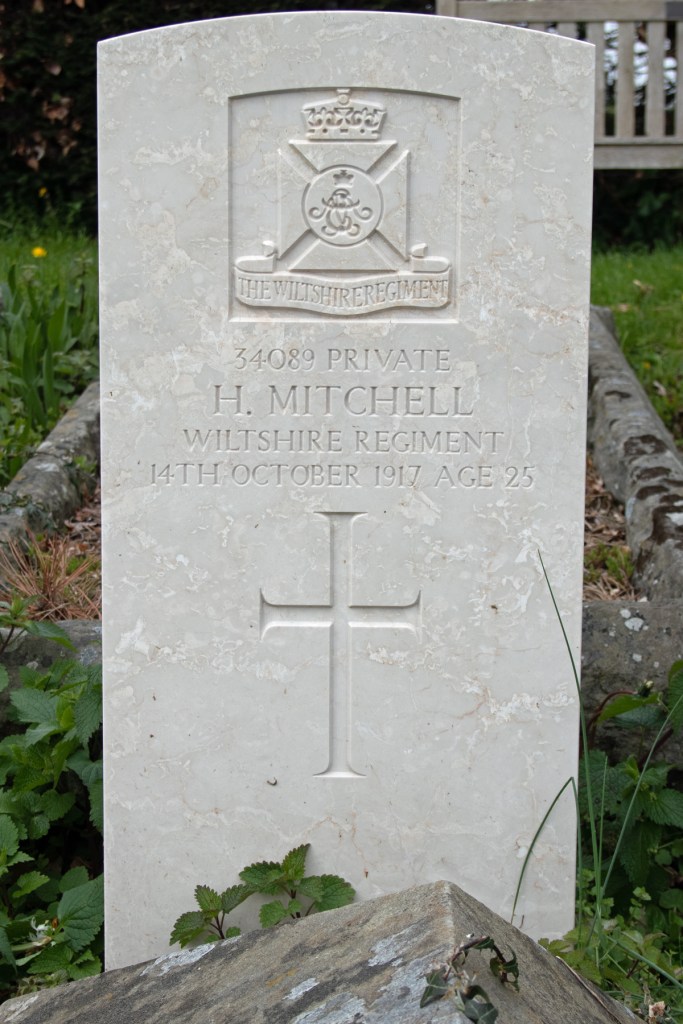
Henry Mitchell was born in the summer of 1892, the second of three children – and the only son – to George and Selina Mitchell. George was a gardener from Saltford, Somerset, and this is where he and Selina raised their young family.

By the time of the 1911 census, Henry had finished his schooling, and had followed his father into gardening for work. War was calling at England’s shores, however, and he was soon to take up a post in the army.

Full details of Henry’s military service are lost to time, but from his gravestone it is clear that he enlisted in the Wiltshire Regiment as a Private. From other documents it is possible to determine that he joined up by April 1917, and that he did not serve overseas. Instead, while his battalion – the 1st – fought at the Somme, Messines and Ypres, Private Mitchell was assigned to the regiment’s depot.

Henry seems to have been based in London, and he was certainly here in the summer of 1917. He was admitted to a hospital in Bethnal Green, and it was here that he breathed his last. He died on 14th October 1917, through causes unknown. He was just 25 years of age.

Henry Mitchell’s body was brought back to Somerset for burial. He was laid to rest in the family plot in the graveyard of the Blessed Mary Church in his home village of Saltford.


Private Alfred Creese

Private Alfred Creese

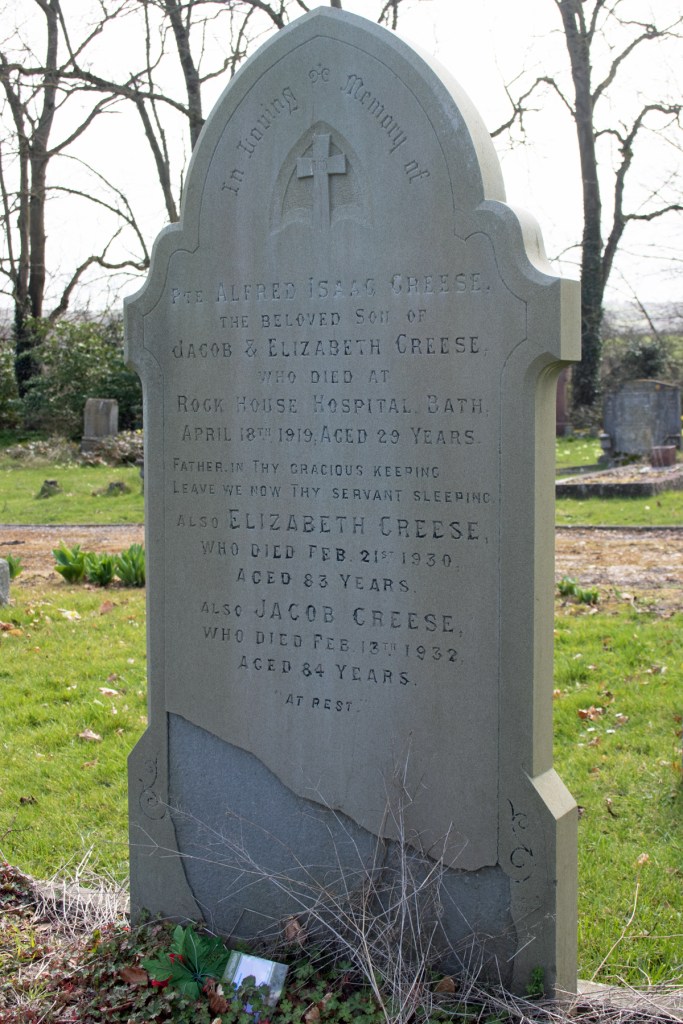
Alfred Isaac Matthew Creese was born in Wellow, Somerset, in the summer of 1889, and was the youngest child to Jacob and Elizabeth Creese. Jacob was a wagon builder for the Somerset & Dorset Railway, working in the village’s station. When Alfred left school, however, he found employment as a farm labourer.

When war came to Europe, Alfred stepped up to play his part. Sadly, few of his military records remain, and those that do give little information away. He enlisted in the Somerset Light Infantry as a Private and, as a result of his war service, he was awarded the Victory, British and Territorial Force War Medal.

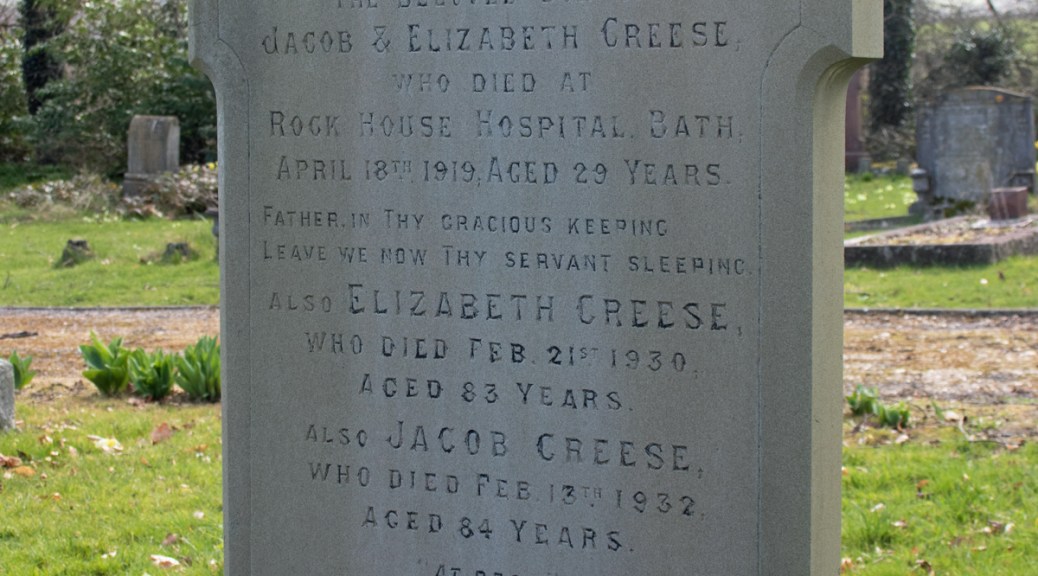
Private Creese survived the conflict, but, according to his headstone, he passed away at the Rock House Hospital in Bath. While this does not appear to be a dedicated hospital, there are a number of locations called Rock House in the Bath area, and it is likely to have been a house used for convalescent purposes. Whatever the location, this is where Private Creese passed away on 18th April 1919, at the age of 29 years old.

Alfred Isaac Matthew Creese was brought back to Wellow for burial. He was laid to rest in the family plot in the village’s peaceful cemetery, to be joined there by his mother in 1930, and his father in 1932, a family reunited once more.


Private Arthur Selway

Private Arthur Selway

Arthur Ernest Selway was born on 30th October 1898 in Wellow, Somerset. The oldest of six children, his parents were Frederick and Mary Selway. Frederick was a coal miner, and this is likely to have been the line of work for Arthur to follow, had war not intervened.

Arthur enlisted in the Machine Gun Corps on 19th April 1918 and was assigned to the 44th (Reserve) Battalion. Sent to the Rugeley Camp in Staffordshire for training, Private Selway’s time in the army was not to last long, however. While his service records are lost to time, he is recorded as having passed away while at the camp on 3rd October 1918.

Private Selway was just 19 years of age and, having been in the army for just five months and two weeks, this meant that his family were not eligible to receive a war gratuity from the army, as he had not completed six months’ service.

Arthur Ernest Selway’s body was brought back to Somerset for burial. He was laid to rest in the peaceful Wellow Cemetery.


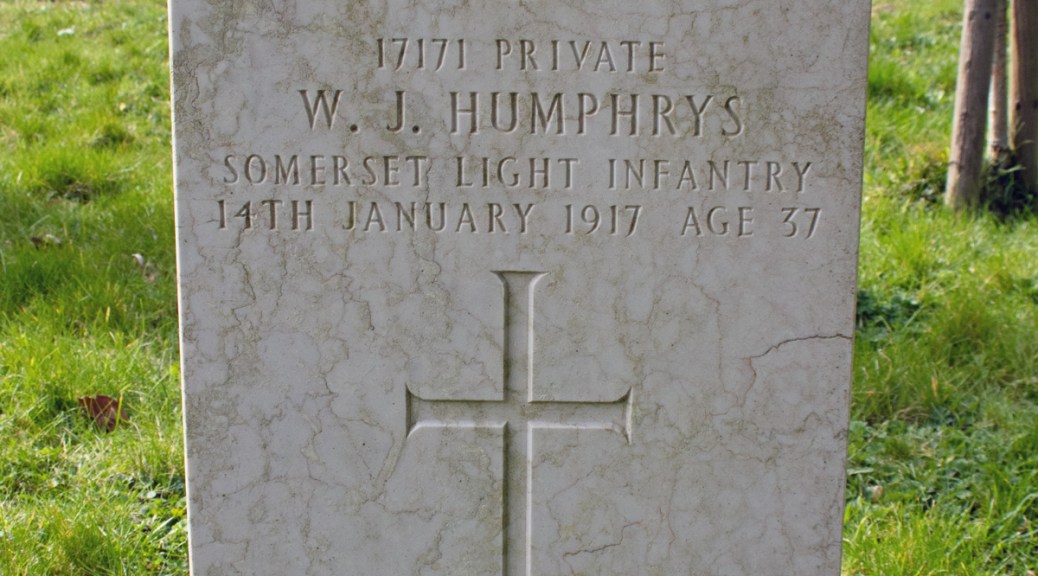
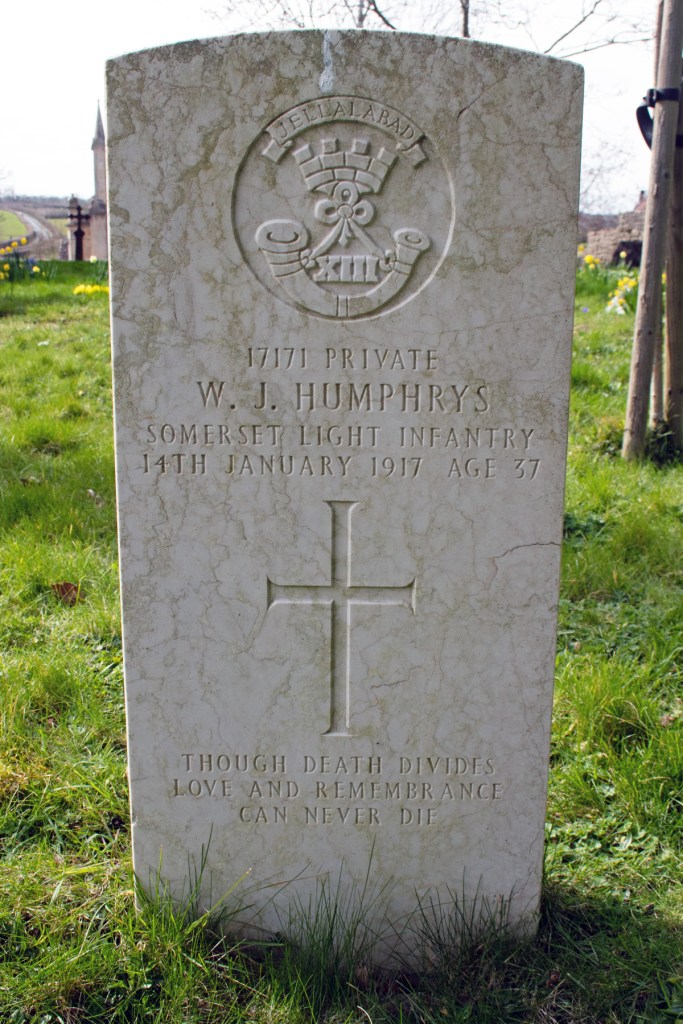
Private William Humphrys

Private William Humphrys

William James Humphrys was born early in 1880, the fourth of seven children to Mark and Alice Humphrys. Mark was a gardener from Wellow in Somerset, but it was in nearby Norton St Philip that the family were born and raised.

Alice died in 1904, by which time William was working as a mason’s labourer. By the time of the 1911 census, he was living in the family home on Church Street, with his father and two older sisters, Annie and Mary.

On 17th April 1911, William married Annie Holcombe, a farmer’s daughter from the village. It is likely that they set up home with Mark, but those details are lost to time.

War came to Europe in the summer of 1914, and William was quick to step up and play his part. He enlisted in the Somerset Light Infantry early in 1915, and was assigned to the regiment’s 6th Battalion as a Private.

William arrived in France in June 1915, and over the next eighteen months was caught up in some of the fiercest battles of the war. The 6th Battalion first saw fighting at the Action of Hooge, where it had the misfortune to be the first to be attacked by flamethrower. During 1916, Private Humphrys was firmly ensconced at the Somme, although full details of his service are lost to time.

In fact, the only other concrete information about Private Humphrys is that of his passing, which happed on 14th January 1917 at King George’s Hospital in London. The cause of his death is unknown, but he was 36 years old at the time.

William James Humphrys was brought back to Somerset for burial. He was laid to rest in the quiet graveyard of Saints Philip & James’ Church, Norton St Philip, within sight of his family home.


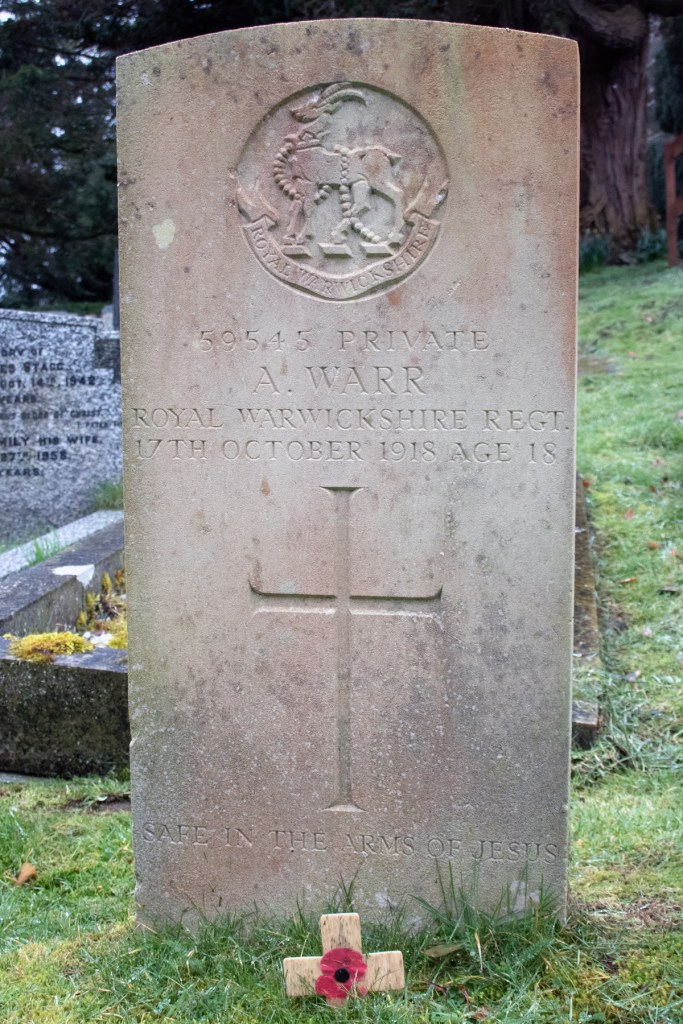
Private Albert Warr

Private Albert Warr

Albert Warr was born in Chaffcombe, near Chard, Somerset, in the spring of 1900. He was the middle of three children to William and Edith. Edith, who was also known as Sophie or Sophia, was nine years older than her husband, and had been married previously. When her first husband passed away, she was left with three children under ten years old – half-siblings to Albert – and so married William to provide them and her a home.

William was an agricultural labourer, but by the time of the 1911 census, the family had moved east to Crewkerne, where both he and Edith took up work in a laundry. The household was complemented by the two older of Edith’s children – Edith, who helped with the laundry work, and Samuel, who was a fishmonger.

Little information is available for Albert’s military service, so his time in the army is a challenge to piece together. He enlisted no earlier than April 1918, and was assigned to the 5th Battalion of the Royal Warwickshire Regiment. Private Warr’s troop fought in France and Italy, although it is unlikely that he saw any action overseas.

All that can be confirmed is that he was admitted to the 1st Northern General Hospital in Newcastle-upon-Tyne, although his condition is unknown. Private Warr passed away on 17th October 1918, aged just 18 years old.

The body of Albert Warr was brought back to Somerset for burial. He was laid to rest in the Townsend Cemetery, within walking distance of the family home in Crewkerne.


Private Warr’s pension ledger notes that Edith had passed away, and that the beneficiary was to be William instead. As this document is not dated, it is not possible to determine when Albert’s mother died, but it is likely to have been between 1917 and 1919.


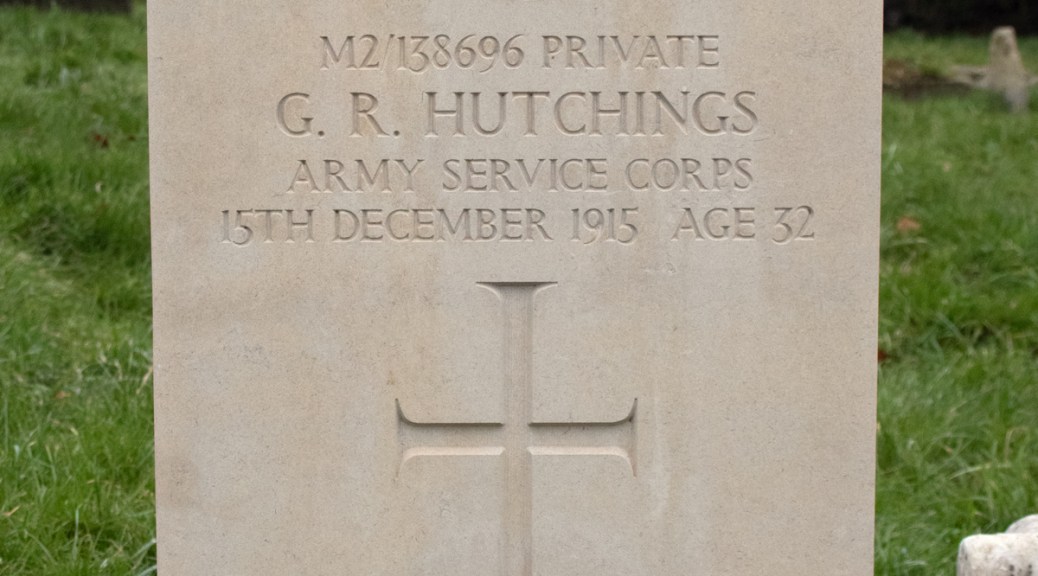
Private George Hutchings

Private George Hutchings

George Robert Hutchings was born towards the end of 1883 in Forest Gate, Essex. He was the oldest of four children to George and Mary Ann Hutchings. George Sr was a labourer for the railways, and this led to the family relocating to Swindon, Wiltshire, in the 1890s.

George Jr took up work with the Great Western Railway when he left school, while his father switched employment and, by the time of the 1911 census, he was working as a collector for a clothing supply company.

On 13th July 1911, George Jr married Daisy Smale in the Sanford Street Congregational Church, Swindon. Daisy was a school teacher, and was the daughter of an iron moulder. It is likely that the couple met through George’s workplace. The newlyweds had a son, Raymond, who was born in 1914 and, at some point moved to Bath in Somerset.

When war came to Europe, George stepped up to play his part. He enlisted in the Royal Army Service Corps and, unsurprisingly, given the work he was doing, was assigned to the Mechanical Transport division. Little information about his military service remains, but is it clear that he had enlisted in the second half of 1915.

The next available record for Private Hutchings is that of his passing. He had been admitted to the Royal Herbert Hospital in Woolwich, South East London, and died there on 15th December 1915. No cause for his death is evident, but he was 32 years of age.

George Robert Hutchings was brought back to Somerset for burial. He was laid to rest in Bath’s St James Cemetery.


When her husband died, Daisy was pregnant. In March 1916 she gave birth to a daughter, Winifred, who was never to know her father.

Daisy never remarried. By the time of the 1939 register, she was living in Northampton Street, Bath, sharing the house with a Mr and Mrs Spreadbury. Her employment was listed as unpaid domestic duties.

Daisy and George’s son Raymond was focused on his education. He made an eventual move to Birmingham, where, at the outbreak of war, he was working as a research chemist. He died in Bath in 1982, at the age of 68.

Winifred married grocer Kenneth Batten in Bath in 1938. The couple had three children and emigrated to Australia after the war, and settled in Coffs Harbour, New South Wales. Kenneth died in 1988, at the age of 72; Winifred died in 2003, aged 87.


Private Ernest Whatley

Private Ernest Whatley

Ernest James Victor Whatley was born in the spring of 1899, the youngest of three children to George and Clara Whatley. Clara passed away in 1908, and George remarried the following year, to a woman called Sarah. Ernest’s brothers were sixteen years older than him, and so by the time of the 1911 census they had moved out of their father’s home. By that point, Ernest living with his father and stepmother in their house in Bath, Somerset.

Little further information is available about Ernest. With war raging across Europe, he enlisted in the army, but this was not before September 1916, and it is likely that he came of age before joining up.

Private Whatley served in the 1st/7th (Cyclist) Battalion of the Devonshire Regiment, and was based in Suffolk. It is while he was billeted that he was admitted to a hospital in Ipswich, although the cause of his admission is unclear.

Whatever befell Private Whatley, it was to prove his undoing. He passed away in the Ipswich hospital on 9th March 1917, at the tender age of just 18 years old.

Ernest James Victor Whatley’s body was brought back to Somerset for burial. He was laid to rest in St James’ Cemetery, Bath, not far from his mother, Clara.