Category Archives: New Zealand Otago Regiment

Private James McLeod

Private James McLeod

James McLeod was born on 15th April 1893 in Dunedin, New Zealand. There is little further information about his early life, although the Commonwealth War Graves Commission give his father’s name as Samuel, and his service records note his next-of-kin as his brother, George McLeod.

James was employed by A&T Watt as a French polisher. However, he gave that up on 25th January 1915, when he enlisted in the New Zealand Expeditionary Force. His service records show that he was 5ft 8.5ins (1.74m) tall, and weighed 166lbs (75.3kg). He was recorded a having fair hair, blue eyes and a fair complexion.

Private McLeod was assigned to the New Zealand Otago Regiment, and undertook his initial training on home soil. He evidently showed some promise as, on 1st May, he was promoted to Lance Corporal. Six weeks later his unit was heading for Europe, and by the summer James was in Egypt.

On 20th August 1915, Private McLeod was admitted to the New Zealand and Australian Convalescent Hospital in Mena with a gun shot wound to his finger. He remained there for three weeks, returning to his unit in time for them to leave for the Dardanelles on 7th November 1915.

What happened to James over the next couple of months is uncertain. Certainly he was on the Greek island of Moudros by 18th November and in the Dardanelles on 7th December 1915. Just 20 days later he was back in Alexandria, and he would remain there for the next few months. There is, however, nothing in his medical record to suggest that his return to Egypt was on health reasons.

On 6th April 1916, Private McLeod was on the move again, this time to France. He was wounded again on 14th July 1916, and medically evacuated to Britain for treatment. Details of this injury are not clear, but he was admitted to the 2nd London General Hospital in Chelsea, Middlesex. After a month recuperating, James was released from hospital and sent to camp in Hornchurch, Essex. At this point he was also demoted to Private, although, again, the reason is unclear: it may have been a personal choice, or the reversion may have been connected to his injuries.

In September 1916, Private McLeod was transferred to the ANZAC Camp on the outskirts of Codford, Wiltshire. That winter he contracted pleurisy, and he was admitted to the No. 3 New Zealand Hospital, which was connected to the camp, on Christmas Day. His condition worsened, and James passed away from pneumonia on 28th December 1916. He was just 23 years of age.

Thousands of miles from home, James McLeod was laid to rest alongside his fellow soldiers in the extension to the graveyard of St Mary’s Church, Codford.


Private Frederick Browning

Private Frederick Browning

Frederick Henry Browning was born on 19th March 1884, and was the third of five children to John and Elizabeth Browning. Born in Dunedin, New Zealand, there is little information about his early life, but as he grew up, he found work as a blacksmith.

When war broke out in Europe, Frederick was working for JS Collins at the Mountain Hotel in Queenstown. By this point he had also spent three years in military service, working for the Ambulance Brigade in Nelson, at the northern tip of South Island.

Frederick stepped up to play his part, enlisting on 22nd August 1916. His service documents show that he was 5ft 7ins (1.7m) tall, and weighed 153lbs (69.4kg). A Methodist, he had black hair, brown eyes and a dark complexion.

Attached to the New Zealand Otago Regiment, Private Browning was sent to Trentham, on the North Island, for training. An asthmatic, he spent two weeks in hospital with the condition in October 1916. On 30th December 1916 his unit departed for Europe on board the SS Athenic, a White Star Line ship conscripted for troop use at the start of the war.

Frederick’s asthma returned on the journey, and he spent a further week of the journey in his sick bed. The Athenic docked in Devonport, Devon, on 3rd March 1917, and Private Browning was sent straight to the town’s military hospital, his lung condition once again affecting him.

It would not be until 14th March that Frederick eventually re-joined his unit, who were based in a camp just outside the Wiltshire village of Codford. His health was really struggling, however, and he came down with a bout of pneumonia. On 24th March he was admitted to the No. 3 New Zealand General Hospital near the camp, but the condition was to get the better of his weakened body. Private Browning passed away on 31st March 1917, at the age of 33 years old.

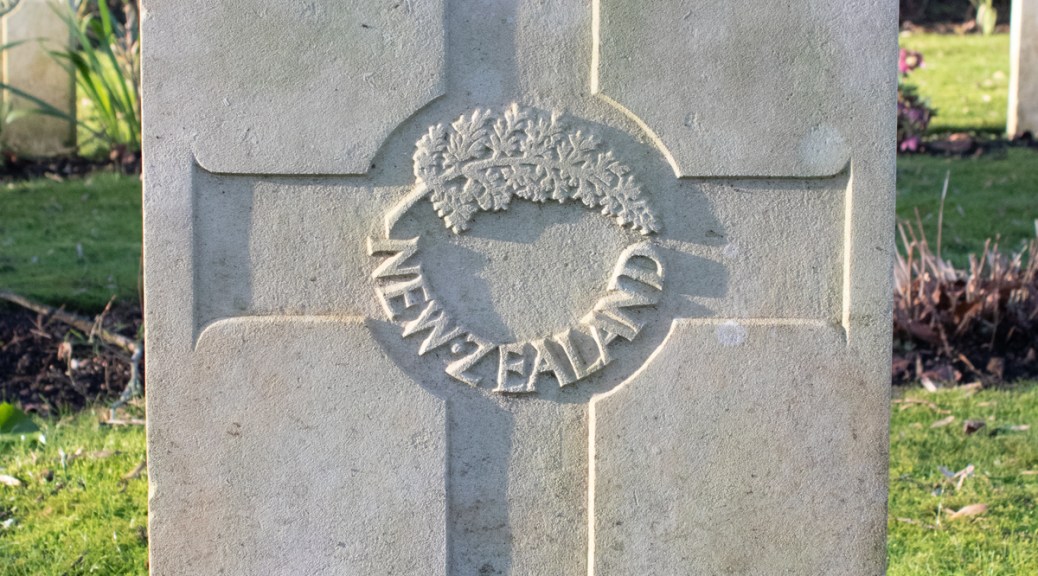
The body of Frederick Henry Browning was laid to rest in the ANZAC graveyard extension of St Mary’s Church, Codford, not far from the base he had so briefly called home.


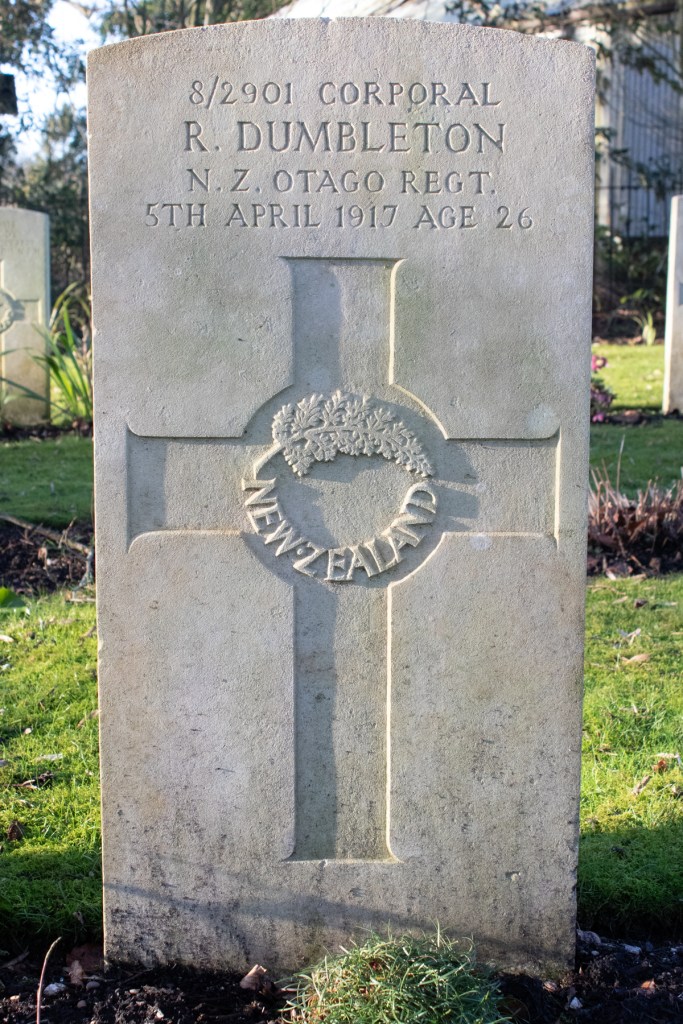
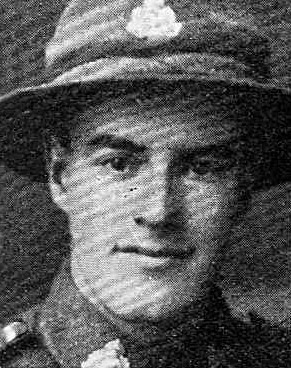
Corporal Ronald Dumbleton

Corporal Ronald Dumbleton

Ronald Dumbleton was born in Pukeuri Junction, New Zealand, at the end of 1890. His parents were William and Lucy, but about his early life, there is very little information.

When he finished his schooling, found work as a telegraphist and, by the time war broke out, he was employed at the Oamaru Post Office. This employment fitted in perfectly with his hobby as a volunteer in the Signal Company.

Ronald enlisted in the Otago Regiment of the New Zealand Infantry on 13th June 1915. His service records show that he was 5ft 8ins (1.73m) tall and weighed 140lbs (63.5kg). An Anglican by faith, he had black hair, dark eye and a dark complexion.

Assigned to the 7th Battalion, Private Dumbleton’s unit set sail for Europe towards the end of the year and, after a few weeks in Egypt, Ronald arrived in Britain in March 1916. His previous military service stood him in good stead. On 8th July 1915 he was promoted to Lance Corporal, and just six weeks later he had made full Corporal.

In April 1916, Ronald arrived in France. Transferred to the 1st Battalion, he would remain overseas for six months. Caught up in the fighting at the Somme, he was injured in his left arm and shoulder and medically evacuated to Britain for treatment. Corporal Dumbleton was admitted to the 1st Southern General Hospital in Birmingham, and remained there for a month.

In November, Corporal Dumbleton transferred to a hospital in Hornchurch, Essex. He then seems to have been moved to the ANZAC base near Codford, Wiltshire, for his ongoing recuperation. He was given two weeks’ leave in January 1917, returning to the base towards the end of the month.

At this point, Ronald’s trail goes cold. He remained based in Codford, possibly as he was not yet fit enough to re-join his unit on the Western Front. While in camp, however, he fell ill, passing away on 5th April 1917. He was 26 years of age.

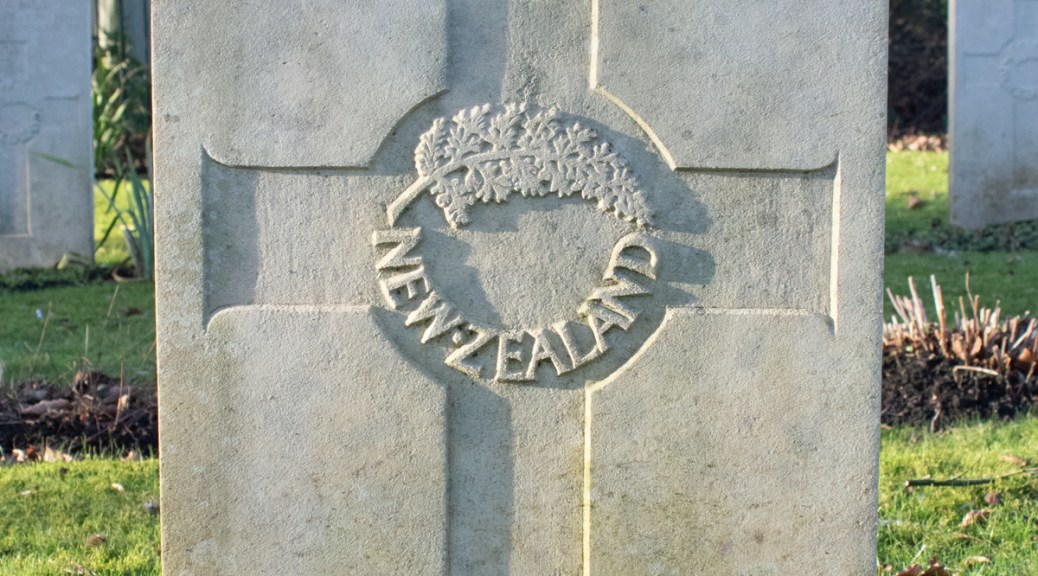
Thousands of miles from home, Ronald Dumbleton’s body was laid to rest in the extended graveyard of St Mary’s Church in Codford, not far form the base which he had called home.


Corporal Ronald Dumbleton
(from findagrave.com)

Private Andrew Wishart

Private Andrew Wishart

Andrew Anderson Wishart was born in Mokoreta, New Zealand, on 9th July 1896. The fourth of eight children, his parents were George and Agnes Wishart.

There is little information available about Andrew’s early life, but when he completed his schooling, he found work in the local sawmills, not an uncommon trade for the rural southern part of the country. In his spare time, he enlisted in the cadets, and had spent a year with them when he stepped up to join the war effort.

Andrew signed up on 19th November 1915, and was assigned to the 1st Battalion of the New Zealand Otago Infantry Regiment. His service records show the mad he had become: he gave his age as 20 years old (he was, in fact, only 19), he was 5ft 10.5ins (1.79m) tall and weighed 166lbs (75.3kg). He was initially trained near Wellington, and seemed to enjoy his freedom, as he spent a month in hospital in Trentham, suffering from gonorrhoea.

Private Wishart’s battalion set out from Wellington on 1st April 1916, arriving in Suez a month later. After three weeks’ pause in Egypt, his unit continued on to France, disembarking in Etaples on 28th May, and heading for the Western Front. Andrew soon found himself in the thick of the action.

The 1st Battalion was heavily involved at the Somme in the summer of 1916, and Private Wishart was not to come out unscathed. He was wounded on 30th September, and evacuated for treatment, first to Rouens, then to Britain. Wounded in the left thigh, he was admitted to the 1st New Zealand Hospital in Brockenhurst, Hampshire, and would end up spending two months there.

In December 1916, Private Wishart moved to the ANZAC camp in Codford, Wiltshire. He remained on site for the next few months, although this time was not without incident, as he was admitted to the camp hospital for with venereal disease once more.

Andrew returned to camp on 10th April 1917, but his health seems to have been impacted. He became jaundiced, and was once again admitted to the camp hospital. Atrophy of the liver was identified, and the condition would prove too severe for his body to recover from. He died on 10th July 1917, the day after his 21st birthday.

Andrew Anderson Wishart was laid to rest in the extension to St Mary’s Churchyard in Codford, Wiltshire, not far from the base he had called his home.


Andrew’s younger brother James had also enlisted in the Otago Regiment when war broke out. As a Private, he was assigned to the 2nd Battalion, his path followed a similar one to that of his older sibling. He was killed in action on the Western Front on 15th November 1916, aged just 18 years old.

Private James Wishart is buried in the Cité Bonjean Military Cemetery in Armentieres.

Private James Wishart
(from findagrave.com)