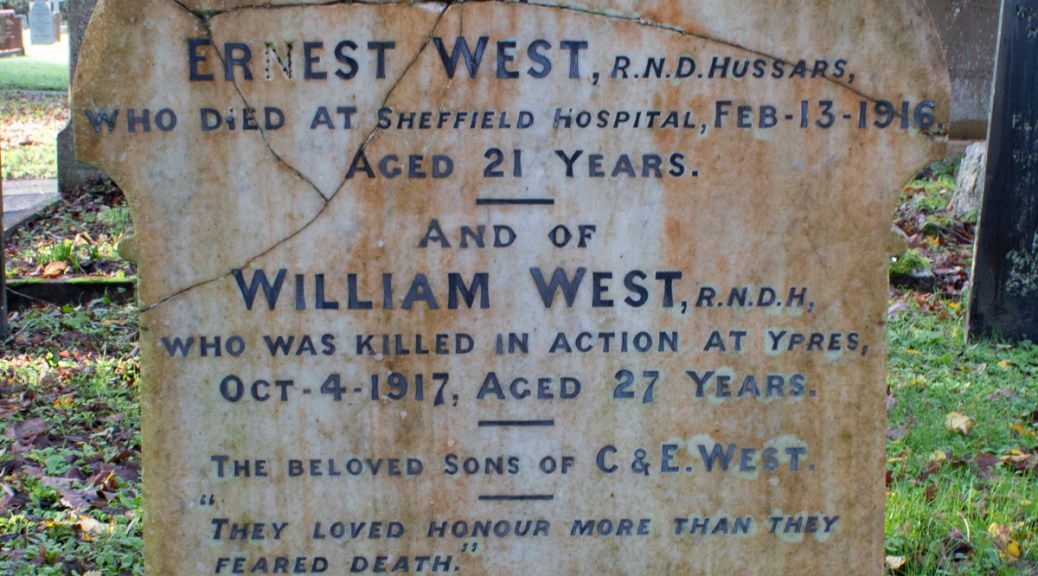
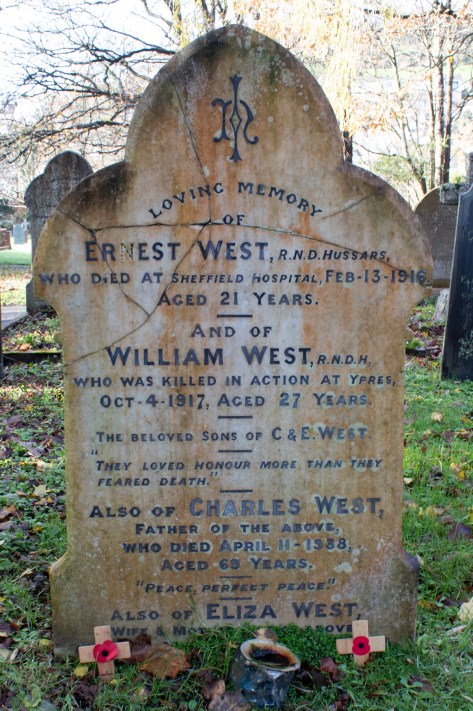
Ernest West was born in the autumn of 1894 in Barnstaple, Devon. The middle of seven children, his parents were Charles and Eliza. The 1901 censes recorded Charles as being the innkeepers of a pub on North Street in Braunton, but ten years later he had changed career, and was a corn and manure merchant. The family had moved to Scur Farm to the north of the town centre.
War broke out in the summer of 1914, and Ernest stepped up to play his part. He enlisted in the Royal North Devon Yeomanry, and was attached to the 1st Battalion. Full service details have been lost to time, but by the autumn of 1915, Private West was in the Balkans, and was among those to land at Sulva Bay on the Gallipoli peninsula.
Ernest survived the fighting, but contracted dysentery. He was medically evacuated back to Britain, and admitted to the 3rd North General Hospital in Sheffield, Yorkshire. Sadly, the condition was to get the better of him, and he passed away on the 13th February 1916, at the age of just 21 years old.
The body of Ernest West was taken back to Devon for burial, and he was laid to rest in the graveyard of St Brannock’s Church, Braunton.
Ernest was not the only West sibling to die during the First World War. His older brother William enlisted in the 1st Battalion of the Devonshire Regiment and, in the autumn of 1917, found himself in the fighting at Passchendaele. He was killed in action on 4th October, at the age of 27. He is commemorated on the Tyne Cot Memorial.
Alfred George Moss was born in West Ham, Essex, on 14th February 1885. One of eight children, his parents were John and Sarah Moss. John was a leather worker, but Alfred initially found work as a butcher’s assistant when he completed his schooling.
Butchery wasn’t the career that Alfred sought, however, and, on 12th November 1903, he enlisted in the Royal Navy as a Stoker 2nd Class. His service papers note that he was 5ft 9ins (1.75m) tall, with brown hair, hazel eyes and a fresh complexion. He was also recorded as having a scar on both knees.
Stoker Moss was sent to HMS Acheron, a training ship based on the Thames Estuary, for his initial service. He stayed there until July 1904, when he was given his first sea-going assignment, on board the cruiser HMS Terpsichore. She would remain his home for the next eighteen months, during which he was promoted to Stoker 1st Class.
Alfred seems to have been a steady worker, his annual reviews noting a very good character. In November 1908, having come to the end of his five-year contract, he was stood down to reserve status. He had served on four vessels and, when not at sea, HMS Pembroke, the Royal Naval Dockyard in Chatham, Kent, became his home from home.
Alfred is missing from the 1911 census, but turns up on 21st December 1913. On that day he married Ellen Lipscombe in All Saints’ Church, West Ham. Nellie, as she was known, was the oldest of seven children to plasterer Tomas Lipscombe. The couple set up home on Grafton Road, Plaistow, and went on to have a son, Thomas, the year after exchanging vows.
When war was declared, Alfred was called back into service. He returned to Pembroke, and spent the next year split between there and HMS Victory, the Royal Naval Dockyard in Portsmouth, Hampshire. In the summer of 1915, Stoker 1st Class Moss was assigned to the cruiser HMS Europa. For the next two years, he would be based in the Eastern Mediterranean, supporting the troops in and around the Gallipoli peninsula.
By the summer of 1917, Alfred was back at Pembroke, which, by this point in the war, was a busy and overcrowded place. The sinking of HMS Vanguard meant that her replacement crew were stuck in port waiting to be reassigned, and an outbreak of meningitis demanded more space to slow or stop its spread. Stoker 1st Class Moss found himself barracked in overflow accommodation set up in the dockyard’s Drill Hall.
On the night of the 3rd September 1917, German bombers launched an audacious raid on the North Kent Coast. Two bombs landed on the Drill Hall, shattering its glass roof, and killing dozens of sleeping servicemen beneath. Stoker 1st Class Moss was one of those who lost his life: he was 32 years of age.
The body of Alfred George Moss was taken back to Essex for burial. He was laid to rest in West Ham Cemetery, not far from where his grieving widow and young son were living.
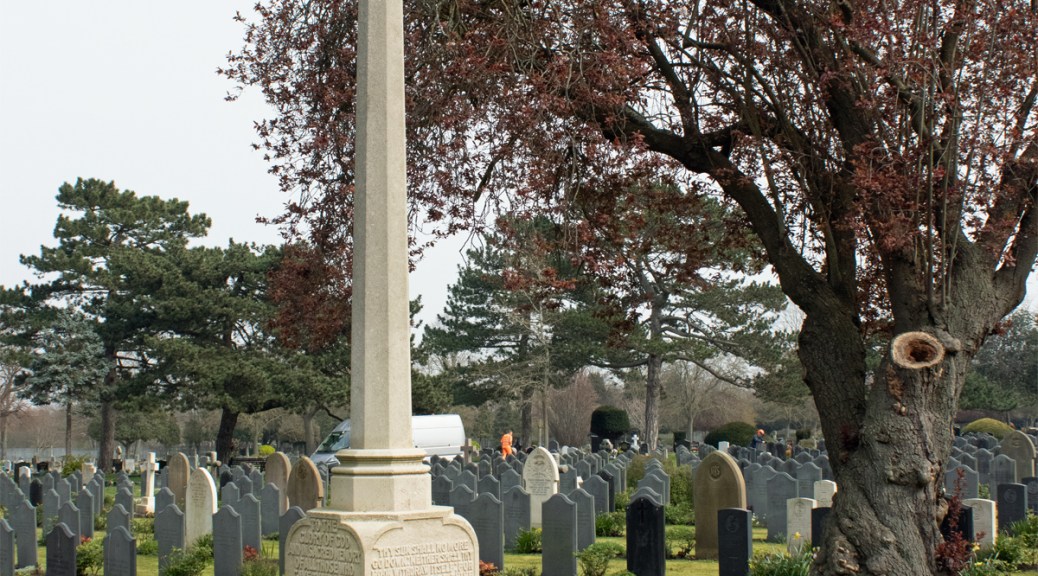
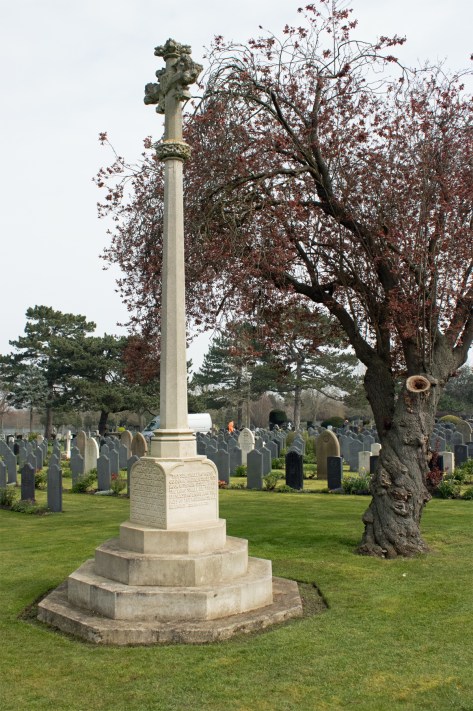
[Note: the photo above is of the memorial to the Chatham Air Raid victims, close to the mass grave for those whose bodies were not identified, in Woodlands Cemetery, Gillingham, Kent.]
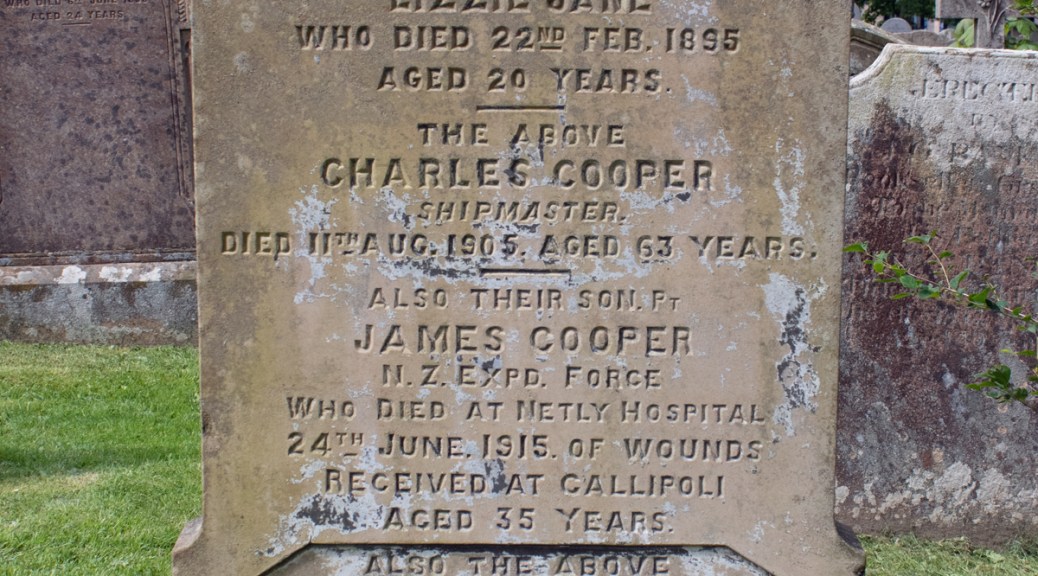
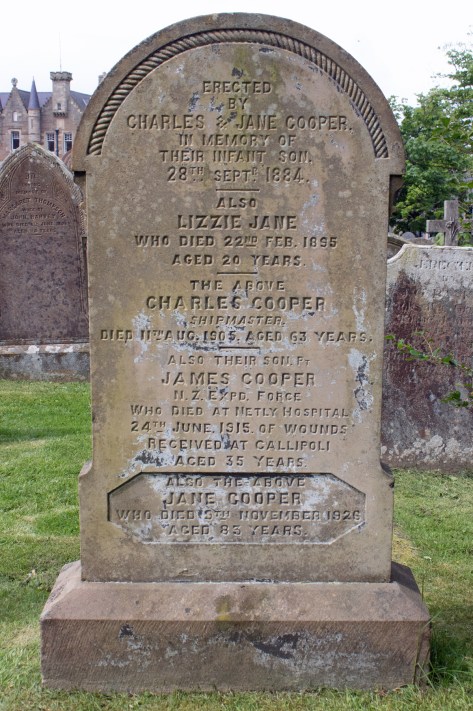
Private James Cooper, a native of Kirkwall, died in the Red Cross Hospital at Netley last Thursday from a wound received at the Dardanelles. Private Cooper, who was 35 years of age, was a son of Mrs Cooper, School Place, Kirkwall (with whom much sympathy is felt), and of the late Capt. Charles Cooper. After being employed for some time in a shop in Kirkwall, he decided to follow his father’s vacation [sic] and went to see for some years, during which time he served in the Naval Reserve. He was in New Zealand when the war began, and at once enlisted in the 6th Hamaki Coy. With the New Zealand contingent he went to Egypt and took part in the fighting with the Turks near the Suez Canal. In April the contingent was sent from Egypt to the Dardanelles, and towards the end of that month Private Cooper received a gunshot wound in the left arm. With other wounded he was sent to the base hospital at Alexandria, and thence, after a few weeks, was sent home to the hospital at Netley. In all his letters home he wrote cheerfully and made light of his wound, but the nurse wrote that the wound was a serious one. At Netley the arm was amputated. Private Cooper gradually sank and died last Thursday.
[Orkney Herald: Wednesday 30th June 1915]
James Cooper was born on 9th October 1879 in Kirkwall, Orkney. He was one of seven children – and the youngest of three sons – to Charles and Jane Cooper. With her husband being away at sea a lot of the time, Jane was used to raising her family on her own.
In August 1905, tragedy struck the family:
At an early hour on Friday morning last, the town of Stromness was thrown into a stat of alarm by the report that a sad burning fatality had taken place on board the barquentine Brazilian on Ness patent slip. To accurately describe how the accident took place is impossible, but from careful enquiries we learn that on Thursday evening Captain Charles Cooper, belonging to Kirkwall, accompanied by an acquaintance, left the town and went on board the vessel, where they lit a fire and make a cup of coffee, after which friend left him. At that time the fire was very low, and no danger apprehended. At an early hour of the morning, the vessel was observed to be on fire, and an alarm given. In a short time the fire hose from the town was on the scene, and two streams playing on the burning vessel. The fire was fortunately confined to the cabin and companion way, where the rescue party discovered the body of Capt. Cooper terribly burned and disfigured, to such an extent that it was quite unrecognisable… There can be no doubt but that death was caused by suffocation, but what led to the fire is not known. It is supposed, however, that after the friend left the vessel, Capt. Cooper had taken the paraffin oil flask to put some oil on the nearly burnt-out fire, when possibly an explosion took place, and the cabin got suddenly full of smoke.
[Orkney Herald: Wednesday 16th August 1905]
Charles was 64 when he died. Jane brought his body across the island, and he was buried in the family plot in the churchyard of St Magnus’ Cathedral.
By this point, James was serving in the Royal Navy. The exact details are unclear, but he seems to have bought his way out, after completing six years. He travelled to Australia, and worked as a cook for a while, before moving on to New Zealand, setting up home in the town of Thames, on the country’s North Island.
When war was declared, he was quick to step up, and, joined the Auckland Regiment of the New Zealand Expeditionary Force. His service papers show that he was 5ft 7ins (1.7m) tall and weighed 159lbs (72.1kg). He had brown hair, grey eyes and a medium complexion. He had a tattoo of a naval coat of arms on his right forearm, and one of a full length woman on the back of his left forearm.
Private Cooper’s unit left New Zealand on 16th October 1914, heading for Egypt. As the newspaper report stated, he moved from there to Gallipoli, before being medically evacuated to Egypt, and then to Netley Hospital, Hampshire.
After his passing, the body of James Cooper was taken back to Orkney for burial. He was laid to rest in the family plot at St Magnus’ Cathedral, reunited with his father after ten years.
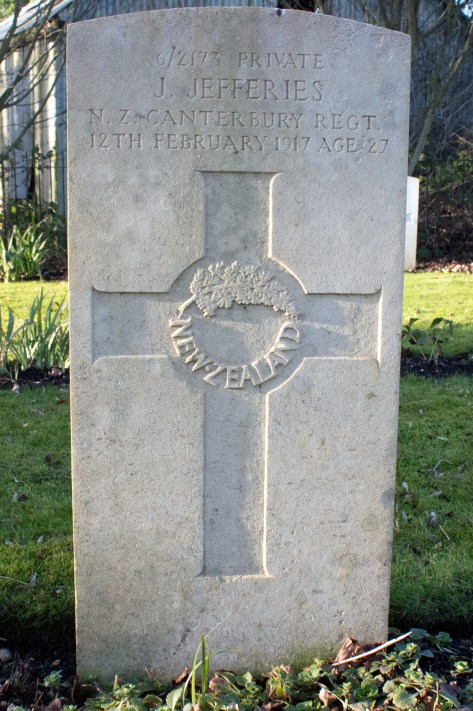
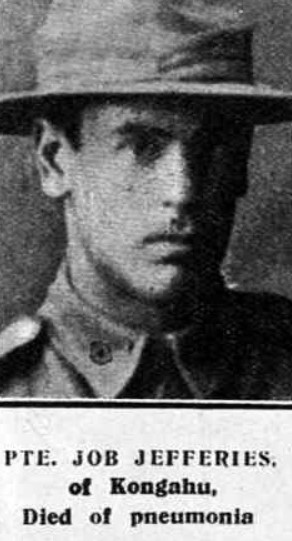
Job Jefferies was born on 12th October 1889 in the city of Timaru, on New Zealand’s South Island. The sixth of ten children, his parents were William and Ada Jefferies.
There is little information available about Job’s early life, but by the time war broke out, he had moved to Kongahu, at the northern tip of South Island. He was working as a labourer, and was employed by the Public Works Department.
Job was quick to step up and serve his country. He enlisted in the New Zealand Infantry on 12th February 1915, and was assigned to the Canterbury Regiment. His service records confirm that he was 5ft 10.75ins (1.79m) tall, and weighed 170lbs (77.1kg).
Private Jefferies left New Zealand in the summer of 1915, and his service record makes for grim reading.
On 9th August 1915, Job’s unit arrived in the Dardanelles, and he was firmly entrenched in the fighting at Gallipoli. Wounded on 5th September, he was initially treated at a casualty clearing station, before being medically evacuated first to Malta, then to Britain. He was admitted to the No. 2 Western General Hospital in Manchester, Lancashire, and would spend the next seven months there.
On 12th May 1916, Private Jefferies was on the move, leaving his base in Hornchurch, Essex, for the Western Front. He re-joined his unit on 7th July, but just nine days later was wounded at the Somme. Medically evacuated to Britain again, he spent the next couple of months being moved between hospitals. Discharged back to base in Hornchurch, Essex at the end of September, he would spend the next four months recuperating once more.
By February 1917, it would seem that Private Jefferies had been moved to Sling Camp near Bulford, Wiltshire. While there, he fell ill, and was admitted to the No. 3 New Zealand General Hospital in nearby Codford. He was suffering from pneumonia, and this time his body could take no more. Job passed away on 7th February 1917: he was 27 years of age.
Job Jefferies was laid to rest alongside his fellow soldiers in the ANZAC extension to St Mary’s Churchyard, Codford.
James McLeod was born on 15th April 1893 in Dunedin, New Zealand. There is little further information about his early life, although the Commonwealth War Graves Commission give his father’s name as Samuel, and his service records note his next-of-kin as his brother, George McLeod.
James was employed by A&T Watt as a French polisher. However, he gave that up on 25th January 1915, when he enlisted in the New Zealand Expeditionary Force. His service records show that he was 5ft 8.5ins (1.74m) tall, and weighed 166lbs (75.3kg). He was recorded a having fair hair, blue eyes and a fair complexion.
Private McLeod was assigned to the New Zealand Otago Regiment, and undertook his initial training on home soil. He evidently showed some promise as, on 1st May, he was promoted to Lance Corporal. Six weeks later his unit was heading for Europe, and by the summer James was in Egypt.
On 20th August 1915, Private McLeod was admitted to the New Zealand and Australian Convalescent Hospital in Mena with a gun shot wound to his finger. He remained there for three weeks, returning to his unit in time for them to leave for the Dardanelles on 7th November 1915.
What happened to James over the next couple of months is uncertain. Certainly he was on the Greek island of Moudros by 18th November and in the Dardanelles on 7th December 1915. Just 20 days later he was back in Alexandria, and he would remain there for the next few months. There is, however, nothing in his medical record to suggest that his return to Egypt was on health reasons.
On 6th April 1916, Private McLeod was on the move again, this time to France. He was wounded again on 14th July 1916, and medically evacuated to Britain for treatment. Details of this injury are not clear, but he was admitted to the 2nd London General Hospital in Chelsea, Middlesex. After a month recuperating, James was released from hospital and sent to camp in Hornchurch, Essex. At this point he was also demoted to Private, although, again, the reason is unclear: it may have been a personal choice, or the reversion may have been connected to his injuries.
In September 1916, Private McLeod was transferred to the ANZAC Camp on the outskirts of Codford, Wiltshire. That winter he contracted pleurisy, and he was admitted to the No. 3 New Zealand Hospital, which was connected to the camp, on Christmas Day. His condition worsened, and James passed away from pneumonia on 28th December 1916. He was just 23 years of age.
Thousands of miles from home, James McLeod was laid to rest alongside his fellow soldiers in the extension to the graveyard of St Mary’s Church, Codford.
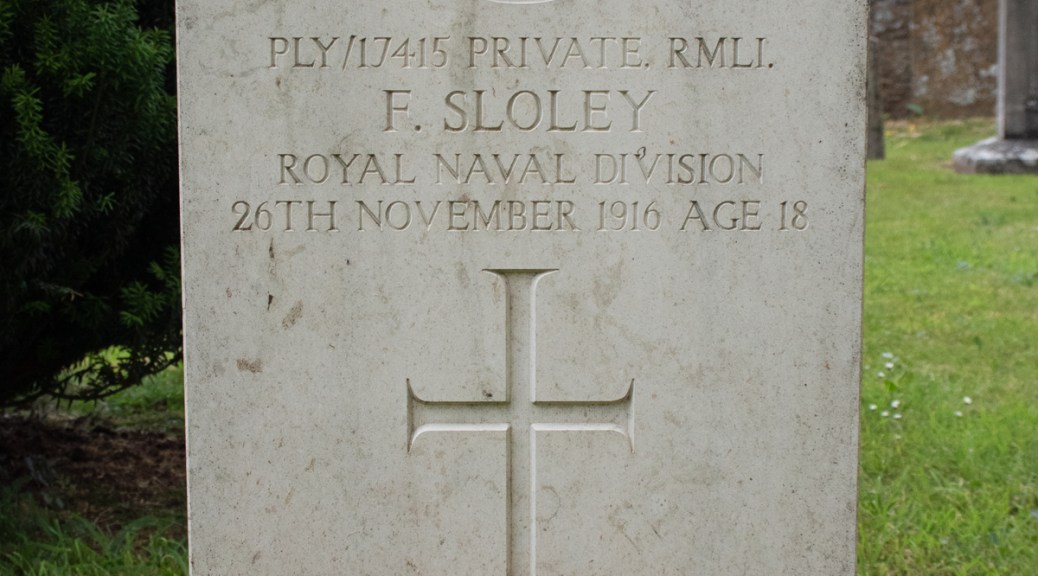
Frederick Sloley was born on 7th April 1897 in Kingston St Mary, Somerset, and was the fourth of nine children to Walter and Mary Jane Sloley. The family were farm workers and were living with Walter’s parents – also agricultural labourers – in the 1901 census.
After he finished his schooling, Frederick found began working with the horses on the farm. When war broke out, however, he saw an opportunity to serve his King and Empire, and enlisted in the Royal Marine Light Infantry. He joined up on 5th October 1914, and his service records show that he was 5ft 4ins (1.63m) tall, with black hair, grey eyes and a fresh complexion.
Private Sloley was initially sent to the Reserve Depot in Deal, Kent, for training, before moving to the Plymouth Division in Devon in March 1915. He records do not make it clear where he served specifically, but by 1916 he has fought in the Dardanelles and Mesopotamia.
It was while he was in the Eastern Mediterranean that Frederick was injured. Wounded in the spine by enemy gunfire, he was medically evacuated to Britain for treatment. Admitted to King George’s Hospital in London, surgery proved too late. Private Sloley passed away on 26th November 1916, at the age of just 19 years old. His mother, Mary, had managed to see him before he died.
The body of Frederick Sloley was brought back to Somerset for burial. He was laid to rest in the peaceful graveyard of St Mary’s Church in his home village of Kingston.