Christina Jack was born in Thurso, Caithness, Scotland, on the 19th December 1882. One of eight children, her parents were Donald and Margaret Jack. Donald was a merchant and rope maker, and the family lived on Bank Street, to the north of the town centre.
Margaret died in 1907, by which point Christina had taken a job in nursing. The 1911 census found her in Govan, Lanarkshire, where she was employed as a registered general nurse. When war broke out, she volunteered to do her duty, and joined the Queen Alexandra’s Imperial Military Nursing Service.
Sister Jack remained on home soil, and was attached to the 1st Birmingham War Hospital in Rednal. Nursing staff were vulnerable to the infections and diseases of the men they were treating, and it appears that Christina was not immune to this. She passed away on 22nd October 1918, at the age of 35 years old.
The body of Christina Jack was taken back to Caithness for burial. She was laid to rest in Thurso Cemetery, on the outskirts of the town in which she had been born and raised.
Neil Moore was born on 17th April 1882 in Glasgow, Lanarkshire. One of twelve children, he was the second son to John and Jane Moore. John was a cabinetmaker and, according to the 1891 census, the family lived in rooms at 13 Melville Street in the city’s Govan district.
Although little is known about Neil’s early life, his enlistment in the Royal Naval Reserve on 26th July 1904 offers the first clear insight into the young man he had become. His service papers describe him as twenty-two years old, 5 ft 4 in (1.63 m) tall, with grey eyes and fair hair.
Over the next decade, Stoker Moore travelled the world, taking in Canada and South America. There were times when he was out of work – he was recorded as seeking a job over the winter of 1912 – but generally his employment appears to have been steady.
Intriguingly, after a stint on the SS Sardinian, Neil left the Royal Naval Reserve on 17th November 1913. He was re-engaged on 17th December, but is then reported as having deserted just three days later. He was then recorded as being assigned to HMS Wildfire – a shore base in Northwood, Middlesex – on 3rd February 1914.
It is possible that it was around this time that Neil got married. His wife was called Elizabeth, but there is little further information about her.
When war broke out, Stoker Moore appears to have been formally mobilised once more. Over the next three years, he served on half-a-dozen vessels, before finally being attached to HMS Pembroke, the Royal Naval Dockyard in Chatham, Kent, in the spring of 1917.
Over the course of that summer, Pembroke was hit by two significant challenges. The battleship HMS Vanguard was sunk in Scapa Flow, leaving its planned replacement crew stuck in the Kent dockyard with nowhere to go. At the same time, a bout of spotted fever broke out and more space was needed to slow the transmission of the contagious disease.
Pembroke’s Drill Hall was brought into use as temporary accommodation, and this is where, in September 1917, Stoker Moore found himself billeted.
On the night of the 3rd September, the German air force carried out an audacious raid on North Kent. Four aircraft bombed Chatham, and two devices landed direct hits on the Drill Hall. The glass roof shattered, raining shards onto the sleeping men below. Stoker Moore was badly injured, and he was transported to the town’s Royal Naval Hospital for treatment. Sadly, this would prove ineffective, and Neil died from his injuries on 8th September 1917. He was 35 years of age.
The body of Neil Moore was taken back to Scotland for burial. He was laid to rest in St Kentigern’s Roman Catholic Cemetery, to the north of the city centre.
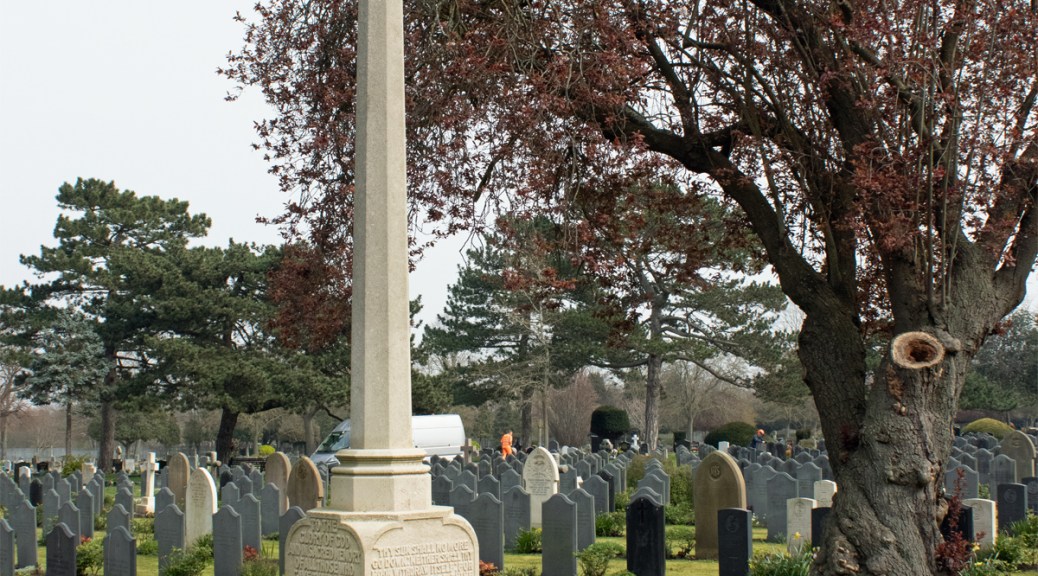
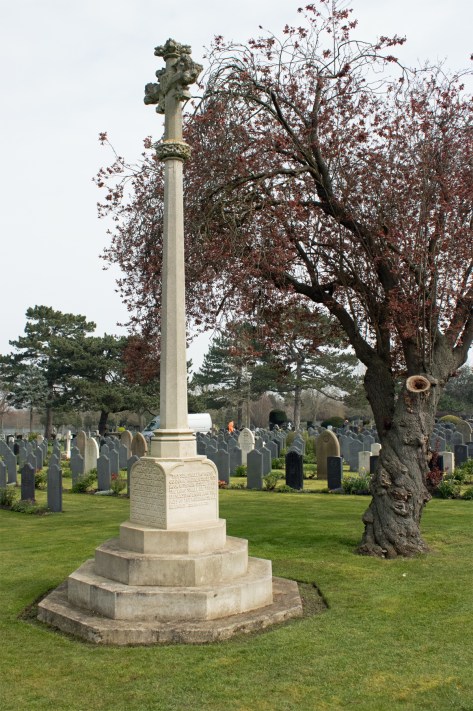
[Note: the photo above is of the memorial to the Chatham Air Raid victims, close to the mass grave for those whose bodies were not identified, in Woodlands Cemetery, Gillingham, Kent.]
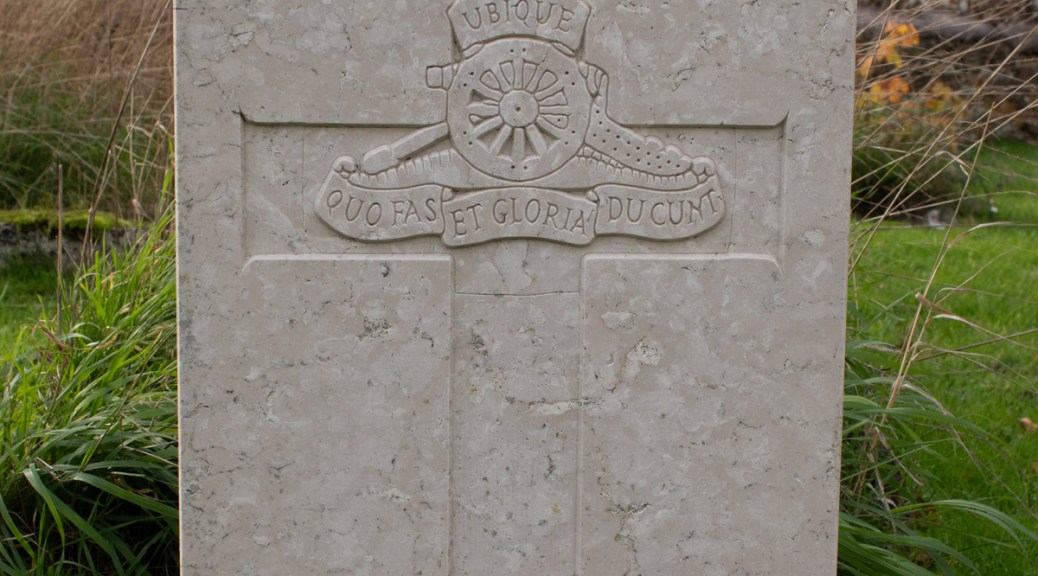
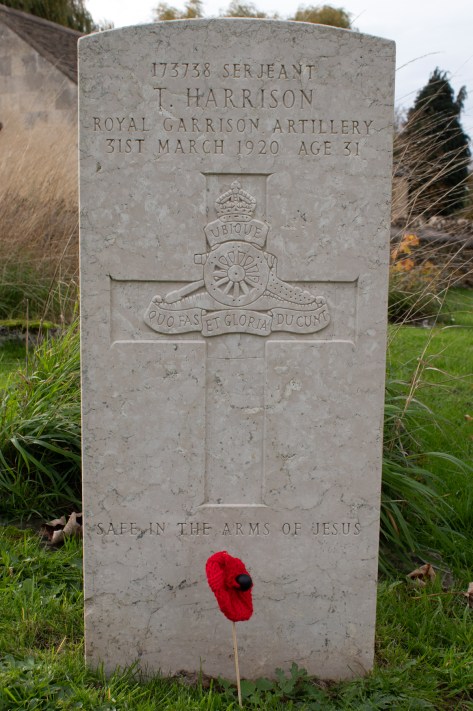
The life of Thomas Harrison, buried in Holt Old Cemetery, Wiltshire, is a challenge to unpick. No service papers remain, but the Commonwealth War Graves Commission note that he was married to Annie Harrison, who lived in Trowbridge, Wiltshire.
The couple do not appear together in the 1911 census, so it is likely that they exchanged vows after this date. There is a Thomas Harrison recorded in the return: he was an Acting Bombardier in the Royal Horse Artillery, billeted in the barracks in Trowbridge. It is likely that he is the gentleman buried in Holt Cemetery, but it cannot be confirmed either way.
Acting Bombardier Harrison was born in Motherwell, Lanarkshire, in around 1889, but his name is not uncommon, so it is not possible to identify his parents or early life.
Thomas served during the First World War, rising to the rank of Serjeant in the Anti-Aircraft Depot of the Royal Garrison Artillery. He and Annie had two children: Vera, who was born in 1912, and Ivy, who was four years younger.
When the Armistice was declared, Serjeant Harrison returned home, but, in the spring of 1920, he suffered a bout of gastritis. The condition was to prove fatal, and he passed away on 31st March 1920. He was 31 years of age.
The body of Thomas Harrison was laid to rest in Holt Old Cemetery, not far from where Annie and the girls lived.
Robert Muckart Templeton was born in Glasgow, Scotland, in 1894. He was the fourth of five children to shipyard labourer William Templeton and his wife, Agnes.
There is little information on Robert’s early life: the family’s 1911 census records are lost, so it is not possible to identify what work he took on when he left school. It is, however, reasonable to assume that he joined his father in the shipyards.
When war broke out, Robert was one of the first to enlist. He joined the Royal Scots Fusiliers, and, as a Private, was assigned to the 8th (Service) Battalion. His troop was sent to Salisbury Plain, Wiltshire, for training, and he was camped at Codford St Mary.
Towards the end of October, the 8th Battalion was moving to Bristol, and it was at this point that the fates intervened for Private Templeton. Suffering from an acute bout of appendicitis, he was admitted to the Abbas and Templecombe hospital. The condition was to prove his undoing and, on 1st November 1914, he passed away. He was just 20 years of age.
A shipyard labourer’s wages were not going to be enough to transport a body halfway across the country, so the Templetons were left with little choice but to have their son buried close to where he died. Robert Muckart Templeton was laid to rest in the quiet graveyard of St Mary’s Church, in Templecombe, Somerset.
Editor’s note: My gratitude goes to Christine Scott, who was able to furnish me with details of Robert’s death.





 Death and Service