Tag Archives: New Zealand Canterbury Regiment

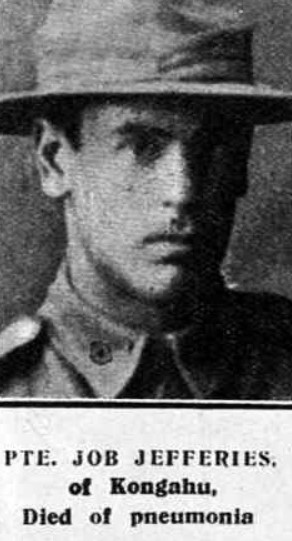
Private Job Jefferies

Private Job Jefferies

Job Jefferies was born on 12th October 1889 in the city of Timaru, on New Zealand’s South Island. The sixth of ten children, his parents were William and Ada Jefferies.

There is little information available about Job’s early life, but by the time war broke out, he had moved to Kongahu, at the northern tip of South Island. He was working as a labourer, and was employed by the Public Works Department.

Job was quick to step up and serve his country. He enlisted in the New Zealand Infantry on 12th February 1915, and was assigned to the Canterbury Regiment. His service records confirm that he was 5ft 10.75ins (1.79m) tall, and weighed 170lbs (77.1kg).

Private Jefferies left New Zealand in the summer of 1915, and his service record makes for grim reading.

On 9th August 1915, Job’s unit arrived in the Dardanelles, and he was firmly entrenched in the fighting at Gallipoli. Wounded on 5th September, he was initially treated at a casualty clearing station, before being medically evacuated first to Malta, then to Britain. He was admitted to the No. 2 Western General Hospital in Manchester, Lancashire, and would spend the next seven months there.

On 12th May 1916, Private Jefferies was on the move, leaving his base in Hornchurch, Essex, for the Western Front. He re-joined his unit on 7th July, but just nine days later was wounded at the Somme. Medically evacuated to Britain again, he spent the next couple of months being moved between hospitals. Discharged back to base in Hornchurch, Essex at the end of September, he would spend the next four months recuperating once more.

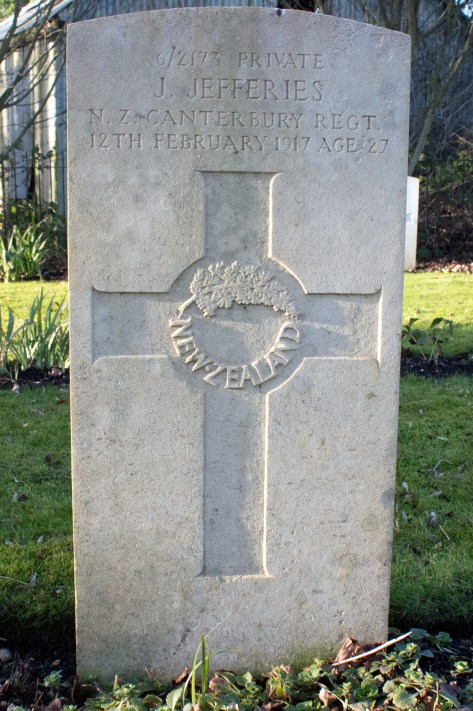
By February 1917, it would seem that Private Jefferies had been moved to Sling Camp near Bulford, Wiltshire. While there, he fell ill, and was admitted to the No. 3 New Zealand General Hospital in nearby Codford. He was suffering from pneumonia, and this time his body could take no more. Job passed away on 7th February 1917: he was 27 years of age.

Job Jefferies was laid to rest alongside his fellow soldiers in the ANZAC extension to St Mary’s Churchyard, Codford.


Private Job Jefferies
(from findagrave.co.uk)

Private Edward Boland

Private Edward Boland

Edward James Boland was born on 14th August 1885 in the town of Darfield, on New Zealand’s South Island. Details of his early life are sketchy, but he was the fourth of nine children to Francis and Annie Boland.

When he finished his schooling, Edward found work as a farm labourer. In 1906, he married Ellen – or Nellie – Shea: their first child, son Raymond, was born the same year, and they would go on to have three more children by the time war was declared.

On 18th June 1916, Edward answered the call to serve the Empire. Enlisting in Trentham, he joined the New Zealand Canterbury Regiment as a Private. His service record notes that he was 5ft 8.5ins (1.74m) tall and weighed 144lbs (65.3kg). A Catholic, he had light brown hair, blue eyes and a fair complexion. A scar on his right thigh was also recorded as a distinguishing mark.

On 16th October 1916, Private Boland left from Wellington on board the steam ship Willochra. His unit – the 18th Reinforcements – arrived in Devonport, Devon, ten weeks later. They were then marched to their base at Sling Camp near Bulford, Wiltshire.

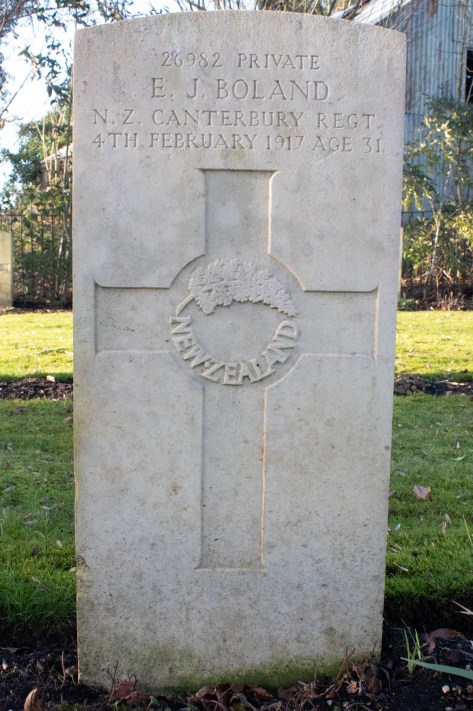
The journey from New Zealand, impacted Edward’s health. At the end of January 1917, he was admitted to the 3rd NZ General Hospital in Codford, Wiltshire, suffering from broncho-pneumonia. His condition deteriorated and would take his life. Private Boland died on 4th February 1917: he was 31 years of age.

As he was thousands of miles from his home, Edward James Boland was instead laid to rest in the newly extended graveyard attached to St Mary’s Church in Codford.


Private Edward Boland
(from findagrave.co.uk)

Private Charles Tombs

Private Charles Tombs

Charles Tombs was born on 26th November 1875 in Sefton, New Zealand. The seventh of eight children, his parents were Job and Elizabeth Tombs.

There is little information available about Charles’ early life. He found work as a chainman, working as a labourer in a sawmill.

On 11th December 1899, Charles married Eliza Pound, the daughter of immigrants from Somerset. The couple settled in Wairau, and went on to have six children: John, Charles, Arthur, William, Ronald and Alice.

(The Tombs and Pounds seemed to have been closely connected: Charles’ younger brother John, went on to marry Eliza’s younger sister, Elizabeth.)

Sadly, Eliza died in 1910, leaving Charles to raise four children (John and Alice having died when just babes-in-arms), alone. A later document gives Charles’ next-of-kin as Mrs R Register, who was, in fact, his younger sister, Mary (who had married Robert Register in 1907).

War was coming, and Charles would be called upon to serve his long-distant King and Empire. On 26th July 1916, he stepped up, and enlisted in the New Zealand Canterbury Regiment. His service records show that, at 40 years of age, he was 5ft 5ins (1.65m) tall, and weighed 119lbs (54kg). He had brown hair, blue eyes and a dark complexion.

Private Tombs’ unit departed from New Zealand on 15th November 1916, making the journey to Britain on the RMS Tahiti. The journey took nearly three months, and Charles arrived in Devonport, Devon, on 29th January 1917.

The ANZAC camp near Codford, Wiltshire, was to be Private Tombs ultimate destination, and he arrived there a couple of days after landing in Britain. After a lengthy journey, his health had been impacted, as had many of the men he had travelled with.

Suffering from bronchitis, Charles was admitted to the No. 3 New Zealand General Hospital on the outskirts of the camp. The condition was to prove his undoing, and he passed away on 17th February 1917. He was 41 years of age.

Charles Tombs was laid to rest in the ANZAC extension to St Mary’s Churchyard in Codford, Wiltshire.


Private Charles Tombs
(from findagrave.com)

Private William Allen

Private William Allen

William Allen was born on 24th June 1888, and was the third of ten children to Joseph and Leah. The family lived in Oxford, on New Zealand’s South Island, and when Leah passed away in 1900, Joseph married again, and William soon had four half-siblings.

When he finished his schooling, William found employment as a labourer. At the outbreak of war, William was called to play his part, and he enlisted on 26th July 1916. His service documents note that he was small of stature, just 5ft 2ins (1.57m) tall, and weighing 120lbs (54.4kg). A Baptist, he had dark hair, brown eyes and a dark complexion.

Private Allen was assigned to the New Zealand Canterbury Regiment. His unit departed from Wellington for the ten week journey to Britain, the SS Tahiti finally docking in Devonport, Devon, on 29th January 1917. From here the battalion marched to Codford, Wiltshire, where the developing ANZAC base was located.

Tragically for William, this would be the last stage of his journey. After weeks at sea, in cramped conditions, the incoming troops found they were battling a different enemy from the one they had expected. Many fell ill, and this included Private Allen. He was admitted to the No. 3 New Zealand General Hospital, which was connected to the base, with pneumonia on 19th February 1917. Treatment proved too little, too late, however, and he passed away just four days later, on 23rd February. He was just 28 years of age.

William Allen was laid to rest in the ANZAC extension to St Mary’s Churchyard, Codford, not far from where he had breathed his last.


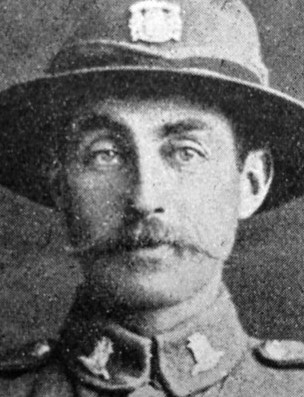
Private Walter Watson

Private Walter Watson

Walter Robert Watson was born in Wai-Iti, to the south of Nelson, New Zealand, on 12th November 1889. The third of four children, his parents were Edward and Eliza Watson.

When he finished his schooling, Walter found farming work, and this is what he was doing when, in the spring of 1916, he married Beatrice Godbaz. By this point war was raging across Europe, and it seems likely that the couple exchanged vows ahead of his departure for the conflict.

Walter joined up on 26th July 1916, and, as a Private, was assigned to the New Zealand Canterbury Regiment. His service records show that he was 6ft (1.83m) tall and 161lbs (73kg) in weight. A Methodist by religion, he had fair hair, blue-grey eyes and a fair complexion.

Private Watson’s unit departed for Britain on 15th November 1916. Leaving from Wellington on board the SS Tahiti, the journey would take nearly three months. The Canterbury Regiment arrived in Devonport, Devon, on 29th January 1917, and from there the unit moved to their camp on the outskirts of Codford, in Wiltshire.

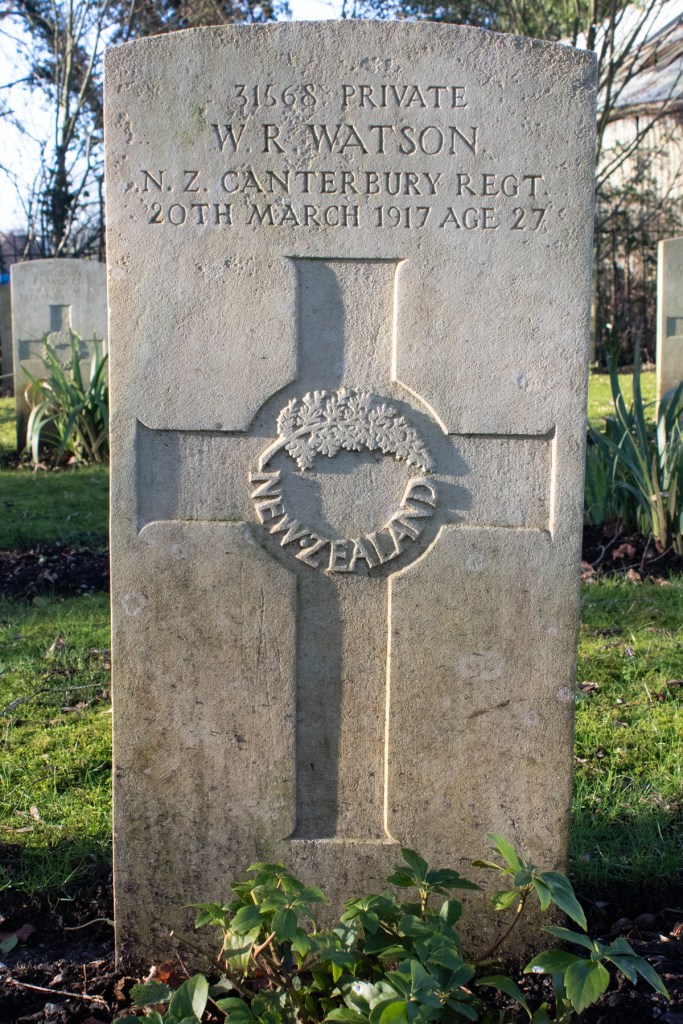
Walter was feeling every mile of the journey by this point. He contracted lobar pneumonia, and was admitted to the No. 3 New Zealand General Hospital on the outskirts of the camp. The condition was to prove fatal: Private Watson passed away on 20th March 1917, at the age of just 27 years old.

Walter Robert Watson was laid to rest in the ANZAC graveyard extension to St Mary’s Church in Codford.


Private Walter Watson
(from findagrave.com)

Walter’s younger brother, Herbert, had taken a different path in life. Also a farmer, he had volunteered in the 12th Nelson Regiment. When war broke out, he was one of the first to enlist, joining the Canterbury Mounted Rifles on 15th August 1914.

By December that year, his unit had left New Zealand and arrived in Egypt. On the subsequent journey to Britain, Herbert became unwell, and he was admitted to the General Hospital in Gibraltar with dysentery. The condition would prove his undoing, and Trooper Herbert Watson passed away on 30th August 1915, at the age of just 24 years old.

Herbert Percy Watson was buried in Gibraltar’s North Front Cemetery.


Trooper Herbert Watson
(from findagrave.com)

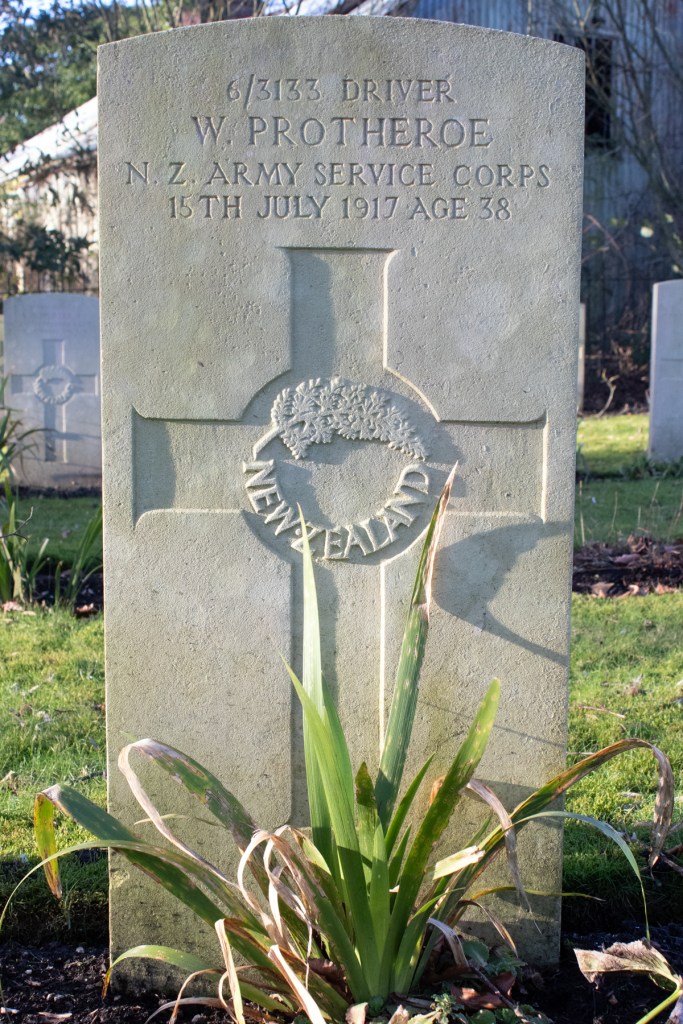
Driver William Protheroe

Driver William Protheroe

William Protheroe was born in Rangiora, New Zealand, on 3rd January 1878. One of eleven children, his parents were Welsh-born Alexander Protheroe and his English wife, Mary.

There is little concrete information about William’s early life, but later documentation gives his trade as ‘traveller’, and confirms his marriage to Elizabeth Marshall in 1906, although she had passed away by the summer of 1915.

When the Empire was called upon to support Britain in the First World War, William stepped up to play his part. He enlisted on 14th June 1915, and was initially assigned to the Canterbury Infantry Regiment. His service records confirm that at 36 years of age, he was 5ft 9.5ins (1.77m) tall, and weighed 156lbs (70.8kg). William had brown hair, grey eyes and a fair complexion.

After his initial training, William was sent to Europe. On 18th November 1915, he arrived in Suez, and it was here that he transferred to the New Zealand Army Service Corps as a Driver. By the following spring he was on the move again, and he arrived in France in May 1916.

Driver Protheroe was dispatched to a field hospital, as he had contracted influenza, but was well enough to re-join his unit after a few weeks. December 1916 proved eventful for William. He was admitted to hospital in Wimereux, France, the records for the time confirming that he was suffering from rheumatism. Intriguingly, a corresponding entry advises that ‘Soldier was on duty at time of accident and in no way to blame.’

Medically evacuated to Britain, William was admitted to the No. 1 New Zealand General Hospital in Brockenhurst, Hampshire. He spent the month of January 1917 there, before moving to the ANZAC camp near Codford, Wiltshire.

Driver Protheroe would remain in Codford for the next few months. His health was still causing some concern, however, and he was admitted to the camp hospital on 30th June. William was suffering from nephritis, and this was the condition to which he would ultimately succumb. He passed away on 15th July 1917, at the age of 39 years old.

William Protheroe was laid to rest in the graveyard extension of St Mary’s Church, Codford, Wiltshire, alongside fallen colleagues from his regiment.