Tag Archives: Norfolk

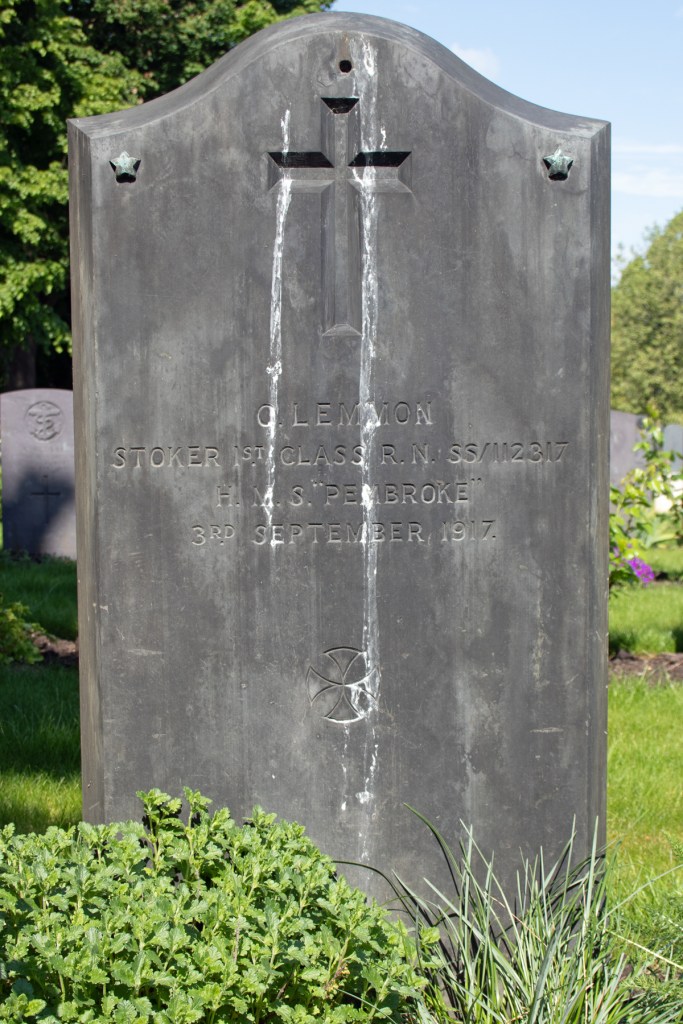
Stoker 1st Class Charles Lemmon

Stoker 1st Class Charles Lemmon

Charles Lemmon was born in Norwich, Norfolk on 12th July 1892. He was one of ten children and the son of bricklayer Henry Lemmon and his wife Sophia.

When Charles left school, he found work as an errand boy; by the time of the 1911 census, he had moved to Cambridge. He was living with John Buol, a Swiss confectioner and pastry chef who had set up a restaurant in the centre of the city, opposite King’s College.

The move from Norfolk to Cambridgeshire must has ignited a yearning for travel, however. Within a year, Charles had enlisted in the Royal Navy, and was taken on as a Stoker 2nd Class. His naval records show that he stood at 5ft 2ins (1.57m) tall, had brown hair, grey eyes and a fair complexion. It was also noted that he had a scar on his left leg.

Stoker Lemmon was set to see the world. After his initial training at HMS Pembroke – the Royal Naval Dockyard in Chatham, Kent – he was assigned to HMS Berwick, an armoured cruiser that sailed between England and the Americas.

The following year, Charles was reassigned to HMS Swiftsure, and received a promotion to Stoker 1st Class. He returned to HMS Pembroke in May 1916, and, after a couple of months on land, boarded HMS Titania, a submarine depot ship that had recently seen action in the Battle of Jutland.

Stoker Lemmon spent just under a year on the Titania, before again returning to Chatham in the spring of 1917. HMS Pembroke was a crowded place that summer, Charles was billeted in temporary accommodation in the dockyard’s Drill Hall.

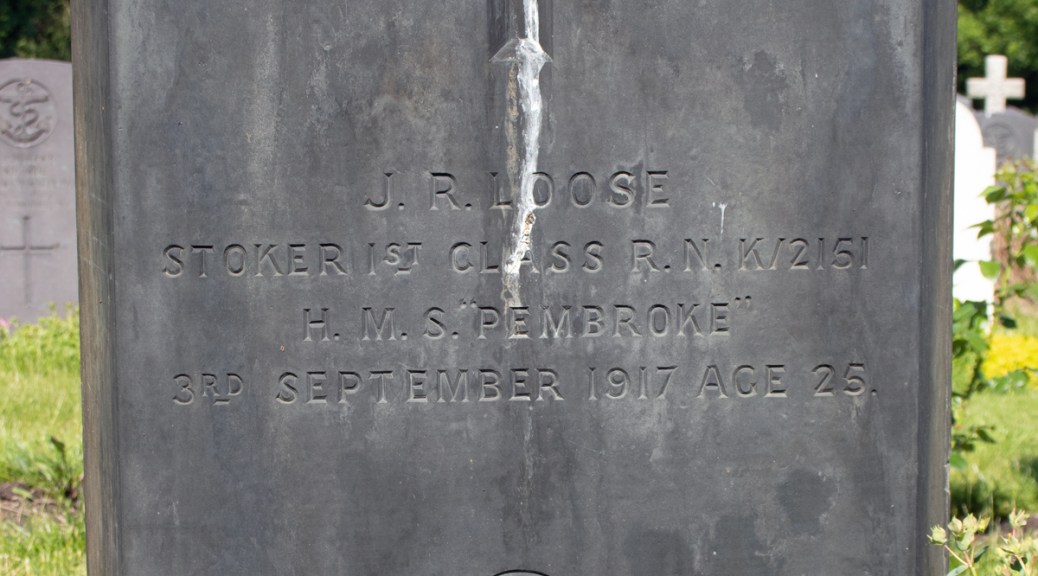
On 3rd September, the German Air Force was trialling night raids on English locations; Chatham found itself in the line of fire. The Drill Hall received a direct hit, and Stoker 1st Class Lemmon was killed, along with close to 100 other servicemen resting there. He was just 25 years of age.

The servicemen who lost their lives in the Chatham Air Raid, including Charles Lemmon, were laid to rest in the Woodlands Cemetery in nearby Gillingham.


Carpenter’s Crew Roland Mayes

Carpenter’s Crew Roland Mayes

Roland William John Mayes was born on 29th September 1895 in the Norfolk village of Fundenhall. He was the seventh of ten children to Herbert and Anna Mayes, and was the first son. Herbert was a carpenter, and this was a trade his son was to follow him into, finding work at a local piano factory.

By 1914, war was looming, and Roland wanted to put his skills to good use. He enlisted in the Royal Navy on 11th March 1914, joining a carpenter’s crew at HMS Pembroke, the Royal Naval Dockyard in Chatham, Kent. Roland’s service records show that he stood at 5ft 7ins (1.7m) tall, had brown hair, grey eyes and a sallow complexion.

Crewman Mayes’ first sea-bound assignment was aboard HMS Patrol; she was a cruiser that provided defence for the east coast of England. The vessel was badly damaged during the German bombardment of Hartlepool in December that year; Roland remained on board for more than three years.

In August 1917, Crewman Mayes returned to Chatham. HMS Pembroke was a crowded place that summer, additional accommodation was made available in the dockyard’s Drill Hall, and this is where Roland was billeted.

On the night of the 3rd September, the German Air Force was trialling night raids on English locations; Chatham found itself in the direct line of fire. The Drill Hall received a direct hit, and Carpenter’s Crewman Mayes was killed, along with close to 100 other servicemen resting there. He was just 21 years of age.

Along with 97 other victims of the Chatham Air Raid, Roland William John Mayes was laid to rest three days later in the Woodlands Cemetery in nearby Gillingham.


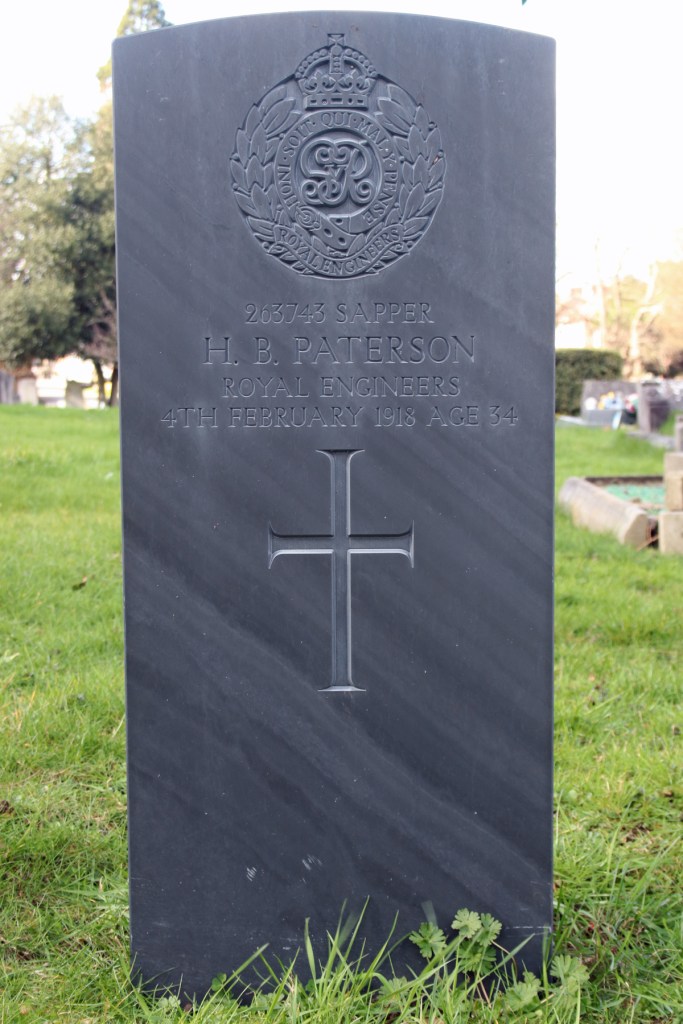
Sapper Harry Paterson

Sapper Harry Paterson

Harry Bruce Paterson was born towards the end of 1893, one of two children to John and Jane Paterson. John worked at Chatham Dockyard fitting ships’ engines, and the family lived in a small terraced house close to the centre of Gillingham in Kent.

When Harry left school, he became a plumber’s apprentice, soon qualifying as a full plumber.

He married Ellen Keeler in 1906, and the couple lived a short walk away from his parents’. They went on to have four children, Lilly, Harry Jr, Mabel and Kathleen.

War was on the horizon, but Harry’s military service records are a bit sketchy.

He enlisted as a Sapper in the Royal Engineers on 14th July 1915, and served in France. He attained the Victory and British Medals as well as the 1915 Star.

Sadly, Sapper Paterson’s health seems to have been impacted by his service. In January 1918 he was invalided back to England and admitted to the military hospital at the army camp in Thetford, Norfolk. Diagnosed with pulmonary tuberculosis, he quickly succumbed to the disease, and passed away on 4th February 1918. He was 34 years old.

Harry Bruce Paterson lies at rest in the Woodlands Cemetery, Gillingham, just a few minutes’ walk from both his parents and his widow and children.


Sapper Harry Paterson
(from ancestry.co.uk)