Tag Archives: Private

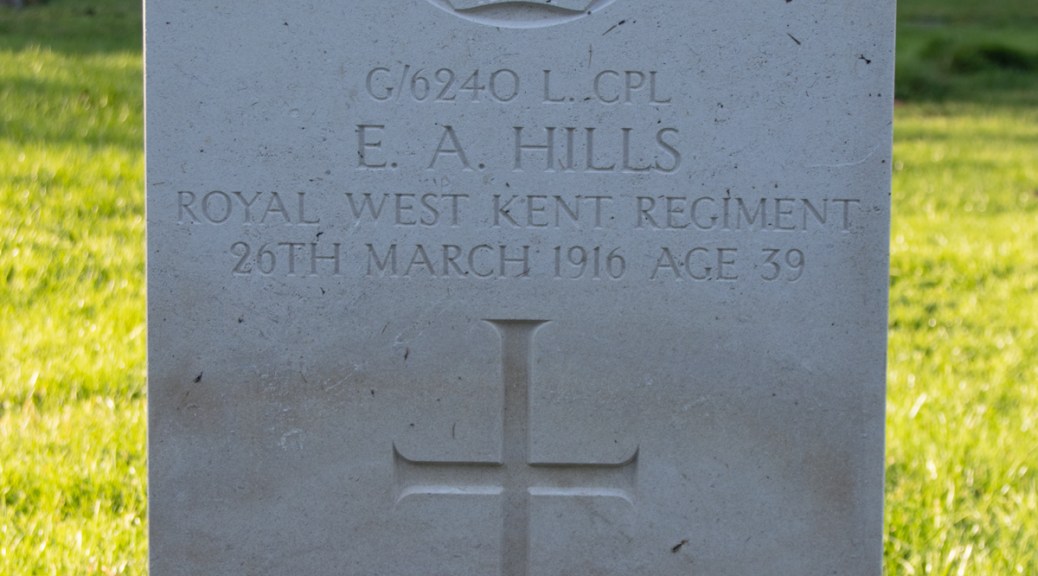
Lance Corporal Ernest Hills

Lance Corporal Ernest Hills

Ernest Albert Hills was born in December 1877, and was the fifth of ten children to Benjamin and Elizabeth Hills. Benjamin was a labourer for a brick maker from the Kent village of Upnor, but it was along the coast in Faversham that he and Elizabeth were to raise their young family.

When he left school, Ernest followed in his father’s footsteps, working in the local brick kiln. By the time of the 1911 census, however, he had moved to South East London and was boarding with his younger brother, William, working with him as a stoker for a Greenwich gas company.

War came to Europe, and Ernest wanted to play his part. On 20th April 1915, he enlisted, joining the Queen’s Own (Royal West Kent Regiment) as a Private. His service records give his height as 5ft 9.75ins (1.77m) and note that he had a scar on the right side of his abdomen.

Private Hills’ service was carried out on home soil: he was assigned to the 3rd (Reserve) Battalion, which was based in Maidstone and Chatham. Ernest was obviously well thought of: within six months of enlisting, he was promoted to Lance Corporal.

His good fortune was not to last for long, however, in the spring of 1916, he fell ill and, while at his family home in March, he passed away, having been suffering from Addison’s disease, a rare disorder of the disorder of the adrenal glands. He was 39 years of age.

Lance Corporal Ernest Albert Hills was laid to rest in the Faversham Borough Cemetery, not far from his family home, and where his father – who had passed away in 1903 – had also been laid to rest.
Private Herbert Macklin

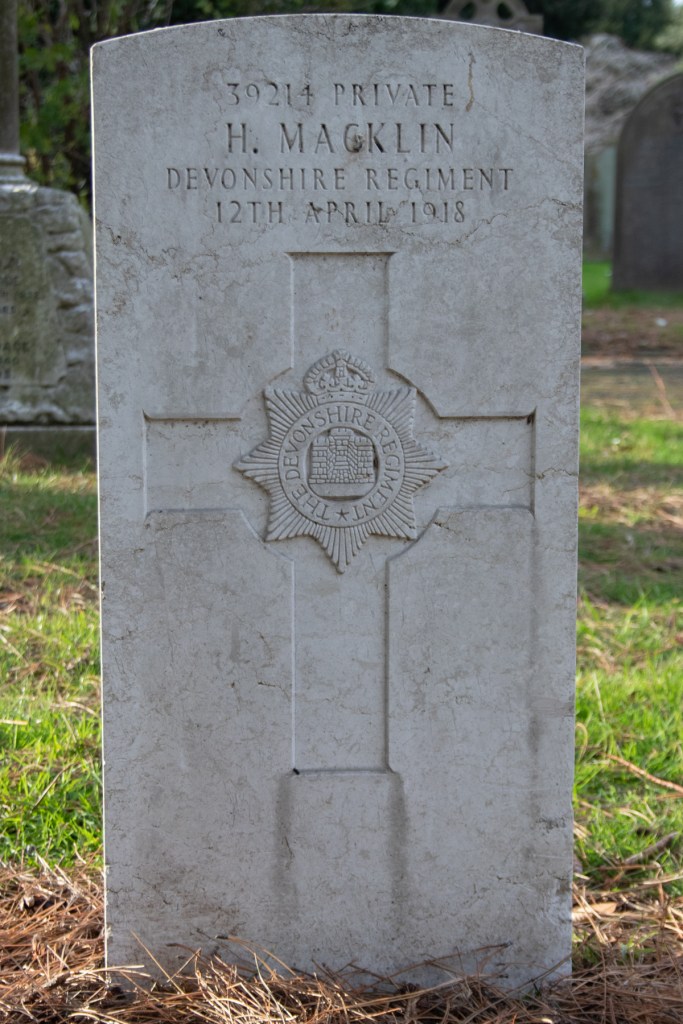
Private Herbert Macklin

Herbert Macklin was born in Lambeth, Surrey, on 14th August 1897, the youngest of six children to Enos and Sarah Macklin. Enos was a general labourer and, after his mother died in 1909, Herbert worked around his school as a baker’s errand boy, to bring in a little more money for his family.

After Enos passed away in 1912, and with his older sisters all having families of their own, Herbert and his older brother William did what they could to survive, getting some support from the local poor school.

The outbreak of war gave the brothers a sense of purpose, and both enlisted. William joined the Royal Field Artillery, and was sent to France in September 1915.

Herbert, being six years younger than his brother, enlisted later than his sibling. He joined the Middlesex Regiment, on 10th May 1916, and his service records show that he was 5ft 4.5ins (1.64m) tall, 126lbs (57.2kg) in weight and had a fair physical development. While Herbert had a fair physical development, he was also recorded as having flat feet, which somewhat limited his army service.

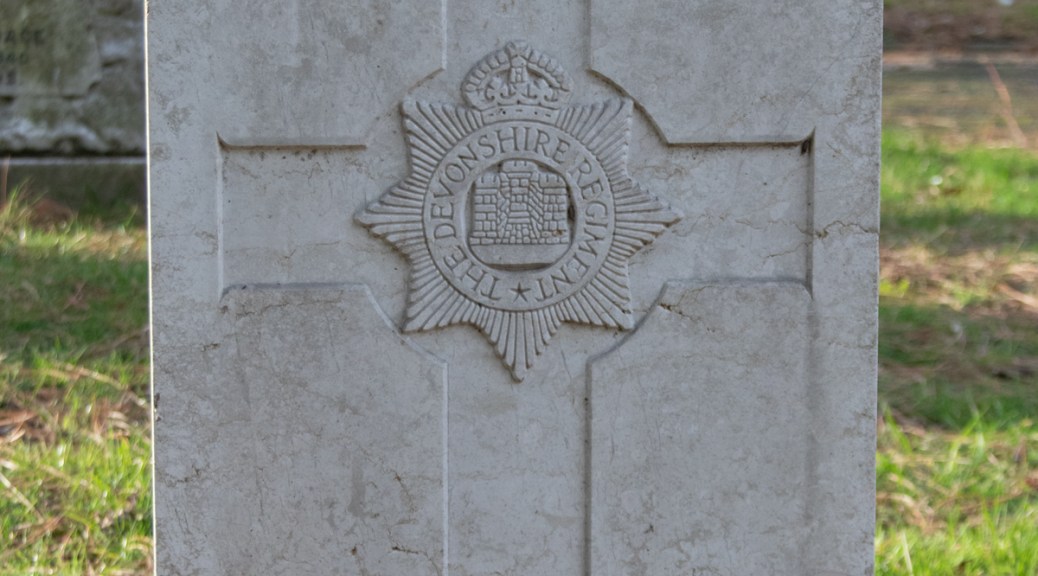
Private Macklin transferred across to the Devonshire Regiment a few months after enlisting. He was then assigned to the regiment’s Labour Corps in the summer of 1917, and remained with them for the rest of his service.

While William was serving abroad, Herbert remained on home soil for the duration. By the spring of 1918, he was working in Kent, but was admitted to hospital in Faversham, suffering from acute tonsillitis. Sadly, this was to prove too much for Private Macklin’s body to take: he suffered cardiac failure, and died on 12th April 1918. He was 21 years of age.

Herbert Macklin was laid to rest in the Borough Cemetery of the town in which he passed, Faversham.


Tragedy was to strike again for the Macklin brothers: as the war moved into its closing months, Driver William Macklin was based in Salonika, Greece. He was not to see England’s shores again, sadly: he passed away on 23rd November 1918, aged just 27 years old.


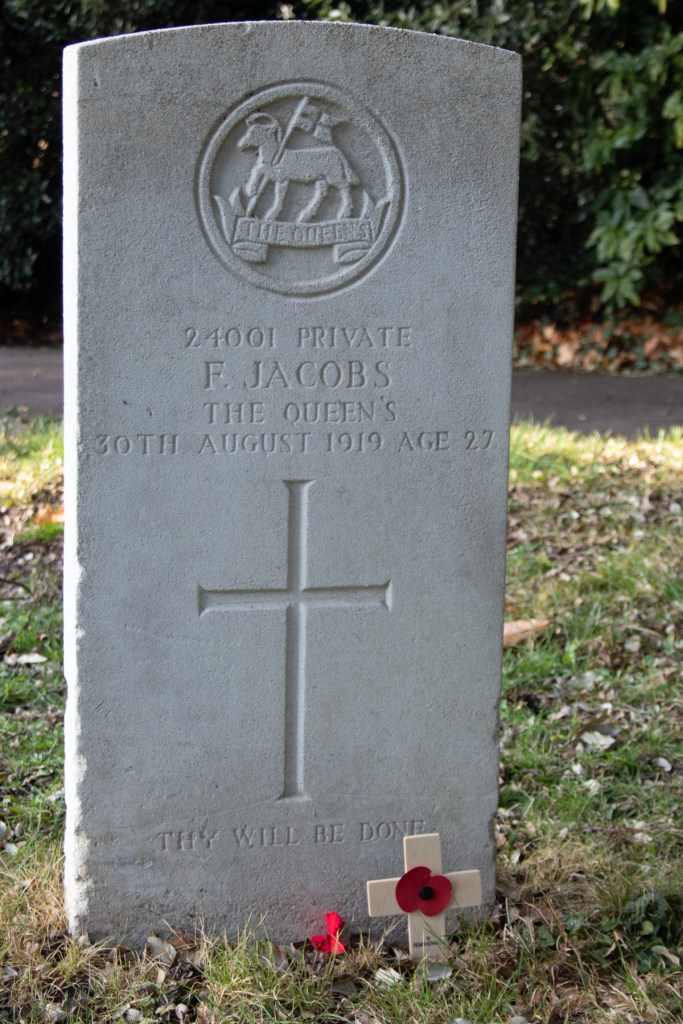
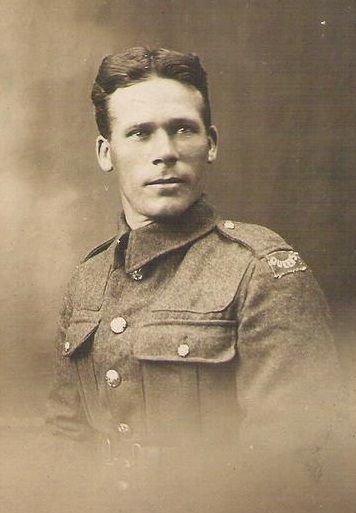
Private Frank Jacobs

Private Frank Jacobs

Frank Jacobs was born on 17th March 1892, and was one of fifteen children to George and Amelia Jacobs. George was a machine worker from Ashford in Kent, but the family moved around the county, presumably for work, as the years went on. Frank was born in Riverhead, near Sevenoaks, but within a few years, the family had settle in Faversham.

George and Amelia appear to have separated when Frank was in his early teens. There are no death records for George until the 1920s, but Amelia had a son with her maiden name in 1905 and, by the time of the 1911 census, she was married to a George Appleton, and had been for just under a year.

The same census recorded the Appletons living in Faversham with five of Amelia’s children, including Frank, who was employed in a local tannery.

On 25th October 1913, Frank married Ivy Clark, the Faversham-born daughter of a cement works labourer. The couple went on to have two children, Ronald and Eileen, in 1915 and 1916 respectively.

When was broke out, Frank was keen to play his part. He initially enlisted as a Private in the 10th (Service) Battalion of The Queen’s (Royal West Surrey Regiment), but at some point was transferred across to the Labour Corps. He served throughout the conflict, and was based on home soil for the duration.

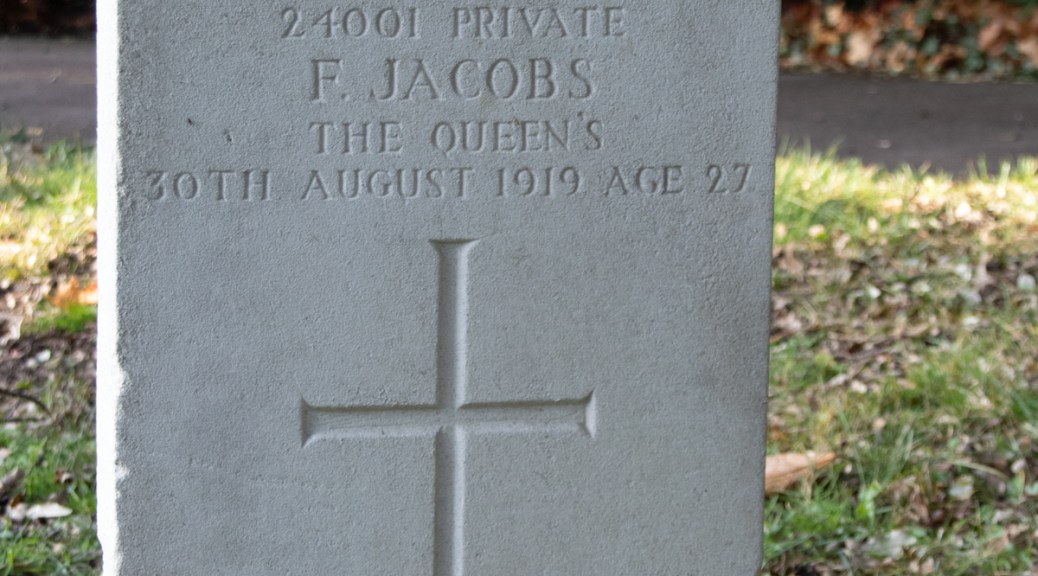
Private Jacobs remained on active service through to the summer of 1919. By this point he had returned home to Kent, but the war had taken its toll, and he fell ill. He was admitted to the Military Hospital in Chatham, but died from his illness – possibly one of the lung conditions prevalent at the time – on 30th August 1919. He was 27 years of age.

Frank Jacobs was laid to rest in the Borough Cemetery near his family home in Faversham.


Private Frank Jacobs
(from findagrave.com)

Tragedy was to strike again for the Jacobs family. When the Second World War broke out, Frank and Ivy’s son Ronald enlisted. He joined The Buffs (Royal East Kent Regiment) and, towards the end of the conflict, he was among those fighting in Italy.

Private Ronald Jacobs was killed on 19th April 1945, aged just 30 years old. He was buried in Argenta, Emelia-Romagna.

While Ronald had not left a widow or any children, his mother, Ivy, had now lost her husband and only son to European conflict.


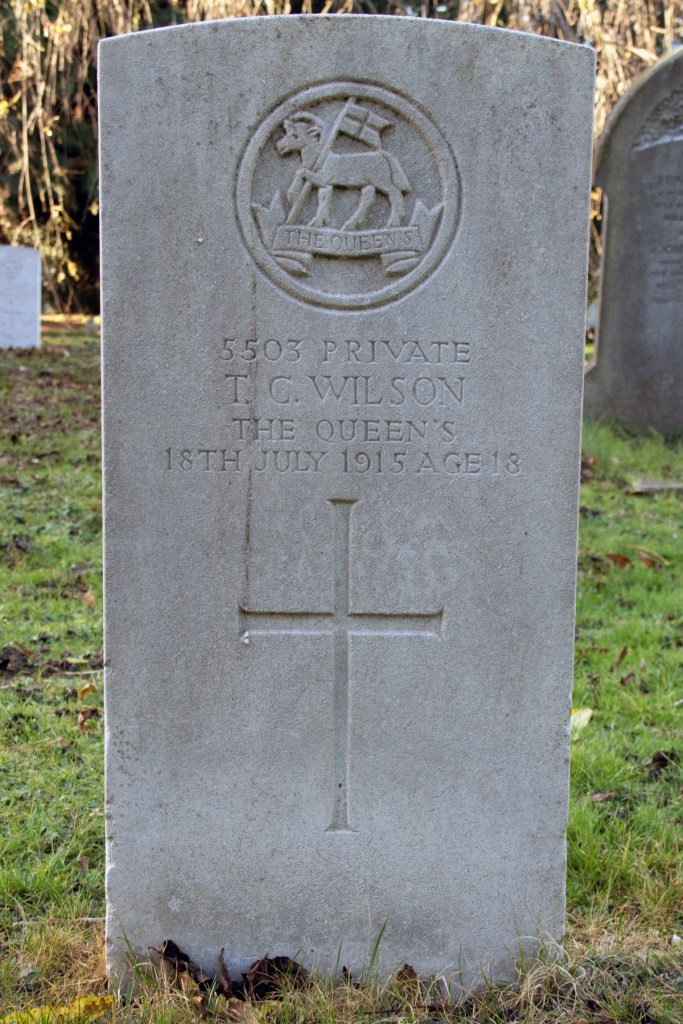
Private Thomas Wilson

Private Thomas Wilson

Thomas Charles Wilson was born in the summer of 1897 in South London, His parents were John and Ellen Wilson, and they appear to have passed away when their son was still young. He had a sister – also called Ellen – but there is little more concrete information about Thomas’ early life.

In fact, the bulk of the information available about Thomas comes from the newspaper article reporting on his funeral:

The death occurred at The Mount Hospital [Faversham] of Private Thomas Charles Wilson of the [3rd Battalion of The Queen’s (Royal West Surrey Regiment)]. The deceased was a medical case admitted from Fort Pitt Hospital, Chatham, on July 1st. He had not been to the Front; as a matter of fact he only enlisted in April, and was only 19 [sic] years of age.

The deceased, who belonged to Bermondsey, seems to have had very few friends. His nearest relative, a sister, is at present in a hospital.

Faversham News: Saturday 31st July 1915

There is little further detail to add to this life cut short. Private Wilson seems to have been a loner, with no family other than his sister, and the army may have been an opportune escape from his life. He passed away on 18th July 1915, and was just 18 years of age.

Thomas Charles Wilson was buried in the Borough Cemetery of the town in which he passed away, Faversham, Kent. The newspaper report does not mention many mourners, but he would have been proud to have been afforded full military honours as he was laid to rest.


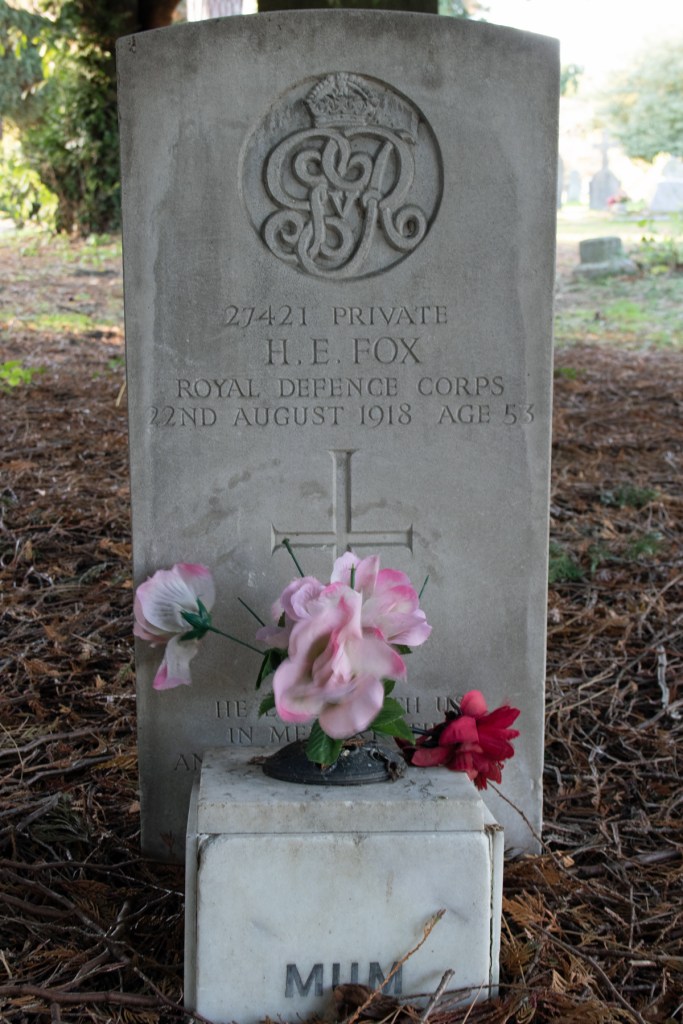
Private Hubert Fox

Private Hubert Fox

Hubert Edward Fox was born in the spring of 1865, the youngest of five children to Alfred and Eliza Fox. Alfred was a baker, from Faversham, and it was in the town that he and Eliza raised their young family.

When he finished school, Hubert found work as a carter and labourer. He served in the King’s Royal Rifles for eight years, spending two of those stationed in Egypt.

In 1894 John married Elizabeth Rebecca Harris in their home town. The couple set up home in the Abbey Road, to the north of the town, and went on to have six children between 1896 and 1909.

When war broke out, Hubert enlisted to play his part once more. He joined up in 1915, and was assigned to the Royal Defence Corps. Private Fox was on guard duty at the Uplees Munitions Factory on 2 April 1916, when a series of explosions ripped through the base. The loss of life was horrific – more than 100 men and boys were killed – and Hubert was fortunate enough to escape serious injury.

In May 1918, Private Fox was invalided out of the army on medical grounds. He was sent to a hospital in Reading, Berkshire, returning to Kent after around six weeks. He was treated in the town’s nursing home, but never fully recovered from his illness: he passed away on 22nd August 1918, at the age of 53 years of age.

Hubert Edward Fox was laid to rest in the Borough Cemetery of his home town, Faversham, not far from the family home in Abbey Road.


At the time of Hubert’s funeral, his eldest son, also called Hubert, was reported as missing in action.

Hubert Jr had enlisted in the 10th Battalion of the Queen’s Own (Royal West Kent Regiment) in August 1915, embarking for France the following May. After two years, Private Fox Jr moved to Italy with his division, but returned to the Western Front just a few months later.

In April 1918, Hubert was reported missing in action; he was later confirmed to be a Prisoner of War, and was eventually released and repatriated home in December 1918.

Hubert found work as a labourer and night watchman; the 1939 Register records him living in his Abbey Road home with his mother. He died the summer of 1968, at the age of 71 years old.


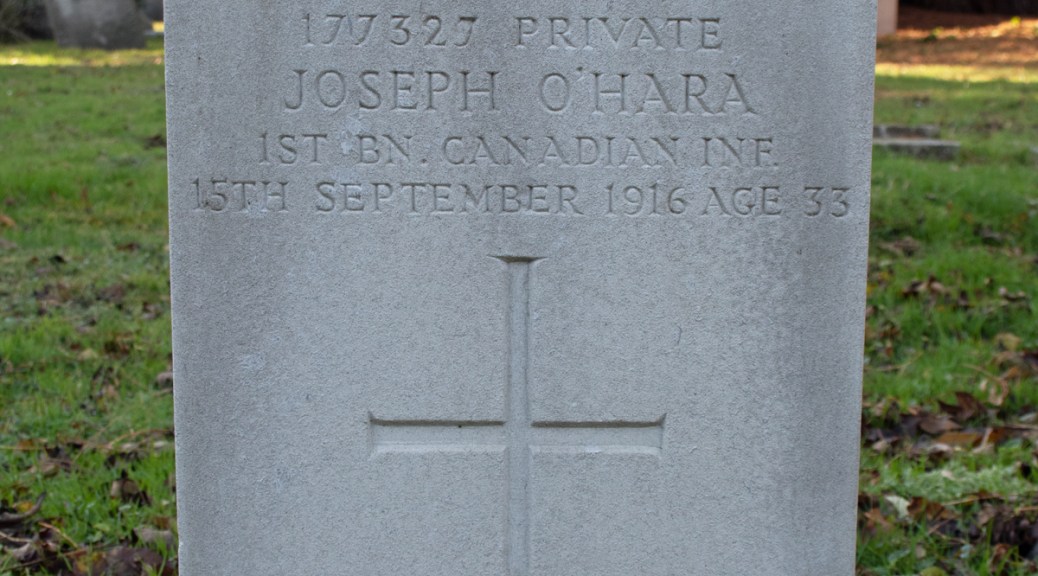
Private Joseph O’Hara

Private Joseph O’Hara

Joseph O’Hara was born in Manchester on 30th May 1882, the son of John and Kate O’Hara. There is little information available about his early life, although it is clear that at some point the family emigrated to Canada, settling in Toronto.

When war broke out, Joseph enlisted, joining the 1st Battalion of the Canadian Infantry. By 1916 Private O’Hara was not only back in Europe, but fighting on the Western Front. Details are scarce, but a contemporary newspaper sheds a little light on what happened to him next.

A contingent of 132 wounded men was detrained at Faversham last Friday morning. Forty-four of the number were taken to The Mount, seventy-one to Lees Court, and seventeen to Glovers (Sittingbourne).

With one exception the cases were all “sitting up” cases and were in a separate train by themselves. This train, however, was preceded by a train of “cot” cases which was going through to Chatham, but owing to the serious condition of one of the men – Joseph O’Hara, of the Canadian Expeditionary Force – the train was stopped at Faversham for his removal to the Mount Hospital. O’Hara had been badly wounded in both legs and he died at the Mount a few hours after his arrival there.

Faversham News: Saturday 23rd September 1916

Private Joseph O’Hara was 34 years of age when he passed away. He was laid to rest in the Faversham Borough Cemetery.


Private Joseph O’Hara
(from findagrave.com)

Private George Knight

Private George Knight

George Albert Knight was born in Dover, Kent, on 27th September 1888, the second of seven children to Thomas and Frances Knight. Thomas was a railway porter from Hampshire, and the family lived in a small terraced house a few minutes’ walk from his workplace, Dover Priory Station.

By the turn of the century, the family had moved to Faversham: Thomas was working a signalman, and two of George’s brothers also worked for the railway – one as a clerk, the other as a number taker. George, meanwhile, was working as a butcher.

In the summer of 1916, George married Alice Smith, who was working as a domestic servant for an government inspector in Willesborough, Kent. George was still working as a butcher at this point, and continued to do so up until the spring of 1918, when he was eventually called up.

Private Knight enlisted in March 1918, joining the Royal Naval Air Service shortly before it merged with the Royal Flying Corps to become the fledgling Royal Air Force. He was based in Cornwall, and his role included mechanic work.

On the evening of 21st September 1918, George collapsed and, despite being rushed to hospital in Truro, he passed away the following morning. It appears that he had not been unwell before, and his death came as a shock. He was just short of his 30th birthday.

George Albert Knight was brought back to Kent for burial. He was laid to rest in Faversham Borough Cemetery, not far from where his widow and family were living.


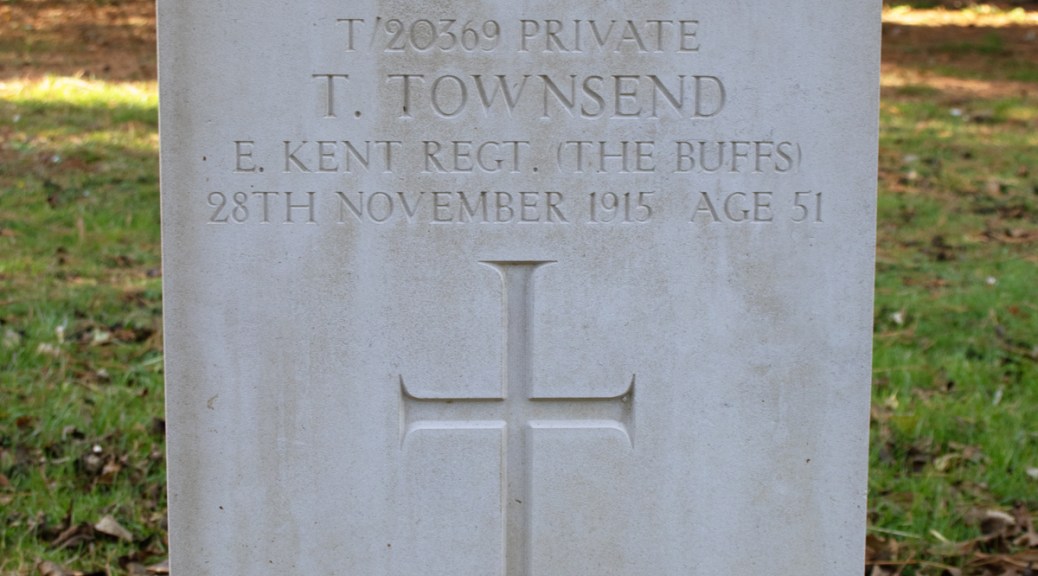
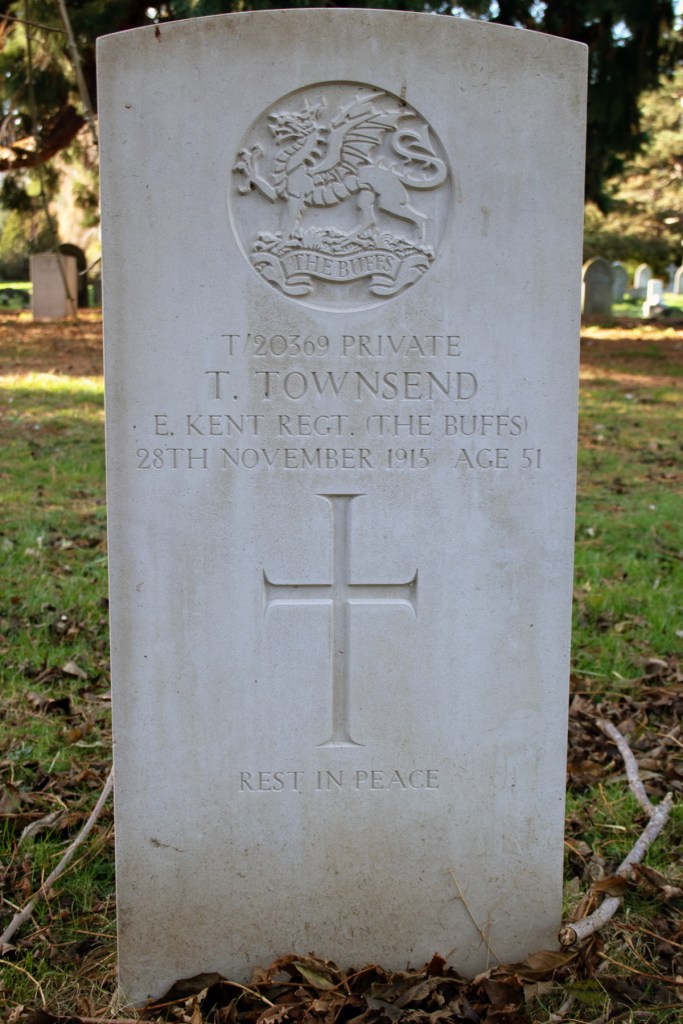
Private Thomas Townsend

Private Thomas Townsend

Thomas Townsend was born in Maidstone, Kent, in around 1864. Details of his early life are sketchy, but his mother was Mary Townsend, and he had an older brother, Henry.

Thomas worked as a labourer, mainly in brickyards, and, at the turn of the century, was living in to the north of Maidstone. The 1901 census records him as sharing his home with his wife, Lydia Townsend, her son, George Andrews, and a visitor, seven-year-old John Lassam.

The next census, in 1911, Thomas and Lydia are both shown as living in the same house, although it notes they had been married for eight years. John Lassam is still living at the property, by now as a boarder, while he was also working as a labourer.

Conflict was closing in on Europe and, despite being 50 when war was declared, Thomas was keen to play his part. He initially enlisted in the Queen’s Own Royal West Kent Regiment, but soon transferred across to The Buffs (East Kent Regiment). Full details of his service as unclear, but it seems he was assigned to the National Reserve Guard at Faversham, Kent.

Private Townsend’s role was guard duty, possibly at the munitions factory in the town. While carrying out this role in the autumn of 1915, he caught a chill, which then became pneumonia. He was admitted to the Faversham Military Hospital, but the lung condition was to get the better of him, and he passed away on 28th November 1915. He was 51 years of age.

Thomas Townsend was laid to rest in Faversham Borough Cemetery, not far from where he carried out his military role.


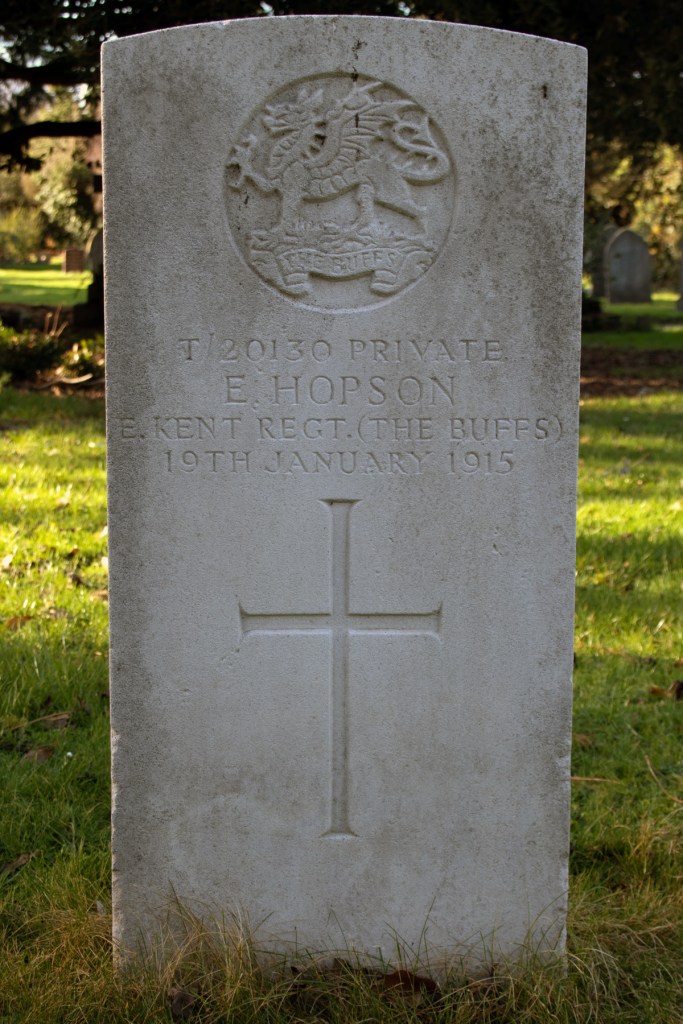
Private Edward Hopson

Private Edward Hopson

The life of Edward Hopson looks likely to remain a mystery, and what can be pieced together is done from a few fragmented documents. His gravestone sits in the Faversham Borough Cemetery in Kent.

A local newspaper, contemporary to his passing in January 1915, acts at the starting point:

Edward Hopson, a Maidstone [Kent] man, belonging to the National Reserve Guard doing duty at the Explosives Works at Faversham, died suddenly while proceeding on duty on Tuesday night.

Evidence of identification was given by Joseph Cornelius, a Lance Corporal in the Guard, who stated that so far as was known, the deceased’s only relative was a half-brother. The deceased gave his age as 49 when he enlisted, but witness believed his correct age was 61. He was apparently in good health when passed for duty on Tuesday at the works of the Explosives Loading Company at Uplees.

Charles John Link, engaged on patrol duty at the works, stated that about 10:30 on Tuesday night he was accompanying deceased to the point where he was to do guard duty. On the way deceased complained that he could not see, and shortly afterwards, as they came to a style, he exclaimed “Oh! dear,” and then, dropping his rifle, he fell into the witness’s arms and expired.

South Eastern Gazette: Tuesday 26th January 1915

The cause of death was given to be heart disease, and, at the inquest, a verdict of “Death from Natural Causes” was given.

The report suggests that Edward was born either in around 1866 or 1854. The Commonwealth War Graves Commission give his parents as Jack and Annie Hopson, but there are no surviving census records from the 1800s that would corroborate this.

The 1911 census records an Edward Hopson, aged 57 and from Maidstone, Kent, residing in the Maidstone Union Workhouse. He is listed as a former farm labourer, and his marital stated us given as widowed.

If this is the Edward Hopson commemorated in Faversham Cemetery, it seems likely that he used the outbreak of war – and the opportunity to enlist – as his escape route from the workhouse.

He joined The Buffs (The East Kent Regiment), and was assigned, as a Private, to the 4th Battalion. This particular troop was dispatched to India in October 1914, and it seems likely that Private Hopson was reassigned to the National Reserves Guard, and posted to Faversham.

This is all conjecture, of course, but, either way, Private Hopson died of a heart attack on the night of the 19th January 1915, aged approximately 61 years old.


Private Albert Stockley

Private Albert Stockley

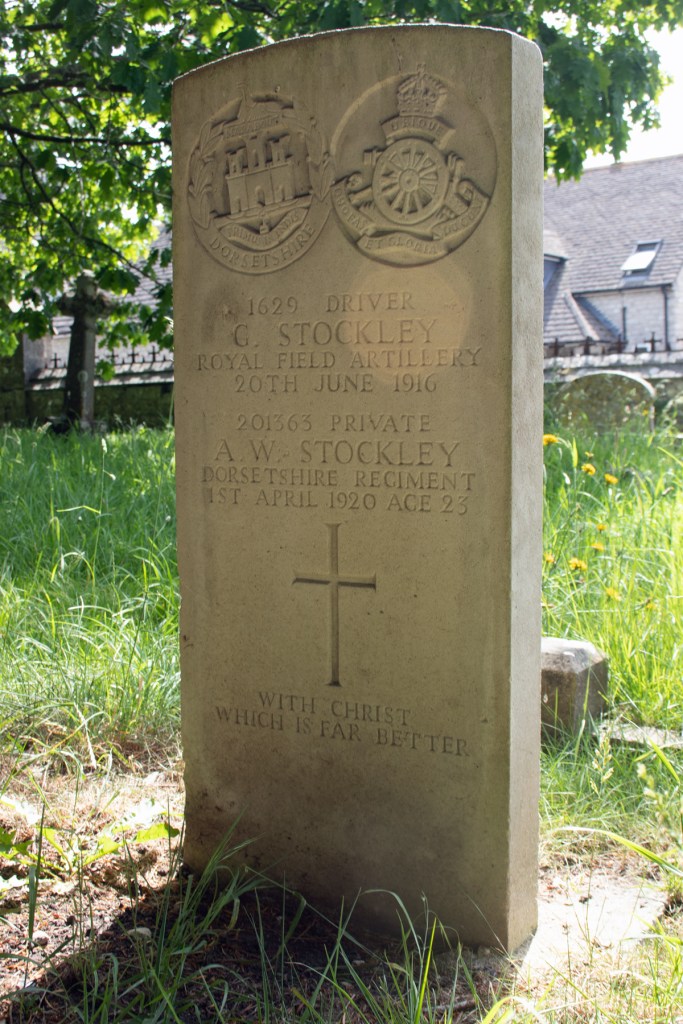
Albert William Stockley was born in the spring of 1897, the youngest of twelve children to Frank and Mary Ann Stockley. Frank was a clay cutter from Dorset, and he and his wife raised their family in the picturesque village of Corfe Castle.

Sadly, much of Albert’s life is lost to time. He would have been 17 years old when war broke out, so it seems likely that he would not have been in the first wave of men to enlist.

Albert joined the Dorsetshire Regiment and, as a Private, was assigned to the 1st/4th Battalion. His troop was based in India for the first part of the war, before moving to Mesopotamia in 1916. There is nothing to confirm, however, whether Private Stockley served abroad, or if he remained as part of a territorial force.

Private Stockley was demobbed on 22nd May 1919, and awarded the Victory and British Medals for his service. He returned to Dorset, but is it at this point that his trail goes cold.

All that is evident is that Albert William Stockley passed away on 1st April 1920, ages just 23 years old. was laid to rest in the Old Church Cemetery in his home town of Corfe Castle.


Albert shares his grave with his older sibling, George Stockley, who died in June 1916. The brothers are commemorated on the same headstone.