
Alfred George Moss was born in West Ham, Essex, on 14th February 1885. One of eight children, his parents were John and Sarah Moss. John was a leather worker, but Alfred initially found work as a butcher’s assistant when he completed his schooling.
Butchery wasn’t the career that Alfred sought, however, and, on 12th November 1903, he enlisted in the Royal Navy as a Stoker 2nd Class. His service papers note that he was 5ft 9ins (1.75m) tall, with brown hair, hazel eyes and a fresh complexion. He was also recorded as having a scar on both knees.
Stoker Moss was sent to HMS Acheron, a training ship based on the Thames Estuary, for his initial service. He stayed there until July 1904, when he was given his first sea-going assignment, on board the cruiser HMS Terpsichore. She would remain his home for the next eighteen months, during which he was promoted to Stoker 1st Class.
Alfred seems to have been a steady worker, his annual reviews noting a very good character. In November 1908, having come to the end of his five-year contract, he was stood down to reserve status. He had served on four vessels and, when not at sea, HMS Pembroke, the Royal Naval Dockyard in Chatham, Kent, became his home from home.
Alfred is missing from the 1911 census, but turns up on 21st December 1913. On that day he married Ellen Lipscombe in All Saints’ Church, West Ham. Nellie, as she was known, was the oldest of seven children to plasterer Tomas Lipscombe. The couple set up home on Grafton Road, Plaistow, and went on to have a son, Thomas, the year after exchanging vows.
When war was declared, Alfred was called back into service. He returned to Pembroke, and spent the next year split between there and HMS Victory, the Royal Naval Dockyard in Portsmouth, Hampshire. In the summer of 1915, Stoker 1st Class Moss was assigned to the cruiser HMS Europa. For the next two years, he would be based in the Eastern Mediterranean, supporting the troops in and around the Gallipoli peninsula.
By the summer of 1917, Alfred was back at Pembroke, which, by this point in the war, was a busy and overcrowded place. The sinking of HMS Vanguard meant that her replacement crew were stuck in port waiting to be reassigned, and an outbreak of meningitis demanded more space to slow or stop its spread. Stoker 1st Class Moss found himself barracked in overflow accommodation set up in the dockyard’s Drill Hall.
On the night of the 3rd September 1917, German bombers launched an audacious raid on the North Kent Coast. Two bombs landed on the Drill Hall, shattering its glass roof, and killing dozens of sleeping servicemen beneath. Stoker 1st Class Moss was one of those who lost his life: he was 32 years of age.
The body of Alfred George Moss was taken back to Essex for burial. He was laid to rest in West Ham Cemetery, not far from where his grieving widow and young son were living.
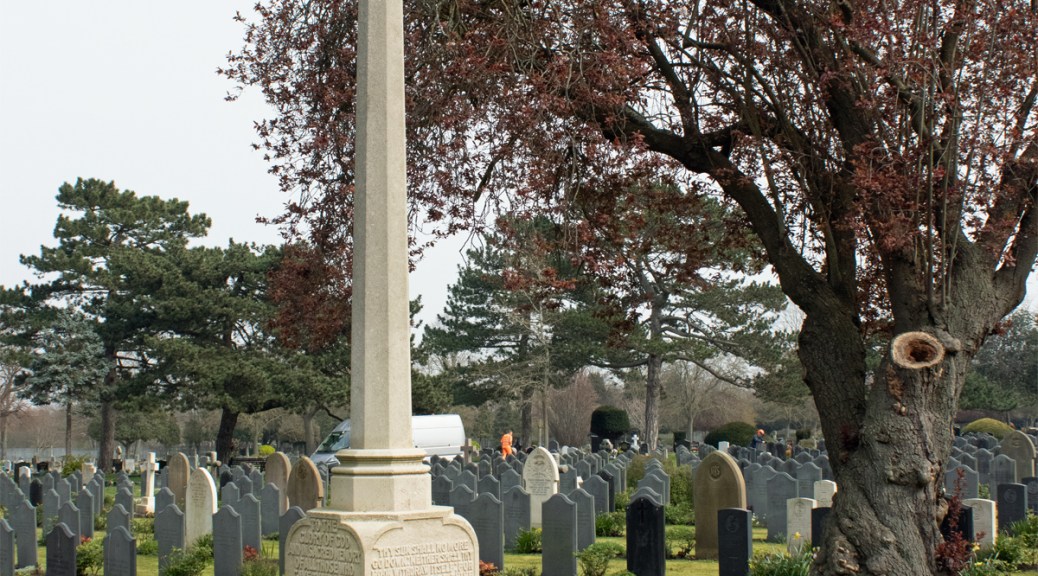
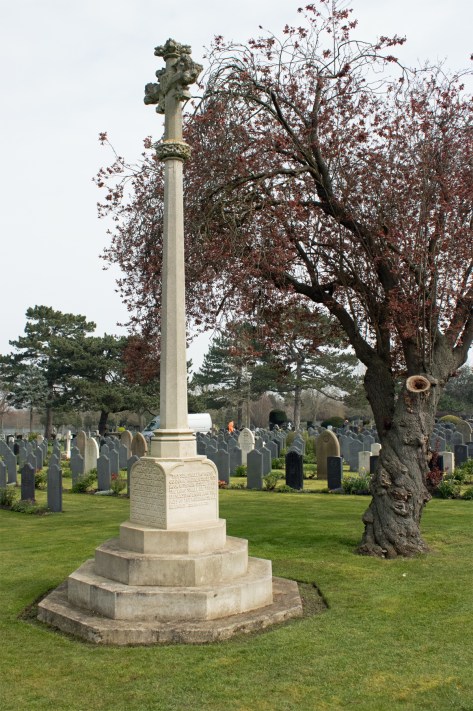
[Note: the photo above is of the memorial to the Chatham Air Raid victims, close to the mass grave for those whose bodies were not identified, in Woodlands Cemetery, Gillingham, Kent.]

