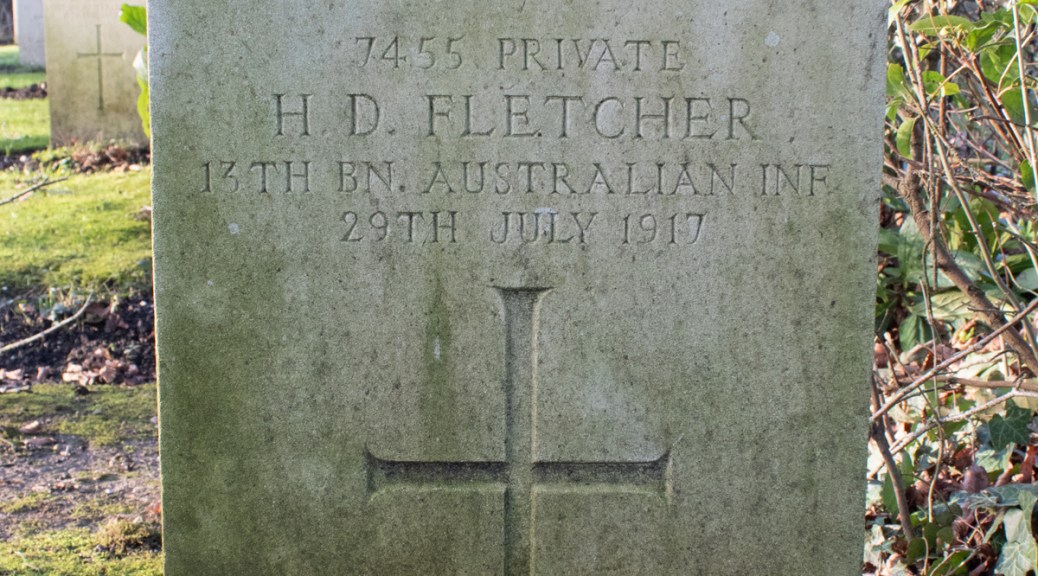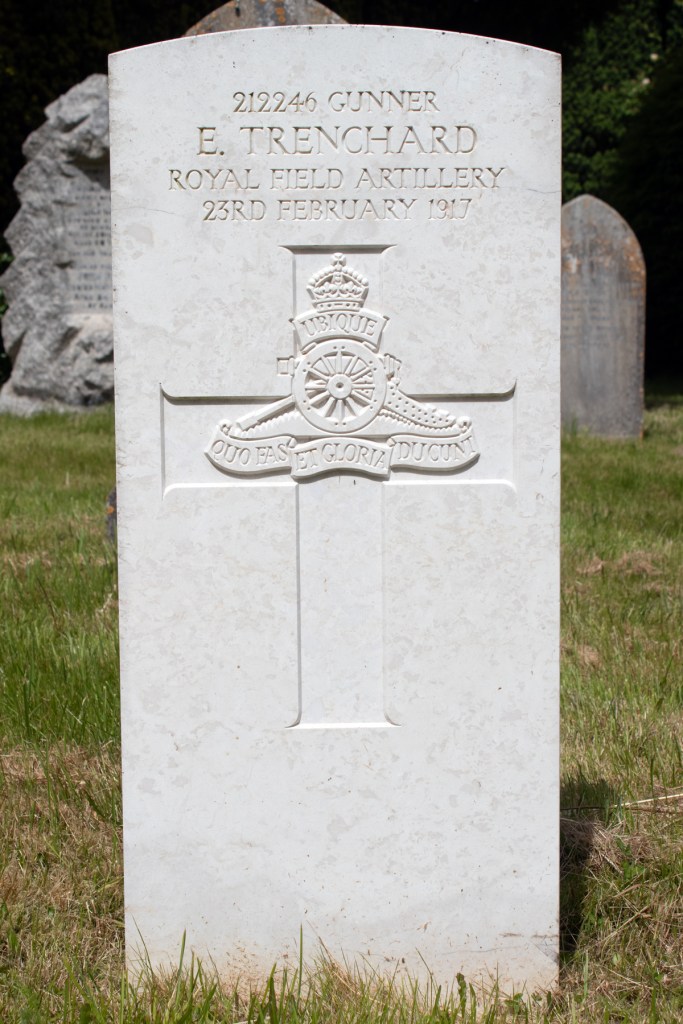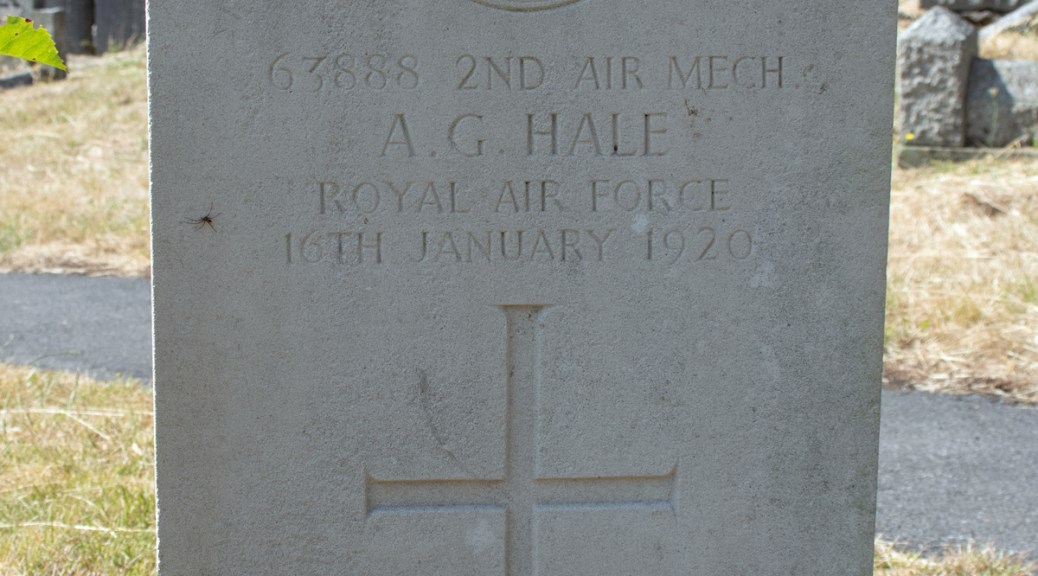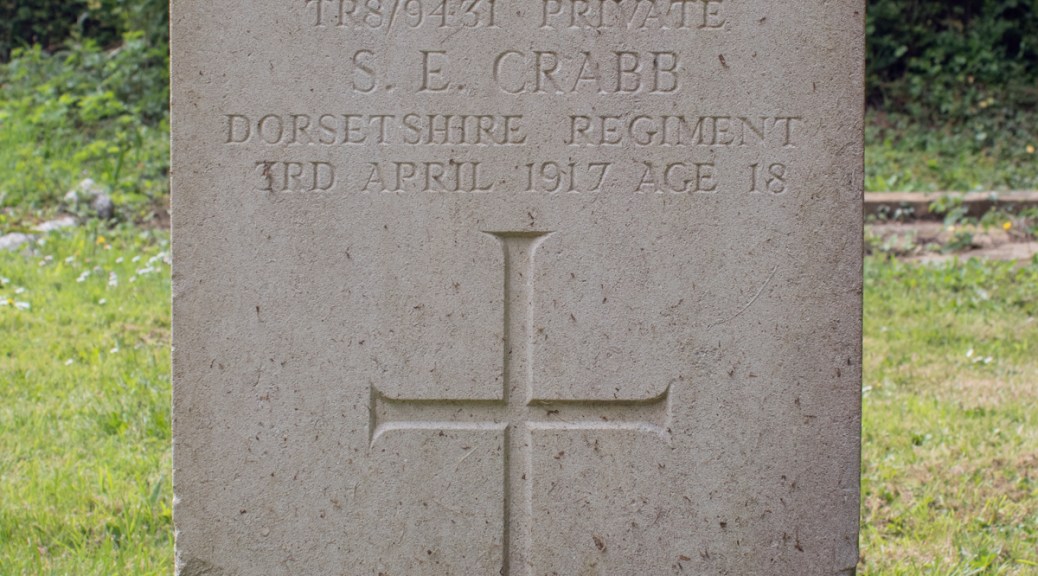
Details of Cecil Whitehead’s early life as lost to time. Born in 1882, he was the son of Henry and Annie Whitehead, from Openshaw in Manchester. There are no census returns for the family, so it is not possible to discover any more of their background.
The Commonwealth War Graves Commission confirm that Cecil wed a woman called Annie Ellis. His pension ledger notes four children: John, Cecil, Annie and Catherine, who died in 1917.
When war broke out, Cecil stepped up to serve his King and Country. He enlisted in the Manchester Regiment, and was assigned to the 3rd/8th Battalion. This was a reserve unit, based on home soil, and there is no evidence that Cecil spent any time overseas.
Cecil rose to the rank of Serjeant, by the winter of 1915, Cecil was billeted near Codford in Wiltshire. It was while he was here that he fell ill, contracting pneumonia. The condition was to prove too much for his body to bear, and he passed away on 13th February 1916, at the age of 33 years old.
Annie appear to have been unable to fund bringing her husband back to Manchester for burial. Instead Cecil Whitehead was laid to rest in the quiet graveyard of St Mary’s Church in Codford.
Herbert Gordon Maurice Fleming was born in Stockton, Wiltshire, on 24th March 1888. An only child, his parents were carpenter and wheelwright George Fleming and his wife, Annie.
Little further information is available about Herbert’s early life. On 25th June 1910 he married Ethel Young, a shepherd’s daughter from Wiltshire: they would go on to have four children, Herbert Jr, Ivy, George and Harold.
Herbert’s marriage certificate noted that he was employed as an engine driver. In his spare time, he also volunteered for the Wiltshire Regiment. When war broke out in the summer of 1914, he was called upon to play his part, and was formally mobilised in July 1916.
Sapper Fleming joined the Royal Engineers. His service records show that, at 28 years of age, he stood 5ft 7.5ins (1.71m) tall, and weighed 159lbs (72kg). He was of good physical development, although his medical report noted that some dental attention was required, and he had a pendulous mole on his back.
After his initial training, Herbert was sent to France. He was to remain part of the British Expeditionary Force for the next three years. While details of his service are scarce, his commitment to the army was clear: he was promoted to Lance Corporal in December 1918; full Corporal in June 1919; and Serjeant just three months later.
In October 1919, Herbert arrived back in Britain and the following month he was formally demobbed. He returned to his family, who were now living in Bath, Somerset. Back on civvy street, Herbert took up work as a motor waggon driver in the city, but his post-army life was to be short-lived.
The enquiry into the death on Saturday of Herbert John Maurice Fleming… was held at Bath Guildhall… Medical evidence proved that the cause of death was heart failure, due to an unexpected attack of pneumonia.
The widow said her husband did not complain of illness until Friday evening, when he returned from a journey to Reading. He then said he ached all over, and would go to bed at once. On Saturday evening he said he felt better, and sent her to the chemist for a tonic. He told her not to send for a doctor, as he expected to be quite well on Monday. On Sunday he still appeared fairly well, and was quite cheerful: but in the afternoon he complained of sickness, and the end came very suddenly.
[Bath Chronicle and Weekly Gazette: Saturday 27th March 1920]
Herbert John Morris Fleming was just three days short of his 32nd birthday when he died. He was laid to rest in Bath’s sweeping Locksbrook Cemetery.
The spelling of Herbert’s second middle name is variously noted as Maurice and Morris. For consistency, I have used the spelling noted on his birth certificate.
Lewis Scott White was born at the start of 1896 in Bath, Somerset. The youngest of four children, his parents were surgeon Edward White and his wife, Fanny. The 1911 census recorded the family living in a substantial property in Green Park: the now medical practitioner Edward, Fanny and Lewis sharing the 12-room house with a servant, Ellen Fry.
As befitting of his station in life, Lewis’ education was a well rounded one: “[he] was educated at Bath College and Kelly College, Tavistock, and was coached for his matriculation examination by Mr Samuel Edwards, of Grosvenor College. He exhibited a fondness for aeronautics when quite a lad. While at Victoria College he evinced much enthusiasm for the art of flying, and made models of flying machines. One of these miniature planes he flew successfully on Lansdown, and we believe showed at an exhibition in London. He was one of the leading spirits in the Bath Aerial Club, which used to meet at the Church Institute.” [Bath Chronicle and Weekly Gazette – Saturday 06 October 1917]
Lewis’s mechanical mind was put to good use in his working life as well. He found employment as a motor fitter, and this is what he was doing when war broke out in the summer of 1914. He felt duty bound to service his King and his Country, and, on 20th October, he enlisted in the Royal Flying Corps as an Air Mechanic. His service records confirm the man he had become: at 18 years of age, he was 5ft 4ins (1.63m) tall and weighed 117lbs (53kg). He had dark brown hair, brown eyes and a fresh complexion.
His skill and daring earned promotion, and he was given a commission… He accomplished many fine feats in actual aerial warfare on the Western Front, and for one of these some months ago he was awarded the Military Cross. He was acting as an observer when the flight occurred; the pilot in the same machine was given the DSO.
While wearing only one wing he came home to England to train as a pilot. He rapidly passed all the tests for this, and obtained the two wings, and was gazetted Captain of the RFC on May 5th last. It was only on Wednesday last week that Captain White attended an investiture at Buckingham Palace and was decorated by the King with the MC. So complete was his mastery of flying machines and so great his initiative that Captain White was appointed Flight Instructor, and for the last two months he had been Flight Commander quartered in Wiltshire.
[Bath Chronicle and Weekly Gazette – Saturday 06 October 1917]
On 29th September 1917, Captain White was piloting a Sopwith Camel from RAF Yatesbury, Wiltshire, when the aircraft failed to pull up from a dive. It crashed into the ground and Lewis was killed instantly. He was just 21 years of age.
It is no secret that the aeronaut whose intrepid feats in the air above Bath of late had caused much notice was Captain White. He would loop the loop with the greatest ease, and his nose-diving was most daring. When questioned why he performed these dangerous acts in the air Captain White would declare that there was no risk from engine trouble unless a man ‘lost his head,’ and apparently he had no idea that is was possible for him to get into difficulties from that cause. It is to be surmised therefore that in the accident which had cost his life, so especially valuable to the country now, something beyond engine trouble must have happened.
To stay-at-home and peacefully minded citizens some of the manoeuvring by aeroplanes in flight savours too much of the sensational, and they are apt to think that it is unnecessarily throwing away chances. But such an impression is as unjust as it is unkind. The strange evolutions described by machines in mid-air are just the kind that have to be executed in actual aerial warfare when seeking to gain an advantage over the foe, and unless this preliminary training were carefully and systematically gone through it would be hopeless to seek to acquire the necessary skill in the moment of crisis. Captain White was absolutely fearless, and his death will be deeply deplored by by many comrades who knew his worth.
[Bath Chronicle and Weekly Gazette – Saturday 06 October 1917]
A subsequent inquest found no immediate cause for the crash, but suggested that Captain White may have misjudged the distance whilst diving and flew into ground.
The body of Lewis Scott White was brought back to Somerset for burial He was laid to rest in the majestic Locksbook Cemetery in Bath, his funeral attracting a full page report in the city’s Chronicle and Weekly Gazette.
Leo Edwin Aldrich was born on 14th July 1897 in the Ohio city of Elyria, and was the only child to Hiram and Agnes Aldrich. Hiram was a machinist from New York and, by the time of the 1910 census, he had found work as a toolmaker for a motor company, and the family has moved to Detroit, Michigan, 150 miles (240km) along Lake Erie’s coastline.
When war came to Europe, Leo seemed keen to get involved. Full details of his military service are lost to time, but it seems that he enlisted in the Canadian Royal Engineers. By the summer of 1918, Leo was in Britain, and had transferred to the Royal Air Force. He had reached the rank of Second Lieutenant and was based at Yatesbury Airfield in Wiltshire.
On 14th November 1918, just three days after the Armistice was signed, he was flying in a Bristol F2b fighter aircraft, when it nosedived into the ground. Both Second Lieutant Aldrich and his passenger Second Lieutenant McDougall were seriously injured, and were taken to Bath War Hospital for treatment.
Sadly, Leo’s injuries were to prove to be too severe. He passed away the same day: he was just 21 years of age.
Leo Edwin Aldrich was laid to rest in Locksbrook Cemetery, not far from the hospital in which he passed.
Leo’s service records suggest that his next of kin was his wife, Mrs Leo Aldrich of 480 East 112th Street, Cleveland, Ohio. There are no identifiable marriage records for him although, intriguingly another one does exist.
This confirms the wedding of a George L Aldrich to a Helen J Seymour on 6th August 1918 in Cuyahoga, Ohio. As the names do not match, the record would normally be dismissed, but the parents’ names – Hiram and Agnes – match Leo’s, as does the place of birth – Elyria – and his occupation – Second Lieutenant.
Further details for Helen Seymour, and why Leo may have given the name George, are lost to time.
Clarence Philip Rondel was born in 1900 in St Lawrence, Jersey. One of twelve sibling, nine of whom survived childhood, his parents were John and Louisa Rondel. John was a farmer and by the time of the 1911 census, the family had moved to St John’s to take up a new post, a lot of the family pitching in to help out.
When war came to European shores, Clarence was keen to play his part. Too young to enlist when hostilities were declared, it was not until the spring of 1918 that he was able to join up. Private Rondel was assigned to the 53rd (Young Soldier) Battalion of the Devonshire Regiment.
Clarence was sent to England for training, and was based at the Rollestone Camp on Salisbury Plain, Wiltshire. The barracks were breeding grounds for illness and disease, and Private Rondel was not to be immune. He contracted pneumonia, and was admitted to the camp’s hospital. The condition got the better of him, and he passed away on 2nd November 1918: he was just 18 years of age.
The body of Clarence Philip Rondel was taken back to Jersey for burial. He was laid to rest in St John’s New Cemetery, not far from where his family still lived.
William John Hamilton was born in Urney, County Tyrone, in 1870. One of ten children, his parents of John and Bella. Little further information is available about his early life, but on 29th September 1895, William married Sarah McLaughlin.
The couple set up home in Ballycolman Lane, Strabane, and had at least six children. William worked as a shop porter, while Sarah kept house for the family.
By the time of the 1911 census, William was working as a general labourer. War was brewing over the continent by this point, however, and when hostilities were declared, he stepped up to play his part.
Full details of William’s service are lost to time. What documents remain, however, confirm that he enlisted no earlier than June 1917, and that he joined the Royal Engineers as a Pioneer. He was attached to an Inland Water Transport unit and sent to Salisbury Plain, Wiltshire, for training.
Pioneer Hamilton’s Pension Ledger Card provides a tantalising insight into his passing. On 25th December 1917, he died from “suffocation from submersion accidentally drowned while on active service.” There is no other documentation to expand on what happened, and no contemporary newspaper report on his passing. William was 47 years of age.
It would appear that Sarah was unable to afford the cost of bringing her late husband’s body back to Ireland for burial. Instead, William John Hamilton was laid to rest in Amesbury Cemetery, close to where he had passed away.
There is little concrete information available on the life of John Henry Chapman. His headstone, in Amesbury Cemetery, Wiltshire, confirms that he was a Lance Serjeant in the Royal Garrison Artillery, and that he died on 19th December 1920.
John’s pension ledger gives his widow’s name, Caroline, date of birth, 25th August 1900, and her address, High Street, New Romney, Kent. It also gives a cause of death for John, who passed away from pneumonia.
The record for Lance Serjeant Chapman’s headstone gives his next of kin as Mrs C Chapman, c/o Mrs Savage, which would suggest that that was Caroline’s maiden name. The Civil Registration Marriage Index records the union of a John H Chapman to someone with the surname of Savage in the summer of 1920: the wedding took place in Richmond, Yorkshire, although there does not appear to be any direct connection between the Lance Serjeant, Caroline and the town.
There are no further clear documents relating to John Henry Chapman. He lies at rest in the peaceful anonymity of Amesbury Cemetery.
Charles Millson was born in Scullcoates, Yorkshire, in the summer of 1897. One of nine children, his parents were called Charles and Eliza. Charles Sr was a general labourer and while still at school, his son found work as a newsboy, hawking papers for a local newsagent.
Sadly, there is little more concrete information about young Charles’ life. When war broke out, he stepped up to enlist, although the exact dates of his service are lost to time. He joined the Royal Field Artillery and, as Driver, was assigned to the 107th Brigade.
By the summer of 1915, Driver Millson was based on Salisbury Plain, near Amesbury, Wiltshire. This is where he was to breathe his last. Charles died on 7th June 1915, through causes unknown: he was just 18 years of age.
It would seem that the Millsons were unable to bring their son back to Yorkshire for burial. Instead Charles was laid to rest in Amesbury Cemetery, not far from where he had passed away.
On Tuesday morning another member of the Royal Flying Corps, Second Lieutenant Henry Roland Fleming, lost his life at Upavon. Lieutenant Fleming, who was 28 years of age, and married, having his home at Ripley, Surrey, was attached to the Central Flying School early last month, having volunteered for service on the outbreak of war, joining the Special Reserve Air Service. Nearly four years ago he gained the Aero Club’s certificate at Brooklands, but for nearly two years prior to the outbreak of war had not practiced aviation. On Tuesday morning the conditions were very favourable for flying, and the deceased’s flight was watched by Major Webb-Bowen, assistant commandant at the school, and Captain Stopford, who was flying at the same time. Lieutenant Fleming was about 1200ft [365m] up when the attitude of his machine first attracted the attention of the officers. They noticed it dive in an almost vertical position, after which it turned over on its back and glided for some distance upside down. Then it turned its nose to ground again, and from a height of some 450 feet [137m] dived straight into the earth. Death was instantaneous. The officers found Mr Fleming dead in the remains of the machine, with the strap broke in the fall still about his waist. Medical examination showed that he had dislocated his neck and fractured his skull. Lieutenant Fleming, who comes from a well-known family, was one of the first in the country to take up aviation. His father went through the Crimean Campaign in the 4th Irish Dragoon Guards, and a brother was killed in the South African War.
Salisbury and Winchester Journal: Saturday 28th November 1914
Henry Roland Fleming was born in the summer of 1884 in Farnham, Surrey. There is scant information about his early life, but the 1911 census recorded him as boarding at the New Inn in Amesbury, Wiltshire, where he was employed as an aviator.
Henry gained his wings on the 25th April 1911 – shortly after the census – flying a Bristol biplane. He married Ivy Wyness-Stuart, a widow six years his senior, in the spring of 1913, but after this, the couple’s trail goes cold.
When war broke out, Henry stepped up to play his part. He gained a commission to the Royal Flying Corps and, once again found himself based on Salisbury Plain. Tragically it was only a matter of months because the fatal accident.
While his widow was living in Surrey, her Henry Roland Fleming was laid to rest in Amesbury Cemetery, not far from airfield where he had developed his flying skills.
Second Lieutenant Henry Fleming (from findagrave.com)
The life of Forrest Dinnett Evans is a challenge to uncover, although his service records shed tantalising glimpses into his history.
Forrest enlisted in the Canadian Royal Flying Corps on 8th August 1917. He joined up in Toronto, Canada, but gave his address as 26 Leicester Drive, Boston, Massachusetts.The same document gives his middle names as Dennett, and that his father was called George William Evans. It also suggests that both men were British subjects. While it’s not clear when the Evans family moved to North America, there are no UK census or birth records for either man.
Forrest was 19 years 9 months old when he enlisted and stood 5ft 10ins (1.77m) tall. He gave his trade as an student aviation cadet. He was mobilised straight away, and sent to Britain. His time in the Canadian Royal Flying Corps came to an end on 18th December 1917, when he received a commission in the Royal Flying Corps.
Second Lieutenant Evans, as he was now known, was based at Boscombe Down, Wiltshire. It was here, on 27th March 1918, that he was in charge of an Armstrong Whitworth FK8 two-seater biplane. Shortly after take off, the aircraft span into the ground: Forrest was killed instantly. He was 20 years of age.
With his family overseas, Forrest Dinnett Evans was laid to rest in Amesbury Cemetery, just a few miles from Boscombe Down.