Category Archives: Royal Army Service Corps

Private Henry Ridler

Private Henry Ridler

Henry Ridler was born in Henbury, Gloucestershire, in the summer of 1862. He was the middle of three children to Abraham and Harriet Ridler. Abraham was a farm labourer who moved the family for work to the Weston area of Bath, Somerset, not long after Henry’s younger brother, John, was born.

The oldest Ridler sibling, Joseph, worked as a cabinet maker, and by the time of the 1881 census, both Henry and John were apprenticed to him. Henry married Emma Stone on Christmas Eve 1882, and the couple would go on to have seven children.

The 1891 census found Henry and the family living at 5 Comfortable Place in Bath, one of a row of terraced cottages then, but now sandwiched between the River Avon and the busy A4. Henry and Emma had four children by this point – all daughters – and the house was split between them and mother-and-daughter dressmakers Lucy and Lucy Batt.

By the time of the 1901 census, the family were growing up, and had moved literally just around the corner, to 2 Onega Terrace. Set slightly back from the main road, this terraced house had six rooms, and was better suited to the growing family. Henry was still working as a cabinet maker at this point, while his three oldest daughters – Mabel, Lilian and Maude – were all employed, as a corset fanner, a kitchen maid and a nurse girl respectively.

The next census return, taken in 1911, recorded the Ridler family still living in the same house. Henry and Emma had been married for 28 years by this point, and, while 2 Onega Terrace may have had six rooms, they would have become very cramped by this point. Six of the children – aged between 14 and 27 – were still living at home, with everyone in the household but Emma bringing in a wage of sorts.

War was closing in by this point, and, despite his advancing years, Henry was drawn to serve his King and Country. He enlisted in the Royal Army Service Corps on 20th October 1915, a date that confirms he volunteered for duty, as conscription wasn’t introduced until the following year. Henry’s service records show that he was 5ft 6ins (1.68m) tall, with greying hair and blue eyes.

Private Ridler spent two periods of time overseas. In November 1915, his unit was sent to the Eastern Mediterranean, and he served in Salonika, Greece, for seven months. While there, he was hospitalised following an injury to his right knee. He was medically evacuated to Malta, before being posted back home in Britain to convalesce in Woodcote Park Hospital, Epsom, Surrey.

By the summer of 1916, Henry was deemed fit once more, and was sent abroad again, this time to the Western Front. Details of his time there are sketchy, although he seems to have been transferred tot he Labour Corps at some point. It appears that his previous injury flared up again, and he was eventually discharged from the army on medical grounds on 30th July 1918.

At this point, Henry’s trail goes cold. He returned to Bath, but it is unclear whether or not he was able to resume working. The next confirmed documentation for Henry’s life is that of his passing. While the cause is unclear, he breathed his last on 3rd June 1921: he was 58 years of age.

Henry Ridler was laid to rest in Bath’s sweeping Locksbrook Cemetery, a short walk from the family home in Onega Terrace.


Emma remained in the family home for the next 17 years. When she passed away in 1938, she was also laid to rest in Locksbrook Cemetery, not far from her late husband.


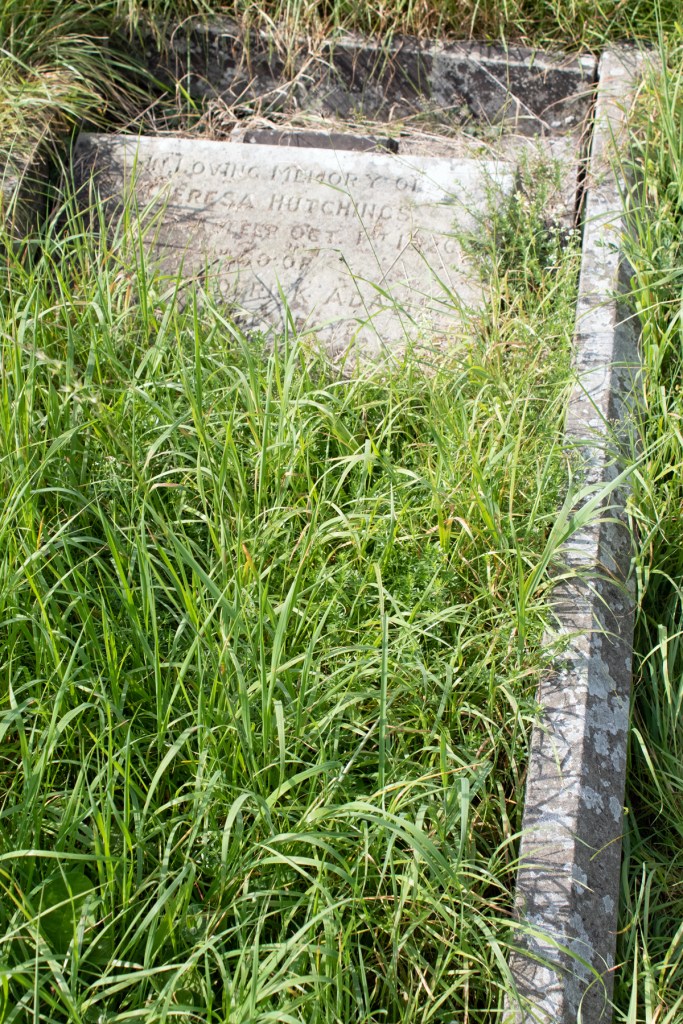
Private Henry Hutchings

Private Henry Hutchings

The funeral of Mr Henry Hutchings, the Zulu war veteran, who died suddenly at Lower Weston on Tuesday, took place on Saturday afternoon…

The principal mourners were: Mrs Hutchings (widow), Sergt. Hutchings (son)(who wore the Mons ribbon and a Zulu war medal), Mr AE Adams (step-son), Mrs A Hutchings (daughter-in-law), Mr David Adams (step-son), and Mrs Emily Pickworth (step-daughter).

In order to attend the funeral Mr AE Adams had returned from France, where he has been carrying out work for a local firm.

Bath Chronicle and Weekly Gazette: Saturday 16th February 1918

Tracking down Henry Hutchings’ early life is a bit of a challenge, but working backwards through census records sheds some light onto his later years.

The Commonwealth War Graves Commission record states “Hutchings, Pte. Henry, 14475. Royal Defence Corps. 5th Feb., 1918. Age 59. Husband of Theresa Hutchings… Served in the Zulu War (1877-79) with Army Service Corps.”

The 1911 census recorded Henry and Theresa living in Shepherd’s Bush, Hammersmith. The document confirms they had been married for less than a year and, unusually, suggests both were twice married. Henry had been born in Notting Hill, and was employed as a smith’s hammerman. Theresa was born in Byfleet, Surrey, and the couple were living with Henry’s son, Henry Jr, and Theresa’s daughter, Alice.

Turn the clock back ten years, and the 1901 census tells a more confused story. Henry was living in Edmonton, Middlesex, where he was employed as a general labourer. Theresa is noted as being his wife – in contrast to the later census return – and the couple were living in Gilpin Crescent with Henry’s sons – Henry Jr, Edward and Sidney – and Theresa’s two children – Alice and Albert.

Going back a further ten years leads to a dead end. Neither Henry nor Theresa are readily identifiable on the 1891 census, even though both should have had their older children by that point.

An 1877 military record confirms Henry’s earlier time in the army. It was in July of that year that he enlisted, joining the Army Service Corps. At 18 years of age, he had been working as a carman, but a dedicated career is what he sought out. His record confirms he was 5ft 4ins (1.63m tall, with brown hair, blue eyes and a fresh complexion. Henry lists his next of kin as brother Robert Hutchings, although, again further family details are lost in the mists of time.

Private Hutchings spent twelve years in the army. After eighteen months on home soil, he was dispatched to South Africa, as the later newspaper report suggests, and spent a year overseas. He returned home in March 1880, and was stood down to reserve status until the end of his contract in July 1889.

The documentation uncovers details of Henry’s second period of time in the military. He enlisted in the Royal Defence Corps in September 1915, and was based at Alexandra Palace in London. His time there was limited, however, as he began to show signs of heart disease. By the following summer, Private Hutchings suffered from breathlessness and chest pains, to the point where he was medically discharged from service on 21st August 1916.

Henry and Theresa had moved to Somerset by January 1917, presumably for the cleaner air that their home in Bath would provide. This was not to be enough, however. Henry died a little over a year later, at the age of 59 years old.

Henry Hutchings was laid to rest in the sweeping grounds of Locksbrook Cemetery, Bath. He was to be reunited with Theresa when she passed away in 1926.


Private Horace Broderick

Private Horace Broderick

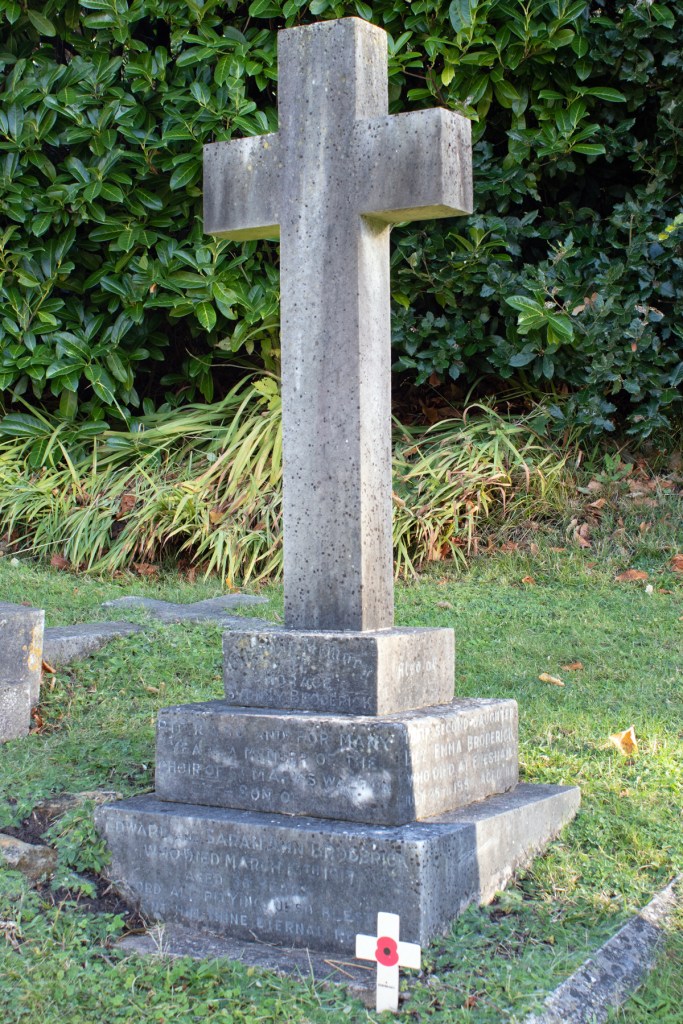
Horace Sydney Broderick was born in the summer of 1880, and was the youngest of ten children to Edward and Sarah Broderick. Edward was a clothier from Newport Pagnell, Bedfordshire, but the family were born and raised in Horfield, Gloucestershire.

By the time of the 1891 census, the family had moved to the south of Bristol, setting up home at Rugby House in Walton-in-Gordano, Somerset. Horace was still at school, and of the four other siblings living at the family home, only one, Horace’s older brother, Walter, was gainfully employed, assisting his father in the cloth trade. The Brodericks were supported by two live-in staff, a cook, Elizabeth Phipps, and a housemaid, Ada Perrett.

The next census, taken in 1901, found Horace and three of his sisters still living at Rugby House with their parents. Edward was now employing his son as a clerk to the family business, and two new staff had come on board, cook Lily Collier and housemaid Florence Hadeley.

By the time of the 1911 census, Edward and Sarah had been living in Rugby House for more than twenty years. Both now in their 70s, they still had their oldest daughters living with them, but Horace is nowhere to be found. Indeed, there is no sign of him on any of the UK census returns, and it is not until six years later that he seems to surface again.

When war broke out, Horace stepped up to enlist. He joined the Army Service Corps and, based on his service number, was employed as a Driver Mechanic. Beyond this, Private Broderick’s time in the military is lost to time.

New has been received in Bristol of the death at the Royal Herbert Hospital, Woolwich, of Pte. Horace Sydney Broderick, youngest son of the late Mr Edward Broderick (of the firm Broderick & Co,. Limited, St James’s Barton, Bristol) and of Mrs Broderick, of Walton Park, Clevedon. Deceased soldier was in his 37th year.

Bristol Times and Mirror – Thursday 15 March 1917

The report appeared in a dozen or so contemporary newspapers and, as no specific detail is given, it is likely that Horace passed away from illness, rather than injury or any unexpected cause. He died on 13th March 1917, at the age of 36 years old.

Horace Sydney Broderick’s body was brought back to Somerset for burial. He was laid to rest in the graveyard of St Mary’s Church, Walton Clevedon, next to Edward, who had passed away two years before.


Private Alexander Reid

Private Alexander Reid

Alexander Reid was born in Ballymena, County Antrim, in the autumn of 1898. Information about his early life is a challenge to pin down, as there were a number of boys with the same name growing up in the area at the time. However, his parents were John and Margaret – or Maggie – Reid.

When Alexander finished his schooling, he found employment as a mill hand. However, when war broke out, he received the call to play his part and, on 13th October 1917, he enlisted in the Army Service Corps. His service records show that he was 5ft 7.5ins (1.71m) tall and weighed 138lbs (62.6kg). He was noted as having a tattoo of his initials on his left thumb, and that his right knee was stiff and swollen from an old injury.

Private Reid was sent to England to serve. He was attached to the Mechanical Transport Depot at Grove Park, Kent. Barracked in an old workhouse that had been taken over for army use, he remained there until the spring of 1918.

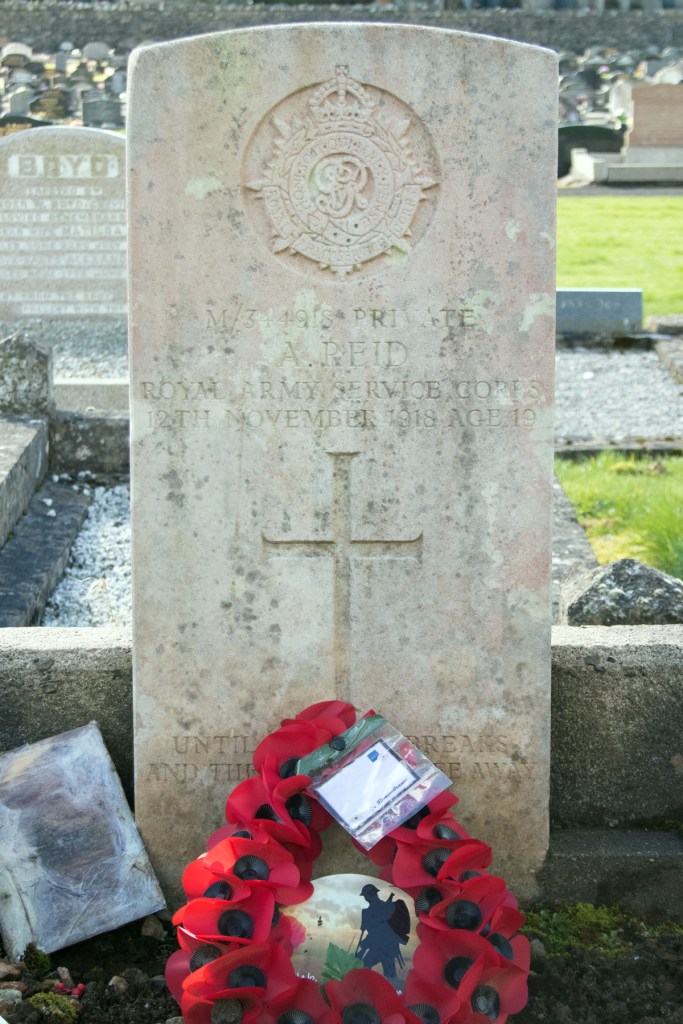
Alexander had contracted tuberculosis and was medically discharged from service because of the contagious disease. He returned home to Ballymena, but the condition worsened. He passed away at home on 12th November 1918, aged just 19 years old.

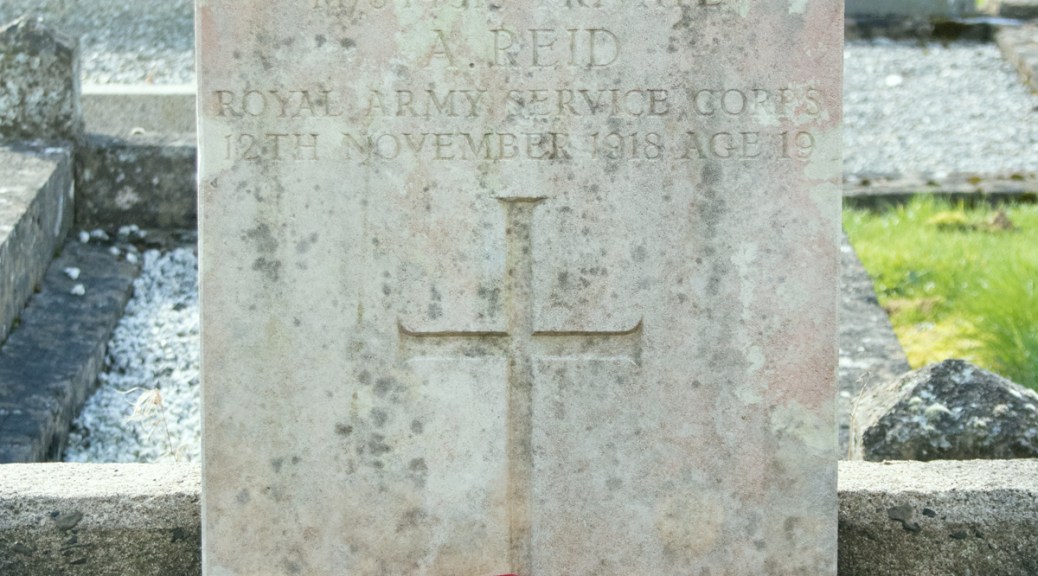
Alexander Reid was laid to rest in Ballymena New Cemetery, County Antrim, a twenty-minute walk from where his grieving family lived, in the centre of the town.


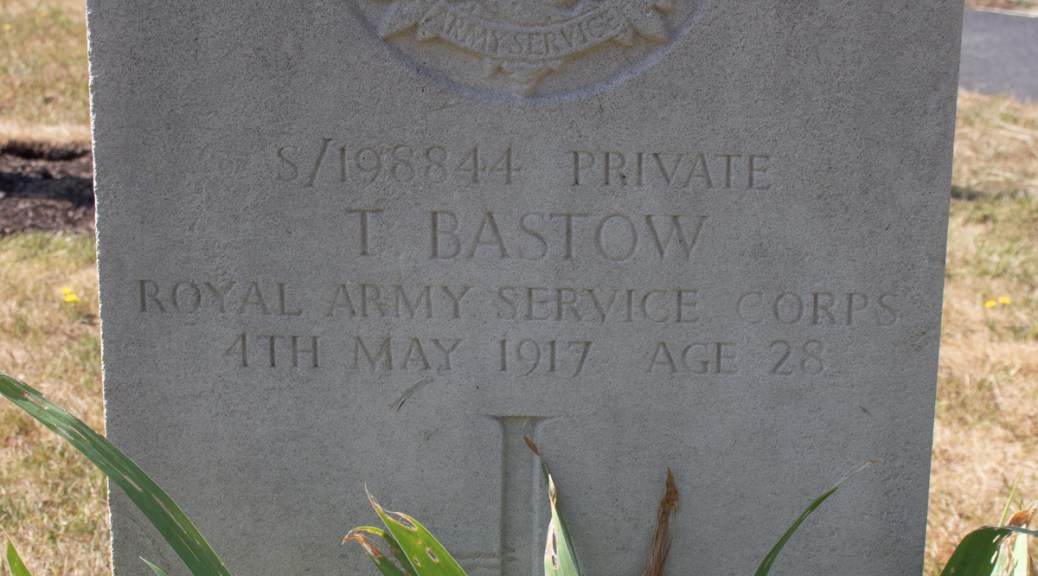
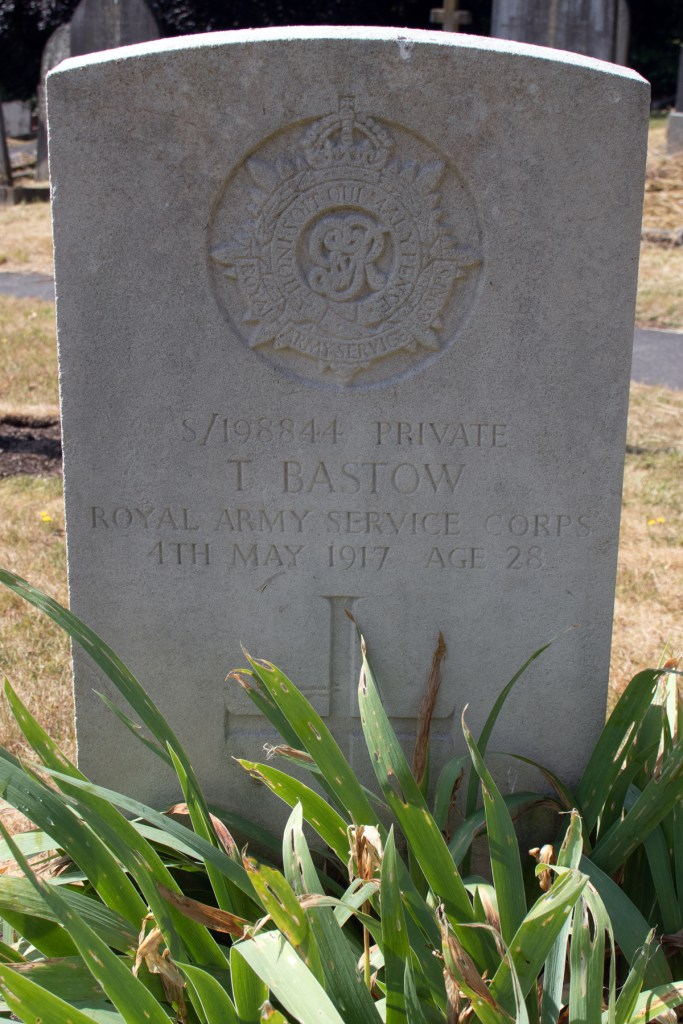
Private Thomas Bastow

Private Thomas Bastow

Thomas Bastow was born in the spring of 1889, the youngest of five children to Frederick and Mary Bastow. Frederick was from Weston-super-Mare in Somerset, but had met his Liverpudlian wife in Lancashire, and it was in the North West of England that the Bastow family had been raised. Mary passed away in 1898, when she was jus 40 years of age. Frederick remarried in 1901, Florence Travis becoming the young Thomas’ stepmother.

Frederick was an inspector for a mineral water company, but when Thomas left school, he found work as a clerk for the land registry. In the autumn of 1916, he married Margaret Hughes. Sadly, there is little more information about her, although their wedding was registered in West Derby.

It may have been that Thomas was in the army at this point, or at least on the verge of going. He enlisted in the Royal Army Service Corps, and was attached to one of the supply units. He seems to have been based in Somerset, as this is where he was hospitalised when he came down with appendicitis.

Private Bastow’s condition was to get the better of him: he passed away on 4th May 1917 while admitted to the Bath War Hospital. He was just 28 years of age.

Finances seem to have limited Margaret’s options when it came to her late husband’s funeral. Rather then being taken back to the north wet for burial, Thomas Bastow was instead interred in Bath’s Locksbrook Cemetery.


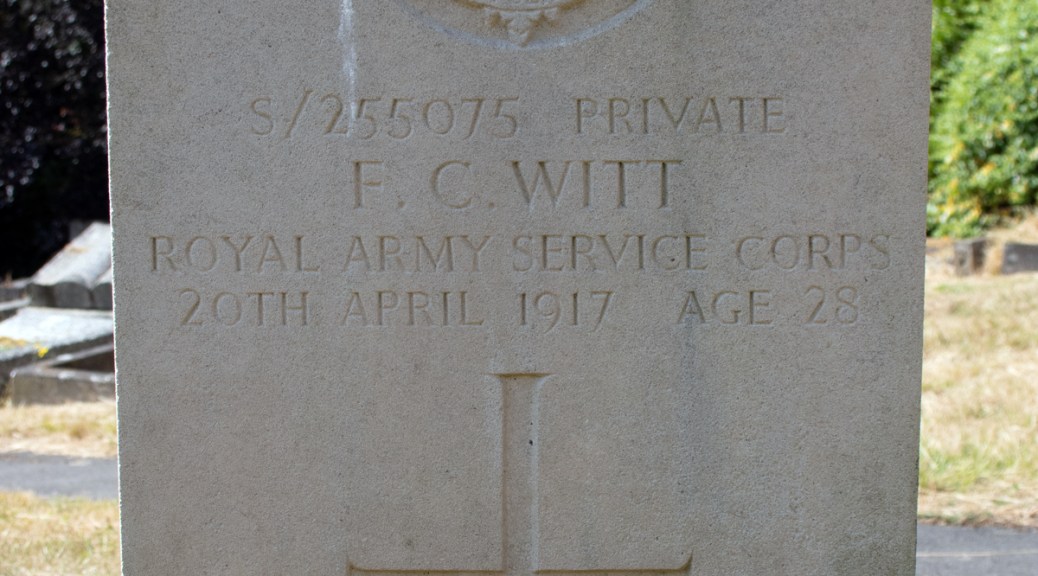
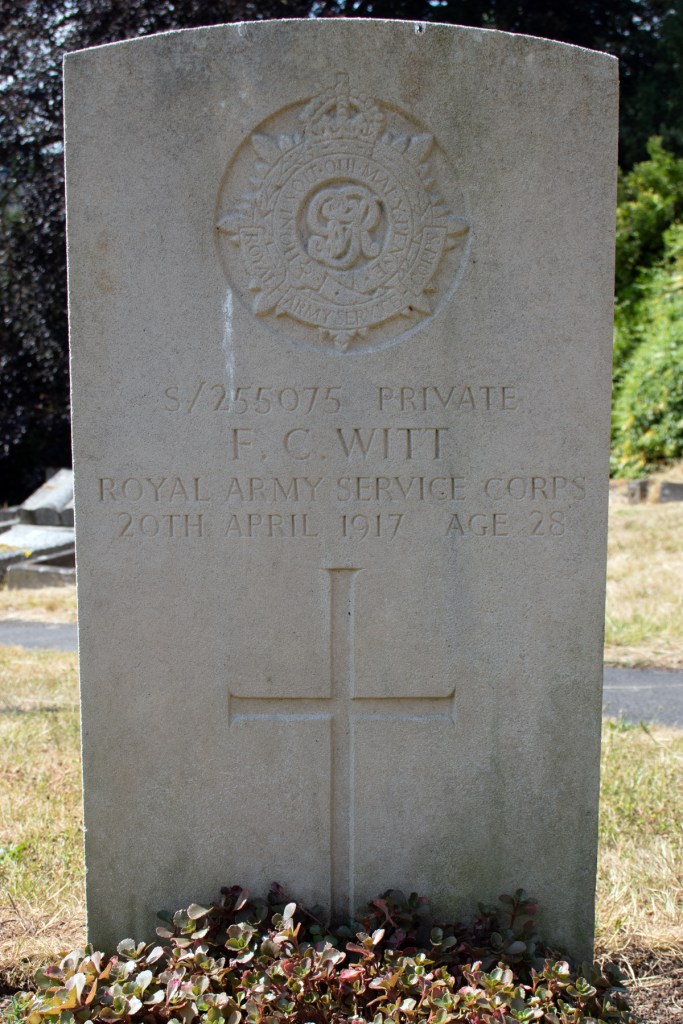
Private Frederick Witt

Private Frederick Witt

Frederick Charles Witt was born on 19th June 1888 in Amesbury, Wiltshire. The second youngest of eight children, his parents were journeyman baker Richard Witt and his wife, Elizabeth.

By the time of the 1901 census, Richard had set up a bakery in North Tidworth, ten miles north-east of Amesbury, with Frederick’s older brother, Alfred, helping out. This was a line of work that Frederick was also to go into when he completed his schooling: the next census return, in 1911, noted him as being his father’s assistant.

On 26th December 1912, Frederick married a woman called Kate Howard. The marriage took place at St Luke’s Church, Enfield, Middlesex. Kate was living in Enfield at the time, while hew new husband was based in Southampton, Hampshire. How a connection was made between the two is unclear, but the couple settled back in Southampton, and went on to have two children: Ivy and Doris.

When war was declared, Frederick was called upon to play his part. Full details of his service are unclear, but he had joined the Royal Army Service Corps by the start of 1917. Private Witt was attached to the Reserve Supply Personal Depot in Bath, Somerset, but, soon after enlisting, he contracted pneumonia.

Frederick was admitted to the Bath War Hospital in April 1917, but the condition was to prove too severe. He passed away on 20th April, at the age of 28 years old.

Frederick Charles Witt was laid to rest in Bath’s sweeping Locksbrook Cemetery. Interestingly, a newspaper report of his funeral did not mention the attendance – or existence – of Kate or their children; instead his parents seemed to take centre stage.


Private Alex Jacobs

Private Alex Jacobs

Ephraim Alex Jacobs was born in the summer of 1883 in Birmingham, West Midlands and was the youngest child to Morris and Mary Jacobs. Morris was a tailor, but when he finished his schooling, Ephraim followed in his older brother’s trade, becoming a hairdresser.

This was not to prove a long-term career, however and, by the time of the 1911 census, things had changed. Ephraim, who now went by his middle name, had moved to Seend, near Melksham, Wiltshire. The document confirms that he had been married for four years by this point, although full details of his wife, the London-born Ethel, remain elusive. Alex was employed as a rubber worker in a factory in Melksham.

When war broke out, Alex stepped up to play his part. His service records no longer exist, but it seems that he enlisted in the Royal Army Service Corps, and was attached to one of the Mechanical Transport units. He seems not to have served overseas, and was demobbed on 14th September 1919. At this point Private Jacobs was suffering from neuritis, or nerve damage.

Alex’s trail goes cold at this point. He seems to have spent some time at the Pensioner’s Hospital in Bath, Somerset, and this is where, on 22nd December 1920, he passed away. The cause of his death was noted as being a cerebral tumour and asthma. He was 37 years of age.

With finances seemingly leaving Ethel unable to bring her late husband back to Wiltshire, Alex Ephraim Jacobs was instead laid to rest in the sweeping Locksbrook Cemetery, Bath.


Serjeant Robert Dodds

Serjeant Robert Dodds

Robert Frederic Dodds was born in 1874 in Darlington, Country Durham. The third of nine children, his parents were Robert and Elizabeth Dodds. Robert Sr was a carter and furniture remover and, when he finished his schooling, Robert Jr joined his father in his work.

Robert Sr died in 1898, at the age of 61. Whether this was a catalyst for his son to move on is unclear, but by the following year, Robert Jr was working as a labourer in Weston-super-Mare, Somerset. On 16th September 1899, he married Elizabeth Counsell, a fisherman’s daughter from the town.

It seems that Robert was keen to build a life for his new wife: the next census, taken in 1901, found the couple living in Cardiff, Glamorgan, where he was employed as a stone mason. The Dodds remained in Wales for the next decade, having three children – Lily, William and Rosie – there. By the spring of 1911, however, they were back in Somerset, living in a three-roomed cottage in Castle Street. Elizabeth had had a fourth child just a month before the census, with a second son, Bertie, adding to the family.

When war came to Britain, Robert stepped up to play his part. He initially joined the Royal Army Veterinary Corps as a Private, and found himself in France on 6th March 1915. Elizabeth, meanwhile, remained at home in Somerset, seeking support from her family. With four children to look after, her workload was to increase again when, just a week after Robert arrived on the Western Front, she gave birth to their fifth child, the patriotically named Frederick Gordon Kitchener Dodds.

Robert remained in the Royal Army Veterinary Corps for the next four years, rising to the rank of Serjeant. Details of his time in the service are unclear, but he survived the war and, on 11th July 1919, he transferred to the Royal Army Service Corps.

Little further information is available about Robert’s life. By the winter of 1919/1920, he was based in Midlothian, Scotland. He was admitted to the 2nd Scottish General Hospital, Edinburgh, although his condition is unclear. Whatever it was, it was to be fatal: he passed away on 6th January 1920, at the age of 45 years old.

Robert Frederic Dodds’ body was taken back to Somerset for burial. He was laid to rest in Highbridge Cemetery.


Private Oliver Carter

Private Oliver Carter

Oliver Carter was born in the spring of 1861 in East Budleigh, Devon. The youngest of four children, his parents were Ellis, who was a farm labourer, and Jane Carter.

As the years passed, Oliver’s older siblings left home and, by the 1881 census, he was the last of Ellis and Jane’s children to remain living with them. He was employed as a baker by this point, although he seemed to want more permanent employment.

On 9th February 1883, Oliver enlisted in the army. His service records show that he was 5ft 6.5ins (1.69m) tall and weighed 120lbs (54.4kg). He had a sallow complexion, with brown hair and grey eyes. The document confirmed no distinguishing marks (in the event that his body needed to be identified) and that his religious denomination was Church of England.

Private Carter was assigned the Commissariat and Transport Corps – a forerunner to the Royal Army Service Corps – for a period of twelve years. After eighteen months on home soil his unit was sent to South Africa, where he remained until December 1885. On returning to Britain, he spent the next nine years on reserve status, and was formally stood down from army service un February 1895.

The 1891 census return found Oliver back in Devon, where he working as a general labourer alongside his army commitments. Ellis, meanwhile, was employed as a miller’s waggoner, while Jane had also started taking in lacemaking jobs.

In the autumn of 1893, Oliver married Elizabeth Morrish. Eight years his senior, she was a widow with eight children of her own. The 1901 census recorded the couple living in a cottage near the King’s Arms Hotel in East Budleigh. They shared their home with three of Elizabeth’s children and their own daughter, Hilda. Oliver had changed jobs again, and was employed as a cowman on a farm.

Life continued on for the Carters. A chance of more regular employment as a labourer for the local council brought a move to Highbridge in Somerset. Elizabeth had her own account as a dressmaker, Hilda was keeping house and the family also had a boarder, Charles Smith, who was a butcher’s assistant. While they had made the move to a new county, they did not forget their roots: their house was called Budleigh.

When war broke out, Oliver seemed to be drawn to serve his country again. Full details of his second period of army service are lost to the mists of time, but some things can be gleaned from a contemporary newspaper report of his passing:

Death of a Volunteer

Much regret was expressed at Highbridge on Saturday when it became known that Mrs Carter, of Newtown Road, had received a telegram containing the news that her husband, Mr Oliver Carter, a member of the Somerset Volunteer Regiment, had died while undergoing training with his company under canvas.

Central Somerset Gazette: Friday 7th June 1918

Oliver had been assigned to the 1st (Volunteer) Battalion of the Somerset Light Infantry. His death was registered in Wiveliscombe, and the canvas reference would suggest that he was being trained on nearby Exmoor.

Given he was being trained at the time of his passing, Private Carter is likely to have been a new recruit to the Somersets. As he was 57 years of age when he passed, it is no surprise that he had volunteered for service. His age was to act against him, however: he passed away having contracted pneumonia.

Oliver Carter was brought back to Highbridge for burial. He was laid to rest in the town’s cemetery, a short walk from where his widow and daughter lived.


Private Oliver Carter
(from findagrave.com)

Private Bertie Gannicott

Private Bertie Gannicott

Bertie Claude Gannicott was born in Stalbridge, Dorset, in the summer of 1893. One of twelve children, he was the son of railway signalman Edward Gannicott and his wife, Emily. The family moved to Highbridge, Somerset, when Bertie was a babe-in-arms, and so this was the town he was to know as home for his whole life.

When Bertie completed his schooling, he found work as a cellerman in a local brewery. When war broke out in 1914, he turned 21 years of age. He seemed keen to serve his King and Country and, while service records for him no longer exist, it is clear that he had enlisted in the army by the spring of 1918.

Private Gannicott joined the Royal Army Service Corps and was attached to the 61st Remount Squadron. It’s not possible to confirm whether he saw action overseas, although his unit would have been responsible for supplying the army with horses and mules for the war effort.

Bertie was based in Berkshire towards the end of the war. He fell ill in the autumn of 1918, contracting pneumonia. Admitted to the No. 5 War Hospital in Reading, this was a condition to which he would succumb. He passed away on 19th November, at the age of 25 years old.

Bertie Claude Gannicott was taken back to Somerset for burial. He was laid to rest in the family plot in Highbridge Cemetery.