Tag Archives: 1917

Ordinary Seaman Henry Bird

Ordinary Seaman Henry Bird

Henry David Bird was born on 11th April 1898 in Hoxton, East London. He was the third of eleven children to carter and carman Henry Bird and his wife Florence.

When he left school, Henry Jr found employment as a munitions worker, but shortly before his nineteenth birthday, he was drawn to a more active role. On 8th January 1917, he enlisted in the Royal Navy as an Ordinary Seaman. His enlistment papers show that he was 5ft 4ins (1.63m) tall, with brown eyes, brown hair and a fresh complexion. They also noted that he had a scar on his right index finger.

Henry’s first posting was at HMS Pembroke, the shore-based establishment at the Naval Dockyard in Chatham, Kent. After a couple of months’ training, he was assigned to the cruiser HMS Concord. He served on board for for a few weeks, before returning to Chatham in May.

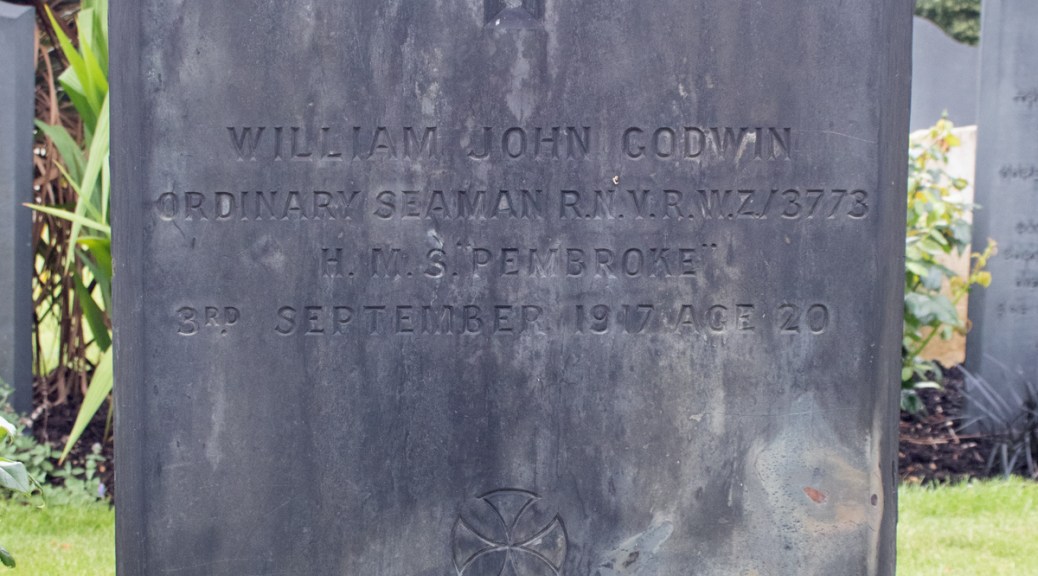
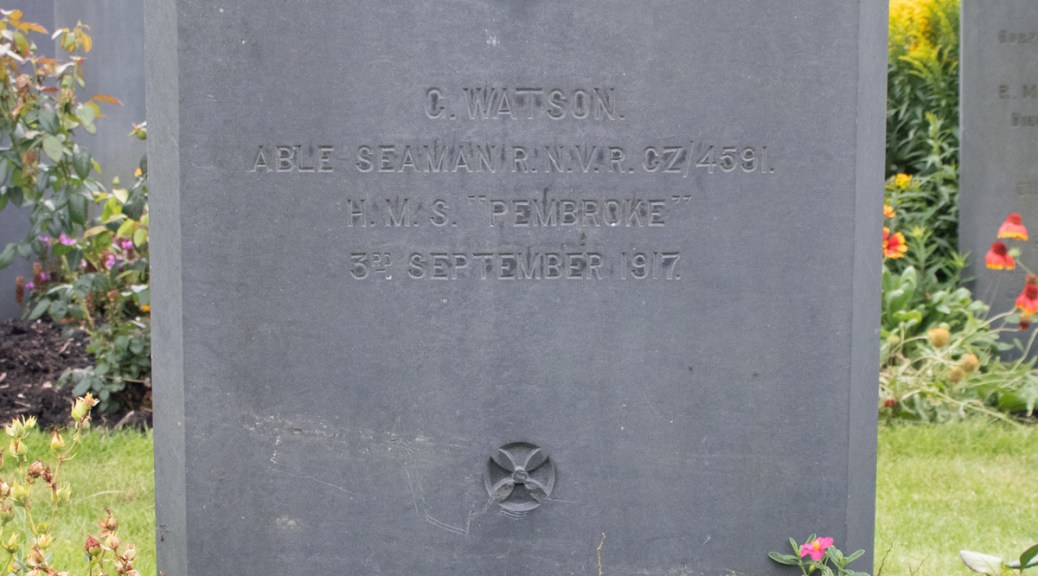
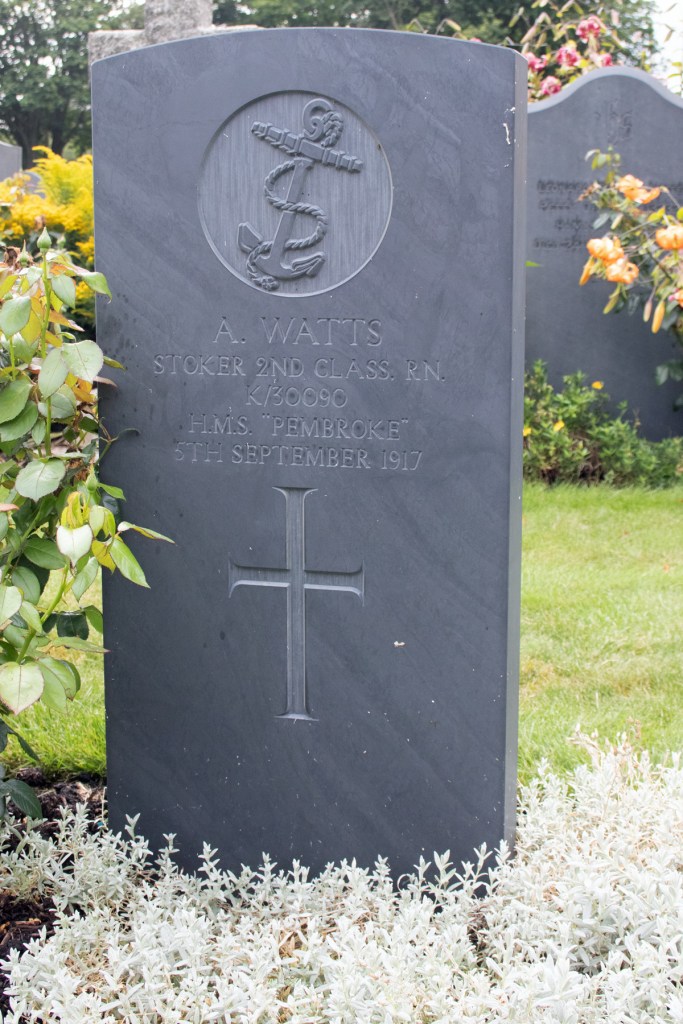
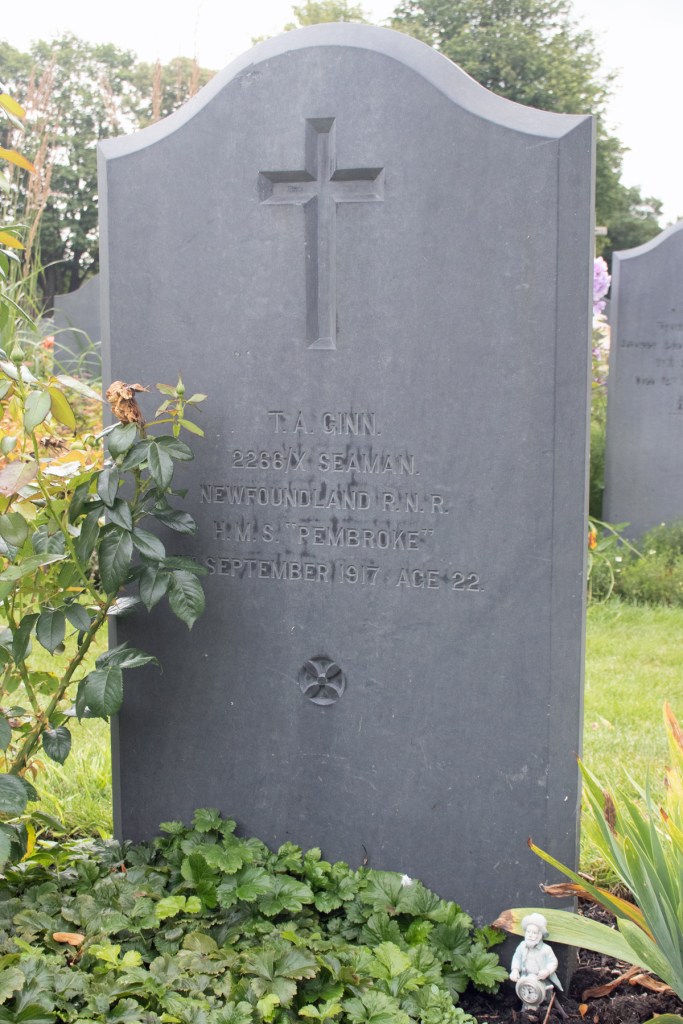
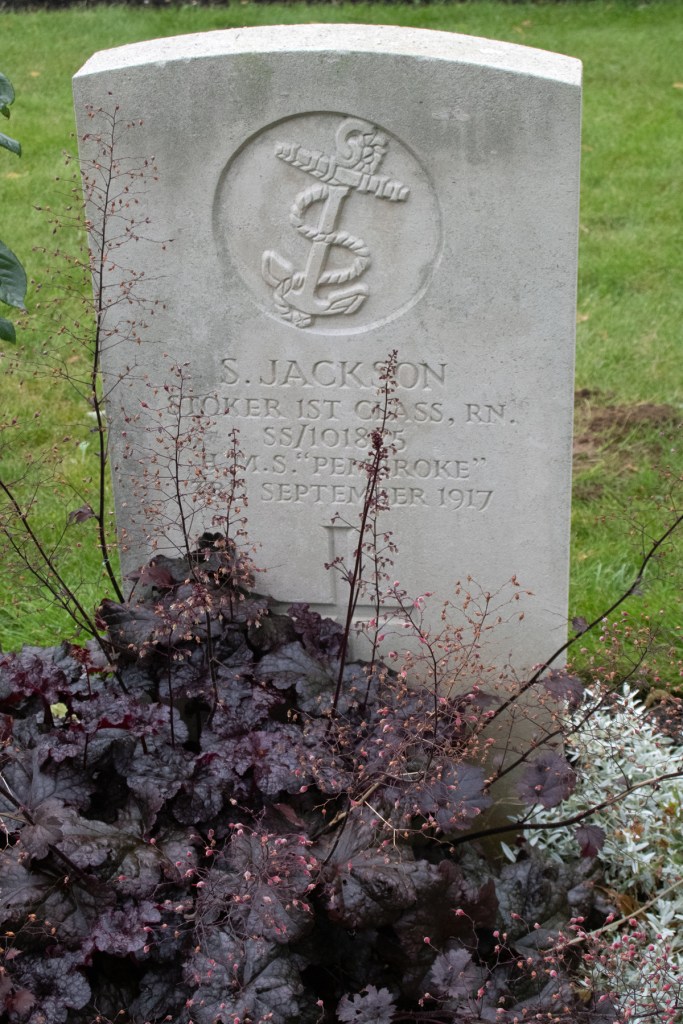
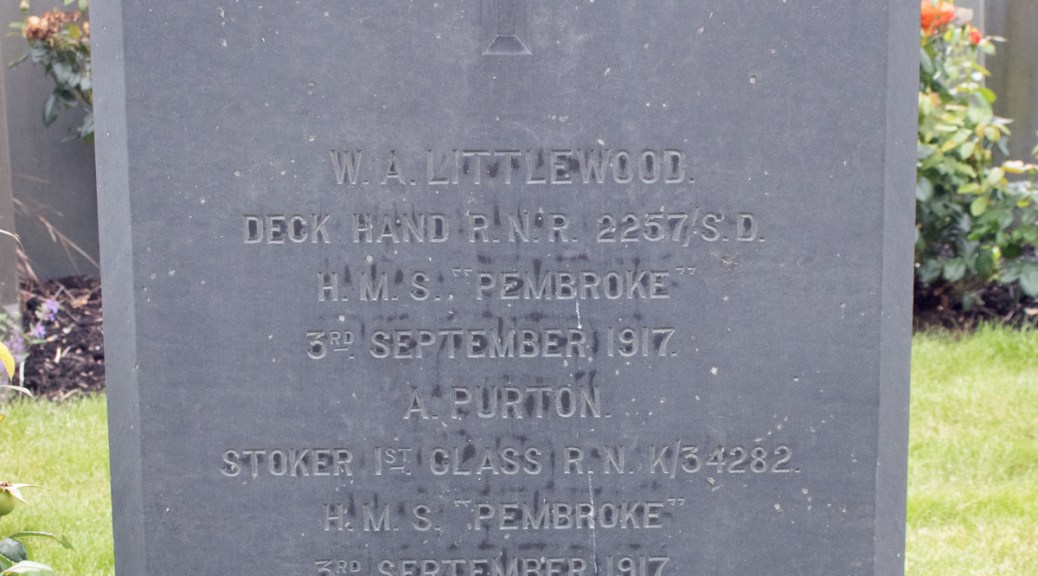
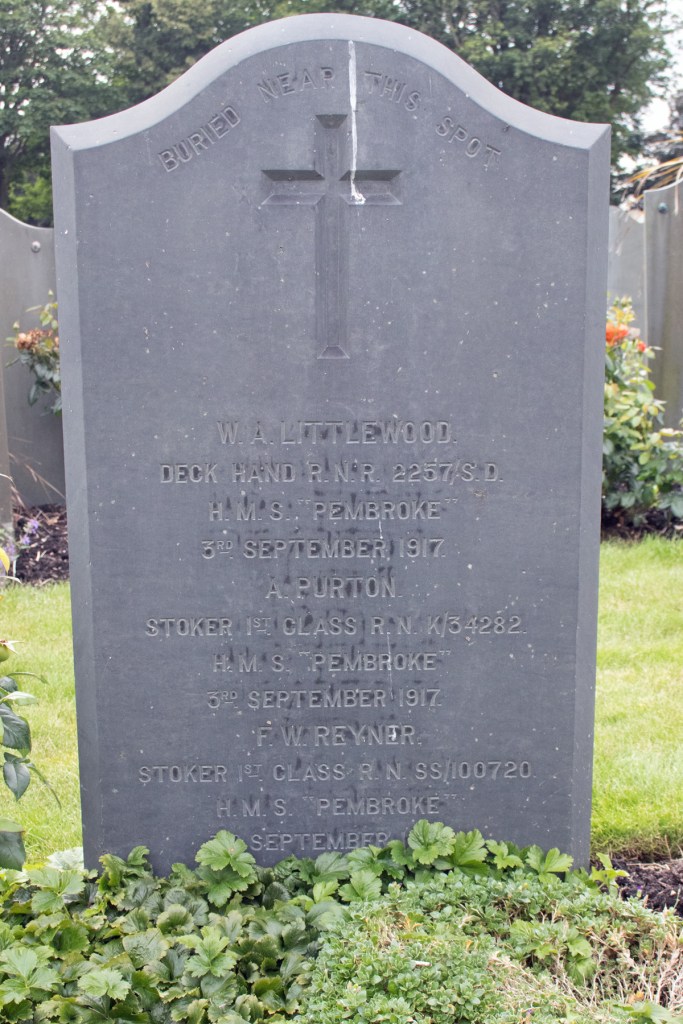
The summer of 1917 was a busy time for HMS Pembroke; Ordinary Seaman Bird was one of those billeted in the Drill Hall, sleeping there, rather than in the overcrowded barracks in the dockyard itself. It was here that he was sleeping on the 3rd September, when the German Air Force undertook their first night bombing raid. One of the planes scored a direct hit on the Drill Hall, and Henry was killed instantly. He was just 19 years of age.

Henry David Bird was buried in the Woodlands Cemetery in nearby Gillingham, along with the dozens of other servicemen killed in the Chatham Air Raid.


Able Seaman Gregory Wootton

Able Seaman Gregory Wootton

Gregory Ernest Wootton was born on 28th October 1898, the only child of Henry and Isabella Wootton. The family lived in East London, and the year of Gregory’s birth was a challenging one. His parents married that year, and Henry also passed away, leaving Isabella to raise her son on her own.

She was made of stern stuff, however, and moved back in with her father, Joseph, while finding employment as a florist, working with artificial flowers. By 1909, Isabella had remarried, wedding policeman Harry Mee, and moving to South London, where the couple had a child of their own, Gregory’s half-brother, Leonard.

War was edging close to Europe, although Gregory was underage when hostilities broke out. By late 1916, however, this was no longer the case, and he was drawn to the Royal Navy. On 6th November, he gave up his job as a case maker, and enlisted as an Ordinary Seaman. His sign-up papers show that he stood 5ft 4ins (1.62m) tall, had brown hair, brown eyes and a fresh complexion.

Ordinary Seaman Wootton’s first posting was at HMS Pembroke, the shore-based establishment at the Naval Dockyard in Chatham, Kent. After a couple of months, he was moved north, to HMS Ganges, which was a similar training base in Suffolk. While here, he was promoted to Able Seaman.

In June 1917, Gregory was on the move again, returning to Chatham. While here, at a particularly crowded time for the dockyard, he was billeted at the nearby Drill Hall. On the night of the 3rd September, while resting, the first German night raid dropped bombs on Chatham, directly hitting the Drill Hall. Able Seaman Wootton was killed instantly. He was just 18 years of age.

Gregory Ernest Wootton was laid to rest in the Woodlands Cemetery in nearby Gillingham. He was buried with the other 97 victims of the Chatham Air Raid.


Private Thomas Willcocks

Private Thomas Willcocks

Thomas George Willcocks was born on 18th April 1882, in the Devon village of Chudleigh Knighton. The oldest of five children, his parents were William Willcocks and his wife Emma. William worked as a clay cutter, and this was a trade Thomas followed when he left school.

By 1899, Thomas had met Sophy Gale, a clay cutter’s daughter from nearby Hennock; the couple married and had a daughter, Violet. Thomas was also working as a cutter, and moved into his in-laws house to start raising his young family.

Life can be cruel: the 1911 census shows that Thomas and Sophy had moved to Chudleigh Knighton – where Sophy was originally from. Violet had, by this point, sadly passed away; Thomas’ brother-in-law, Albert, had moved in with the couple to help pay their way.

War was coming to Europe and, although full details of Thomas’ service no longer remain, it is possible to piece together some of his time in the army.

Private Willcocks enlisted in the Duke of Cornwall’s Light Infantry at some point before January 1917, although he soon transferred across to the Hampshire Regiment. His battalion – the 15th – were moved to France in the summer of 1916, and it seems that Thomas was caught up in a gas attack, while in the trenches of the Western Front.

Private Willcocks’ health deteriorated and he was medically evacuated back to the UK for treatment. He was admitted to the Red Cross Hospital in Glasgow, but reports are confused – some identify the impact of the gas on his lungs, while others suggest he was suffering from rheumatism and trench fever. Regardless of the cause, he passed away on 23rd July 1917 at the age of 35 years old.

The body of Thomas George Willcocks was brought back to Devon for burial. He was laid to rest in the graveyard of St Paul’s Church in Chudleigh Knighton.


Thomas’ brother in law, Albert, also died as a result of the First World War; he lies in the grave next to Thomas. His story can be found here.

Thomas’ neighbour was Alfred Moist. He also lies in the same churchyard and his story can be found here.


Thomas George Willcocks
(from findagrave.com)

Private Edmund Bevan

Private Edmund Bevan

Edmund Thomas Bevan was born in Weston-super-Mare, Somerset, in November 1867, the son of blacksmith George Bevan and his wife, Mary Ann.

Unfortunately, little documentation remains on Edmund’s early life; after his baptism record, the next evidence for him comes in the form of his military service record, twenty years later.

Looking for a life of adventure, Edmund gave up his labouring job and joined the Somerset Light Infantry. His enlistment papers confirm the date – 12th May 1887 – and showed that he stood at 5ft 4ins (1.62m) tall and weighed in at 120lbs (54.4kg). The papers also note that he had dark brown hair, hazel eyes and a fresh complexion. He also had a scar above his right eye.

Private Bevan joined up for twelve years’ service. He spent his first four years at bases in Essex and Hampshire, before being sent to Gibraltar in November 1891. He returned home after two years, and spent his remaining time in the army in his home county, Somerset. Noted that he had shown a very good character, he was discharged to the reserve brigade on 11th May 1899 in Taunton.

Sadly – tantalisingly – Edmund’s trail goes cold again at this point. When hostilities were declared in August 1914, it seems likely that he was brought out of reserve, but given his age at this point – he was 46 – he was assigned to the territorial force. As a Private in the 125th Coy of the Royal Defence Corps, he would have had civil protection in the London area, although again, specific details are not known.

The next confirmation of Private Bevan’s life is his gravestone. This confirms that he passed away 19th July 1917, at the age of 49. While no cause of death is evident, his pension record sheds a little more light onto his life in the early years of the twentieth century.

Edmund had married a woman called Martha, and the couple had gone on to have a child. Martha passed away in September 1913 and, according to the pension record, Edmund passed guardianship on to his brother Henry.

Edmund Thomas Bevan was laid to rest in the Milton Road Cemetery in his home town of Weston-super-Mare.


Greaser Humphrey Donoghue

Greaser Humphrey Donoghue

Humphrey Donoghue was born in Kerry, Southern Ireland, on 13th December 1859. He was the oldest of two siblings, boys to John and Mary Donoghue. John was a labourer who, by the time Humphrey’s younger brother was born, had moved the family to the village of Llantarnam in South Wales, presumably for work.

Humphrey seemed to be looking for adventure, and the trip across the Irish Sea may have been the spur for that. By the time of the 1891 census, he was recorded as being a Stoker on board HMS Tretis. This was a screw corvette ship which, on the day of the census, was plying the waters of the Pacific.

Sadly, full records of Humphrey’s life at sea are no longer available, so it’s not possible to track his progress over the following years. It would seem that he Stoker Donoghue persisted with his naval career, continuing through what would have been his initial twelve years’ service. Whether he had any breaks in that service is unknown, but he was certainly still serving – or had been called back into duty – by the time of the Great War. His gravestone confirms that was serving as a Greaser – maintaining the engines – on HMS Achtaeon.

The next available document for Humphrey is the record of his death. He passed away on 26th February 1917, at the Royal Naval Hospital in Chatham, Kent, having been admitted there with pneumonia. He was 57 years old.

Humphrey Donoghue was laid to rest in the Woodlands Cemetery in Gillingham, Kent, close to the Naval Dockyard where he may have been based.


Stoker 1st Class Christopher Hickey

Stoker 1st Class Christopher Hickey

Christopher Hickey was born on Christmas Eve 1891, in Wicklow, Southern Ireland. Full details of his early life are not available, but his mother was called Mary and he had at least one sibling, a sister called Catherine.

When he left school, he worked as a gardener but, when the war broke out, he enlisted, joining the Royal Navy on 5th November 1915. His enlistment records show that he stood 5ft 6ins (1.67m) tall, had brown hair, brown eyes and a fresh complexion.

Stoker 2nd Class Hickey received his initial training at HMS Pembroke, the shore establishment at the Naval Dockyard in Chatham, Kent. In February 1916, he was assigned to HMS Champion, a cruiser that, during his time on board, served as a flagship during the Battle of Jutland that summer.

Christopher returned to HMS Pembroke in November 1916, having been promoted to Stoker 1st Class. He served there until the following March, when he was admitted to the local Naval hospital with pyaemia (or sepsis). Sadly, this proved too much for his body to take and he died on 20th March 1917 at the age of 25 years old.

Christopher’s body was laid to rest in the Woodlands Cemetery in Gillingham, Kent, not far from the base at which he had served.


Interestingly, the Irish Memorial Records for the Great War confirm Christopher’s passing, but give the cause of death as ‘died of wounds’, although I have been unable to find anything else to corroborate this. It may be that sepsis set after he was wounded, but it is reasonable to assume that full details will remain lost to time.


Donkeyman John Hart

Donkeyman John Hart

John Hart is someone whose life is destined to be a mystery. He lies at rest in the Woodlands Cemetery in Gillingham, Kent. His gravestone simply states that he was a Donkeyman for the Royal Mail Steam Packet Company, and that he passed away on 17th May 1917.

Sadly, without a date or location of birth, it is impossible to narrow down any historic records to a specific John Hart.

The Royal Mail Steam Packet Company was a shipping company that transported goods and travellers around the world. Primary routes included the Americas, although it is impossible to confirm which countries John would have visited. His job as a Donkeyman, however, was to help pilot the vessel.

Unfortunately, there is little more to be determined about John’s life. Given that he is buried in a cemetery close to the Naval Dockyard in Chatham, it is likely that this is a port that he sailed out of or into on a regular basis. Sadly, we are unlikely ever to know.


Private John Lodge

Private John Lodge

John Thomas Inskip Lodge was born in Shefford, Bedfordshire, on 31st January 1899, one of seven children to John and Florence Lodge (née Inskip). When his son was young, John Sr worked as a bead lace manufacturer, but by the time of the 1911 census, he had become the manager of a steam laundry.

Florence, by this time, had passed away, and in November 1911, John Sr married again, to Florence Yarnell. The couple would go on to have four children, John Jr’s half-siblings.

By this time, war was on the horizon, and John was eager to leave his laundry job and volunteer. He joined the Royal Marine Light Infantry on 4th September 1915, giving his date of birth as three years earlier in order to ensure he was accepted. His service record shows that he stood 5ft 4ins (1.62m) tall, had a fresh complexion, brown eyes and brown hair.

As a Private, John served with the Chatham Division of the regiment; he would have seen action in some of the key battles of the war, including at Gallipoli in 1915/16 and later on the Western Front. It was while he was fighting in France in September 1916 that he was injured, and he was medically evacuated back to England for treatment.

Private Lodge recovered, and served on in Chatham, Kent, where he was billeted at the naval barracks in the town. At the start of June 1917, he had some leave owing, and so visited his parents back in Bedfordshire. When he returned to Kent, he fell ill and was admitted to the Naval Hospital in the town. Sadly, John was not to recover; he passed away on 23rd June 1917, aged just 18 years old.

John Thomas Inskip Lodge was laid to rest in the Woodlands Cemetery in Gillingham, not far from the Chatham barracks at which he was based.


Private Everett Ferriday

Private Everett Ferriday

Everett Ferriday was born in February 1899 in the Cornish town of Camborne. The second of four children, his parents were Methodist minister Jonah Ferriday and his wife, Elizabeth. Jonah’s calling took the family around the country, and, by the time of the 1911 census, they had settled in Frome, Somerset.

When Everett left school, he found employment at a motorcycle works in Bristol, and left home to move to the city. War was coming to Europe, however, and things were soon to change.

Everett got the call to join up in January 1917, just shy of his eighteenth birthday. His enlistment papers give his height as 5ft 11ins (1.8m) tall, and confirm that he weighed in at 126lbs (57.2kg). They also confirmed that he had found new employment as an insurance agent.

Private Ferriday was assigned to the 94th Training Reserve Battalion and sent to the army camp at Chiseldon, near Swindon at the beginning of March. Tragically, within a matter of weeks, he was admitted to the camp hospital with bronchial pneumonia. Sadly, this was too much for his body to take; he died at the hospital on 3rd April 1917, at just eighteen years old.

Everett Ferriday’s body was brought back to Frome; he was laid to rest in the Vallis Road Cemetery in the town.


Everett was not the only Somerset soldier to succumb to pneumonia at Chiseldon Camp that spring. Private Charles Oborne, died from the same condition a few weeks before him. Private Ivan Day, of the 93rd Training Battalion, passed away in the same hospital on the same day as Everett, also from pneumonia.

You can read their stories by following the links above.


Private Frederick White

Private Frederick White

Frederick James White was born in the autumn of 1898, one of four children to Frederick and Emma White. Frederick Sr was a gas fitter from Frome, and the Somerset town was where the family were raised.

As a youngster, Frederick Jr attended the Primitive Methodist Sunday School in the town. He also acted as treasurer for the local YMCA. He was only 15 when war broke out, so was not able to enlist immediately.

However, by 1916 he had joined the 1st Battalion of the Devonshire Regiment as a Private and, at some point, was assigned to the Royal North Devon Hussars.

Either way, in whichever regiment he served, Frederick saw fighting in France, and was wounded in the autumn of 1917. Medically evacuated back to England, he was admitted to the temporary military hospital at Collegiate Hall in Sheffield.

The local newspaper shed a little more light into Frederick’s life:

Deceased, who was in the North Devon Hussars, died on November 22nd, at Sheffield, of wounds he received on November 5th. He was brought back to England three weeks to the day from the time he sailed for France.

Somerset Standard: Friday 30th November 1917

Private White’s wounds were too much; he passed away at the age of just 19 years old.

Frederick James White’s body was brought back to his home town. He was laid to rest in the Dissenters’ Cemetery in Vallis Road, Frome.


Frederick Sr and Emma White would have been understandably saddened by their son’s passing. They had four children; their eldest, Florence, had passed away before reaching her first birthday. Their youngest, Reginald, had died in childbirth. Frederick had died as a result of the First World War.

Sadly, the tragedy wasn’t yet over. Their only surviving child, Frederick’s younger brother William, passed away in August 1919, aged just 17 years old.

Frederick Sr and Emma had outlived all of their children, none of whom had reached or survived their teenage years.