Bertie Pegram was born in the Hertfordshire village of Westmill, on 24th July 1893. The third of four children – all of them boys – his parents were John and Eliza Pegram. John was a farm labourer, and his oldest two sons followed him into that line of work.
Bertie chose a different path, however, and the 1911 census showed that he had taken employment at a local cement works. This was not a career, however, and so, on 11th August 1911, Bertie enlisted in the Royal Navy as a Stoker 2nd Class. His papers show that he was 5ft 5ins (1.65m) tall, with dark brown hair, grey eyes and a dark complexion. He was also noted as having a scar on his left leg.
Stoker Pegram was sent to HMS Pembroke, the Royal Naval Dockyard in Chatham, Kent, for his training. At the start of 1912, he was given his first posting, on board the battle cruiser HMS Indomitable. This would be a long-term move and she remained his home for more than five years.
In September 1912, Bertie was promoted to Stoker 1st Class; this was followed with another promotion – to Acting Leading Stoker – in July 1915. The rise in rank seemed not to suit him, however, and he reverted to Stoker 1st Class just six months later.
Indomitable was in the Eastern Mediterranean when war broke out, and was one of the ships that bombarded the Ottoman defences in the Dardanelles. During Bertie’s time on board, she also fought at the Battles of Dogger Bank and Jutland.
In September 1916, Bertie rose to Acting Leading Stoker once more. The promotion was made permanent on 29th March 1917, and he remained with Indomitable for the next couple of months.
On 1st July 1917, Leading Stoker Pegram returned to shore, and HMS Pembroke. At this point in the war, she was a bustling and overcrowded place. The sinking of HMS Vanguard left her replacement crew in limbo, stuck in the Kent dockyard while new assignments were found. There had also been an outbreak of meningitis, and the decision was taken to set up temporary accommodation to slow the spread of the disease. Bertie found himself billeted in the dockyard’s Drill Hall.
British defences were rendering day time German air raids less and less effective, and the decision was taken to trial a bombing raid after dark. On the night of the 3rd September the first of these attacks took place, and Chatham found itself in the firing line. The Drill Hall received two direct hits, and dozens of men inside were killed. Leading Stoker Pegram was badly wounded, and rushed to the Naval Hospital in the town. Sadly, Bertie’s injuries would prove too severe and he died the day after the raid: he was 24 years of age.
The body of Bertie Pegram was taken back to Hertfordshire for burial. He was laid to rest in the graveyard of St Mary’s Church, Westmill, just a short walk from the family home.
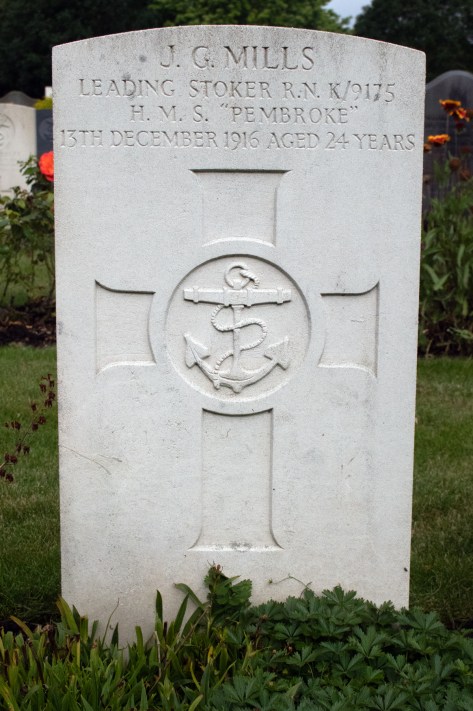
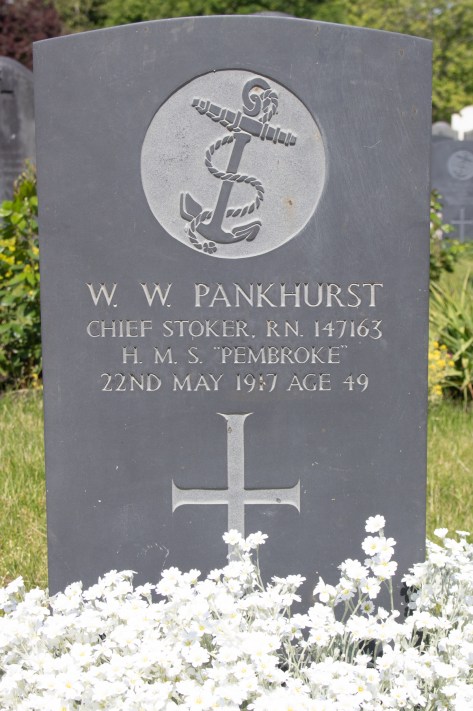
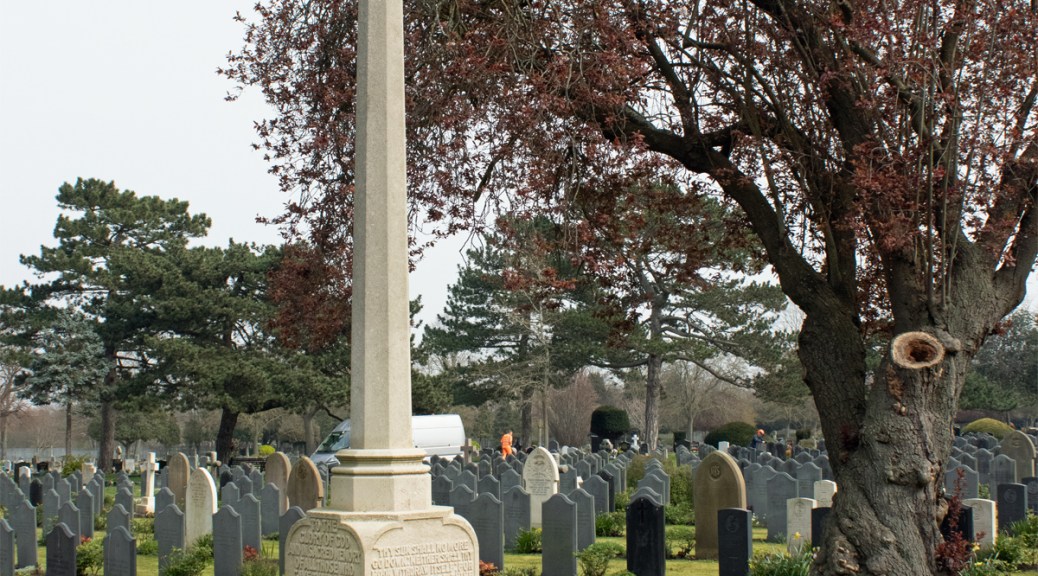
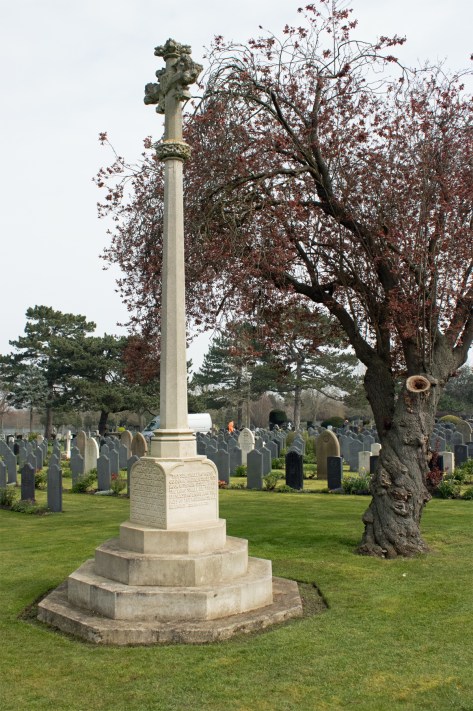
[Note: the photo above is of the memorial to the Chatham Air Raid victims, close to the mass grave for those whose bodies were not identified, in Woodlands Cemetery, Gillingham, Kent.]