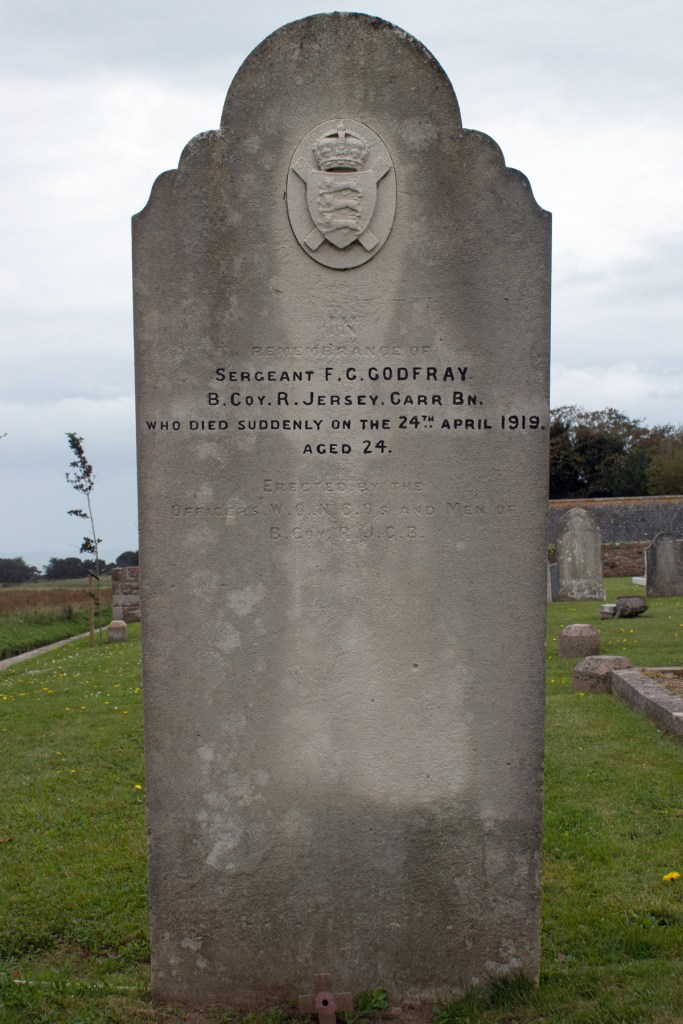
Francis George Godfray was born in Jersey, Channel Islands, on 10th April 1895. One of fifteen children, his parents were Philippe and Alice Godfray. Philippe was a quarryman-turned-agricultural labourer and, by the time of the 1911 census, Francis had also gone into farm work.
War was closing on on Europe’s shores, and Francis stepped up to play his part. Full details of his service have been lost to time, but it is clear that he had enlisted in the Royal Jersey Militia by 1918. Attached to B Company of the regiment’s Garrison Battalion, by the end of the conflict he had been promoted to the rank of Sergeant.
Sergeant Godfray survived the conflict and had returned home by the spring of 1919. On 24th April, he collapsed and died suddenly, his death later confirmed as heart failure. Francis was just 24 years of age.
Francis George Godfray was laid to rest in the peaceful St Ouen’s Churchyard in Jersey.
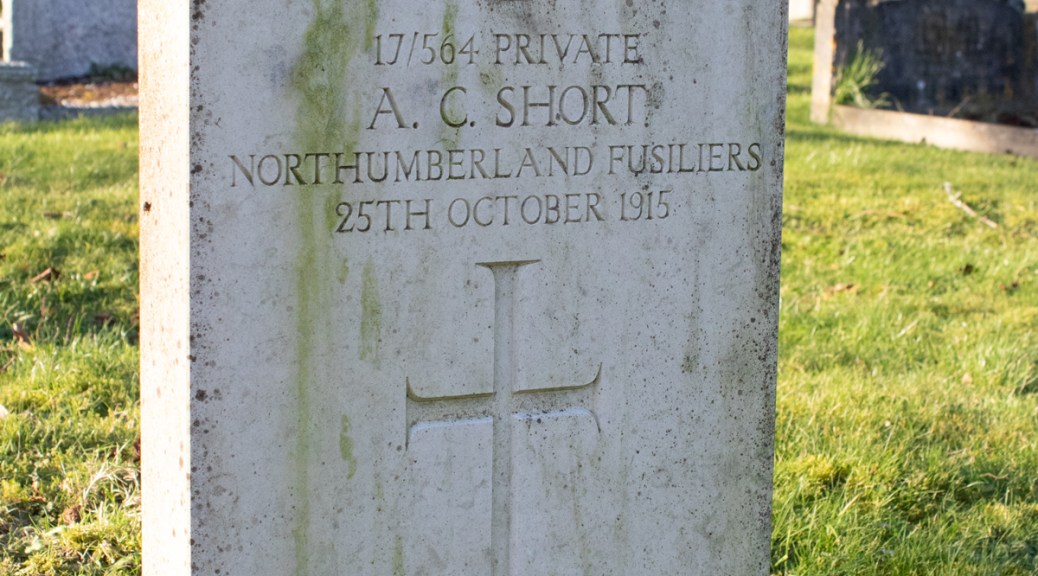
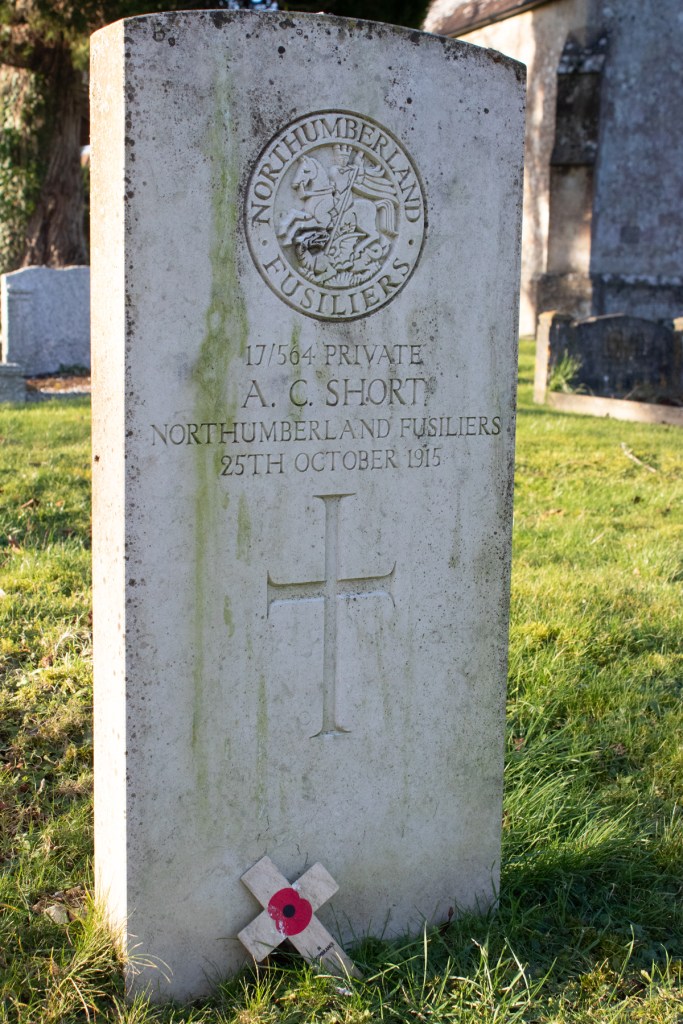
Alexander Coverdale Short was born in the Yorkshire village of Nafferton in the autumn of 1890. One of twelve children, his parents were labourer Benjamin Short and his wife, Emily.
Benjamin died in 1908, and the following year Emily remarried, to widow William Jefferson. He was a clerk for the council in neighbouring Driffield but, by the time of the 1911 census, the family had moved to Sculcoates, near Kingston-upon-Hull, where he had taken up employment at an auctioneer’s.
The 1911 census found the extended family living at 44 Hopwood Street in Hull, a seven-room property. William and Emily headed the household, sharing the house with William’s son Alfred, Alexander and four of his sisters, Alexander’s nephew, two boarders and two visitors – another of Alexander’s sisters and her son.
Alexander was employed as a bricklayer’s apprentice by this point, but at some point found alternative employment working for the North Eastern Railway Company. War was on the horizon, however, and he had enlisted in the Northumberland Fusiliers by the spring of 1915.
Private Short was attached to the 17th (Service) Battalion (North Eastern Railway Pioneers) and, by August 1915, his unit had moved to Codford, Wiltshire, on the edge of Salisbury Plain.
Knowing a trip across the English Channel was likely imminent, before he left Yorkshire, Alexander married Dora Harrison. The daughter of a butcher, she had been born and raised in Sculcoates.
Alexander’s time in the army was not to be a long one. Within a matter of months, his health began to deteriorate, and on 25th October 1915, he died of heart failure at Codford Military Hospital. He was just 24 years of age.
Finances appear to have prevented Private Short’s family from bringing their son and husband home. Instead, Alexander Coverdale Short was laid to rest in the peaceful St Mary’s Churchyard in Codford.
Henry Weakley was born in 1885 in Bath, Somerset. The second of six children, he was the eldest son to James and Fanny. James was a cab driver, and Henry – who was better known as Harry – followed suit, becoming a coachman by the time of the 1901 census.
In 1910, Harry married a woman called Jennie. There is little information available about her, but the following year’s census return found the couple living with his family at 1 Cork Street, Bath, not far from the city’s Royal Crescent. The census had two records for that address, which confirmed the family’s living arrangements. Harry and Jennie had one room, while the rest of the Weakleys – James, Fanny, four of their children and a grandson – took up four rooms.
Harry was still employed as a coachman as this point, but, with war on the horizon, things were to change. Full details of his military service are lost in the mists of time, but it is clear that he enlisted in the Somerset Light Infantry, and that he was assigned to the 3rd (Reserve) Battalion.
Private Weakley’s unit was a territorial battalion and it remained on UK soil throughout the war. Initially based in Devonport, Devon, the 3rd moved to Londonderry, Northern Ireland, in November 1917, and Belfast the following April. Sadly, the little that remain of Harry’s records do not confirm where he served.
Harry was demobbed on 13th May 1919: his pension ledger notes that he had received gun shot wounds to his neck and back, although no further records identify when or how these injuries occurred. He returned home – 5 St George’s Buildings, Upper Bristol Road, Bath – and seems to have settled back into his pre-war life, although his health was still impacted.
Harry passed away at home on 27th March 1921. He was 36 years of age, and had died of heart failure. Despite his wartime injuries, the war office determined that his condition had been contracted after his army service: Jennie was denied a war pension.
Henry “Harry” Weakley was laid to rest in Bath’s sweeping Locksbrook Cemetery, not far from where his widow still lived.
William George Masters was born in Padstow, Cornwall, on 15th April 1877. The older of two children, his parents were Samuel and Catherine (or Kate) Masters. Samuel was an agricultural labourer, but his son sought a life at sea.
On 7th November 1894, William enlisted in the Royal Navy. Sent to HMS Northampton, an armoured cruiser repurposed as a training ship, he took on the role of Boy 2nd Class. His service records show that he was 5ft 6.5ins (1.69m) tall, with brown eyes, auburn hair and a freckled complexion. He was noted as having a scar on the third finger of his right hand.
Over the next six months, William showed a remarkable dedication to the job. On 7th February 1895 he was promoted to Boy 1st Class, and, just three months later, he came of age and assumed the rank of Ordinary Seaman.
William’s shore base was to be HMS Vivid, the Royal Naval Dockyard in Devonport, Devon, and he returned here regularly over the twelve years of his service. Ordinary Seaman Masters served on ten ships during this time and, on 1st May 1902, was promoted to Able Seaman.
His time in the navy wasn’t to be without incident, however, and he had two spells in the brig – for three days in July 1897, and ten days in December 1905. His misdemeanours are lost to time, but they did blemish an otherwise clear term of service for William.
William married Laura Oldham in 1905: they would go on to have three children – William Jr, Emily and Katharine. He was stood down to reserve status in April 1907 and, by the time of the next census in 1911, the family were living in Church Street, Padstow. No longer working for the Royal Navy, he was, instead, self-employed as a general labourer.
When war was declared in August 1914, William was called back into action. Assigned to HMS Argonaut, he once again too the rank of Able Seaman. He spent a year on board, patrolling the Atlantic, before the protected cruiser was converted to a hospital ship.
In September 1915, Able Seaman Masters transferred to another cruiser – HMS King Alfred – which served in the Mediterranean. He remained on board until the following summer, by which point his health was beginning to become affected.
William returned to Devonport in August 1916, remaining there for a couple of months. On 4th October, he as medically discharged, suffering from myocarditis, a heart condition.
At this point William’s trail goes cold. He returned to Cornwall, passing away at home on 13th September 1917: he was 40 years of age.
William George Masters was laid to rest in Padstow Cemetery, on the outskirts of the town he called home.
The funeral of Mr Henry Hutchings, the Zulu war veteran, who died suddenly at Lower Weston on Tuesday, took place on Saturday afternoon…
The principal mourners were: Mrs Hutchings (widow), Sergt. Hutchings (son)(who wore the Mons ribbon and a Zulu war medal), Mr AE Adams (step-son), Mrs A Hutchings (daughter-in-law), Mr David Adams (step-son), and Mrs Emily Pickworth (step-daughter).
In order to attend the funeral Mr AE Adams had returned from France, where he has been carrying out work for a local firm.
Bath Chronicle and Weekly Gazette: Saturday 16th February 1918
Tracking down Henry Hutchings’ early life is a bit of a challenge, but working backwards through census records sheds some light onto his later years.
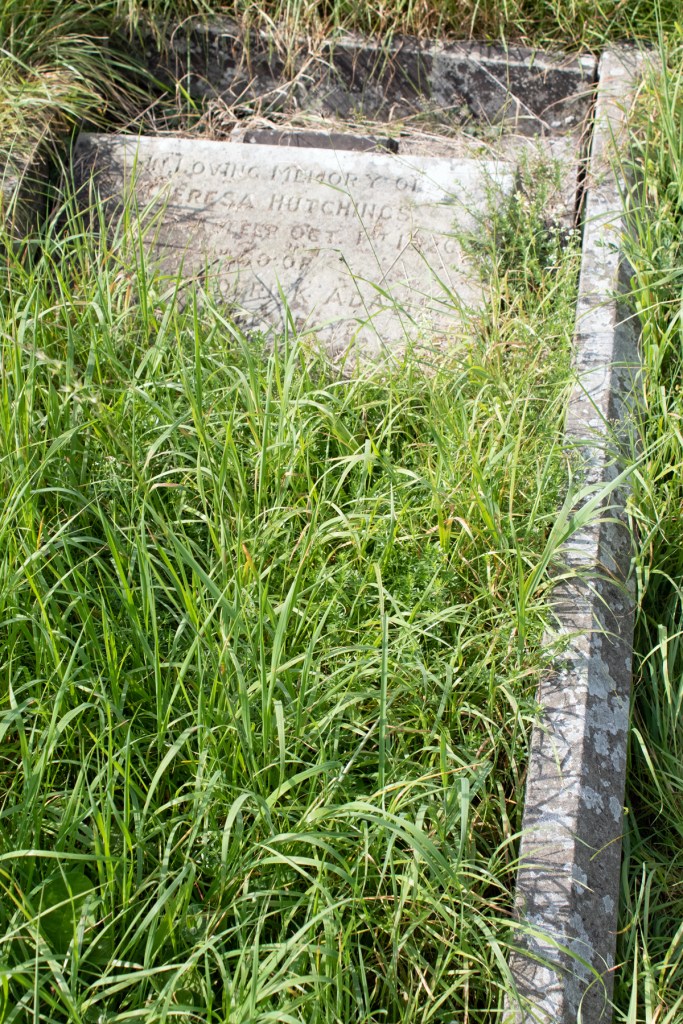
The Commonwealth War Graves Commission record states “Hutchings, Pte. Henry, 14475. Royal Defence Corps. 5th Feb., 1918. Age 59. Husband of Theresa Hutchings… Served in the Zulu War (1877-79) with Army Service Corps.”
The 1911 census recorded Henry and Theresa living in Shepherd’s Bush, Hammersmith. The document confirms they had been married for less than a year and, unusually, suggests both were twice married. Henry had been born in Notting Hill, and was employed as a smith’s hammerman. Theresa was born in Byfleet, Surrey, and the couple were living with Henry’s son, Henry Jr, and Theresa’s daughter, Alice.
Turn the clock back ten years, and the 1901 census tells a more confused story. Henry was living in Edmonton, Middlesex, where he was employed as a general labourer. Theresa is noted as being his wife – in contrast to the later census return – and the couple were living in Gilpin Crescent with Henry’s sons – Henry Jr, Edward and Sidney – and Theresa’s two children – Alice and Albert.
Going back a further ten years leads to a dead end. Neither Henry nor Theresa are readily identifiable on the 1891 census, even though both should have had their older children by that point.
An 1877 military record confirms Henry’s earlier time in the army. It was in July of that year that he enlisted, joining the Army Service Corps. At 18 years of age, he had been working as a carman, but a dedicated career is what he sought out. His record confirms he was 5ft 4ins (1.63m tall, with brown hair, blue eyes and a fresh complexion. Henry lists his next of kin as brother Robert Hutchings, although, again further family details are lost in the mists of time.
Private Hutchings spent twelve years in the army. After eighteen months on home soil, he was dispatched to South Africa, as the later newspaper report suggests, and spent a year overseas. He returned home in March 1880, and was stood down to reserve status until the end of his contract in July 1889.
The documentation uncovers details of Henry’s second period of time in the military. He enlisted in the Royal Defence Corps in September 1915, and was based at Alexandra Palace in London. His time there was limited, however, as he began to show signs of heart disease. By the following summer, Private Hutchings suffered from breathlessness and chest pains, to the point where he was medically discharged from service on 21st August 1916.
Henry and Theresa had moved to Somerset by January 1917, presumably for the cleaner air that their home in Bath would provide. This was not to be enough, however. Henry died a little over a year later, at the age of 59 years old.
Henry Hutchings was laid to rest in the sweeping grounds of Locksbrook Cemetery, Bath. He was to be reunited with Theresa when she passed away in 1926.
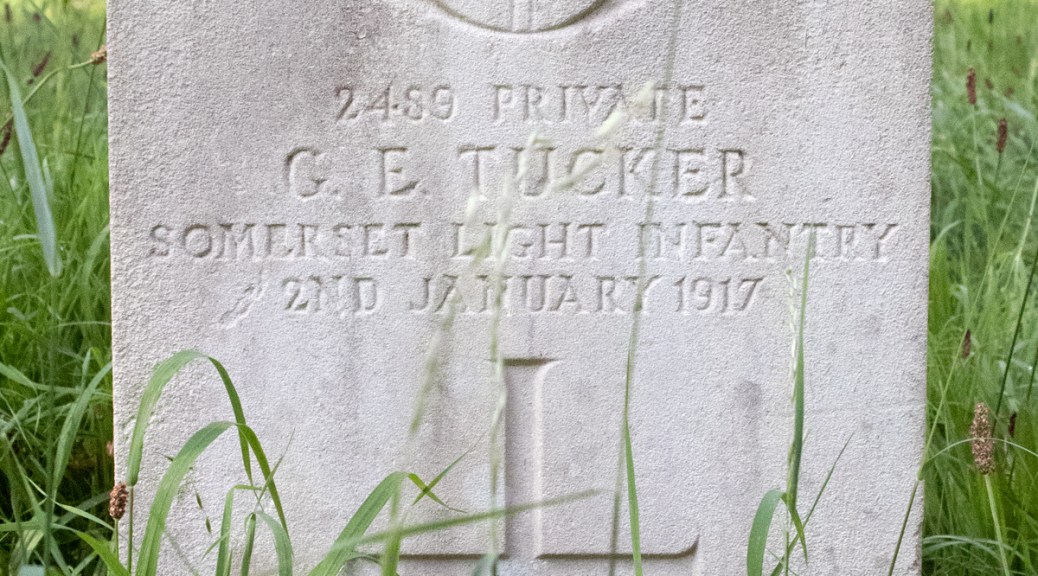
George Edward Tucker was born in Lyncombe, Bath, Somerset in the autumn of 1883. The fourth of eight children, his parents were stone mason Edward Tucker and his wife, both of whom were from northern Somerset.
When he finished his schooling, George found work as an errand boy. By the time of the 1911 census, however, he had taken a job as a painter, possibly being employed by his father’s boss.
George married Rosina Hurley at Bath Register Office at the start of 1913. the couple set up home and went on to have two children, Edina and Audrey.
George enlisted in the opening weeks of the First World War, joining the Somerset Light Infantry as a Private. His time in service was not to last long, however. He was out on a route march on 1st December, when he was pulled up with acute pain in the chest.
Private Tucker was sent back to barracks, and given light duties. A subsequent medical confirmed an enlarged heart, and he was medically discharged from military service on 31st December 1914.
At this point, George’s trail goes cold. The next record for him is that of his passing, on 2nd January 1917. He was 33 years of age.
George Edward Tucker was laid to rest in Bath’s sweeping Locksbrook Cemetery.
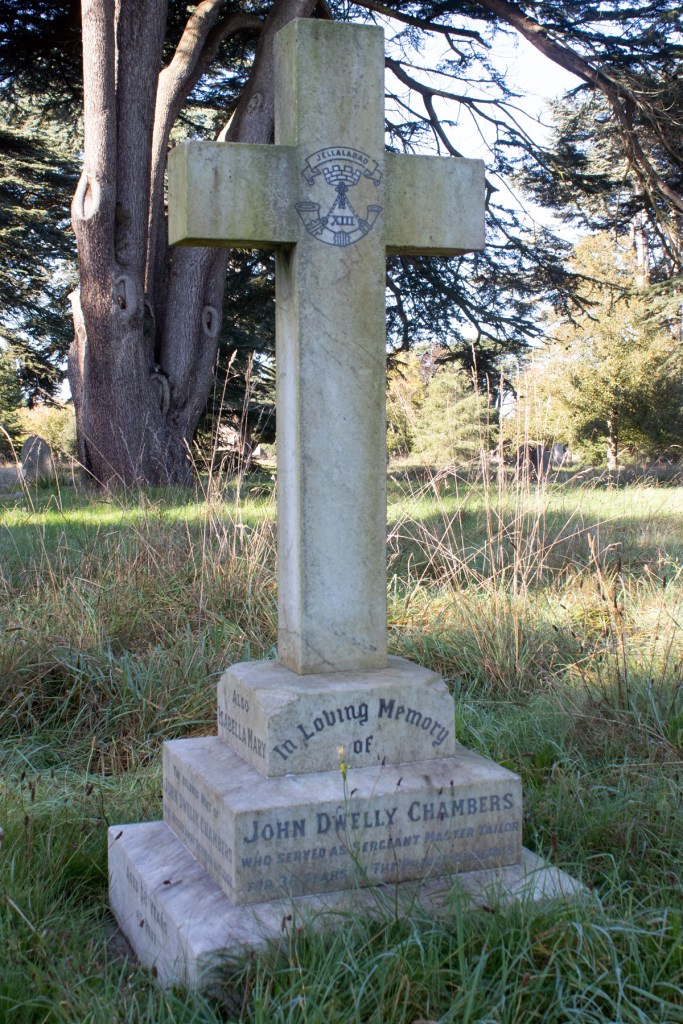
John Dwelly Chambers was born on 21st August 1846, in Holborn, Middlesex. The second of four children, his parents were John and Sarah Chambers. John Sr was a tailor, and this was a trade into which his oldest son followed.
Unusually, John Jr travelled widely with his work and, by the late 1860s, he was based in Devon. It was here that he met and, on 5th March 1870, married Isabella Smith. She was born in Exeter, and couple initially made a life for themselves there.
The 1881 census return shows just how far the family moved in the coming years. John and Isabella were to have nine children: their first, Louise, was born in Exeter a hear after their marriage. The second child, son John, was born in Armagh, Ireland, though; their third, Emily, was born in Glasgow; while their fourth, George, was born in Surrey. It was only by the time their fifth and sixth children, Thomas and Charles, were born that they family returned to Devon. Their youngest three children – Percy, Victoria and Ivor, were all born in Somerset, when the family had settled in Taunton.
The reason for these moves seem to have been because his tailoring work was for the army. The 1891 census found the family living in army barracks, where John was listed as being a soldier. Ten years on, and John was recorded as being a Lance Sergeant in the Somerset Light Infantry, the Chambers’ still being billeted in barrack accommodation in Taunton.
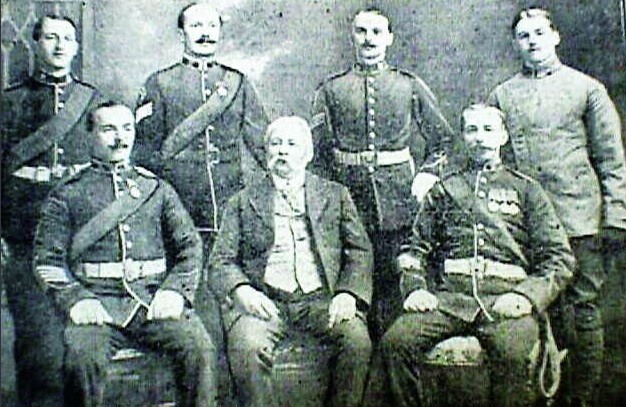
By this point, Percy, now 17 years of age, was employed as a gunsmith, and a later photo suggests that all six of John’s sons went into the army.
Isabella died in 1906, at the age of 58: the following year, John married Elizabeth Dunning, a widow with her own children to raise. The 1911 census found the extended family living in the barracks: John, Elizabeth, Ivor and Elizabeth’s two daughters, Kate and Beatrice. John, by now, was listed as being a master tailor (military), Ivor was now a gunsmith, and the two girls were employed as a book binder and dressmaker respectively.
John had officially been discharged from the army by this point, but it seems likely that the outbreak of war brought him back into service. His life over the next few years is largely undocumented, but it is fair to assume that Serjeant Chambers was called back to the army, possibly to train newer recruits in the trade he had been working in for decades.
John Dwelly Chambers died of a heart attack on 2nd August 1915: he was just short of his 69th birthday. John was laid to rest in the sprawling St Mary’s Cemetery in Taunton, not far from the barracks to which he had devoted his life.
Serjeant John Chambers (seated middle, with his sons) (from ancestry.co.uk)
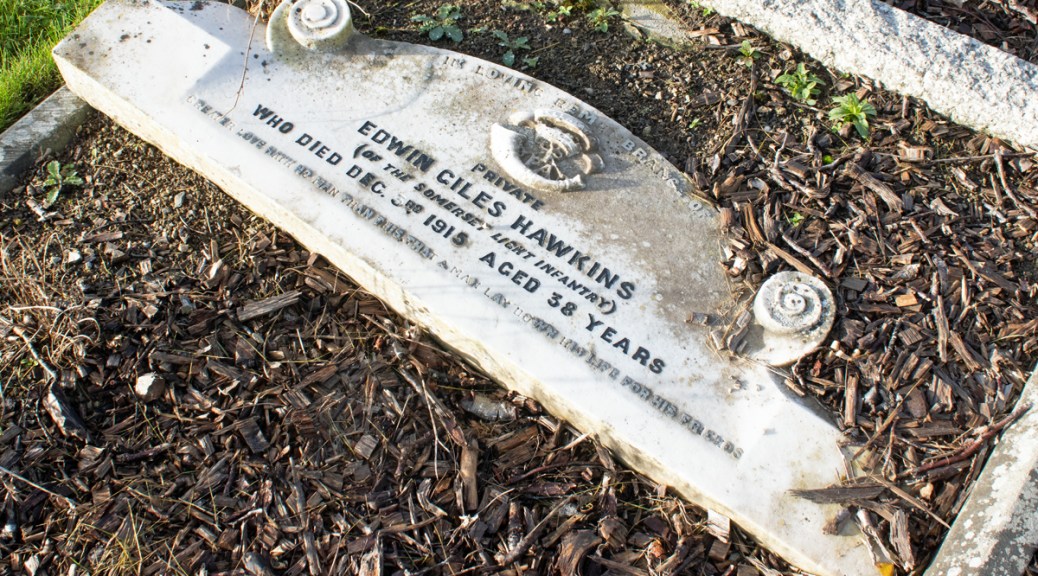
Another sudden death has occurred… when Edwin Giles Hawkins, Divisional Reserve company, 8th Divisional Train, BEF, passed away at the age of 38 years. Deceased… was called up with the National Reserves, and for some time he had been in France. On December 2nd he was granted eight days leave from the Front and arrived at home the same evening. He retired to rest at 10pm, apparently in his proper health. At 5am next morning he called his mother and complained of pains in the stomach. Hot water was applied and a doctor sent for but before the latter arrived he passed away.
Western Chronicle: Friday 10th December 1915
Edwin Giles Hawkins was bornin the autumn of 1877, the oldest of six children to Giles and Elizabeth. Giles had been born in West Coker, Somerset, and the family grew up in the Anchor Inn, Yeovil, where he was the innkeeper and glover.
By the time of the 1891 census, Giles had stepped down as landlord, and the growing family were living in a cottage next to the pub. He was working as a leather dresser and glover, working to feed his wife and five children.
Little information about Edwin’s time in the army before the First World War is available. However, his details are missing from the 1901 census, which would suggest that he was serving overseas at that point.
Edwin was called upon to due his duty once more when war was declared. Joining the Somerset Light Infantry, he was assigned to the 1st Battalion, and, by December 1914, he was in France. Private Hawkins was caught up at Ypres the following spring and returned home on leave in December 1915.
The cause of Private Hawkins’ death was recorded as being heart failure. As the newspaper report noted, he was 38 years of age.
Edwin Giles Hawkins was laid to rest in Yeovil Cemetery, a short walk from where his parents still lived.
Charles Bayliss was born in Birmingham in 1861. Little concrete information is available about his early life, but later documents confirm his father was called John, and he was one of at least five children.
Charles married Ellen Kimberley on 8th April 1888. The couple wed at St Mary’s Church in Kidderminster, Worcestershire, and went on to have four children – Nellie, Charles, Burt and Eva.
Charles took up manufacturing work, and ended up being a machine belt maker. He also served in the South Staffordshire Regiment, although whether this was on a paid or voluntary basis is not clear.
When was came to Europe, Charles felt the need to serve his country once more. He enlisted on 23rd August 1917, taking five years off his age to ensure he was accepted. He was assigned to the Royal Engineers, and attached to the Inland Waterways and Docks unit.
Private Bayliss was based at Portbury Camp near Bristol, and records suggest that Ellen moved to be near him, finding lodgings on Myrtle Hill in Pill.
Charles was respected for the work that he was doing, and was promoted to Lance Corporal in May 1918. His health was against him, however, and just two months later he collapsed and died from a heart attack while at work. He was 58 years of age.
Charles Bayliss was laid to rest in the graveyard of St George’s Church, Easton-in-Gordano, not far from the docks where he had served, and the riverside home in which his widow still lived.
John McClymont was born in Cowra, New South Wales, Australia, in 1865. Full details of his early life are lost to time, but later documents confirm that his mother was called Sophia.
Most of the information relating to John’s life comes from his army service records. These confirm that he enlisted on 13th September 1915, and that he was assigned to the 8th/20th unit of the 5th Australian Infantry Brigade. He was noted as being a labourer when he joined up, with brown hair, blue eyes and a fresh complexion. The record confirms that he stood 5ft 10ins (1.78m) tall, and weighed 169lbs (76.7kg).
Private McClymont arrived in Egypt in February 1916, and transferred to the 2nd Battalion of the Australian Imperial Force. He was initially based at Tel-el-Kebir camp, close to Cairo. From here on in, he seems to have been beset with poor health, and had numerous hospital admissions for heart ailments and haemorrhoids.
By April 1916, John’s unit had arrived in France, and his commitment to the job was not to go unrewarded. On 13th July 1916, he was appointed to the role of Acting Sergeant, and just three months later, he was reassigned to the 1st Australian Infantry Brigade Headquarters, where he was mustered as a Driver.
He was still battling health issues, however, and, in 18th August 1917, he was admitted to a hospital in Boulogne with heart disease. Within a month, Driver McClymont had been medically evacuated to Britain for treatment, and he was taken to Bath War Hospital in Somerset. It was here that he was diagnosed with diabetes, and, having slipped into a diabetic coma, it was here that he passed away, on 9th October 1917. He was 42 years of age.
With all of his family on the other side of the world, John McClymont was laid to rest in the military section of Bath’s Locksbrook Cemetery.







 Death and Service