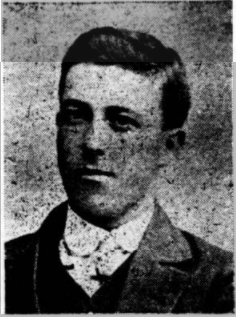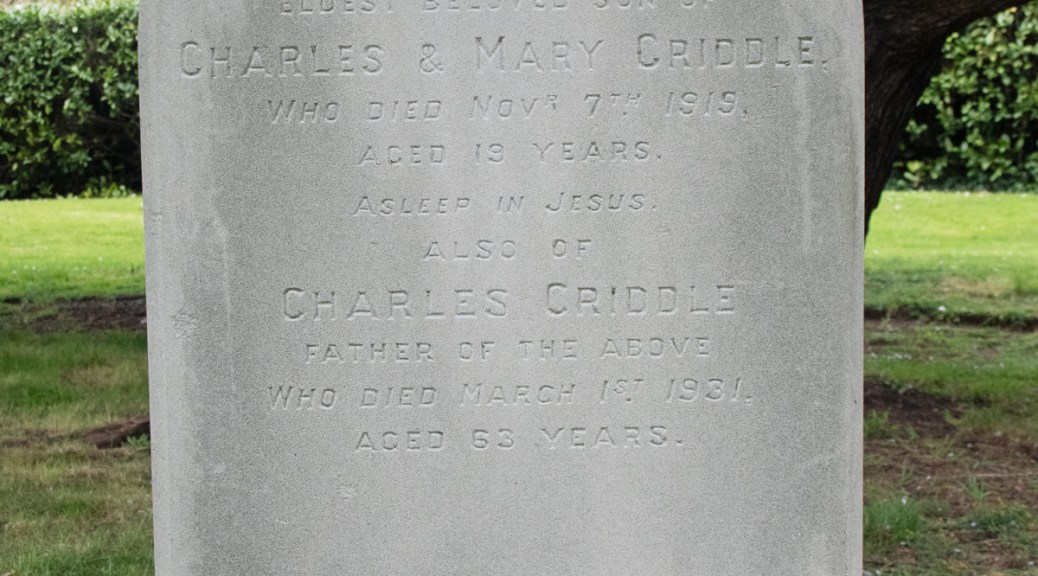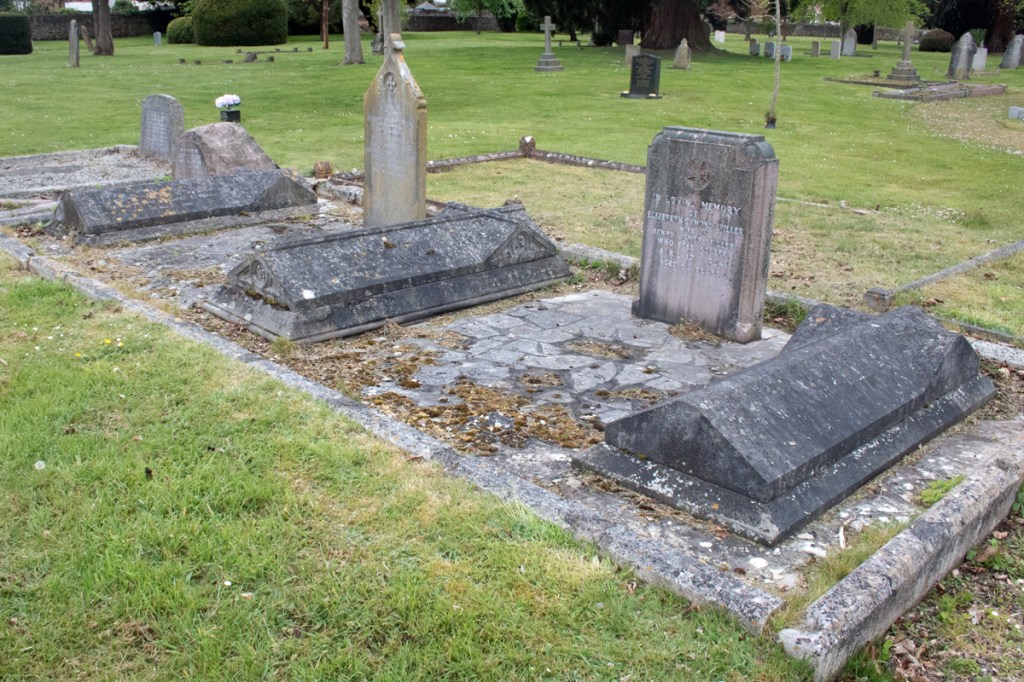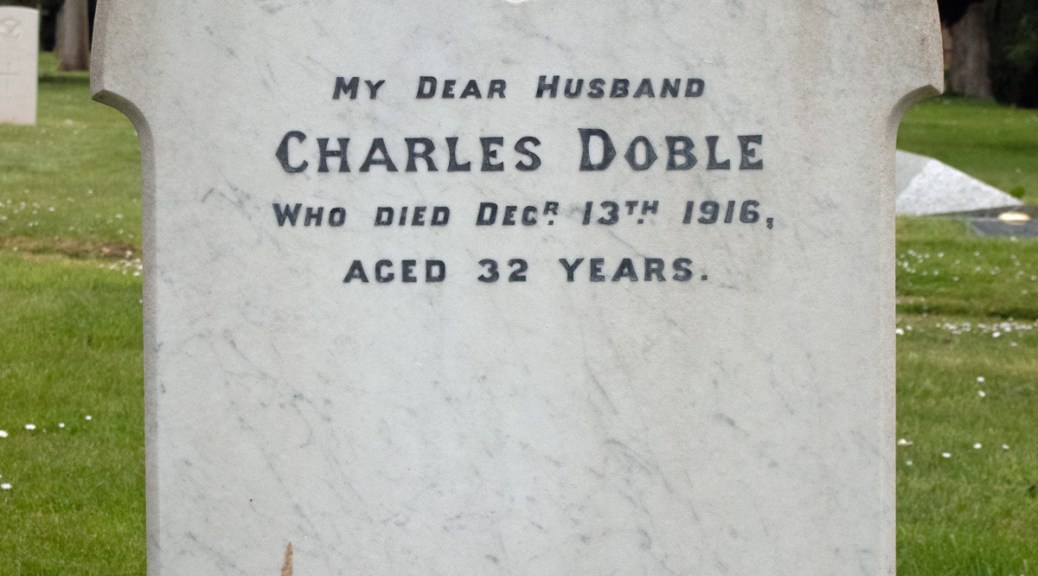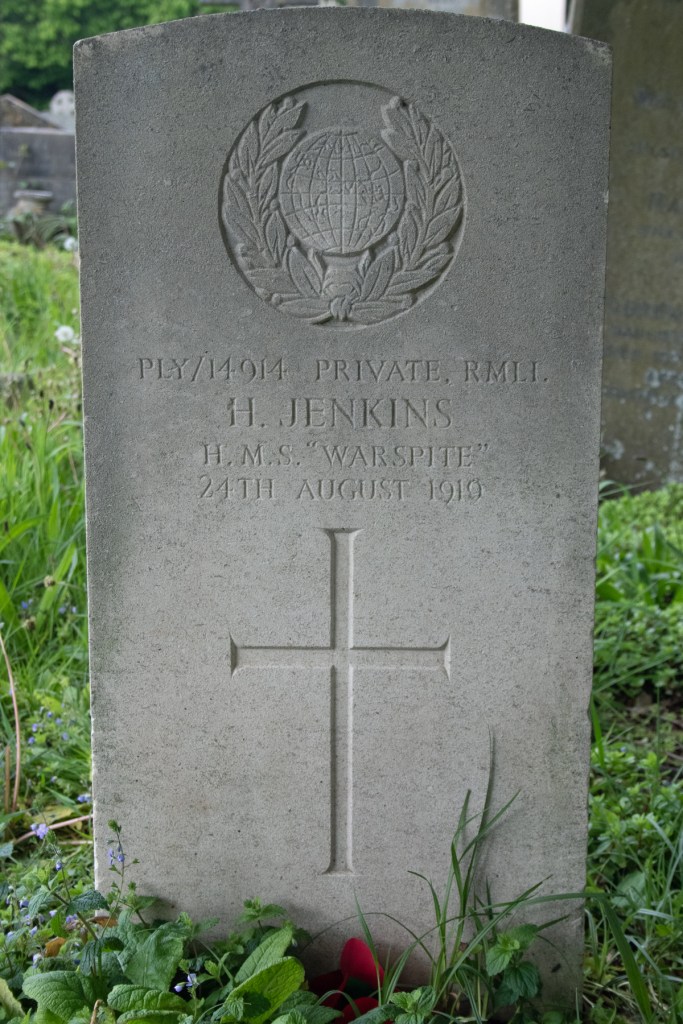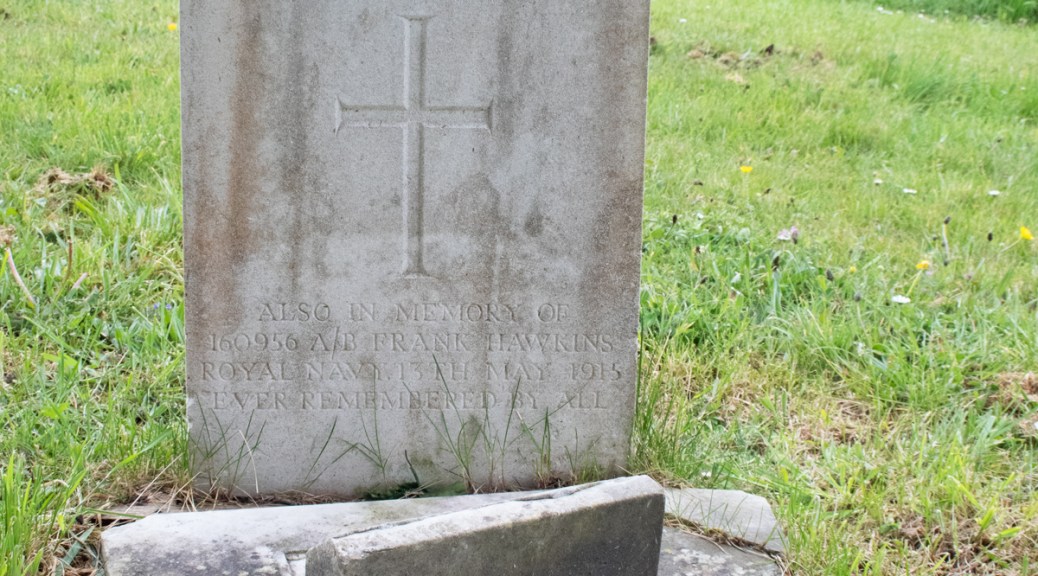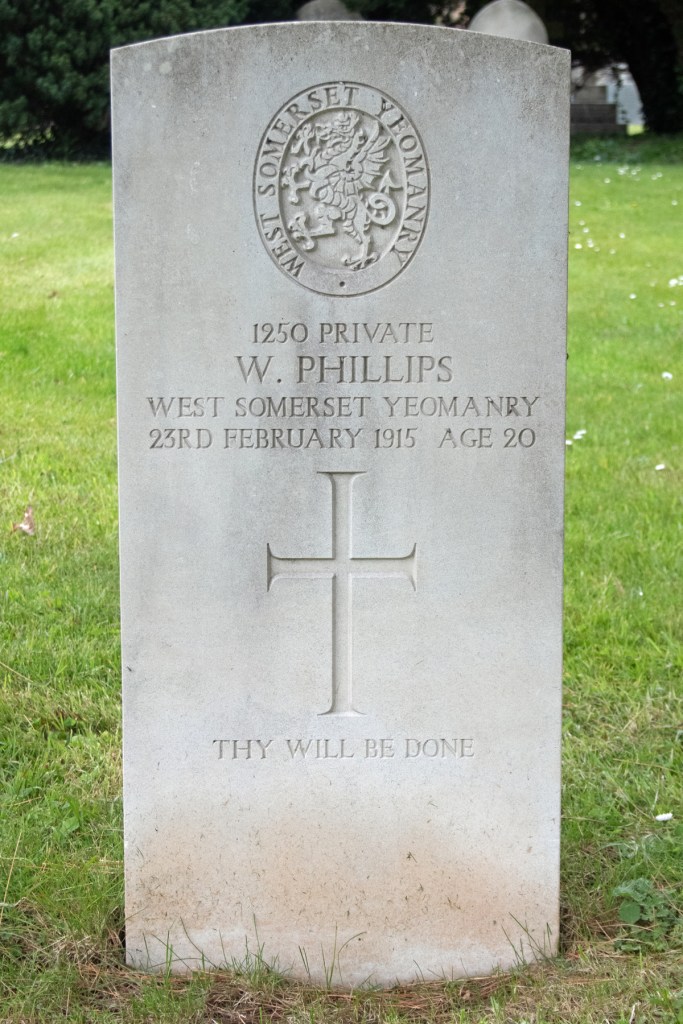
George East was born in 27th May 1879 to George and Agnes East. Agnes was George Sr’s second wife, which led to George Jr having four siblings and a further eight half-siblings. George’s father was a painter and handyman, who sadly passed away when his son was only seven years old.
Sadly, a lot about George remains a mystery, as a lot of documentation about him no longer exists. The snippets that are available give a tantalising glimpse into his life.
He married a woman called Jessie, and they had a daughter, Vera, who was born in July 1912.
George enlisted in the Royal Marine Light Infantry on 29th September 1915, and served at the Naval Dockyard in Chatham, Kent. Private East was based there for most of the war, but fell ill, succumbing to stomach cancer on 22nd June 1918. He was 39 years old.
George East lies at peace in the Woodlands Cemetery in Gillingham, Kent.
There are some people whose stories just don’t want to be unearthed. It’s rare, but occasionally the brick walls come up and you just can’t find a crack through them.
Private A Lewis seems to be one of those people.
The gravestone is in Woodlands Cemetery in Gillingham, Kent. The inscription reads:
G/39918 Private
A Lewis
Middlesex Regiment
11th April 1919
Military records for the service number are scarce, which is not unusual, but unearth two things. Private Lewis’ first name was Alfred, and he was married to a woman called Amelia.
Further research leads to his wife’s full maiden name, Amelia Florence May Courtney, and that she was the daughter of a draper’s assistant, born in London. The couple married in December 1909.
Frustratingly at this point, the trail goes cold. There is a record for an Alfred and Millie Lewis living in Gillingham in the 1911 census, but I am not convinced that they are the same couple.
Alfred Lewis is too common a name to be able to pinpoint any life before his marriage with any certainty, particularly as their marriage record does not give his parents’ names.
All I can say is that Alfred Lewis enlisted in the Middlesex Regiment, although there is no confirmation of when he enrolled. He gained both the Victory and British Medals, but there is nothing to confirm whether he service abroad or part of a territorial force.
Alfred was admitted to the War Hospital in Whitchurch, which was a psychiatric hospital to the north of Cardiff. He was recorded as suffering from paralysis, though whether this was the result of a physical or mental trauma is not clear.
Sadly, Private Lewis passed away on 11th April 1919; his age is unknown. He lies at rest in the Woodlands Cemetery in Gillingham.
Aubert Charles Smith was born in 1893, the eldest of eight children to Charles and Mary Ann Smith. Charles worked at the Naval Dockyard in Chatham, and the family lived not far away in Gillingham, Kent.
When he left school, Aubert found work as a labourer in a ‘provision warehouse’, which may have been connected to the dockyard at which his father worked.
In July 1915, aged 22, he married Lucy Cox, who was the daughter of a mess cook at the naval base. The young couple went on to have a son, also called Aubert, in 1917.
At this point, the First World War was raging, but little documentation remains of Private Smith’s service. He enlisted in the East Kent Regiment (also known as The Buffs), but there is nothing to confirm when he enrolled or where his duty took him.
The next record for Private Smith shows that he was admitted to Fulham Military Hospital, suffering from testicular cancer. Sadly, he succumbed to the condition, and he passed away on 29th December 1917. He was just 24 years old.
Aubert Charles Smith lies at rest in the Woodlands Cemetery in his home town of Gillingham, Kent.
Herbert Stevens was born in Lincolnshire in 1873. Little record of his early life remains, but his mother, Rachel, was born in Cambridgeshire.
Herbert had at least two siblings; Arthur was ten years older than him, and had been born in Liverpool. Alice, who was six years Herbert’s junior, was also born in Lincolnshire.
By the time of the 1891 census, Rachel had been widowed. She was living with her three children in Chatham, Kent, and working as a laundress. Arthur was a labourer in the Naval Dockyard, which may be what brought the family so far south. Herbert, aged 18 by this point, was a stable hand, while Alice was still at school. To help make ends meet, the family had also taken in two lodgers, Joan Kitteridge, who was a tailoress, and her daughter, two-year-old Florence.
On Christmas Day 1898, Herbert married Sarah Beed. Her father was a ship’s carpenter, based in the Dockyard, and the couple set up home in neighbouring Gillingham. The young couple went on to have seven children.
Herbert went on to become a labourer in the Dockyard, but then found employment for the local council, working as a carman, or carter (presumably his work in the stables and his affinity with horses stood him in good stead).
War was on the horizon, however. He enlisted in May 1915, enrolling in the Royal Army Service Corps, and gave his trade as a groom. Private Stevens was assigned to the Remount Depot in Romsey, Hampshire, where he would have been partly responsible for the provisioning of horses and mules to army units both in England and abroad.
Split across ten squadrons, at times there were as many as 4,000 horses and mules stables at the Romsey Remount Depot, so Herbert’s life would have been a busy one. It seems, however, to have been a strenuous life too an, on 23rd March 1918, after nearly three years’ service, Private Stevens died of heart failure. He was 45 years old.
Herbert Stevens lies at rest in the Woodlands Cemetery in his adopted home of Gillingham, Kent.
Henry McCahearty was born in Glasgow in October 1864, one of four children to Henry and Bridget McCaherty. Sadly, few records remain, but it seems that Henry Sr, who had been born in Northern Ireland, was a soldier.
Henry falls off the radar quite quickly; from later records we can determine that he worked as a skilled labourer at the Naval Dockyard in Chatham, although it is not certain what particular skills he had.
He married Alice Radford on 3rd September 1901 in Walmer, on the Kent coast, although the couple subsequently moved to Gillingham. They went on to have four children – Reginald, James, Leonard and Alfred.
Henry was 49 when war broke out. While over the initial recruitment age, he did enlist – becoming a Private in the Royal Marine Light Infantry – although it is not certain exactly when he joined up.
Sadly Private McCahearty’s passing is also a mystery. There is nothing in the newspapers of the time to suggest anything out of the ordinary, so I can only assume that he died as a result of one of the illnesses that were rife at the time. Either way, he died on 14th November 1916, at the age of 51.
Henry McCahearty lies at rest in the Woodlands Cemetery in Gilingham, Kent.
John Francis Friday was born in June 1898 to John and Laura Friday from Gillingham in Kent. Laura passed away when John Jr was only ten years old, and his dad remarried, meaning John Jr had eight full and half siblings. John Sr was a farm labourer, and the family lived on the river front in Gillingham, Kent.
John’s military service seems a bit of a challenging one. A letter to Gillingham Police Station dated November 1916 stated that he had not received his call up papers, but that he would present himself that day for enlistment.
John eventually enlisted on 27th December 1916; his joining records show that he was 18 years and six months old, and stood at just under 5ft 3ins (1.57m) tall. He also noted that his preference was to be assigned to the Royal Engineers.
Private Friday initially joined the Manchester Regiment, and, while serving on the Western Front, seemed to have a bit of a rebellious streak in him. He was pulled up on misdemeanours such as neglect of duty on at least five occasions before being admitted to hospital in Calais in December 1917, suffering from trench foot. After serving some further time in England, he again found himself in France in the summer of 1918.
On 11st March 1919, he was transferred to the East Surrey Regiment, and was shipped back to England at the beginning of April. Sadly, it looks like John was stricken by poor health; he passed away on 6th July 1919, having contracted pneumonia. He was just 21 years old.
John Francis Friday lies at rest in the Woodlands Cemetery in his home town of Gillingham in Kent.
Alfred William Lowes was born in 1893, one of eight children to George and Ann. George was a railway porter from Kent, Ann was born in Berkshire, and the couple had settled in Gillingham, Kent, by the time they started a family.
The naval dockyard in Chatham was one of the main employers in the Medway area of Kent, and Alfred was drawn there for work. After leaving school, he found a job there as a messenger, following his older brother George, who was a labourer there.
In the spring of 1916, Alfred married Edith Kennett, and it seems like the timing was due to his military service. Private Lowes joined the Prince of Wales’ Own Civil Service Rifles (also known as the 15th Battalion London Regiment) and by the beginning of August his troop was bound for France.
Full details of Private Lowes’ military service is not available, although it seems not to have been a lengthy one. He would have fought on the front line, and was wounded as a result. Repatriated back to England for treatment, Alfred passed away at home on 12th November 1916. He was just 23 years of age.
Alfred William Lowes lies at rest in the Woodlands Cemetery in his home town of Gillingham.
John Wride was born in 1891, one of eleven children to William and Kate Wride from Cheddar in Somerset. William stared as an agricultural labourer, but went on to become a market gardener, a trade at least four of his sons, John included, also went into.
Sadly, little of John’s life before the outbreak of war is documented. He enlisted on 12th February 1915, and was assigned to the Royal Scots Fusiliers. There is little information about whether he served abroad, although a number of battalions remained based in the UK.
When he enlisted, Private Wride was noted to have an enlarged thyroid and dental deficiencies. He seems to have suffered with his health during the conflict, and the medical report that accompanied his discharge from the army showed that he suffered from VDH – valvular disease of the heart – although the doctor did not attribute this to his military service.
This decision was appealed, and a subsequent report identified that John’s heart and kidney disease were in fact aggravated by his time in the army. He was medically discharged due to these conditions in February 1919.
By the time of the 1921 census, taken in June that year, John was back home in Cheddar. He was living with his parents and two siblings, and seemed to be working alongside his father in the market garden business. Sadly, however, his heart condition was to prove fatal. He passed away on 27th July 1921, aged 30 years old.
John Wride lies at rest in the Baptist Burial Ground in his home town of Cheddar.
Ernest Hart Painter was born in December 1884 one of eight children to Alfred and Elizabeth from Devon. Alfred moved the family to Cheddar, Somerset to work at a paper mill in but sadly passed away when Ernest was only eleven years old.
The family rallied round Elizabeth, however, and, by the time of the 1901 census, she was living on the outskirts of the town with her six younger children. Elizabeth worked as a domestic cook; Ernest was an agricultural labourer; his two older sisters were shirt machinists; his 13 year old brother Albert was listed as a gentleman’s servant.
Ernest, by this point, seemed to have taken on the role of head of the family; he continued work as a farm labourer, while Elizabeth earned money as a housekeeper. Alfred became a mechanic for a car dealer and, at the 1911 census, the three of them lived with the youngest member of the family, Ernest’s sister Emily, who had followed in her older sisters’ footsteps as a machinist.
As with many of the fallen men and women of the Great War, a lot of Ernest’s military service records have been lost to time. He enlisted in the Army Veterinary Corps in December 1915, his work as a farm labourer presumably having involved animals and livestock.
Private Painter must have been on the front line as, on 30th May 1918, he was shot in the ankle. Shipped back to England for treatment, he was eventually discharged from service on 19th November, a week after the Armistice. The ankle wound continued to give him trouble, however, and over the following couple of years, he had a number of operations on it.
Sadly, the last of these procedures resulted in an infection, and sepsis took hold. Private Painter passed away from blood poisoning on 15th April 1921. He was 36 years old.
Ernest Hart Painter lies at rest in the graveyard of St Andrew’s Church in Cheddar, Somerset.
Frank Herbert Perrett was born in January 1880, the tenth of thirteen children. He was the son of Thomas and Thirza Perrett, bakers and grocers from Bridgwater in Somerset.
When he left school, Frank worked as a chemist’s assistant, and boarded with the chemist – a Frank Sanguinetti – in Ealing, London.
In around 1908, having moved back to Somerset, he married Bessie Hutchings, who was also from the Bridgwater area. The couple went on to have a son, Douglas, who was born in 1910. A year later, the census sees him working as a commercial traveller for a chemist.
War was on the horizon and, although exact details of his military service are not available, it is evident that Frank enrolled in the Dorsetshire Regiment.
Assigned to the 6th Battalion, Private Perrett’s troop would have been involved in the Battles of Ypres, Arras and Passchendaele, amongst others (although I have not been able to find confirmation of how involved he was in these skirmishes).
At some point, Private Perrett fell ill and he was admitted to the Tidworth Military Hospital near Andover. Sadly, he succumbed to the condition, and he passed away on 13th July 1918. He was 39 years old.
Frank Herbert Perrett lies at peace in the St John’s Cemetery in his home town of Bridgwater in Somerset.