Tag Archives: typhoid

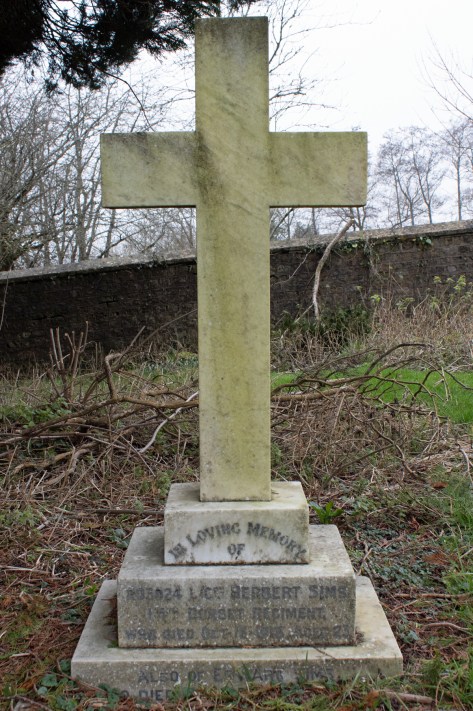
Lance Corporal Herbert Sims

Lance Corporal Herbert Sims

Herbert Rowland Sims was born in Warminster, Wiltshire, on 27th May 1895. One of nine children, he was the youngest son to Edward and Mary Sims. Edward was a railway signalman, and the family lived on Imber Road, to the north east of the town centre.

When Herbert finished his schooling, he found employment as a tailor’s apprentice. When war broke out, however, he was keen to play his part. His service records no longer exist, but a later newspaper report fills in some of the details.

The death took place on Wednesday in last week at the Tewkesbury Red Cross hospital of Lance-Cpl. Herbert Rowland Sims… [He] went to India on the outbreak of war with the Wilts Regiment, and subsequently volunteered for service in Mesopotamia, being transferred to the Dorsets. He contracted typhoid, and after being in hospital in Egypt he was invalided home. He was about to receive his discharge, but was again laid low by an attack of pneumonia which, after the illness contracted in Mesopotamia, proved fatal.

A memorial service was held in Tewkesbury Abbey on Saturday, the body being escorted by wounded comrades from the hospital. From the Abbey the coffin was taken to the railway station to be sent to Warminster, and on Monday the internment took place in the Minster churchyard with military honours.

[Wiltshire Times and Trowbridge Advertiser: Saturday 26th October 1918]

Herbert Rowland Sims was just 23 years of age when he died on 16th October 1918. He was laid to rest in St Denys’ Churchyard in his home town of Warminster.


Lance Corporal Herbert Sims
(from ancestry.co.uk)

Lieutenant Arthur Devas

Lieutenant Arthur Devas

Arthur Edward Devas was born in Devizes, Wiltshire, on 29th July 1877. One of ten children, his parents were Reverend Arthur Devas and Louisa. Arthur Sr was chaplain at the County House of Correction, the prison a short walk away from the family home, over the Kennet and Avon Canal. The 1881 census showed the Devas’ were living to the south of the town centre, and were supported by three servants.

Arthur standing as a vicar’s son earned him an education. He was sent to the prestigious Haileybury College in Hertfordshire. When his father died in 1901, he felt a pull to see more of the world, and joined the army. Enlisting in the Essex Regiment in September 1902, he was taken on as a Second Lieutenant.

Promoted to the rank of full Lieutenant in January 1906, the next census, in 1911, recorded Arthur at the Warley Barracks in Billericay. When war broke out in August 1914, he was based in Mauritius: he remained there for the next five months, before his battalion – the 1st – were brought back to England.

Setting up camp in Banbury, Oxfordshire, the aim was to train the battalion in readiness for an assault in Gallipoli. For Lieutenant Devas, however, this was not to be. He had fallen ill on the journey back to Blighty and, having contracted typhoid, he was admitted to the 3rd Southern General Hospital in Oxford. He died at the hospital on 15th February 1915, at the age of 37 years old.

Louisa and some of her children had moved to Minehead, Somerset, after her husband’s death, and this is where Arthur Edward Devas’ body was brought for burial. He was laid to rest in the extensive Minehead Cemetery, to be reunited with his mother when she passed away some eighteen years later.


Private Arthur Turner

Private Arthur Turner

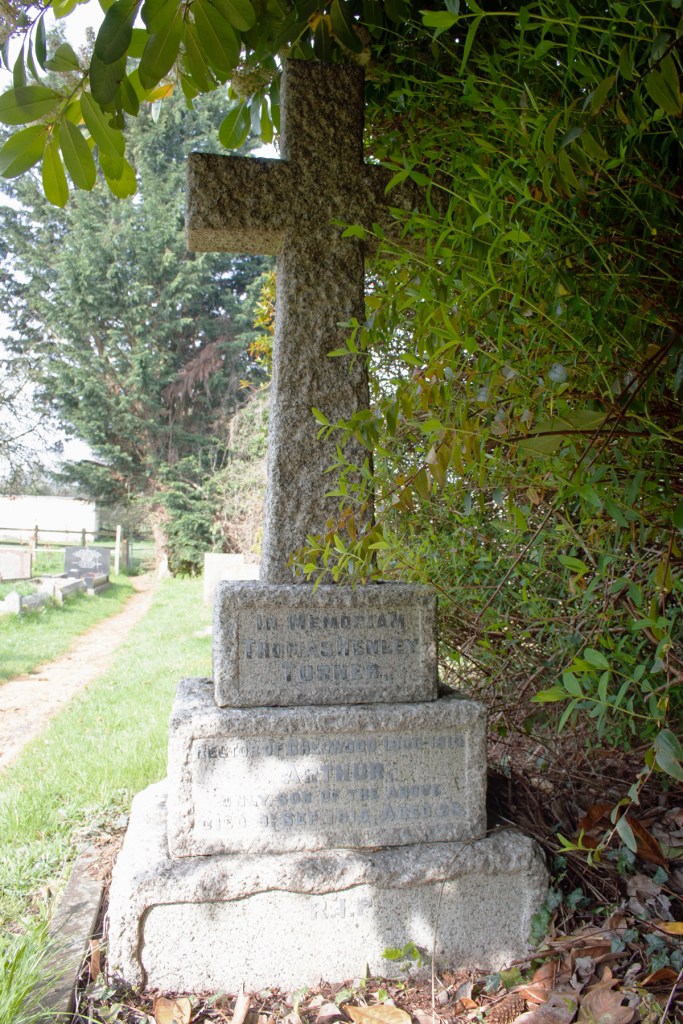
Arthur Turner was born in East Brent, Somerset, in the spring of 1892. The younger of two children to Thomas and Lucinda Turner, his older sister had passed away while Lucinda was pregnant with him. Thomas was a vicar for the Church of England, and baptised both children, although the records suggest that he did not lead his daughter’s funeral service.

In 1900, the Turners had moved on to a new parish, setting up home in the rectory in Chelwood, to the south of Bristol. They settled in well, and Thomas remained vicar of St Leonard’s Church there until the summer of 1914, when he passed away after a short illness, at the age of 64.

Conflict had not long darkened Europe by this point, and Arthur felt compelled to play his part. Full details of his military service are not available, but records suggest that he had enlisted in the Gloucestershire Regiment by March 1915.

Assigned to the 12th (Service) Battalion, Private Turner was sent north for training. Billeted in a camp in Wensleydale, North Yorkshire, Arthur would have moved south to Salisbury Plain with his troop, had he not fallen ill. He was admitted to a hospital in Darlington, in neighbouring County Durham, suffering from typhoid. The condition was to get the better of him, and he passed away on 9th September 1915. He was just 23 years of age.

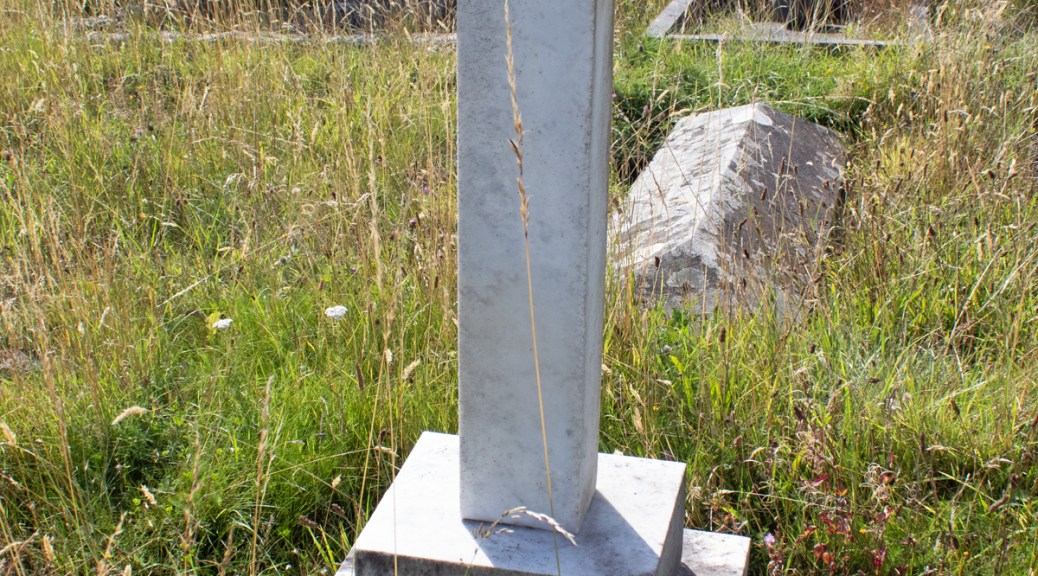
Arthur Turner was brought back to Somerset for burial. He was laid to rest in the family plot in St Leonard’s Churchyard, Chelwood, alongside his father, Thomas.


Whatever her late husband’s calling, Lucinda’s own faith must have been strong. Having lost her eldest child young, she then stood witness to the burials of her husband and son within eighteen months.

The 1921 census recorded Lucinda living with her sister, Charlotte, in Bromley, Kent. Eighteen years later, the 1939 Register found her back in Somerset, where she was living in Clutton, providing support and companionship to Letty Collinson, a retired kindergarten mistress.

Lucinda passed away in March 1942, at the age of 88 years old. She was brought back to Chelwood, and buried alongside her husband and son, the family reunited at last.


Able Seaman Melville Franklin

Able Seaman Melville Franklin

Melville Franklin was born on 25th November 1890, the youngest of seven children to Edmund and Alice Franklin. Edmund had been born in Birmingham, and had taken up holy orders. He and Alice married in the UK, but their first born, a boy called Victor, had been born in Australia, while their second child, another son called Harold, had been born a year later in Birmingham.

By the late 1880s, Reverend Franklin had taken up the post of vicar of St Nicholas’ Church in Whitchurch, near Bristol, and the family moved there. Unsurprisingly, the parish record for both Melville and his older sister Elsie, both of whom had been born in the village, shows they were baptised in the church by their father.

The Franklin children’s upbringing stood them in good stead in life. The 1901 census found that Victor and Harold had both found work as clerks – Victor for a timber merchant, and Harold for an oil cake merchant – while the following census, in 1911, recorded that another brother, Percival, was a motor expert for an insurance company. Melville, aged 20 by this point, had also found employment as a clerk, his employer being a wine merchant.

Melville wanted to expand his horizons further and, on 25th February 1911, he joined the Royal Naval Volunteer Reserve. His service records are sparse, but they confirm that he was 6ft 1ins (1.85m) tall, had fair hair, grey eyes and a fresh complexion.

Melville was formally mobilised on 22nd August 1914. At this early point in the war, there was a surplus of more than 20,000 men from the Royal Naval Volunteer Reserve, and the powers that be recognised that this was enough to form three brigades of land troops – one of Marines and two Naval.

Able Seaman Franklin was assigned to the Collingwood Battalion of the Royal Naval Division, and appears to have found himself heading to Belgium via Dunkirk by the late summer.

In the general rush to get men to the front line, more than three quarters of the troops went without even the most basic of equipment – packs, mess tins, water bottles.

The Division had no artillery, field ambulances or other support. Melville’s brigade was provided with old rifles, which they were given just three days before embarking for Europe.

Able Seaman Franklin landed in Antwerp shortly before the German invasion, and in the retreat, more than 1500 troops were captured and interned in the Netherlands. Melville, it would seem, was one of those who managed to escape back to England.

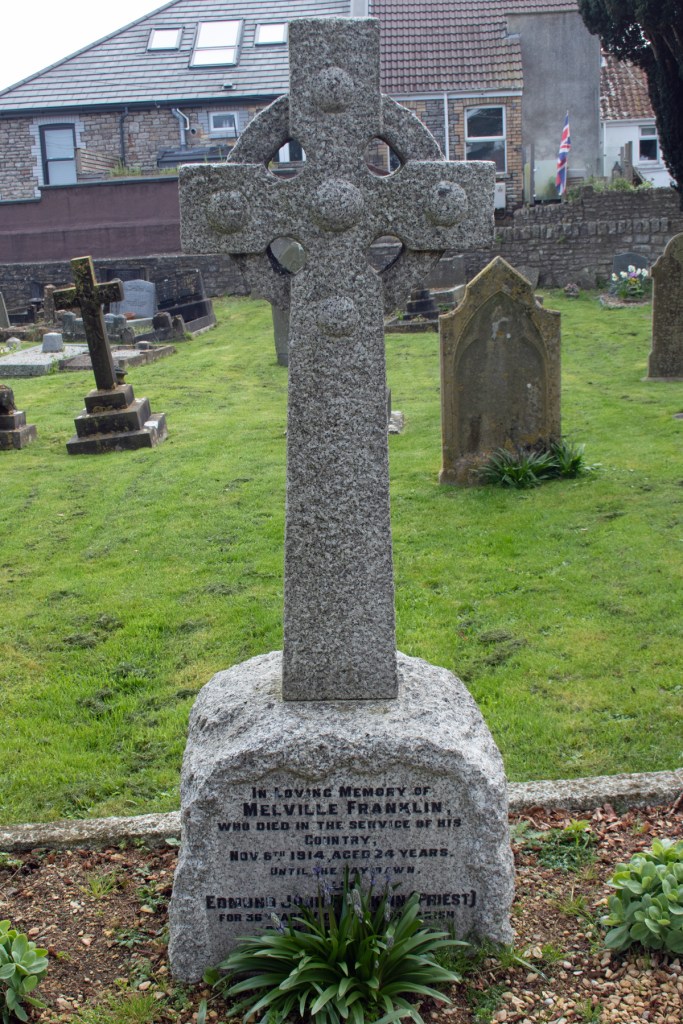
This was only to be a very temporary reprieve for Able Seaman Franklin, however. He had returned to Bristol, but had contracted enteric fever, also known as typhoid. This was to get the better of him, and he succumbed to it on 6th November 1914. He was weeks away from his 24th birthday.

Melville Franklin was laid to rest in the graveyard of St Nicholas’ Church, Whitchurch, in a funeral likely to have been presided over by his father, Edmund.


Private William Pole

Private William Pole

William James Pole was born on 22nd July 1892 in the Somerset village of Halse. He was the third of six children to shepherd and farm labourer William Pole and his wife, Harriet. When he left school, William Jr also found work on a relative’s farm in Herefordshire.

William Jr was still working on the farm when war broke out. He enlisted in the spring of 1915, joining the Royal Army Service Corps as a Private. There is no evidence of whether he served overseas, although it seems likely that he would have done, if only for a short while.

By September 1915, however, he was back on English soil, having been admitted to Netley Hospital in Southampton, suffering from enteric fever, also known as typhoid. Sadly, his illness was to get the better of him, and he passed away in the medical facility on 12th September 1915. He was just 23 years of age.

William James Pole’s body was brought back to Somerset for burial. He lies in the graveyard of St James’ Church, Halse. His parents would also be buried there: William Sr in 1935, and Harriet in 1949.


Rifleman Frederick Burstow

Rifleman Frederick Burstow

Frederick William Burstow was born in the summer of 1893, and was one of thirteen children. His parents were plasterer Alfred Burstow and his wife, Lydia. Both came from Sussex, and it was in Bexhill-on-Sea where they raised their family.

There is little documented about Frederick’s early life, but he sought a life outside of Sussex and, in around 1900, he enlisted in the 2nd Battalion of the Rifle Brigade, serving in India for a time.

Rifleman Burstow was still serving when, in August 1914, war was declared. His battalion was sent to France that November, and he ended up serving two terms on the Western Front.

In the summer of 1915, Frederick married Priscilla Epps. She was from Faversham, Kent, and this is where the couple set up home together.

It was while on his second term in France that Rifleman Burstow became ill. He had contracted enteric fever – also known as typhoid – and, at the beginning of 1916, he was sent home to recuperate. While here, Priscilla gave birth to a child, Alice.

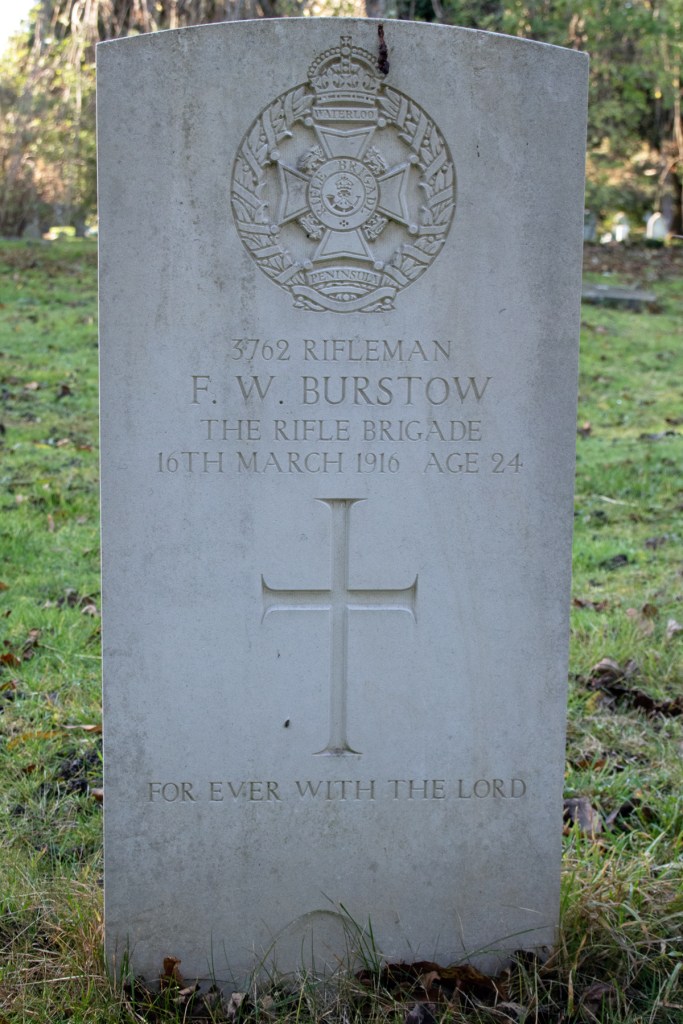
Sadly, however, Frederick’s condition was to get the better of him: he passed away at home on 16th March 1916, at the age of just 24 years old.

Frederick William Burstow was laid to rest in the Borough Cemetery in his adopted home town of Faversham.


Rifleman Frederick Burstow
(from ancestry.co.uk)

Frederick was not the only Burstow family member to die during the war. His older brother, Arthur Edward James Burstow, fought on the Western Front with the 2nd Battalion of the London Regiment.

Private Burstow was caught up in the fighting in Arras in the spring of 1918, and was killed in action on 13th April. He was 38 years of age, and left behind a widow and six children.

Arthur Edward James Burstow is commemorated on the Ploegsteert Memorial in Belgium.


Private Thomas Winter

Private Thomas Winter

Thomas Henry Winter was born in 1887, one of six children to James and Mary. James was a farmer, and the family lived in Milverton, in the Somerset countryside to the west of Taunton.

James died in 1900, and Thomas found his way into farm work as well. He met and married a local woman called Ada Thynne in February 1909, and the couple went on to have five children: Beatrice, James, Charles, Frank and Thomas.

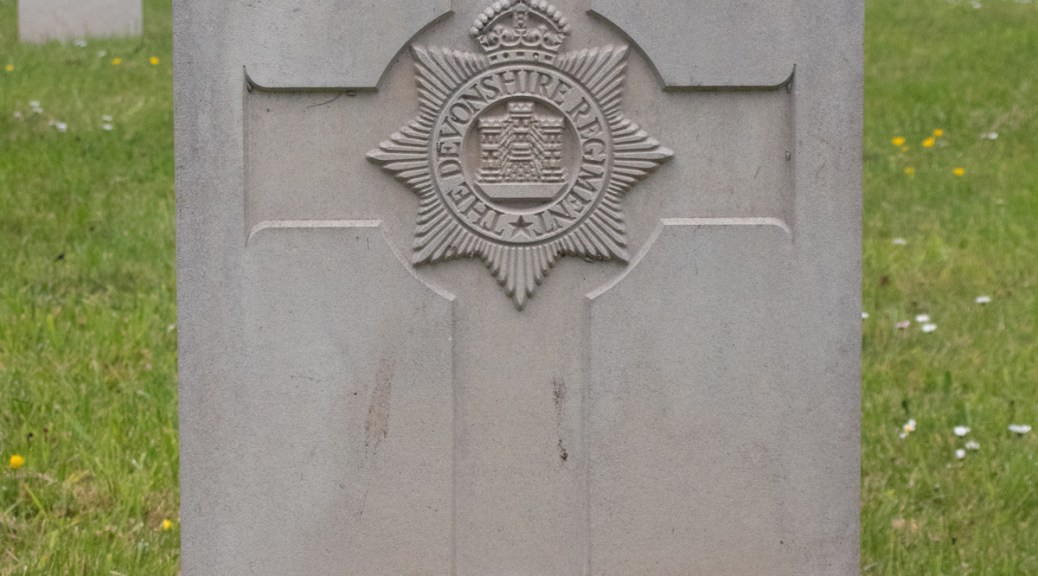
There is little confirmed information about Thomas’ military career. When he joined up, he enlisted in the 13th Battalion of the Devonshire Regiment, although, as his service records no longer exist, it is not possible to identify when this was.

Private Winter later transferred to the Labour Corps – again there are no records to confirm the dates – and this is the division in which he remained.

Illness was to dog Thomas, however; in early 1918, he contracted enteric fever (known nowadays as typhoid), and was hospitalised. Sadly, he succumbed to the disease, and passed away on 14th February 1918. He was 30 years of age.

Thomas Henry Winter lies at rest in St Mary’s Cemetery in Taunton, Somerset.


An additional tragic turn to Thomas’ story is that Ada was pregnant when he passed away. His youngest son, whom Ada named after him, would never know his father.