Category Archives: Coldstream Guards

Lance Corporal William Bence

Lance Corporal William Bence

Arthur William Bence was born in the village of Box, Wiltshire, in the spring of 1887. The oldest of eight children, his parents were James and Sarah. James was an engineer from Bathampton, Somerset, and by the time of the 1901 census, the young family had moved to 14 Hampton Row in nearby Bathwick.

Ten years later, and the Bence family had relocated again, this time to the northern outskirts of Bath, in a terraced cottage at 6 Brooklyn Road. By this point, Arthur had finished his schooling, and had found employment, working as a baker and bread maker. This was not to be a permanent career, however, and he sought out more of a career.

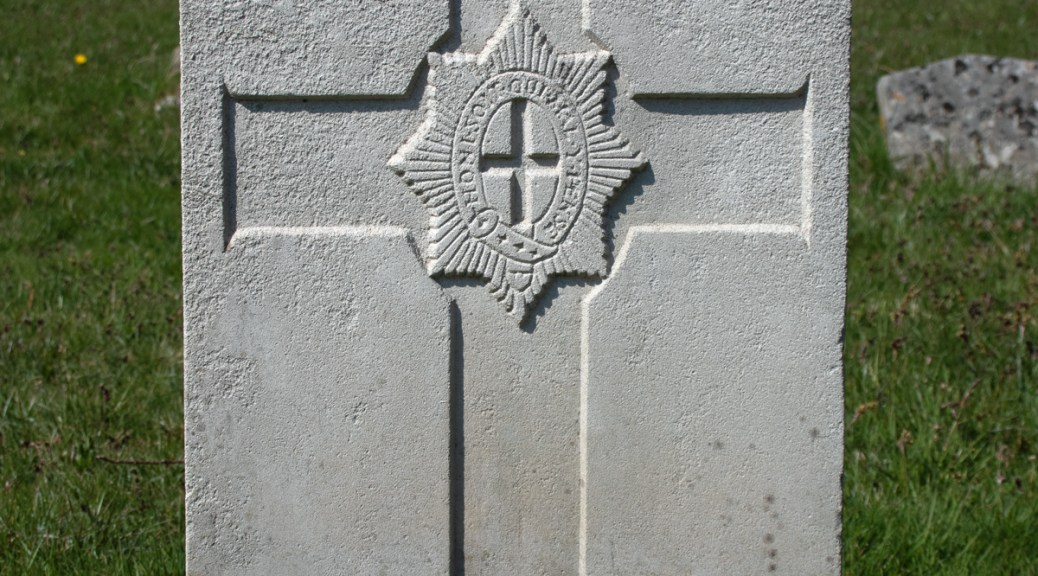
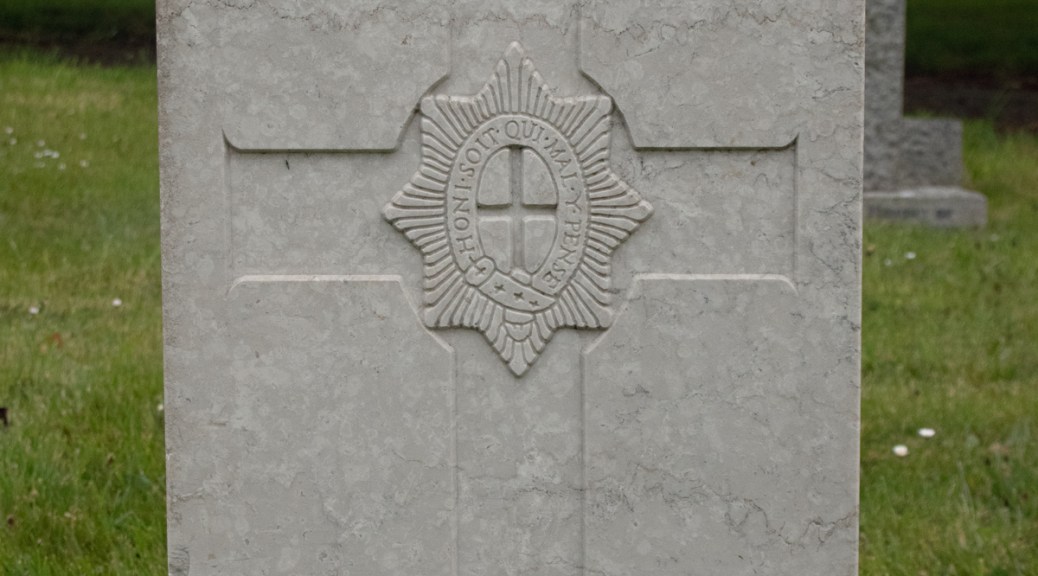
Arthur had long been a volunteer in the local militia, and on 14th November 1905 he enlisted in the army. Now known by his middle name, William Bence joined the Coldstream Guards as a Private. His service records show that he was 5ft 11ins (1.82m) tall, and weighed 148lbs (67.1kg). He was noted as having brown hair, brown eyes and a fresh complexion. Hs also had several tattoos on his left forearm, including a heart, cross, anchor, man’s face, crown and crossed flags.

Private Bence spent the first two years of his military career on home soil in Windsor, Berkshire, and London. In January 1908, his unit – the 3rd Battalion – transferred to Africa, and William would remain in Egypt and Sudan for more than three years. In March 1911 he returned to home soil, and that year’s census record noted his address as the Tower of London.

By the end of 1913 Private Bence had been formally stood down to reserve status. During his eight years on active service, he had been hospitalised a couple of times: for a sprained wrist in 1906, and for a bout of pneumonia in July 1910.

War was a matter of months away, however, and in the summer of 1914, William was to be mobilised again. By 12th August he was sent to France, and his battalion would be caught up at Marne and Aisne before the end of the year.

On 27th September 1914, William rose to the rank of Lance Corporal. This was not to last, however, and within six weeks the promotion was retracted for misconduct. He remained on the Western Front for nearly two and a half years, and had a mixed time of it. In April 1915, he Private Bence was confined to barracks for 14 days for being drunk on duty. In November that year, he was promoted to Lance Corporal for a second time.

This advancement coincided with William’s marriage. He had wed Amelia Oakley at St Saviour’s Church in Bath on 3rd November. There is little information available about her, other than that she had been born in Bath in 1888.

Back in France, and Lance Corporal Bence’s battalion fought at Loos and was heavily involved at the Somme. William would remain on the Western Front until December 1916, at which point his health forced him back to Britain. He had contracted tuberculosis, and this would lead to his ultimate discharge from military duty on 9th January 1917. William returned home, but his condition was to get worse. He passed away on 1st April 1917: he was 30 years of age.

The body of Arthur William Bence was laid to rest in the sweeping grounds of Bath’s Locksbrook Cemetery, in the city that was his home.


Guardsman Francis Marchant

Guardsman Francis Marchant

Francis George Marchant was born in the autumn of 1894, the fourth of five children to William and Emma Marchant. William – who went by his middle name, Walter – was a gamekeeper from the village of Uplyme in Devon, and this is where the family were born and raised.

Sadly, there is little specific information about Francis’ life. When war was declared, he stepped up to play his part, joining the Coldstream Guards as a Guardsman. Attached to the Machine Gun Corps, he would have spent time overseas, but details about his time in the military are long since lost.

By the end of the conflict, Guardsman Marchant was based in Hampshire, billeted in Witley Camp. While here, for reasons unknown, he was admitted to the Connaught Military Hospital. It was here, on 4th April 1919, that he passed away: he was 24 years of age.

Francis George Marchant was taken back to Devon for burial. He was laid to rest in Uplyme’s Ss. Peter & Paul’s Church.


Private Ernest Richards

Private Ernest Richards

Ernest Richards was born in Bath, Somerset, 1886, and was the youngest of four children to Emma Richards. Emma was widowed when Ernest was an infant, and no baptism records remain to confirm who he was.

The fate of the Richards family is outlined through the consecutive census records. The 1891 document shows Emma and her children living at 4 Camden Row, to the north of the city centre. Emma was employed as a needlewoman, while Ernest’s oldest brother, Herbert, was working as an errand boy. The family shared their home with widowed laundress Emily Clarke, helping with the bills.

By the time of the 1901 census, the family had moved to 1 Claremont Row. A bit further out of the centre of the city, this offered more space for the growing children. Emma was still working as a needlewoman, but three of the children were gainfully employed: Ernest as a printer’s errand boy, Herbert as a grocer’s carter, and their brother William as a book shop porter.

The 1911 census found Emma still living at 1 Claremont Row. She was 53 by this point, and no longer working, but three of her children were still living there, and bringing in an income. William was a milkman, Ernest a porter, and her youngest child, daughter Gladys, was a machinist.

War was closing in on Europe by this point, but from here on in, Ernest’s trail gets a bit sketchy. Later records confirm that he had enlisted by the summer of 1916, and they he had joined the Coldstream Guards. Attached to the 5th (Reserve) Battalion, Private Richards appears to have been based on home soil.

Ernest seems to have been hospitalised in February 1917. Sadly, there is little additional information about his condition. While his regiment was based in Windsor, Berkshire, there is no evidence to confirm whether his barracks where also there, so it isn’t clear to which hospital he was admitted.

Private Richard would succumb to his ailment. He passed away, while in hospital, on 10th February 1917: he was 30 years of age.

Ernest Richards’ body was taken back to Somerset for burial. He was laid to rest in Bath’s majestic Locksbrook Cemetery, not far from his family home.


Guardsman Sydney Proctor

Guardsman Sydney Proctor

Sydney Francis Proctor was born in the autumn of 1886 in the Hertfordshire town of Bushey. The middle of three children, his parents were George and Annie Proctor. George was a stationary engine driver, and Sydney found work at a local iron foundry – possibly working alongside his father – when he left school.

This was not to be Sydney’s long term career, however, as, by the time of the 1911 census, he had moved to West Sussex and settled in Cuckfield, near Haywards Heath. By this time he was working as a gardener, and was employed at the nearby Borde Hill estate.

It is likely that Sydney had made the move to Sussex a few years earlier, as the same document confirms that he was married to a London-born woman called Florence, who was five years his senior. The couple would go on to have a daughter, Frances, who was born in December 1912.

Sydney’s wartime service is a little sketchy. He enlisted in the Coldstream Guards in November 1914, and was assigned to the 4th Battalion. While full details of his service are not available, Guardsman Proctor certainly served overseas, and may have seen some of the fiercest fighting of the conflict, at Loos, Ypres and the Somme.

Guardsman Proctor survived the conflict, but paid a price. In October 1918, he was medically discharged from military service, as he was suffering from aortic regurgitation – a heart complaint. He returned home to Sussex, but this respite was not to be for long. Sydney passed away on 17th July 1919, at the age of 32 years old.

Sydney Francis Proctor was laid to rest in the cemetery of his adopted home town, Cuckfield.


Guardsman Arthur Baguley

Guardsman Arthur Baguley

Arthur George Baguley was born in the autumn of 1897 in Warwick, and was one of six children to George and Rosa Baguley. George was a journeyman butcher who had moved his family to Frome, Somerset, by the time Arthur was three years old. George died in 1908, leaving Rosa to raise the younger members of her family alone.

Little information about Arthur’s life remains, and the only other documents that can be directly connected to him relate to his passing towards the end of the war. These confirm that he enlisted as a Guardsman in the Coldstream Guards at some point after April 1918.

Based in barracks in Hampshire, Guardsman Baguley was admitted to the Connaught Hospital in Aldershot, suffering from infective endocarditis, a bacterial infection of the heart. Sadly, he succumbed to the illness, passing away on 13th September 1918, aged just 20 years old.

Arthur George Baguley’s body was brought back to Somerset for burial. He was laid to rest in the graveyard of St John the Baptist Church, Midsomer Norton, where his mother was living by that point.


Guardsman Arthur Baguley
(from ancestry.co.uk)

Guardsman Alfred Moist

Guardsman Alfred Moist

Alfred Charles Moist was born early in 1887 in the Devon village of Chudleigh Knighton. His parents were William and Mary Moist, and he was the youngest of eight children. William was a clay miner and his neighbours – who included the young Thomas Willcocks – all worked in the same trade.

William died in 1899, leaving Mary to raise the family alone. By the time of the 1901 census, her widowed daughter Emma had moved back in with her son, and was working from home as a dressmaker. Alfred, meanwhile, and his two older brothers Frank and Reginald were all employed as brick dressers and together they earned enough to keep the family going.

The next census – compiled in 1911 – found Alfred still living with Mary, but the household had a different set up. Emma had remarried and was living in nearby Ilsington with her publican husband. Another of Alfred’s sisters, Bessie, had moved in with her daughter, Florence, and was keeping house for her mother. Reginald was also still living at home and was still employed by the brickyard. Alfred, however, had found now work as a police constable.

Mary passed away in the spring of 1913, by which point, Alfred had met Edith Mary Sampson, a labourer’s daughter from North Devon. The couple married in Broadhempston, near Totnes, on 21st November 1913.

War came to Europe, and Alfred enlisted in December 1915. His job in the police force, however, meant that he was initially placed on reserve, and he was not formally mobilised until April 1918, when he joined the Coldstream Guards. His enlistment papers show that he stood 5ft 11ins (1.8m) tall and weighed in at 10st 4lbs (65kg).

Guardsman Moist was barracked in London, but fell ill in September 1918. He was admitted to the Queen Alexandra Military Hospital with a haematoma and renal calculus (kidney stones). He spent a total of four months in hospital before being discharged back to duty.

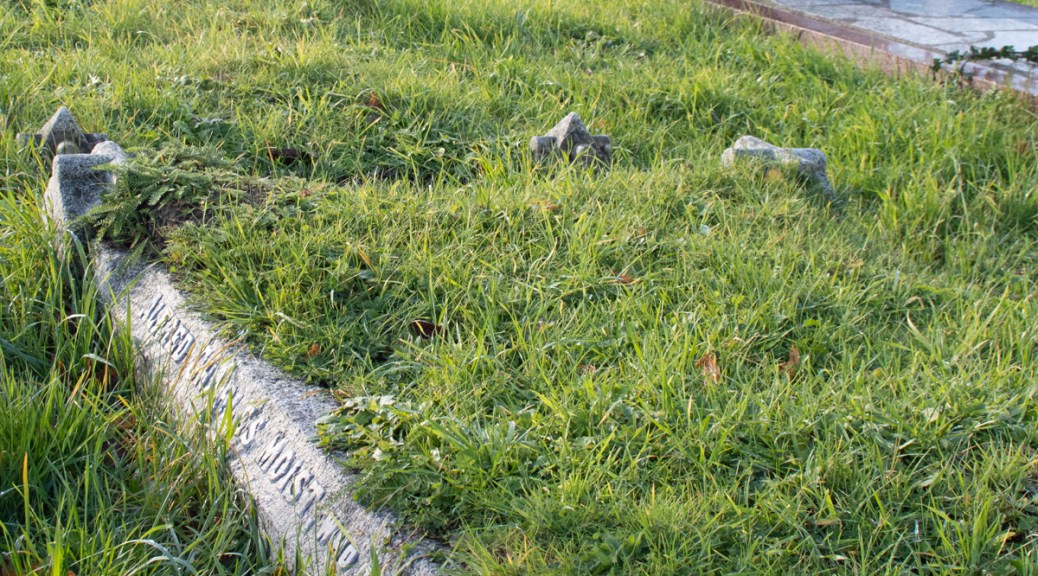
At this point, Alfred’s trail goes cold. The next record for him comes in the form of the record of his death, which was registered in Hampstead, London. This suggests that he was either still in the Coldstream Guards or that he had been hospitalised again because of his previous illness. Either way, he died on 28th August 1919, at the age of 32 years old.

Alfred Charles Moist’s body was brought back to Devon. He lies at rest in the Graveyard of St Paul’s Church in his home village of Chudleigh Knighton.


Private William Bellham

Private William Bellham

William Harry David Bellham was born in September 1888, the only child to William and Rosina Bellham. William Sr was a foreman for a collar manufacturer, and the young family lived in Taunton, Somerset, in a house they shared with Rosina’s mother, Mary Hale.

Life continued pretty much unchanged. When William Jr left school, he became a stenographer for a coal merchant, and, when war erupted in 1914, he didn’t sign up as soon as you would expect for someone of his age.

William enlisted in February 1916 and was assigned to the Coldstream Guards – given he stood 5ft 11ins (1.8m) tall, this probably went in his favour. Initially placed on reserve duty, Private Bellham was eventually mobilised in January 1917, and sent to Caterham for training.

Within a matter of weeks, William had an accident. Slipping on some ice, he suffered an inguinal hernia, which subsequently became strangulated, causing him severe pain. After initial treatment in hospital, he was discharged, but was then admitted again five months later when the hernia returned. A further operation was ruled out by the medical examiner, and he was discharged from the army on medical grounds at the end of June 1917.

Once back in Taunton, it did become necessary for William to undergo an additional operation. This was carried out in the local hospital and, according to the records, was a success. Sadly, however, William subsequently contracted pneumonia, and he died on 10th December 1917. He was just 29 years old.

William Harry David Bellham was buried in St Mary’s Cemetery in his home town of Taunton.


Cruelly, the contemporary local media had a less sympathetic take on the incident that caused William’s troubles. The Taunton Courier and Western Advertiser [on Wednesday 26th December 1917] suggested that he “was not really strong enough to stand the strain and hardships of military training and was invalided out after some months’ service.” Not exactly the picture that his medical records had outlined.


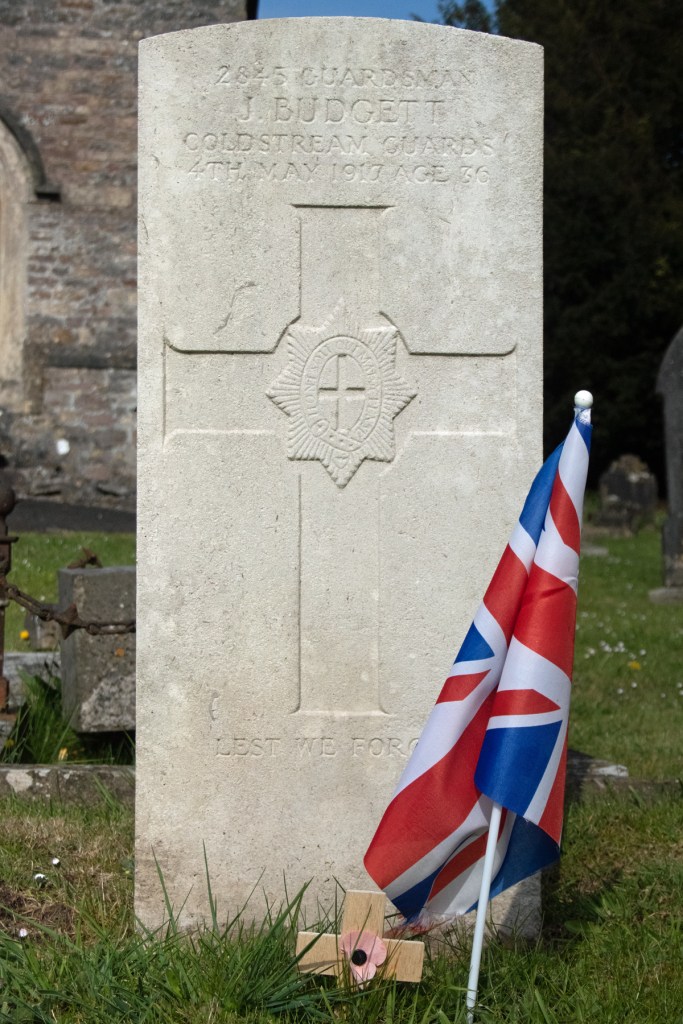
Guardsman James Budgett

Guardsman James Budgett

James Budgett was born in October 1880 and was one of nine children to Henry and Eliza Budgett. Henry was a labourer, and the family lived in the small village of Stoke St Michael, near Shepton Mallett in Somerset.

While initially following his father in to labouring, James was drawn to the military as a career. He enlisted in the army in August 1899, and was assigned to the Coldstream Guards. James’ bearing would certainly have stood him in good stead for this wing of the army; his medical examination shows he was 6ft 1in (1.85m) tall.

Guardsman Budgett’s initial service was for twelve years; during this time, he spent six months in Australia, but his records show that most of his time was spent on home soil.

When his term ended in August 1911, he enrolled for a further four years. Initially assigned to the Reserve Battalion, he was formally mobilised when war broke out. Sent to France as part of the British Expeditionary Force in August 1914, he was wounded in the foot two months later, and was sent home for treatment.

According to Guardsman Budgett’s medical records, the treatment unearthed a two other issues. One was that he was suffering from syphilis, which was treated. The other was that an x-ray identified an aneurysm in his aortic arch. This was considered harmful enough for him to be medically dismissed from the army, and he left active service on 25th March 1915.

After this, details of James’ life get a bit hazy. His pension records show that he married a woman called Bessie, but there is nothing to confirm when the marriage took place.

The next record for James Budgett is confirmation of his passing. He died from an aneurysm on 4th May 1917, at the age of 36. He lies at rest in the graveyard of St Michael’s church in his home village of Stoke St Michael, Somerset.


Private Herbert Packer

Guardsman Herbert Packer

Herbert Packer was born in December 1889, the youngest of nine children to Joseph and Ann Packer. Joseph was a railway carrier (or porter) and the family lived in Cheddar, Somerset.

The 1911 census found Herbert on his travels; he was working as a grocer’s assistant, and boarding with a family in Abergavenny, South Wales. He was obviously keen to develop his skills, and soon moved to Barnstaple in Devon to work for the Lipton’s grocery there.

In the autumn of 1914, Herbert married Lydia Snell, a dressmaker from Wales and the young couple lived together in the Devon town where he worked. He was very active in the community; he was a teacher at the local Wesleyan Sunday School, and active in the church choir having, according to a local newspaper, “a capital voice”.

Herbert enlisted in the spring of 1916, and had the honour of joining the Coldstream Guards. He did his training in London, and was due back to Barnstaple on leave before starting his active service when he was taken ill. Admitted to the London Hospital with pneumonia, within a couple of weeks he had succumbed to the condition. Guardsman Packer died on 3rd December 1916, aged just 26 years old.

Herbert Packer lies at rest in St Andrew’s Churchyard in his home town of Cheddar in Somerset.


Private Roland Roberts

Private Roland Roberts

Roland Roberts was born in September 1896, one of three children – all boys – to Albert and Minnie Roberts.

Minnie, who was originally from Yeovil, had married Walter Shury, a Londoner, in 1874, and the couple had six children together. Walter then went on to have four children with Alice Norwood, and the couple married in 1898. Minnie, meanwhile, had met Albert Roberts, who was from Dundalk in Ireland, and, while no marriage seems to be confirmed, the couple had three boys, including Roland. (It is pure speculation, but as Minnie’s maiden was also Roberts, this might have provided a good enough cover for any divorce or re-marriage.)

Albert had been a Band Sergeant in the 4th Hussars, and continued that passion by becoming a music teacher Travel was also definitely in his blood: the couple’s first child, Willie, was born in South London, Roland was born in Somerset, and his younger sibling, Glencoe, was born in Penzance, Cornwall. Albert’s musical success led him to become bandmaster for the Penzance Town Band. Sadly, it was not all positive for him; in 1901, Minnie passed away, and in the same year, Willie also died, at the tender age of six.

It was the military that drew Roland in, and, in 1910, aged just 14 years old, he enlisted in the Coldstream Guards. According to the following year’s census, he was stationed at the Ramillies Barracks in Aldershot, and held the rank of Boy.

Differing from the naval rank of the same name, lads of 14 or over could serve in any regiment as musicians, drummers, tailors, shoemakers, artificers or clerks, and all were ranked as boys. It seems likely, therefore, that his father’s enthusiasm for music served him well.

When war broke out, he was of fighting age, and, as part of the “Old Contemptibles”, he was involved in the Battle of Mons, the first major confrontation for the British Expeditionary Force.

During the war, Private Roberts took part in some of the most severe fighting on the Western Front, was wounded three times, as well as being gassed. He was also recommended for the DCM for gallantry in action.

He transferred to the Labour Corps, and spent time doing land work in Somerset. It was here that Roland met and married Gladys Pyne, whose family was from Bridgwater, and the couple tied the knot in March 1918.

Sadly, it was during this war service that Private Roberts contracted influenza and pneumonia and he passed away as his in-laws’ home on 10th November 1918, the day before the Armistice was signed. He was just 22 years old.

The local newspaper reported on Roland’s continued gallantry in its article on his funeral:

[Roland] held the medal of the Royal Humane Society for saving a woman’s life.

He was also the hero of an incident that occurred in Bridgwater a few weeks ago, when he succeeded in checking the career of an infuriated bull through pluckily catching the animal by its horns.

His disposition was always most cheerful, and although suffering from his [war] wounds a good deal, he never complained.

The Cornishman: Wednesday 27th November 1918

Roland Roberts lies at rest in the Wembdon Road Cemetery in his adopted home town of Bridgwater, Somerset.