
Category Archives: Hussars

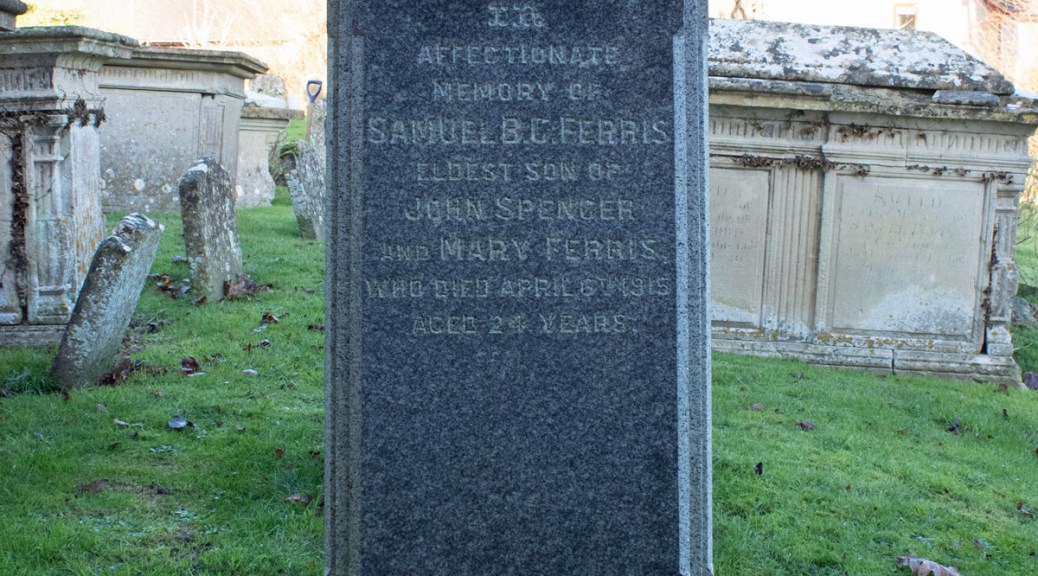
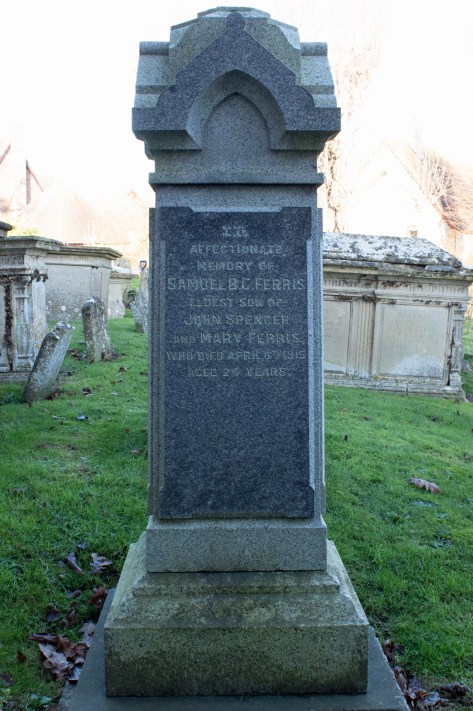
Second Lieutenant Samuel Ferris

Second Lieutenant Samuel Ferris

A verdict of accidental death was returned by a Coroner’s jury at Tidworth on Thursday in the case of Second-Lieutenant Samuel Ferris, of the Cavalry Reserve. The officer was found in his room at the Barracks shot through the head, and died within the hour. Shortly before the occurrence he was in a cheerful mood, had been on parade, breakfasted, and was changing his wet clothes. Captain and Adjutant Barclay stated that he found a yard and a half from Lieutenant Ferris’s feet an automatic pistol of the latest pattern. It might, he said, easily be discharged by a person who did not intend to fire it, and who had no reason to know it was loaded. Captain Barclay expressed his opinion that the discharge of the pistol was accidental. Lieutenant Ferris, who had been to the front and was much improved in health since his return, was a son of Dr John Spencer Ferris, or Warwick Dene, Ealing.

[Wiltshire Telegraph: Saturday 10th April 1915]

Samuel Bernard Clutton Ferris was born on 1st December 1890, and was the oldest of three children to John and Mary Ferris. John was a physician and surgeon from Wiltshire, but the family were born and raised near his practice in Uxbridge, Middlesex.

Mary died in 1910, by which time Samuel had taken up studies at Cambridge. Following in his father’s line of work, he was reading natural science at the esteemed university. Outside of term time, John – now retired – Samuel, and younger sister Stella were living in an 11-roomed property at 2 Warwick Dene, Ealing, and were being supported by three servants – housemaid Mary Fisher, under housemaid Elizabeth Price, and cook Emma Lovejoy.

When war broke out, Samuel took up a commission in the 10th (Prince of Wales’s Own Royal) Hussars. Sent to France early in the conflict, it is likely that he saw action during the First Battle of Ypres, possibly at Langemarck or Gheluvelt.

Whether Second Lieutenant Ferris was wounded in France, it is unclear. He may, however, have fallen physically or mentally ill, and the wording of the newspaper report suggests this might have been the case. Either way, his condition was grave enough for him to be sent back to Britain for treatment or recuperation.

Back on home soil, Samuel was based at Tidworth, on Salisbury Plain, Wiltshire. It was here, on the 6th April 1915, that the accident that ended his life occurred. He was 24 years of age.

The body of Samuel Bernard Clutton Ferris was laid to rest in the graveyard of St Leonard’s Church in Keevil, Wiltshire. This is where Samuel’s father had been baptised, and was his paternal grandparents’ parish church. The above newspaper report noted that the funeral was well attended, but that Samuel’s father was “very ill and unable to be present.” [Wiltshire Telegraph: Saturday 10th April 1915] His sister – now Mrs Walter Spencer – attended, but his brother, John, was absent, although it is likely that he was serving his country at the time.


Samuel’s probate records note that he left an estate worth £1243 1s (around £166,000 in today’s money). Interestingly, this did not go to a family member (his father did not pass away until the spring of 1921). Instead, the beneficiary was recorded as Mr Warner Herbert Taylor Ottley. A civil servant, it is likely that he and Samuel were friends.
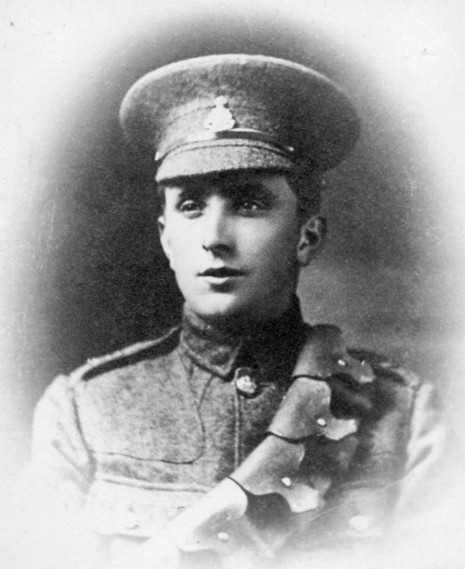
Private Simeon Tulley

Private Simeon Tulley

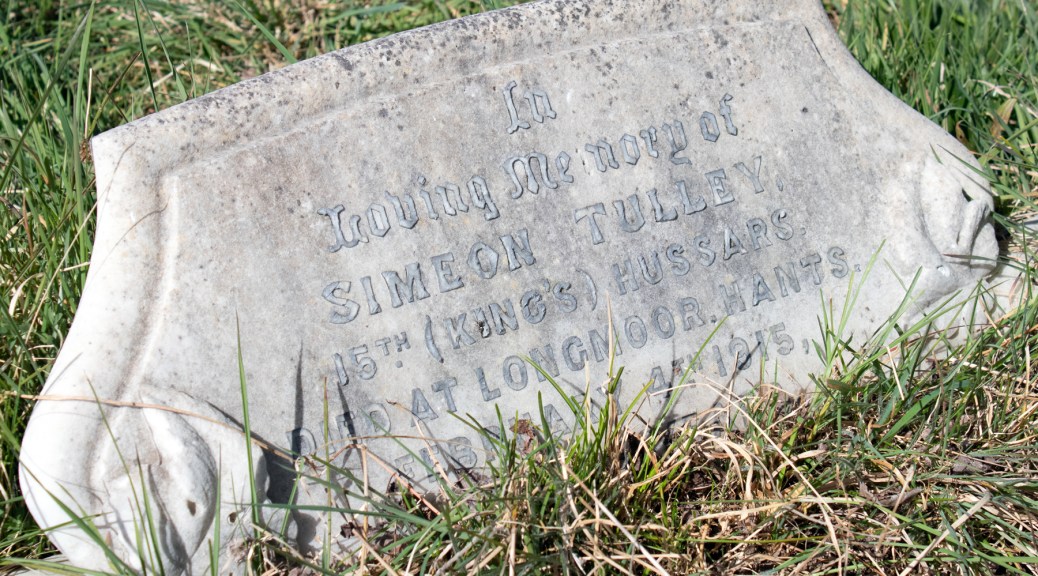
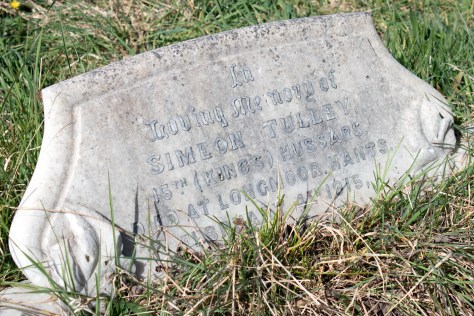
Simeon Tulley was born in Caterham, Surrey, in the summer of 1891. The middle of five children, he was the oldest son to Simeon and Mary Tulley. Simeon Sr was a farmer, and the family moved to where his work took him. The 1901 census found the Tulleys living in Keymer, Sussex, while the next return, taken in 1911, recorded them at Blackbrook Farm, near Hassocks, Sussex.

When Simeon Jr finished his schooling, he also found work on the farm. At the outbreak of war, however, he stepped up to serve his country. His service records have been lost to time, but he had joined the 15th (The King’s) Hussars during the open weeks of the conflict.

Private Tulley was sent to Longmoor Camp, near Petersfield, Hampshire, for his training and it is at this point that his trail goes cold. He passed away on 4th February 1915, at the age of 23 years old.

The body of Simeon Tulley was taken back to Sussex for burial. The family had moved to Coates Farm, Durrington, by this point, and he was laid to rest in Broadwater Cemetery, Worthing.


Private Simeon Tulley
(from findagrave.com)

Private Reginald Payne

Private Reginald Payne

Reginald Payne was born on 27th January 1898 in Milverton, Somerset. He was the third of five children – and the oldest son – to Thomas and Mary Payne. Thomas was a dairyman, and both he and Mary were from Devon: the family moved back to the county after Reginald was born, and, by the time of the 1911 census, they had settled in the village of Halberton.

Reginald, at this point, was still in school, and there is little information about his life. When war broke out, he volunteered to serve his country, but, with no military records remaining, the only point of reference for him is a newspaper report of his funeral.

Quite a gloom was cast over Halberton when it became known that Pte. Reginald Payne, eldest son of Mr & Mrs T Payne, of Brimery Dairy, had passed away at the Military Hospital, Devonport. Deceased, who enlisted in 1916 in the Hussars, and was attached to the 1st City of London Yeomanry, proceeded to Egypt, and whilst there he underwent two operations for appendicitis. He returned to England after recovering, and was sent to Ireland, where he had a return of the old trouble, and was again operated on four times, and then sent to Devonport, where he passed away.

[Western Times: Friday 6th February 1920]

Reginald Payne was a day over 22 years of age when he passed away. He was taken back to Halberton for burial, and was laid to rest in the peaceful St Andrew’s Churchyard.


Serjeant-Trumpeter Alexander de Vere

Serjeant-Trumpeter Alexander de Vere

Alexander Johnstone de Vere was born on 10th August 1889 in Murree, India (now Pakistan). He was one of five children to Norfolk-born Alexander Johnstone (also known as John Ralph de Vere), and his wife Dorothea who had been born in Sangor, India. Alexander Sr was a Sergeant Major in the 12th Lancers, and the family returned to England not long after his son was born, settling first in Aldershot, then in Sandhurst.

Alexander’s youngest sibling, George, was born in Cairo, Egypt, so the family was on the move again. Sadly, Alexander Sr died in a nursing home in the city just two years later and, after returning to England, Dorothea passed away in a Holborn infirmary just two years later.

Documents for the de Vere children – Ellen, Alexander, Dorothea, William and George – are few and far between. The 1911 census places Dorothea boarding with a family in Kingston-upon-Thames, where she was employed as a dress maker. The same document records William as a Bandsman in the 1st Battalion of the Seaforth Highlanders, based at Chanpatia, in Northern India. George, meanwhile, was a schoolboy at the Duke of York’s Royal Military School on the outskirts of Dover. Of the two eldest siblings, however, there is no record.

In the autumn of 1912, Alexander married Emily Louise Collins. Born in Norfolk in 1884, she was working as a servant in a house in Surrey when she and Alexander met. The couple married in Faversham, Kent, and settle down there, their daughter, Dora, being born in the town in January 1915.

Given his family’s military background, it is not unsurprising that Alexander enlisted in the army almost as soon as war was declared. He may have already seen military service, as he enlisted in the 11th Hussars as a Lance Corporal. By 15th August 1914, Alexander was in France.

Lance Corporal de Vere was quickly caught up in the fighting. He saw action at Mons and Nery in 1914, and at Ypres the following year. By this point, he had been promoted to the rank of Sergeant Trumpeter, reflecting the musical connection he shared with his younger brother, William.

Alexander remained in France until January 1916, when he was invalided home. He was admitted to Dorchester County Hospital in Dorset, suffering from a cerebral abscess. Despite treatment, he succumbed to the condition, passing away on 17th March 1916, at the age of just 26 years old.

Alexander Johnstone de Vere was brought back to Kent for burial. He was laid to rest in Faversham Borough Cemetery.


Private George Dove

Private George Dove

George Dove was born in Wincanton, Somerset, on 4th December 1883. One of five children, his parents were farm labourer George Dove and his wife, Jane.

George Jr did not follow his father into farm work: the 1901 census found him boarding with a family in Radstock, working in one of the coal mines in the area. Ten years later, he was living back with his family, employed as a groom.

His work with horses stood him in good stead when war was declared. George enlisted early on, and was assigned to the 19th (Queen Alexandra’s Own Royal) Hussars as a Private. By October 1914, he was in France, returning to England with his squadron the following spring.

At some point during the conflict, Private Dove transferred to the Reserve Regiment of Cavalry. He was posted to the 5th Regiment, which trained men for the Northumberland Hussars and Yorkshire Dragoons, amongst others.

Further details of George’s life are scarce; at some point, he married a woman called Emily, although records of the couple’s wedding no longer exist. The only thing that can be confirmed is that George was admitted to the Bermondsey Military Hospital in Surrey, where he passed away on 24th October 1918. He was 34 years old.

The body of George Dove was brought back to Somerset for burial. He lies at rest in the cemetery in his home town, Wincanton.