Category Archives: Role

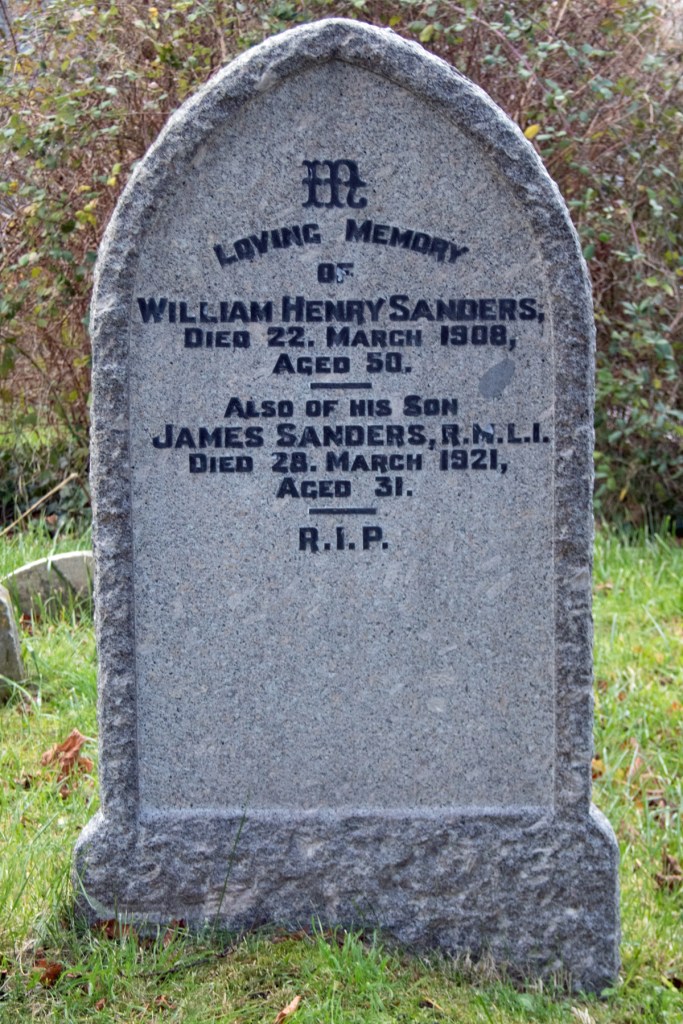
Private James Sanders

Private James Sanders

James Sanders was born on 17th April 1889. One of nine children, his parents were William and Emily Sanders. William worked for a clay company in his home town of Kingsteignton, Devon. He had various roles, including caretaker, inspector and messenger.

William’s son, however, was after bigger things in life and, on 17th July 1907, he enlisted in the Royal Marine Light Infantry. James’ service records show that he was 5ft 6ins (1.67m) tall, had light brown hair, grey eyes and a fresh complexion.

Based out of Plymouth, Private Sanders signed up for an initial period of twelve years. During this time, and throughout the war, he served on six vessels, including 30 months on HMS Argyll (where he was based for the 1911 census) and more than five years on HMS Colossus.

In April 1919, Private Saunders returned to land. When his initial contract was up, he re-enlisted, this time remaining at the Naval Dockyard in Plymouth.

James’ trail goes a little cold for the next couple of years, although he continued in his role with the Royal Marine Light Infantry. On the night of the 28th March 1921, however, he encountered some trouble. The local newspaper reported on the subsequent inquest.

Kingsteignton Man’s Mysterious Death

At an enquiry held at Teignmouth on Saturday afternoon into the circumstances attending the death of Private James Sanders, RMLI… who was found drowned in the river Teign on Friday, it was stated that deceased and seven other Kingsteignton men on Monday visited Teignmouth to attend a football match, at which Sanders acted as touch-judge.

After the match they went to a public house, where deceased had three or four pints of beer and some spirits, which made him unsteady.

They left to catch a bus, but at Station Road deceased turned back. One of his companions followed him, but could not persuade him to return, so he left deceased on his own to travel back home.

The man considered Sanders was in a condition to look after himself. An open verdict was returned.

Wester Times: Friday 8th April 1921

Private James Sanders died on 28th March 1921, aged 31 years old. He was laid to rest with his father, William, who had died in 1908, in the graveyard of St Michael’s Church in Kingsteignton.


Private Lawrence Scott

Private Lawrence Scott

Lawrence Arthur Scott was born in the spring of 1889 in the Devon town of Kingsteignton. He was one of nine children to George and Louisa Scott. George was a lighterman – transporting clay and other goods on a barge. When his father passed away in 1905, Lawrence found work as a clay cutter, bringing in money to help support his mother. By the time of the 1911 census, he was on the only one of Louisa’s children to still be living at home, and was the main breadwinner.

In the spring of 1915, Lawrence married Elizabeth Webber in Newton Abbot. The young couple settled in Kingsteignton, and went on to have a son, Frederick, who was born the following year.

By now war had descended upon Europe. Lawrence enlisted, joining the Royal Berkshire Regiment in the summer of 1916. His service records confirm that he was 5ft 7in (1.7m) tall, had dark hair, blue eyes and a fair complexion.

Private Scott arrived in France on 20th August 1916 and, over the next couple of years he served on the Western Front. In September 1917, he was transferred to the Labour Corps, but by now his health was suffering. On 22nd March 1918 he was admitted to a hospital in Rouen with bronchitis. He was transferred to a hospital back in England and, on 17th June 1918 he was formally discharged from the army, with arteriosclerosis.

Lawrence returned home, but his health was to get the better of him. He passed away from heart failure on 30th March 1919, aged just 30 years old.

Lawrence Arthur Scott was laid to rest in a family plot in the graveyard of St Michael’s Church, Kingsteignton. Elizabeth was finally reunited with her husband 67 years later and was buried with him.


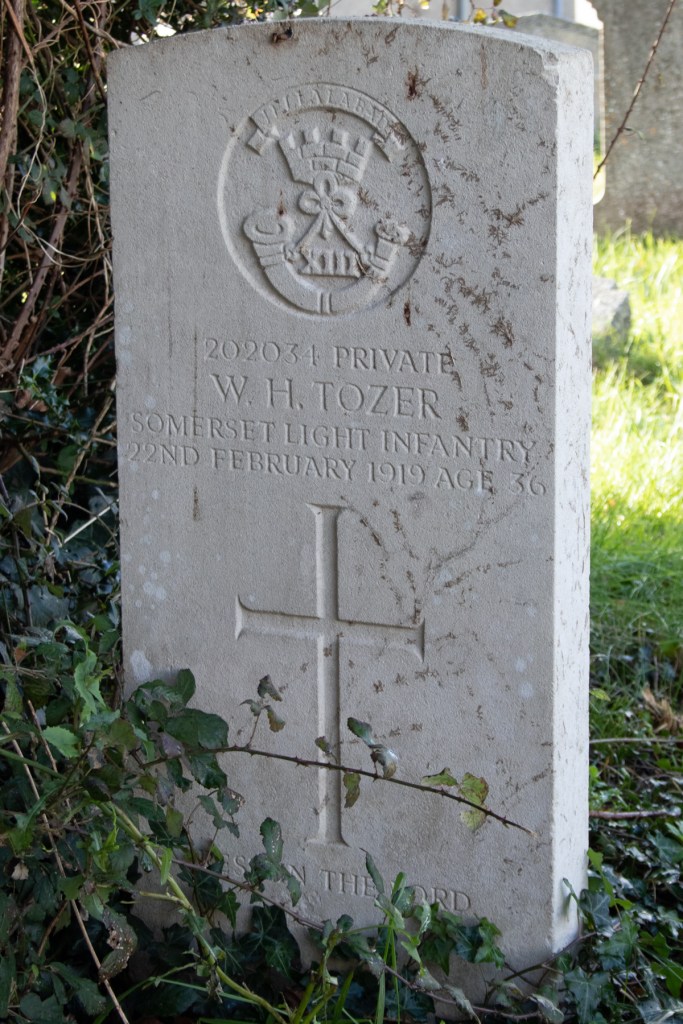
Private William Tozer

Private William Tozer

William Henry Tozer was born in the spring of 1882, and was one of four children to Elias and Thirza Tozer. Elias was a clay worker from Dawlish in Devon, and but the family were raised in nearby Kingsteignton.

William made his own way early on in life. By the time of the 1901 census he was working as a farm labourer and boarding with the family. Ten years later, he was employed as a porter at the Royal Hotel in Dawlish, and was again living on site.

At this point, William’s trail goes cold. War was approaching Europe, and it is documented that he enlisted in the Somerset Light Infantry at some point before the summer of 1918. Private Tozer was assigned to one of the regiment’s depots, but whether that was as part of the British Expeditionary Force, or on home soil is unclear.

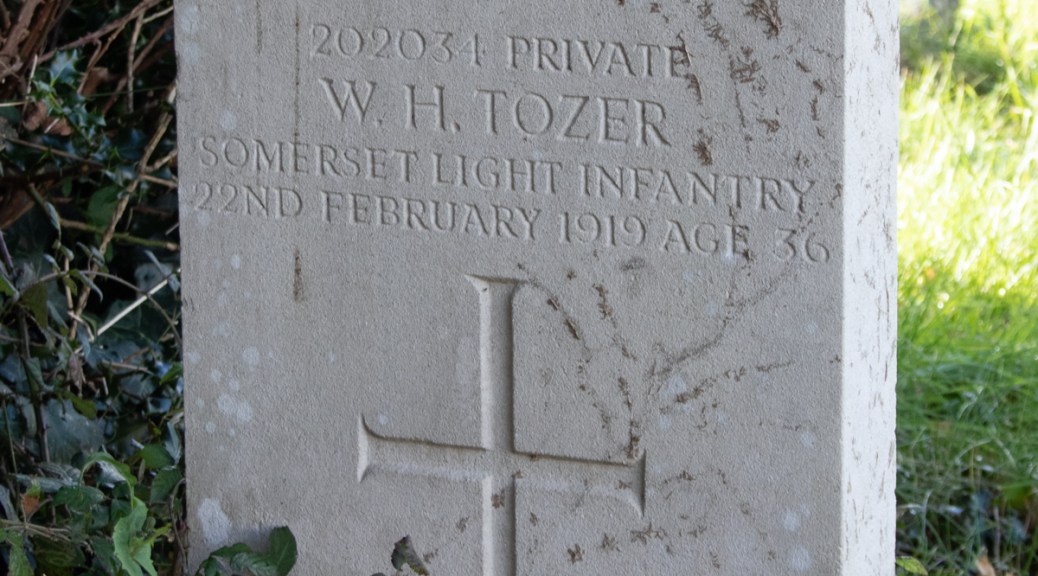
William did survive the war, however, but was admitted to a military hospital at the start of 1919. Again, his condition is unclear, but the record of his passing confirms that he died of ‘disease’. He passed away on 22nd February 1919, at the age of 36 years old.

William Henry Tozer was brought back to Kingsteignton for burial. He was laid to rest in the graveyard of St Michael’s Church.


Rifleman Frederick Partridge

Rifleman Frederick Partridge

Frederick George Partridge was born on 26th May 1890 in Kingsteignton, Devon. He was one of ten children to clay cutter George Partridge and his wife, Anna. George passed away in 1903, but Frederick left school, and also found work as a cutter, helping to pay his way at home.

When was came to Europe, Frederick was keen to play his part. He enlisted on 18th November 1915, and was assigned to the King’s Royal Rifle Corps as a Rifleman. His service records show that he stood 5ft 9ins (1.75m) tall and weighed 145lbs (66kg). He was of good physical development, but had slightly flat feet.

After his initial training, Rifleman Partridge was sent to France, arriving in April 1916. His regiment soon found itself on the front line and, that summer, was firmly ensconced at the Somme. Sadly, Frederick was not to escape injury – he received a gun shot wound to his left thigh on 2nd September.

The wound was serious enough for him to be medically evacuated back to England for treatment. He was admitted to the Royal Victoria Hospital in Netley, near Southampton, but died of his injuries on 12th September 1916. He was just 26 years of age.

Frederick George Partridge was brought back to Devon for burial. He was laid to rest in the graveyard of St Michael’s Church in Kingsteignton.

Bombardier Harold Cornall

Bombardier Harold Cornall

Harold William Cornall was born on 16th August 1890 in Kingsteignton, Devon. He was the oldest of six children to William and Elizabeth Cornall. William worked as a carter and labourer for a tannery in the town, and, when he left school, this was where Harold also went for work.

In the autumn of 1912, Harold married Hilda Potter, from nearby Newton Abbot. The couple set up home and went on to have one child, a daughter called Winifred.

War broke out and, on 29th August 1914, Harold enlisted in the Royal Field Artillery. He was assigned to the A-Battery of the 90th (Howitzer) Brigade and was given the rank of Bombardier. He soon found himself in the thick of battle, as the brigade was sent to The Somme.

Bombardier Cornall was injured in the spine by some shrapnel, and medically evacuated to England in June 1916. Sadly, his injuries led to him becoming paralysed, and he passed away at the King George’s Hospital in London on 20th August 1916. He was just 26 years of age.

Harold William Cornall’s body was brought back to Devon; he was laid to rest in the graveyard of St Michael’s Church in his home town of Kingsteignton.


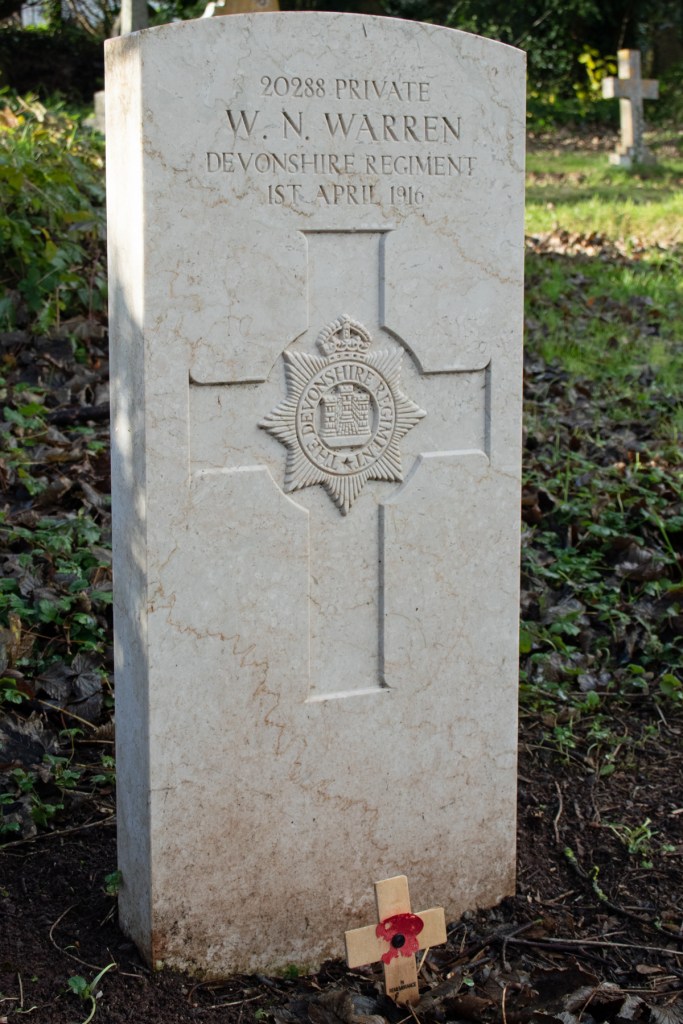
Private William Warren

Private William Warren

William Norrish Warren was born in Ashburton, Devon, on 24th April 1882, one of eight children to William and Irena Warren. William Sr worked as a woodsman and a farm labourer, and agriculture was a trade into which his son also went. There is a record that he found work as a railway porter, but this seems to have been only for a short while, and he soon resigned.

In the spring of 1915, William Jr married Olive Emmett, a carter’s daughter from the town. The couple went on to have a son, Alfred, who was born the following year.

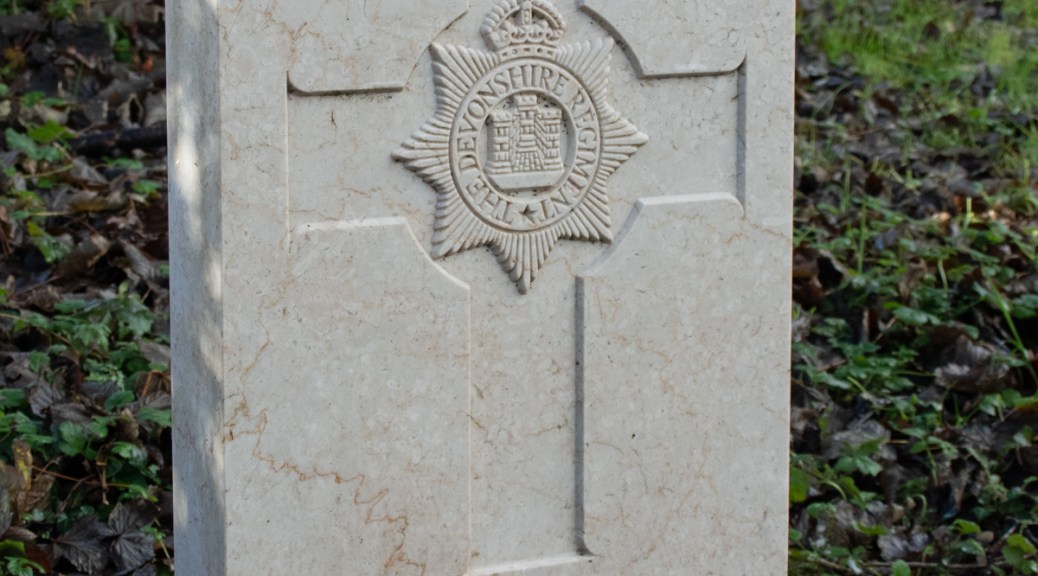
War was on the horizon, however, and William enlisted, joining the 9th Battalion of the Devonshire Regiment by October 1915. He was given the role of Private, and, while full service details are not available, he definitely spent time abroad.

Private Warren was fighting on the Front in the spring of 1916, when, on 10th March, he was badly injured. He was medically evacuated to England and admitted to the Netley Hospital near Southampton for treatment. Sadly, his internal wounds proved too severe and he passed away from his injuries on 1st April 1916. He was just 33 years old.

William Norrish Warren’s body was brought back to Ashburton for burial. He was laid to rest in the graveyard of the town’s St Andrew’s Church.


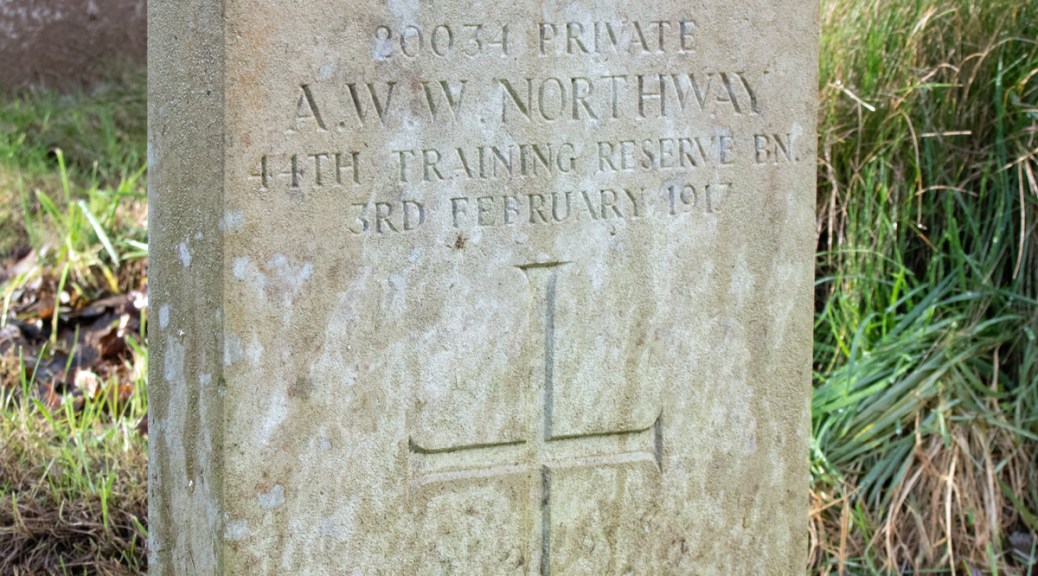
Private Alfred Northway

Private Alfred Northway

Alfred William Winsor Northway was born on 3rd December 1870 in Barnstaple, Devon. He was the only child to farm labourer John Northway and his wife Susan. By the time Alfred was a few months old, John had moved the young family to Ashburton.

On 2nd March 1890, Alfred married Susanna Raddon in Newton Abbot. The couple went on to have eleven children – Susanna already had two children when they married; there is no indication as to whether they were also Alfred’s.

By the time they married, Alfred was working as a farm labourer. This was a job he continued to do to support his rapidly growing family. War was coming to Europe, however, and the stability of life in Ashburton was soon to change. During this time, he volunteered for the 3rd Battalion of the Devonshire Regiment and this stood him in good stead moving forward.

At least two of Alfred and Susanna’s sons enlisted when the First World War broke out; not to be outdone, Alfred also joined up on 11th September 1914. Assigned to the 11th (Reserve) Battalion of the Devonshire Regiment as a Private, there is no indication that he saw any time abroad. Instead it seems that he served at the regiment’s depot in Wareham, Dorset, supporting the Training Reserve.

By the end of 1916, Private Northway had fallen ill. Admitted to the Sidney Hall Hospital in Weymouth with pneumonia, sadly the condition got the better of him. He passed away on 3rd February 1917, at the age of 46 years old.

Alfred William Winsor Northway was brought back to Ashburton for burial. He was laid to rest in the graveyard of St Andrew’s Church in the town.


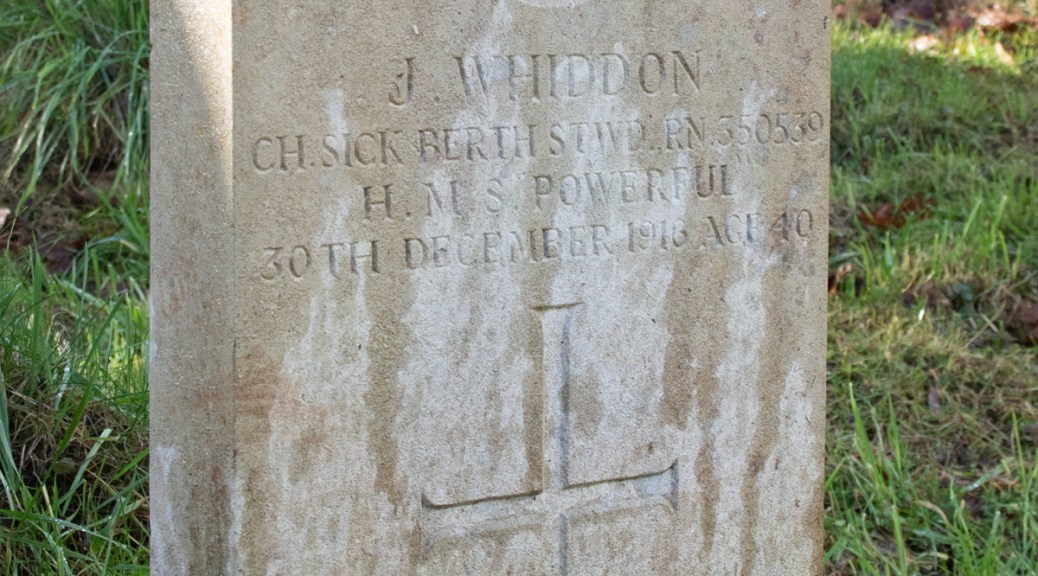
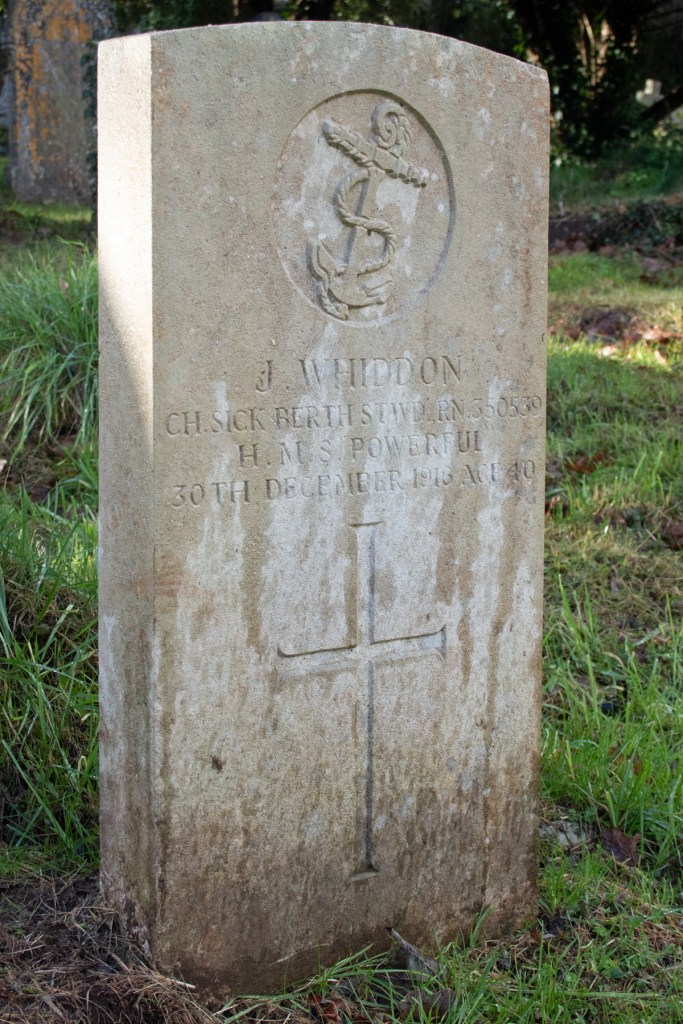
Chief Sick Berth Steward John Whiddon

Chief Sick Berth Steward John Whiddon

John Whiddon was born on 15th January 1876 in the Devon town of Ashburton and was one of seven children to John and Elizabeth Whiddon. John Sr was a general labourer, but when he left school, his son found work as a baker’s apprentice.

John was keen to better himself and so, at the age of 21, he enlisted in the Royal Navy. His service records confirm that he enlisted on 21st July 1897 for a period of 12 years. He was recorded as standing 5ft 6in (1.67m) tall, with light brown hair, blue eyes and a fair complexion.

John’s role was as a Sick Berth Assistant and, over the next few years he had a number of different postings. While some were on sea-going vessels, the majority of his time on shore. He served at the Haslar Hospital in Portsmouth, Plymouth Hospital and at HMS Vivid, the Royal Naval Dockyard in Devonport.

Sick Berth Assistant Whiddon certainly worked hard, though, and this paid off. In 1902 he was promoted to Sick Berth Steward and, in 1909, when his contract came to an end, he volunteered to stay on. Over the next seven years, John continued to do his duty, both on shore and at sea, and was again promoted, this time to Chief Sick Berth Steward.

At some point John married a woman called Catherine; sadly there is no information about her, other than that she had passed away by 1916.

In the autumn of 1916, John was serving on board HMS Powerful, when he contracted pneumonia. He was brought ashore and admitted to the Royal Naval Hospital in Plymouth, but sadly passed away from the illness on 30th December 1916. He was 40 years of age.

John Whiddon was brought back to Ashburton for burial. He lies at rest in the graveyard of St Andrew’s Church there.


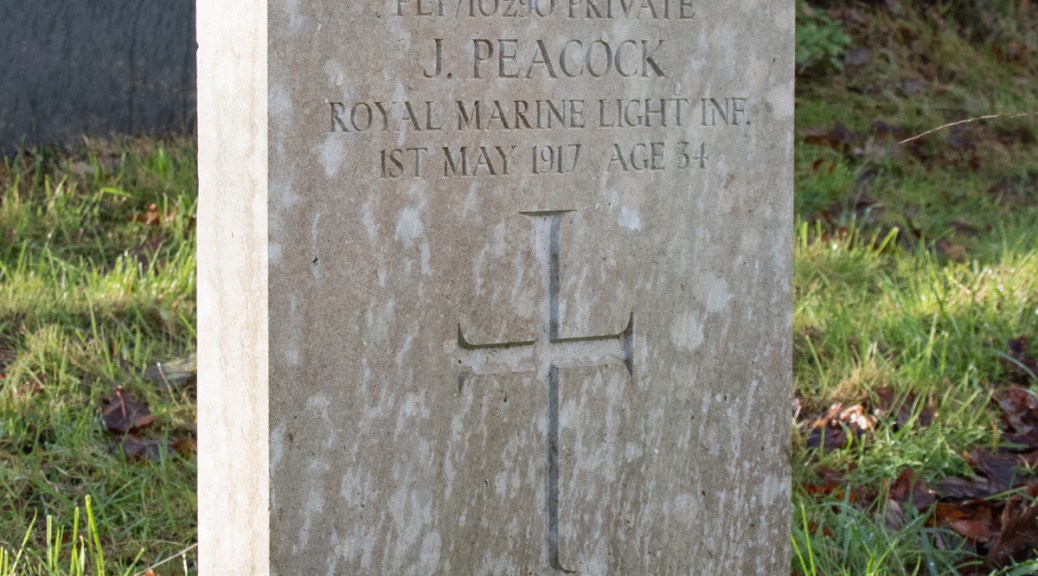
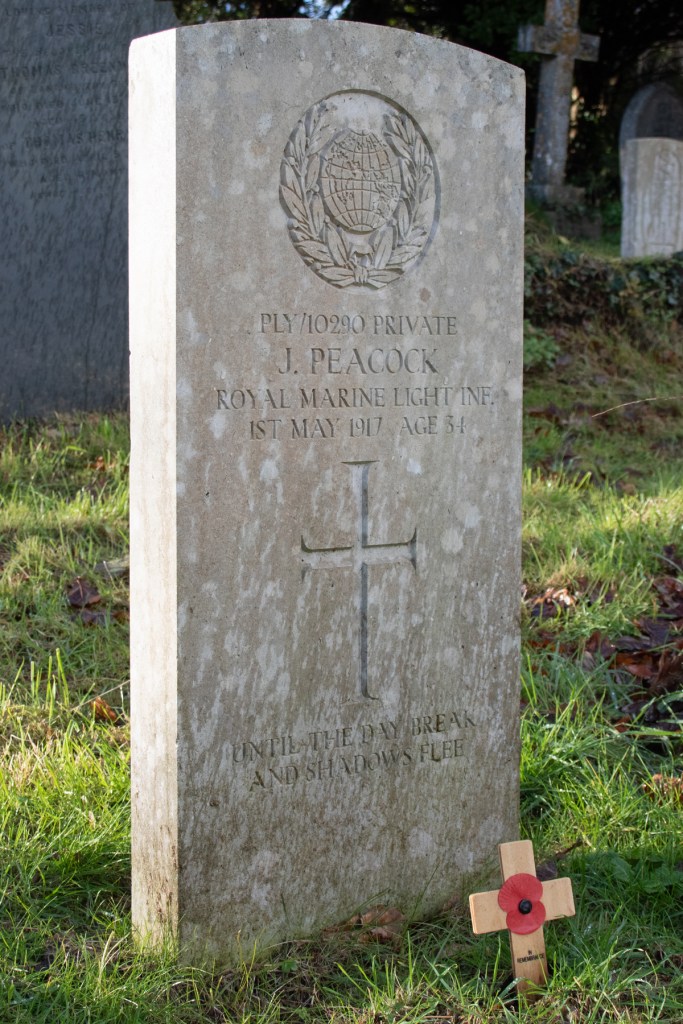
Private John Peacock

Private John Peacock

John Peacock was born in Ashburton, Devon, in 1883. Details of his life are a little sketchy, but his parents were John and Mary Ann Peacock, and he was one of at least thee children. John Sr was an agricultural labourer, but his son wanted bigger and better things.

By the time of the 1911 census, John Jr had enlisted as a Private in the Royal Marine Light Infantry. No military records exist to confirm when he joined up or where he served. The census recorded him as being a patient in the Royal Naval Hospital in East Stonehouse although, again, there is no record of why he had been admitted.

The story of Private Peacock’s health seems to remain a thread through his life. The next document evident is his Pension Ledger Card. This confirms that he died on 31st May 1917, from what was described as general paralysis, often insane. He was 34 years of age.

John Peacock was laid to rest in the graveyard of St Andrew’s Church in his home village of Ashburton, Devon.


Private Hubert Hext

Private Hubert Hext

Hubert Hext was born in Ashburton, Devon, in September 1898. He was the youngest of three children to painter and decorator William Hext and his wife, Susan.

Little information is available on Hubert’s early life, and there is also scant detail about his military career. All that can be confirmed is that he enlisted on 6th May 1914, and joined the Devonshire Regiment as a Private.

He was initially assigned to the 5th Battalion – they sailed to India in October 1914 – but at some point transferred to the 14th (Labour) Battalion – which was in France by October 1916. Sadly, it’s not possible to identify exactly where Private Hext served.

The military documents available confirm that Hubert contracted tuberculosis and was discharged from the army on medical grounds. However, one records suggests this was on 25th October 1916, while another gives the date of 25th October 1917. Either way, Private Hext’s army career was over by the middle of the conflict.

Hubert returned home, and, for a while, his trail goes cold. Sadly, the next record for him is the confirmation of his passing. He died on 11th November 1918 – Armistice Day – at the tender age of just 20 years old.

Hubert Hext was laid to rest in the graveyard of St Andrew’s Church in Ashburton, Devon.