Category Archives: Private

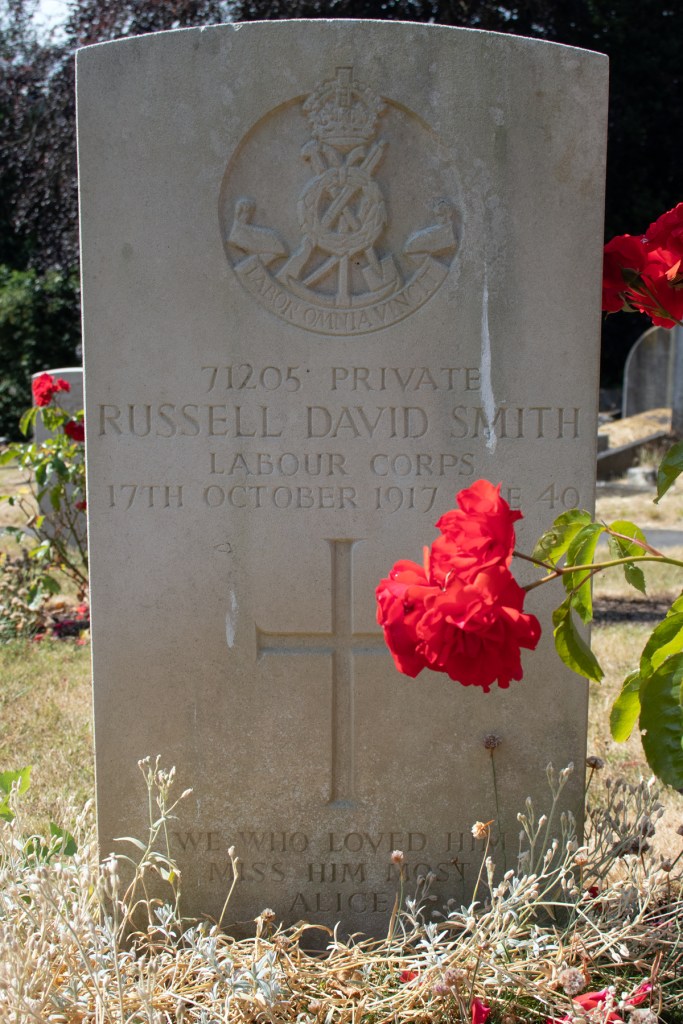
Private Russell Smith

Private Russell Smith

Russell David Smith was born in Shoreditch, London, in the summer of 1877. The second of four children, his parents were tailor Richard Smith and his wife, Emma.

When he finished his schooling, Russell found work as a bookbinder: by the time of the 1901 census, the family had moved to a small terraced house in Cassland Road, Hackney.

On Christmas Day 1902, Russell married Alice Stretch. A year younger than her new husband, she had been born in Islington, and was the youngest child to cabman Edwin Stretch. When the couple married, she was working as a mantle maker’s assistant, making elements for gas lamps.

The newlyweds settled in a cottage in Walthamstow, and went on to have three children. The 1911 census recorded the young family living at 39 Ritchings Avenue: they had taken in a lodger, Alice Carter, to help pay the bills.

War came to Europe in the summer of 1914 and Russell was called upon to play his part. Details of his military service are sketchy, but from the documents available, it is evident that he had enlisted by the summer of 1917 joining the Labour Corps. Private Smith was attached to the 119th Labour Coy. which seems to be been based in Somerset.

It is impossible to trace Russell’s trail any further. The next record for him is that of his passing, on 17th October 1917. The cause of his death is not readily apparent, but he was 40 years old at the time.

Finances seem to have prevented Alice from bringing her husband home. Russell David Smith was, instead, laid to rest in Locksbrook Cemetery, Bath, probably as this might have been the closest burial ground to where he had passed away.
Private Thomas Bastow

Private Thomas Bastow

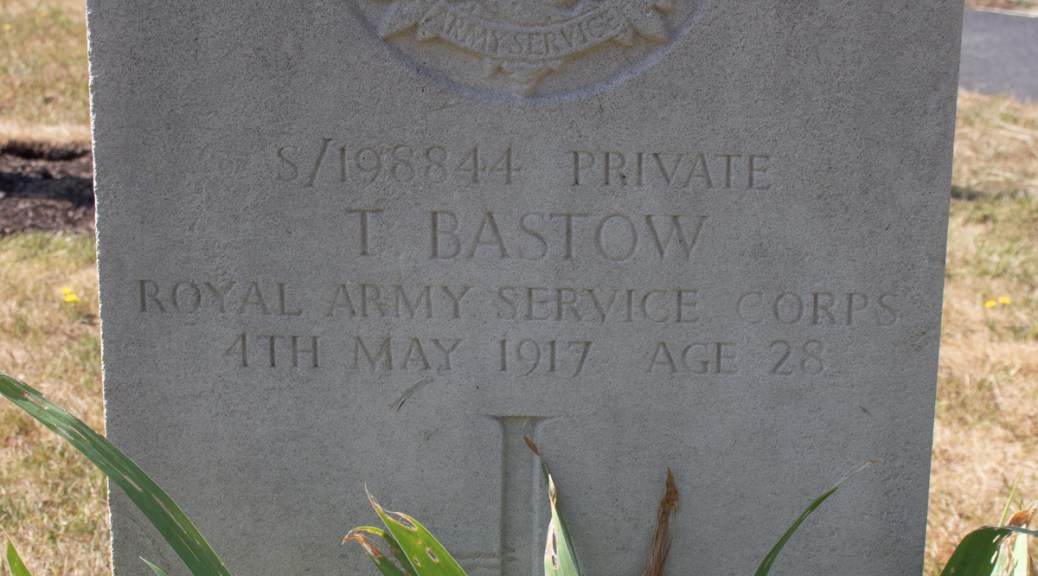
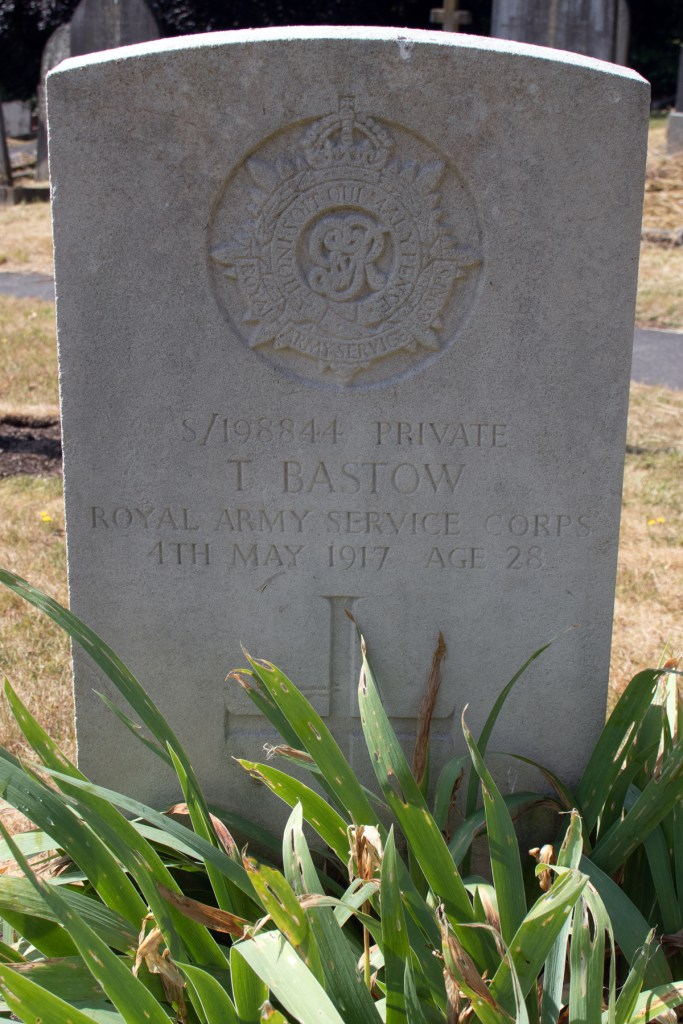
Thomas Bastow was born in the spring of 1889, the youngest of five children to Frederick and Mary Bastow. Frederick was from Weston-super-Mare in Somerset, but had met his Liverpudlian wife in Lancashire, and it was in the North West of England that the Bastow family had been raised. Mary passed away in 1898, when she was jus 40 years of age. Frederick remarried in 1901, Florence Travis becoming the young Thomas’ stepmother.

Frederick was an inspector for a mineral water company, but when Thomas left school, he found work as a clerk for the land registry. In the autumn of 1916, he married Margaret Hughes. Sadly, there is little more information about her, although their wedding was registered in West Derby.

It may have been that Thomas was in the army at this point, or at least on the verge of going. He enlisted in the Royal Army Service Corps, and was attached to one of the supply units. He seems to have been based in Somerset, as this is where he was hospitalised when he came down with appendicitis.

Private Bastow’s condition was to get the better of him: he passed away on 4th May 1917 while admitted to the Bath War Hospital. He was just 28 years of age.

Finances seem to have limited Margaret’s options when it came to her late husband’s funeral. Rather then being taken back to the north wet for burial, Thomas Bastow was instead interred in Bath’s Locksbrook Cemetery.


Private Frederick Witt

Private Frederick Witt

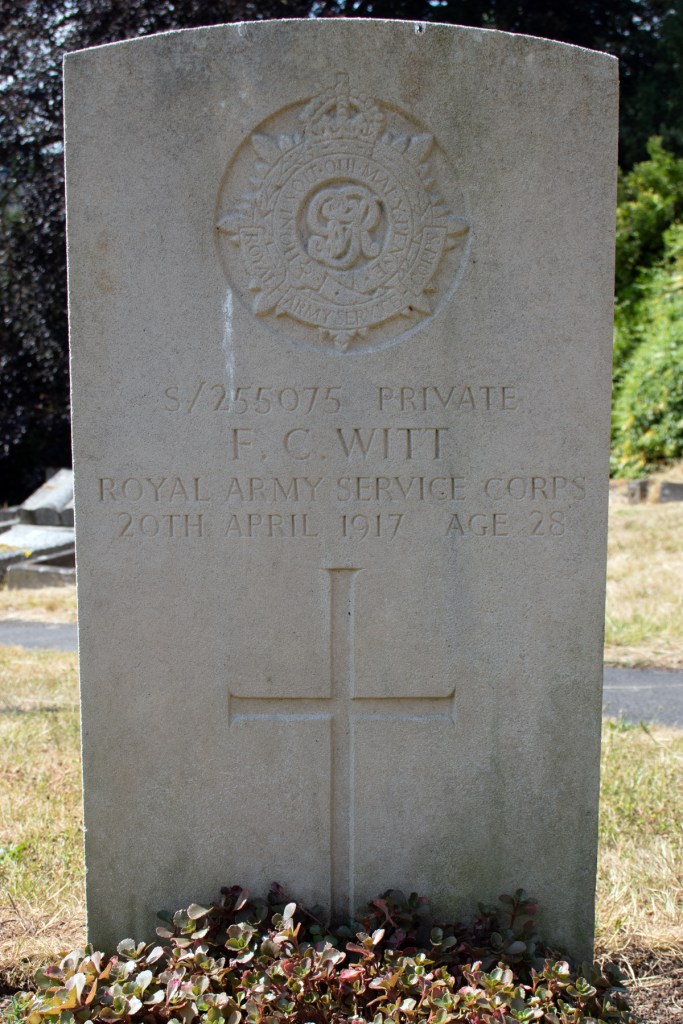
Frederick Charles Witt was born on 19th June 1888 in Amesbury, Wiltshire. The second youngest of eight children, his parents were journeyman baker Richard Witt and his wife, Elizabeth.

By the time of the 1901 census, Richard had set up a bakery in North Tidworth, ten miles north-east of Amesbury, with Frederick’s older brother, Alfred, helping out. This was a line of work that Frederick was also to go into when he completed his schooling: the next census return, in 1911, noted him as being his father’s assistant.

On 26th December 1912, Frederick married a woman called Kate Howard. The marriage took place at St Luke’s Church, Enfield, Middlesex. Kate was living in Enfield at the time, while hew new husband was based in Southampton, Hampshire. How a connection was made between the two is unclear, but the couple settled back in Southampton, and went on to have two children: Ivy and Doris.

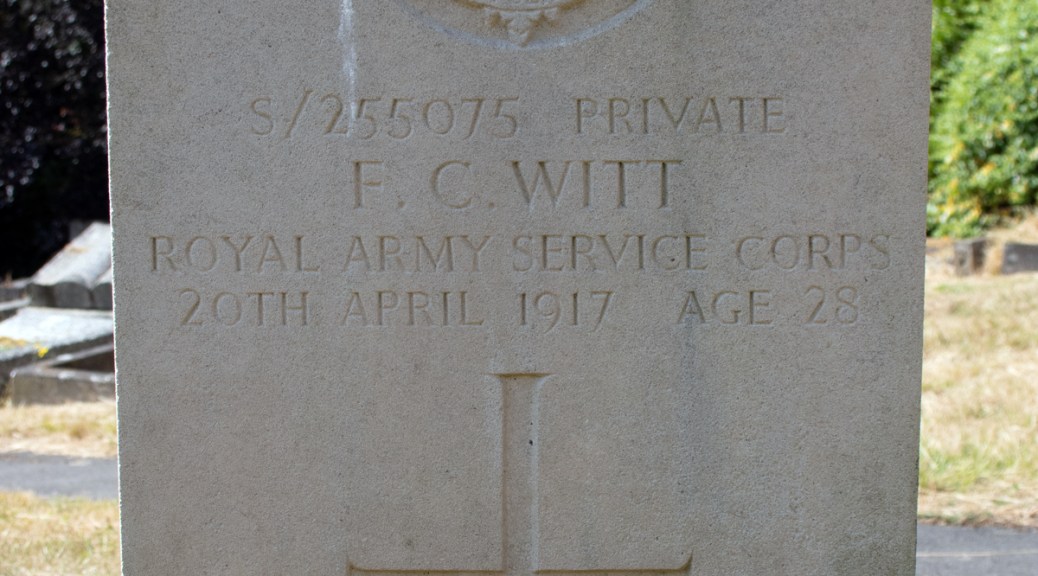
When war was declared, Frederick was called upon to play his part. Full details of his service are unclear, but he had joined the Royal Army Service Corps by the start of 1917. Private Witt was attached to the Reserve Supply Personal Depot in Bath, Somerset, but, soon after enlisting, he contracted pneumonia.

Frederick was admitted to the Bath War Hospital in April 1917, but the condition was to prove too severe. He passed away on 20th April, at the age of 28 years old.

Frederick Charles Witt was laid to rest in Bath’s sweeping Locksbrook Cemetery. Interestingly, a newspaper report of his funeral did not mention the attendance – or existence – of Kate or their children; instead his parents seemed to take centre stage.


Private Alex Jacobs

Private Alex Jacobs

Ephraim Alex Jacobs was born in the summer of 1883 in Birmingham, West Midlands and was the youngest child to Morris and Mary Jacobs. Morris was a tailor, but when he finished his schooling, Ephraim followed in his older brother’s trade, becoming a hairdresser.

This was not to prove a long-term career, however and, by the time of the 1911 census, things had changed. Ephraim, who now went by his middle name, had moved to Seend, near Melksham, Wiltshire. The document confirms that he had been married for four years by this point, although full details of his wife, the London-born Ethel, remain elusive. Alex was employed as a rubber worker in a factory in Melksham.

When war broke out, Alex stepped up to play his part. His service records no longer exist, but it seems that he enlisted in the Royal Army Service Corps, and was attached to one of the Mechanical Transport units. He seems not to have served overseas, and was demobbed on 14th September 1919. At this point Private Jacobs was suffering from neuritis, or nerve damage.

Alex’s trail goes cold at this point. He seems to have spent some time at the Pensioner’s Hospital in Bath, Somerset, and this is where, on 22nd December 1920, he passed away. The cause of his death was noted as being a cerebral tumour and asthma. He was 37 years of age.

With finances seemingly leaving Ethel unable to bring her late husband back to Wiltshire, Alex Ephraim Jacobs was instead laid to rest in the sweeping Locksbrook Cemetery, Bath.


Private Philip le Cornu

Private Philip le Cornu

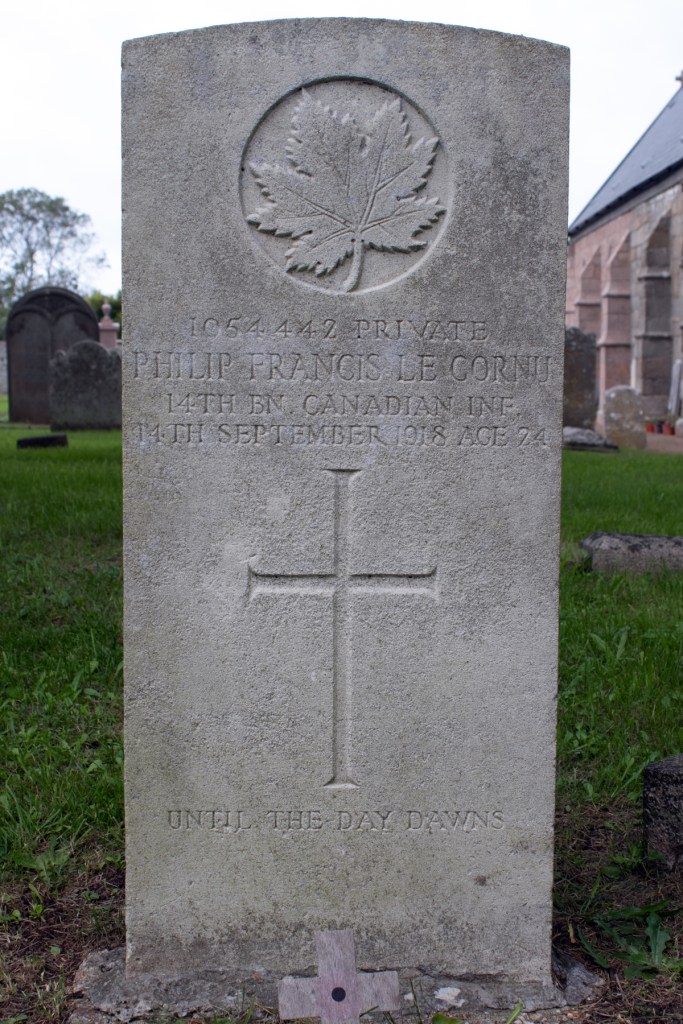
Philip Francis le Cornu was born on 29th July 1894 in St Peter’s, Jersey. The youngest of five children, his parents were Philip and Mary le Cornu. Philip Sr was a farmer, but it seems that both he and Mary passed away not long after his youngest son’s birth. By the time of the 1901 census the children had been split between family members, and Philip Jr was living with his maternal grandparents.

Philip finished his schooling, and seems to have sought a purpose in life. He emigrated to Canada and, by the time war broke out, was living in Grande-Mère, Quebec. He found employment as a clerk, but with conflict raging on the other side of the Atlantic, he responded to the call to arms.

Philip enlisted in the Canadian Expeditionary Force on 12th September 1916. His service records show that he was 22 years and 2 months old and stood 5ft 6ins (1.68m) tall. He had black hair, blue eyes and a dark complexion. Private le Cornu sailed to Britain, and arrived there on 7th April 1917.

Billeted in Shoreham, West Sussex, Philip was attached to the 14th Battalion of the Canadian Infantry. Within weeks he was sent to France, and, on 15th August 1917, was caught up in the Battle of Hill 70 near Lens.

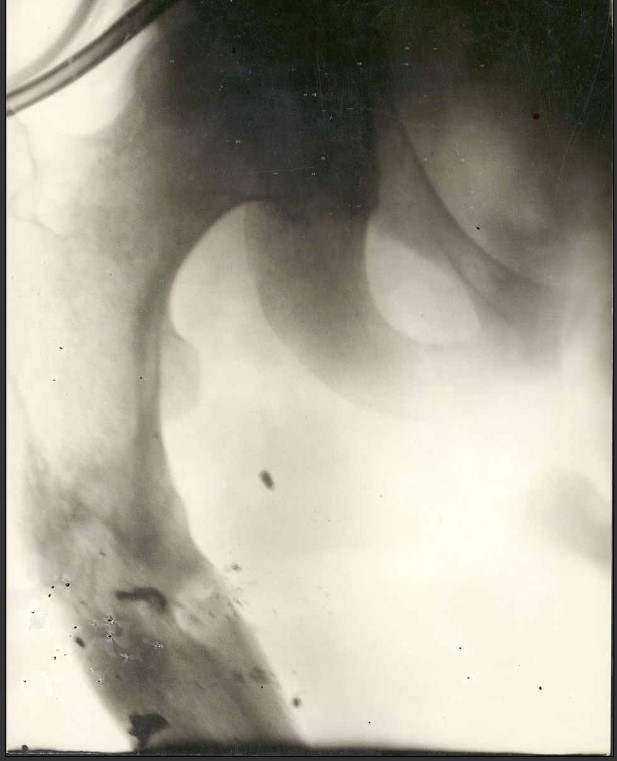
During the skirmish, Private le Cornu was badly wounded in the thigh and sent to the 58th Casualty Clearing Station. Within days he was moved to the 4th General Hospital in Camiens, but his condition necessitated medical evacuation to Britain.

Over the next year, Philip had three operations on his leg, and spent time at the 3rd Southern General Hospital in Oxford, the Manor War Hospital in Epsom, Surrey, and the 16th Canadian General Hospital in Orpington, Kent. Tragically, all of the medical treatment was to prove to no avail. Private le Cornu passed away from his injuries on 14th September 1918, more than a year after Hill 70. He was 24 years of age.

Philip Francis le Cornu’s body was taken back to the Channel Islands for burial. He was laid to rest in the quiet graveyard of St Mary’s Church on Jersey.


X-ray of Private Philip le Cornu’s left femur
(from uk.forceswarrecords.com)

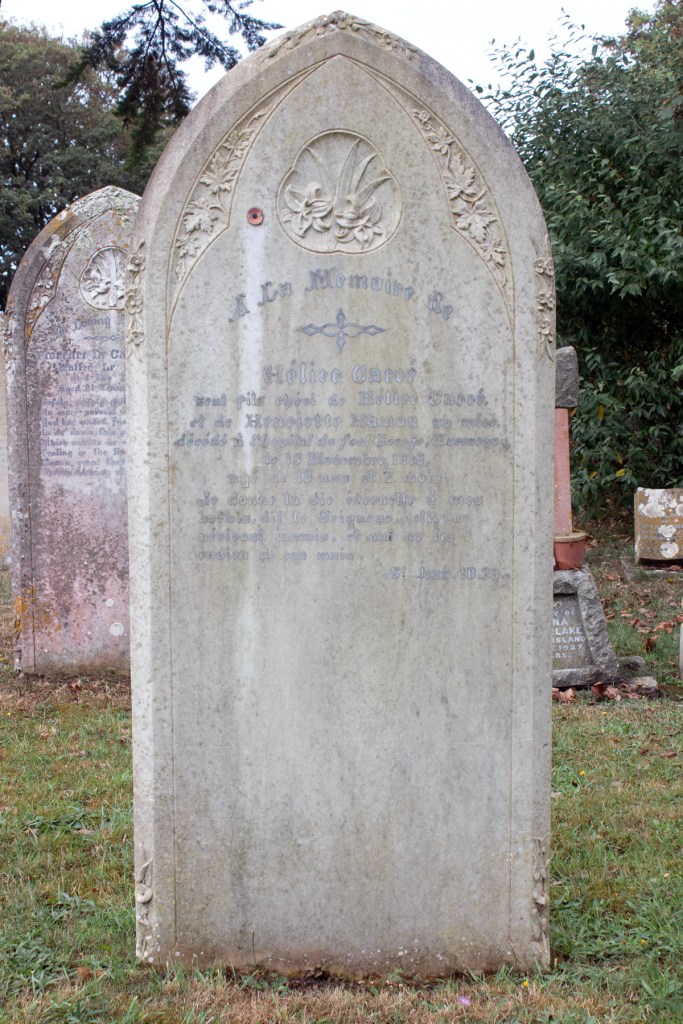
Private Hélier Carré

Private Hélier Carré

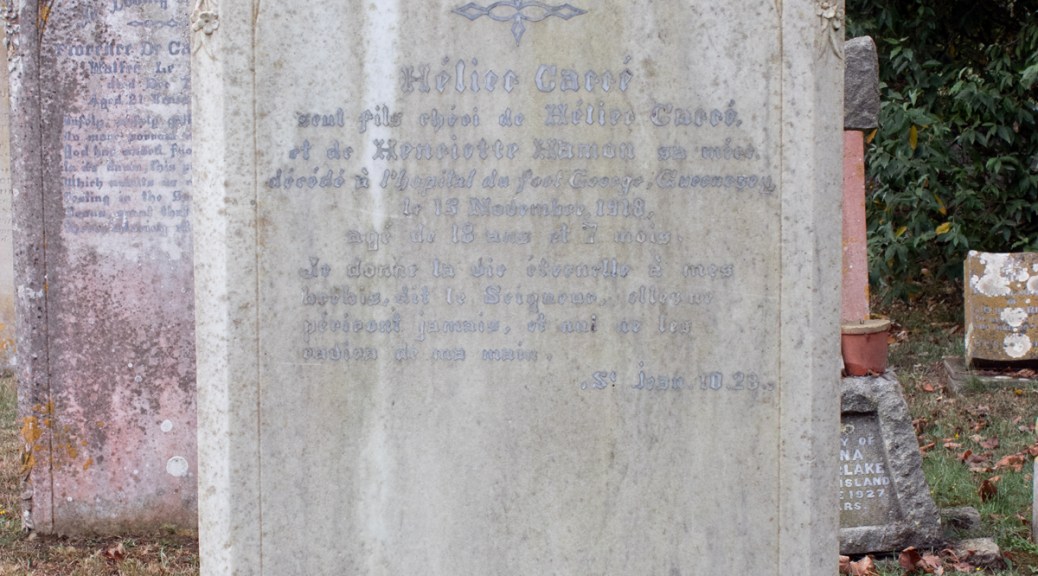
Hélier Carré was born in April 1900, on the Channel Island of Sark. He was the second of two children to Hélier and Henriette (also known as Harriet) Carré. Hélier Sr was a fisherman, and the family, including siblings Hélier Jr and Harriet Jr, lived in a four-roomed cottage, La Collinette, with Henriette’s widowed mother, also called Henriette/Harriet.

Hélier Jr was just 14 when war broke out but, with France just 25 miles (39km) across the water, he was obviously keen to play his part. It was not to be until the summer of 1918 that he enlisted, and he joined the Royal Guernsey Light Infantry as a Private. His service records confirm that he had become a fisherman like his father, and they he was 5ft 3ins (1.6m) tall.

Little additional information is available about Private Carré. He was sent to Guernsey for training, and it was there, on 13th November 1918 – just two days after the Armistice was signed – that he passed away. The cause of his death is not freely available, but he was just 18 years of age.

The body of Hélier Carré was taken back to Sark for burial. He was laid to rest in the graveyard of the island’s church, St Peter’s.


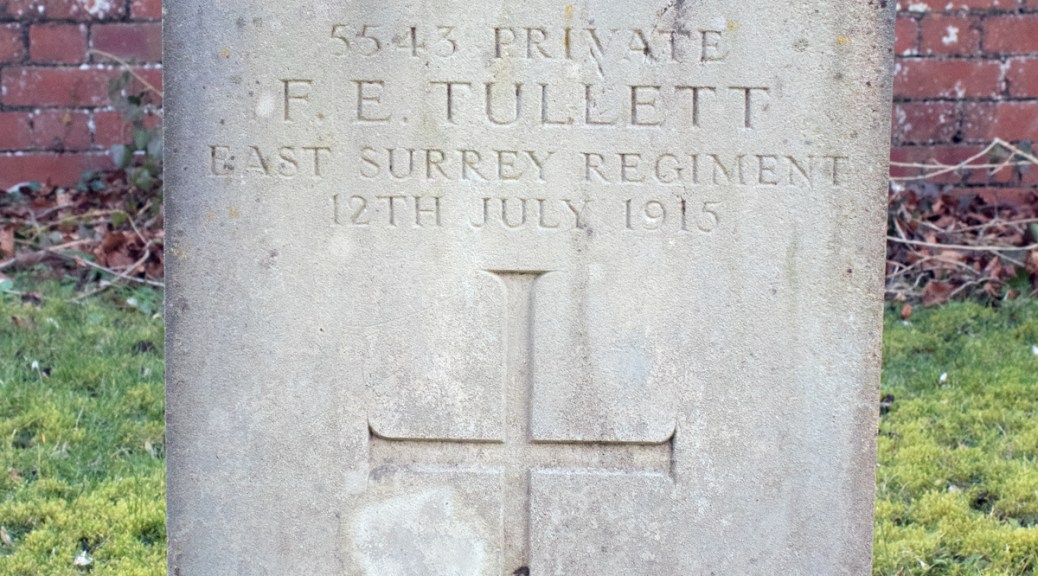
Private Frederick Tullett

CWG: Private Frederick Tullett

Frederick Edward Tullett was born in 1885 in Islington, Middlesex. The seventh of nine children, he was the fourth son of house painter John Tullett and his wife, Sarah.

When he completed his schooling, Frederick found work as an errand boy for a greengrocer. This appears to have been a trade he enjoyed: by the time of the 1911 census, he was employed as a greengrocer’s porter; while his marriage certificate records him as a fully-fledged grocer.

Frederick’s betrothed was Eliza Gundry, the daughter of a bricklayer from Wimbledon, Surrey. The ceremony was held on 18th April 1915 in the town’s All Saints’ Church. The couple were already living at 15 Dryden Road at this point.

It would appear that Frederick had already stepped up to serve his King and Country by the time of his marriage and, while his profession was listed as greengrocer, it may be that this was the job he continued while waiting to be formally mobilised.

Frederick had enlisted in the army by the start of 1915, and was assigned to the 8th (Service) Battalion of the East Surrey Regiment. The unit was based on Salisbury Plain, Wiltshire, and this is where Private Tullett would end up by that summer.

Crowded barracks were notorious as breeding grounds for infections diseases, and Frederick, sadly, was not to be immune. He contracted pneumonia, and was admitted to a military hospital in Codford. The condition was to prove his undoing: he passed away on 12th July 1915, at the age of 30 years old.

Finances may have prevented Eliza, who had been widowed after just 12 weeks of marriage, from bring her husband back home. Instead, Frederick Edward Tullett was laid to rest in the graveyard of St Peter’s Church in Codford, Wiltshire.


Private Charles McManus

Private Charles McManus

Charles McManus was born in Ballymena, County Antrim, in 1891. The middle of three children, his parents were John and Maryann McManus. John was a horse dealer: when they finished their schooling Charles’ older brother, John Jr, found work as a hawker.

Maryann died in 1907, aged just 47 years of age. The next census record, in 1911, found John Jr living with his wife and family in Ballymena, while John Sr was boarding with a fishmonger elsewhere in the town. Alexander, Charles’ younger brother, was a pupil at an industrial school in Dublin, but Charles himself is missing from the census return.

John Sr passed away in 1913, at the age of 53 years old. Charles was 22 years old and an orphan. The following year war was declared, and Charles was one of the first to step up and serve his country. He joined the Royal Inniskilling Fusiliers on 14th September 1914, and was attached to the 1st Battalion.

Full service records for Private McManus are lost to time. However, his unit was sent to Gallipoli in the spring of 1915, only to be evacuated from the region the following January. The 1st Battalion was then sent to France where it became entrenched at the Somme. For Private McManus and his colleagues, this must have felt like going from the frying pan into the fire, but this time he was not to emerge unscathed.

At some point Charles was wounded. He was medically evacuated to Britain for treatment, and admitted to the King George’s Hospital in London. Whatever his injuries, they were to prove too severe: he died on 24th July 1916, at the age of 25 years old.

Charles McManus’ body was taken back to Antrim for burial. He was laid to rest in the Crebilly Cemetery, overlooking his home town, Ballymena. His pension ledger suggests there was happiness in his life, beyond the killing fields. His next of kin is noted as Miss Mary Gordon of Ballymena, recorded as his unmarried wife.


Private Robert Carroll

Private Robert Carroll

Robert Carroll was born on 15th October 1874 in Ballymena, Co. Antrim. He was one of three children to Henry and Mary Ann Carroll.

There is little additional information about his early life, but, on 6th April 1896, he married a woman called Martha Keenan. Robert was a plasterer at the time of his wedding, and the couple went on to have four children. Tragically, the youngest, Robert Jr, was just five months old when he passed: even worse, Martha was to die just weeks later, in June 1908.

With three children to raise, the grieving Robert married again, wedding Sarah O’Hara in October 1909. They were to have a son together, another boy they called Robert, the following year.

When war came to European shores, Robert stepped up to play his part. He enlisted in the Royal Irish Regiment and was assigned to the 1st Battalion. By September 1915, Private Carroll was sailing for the Eastern Mediterranean, where he was to remain for more than a year.

Little further information is available for Robert’s life. He was discharged from the army on 27th April 1917. As his service records no longer remain, it is not possible to determine why he left the army, but is likely to be as a result of illness or injury.

Robert returned to Northern Ireland, and his trail goes cold. All that can be confirmed is that he passed away at home on 7th August 1919, at the age of 44 years of age.

Robert Carroll was laid to rest in Crebilly Cemetery, on the hills outside Ballymena.


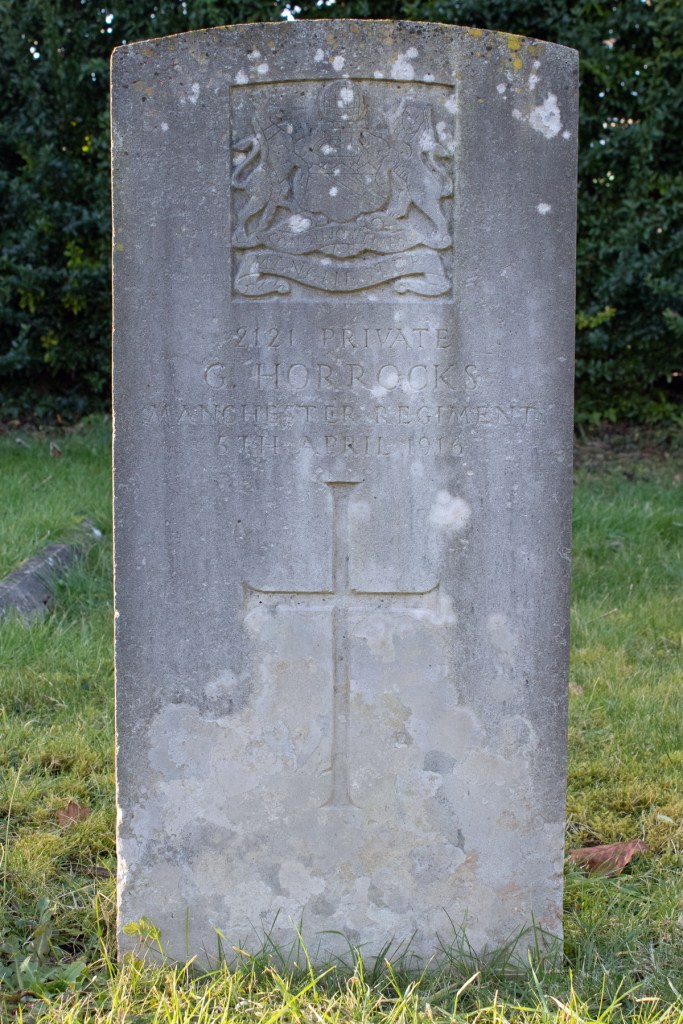
Private Granville Horrocks

Private Granville Horrocks

Granville Horrocks was born in Heywood, Lancashire in around 1872. His early life is difficult to piece together, but by the time of the 1901 census, he was living with his widowed mother, Jane Horrocks, and his wife of a year, Mary.

The family were living in Rock Street, Oldham, where Granville was working as a labourer in an ironworks. Mary was also working, and was employed as a cotton reeler in one of the local mills.

Granville and Mary went on to have five children – Mary, Lilian, Ellen, Wilfred and Jessie. The 1911 census records the family living in two rooms in Bloom Street, Oldham. Granville was employed as an iron turner in the local factory, while Mary remained at home to look after the house and the family.

Conflict broke out in Europe in the summer of 1914, and Granville opted to serve his King and his Country. Sadly, full details of his service are lost to time, but it is clear that he had enlisted in the Manchester Regiment by the autumn of 1915. Private Horrocks was assigned to the 10th Battalion, which saw active service at Gallipoli, and it is likely that Granville spent time in that part of the Mediterranean.

Private Horrocks’ army pension ledger provides details of his passing. The date was 5th April 1916, and the cause given was “suicide by drowning whilst of unsound mind due to disease contracted on [active service].” Little additional information is available about the incident and, surprisingly, there is nothing reported in contemporary newspapers.

Granville was based near Wylye, Wiltshire, when he took his life. He was around 44 years old at the time. Finances must have limited Mary’s options regarding his burial: rather than being taken back to Oldham, he was laid to rest in the peaceful graveyard of St Mary’s Church in the village where he passed.