Tag Archives: Bugler

Sergeant Herbert Marriott

Sergeant Herbert Marriott

Herbert Ernest Marriott was born on 15th November 1881 in the Hampshire village of Alverstoke (now part of Gosport). The younger of two children, his parents were George and Sarah Marriott. George was a navy pensioner, who died a matter of months after his youngest son was born, leaving Sarah to raise their two children alone.

The 1891 census found Sarah living at Prince Alfred Cottage in Alverstoke, with her two sons – Herbert, aged 9, and Joseph, aged 22 – and grandson, one-year-old Charles. She was employed as a launderess, while Joseph was employed as a bricklayer’s labourer.

Herbert was keen to build a career for himself and, on 20th July 1897, he enlisted in the Royal Marine Light Infantry. His service record shows that he was 5ft 7.5ins (1.71m) tall, with dark brown hair, brown eyes and a fresh complexion. He was also recorded as having a small scar on his left shoulder.

Private Marriott was sent just along the coast to Portsmouth for his training: this would become his land base in between voyages. He evidently showed some musical talent as, just two months after enlisting, he was given the rank of Bugler. Over the years the career he had sought grew, and his abilities grew with it.

Between 1897 and 1914, Herbert would serve on nine vessels in total. In February 1900 he became a Private once more, but by the end of the following year he had been promoted to Corporal. He continued to rise through the ranks, becoming Lance Sergeant in January 1905 and full Sergeant in the summer of 1907.

In the spring of 1901, Herbert married navy pensioner’s daughter Annie Hill. The newlyweds would set up home at 140 Queen’s Road, Gosport, and have six children between 1904 and 1914.

Back at sea and, by the time war was declared, Sergeant Marriott had been assigned to the battleship HMS Bulwark for two years. Part of the Channel Fleet, she was charged with patrolling and protecting the water off the south coast of England.

On 16th November, Bulwark was moored in the River Medway, near Sheerness, Kent, and being restocked with ammunition. A number of cordite charges had been stored incorrectly and overheated. These detonated the nearby shells and the resulting chain reaction of explosions ripped apart the battleship, sinking it and killing more than 740 crewmen, including Sergeant Marriott. He had turned 33 years of age just the day before.

The bodies recovered were laid to rest in the naval section of Woodlands Cemetery, Gillingham, Kent. As his had been identified, Herbert Ernest Marriott was buried in a marked grave.
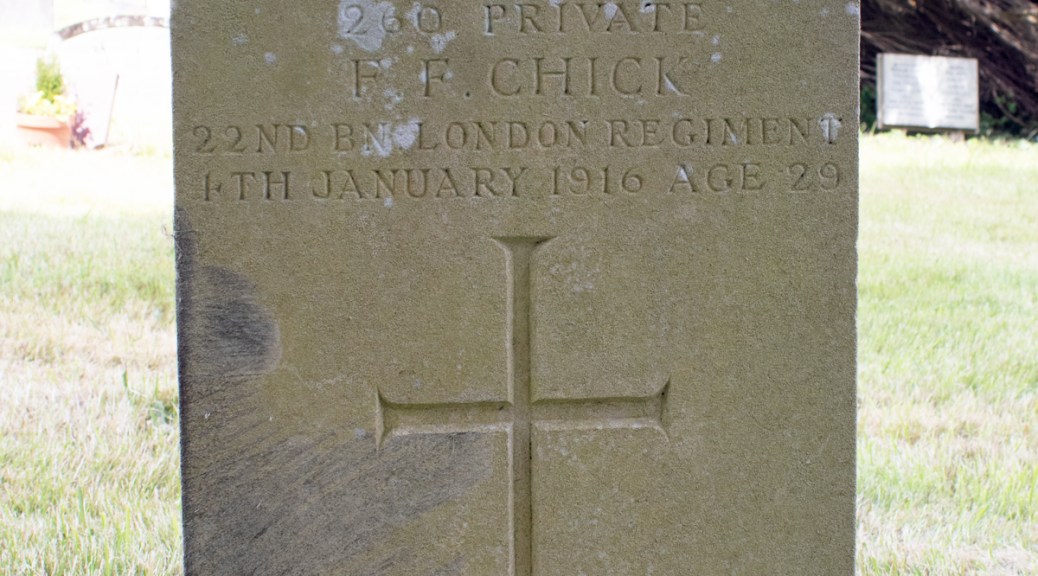

Private Francis Chick

Private Francis Chick

Francis Frederick Chick was born in the spring of 1886 in Axminster, Devon. One of eight children, his parents were brickmaker Edwin (or Edward) Chick and his wife, Elizabeth.

When he completed his schooling, Francis found work as a sawyer’s apprentice. However, he wanted bigger and better things and, on 19th November 1900, he enlisted in the army. At 14 years of age, he was just short of 5ft (1.52m) in height, and had fair hair, blue eyes and a fresh complexion.

Initially enlisting in the Royal Marine Light Infantry, Boy Chick was to serve three years in the naval division. The 1901 census found him based at the East Stonehouse Barracks in Devonport, Devon, where he was a Bugler.

In September 1903, Francis transferred across to the Devonshire Regiment, remaining within the band structure. He came of age in March 1904, and, as a Private, he took on the role of Drummer. By the start of 1909, his unit had moved overseas, and the next census, taken in 1911, found Private Chick billeted in St George’s Barracks in Malta.

Francis remained in Malta for three years, and moved to Egypt with his unit in January 1912. By this point, having completed nearly twelve years’ service, he elected to stay on and renewed his contract. While serving in North Africa, he completed his induction into the Camel Corps, although by the end of the year, he was back on home soil after nearly four years abroad.

At this point, Francis seems to fall off the radar. It is unclear whether his move back to Britain was because he had been placed on reserve status, or due to medical reasons. To add to the mystery, when war broke out, he did not re-join the Devonshire Regiment, but enlisted in the London Regiment instead. He was assigned to the 22nd (County of London) Battalion, but later records note a connection to the 22nd (Wessex and Welsh) Battalion of the Rifle Brigade.

Private Chick was in Buckinghamshire by the winter of 1915/16, and it was here that he became unwell. Admitted to hospital in Aylesbury, he died of pneumonia on 4th January 1916: he was 29 years of age.

The body of Francis Frederick Chick was taken back to Devon for burial. He was laid to rest in the cemetery of his home town, Axminster.


Sapper Frederick Maple

Sapper Frederick Maple

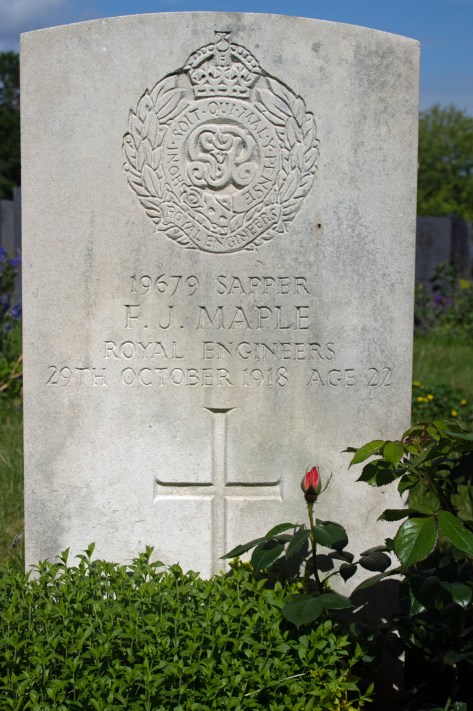
Frederick John Maple was born in 1896, the middle of three children to Royal Engineers Company Serjeant Major Frederick Maple and his wife Amelia. Frederick Jr was born in Brompton, Gillingham, Kent, but it’s interesting to note that the 1901 census gives Amelia’s place of birth as Canada, while Frederick Sr’s is not known.

Frederick Jr lost his father in 1904, and his mother five years later. At the age of just 13, he was an orphan, and this may have spurred him into finding a career. The next census – taken in 1911 – lists him as a Bugler in the Royal Engineers, barracked within walking distance of where he had grown up.

By the time war had broken out – and having come of age – the now Private Maple was assigned to the 15th Field Company. The regiment fought in a number of the key skirmishes of the war, including the Battles of Neuve Chapelle, the Somme, Loos, Ypres and Arras. Frederick went to France in March 1915, although it is not possible to confirm how or if he was involved in these battles. He was awarded the Victory and British Medals and the 1915 Star for his efforts.

Sadly, the next available document for Frederick is the Army Register of Soldiers’ Effects. This confirms that he was admitted to the 2nd London General Hospital in Chelsea, and that he passed away on 29th October 1918. Again, there is no evidence of the cause of his passing, so he may have fallen ill, or been wounded. Either way, Private Maple was just 22 years old when he died.

Frederick John Maple was laid to rest in the Grange Road Cemetery in Gillingham. When this was subsequently turned into a public park, he was commemorated in the neighbouring Woodlands Cemetery.


Company Sergeant Major Hugh Caston

Company Sergeant Major Hugh Caston

Hugh Charles Caston was born in Chelsea in the summer of 1881, the oldest of three children to Emily and Hugh Caston. Hugh Sr died in the late 1880, leaving Emily to raise the family on her own. She moved the family to Gillingham, Kent, to be near her family. She found work as a seamstress and took in boarders.

As the effective head of the family, Hugh obviously felt he had to earn a wage. On 1st August 1896, he enlisted in the Royal Engineers as a Bugler.

Hugh’s medical report shows he stood at 5ft 4.5ins (1.63m) tall and weighed 97lbs (44kg). He had a medium complexion, with brown eyes and brown hair. The report also gave his distinctive marks as being a scar on his forehead, a brown patch on his left buttock and that his eyebrows meet.

Initially too young for full active service, Hugh formally joined up on 1st June 1897. He spent more than five years on home soil, rising through the ranks from Sapper to Lance Corporal to 2nd Corporal. In May 1902, he was posted to Malta, returning home nearly two years later. Hugh’s promotions continued over the next decade, and, by the time war broke out, he had reached the rank of Company Sergeant Major.

By this point, Hugh had married, wedding Rochester woman Mary May Coast in September 1907. The couple went on to have two children, Hubert, who sadly died young, and Joan.

War came to Europe, and things took a turn for Company Sergeant Major Caston. He was admitted to Netley Hospital near Portsmouth, with mania:

Patient’s very restless, often gets ‘excited’ is thwarted in any way. Has a delusion that he is to be promoted to Major and that he possesses great wealth. He continually asks that his motor may be sent round to take him out, also that his tailor be sent for to rig him out. Stated this morning that he wished all the other patients be supplied with Egyptian cigarettes.

Medical Report on Hugh Caston, 20th January 1915

The medical officer went on to state that he did not consider that military service had in any contributed to the mania; he was dismissed from the army on medical grounds on 2nd February 1915, after nearly 20 years’ service.

Sadly, at this point Hugh’s trail goes cold. There is no documentation relating to his time after being discharged from the army and, tragically, after his death Mary was not granted a war pension, as he had served for less that six months during the First World War.

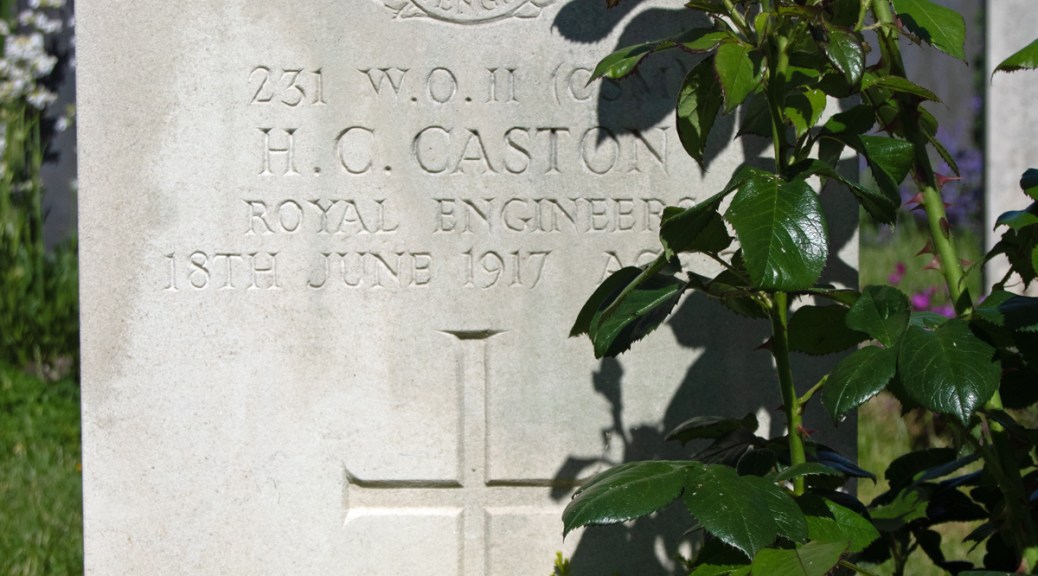
Hugh Charles Caston died on 18th June 1917, at the age of 36 years old. While the cause of his passing is lost to time, he was laid to rest in the Woodlands Cemetery in Gillingham, Kent.


Corporal Harold Mattick

Corporal Harold Mattick

Harold Mattick was born in the spring of 1895, the youngest of four children to Walter and Augusta. Walter was a harness maker and brought the family up in his home town of Weston-super-Mare, Somerset.

When he left school, Harold found work as a plumber. He seemed to had sought a life of adventure, however, and, in 1908, aged just 14, enlisted in the Wessex Division of the Royal Engineers as a Bugler. He served for five years, fulfilling his duties at the same time as carrying out his plumbing work.

When war broke out, Harold immediately re-enlisted. As a Sapper, he was assigned to the 1st/2nd (Wessex) Field Company. After initial training, he was sent to the front as part of the British Expeditionary Force just before Christmas in 1914.

Sapper Mattick was caught up in some of the fiercest fighting on the Wester Front, including the First and Second Battles of Ypres. On 30th September 1915, at Loos, he received a gunshot wound in his right leg, which fractured his tibia. The Germans were also using gas to attack the Allied front lines, which also affected Harold.

Medically evacuated to England for treatment on 9th October, his condition was such that he was discharged from the army on health grounds six months later, on 30th March 1916.

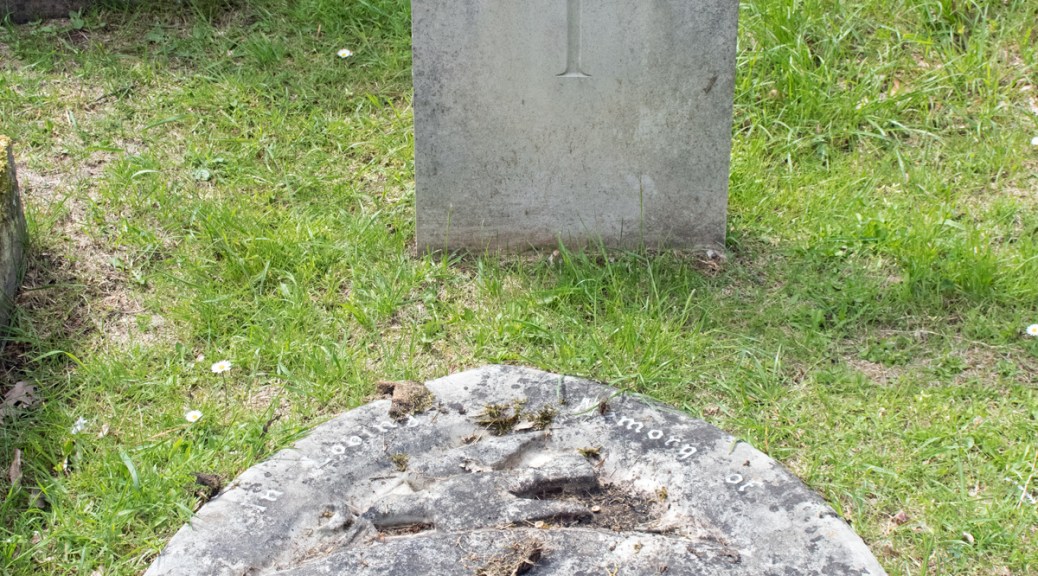
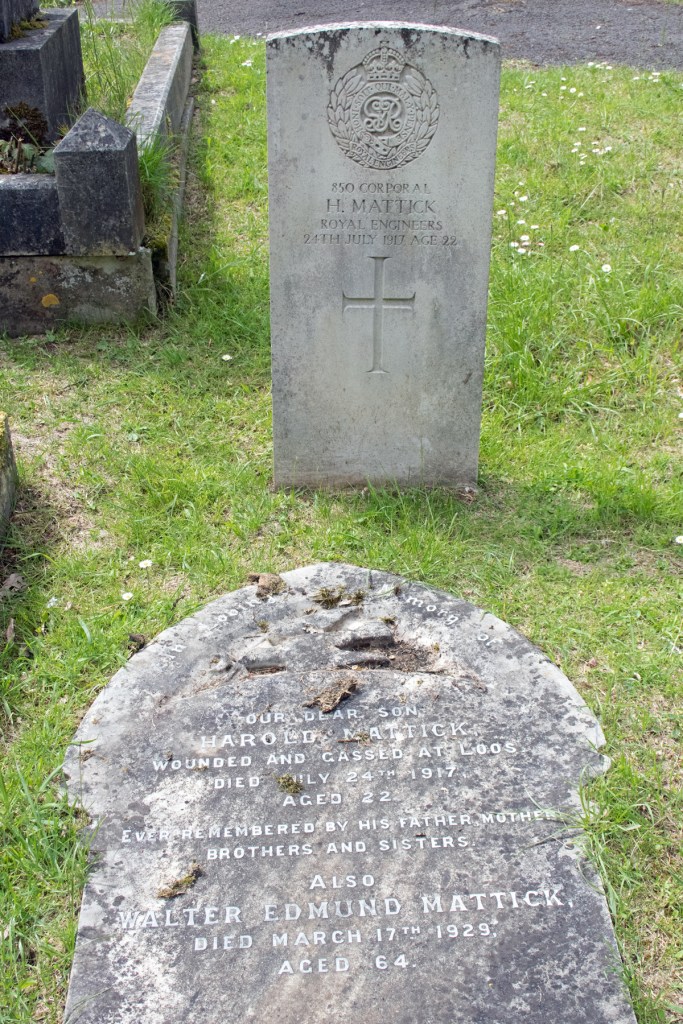
Sadly, while Harold’s leg healed, the injuries he sustained in the gas attack were too severe for him to recover from. He died at home from a lung condition on 24th July 1917, aged just 22 years old.

Harold Mattick was laid to rest in the Milton Cemetery of his home town, Weston-super-Mare.