Tag Archives: heart

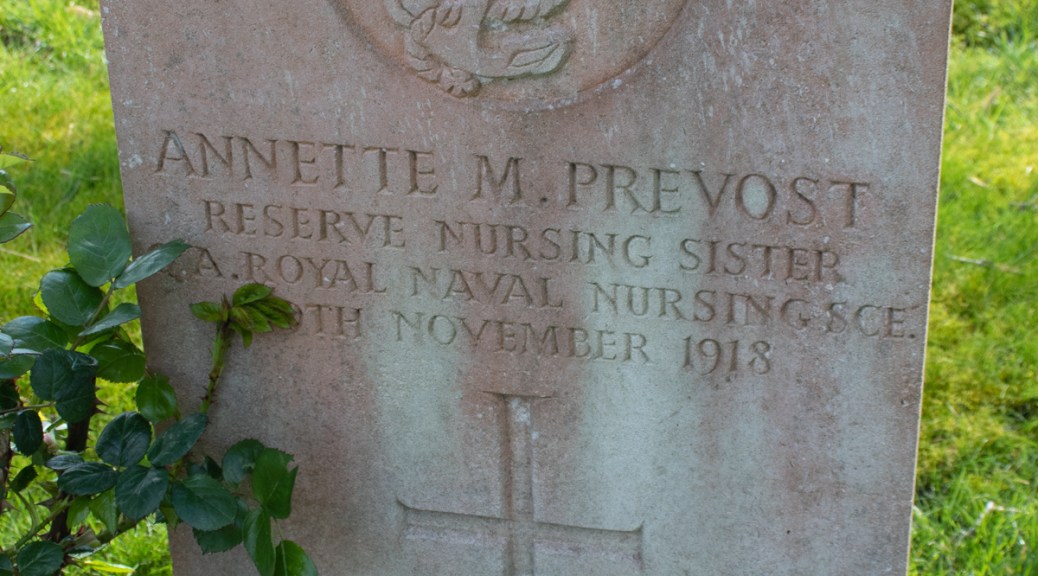
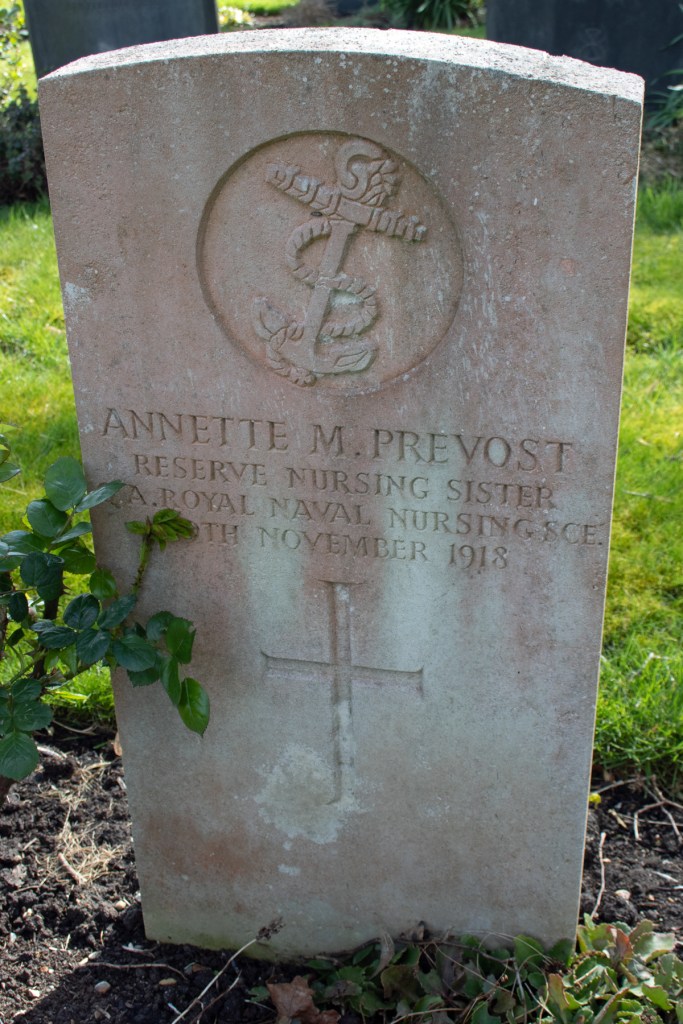
Reserve Nursing Sister Annette Prevost

Reserve Nursing Sister Annette Prevost

Annette Maud Prevost was born on 27th August 1892 in Bombay, India. Her parents were Cumbria-born Francis Prevost and his wife, Maud, who came from Somerset, and she was their only child.

It is unclear why the Provosts were in India, although Annette’s paternal grandfather was a Major in the army and her maternal grandfather was a clerk in holy orders (as per Maud’s baptism record). It is likely, therefore that her grandparents’ work took her parents overseas, which is how Francis and Maud ended up meeting.

Full details of Annette’s life are not readily available. She does not feature on any surviving census records, but it appears that the family returned to England in the early 1910s.

War was on the horizon, of course, and the tragedy of Edwardian culture is that women’s roles in the conflict were under-documented. What is clear, however, is that Annette wanted to play her part and she enlisted in the Queen Alexandra’s Royal Naval Nursing Service as a Nursing Sister, and was based at Chatham, in Kent.

During the conflict, she would have treated servicemen from the nearby Royal Naval Dockyard, as well as from the Royal Engineers Barracks. As the conflict progressed towards its end, an increasing number of cases would have been for pneumonia and tuberculosis, and, in the autumn of 1918, Annette contracted influenza. She developed sepsis, and died of heart failure on 19th November, a week after the Armistice was declared. She was just 26 years of age.

Annette Maud Prevost was laid to rest in the Woodlands Cemetery, Gillingham, not far from the Naval Hospital in which she served and died.


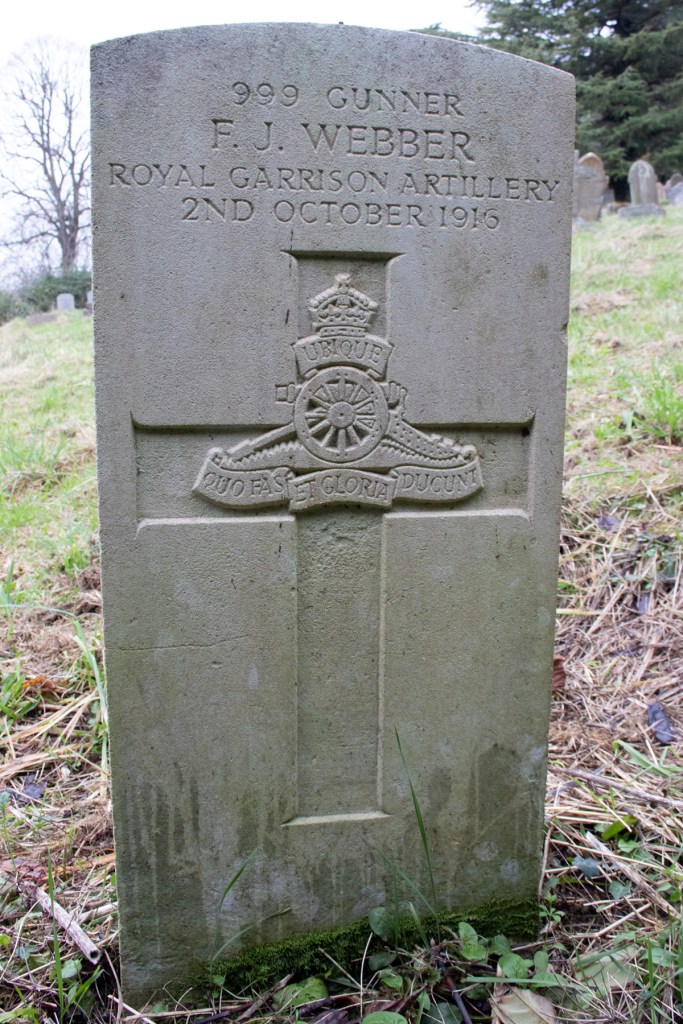
Gunner Frederick Webber

Gunner Frederick Webber

Frederick James Webber was born on 6th July 1889, and was one of nine children to Charles and Mary Webber. Charles was a machinist and wheel turner from Wolborough, near Newton Abbot in Devon, and it was in the village that Frederick and his siblings were born and raised.

The year 1902 was to prove tragic for the Webber family as Mary and two of Frederick’s siblings – Charles, who was 16, and Olive, who was 11 – all died. While there is nothing to confirm causes of death, or whether the three were related, there was a smallpox outbreak in Devon at the time, so it seems likely that the family were drawn into the tragedy.

Charles remarried three years later, to local widow Mary Harper; the couple would go on to have two children of their own. Frederick, by this point, seemed keen to make his own way in the world, and found work on the railways. The 1911 census records him as lodging with the Batten family in Penzance, Cornwall, where he was earning a living as a carriage cleaner.

On 4th September 1915, Frederick married Hannah Mary Annear (née Williams). She was nine years older than him, and was a widow with three children. The couple set up home in Redruth, Cornwall, and may have married as, with war raging across Europe, Frederick was on the verge of being called up.

Full details of Frederick’s military service are not available, but it is clear that he joined the Royal Garrison Artillery at some point in early 1916. Assigned to his adopted home county of Cornwall, he nevertheless needed training, and, for this, he was sent to the B Battery of the 1st Anti-Aircraft Brigade in the North East.

It was while here, that Gunner Webber contracted endocarditis. He was admitted to the Jeffery Hall Hospital in Sunderland, but the condition got the better of him, and he passed away on 2nd October 1916, aged just 26 years old.

Frederick James Webber was brought back to Devon for burial. He was laid to rest in graveyard of St Mary’s Church in Wolborough, where his father and family still lived.


Guardsman Arthur Baguley

Guardsman Arthur Baguley

Arthur George Baguley was born in the autumn of 1897 in Warwick, and was one of six children to George and Rosa Baguley. George was a journeyman butcher who had moved his family to Frome, Somerset, by the time Arthur was three years old. George died in 1908, leaving Rosa to raise the younger members of her family alone.

Little information about Arthur’s life remains, and the only other documents that can be directly connected to him relate to his passing towards the end of the war. These confirm that he enlisted as a Guardsman in the Coldstream Guards at some point after April 1918.

Based in barracks in Hampshire, Guardsman Baguley was admitted to the Connaught Hospital in Aldershot, suffering from infective endocarditis, a bacterial infection of the heart. Sadly, he succumbed to the illness, passing away on 13th September 1918, aged just 20 years old.

Arthur George Baguley’s body was brought back to Somerset for burial. He was laid to rest in the graveyard of St John the Baptist Church, Midsomer Norton, where his mother was living by that point.


Guardsman Arthur Baguley
(from ancestry.co.uk)

Private Lawrence Scott

Private Lawrence Scott

Lawrence Arthur Scott was born in the spring of 1889 in the Devon town of Kingsteignton. He was one of nine children to George and Louisa Scott. George was a lighterman – transporting clay and other goods on a barge. When his father passed away in 1905, Lawrence found work as a clay cutter, bringing in money to help support his mother. By the time of the 1911 census, he was on the only one of Louisa’s children to still be living at home, and was the main breadwinner.

In the spring of 1915, Lawrence married Elizabeth Webber in Newton Abbot. The young couple settled in Kingsteignton, and went on to have a son, Frederick, who was born the following year.

By now war had descended upon Europe. Lawrence enlisted, joining the Royal Berkshire Regiment in the summer of 1916. His service records confirm that he was 5ft 7in (1.7m) tall, had dark hair, blue eyes and a fair complexion.

Private Scott arrived in France on 20th August 1916 and, over the next couple of years he served on the Western Front. In September 1917, he was transferred to the Labour Corps, but by now his health was suffering. On 22nd March 1918 he was admitted to a hospital in Rouen with bronchitis. He was transferred to a hospital back in England and, on 17th June 1918 he was formally discharged from the army, with arteriosclerosis.

Lawrence returned home, but his health was to get the better of him. He passed away from heart failure on 30th March 1919, aged just 30 years old.

Lawrence Arthur Scott was laid to rest in a family plot in the graveyard of St Michael’s Church, Kingsteignton. Elizabeth was finally reunited with her husband 67 years later and was buried with him.


Private Edward Foster

Private Edward Foster

Edward Foster was born in the spring of 1887, one of eight children to Alfred and Eliza. Alfred was an agricultural labourer, born and bred in North Newton, Somerset, and this is where he raised his family.

When he left school, Edward found work in the village as a basket maker, and this is a trade he continued in until war broke out. He enlisted early on, and was assigned to the Somerset Light Infantry as a Private.

His battalion was shipped to India in October 1914, but records are sparse, and it is not clear whether Private Foster also set sail. All that can be confirmed is that he was at home on 21st December 1914, as this is where he sadly passed away from heart failure. He was just 27 years of age.

Edward Foster was laid to rest in the graveyard of St Peter’s Church in his home village, North Newton.


Private Joseph Henry

Private Joseph Henry

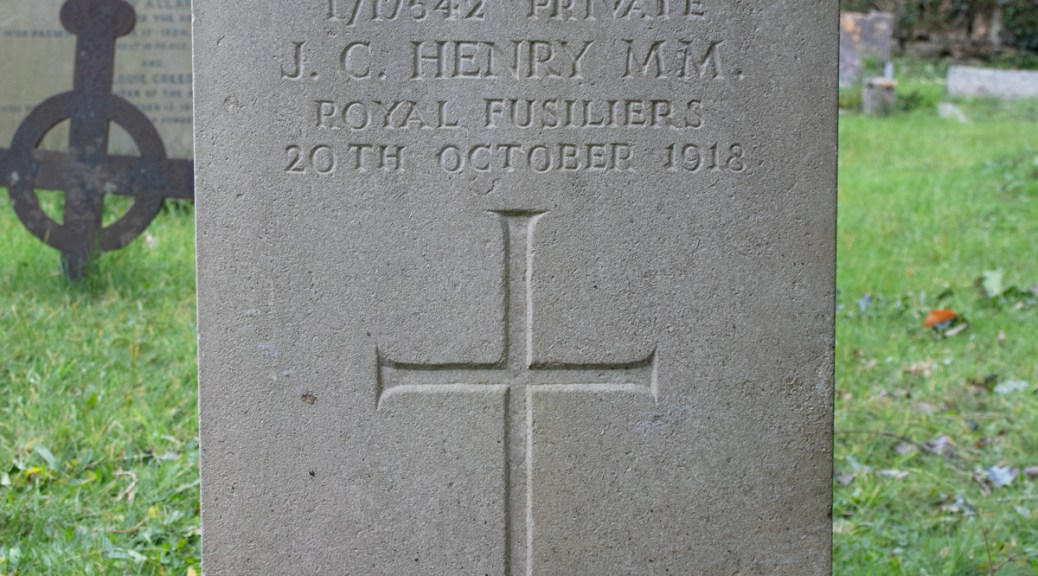
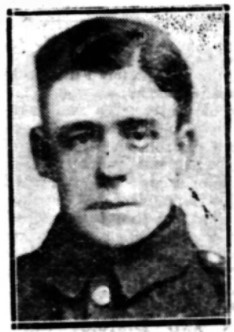
A lot of Joseph Charles Henry’s life is lost to time, and the majority of the information available about him comes from the newspaper report of his funeral.

The funeral with military honours of Private Joseph Charles Henry, Military Medallist, took place at Holy Trinity Church on Saturday afternoon. The case was a very sad one.

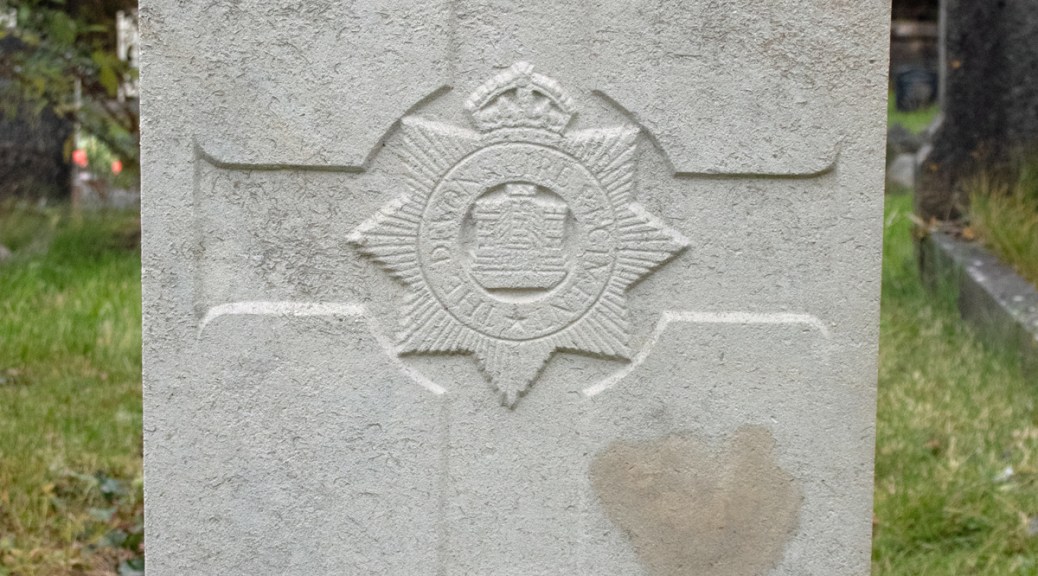
Deceased was a gunner in the Royal Field Artillery, and it was there that he won the Military Medal, in June of last year, but had been transferred to the Royal Fusiliers, and posted to the 30th London Regiment.

He was formerly employed as a miner in Lancashire, and married Lucy, daughter of Edward Reddick, of Coleford [Somerset]. In the clear out of the miners for the urgent needs at home he received his discharge on the 20th October, having ten days previously been handed the medal awarded him at the close of last year for bringing in wounded under heavy fire in June. He was very ill when he returned home on Sunday… and became rapidly worse, passing away on Wednesday. He was about 23 years of age.

His wife and two children were also lying seriously ill, and but for the kindness of friends and of the Salvation Army captain, it might have been even more distressing…

There is sad sequel to the death, Mrs Cullen, sister of Mrs Henry, having been bereaved in like manner by the death of her husband within the week.

Somerset Standard: Friday 1st November 1918

There are no documents to specifically connect Joseph to Lancashire, nor to give insight into his family. He died at home, from a combination of acute pneumonia, delirium and heart failure.

Joseph Charles Henry was laid to rest in the graveyard of Holy Trinity Church in Frome, Somerset.


Private Joseph Henry (from britishnewspaperarchive.co.uk)

For Joseph’s widow, Lucy, this was further heartbreak to suffer. The two children mentioned in the article were, in fact, Joseph’s stepchildren; Lucy’s first husband, Charles Futcher, had died at Ypres in January 1916.


Private Arthur Srodzinski

Private Arthur Srodzinski

Arthur Reginald Srodzinski was born in Paignton, Devon, in October 1890. His great grandfather Stanislaus was born in Poland and emigrated to Devon in the early 1840s. He was an upholsterer, and this is a trade that his son Samuel, and his grandson – Arthur’s father – Henry also followed. Henry and his wife, Sarah, had five children, of which Arthur was the middle one; by the time of the 1901 census, Henry has moved the family to Newton Abbot.

Arthur wanted bigger and better things than upholstering, and sought out a career in the army. In March 1909, he enlisted in the Devonshire Regiment as a Private. His service records show that he was 5ft 5ins (1.69m) tall, and weighed in at 131lbs (59kg). He has hazel eyes, brown hair and a fresh complexion.

Private Srodzinski enlisted for a period of twelve years (seven on active duty), and after his initial training, he was sent overseas. Over the next few years, he was posted to Malta, Cyprus and Egypt but, when was came to Europe, he returned to England, before heading to the Western Front.

Arthur’s time in France was not to be a long one – at the end of December 1914, he was medically evacuated to England, suffering from a heart condition. This was to turn out to be a serious issue, and he was formally discharged from the army on medical grounds just four months later.

Back in Devon, Arthur found work as a butcher and, in the autumn of 1917, he married local carpenter’s daughter Carrie Larkworthy; the couple set up home in Newton Abbot.

In March 1918, Arthur was attending a meeting of discharged soldiers at the Commercial Hotel in Newton Abbot, when he collapsed. Medical treatment was sought, but it proved too late; he had died of a heart attack. Arthur was just 28 years of age.

Arthur Reginald Srodzinski was laid to rest in Newton Abbot Cemetery. Three months later, Carrie gave birth to their one and only child, who she named Reginald.


Private Charles Sparey

Private Charles Sparey

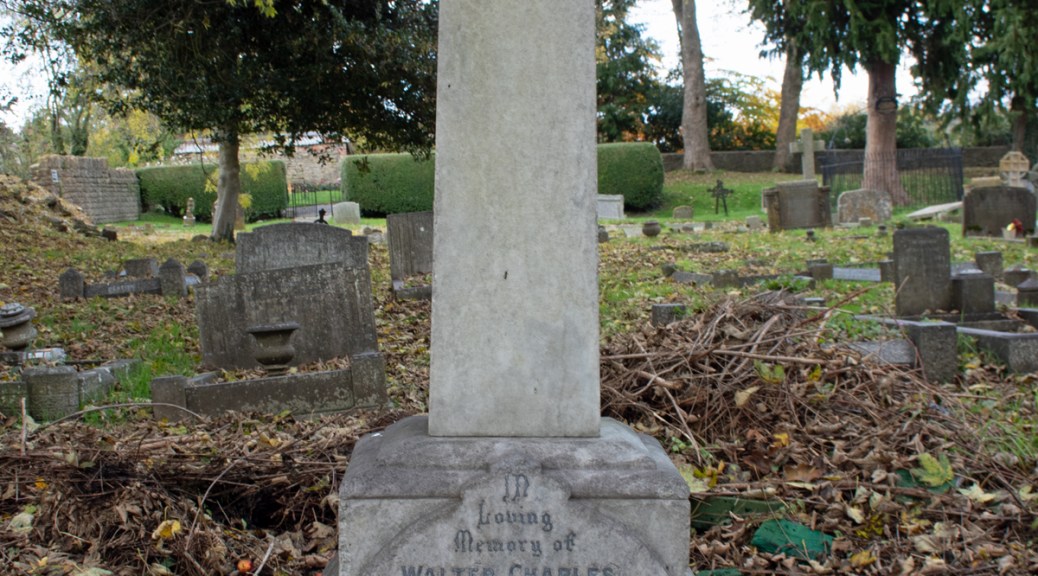
Walter Charles Sparey was born on 3rd Aril 1890 in the Somerset town of Frome. He was a twin, and was one of a total of seven children to Walter and Susan Sparey. Walter Sr was a plasterer and tiler and the family lived on Culver Hill, to the south of the town centre, and next to the Girls’ Asylum Institute.

When he left school, Walter Jr – who was known as Charles, to avoid confusion with his father – found work as a grocer’s porter, while his twin, Henry, was employed as a labourer for the local brewery.

Europe was on the brink of war and, while full details of Charles’ military service are not available, some aspects are clear. He enlisted within weeks of war breaking out, joining the Somerset Light Infantry as a Private. By July 1915, he found himself on the Western Front in France.

Private Carey was caught up in the fighting and, on 3rd April 1916, received gun shot wounds in the back and shoulder. He seems to have recovered, but was dogged by lung and heart afflictions afterwards, and did not return to active duty. He was eventually discharged from military service on 15th August 1917.

Charles returned home, but the effects of his injuries eventually proved too much. He passed away on 1st March 1918, aged just 28 years old, and was laid to rest in the graveyard of Christ Church in his home town of Frome.


Officers’ Cook Carmelo Ellul

Officer’s Cook Carmelo Ellul

Carmelo Ellul was born in Valetta, Malta, on 26th May 1889. There is little information about his early life, other than the fact that he worked as a baker.

He came to England at some point in the early 1900s, and was living in Portsmouth. It was here that he met Selina Southcott, who had been born on the Isle of Wight, and the couple married in 1904. The couple would go on to have three children, all boys: Maurice, who was born in 1911; Alva, who was born in 1912, but who died as a toddler; and Edwin, who was born in 1916.

Carmelo seemed to want a life of adventure: in the summer of 1912, he enlisted in the Royal Navy. Over the next eight years, Officer’s Cook Ellul served on a number of naval vessels, including HMS Bacchante, which toured the North Sea, and was involved in the Battle of Heligoland in August 1914.

Carmelo’s naval life continued after the war ended, although he seems to have been more shore-based than before. He was serving on HMS Waterhen on 24th January 1920, when he collapsed with an epileptic fit, and died of heart failure. He was just 32 years old.

Carmelo Ellul was laid to rest in the Woodlands Cemetery in Gillingham, Kent, presumably as his ship was moored in the nearby Naval Dockyard in Chatham.


Serjeant Major Percy Hawkins

Staff Serjeant Major Percy Hawkins

Percy Harry Hawkins was born in Waltham Green, London, in 1886. One of five children, all boys, his parents were Frederick and Elizabeth Hawkins. Frederick initially worked as a brewer’s collector – collecting rent from tenant pub managers on behalf of the brewery – before working as a tobacconist.

In July 1908, Percy married Gladys Parnell. Sadly, tragedy was to strike and, over the next couple of years both Elizabeth and Frederick passed away in 1909 and 1910 respectively.

By the time of the following year’s census, Percy and Gladys were boarding with a dispensing doctor (or GP), and his wife. Percy listed his occupation as a ‘traveller’, was probably employed as some kind of salesman.

Tragedy was to strike Percy again. Months after the couple had their first child in July 1911, Gladys also passed away, leaving him as a widower and single parent at just 26 years old.

From his later military documentation, it seems that Percy married again in August 1915, this time to a woman called Mildred, and, by September 1919, he had gone on to have three children in total; one boy and two girls.

When war broke out, Percy was quick to enlist. He joined up in Birmingham on 10th August 1914, and gave his profession as a commercial traveller. His records show that he was 28 years and 120 days old, stood 5ft 6ins (1.69m) tall and weighed 131lbs (59.5kg).

After initially joining the Royal Warwickshire Regiment, Private Hawkins was transferred to the Royal Army Service Corps, and was assigned to one of the supply companies.

Over the four years of the war, Percy served on home soil, and was promoted a number of times, rising from Private to Lance Corporal, Staff Sergeant to Quartermaster Staff Sergeant. In September 1917, he was again promoted, this time to Staff Sergeant Major, a position he held for the remainder of the conflict, and on into 1919, when he volunteered for an extra year’s service, rather than being demobbed.

In February 1920, Staff Serjeant Major Hawkins fell ill; he was admitted to the military hospital that had been set up in Brighton Pavilion, Sussex. The diagnosis was heart failure, and, sadly, it was to this that he was to succumb. He passed away on 20th February 1920, aged just 34 years old.

Percy’s family was, by this time, living down the coast in Worthing; his body was brought there for burial and he lies at rest in the Broadwater Cemetery in the town.