Tag Archives: history

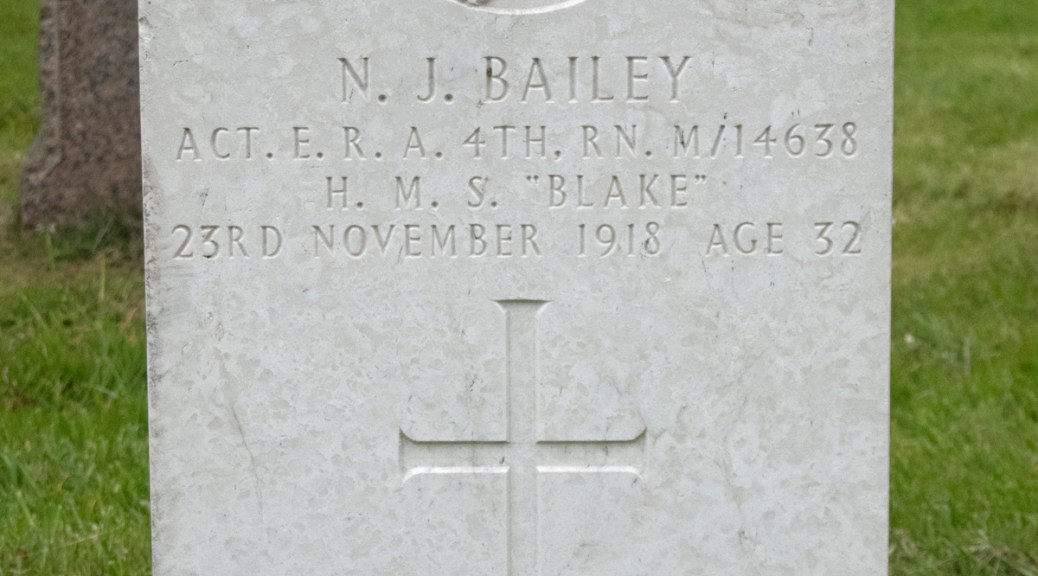
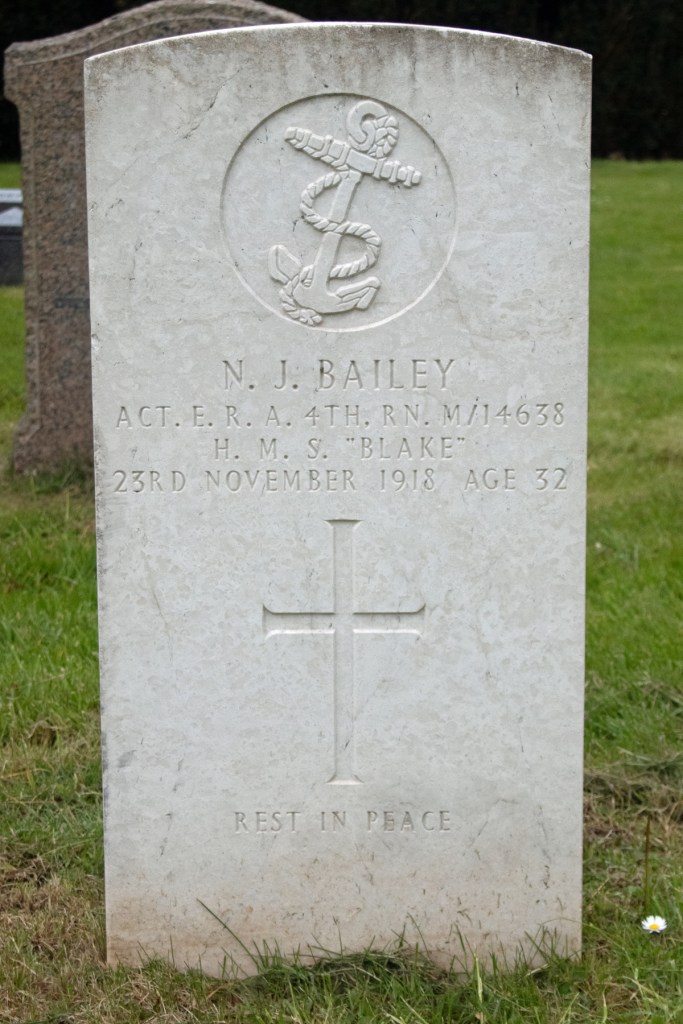
Engine Room Artificer Newman Bailey

Engine Room Artificer 4th Class Newman Bailey

Newman Joynt Bailey was born on 1st August 1887, the eldest of five children to Newman Bailey and his wife Anna (née Joynt). Newman Sr worked as a switchman and signalman for Great Western Railway and had been born in Bath. He married Anna (whose maiden name was Joynt, and who had been born in Ireland) in 1885 and, after a short stint living across the county border in Devon – where Newman Jr was born – he settled his young family in Taunton.

When Newman Jr left school, he became an office boy, but he soon found himself following in his father’s footsteps. He became a fitter for the railways and, by 1910, was living with spitting distance of the GWR depot in the town.

It was here, in William Street, that he set up home with his new wife, Lily Gill, who he had married on 31t July 1910. Lily was the daughter of a Taunton lamplighter, and, to help make ends meet, worked as an ironer at the town’s collar factory.

War was on the way, and in July 1915, Newman enlisted in the Royal Navy. After initial training aboard Vivid II, the shore establishment in Devonport, he was deployed on HMS Blake as an Engine Room Artificer.

HMS Blake was an auxiliary ship designed to provide maintenance support to a flotilla of destroyers or other small warships. With his experience with steam engines at GWR, his knowledge of mechanics would have made him ideally suited to this type of role.

While he survived the war, Artificer Bailey was to be struck down with something much closer to home. In the immediate post-war period, the Spanish Flu pandemic swept the globe, and Newman was to fall victim to it. Admitted to the Royal Naval Hospital in South Queensferry, near Edinburgh, he passed away from the lung condition on 23rd November 1918. He was just 32 years old.

Brought back home, Newman Joynt Bailey was laid to rest in St James Cemetery in his home town of Taunton.
Gunner Walter Coleman

Gunner Walter Coleman

Walter Coleman was born in the spring of 1887, one of seven children to James and Emily Coleman. James was a hairdresser and the family lives in the Somerset town of Taunton.

Walter didn’t follow his father’s trade; instead, after a spell working at a collar factory when he left school, he was soon employed as a groom.

On Christmas Day 1910, he married Kate Norris, and the couple set up in a two-up, two-down in the middle of the town.

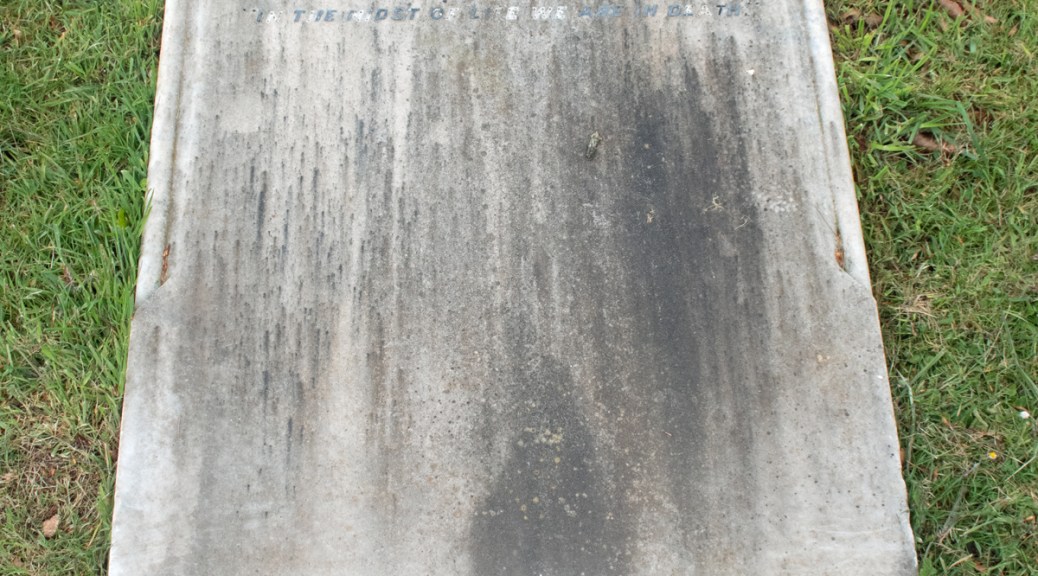
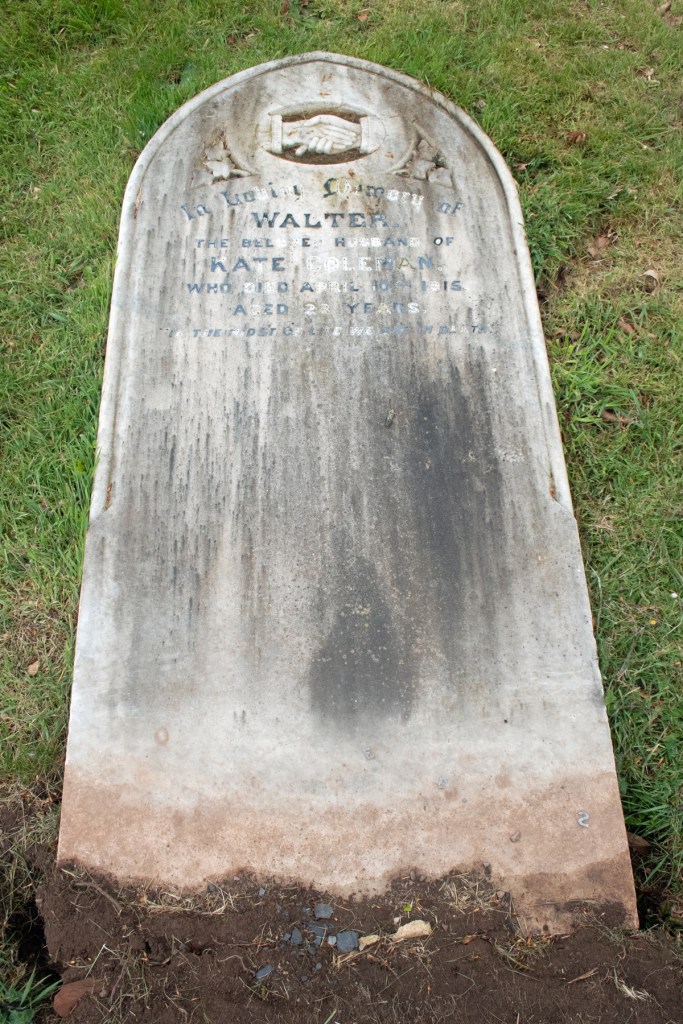
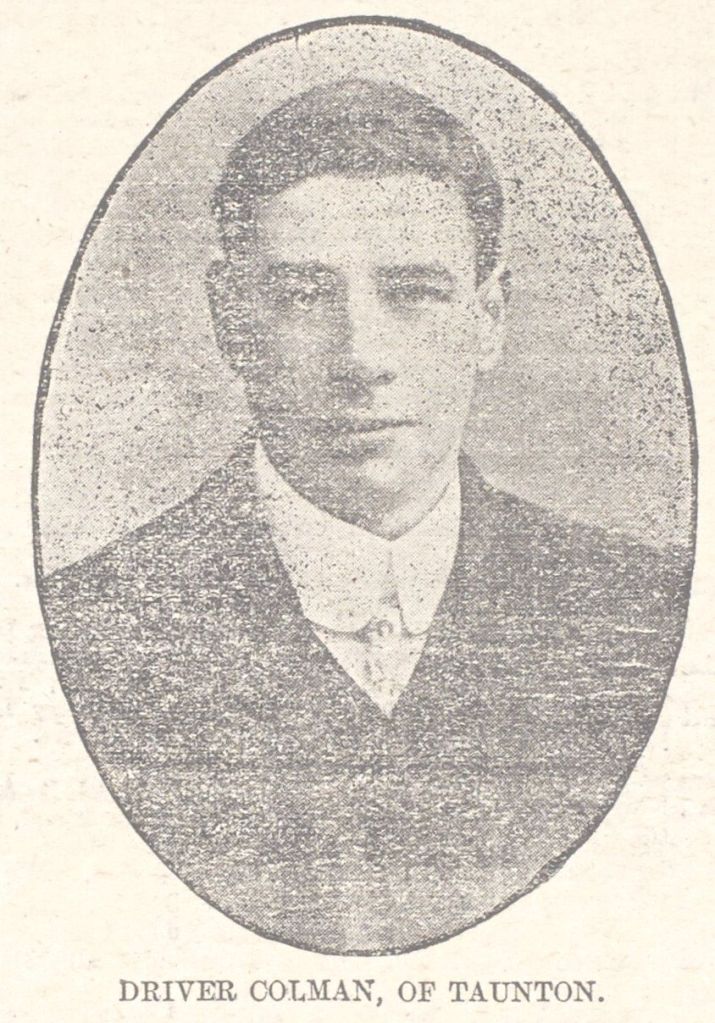
War was on the horizon, however, and when it broke out, Walter signed up straight away. He joined the 72nd Brigade of the Royal Field Artillery as a Driver and trained at the Bulford Camp on Salisbury Plain. It was while he was here on 10th April 1915 that he had an accident and fell off his horse. Sadly, Driver Coleman fractured his skull and died of his injuries that day. He was just 28 years old.

Walter Coleman lies at rest in the St James’ Cemetery in his home town of Taunton.


Walter Coleman (from findagrave.com)

Walter’s older brother Henry James Coleman also served in the Great War. Posted to France as part of the Labour Corps, he died of wounds on 12th April 1918. He was 33 years old, and left behind a widow and four children. He is buried at the Longuenesse Souvenir Cemetery in France.


Gunner William Howard

Gunner William Howard

William Arnold Howard was born in Cumbria towards the end of 1887. He was the youngest of two children, the son of gospel minister Edwin Howard and his wife Alethea. Edwin’s role took him across the country; by the time William was four, the family were settled in Worksop, Nottinghamshire; ten years later, they were based in Taunton, Somerset.

William’s older sister became a music teacher, and was presumably inspired by her father’s calling. William, however, took a different route, and, by the time of the 1911 census, was listed as a physical culture expert.

He had, by this time, met and married a woman called Alice, and the couple had two children, Edna and Marjorie. The census found the young couple living in a three-roomed house in the middle of Taunton.

War was on the horizon, and William enlisted as a Gunner in the Royal Garrison Artillery. His battalion – the 3rd/4th Siege Reserve Brigade – were those manning with large scale weaponry, although, as part of the reserve, Gunner Howard was based in England for the duration of the conflict.

William was awarded the Victory and British Medals for his service but once the Armistice was declared it seems that he fell ill. He was admitted to the Military Hospital in Taunton with exhaustion following a bout of enteritis, and succumbed to this on 15th January 1919. He was 31 years old.

William Arnold Howard lies at rest in the St James Cemetery in Taunton, Somerset.


Private Percy Westcott

Private Percy Westcott

Percy George Westcott was born at the end of 1877, the eldest of six children to George and Elizabeth Wescott. George was a police constable, and brought the family up in the Somerset town of Frome.

After leaving school, Percy sought a trade and, by 1901, was living in the East End of London, working as a wheelwright, work he continued with until the start of the war.

In November 1911, Percy married Annie Maria Meineke, a widow with a young son. The couple set up home in Clapton, East London.

War was on the horizon, however, and Percy was keen to enlist. He volunteered for the Army Service Corps at the beginning of June 1915. His application was turned down, however, and the reason for his discharge given was “Not being likely to become an efficient soldier”.

Percy appears to have been undeterred, however, and by September 1915 had enlisted successfully. He joined the London Regiment as a Private, but this is as much as is documented about his military service.

Private Westcott’s next appearance in records is on the Army Register of Soldiers’ Effects. This confirms that he had served in the 3rd/10th Battalion, which was a territorial force. The document also identifies that he passed away on 20th March 1916, at the age of 38.

While a cause of death is not noted, the location given – the London Asylum, Colney Hatch – is perhaps more significant. As the name suggests, this was a mental health facility; which gives an indication as to the Private Westcott’s state at the time of his passing.

While Percy’s widow was still living in London, his body was taken back to Somerset to be laid to rest. Percy George Westcott is buried in St James’ Cemetery in Taunton, where his parents lived.


Private Charles Criddle

Private Charles Criddle

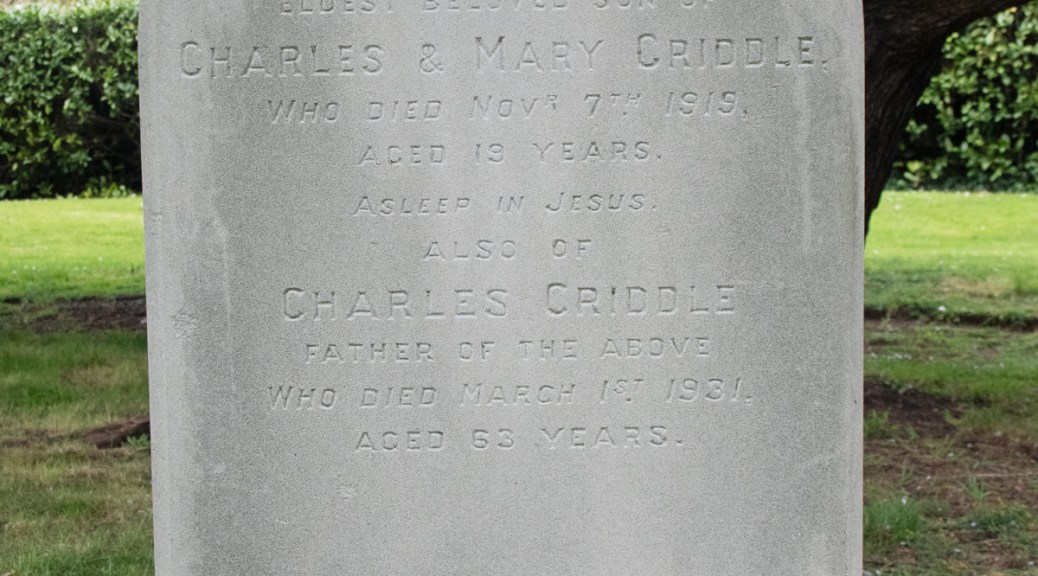
Charles Pretoria Criddle was born on 18th June 1900, the second of five children to Charles and Mary Criddle. Charles Sr was an army reservist, who worked as a labourer for the local council, and the family lived in Taunton, Somerset.

Sadly, little detail of Charles Jr’s life is documented. The Great War broke out when he was only 14, so was too young to enlist at the beginning of the conflict. However, he did volunteer, albeit later on, and joined the 15th Battalion of the Hampshire Regiment at some point in 1918.

Private Criddle’s was one of those lives to be cut tragically short, not by conflict, but by illness. He survived the war, but was subsequently admitted to a military hospital in Brighton, Sussex, where he passed away ‘from disease’ on 7th November 1919. He was just 19 years of age.

Charles Pretoria Criddle lies at rest in the St James Cemetery in his home town of Taunton, Somerset.


Tragedy was to strike again for Charles Criddle Sr. Less than a week after his son had passed, he was called upon to identify the body of his sister, Emma Cable. She had taken her own life after suffering an increasing number of fits over the previous few years.

Emma was a widow, and, since the previous winter, had become increasingly depressed and less physically able, having suffered a debilitating bout of influenza. Early on the morning of Sunday 16th November 1919, she took herself out, dressed in only her nightgown and a pair of boots, and had drowned herself in the River Tone.

At the inquest into her passing, her doctor noted that he had seen her on the previous Thursday “but her condition was not such that he could certify her as insane, but she had been violently hysterical.” [Taunton Courier and Western Advertiser: Wednesday 19th November 1919]

The Coroner recorded a verdict that the deceased drowned herself while of unsound mind.

Emma Cable was 52 years old.


Private Herbert Spiller

Private Herbert Spiller

Herbert George Spiller was born in 1881, the second of four children to George and Emily Spiller. George was a timber merchant and ironmonger, born in Taunton, Somerset, who raised his family in his home town.

When Herbert left school, he found work as a clerk in a solicitor’s office, and this was the trade he followed, eventually becoming a solicitor in his own right.

In March 1907, he married Winifred Lewis, an outfitter’s daughter, and the couple soon emigrated, arriving in Perth, Australia, later that year. They had two children in Australia; a son, who sadly passed as a babe in arms, and a daughter. Within three years, however, the Spillers were back living in England again and went on to have four further children, three of whom survived infancy.

War had arrived, and Herbert enlisted on 11th December 1915, but was initially placed as a reserve. He was finally called to do his duty for King and country on 6th September 1917 and joined the 28th Battalion of the London Regiment. After initial training, Private Spiller was sent out to the Front, arriving in France in April 1918.

Herbert was back on home soil after three months, suffering from albuminaria (a disease of the kidneys) and served in territorial depots until he was demobbed in December 1918.

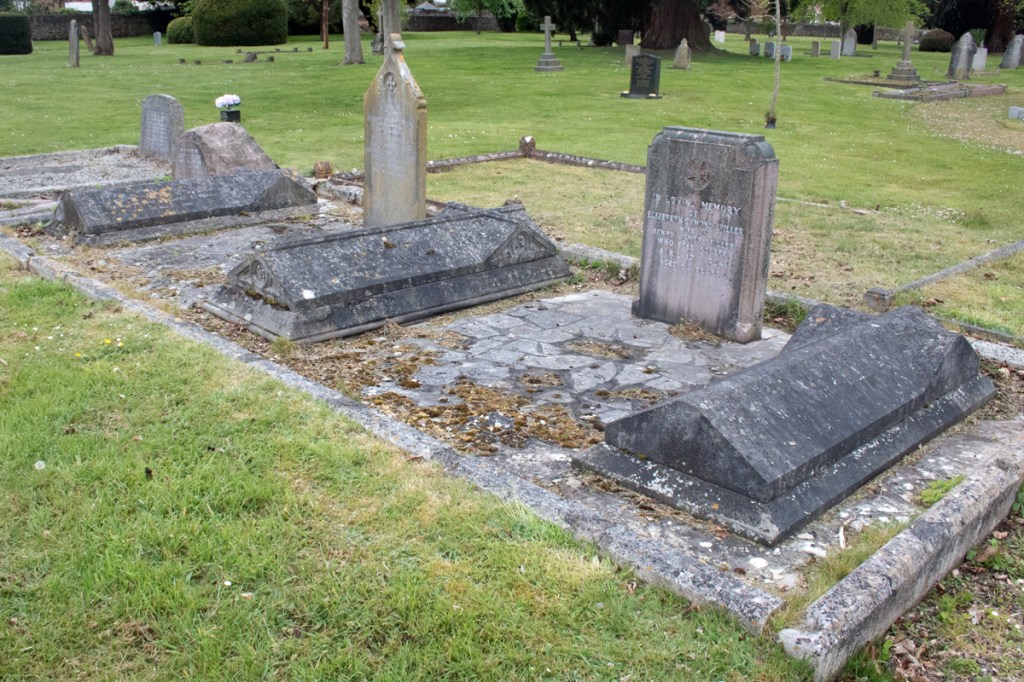
At this point, Herbert disappears from the records. It seems likely that his illness was the cause of his passing, but this cannot be confirmed. Either way, Herbert George Spiller died on 7th May 1920, at the age of 39 years old. He lies at rest in the St James Cemetery in his home town of Taunton, Somerset.


Please note: While Private Spiller was afforded a Commonwealth War Grave, his exact burial location is not identifiable. The image at the top of this post, therefore, is of the other family graves in the cemetery.


Herbert Spiller (from findagrave.com)

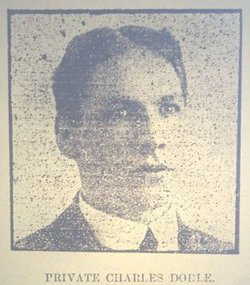
Private Charles Doble

Taunton St James

Charles Doble – also known as Charlie – was born 12th September 1884, the second of seven children to James and Mary Ann Doble from Dunkeswell in Devon. James was a carpenter, but on leaving school, Charles initially found work as an errand boy, before becoming employed as a porter at the Taunton and Somerset Hospital.

The 1911 census found Charles in the village of Cotford St Luke, working as an attendant at the Somerset and Bath Asylum. Housing more than 800 patients at the time, it is reasonable to assume that his duties would have been wide and varied.

Details of Charles’ military service are scarce. He enlisted in the Hertfordshire Regiment as a Private in April 1916, but soon transferred over to the 13th Battalion of the Royal Sussex Regiment.

In the spring of that year, Charles married Ethel Willmott; presumably this was before he was sent abroad, because he soon found himself on the Western Front.

His battalion was caught up in the Battle of the Boar’s Head, during with the Royal Sussex Regiment succeeded in capturing a section of the German front line trench and second line trench, before being pushed back because of mounting casualties and a lack of ammunition.

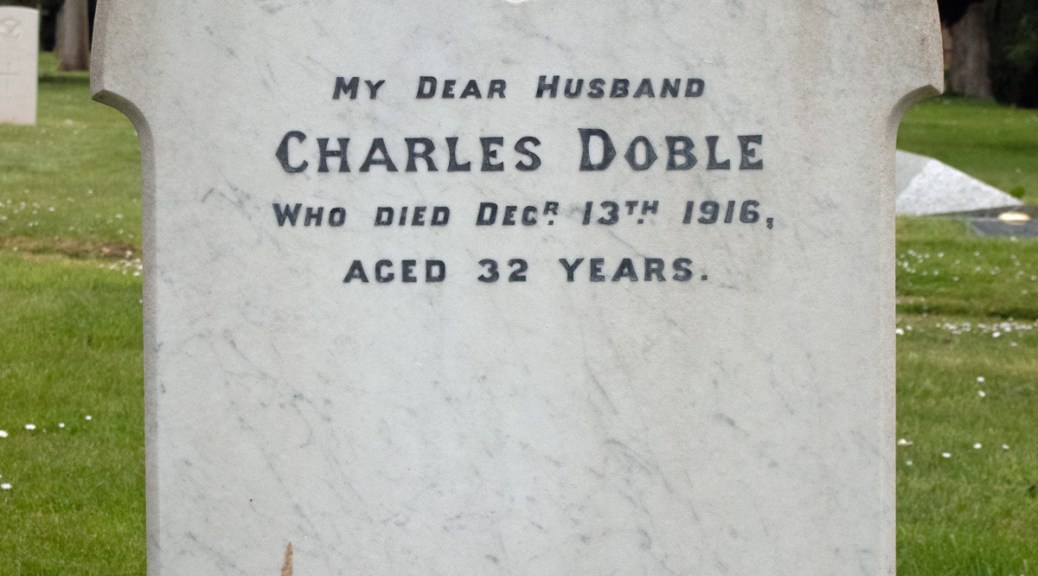
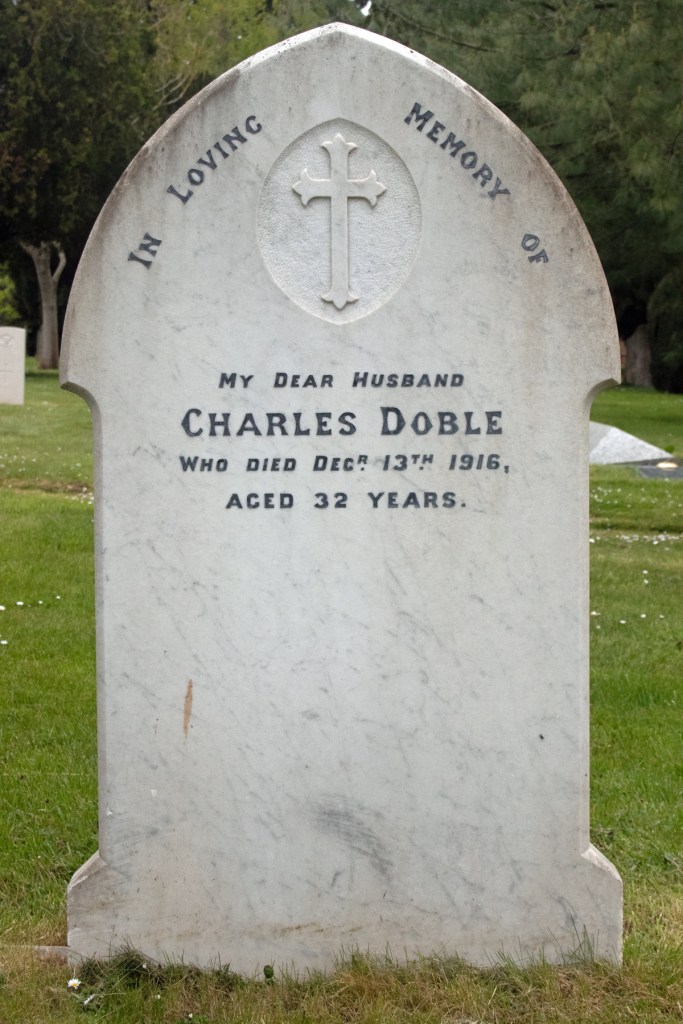
It seems likely that Private Doble was one of those injured on what became known as The Day Sussex Died, as he was evacuated back to England for treatment. Admitted to a military hospital in Stourbridge, sadly his wounds proved too much for Charles to bear; he passed away on 13th December 1916, at the age of 32 years old.

Charles Doble’s body was brought back to Taunton, and he was buried in the St James’ Cemetery in the town.


Charles Doble (from findagrave.com)

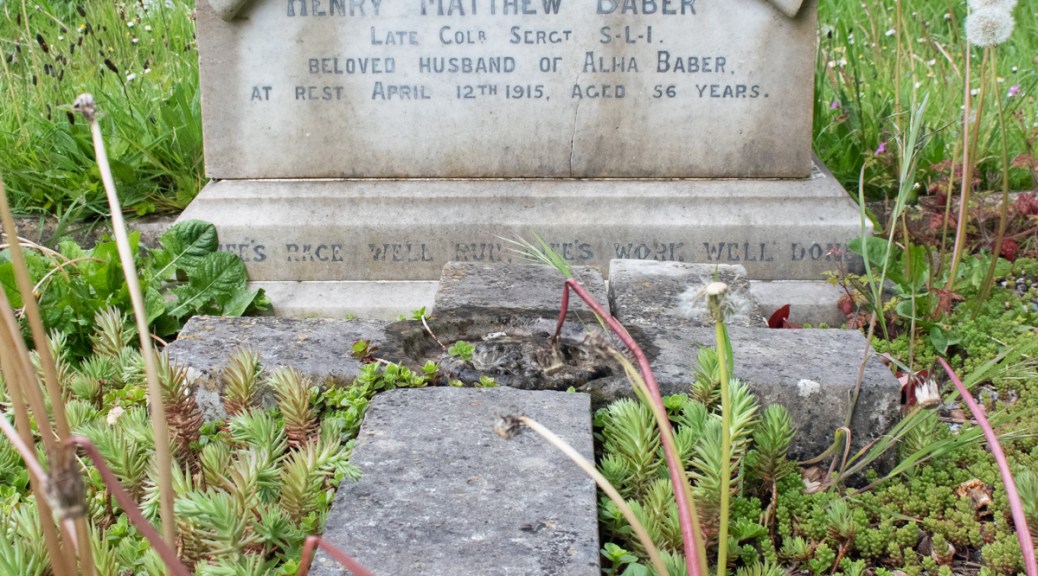
Colour Sergeant Henry Baber

Sergeant Henry Baber

Henry Matthew Baber was born in the spring of 1859, the second of six children to Henry and Jane Baber. Henry Sr was a cordwainer – or shoemaker – and the family lived in Bristol. Or, at least, most of them did. The 1871 and 1881 censuses show Henry Sr and Jane happily living with their children, but Henry Jr is noticeable in his absence.

In August 1887, Henry married Sarah Jane Hardwidge in the village of Paulton, near Bath. His younger brother Alfred and two of his sisters, Annie and Ellen, all bear witness to the wedding, at which Henry gives his profession as coachman.

The newlyweds settle down in Weston-super-Mare, and go on to have two children, Henry and Kathleen. Sadly, the couple’s happiness was to be cut short, when, in 1891, Kathleen passed away, followed just two years later by Sarah, at the age of just 32 years old.

With a young boy to bring up, Henry sought a new companion and, just over a year after Sarah’s death, he married Alma Quantick, who was fourteen years Henry’s junior. Together, they went on to have six children and, by the time of the 1901 census, the family were living in the Somerset village of Yatton. Henry, by this time, was working as an insurance agent for Prudential, a profession that was to last him through to the start of the First World War.

From the early 1890s, Henry had enlisted in the local Yeomanry. While only a reserve force, he had a short spell in Egypt, fighting at Tel-el-Kibir in 1882. Harry worked his way up through the ranks, eventually attaining the role of Colour Sergeant. He was brought out of reserve status on 4th August 1914, at the age of 55, and was assigned to the 4th Battalion of the Somerset Light Infantry.

There is little else to confirm his military career during the Great War; he was discharged in November 1914, but there is nothing to confirm whether he had seen active service during those four months or not.

Colour Sergeant Baber’s passing is also shrouded in mystery. He died on 12th April 1915, but the cause of his death is lost to time. He was 56 years old when he died.

Henry Matthew Baber lies at rest in the graveyard of St Mary’s Church in Yatton, Somerset.


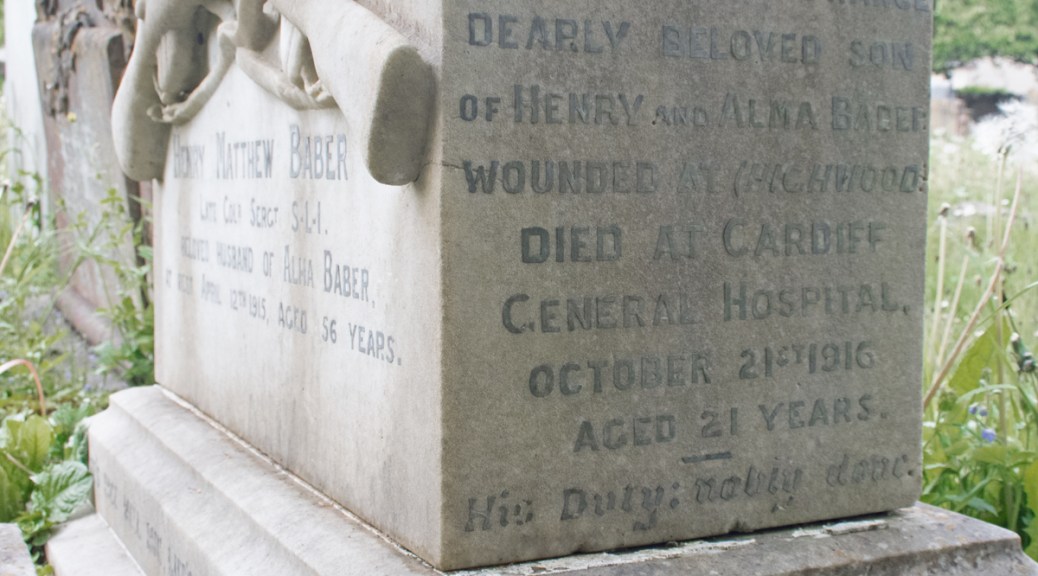
Henry and Alma’s eldest son William Albert Baber is also interred in the family grave and, within eighteen months, Alma had lost both her husband and her eldest son. William was 19 years old when war broke out, and his story can be found here.


Private William Baber

Private William Baber

William Herbert Baber was born in May 1895, the oldest of six children to Henry and Alma Baber. By the time of William’s birth, Henry was an insurance agent for the Prudential insurance company and brought his family up in the Somerset village of Yatton. William’s father had been widowed early on, and so, in addition to his five younger siblings, he also had an older half-brother, also called Henry.

By the time of the 1911 census, William was working as a clerk in a coal office, and the family were living in a five room house not far from the village centre.

Little remains documented about William’s military service. He enlisted in the Somerset Light Infantry, but transferred to the 24th Battalion of the London Regiment. He was involved in the Battle of High Wood – part of the Somme offensive – and was wounded during the skirmish.

Evacuated back to home soil, Private Baber was treated in one of the military hospitals in Cardiff. Sadly, he was to succumb to his wounds, and passed away on 16th October 1916. He was just 21 years old.

William Herbert Baber lies at rest in the family grave in the churchyard of St Mary’s in Yatton.


William’s father Henry was also called up for war duty. You can read more about his story here.


Private Hubert Parsons

Private Hubert Parsons

Hubert Stanley Parsons was born towards the end of 1892, the eldest of eight children to Frank and Emily Parsons. Frank was a burner, working in the lime kilns in his home village of Yatton, in Somerset. When he left school, Hubert followed in his father’s footsteps, while his younger siblings found work in the local paper makers and bakers.

Sadly, a lot of Hubert’s military records are lost to time. What is clear is that he enlisted on 22nd September 1915, joining the 10th Battalion of the Devonshire Regiment as a Private. He served on the Western Front, gaining the Victory and British Medals and the 1915 Star in the process.

In November 1915, Private Parsons’ battalion was moved to Salonika, Greece, to help fight on the Serbian front. Whether Hubert ever fought in the Balkans is not known; the next – and last – time he appears in documentation is in the Register of Soldiers’ Effects. This confirms simply that he died in hospital on 27th March 1917. The cause and location are not known, but he was just 24 years of age.

Hubert Stanley Parsons lies at rest in the graveyard of St Mary’s Church in Yatton, Somerset.