Category Archives: Royal Sussex Regiment

Ordinary Seaman Harry Hosier

Ordinary Seaman Harry Hosier

Henry – or Harry – Hosier was born on 22nd September 1880 at 2 Wenban Terrace, Worthing, West Sussex. The fourth of ten children, his parents were Charles and Elizabeth. Charles was a jack of all trades, working as a carman for the railway in 1881, and a gardener by 1891. That census recorded that the family had moved to 1 Ham Road, in East Worthing, and that Charles was the only person bringing money into the household.

When Harry completed his schooling, he found work as a coachman. On 3rd November 1900 he married Elizabeth Jenkins at Christ Church in Worthing town centre. Elizabeth was living in nearby Broadwater when the couple exchanged vows. Her father is unknown and the surname she went by was her mother Charlotte’s first husband’s name, although he died eighteen months before she was born. Charlotte married a second time, to a Stephen Lillywhite, and, for a while her daughter was listed with his surname. By the time she married Harry, however, Elizabeth had reverted to Jenkins.

Harry and Elizabeth initially moved in with Charlotte and Stephen. By the time of the 1911 census, however, they had set up their own home on Broadwater Street, to the north of Worthing town centre. The couple would go on to have seven children, although two would pass away in infancy.

Harry was working as a cab driver by this point but, when war broke out, he would be called upon to play his part. He enlisted on 26th June 1916, joining the Royal Navy as an Ordinary Seaman. His service papers show that he was 5ft 3.5ins (1.61m) tall, with dark brown hair, brown eyes and a dark complexion. His is also noted as having a number of tattoos on his arms.

Ordinary Seaman Hosier was initially sent to HMS Victory, the Royal Naval Dockyard in Portsmouth, Hampshire, for his training. In August 1916, however, he was assigned to the destroyer HMS Broke. Fresh from the Battle of Jutland, she was part of the 4th Destroyer Flotilla, charged with protecting the English Channel.

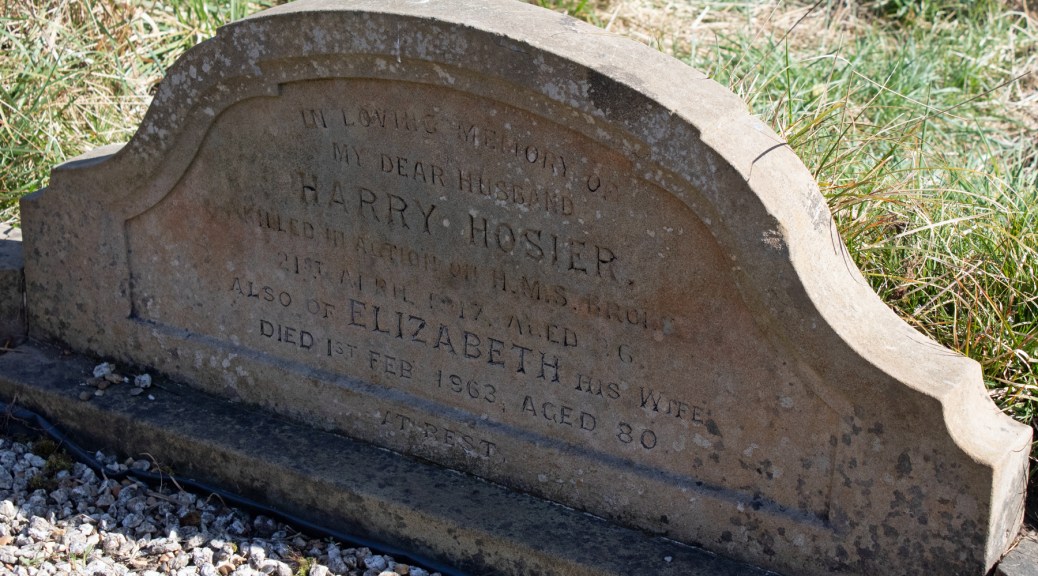
On the 20th and 21st April 1917, Broke took part in the Battle of Dover Strait against six German torpedo boats. In the confusion of the skirmish, Broke rammed the enemy ship SMS G42, and the two vessels became locked together. For a while the crews fought in hand-to-hand combat, before the British ship managed to break free. Soon afterwards the German boat sank. Badly damaged, HMS Broke had to be towed back to Dover: 21 of the crew – including Ordinary Seaman Hosier – were killed, and a further 36 were wounded. Harry was 36 years of age.

The body of Harry Hosier was taken back to Sussex for burial, his funeral at Broadwater Cemetery, making the local newspapers:

A fallen hero of the naval fight off Dover last week was buried in Worthing yesterday with full service honours. Worthing people welcomed the opportunity to show honour to a townsman who had laid down his life in one of the most brilliant naval exploits of the war, and the occasion was unique in that the funeral was the first to take place locally during the war of a naval man killed in action. Seaman Harry Hosier was serving on the destroyer leader “Broke,” so valiantly commanded by Commander Edward Evans, CB, when he met his end. He died the death of a Briton after nobly doing his duty. The coffin was conveyed from Dover to Worthing for the funeral at the request of the deceased’s relatives. Scenes of the most impressive character were witnessed, the route of the procession being thronged from one end to the other, and several thousand people assembled at the cemetery…

The Red. EJ Elliott (Rector) officiated, and from the pulpit gave a stirring address. He said “In the course of the 700 years’ history of this church, I don’t suppose there has ever been a service quite like the present one – the funeral of a Broadwater man killed in action. Forty or more Broadwater men have already made the supreme sacrifice, and we are glad this afternoon to be able in a special way to honour these noble men. In all probability Henry Hosier will be the last in this war who will be called upon to die whose funeral will take place at home. In doing honour to whim whose mortal remains are with us this afternoon – the remains of a gallant bluejacket belonging to HMS Broke – we do honour to our two score other parishioners who at the call of duty, joined up, and are now sleeping their last sleep.

“They heard their Motherland calling to them for the help of their sons and at once, with enthusiasm and alacrity, they responded. They loved their loves as we do, but they loved something more – they had a deeper love for their country and for the safety of their homes and hearth. They died, let us remember, for us, in order that we at home might be spared the agony and the martyrdom of the Belgians and the Serbians. They died in order that we might remain safe and comfortable in the home land and not be called upon the endure the nameless agony and also the atrocities perpetrated by the Huns. We leave the soul of Henry Hosier and of our 40 other Broadwater heroes in God’s hands…”

[Sussex Daily News: Friday 27th April 1917]


Two of Harry’s siblings – Christopher and Ernest – had added to the tally of Broadwater’s forty.

Ernest Hosier was born in 1895, and was the ninth of Charles and Elizabeth’s children. He found work as an errand boy when he left school, but managed to associate himself with the wrong group of friends.

Ernest Hosier, 14, errand boy, on bail, and Frederick Clark, 21, rag and bone collector, were indicted for offences against Fanny Newman and Alice Smith, girls between 13 and 16 years of age, at Worthing, between December 1st, 1909, and March 11th, 1910.

Clark pleaded guilty and Hosier not guilty. The latter gave an absolute denial to the charge, and suggested that the girls had associated him with the charge in revenge because he would have nothing to do with them…

After hearing the evidence, the jury found Hosier not guilty, and his Lordship said he was discharged without any imputation whatever upon his character. Clark was sentenced to six months’ hard labour, his Lordship remarking that girls of the character of those in this case were a terror and a real temptation to men.

[Hastings and Bexhill Independent: Thursday 30th June 1910]

Soon after the court hearing, Ernest joined the Royal Navy, the 1911 census recording him as a boarder at the Training Establishment in Shotly, near Ipswich, Suffolk. After serving on a number of vessels, he came of age, and formally enlisted as an Ordinary Seaman on 16th October 1912. Within a year he had been promoted to Able Seaman and in the summer of 1914, he was assigned to the battlecruiser HMS Invincible.

Able Seaman Hosier was on board during the Battle of Heligoland Bight in August 1914, and the Battle of the Falklands that November. In May 1916 Invincible was involved in the Battle of Jutland, and Ernest was one of the 1,000 crew who were killed when she was was hit by a number of German salvoes and sank. Able Seaman Hosier was 21 years of age, and is commemorated on Portsmouth Naval Memorial.


Christopher Hosier was born in 1887, and was working as a cellarman when war broke out. He enlisted in the Royal Sussex Regiment, and was assigned to the 7th Battalion.

In the autumn of 1917, Private Hosier’s unit was caught up on the Western Front, as Arras and Cambrai. It was here, on 20th November 1917, that he was killed, although his body was not recovered. He was 29 years of age, and is commemorated on the Cambrai Memorial.
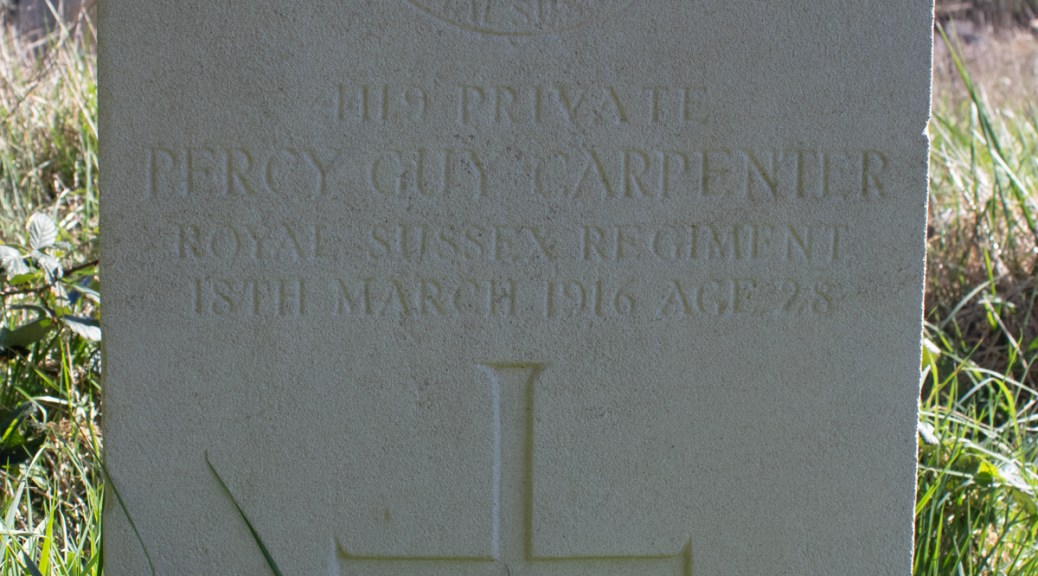
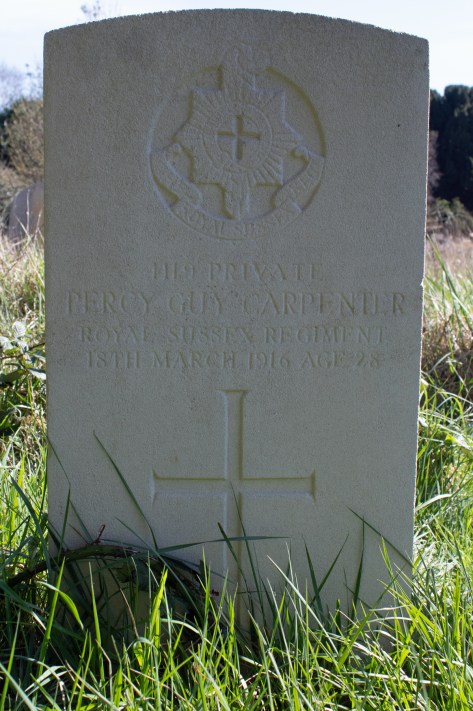
Private Percy Carpenter

Private Percy Carpenter

Percy Guy Carpenter was born in Worthing, West Sussex, in the autumn of 1887. One of eight children, he was the middle of three sons to Alfred and Alice Carpenter. Alfred was a chief clerk at the town’s post office, and the 1891 census found the family living on Oxford Road, to the south of the central railway station.

By the time of the next census, taken in 1901, the family had moved to a small cottage at 93 Newland Road. Alfred had changed jobs, and was noted as being the chief clerk at the local gas works. This seemed not to have been a long-term position, however. The 1911 census recorded his occupation as post office clerk (out of employment).

The Carpenter family were still living at 93 Newland Road by this point, and, of the six children who remained at home, all of them were working. Percy was employed as a tailor’s porter, while his sibling’s jobs included chemist’s stock keeper, ironmonger’s clerk and bookbinder’s apprentice.

War came to Europe in the summer of 1914, and Percy would be called upon to serve his country. Little information about his time in the army remains, but it is clear that he enlisted in the Royal Sussex Regiment at some point early in 1915.

Attached to the 2nd/4th (Cinque Ports) Battalion, Private Carpenter found himself in France by the end of March. He remained overseas for a year, but, while there, he contracted pneumonia. Medically repatriated to Britain for treatment, Percy was admitted to the 1st Eastern General Hospital in Cambridge, but died from a combination of pneumonia and nephritis on 18th March 1916. He was 28 years of age.

The body of Percy Guy Carpenter was taken back to Sussex for burial. He was laid to rest in Broadwater Cemetery, not far from where his family still lived in Worthing.


Private Harry Parsons

Private Harry Parsons

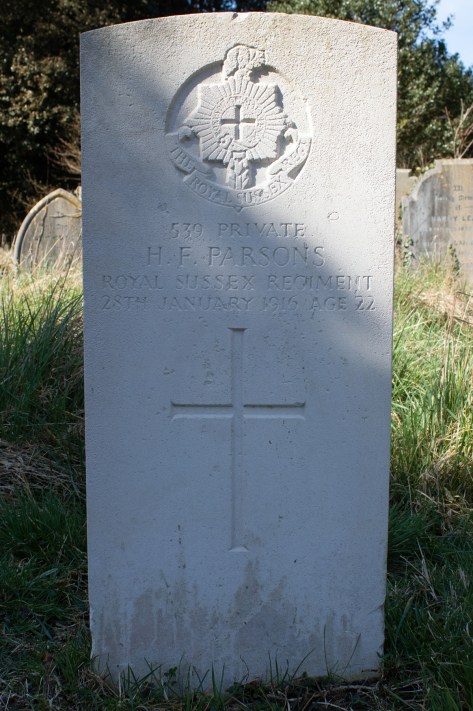
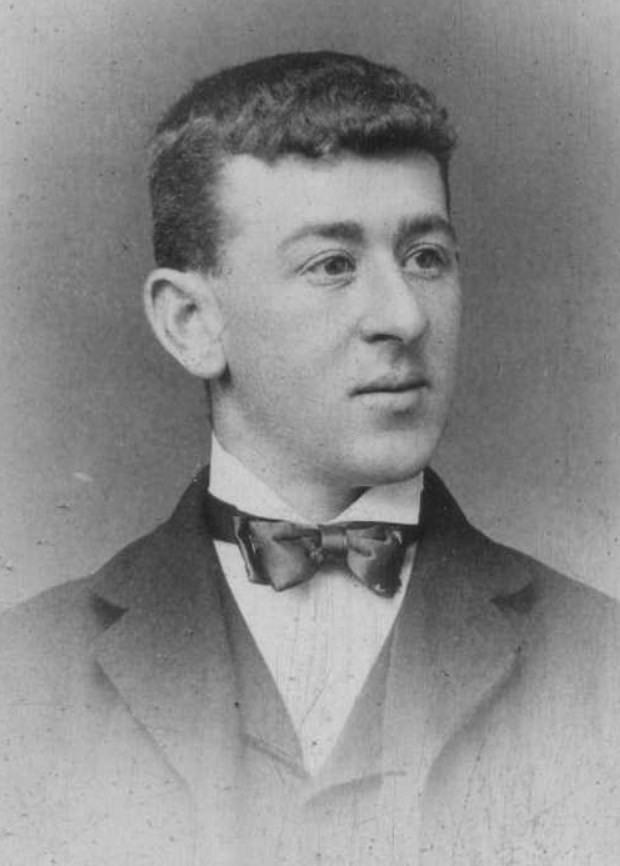
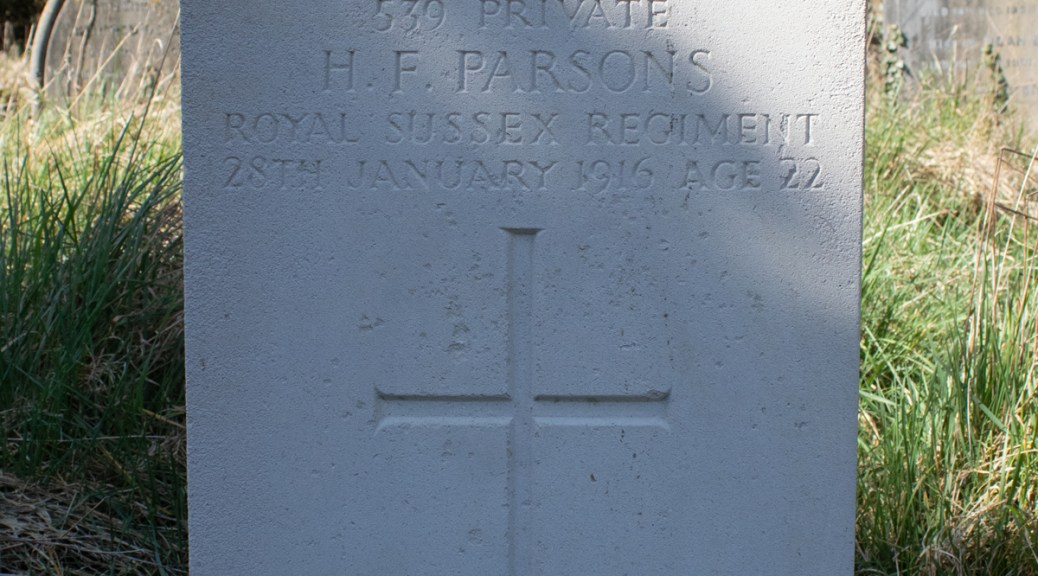
Harry Frank Parsons was born on the 23rd January 1894 in Angmering, West Sussex. The third of four children, he was the only son to Henry and Annie Parsons. Henry was a garden labourer, who died when his son was just four years old: by the time of the 1901 census, Annie had lost her husband and two of her daughters. She was living with her surviving children in a cottage close to Worthing town centre.

When he completed his schooling, Harry found work with a local fruit nursery. The 1911 census found him and his mum living at 19 Eldon Road, Worthing: his was the only wage coming in.

War broke out in the summer of 1914, and Harry was quick to step up and play his part. He enlisted in the Royal Sussex Regiment on 11th September and, as a Private, was assigned to the 11th Battalion. His service record shows that he was 5ft 6ins (1.67m) tall, and weighed 129lbs (58.5kg). He was noted as being a Wesleyan, with dark brown hair, blue eyes and a fresh complexion.

Private Parsons spent the next twelve months on home soil, but in the summer of 1915, he developed tuberculosis. The contagious condition led to his discharge from the army, and he was formally stood down on 14th September 1915, having serves for a year and four days.

At this point, Harry’s trail goes cold. It is likely that he returned home, but his lung condition lingered. He passed away on 28th January 1916, five days after his 22nd birthday.

The body of Harry Frank Parsons was laid to rest in Broadwater Cemetery, to the north of Worthing town centre.


Private Harry Parsons
(from ancestry.co.uk)

Annie had now lost three of her children. Her remaining child, daughter Edith, had married a month after her brother’s passing. She would go on to have two children with husband William Hoad, although their oldest, son William Jr, would die when just five years old.

Edith also passed away before her time, dying of tuberculosis and pleurisy in 1941. Annie, who had now outlived her husband and all of her children, lived until the spring of 1949.


Private Frederick Searle

Private Frederick Searle

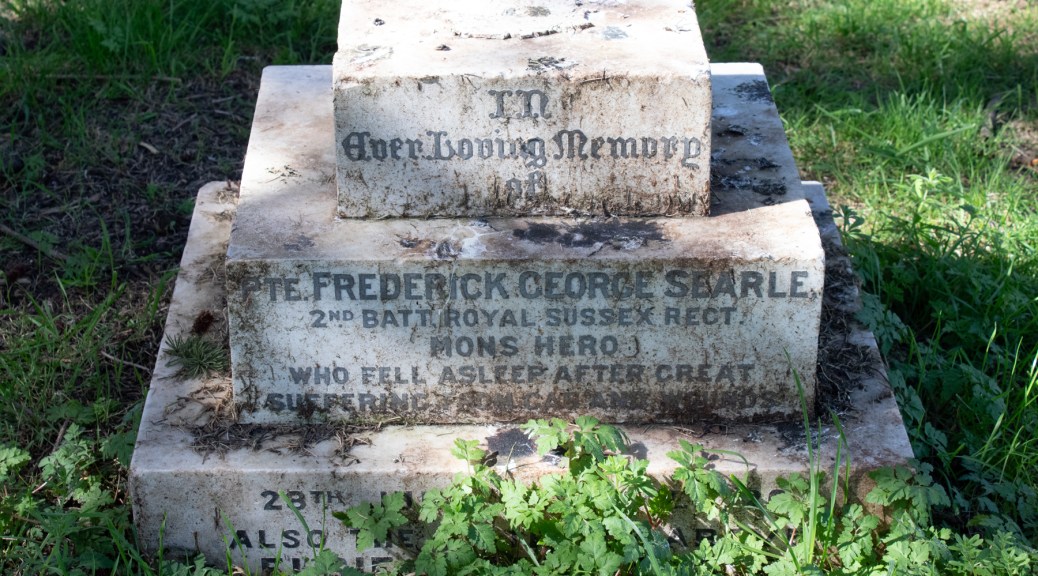
Frederick George Searle was born in the Sussex village of Warminghurst in the spring of 1894. One of thirteen children, his parents were William and Annie Searle.

William was a carter, and moved the family to where the work was. The 1901 census found the Searles living in Wiggonholt, between Pulborough and Storrington. By 1911, however, they had moved south, and were living in a cottage on the golf links in Broadwater, to the north of Worthing.

By this point, William was employed as a carter at the golf course, while three of the Searle children were also working at the club. Frederick – now 16 years of age, was a caddie, while his older brothers did mainly grounds work.

As one of thirteen siblings, Frederick was keen to make his own mark on the world and, on 24th September 1912, he enlisted in the Royal Sussex Regiment. His papers show that he was 5ft 5ins (1.65m) tall, and weighed 121lbs (54.9kg). He had light brown hair, grey eyes, and a number of scars – two on his back, one on the left side of his head and one at the base of his right forefinger.

When war broke out, Private Searle’s unit – the 2nd Battalion – was sent to France. He survived the Battle of Mons and subsequent retreat, but was badly wounded in the left arm on 13th November 1914, and medically evacuated to Britain for treatment. Frederick was moved to a depot while he recuperated, but because of his injury, he was formally discharged from the army on 30th April 1915.

Frederick returned to Sussex, and family life. In time, he took up his role on the golf club once more, but this seemed not to be enough for him. On 31st May 1917, he re-enlisted, joining the Mechanical Transport unit of the Army Service Corps as a Private. He was posted to Isleworth, Surrey, but his injury seemed to still be nagging at him. Despite his best efforts, and with the support of his superiors, at the end of August he took the decision to stand down, and was discharged from duty once more.

At this point, Frederick’s trail goes cold. What can be confirmed is that he passed away on 28th June 1919: he was 25 years of age.

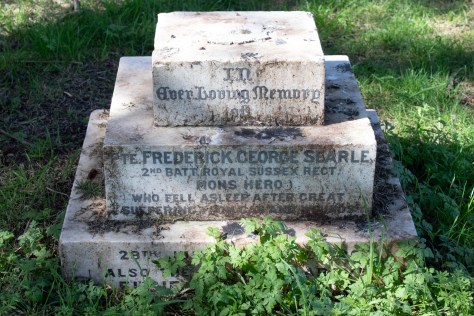
The body of Frederick George Searle, former Private in two regiments, was laid to rest in the family plot in Broadwater Cemetery, not far from where his family still lived.


Private Reginald Reeves

Private Reginald Reeves

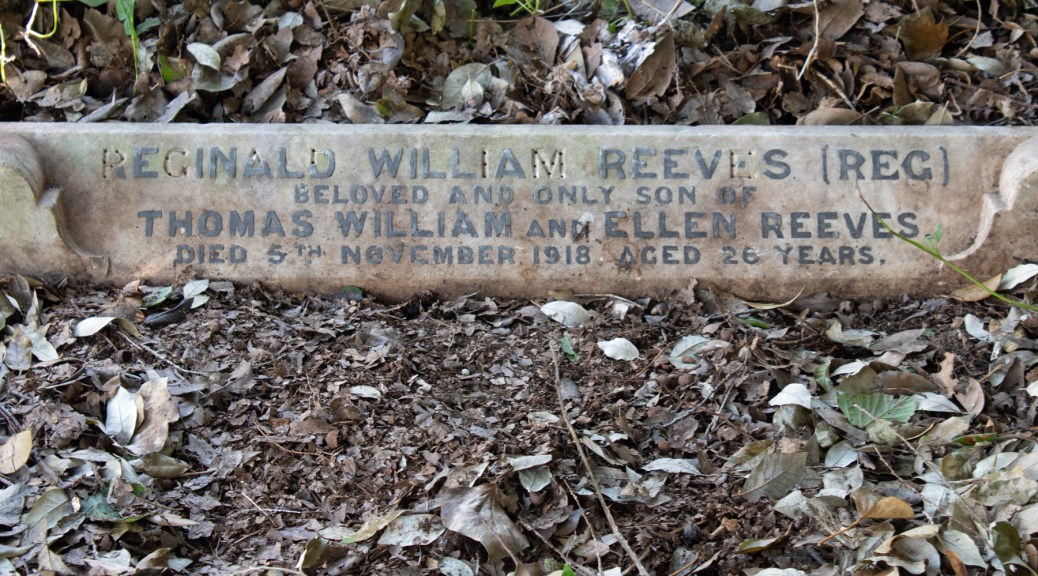
Reginald William Reeves was born in the summer of 1892. The older of two children – his sister Doris passed when she was just six years of age – his parents were Thomas and Ellen Reeves. Thomas was an ironmonger, and the family lived above the shop at 167 Montague Street, Worthing, West Sussex.

Reginald also took up metalwork, becoming his father’s apprentice. The 1911 census notes that the family had moved a short distance, and were now living at 153 Montague Street. A later advert in the Worthing Gazette highlighted special value gas mantles that were double strength and all British made, being sold by TW Reeves & Son, Ironmongers at 135 Montague Street, the family having moved even closer to the town centre.

When war broke out, Reginald would step up to serve his country. Full details of his time in the conflict have been lost, but it is clear that he served as a Private in the Royal Sussex Regiment, and was assigned to the 6th Battalion. The unit was based in Britain and Ireland during the war, and it seems that Private Reeves would not have spent any time in the thick of battle.

By the autumn of 1918, Reginald was back in Worthing, although his trail is pretty hard to follow. He died at a house on Shakespeare Road on 5th November through causes unknown; he was 26 years old.

The body of Reginald William Reeves was laid to rest in Broadwater Cemetery, to the north of Worthing, his parents thanking well-wishers for their sympathy in that week’s edition of the local newspaper.


Lance Corporal Charles Waller

Lance Corporal Charles Waller

The early life of Charles Henry Waller is a challenge to piece together, and it is easier to work backwards.

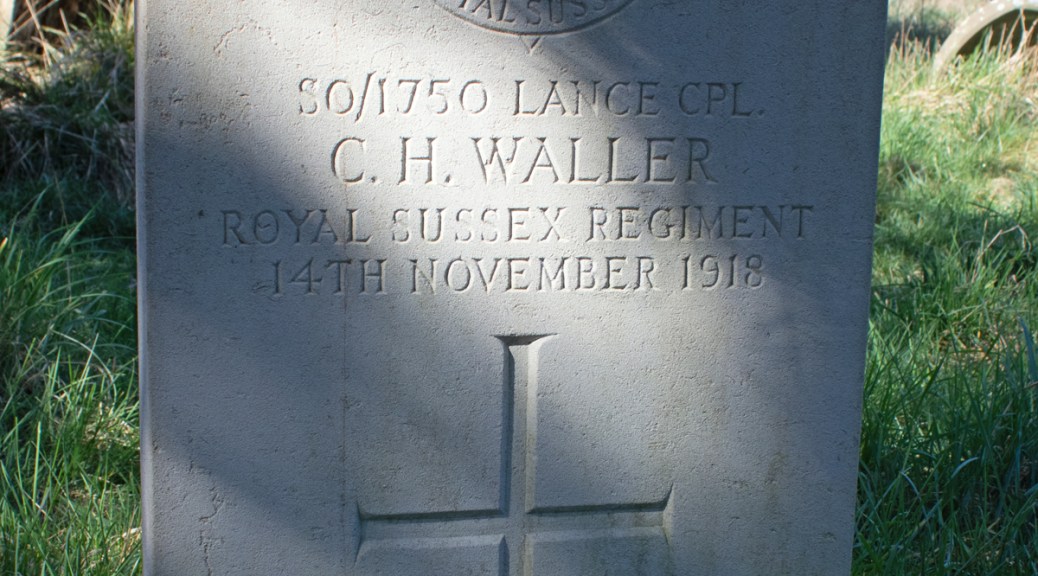
A Lance Corporal in the Royal Sussex Regiment, Charles died from influenza in the 2nd Eastern General Hospital, Brighton, Sussex, on 14th November 1918. His entry in the British Army Register of Soldiers’ Effects show that he had enlisted before the spring of that year, and gave his beneficiary as Elsie.

Lance Corporal Waller’s Dependents’ Pension card expanded on this, giving her details as Mrs Elsie Smith, of 91 High Street, Worthing. The card, however, states that the pension was refused, as she had attained the age of 16.

Intriguingly, while it has not been possible to trace Charles in the 1911 census, Elsie does appear. She is recorded as living with her husband, carter Arthur Smith, and son, three-year-old James. The three are also recorded in the 1921 census, with another child, Arthur. The family, who were living at 35 Lyndhurst Road, Worthing, by this point, had a boarder, George Frederic Waller – possibly a relation of Charles.

As to Charles himself, his life looks to remain a mystery. There are records for people with the same name in the area, but without an age it isn’t possible to definitively identify him. When he passed away, he was laid to rest in Broadwater Cemetery, Worthing, not far from Elsie and her family.


Private Ernest Pointing

Private Ernest Pointing

Ernest Arthur Pointing was born on 21st March 1896 in Goring-by-Sea, Sussex. The second-to-last of thirteen children, his parents were William and Kate. William was a baker from Brighton, but by the time of the 1901 census, the family were living at The Cottage, next to Goring Hall.

When Ernest left school, he found work as a stable boy. The next census, taken in 1911, found him and his parents – William now having retired – living at 1 Elm Tree Cottages in the centre of Goring itself. The three of them shared the house with Ernest’s older sister, Louisa, and his nephew, seven-year-old Herbert.

Alongside his paid work, Ernest also volunteered for the Royal Sussex Regiment and, within a week of turning eighteen, he stepped up to enlist with them. His medical report, undertaken on 18th March 1914, show that he was 5ft 4.5ins (1.64m) tall, and weighed 112lbs (50.8kg). He had dark brown hair, brown eyes and a fresh complexion. He as noted as having two scars on his left thumb, and two more on his right knee.

Assigned to the 2nd Battalion of the Royal Sussex Regiment, Private Pointing would spend the next nine months training on home soil. By the middle of January 1915, however, he was sent to France. Intriguingly, he was to spend only two months overseas, before returning to home soil. There is no evidence of him being injured, but it would not be until September 1915 that he returned to the fray.

In January 1916, Private Pointing transferred to the Machine Gun Corps. He remained overseas until March 1916, at which point his health seemed to have become affected. Ernest returned to Britain, and was ultimately discharged from military on 28th March 1917. He was suffering from pulmonary tuberculosis, the condition that would ultimately take his life less than six months later.

Ernest Arthur Pointing died on 5th October 1917. He was just 21 years of age. He was back in Sussex by this point, and he was laid to rest in the family plot in the graveyard of St Mary’s Church in Goring. He was buried alongside his father, William, who had died two years earlier.


Private Richard Hollingdale

Private Richard Hollingdale

Richard Hollingdale was born at the start of 1887, and was one of nine children to Richard and Elizabeth. Richard Sr was a farm labourer from Lancing, but his namesake son was born in the Sussex village of Washington.

By the time of the 1901 census, the family had moved to Findon, a village to the north of Worthing. Attached to Muntham Farm, they lived in New Barn, a workers’ cottage on the estate. Richard Jr and his brothers all helped out on the farm and, according to the next census return, Richard Sr, now 75 years of age, was a labourer, while the three sons still living at home – William, Richard Jr and Charles – were all waggoners.

When war consumed Europe in the summer of 1914, Richard Jr stepped up to serve his country. Sadly, full details of his service have been lost to time, but it is clear from what remains that he joined up early in the conflict, and certainly no later than October 1914.

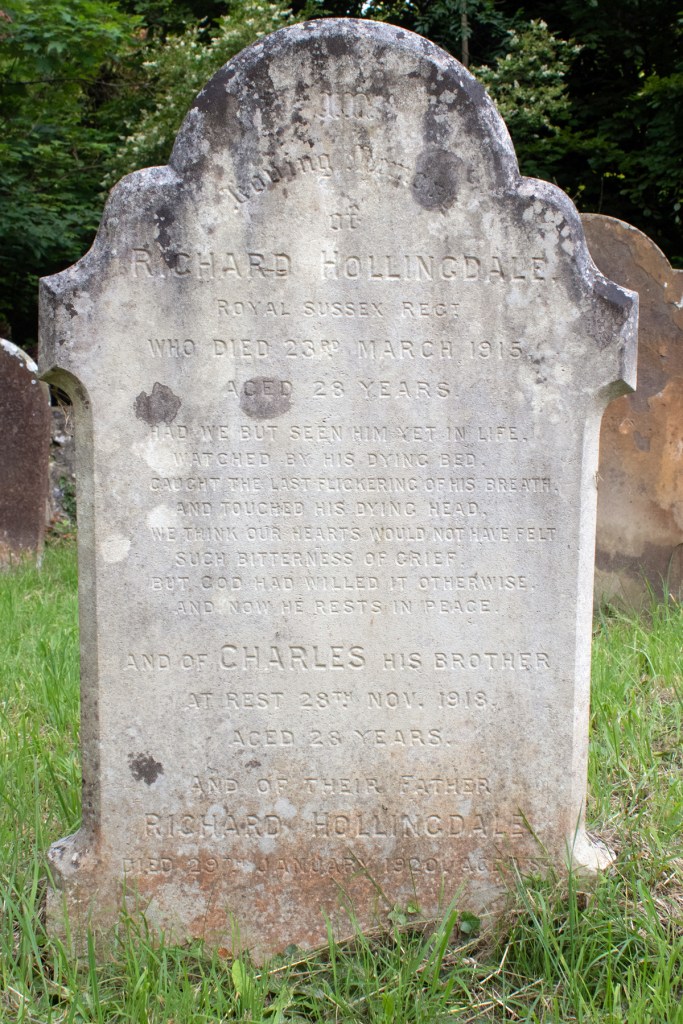
Private Hollingdale was attached to the 7th (Service) Battalion of the Royal Sussex Regiment and in the spring of 1915 his unit moved to the Ramillies Barracks in Aldershot, Hampshire. Richard had only been there for a couple of weeks, when he fell ill. He was admitted to the local Isolation Hospital with scarlet fever, and the condition was to prove fatal. He passed away on 23rd March 1915, at the age of 28 years old.

The body of Richard Hollingdale was taken back to Sussex for burial. He was laid to rest in the family plot in St John the Baptist Churchyard, Findon.


Private Wilfred Bridger

Private Wilfred Bridger

Wilfred Percival Bridger was born on 20th January 1885, the middle of three children to William and Emma. William was a groom from Albourne in Sussex, but, after a spell in Newmarket, the family had settled in Findon near Worthing.

William passed away just two years after Wilfred’s birth, and Emma remarried. The 1891 census found her and her new husband, George Lish, living with William and his siblings in a house on Findon Street.

When he completed his schooling, William found work as a shepherd: the next census return, taken in 1901, found the extended family living at 1 Brazil Cottages, next to the Black Horse Inn in Findon Village. George and Emma now had three children of their own, and Emma’s widowed mother, Martha, completed the household.

Shepherding was not a permanent career option for Wilfred and, on 28th April 1902, he enlisted in the army. He gave his occupation as groom, and his medical report confirmed he was 5ft 7ins (1.7m) tall and 120lbs (54.4kg) in weight. He was noted as having brown hair, grey eyes and a fresh complexion.

The Royal Sussex Regiment would definitely provide Private Bridger with the globe-trotting adventures that he may have wished for. After two years on home soil, his unit – the 2nd Battalion – moved to Malta, where he would spend close to twelve months. In May 1905 he moved to Crete, and from there to India in January 1907.

By the start of 1910 Wilfred had returned to Britain, and he was stood down to reserve status when his contract came to an end that April. He returned to Sussex, and the family home. 1 Brazil Cottages was crowded by this point, with Wilfred sharing the five-roomed house with his mother, stepfather, half-brother, niece. There were also two lodgers, widowed farm labourer Alfred Newman and his son, William.

Things were to change for Wilfred, however. In September 1911 he married Florence Herrington, a carter’s daughter from Henfield, Sussex. When the couple wed, she was working as a servant in a boarding house in Ambrose Place, Worthing. The young couple set up home in Nepcote, near Findon, and went on to have four children – William, Albert, Henry and Lilian.

When war broke out, Wilfred was called upon to play his part again. He re-joined the Royal Sussex Regiment on 31st August 1914, but when his medical was carried out the following March, he was found to have tuberculosis, and deemed not fit for service. After further tests, Private Bridger was medically discharged on 28th May 1915.

At this point, Wilfred’s trail goes cold. He returned to Findon and, it seems this is where he passed away on 13th September 1918. He was 33 years of age.

Wilfred Percival Bridger was laid to rest in the quiet surroundings of Findon’s St John the Baptist Churchyard.


Private Wilfred Bridger
(from ancestry.co.uk)

Lance Corporal James Matthews

Lance Corporal James Matthews

James Matthews was born in the summer of 1894, the youngest of five children to James and Margaret Matthews. James Sr was a farm worker from Cuckfield in West Sussex, and it was on Hodshrove Farm in nearby Ansty that the family were raised.

James Jr worked on the farm when he left school, but when war broke out, he found a bigger calling for himself. Full details of his military service are not available, but he seemed to have enlisted early on in the conflict, joining the 9th (Service) Battalion of the Royal Sussex Regiment. Originally formed in Chichester, West Sussex, he soon found himself billeted in the South Down near Portslade.

James must have impressed his superiors, as he was soon promoted to Lance Corporal for his work. All was not to go well, however, as, during the early months of 1915, he contracted pneumonia.

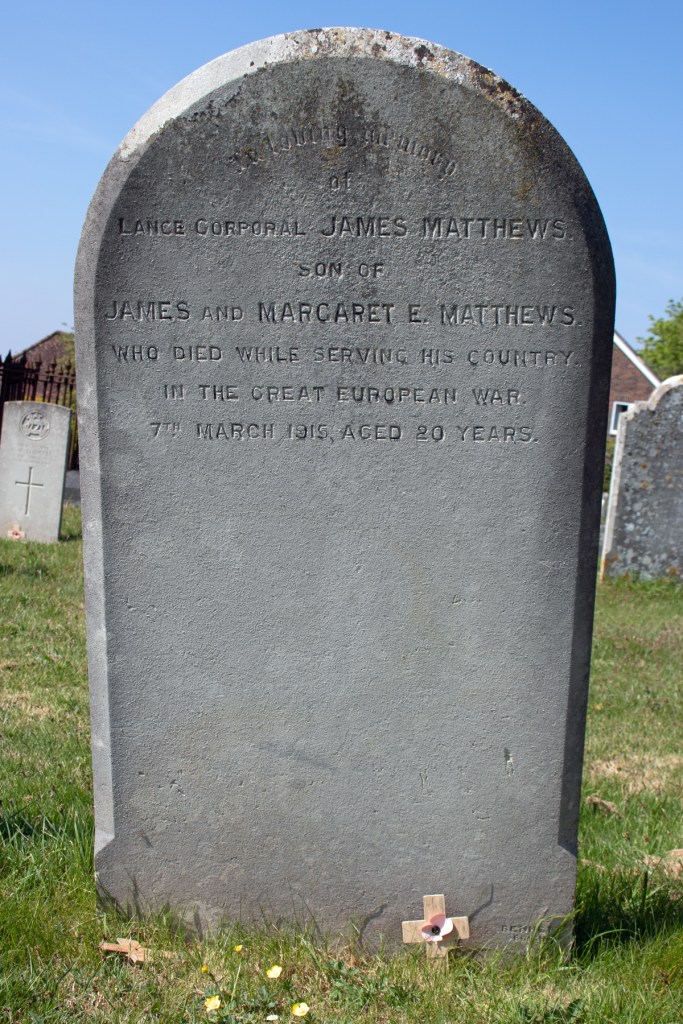
Lance Corporal Matthews was admitted to the 2nd Eastern General Hospital in Brighton, but the lung condition was to get the better of him, and he passed away on 7th March 1915. He was just 20 years of age.

James Matthews was brought back to his home village for burial. He lies at rest in Cuckfield Cemetery, in the shadow of Holy Trinity Church.