John Phippen Dyer was born in the spring of 1896, and was the oldest of four children. His parents, John and Fanny Dyer, were from Somerset and it was in the town of Highbridge that they raised their family.
John Sr worked as a coach body maker for the railways, and his eldest boy joined him as an apprentice when he finished his schooling. When war broke out, however, John Jr was keen to be seen to be playing his part.
John Jr enlisted in Taunton on 15th November 1915, joining the Wessex Division of the Royal Engineers. His service records confirm that he was 5ft 7.5ins (1.71m) tall and of god physical development. He was sent off to Essex for training, but came down with influenza the following January.
Sapper Dyer was admitted to hospital in Great Bentley, spending a fortnight there. He was released back to his unit, but his health continued to suffer. He had had bouts of rheumatism going back to 1911, and, by the spring of 1916, this had recurred, and was recorded as possible rheumatic appendicitis.
John’s condition led to him being declared permanently unfit for was service: he was discharged from the army on 30th March 1916, having served for just four-and-a-half months.
John Jr returned to Somerset, but at this point his trail goes cold. The next record for him is that of his passing, on 26th May 1919. He was just 23 years of age.
John Phippen Dyer was lair to rest in the cemetery of his home town, Highbridge, Somerset.
Herbert Snook was born in the spring of 1895 in the village of Thurlbear, Somerset. The fourth of nine children, he was the second son of Henry and Clara Snook. Henry was employed as a stockman and cowman and by the time of the 1911 census, the family had moved to Bishop’s Lydeard, to the west of Taunton.
When Herbert completed his schooling, he found work as a postman. When war broke out, Herbert stepped up to play his part. Sadly, full details of his time in the army are no longer available, but the documents that remain give an indication about what he did.
Private Snook enlisted in the Somerset Light Infantry, and was assigned to the 8th (Service) Battalion. His unit served in France, but there is no evidence that Herbert went with them. During his time with the regiment, however, he was promoted, reaching the rank of Corporal.
In the summer of 1918, Herbert married Alice Webber. There is little information about her, but the wedding took place in Taunton. That winter, Herbert fell ill, contracting a combination of influenza and pneumonia. His health deteriorated quickly, and he passed away at his in-laws’ home on 3rd March 1919. He was just 24 years of age.
Herbert Snook’s body was taken to Ash Priors, near Bishop’s Lydeard, for burial. He was laid to rest in the tranquil graveyard of Holy Trinity Church, not far from where his family were living.
Lot Evans was born in Street, Somerset, on 30th October 1895. The second of two children, his parents were George and Elizabeth Evans. Lot’s mother had four children from a previous marriage and, by the time of the 1901 census, the family had set up home in the coastal village of Brean. George was employed as a farm labourer there, as were Lot’s older half-brothers.
When Lot completed his schooling, he also found work as a farm labourer. The next census return, in 1911, recorded the family of four still living in Brean. George had eased up on the manual work – he was 67 by this point – and was employed as a domestic gardener. Lot’s older brother Ben was a bricklayer’s labourer, so there were three wages – albeit probably meagre ones – coming in to support the household.
When war came to European shores, both Lot and Ben stepped up to play their part. Lot enlisted on 10th November 1915, but was not actually mobilised until January 1918. He joined the Royal Garrison Artillery as a Gunner, and was assigned to the 4th Siege Battery.
On 28th March 1918, Lot married his sweetheart, Hester Puddy. Theirs was to be a brief honeymoon, as he was sent to France just three days later.
Gunner Evans remained overseas until the end of the year, returning home on 5th February 1919 in advance of being demobbed.
He was very ill with influenza. He went to bed and we had the Doctor. It developed into pneumonia and he died last night [13th February 1919].
Letter from Private Ben Evans to the Royal Garrison Artillery
Gunner Evans was just 23 years old when he died. The letter sent by his brother – who was also at home and waiting to be demobbed from the Wiltshire Regiment – explained that Hester was living with their family and his question to the regiment concerned how to claim his brother’s pension.
Lot Evans was laid to rest in the graveyard of St Bridget’s Church in Brean. Now surrounded by caravan parks and holidaymakers, at the time, this would have been a place of sanctuary bordering the Somerset coastline.
Walter John Greedy was born in the spring of 1889, the eighth of nine children to Theophilus and Mary Greedy. Theophilus was an agricultural labourer from Wiveliscombe in Somerset, and it was here that the Greedy family were born and raised.
When he finished his schooling, Walter found work as a carter for a brewery. In 1906 his oldest sister, Charlotte, was widowed, and he moved in with her and her children to help provide some additional support. He soon found alternative employment, however, and within a couple of years was employed by Great Western Railways as a plate-layer.
On 26th December 1913, Walter married Irene Hobbs. She was a blacksmith’s daughter from nearby Fitzhead, who was working as a domestic servant when the couple wed. They went on to have three children: Frederick, Winifred and Dorothy.
When war was declared, Walter stepped up to play his part. Full details of his military service no longer remain, but he had certainly enlisted by the summer of 1918. Walter joined the Royal Engineers, and, based on his previous employment, was assigned to the 278th Railway Company.
Sapper Greedy served in Northern France, and was based in and around Boulogne. He survived the war, and was back on home soil by December 1918. This may have been because of illness: Walter was admitted to Exeter War Hospital in Devon, having contracted influenza and pneumonia. Sadly, the combination of conditions was to prove a fatal one: he passed away on 22nd December 1918, at the age of 29 years old.
Walter John Greedy was brought back to Somerset for burial: he was laid to rest in the peaceful graveyard extension of St Nicholas’ Church in Brushford, where Irene and their children were now living.
In a quiet corner of Portishead Cemetery, Somerset, is the grave of Private EG Davies. His headstone confirms that he was in the Duke of Cornwall’s Light Infantry, give the date of his death – 23rd March 1919 – and his age when he passed – 40 years old. The Commonwealth War Graves Commission website confirms that Private Davies transferred to the Labour Corps, but only a couple of documents remain from his time in the army.
The soldier’s pension records confirm that his full name was Edward George Davies, and that, at the time of his death, he was living with his ‘unofficial wife’, Minnie Louisa Holbrook. The records also give the cause of death: influenza and septic bronchitis.
Minnie Louisa Fido was born in the spring of 1874 in Bedminster, Bristol, one of thirteen children to farmworker David Fido and his wife, Sarah. She married Arthur Holbrook on 28th April 1895, and had Gertrude four months later.
The Somerset School Register from 1906 notes that Gertrude Fido joined the Church of England School in Weston-in-Gordano on 12th February. It gives her mother’s name as Minnie Fido, but doesn’t give a father’s name. It seems that Gertrude left the school in November 1914, as she had found work.
A search of the 1911 census records shows Edward and Minnie (whose surname is now given as Davies), living in George Street, Portishead. Edward is listed as a wagoner on a farm, and that he was born in Gloucestershire. Minnie is noted as a charwoman from Nailsea, Somerset. Making up the household is Gertrude, noted as being Edward’s stepdaughter, and who was working as a domestic servant.
Edward’s history is more of a challenge to piece together. His name is too common to be able to single him out on census records, and, while the 1911 census suggests he and Minnie had been married for eight years, there is no marriage record to shed any further light on his family. (This is not surprising, given that his army pension documents suggest Minnie was his unofficial wife.)
Most of Edward’s life, therefore, is destined to remain lost to time. Minnie did not marry, or co-habit, again, and she passed away on Christmas Day 1949, at the age of 75 years old. Gertrude looks to have married a man called Bessant. The 1939 England and Wales Register recorded her living in the Portishead area, and working as a supervisor in a boot factory. She was living with her maternal uncle, Herbert Fido, but was noted as being the head of the household. She died early in 1967 in Weston-super-Mare.
Frederick Reginald Channing was born in the autumn of 1869, in Bath, Somerset. He was one of five children to carpenter Allen Channing and his dressmaker wife, Sarah. When Frederick was just a toddler, Allen moved the family south to Chard, and this is where his younger siblings were born.
When Frederick left school, he found work as a lace machine operator and, in fact, all of Allen’s children found work with their hands: Frederick worked alongside one of his brothers, while his two other brothers built on their father’s woodworking skills, one as a coachbuilder, another as a cabinet maker.
By the autumn of 1905, Frederick had moved back to Bath. This is where he met Elizabeth Scammell, a farm labourer’s daughter from Wiltshire. The 1901 census appears to record her as being a servant to a surgeon’s family in Wincanton, and this may have prompted a further move to the larger city where the couple met.
The couple married in Bath towards the end of 1905, and had a son, Frederick Jr, who was born in November the following year. Frederick Sr was doing general labouring work by this point, and the family had moved to Wedmore by the time a second boy, William, was born in 1910. Frederick and Elizabeth had a daughter, Eva, in 1911, and another, Gwendoline, in 1913, tragically, the same year that Eva died.
When war came to Europe, Frederick stepped up to play his part. He enlisted in September 1914, joining the Somerset Light Infantry as a Private. His service records confirm that he was 5ft 6ins (1.67m) tall, and weighed 154lbs (69.9kg). The document also gives his age as 35, although he was actually ten years older than that by this point.
Private Channing spent a year on home soil, during which time Elizabeth gave birth to their fifth child, Percival, who was born in May 1915. Based at a camp in Aylesbury, Buckinghamshire, he was hospitalised twice in this time, suffering from a contusion of his left shoulder.
By September 1915, Frederick was in France, and he remained on the Western Front, apart from when on leave, for the next three-and-a-half years. At some point during this time, he was promoted to the rank of Lance Corporal, and transferred across to the Royal Engineers.
Back at home, Elizabeth was doing her best to raise the family. She didn’t always do the right thing, though, and this resulted in her being taken to court.
Elizabeth Mary Rose Channing, 30… was indicted for having been delivered of a certain female child, did unlawfully by a secret disposition of the deceased child, endeavour to conceal the birth thereof at Wedmore the same day in the month of September 1916.
Mr Wethered prosecuted, and said that the prisoner was a married woman. Her husband was a soldier now on active service. He was last home on leave in April or May, 1917. Previously to that he had not been home for 18 months or two years, so the child could not have been his. Some boys found a parcel in the well, and they discovered the body of the child. The boys communicated with the police, who searched the well and found some pieces of carpet which agreed with a similar carpet in the possession of the prisoner. When arrested she confessed to the crime.
Frederick Channing, husband of the prisoner, said he was home on leave five months ago – May 27th. He went back on June 4th. Previously he had not been home for twenty months. He pleaded for the prisoner in the interests of their four children. He was very sorry for her to think she had thrown herself away like that.
His Lordship, addressing the prisoner, said that while her husband was away doing his duty for her any everybody, she was not faithful to him, and the result was the birth of the child which had been concealed and not revealed till a year afterwards. His Lordship understood that prisoner was already legitimately in a certain condition, and he did not wish her child to be born in prison. She would be sent to prison therefore for three months.
Wells Journal: Friday 26th October 1917
Elizabeth was released in February 1918, and the couple’s last child, Kathleen, was born the following month.
Frederick, meanwhile, returned to the Western Front. He remained in France through to the end of the conflict and beyond, only returning to Britain in February 1919, having fallen ill. Admitted to the North Evington War Hospital in Leicester with influenza, he remained there for two months.
In April 1919, Lance Corporal Channing was transferred to the Bath War Hospital, back in Somerset. This was presumably so that he could be closer to his family, although there is no evidence of whether he was fully reconciled with Elizabeth. His condition did not improve, however, and by this point he was also suffering from myalgia.
Frederick remained in hospital for eighteen months. As time passed, carcinoma of the liver was identified, and this, eventually, was the condition that would take his life. Lance Corporal Canning passed away on 5th September 1920. He was 49 years of age.
Sarah and the children were still living in Wedmore, by this point. Frederick Reginald Channing’s last journey was not to be that far, however. He was moved only a short distance from the hospital, and was laid to rest in the sweeping grounds of the Locksbrook Cemetery in Bath.
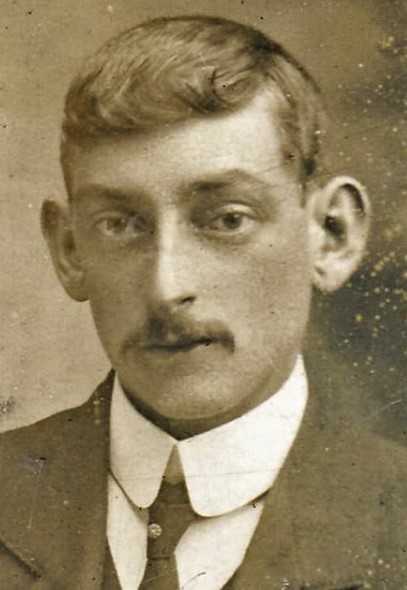
James Douglas John Pyatt was born in the spring of 1881 in Tranmere, Cheshire. The older of two children, his parents were Somerset-born John and Clara Pyatt. John was a coal merchant, and, by the time of the 1901 census, the family had moved back south, settling in the Clifton area of Bristol.
According to that census record, the family were living at 33 Pembroke Road, which Clara ran as a boarding house. James, by this point, was employed as a butcher, while his younger brother, Hubert, was a grocer. At the time the census was taken, the family had two boarders: Emmeline Blake, who was a music teacher, and Archibald Archer, a dentist.
Happiness is Bristol was destined to be short-lived. John died in 1902, aged just 49 years old. The same year, Hubert emigrated to Canada, settling in Brandon, Manitoba. Clara and James both followed the following year, setting up home in the same town.
Clara died in December 1908, but not before seeing both of her sons marry, James to Edith Gillam in June 1907, and Hubert to Lilian Pearce twelve months later.
James was working as a shipping clerk for a brewery by this point, and he and Edith were living on Park Street, to the east of the city. This was an ideal spot for their young family – John, born in 1908, Sidney, born in 1912, and Dennis, born in 1914 – as it overlooked a park and had space around it. Hubert lived down the road with his own family, so the brothers still had each other close by.
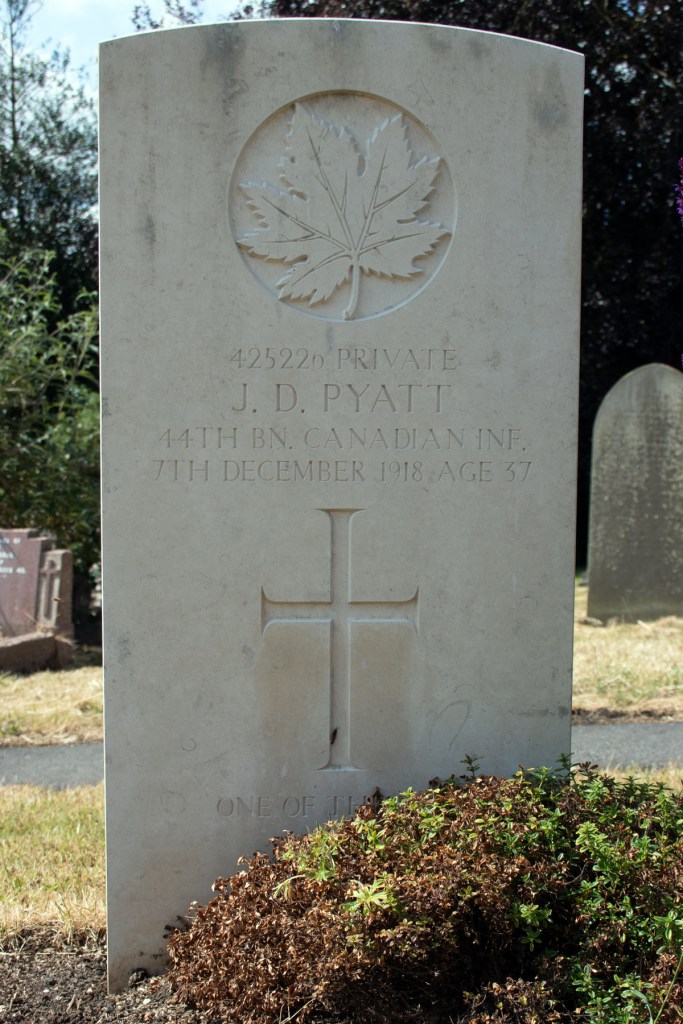
When war came to Europe, James felt compelled to play his part for King and Empire. He enlisted in the Canadian Expeditionary Force on 7th July 1915. Private Pyatt’s service records confirm that he was 33 years of age, and stood 5ft 10ins tall. He was noted as having brown hair, brown eyes and an average complexion.
James arrived back in England on 25th March 1916. Once there, he was attached to the 44th Battalion of the Canadian Infantry and by August that year, he was stationed on the Western Front. That autumn, however, he was dogged by illness and was admitted to field hospitals four times, suffering from diarrhoea, myalgia twice, and laryngitis.
By the start of 1917, however, Private Pyatt was back to full fitness. Details of his service over the next couple of years are unclear, although he remained on the Front Line. In December 1918, James was back in England on leave, and had returned to Somerset, possibly to see friends or relatives.
While here, James contracted influenza, and was admitted to the Bath War Hospital. The condition was to get the better of him, however, and he died on 7th December 1918, days after going in. He was 37 years of age.
With his surviving immediate family all in Canada, James Douglas John Pyatt was laid to rest in Locksbrook Cemetery, Bath, not far from the hospital in which he had passed away.
Percy Kitch was born in the spring of 1897 in Northmoor Green, to the south east of Bridgwater, Somerset. His parents were Francis and Mary Jane Kitch, and he was the youngest of their eight children. Francis – who was better known as Frank – was a farm labourer, and this is something that Percy and his siblings went into when they finished their schooling.
When war broke out, Percy was called upon to play his part, and enlisted in the Royal Army Service Corps as a Private. Unfortunately, little information still exists about his life at this time and, in fact, only one document – his pension ledger card – remains to confirm details of his service.
The card confirms that Private Kitch was attached to the Remount Service, and that he passed away on 31st October 1918, having contracted influenza. He was just 21 years of age. The document gives his mother, Mary Jane, as a dependent, and details the army pension she was awarded after his passing: 5 shillings per week, for life.
Percy Kitch was laid to rest in the peaceful graveyard of St Peter & St John’s Church in his home village of Northmoor Green.
Charles Herbert Dyer was born in the Somerset village of West Monkton in the spring of 1890. One of eight children, his parents were farm labourer Charles Dyer and his wife Mary.
By the time of the 1911 census, Charles Jr had set out on his own, settling in Briton Ferry, near Port Talbot, Glamorganshire. He found work as a gardener and, from this point on, he went by his middle name, Herbert.
Over the next few years, Herbert continued his employment in Wales, although he did make a move to Newport, Monmouthshire. When war came to Britain, Herbert stepped up to serve King and Country, enlisting in the South Wales Borderers on 10th January 1916. Less than two weeks later, he married Ethel May Andrews, in All Saints’ Church, Newport.
Private Dyer was formally mobilised on 2nd March 1916. His service records show that he was 5ft 10ins (1.78m) tall and weighed 141lbs (64kg). Details of his service are a little scrambled, but it appears that Herbert was initially assigned to the 3rd (Reserve) Battalion, and remained on home soil throughout the conflict.
Herbert was based in Bottesford, Leicestershire, in December 1916, where he was put on report and docked 14 days’ pay for being absent from his post, and refusing to obey a superior’s order. Six months later, he had moved camp, and was confined to barracks for two weeks, and docked two days’ pay for being absent without leave for a day and ten hours.
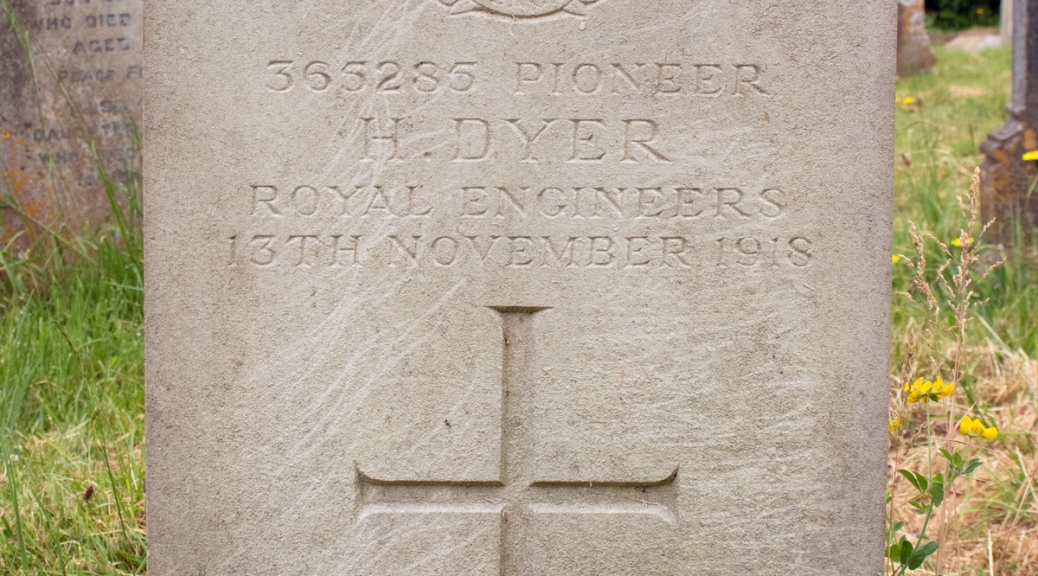
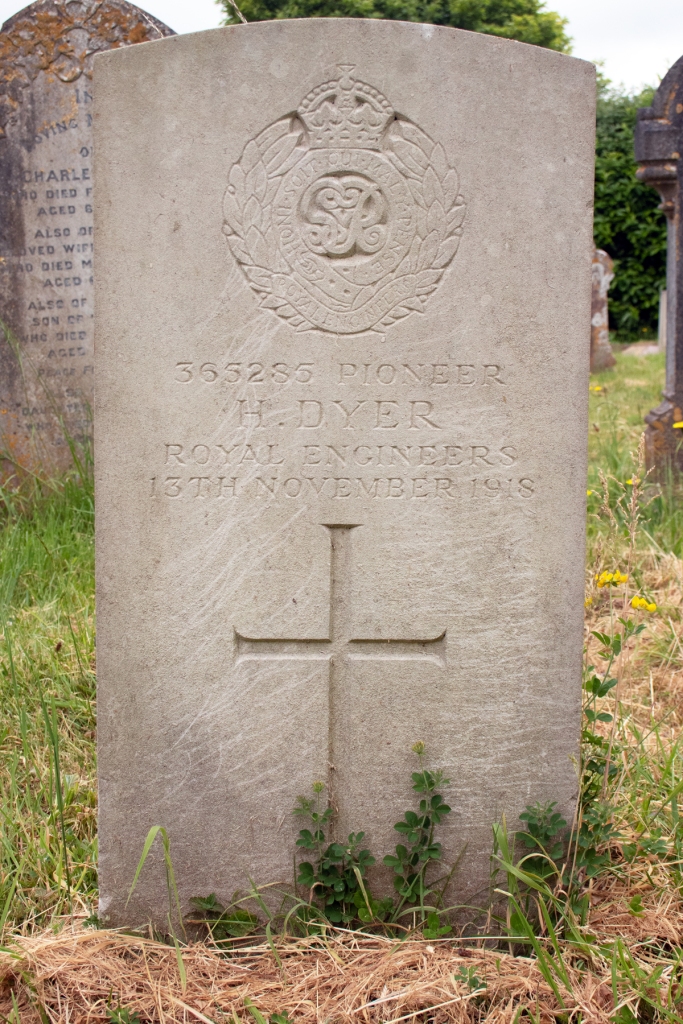
By the summer of 1918, Herbert had transferred across to the Royal Engineers where, with the rank of Pioneer, he was assigned to the 15th Anti-Aircraft Company. Full details of his time in his new regiment have been lost, but he was certainly based in Essex as the war came to a close.
Pioneer Dyer’s health was, however, beginning to suffer by this point. He had a bout of influenza, which developed into pneumonia. He was admitted to the Warley Military Hospital in Brentwood, on 10th November 1918, but, by this point, his body had seemingly had enough. He passed away at 11:20am on 13th November 1918, at the age of 28 years old.
The body of Herbert Dyer was brought back to Somerset for burial. Ethel had moved in with her in-laws in West Monkton by this point, and was a couple of months’ pregnant. Herbert was laid to rest in the peaceful graveyard of St Augustine’s Church. His son – who Ethel named Herbert – was born on 6th June 1919, never to know his father.
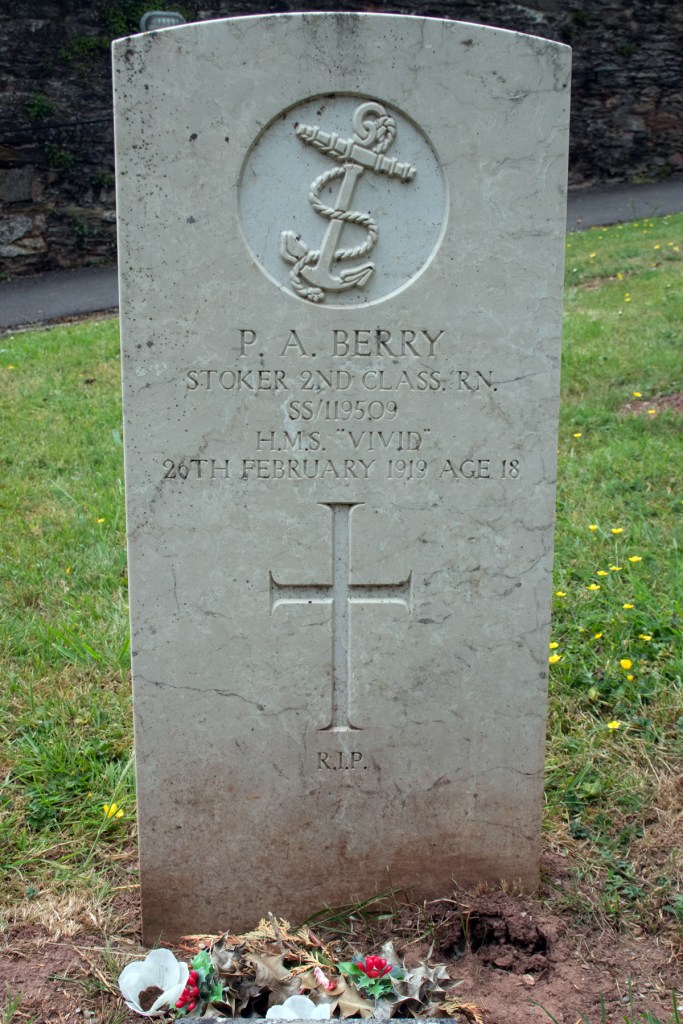
Percival Arthur Berry was born in January 1902, one of five children to Henry and Elizabeth Berry. Henry was a bricklayer from West Monkton in Somerset, and this is where the family were born and raised.
Percival seems to have had a roaming soul, or itchy feet. When he finished his schooling, he worked as a farm labourer, but in January 1918, he found employment as an engine cleaner for Great Western Railways in Taunton. This was not to last, however, and hi employment ended on 15th March, his work records stating that he just left.
Percival went back to farm labouring, but still sought a way out of that life. In January 1919, he enlisted in the Royal Navy. So keen was he to escape Somerset, he added a year to his age, to ensure that they allowed him to enlist. His records show that he was 5ft 6ins (1.68m) tall, with brown hair, blue eyes and a fresh complexion.
Assigned the rank of Stoker 2nd Class, Percival was sent to HMS Vivid, the Royal Naval Dockyard in Devonport. Within a matter of weeks, however, Stoker Berry had fallen ill. The details are a little confusing at this point – he was stationed at HMS Vivid, but admitted to the Dreadnought Seaman’s Hospital in Greenwich, Kent, his admission records stating that he had come from HMS Harlech. It is likely, therefore, that he was on a voyage from Devon, on board the converted trawler Harlech, when he fell ill. Docking in London, he was then admitted to the Greenwich hospital.
Stoker 2nd Class Berry had contracted influenza, and this was to take his life. He died on 26th February 1919, aged just 17 years old. He had served in the Royal Navy for just 47 days.
Percival Arthur Berry was brought back to Somerset for burial. He was laid to rest in the peaceful graveyard of St Mary’s Church in Kingston St Mary, a few miles from his old family home.








 Death and Service