Tag Archives: King’s (Liverpool Regiment)

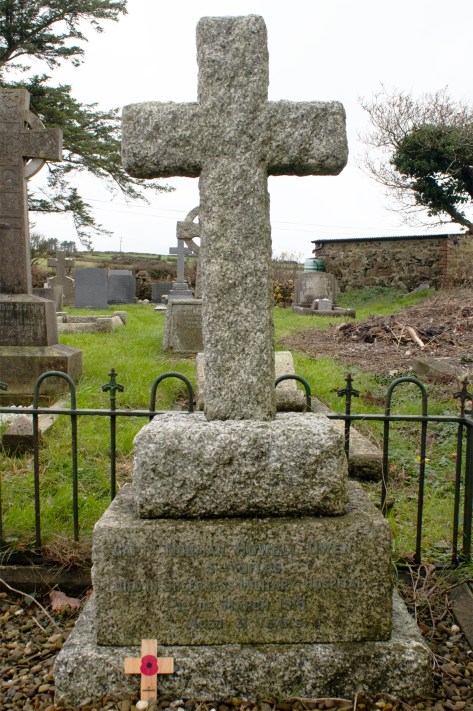
Captain Norman Owen

Captain Norman Owen

Norman Howell Owen was born in the spring of 1888, and was the third of four children – all boys – to John and Elizabeth. John was a surgeon from Pembroke Dock, Pembrokeshire, but the family were raised in Fishguard, where his practice was based.

Norman was an educated young man and, in 1906, attended the Sir Isaac Pitman & Son Phonetic Institute in Bath Somerset. He was studying shorthand, passing an examination in the subject after just three months. He passed an entrance exam for the National and Provincial Bank the following year, and, by the time of the 1911 census, he was working in the Fishguard branch and living back with his parents.

When war came to Europe, Norman was called upon to play his part. Full details of his service have been lost to time, but what remains paints an interesting picture of his time in the army. He appears to have enlisted in the King’s Liverpool Regiment as a Private, before transferring to the Labour Corps, then the Army Ordnance Corps.

By 1918 the Pembrokeshire Voters List noted Norman and two of his brothers as absentee voters – serving in the army, so not at home. Norman is recorded as being a Captain in the Army Service Corps, having received a commission on 8th February 1915. His older brother John is recorded as being a Captain in the Royal Army Medical Corps, while his younger brother, Lionel, was a Captain in the Royal Field Artillery.

The mystery of Norman continued: he survived the conflict, but by February 1919 had been admitted to the Broadway Military Hospital in Sheerness, Kent. He passed away on 1st March, the cause of his passing not readily available. Captain Owen was 31 years of age.

The body of Norman Howell Owen was taken back to Pembrokeshire for burial. He was laid to rest in Fishguard Church Cemetery.


Norman died intestate: his family went through probate, and his effects – totalling £1003 8s 10d (approximately £67,000 today) were left to his father.


Private Joseph Curtis

Private Joseph Curtis

In the war grave section of Locksbrook Cemetery in Bath, Somerset, is a headstone dedicated to a Private J Curtis, of the King’s Liverpool Regiment, who passed away on 3rd January 1921. The Commonwealth War Graves Commission confirms that Joseph Curtis had transferred to the 430th Company of the Labour Corps at some point.

Little additional information is available for Joseph Curtis. Only one service document remains, his Medal Roll Index Card. This gives the dates of his service – 22nd February 1915 to 17th October 1918 – but no other identifying details.

Without a year or place of birth, it is not possible to track down any census records. As Bath was the location of both a War Hospital and one for army pensioners, his burial in a cemetery nearby is no guarantee that the city was ever his home. There is also no report of Private Curtis’ passing or funeral in any available contemporary newspapers.

The life of James Curtis is destined to remain a mystery, therefore, taken with him when he was laid to rest.


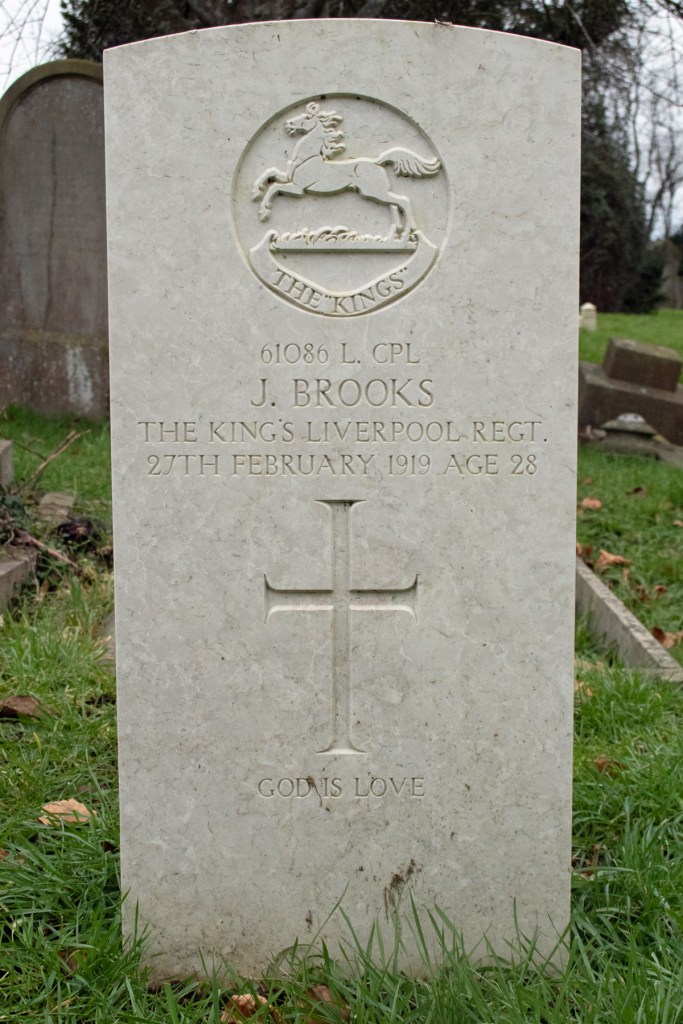
Lance Corporal Jack Brooks

Lance Corporal Jack Brooks

Jack Brooks was born in the autumn of 1890 and was the second of nine children. His parents, John and Kate Brooks, both came from Bath, where they ran a bakery on Queen Street, in the centre of the city. When he left school, it was natural for Jack to follow in his parents’ trade.

When war arrived on Europe’s shores, Jack stepped up to play his part and, on 7th December 1915, he enlisted in the Wiltshire Regiment as a Private. His service records show that he was 25 years and 2 months old, was 5ft 8.5ins (1.74m) tall, and weighed 156lbs (70.8kg). He was also noted to have a scrotal hernia, had flat feet and an upper set of dentures. These were enough for him to be passed for home service only, and he was formally mobilised on 10th February 1916.

Private Brooks seems to have taken a while to settle into army life. He was soon transferred across to the East Lancashire Regiment and, in May 1916, was attached to the 8th Works Coy as a Lance Corporal. In February 1917 he was transferred again, this time to the King’s Liverpool Regiment. On 6th June 1917 he was demoted to Private for ‘neglect of duty’, for not taking proper care of the stores that he was in charge of.

He married a woman called Rosina Elizabeth in 1917: the couple went on to have a son, William, who was born on 22nd November that year.

Jack continued serving after the end of the war and, by the beginning of 1919, was based in Aldershot. It was while here that he fell ill, and was admitted to the town’s Connaught Hospital on 11th February, suffering from influenza and pneumonia. Sadly the combination of illnesses was to prove to much: he succumbed to them, breathing his last on 27th February 1919. He was just 28 years of age, a boy with his mother, Kate, with him when he passed.

The body of Jack Brooks was brought back to Somerset for burial. He was laid to rest in the city’s St James’ Cemetery.


Rifleman William Locke

Rifleman William Locke

William Thomas Locke was born at the start of 1900 in the Kent village of Eccles. His parents were Thomas and Annie Locke, although it seems that he was orphaned early on. The 1901 census recorded him as living with his grandparents John and Mary Locke. Their daughter Annie is also recorded as living at the property, although there is nothing to confirm whether she was William’s mother or an aunt.

By the time of the 1911 census John Locke had died. Mary was living in the same house, with two of her sons – Frederick and Alfred – and her grandchildren, William and his cousin Gladys. Both of William’s uncles were labourers in the local cement works, and it seems likely that this would be work that he would have followed them into once he had completed school.

William’s trail goes cold at this point, although he would have been too young to join up at the outbreak of the First World War. Records confirm that he had enlisted by March 1918, and it seems likely that he would have done so as soon as he came of age.

Rifleman Locke joined the 5th Battalion of the King’s (Liverpool Regiment), but this is the only detail of his military service that can be confirmed. The next record for him confirms that he passed away on 5th October 1918, having been admitted to hospital in Oswestry, Shropshire, suffering from intestinal problems. He was just 18 years old when he passed.

William Thomas Locke’s body was brought back to Kent for burial. He was laid to rest in the graveyard of St Peter & St Paul’s Church in Aylesford, the parish church for his home village of Eccles.

The specific location of William’s grave is not known, although it is likely that he was laid to rest near his grandfather. Instead, he is commemorated on a joint headstone in the First World War section of the graveyard. William’s grandmother passed away the following year, and records confirm that his next of kin was noted as his aunt, Mary Ann Longley.


Private Joseph Roe

Private Joseph Roe

Joseph Leonard Roe was born on 16th February 1892 in Totnes, Devon. The older of two children, his parents were Francis and Mary Roe. Mary died in 1898, when Joseph was only six years old, leaving Francis, who was a traveller for a wholesale grocer, to raise his sons. Tragically, he also passed away in 1902, and it seems that Joseph and his brother were left in the care of their paternal grandmother.

Hope was to come out of adversity – the 1911 census recorded Joseph as boarding in a school in Tiverton, while his brother, who was called Francis, found work as a clerk at a chartered accountant. He was living with his grandmother Mary and aunt Marian in Weston-super-Mare, Somerset.

Joseph followed in his father’s footsteps, finding work as a chemist’s merchant, and this took him travelling across the country. When war broke out, he was living in Wallasey, Merseyside, and it was from here that, on 28th August 1914, he was to enlist.

Joseph’s service records show that he was 5ft 11ins (1.80m) tall, was of good physical development and had good vision. He was accepted for enlistment into The King’s (Liverpool Regiment), and was assigned to the 10th (Scottish) Battalion.

After a coupe of months’ training, Private Roe set sail for France, arriving in Le Havre on 1st November 1914. His time overseas, however, was to be cut short, however, when he contracted a combination of myalgia, bronchitis and diarrhoea. He was medically evacuated back to Britain on 30th November, and given time to recover.

Private Roe remained on home soil for the remainder of his time in the army. However, he continued to suffer with his health. In the spring of 1916, he contracted tuberculosis and was at his grandmother’s home when he passed away on 4th April. He was just 24 years of age.

Joseph Leonard Roe was laid to rest in Totnes Cemetery, buried in the family grave, and reunited with his parents at last.


Francis, meanwhile, had also played an active part on the First World War. He joined the 2nd Battalion of the South Lancashire Regiment and fought on the Western Front.

While at Etaples, he was wounded, and succumbed to his injuries on 7th January 1916, aged just 21 years old. Second Lieutenant Francis Roe was buried at Etaples Military Cemetery in Northern France.

His sacrifice is also commemorated on the family monument in Totnes Cemetery.