Tag Archives: Private

Private Harry Maidment

Private Harry Maidment

Henry James Maidment – known as Harry – was born in Penarth, South Wales, in the autumn of 1890. He was one of seven children to Somerset-born Henry and Minnie Maidment. Henry Sr was a general labourer, and, when he died in 1899, Minnie remained in Penarth, earning money to support the family as a hawker of fruit.

By the time of the 1911 census, most of Minnie’s children were still living at home, with all but one of them working. Harry was employed as a van driver for a laundry, while his siblings were working variously as labourers, sailors and a housekeeper.

In the autumn of 1911, Harry married Annie Hillier, a servant who had been born in Yeovil, but who had also moved to South Wales. The couple went on to have a son, Henry, in October 1912, but he tragically passed away when he was just a couple of months old. They were not to have any other children.

War was coming to Europe by this point, and Harry was keen to play his part. He enlisted towards the end of 1914, joining the 1st Battalion of the Somerset Light Infantry as a Private. He arrived in France at the beginning of May 1915, and would have seen fighting at Ypres that spring.

It seems that Private Maidment was wounded at Ypres; he was medically evacuated home and was admitted to the Graylingwell Hospital in Chichester, West Sussex. Details of his injuries are not available, but they must have been severe; he passed away from them on 23rd July 1915, aged just 25 years old.

Harry James Maidment’s body was brought back to Somerset; he was laid to rest in the graveyard of Christ Church, Frome, his parents’ home town, and where his widow, Annie was living.


Private Frederick Crook

Private Frederick Crook

Frederick Charles Crook was born in Frome, Somerset, in 1896 and was one of eleven children. His parents were Frank and Bessie Crook, and the family were raised in a house to the south of the town centre. Frank was a plasterer but sadly details of his son’s life are quite sketchy, so it’s not evident if this was a trade he followed his father into.

In the spring of 1912, Frederick married Wiltshire-born domestic servant Hannah Gerrish, a farm labourer’s daughter. The couple wed in Bradford-upon-Avon, and went on to have a daughter, Margaret, who was born in 1913.

Storm clouds were gathering over Europe, and, in November 1914, Frederick volunteered to play his part. He joined the Somerset Light Infantry, and was assigned to the 1st Battalion as a Private.

While it’s not possible to identify exactly where he served, Frederick would certainly have seen action on the Western Front: his battalion fought with the 4th Division at Ypres, The Somme and at Arras in the various phases of the conflict.

The ongoing conflict must have had an impact on Private Crook: he was medically discharged from military service with neurasthenia – a nervous breakdown – just weeks before the Armistice was signed. He returned to Frome, but it must have been too much: he passed away on 10th December 1918, at the age of just 22 years old.

Frederick Charles Crook was laid to rest in the graveyard of Christ Church, in his home town, Frome.


Private Edward Pike

Private Edward Pike

Edward Arthur James Pike was born in Frome, Somerset, in 1888, one of six children to Giles and Annie Pike. Giles was a carter and labourer, and this is something that Edward – who was known by his second name, Arthur – followed his father into.

Arthur later found employment with the local Cooperative Society, and his carting experience led him to work for a Mr Bynoth of Badcox, whose Somerset business later became a well-known local taxi and bus company. On 17th April 1911, Arthur married Ellen Emma Sheppard, a labourer’s daughter from nearby Longbridge Deverill.

War was coming to Europe, and Arthur enlisted when his time came in the autumn of 1917. He joined the Army Service Corps, and was assigned to the 12th Mechanical Transport Company on Salisbury Plain.

While serving, Private Pike quickly contracted rheumatic fever. He was admitted to the Fargo Military Hospital in Larkhill, but succumbed to the condition after three months on 28th March 1918. He was 30 years old.

Brought back to Frome, Edward Arthur James Pike was laid to rest in the graveyard of Christ Church.


Private John Hallett

Private John Hallett

John Hallett – better known as Jack – was born in the spring of 1891 in the Somerset town of Frome. One of twelve children, his parents were carpenter Frederick Hallett and his wife, Elizabeth. When he left school, Jack found work at a printer’s, helping with the typesetting.

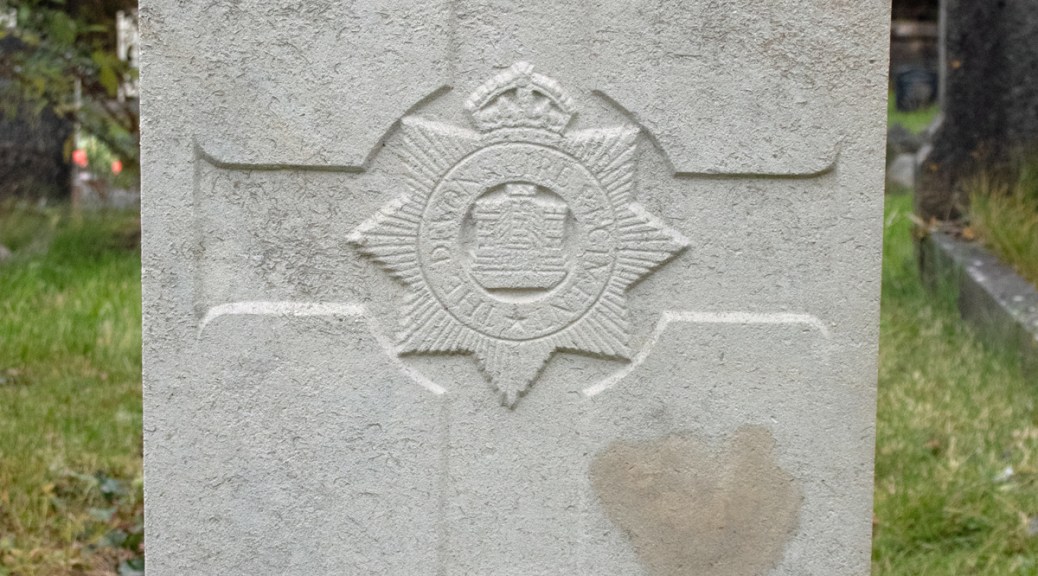
War was approaching, and Jack was keen to do his bit. While full details of his military service are not available, it is clear that he enlisted as a Private in the Royal Irish Dragoon Guards. He served in France with the 4th Battalion, arriving there in October 1915.

A later report suggests that Private Hallett was “seriously wounded several times during the war” [Somerset Standard: Friday 30th January 1920], although no specific details are available about his injuries. He survived the conflict and was awarded the British and Victory Medals and the 1915 Star for his service.

Demobbed and back at home, it seems that John did not fully recover from his wounds. He was admitted to the Victoria Hospital in Frome in January 1920, and died there a matter of days later. He was just 28 years old.

John Hallett was laid to rest in the graveyard of Christ Church in his home town of Frome, Somerset.


The local newspaper gave a more detailed report on John’s funeral:

Ex-Soldier’s Death

The funeral took place yesterday afternoon at Christ Church of Mr John Hallett, aged 29, of The Butts, Frome, who passed away at the Victoria Hospital on Friday last. Deceased had been seriously wounded several times during the war, and a day or two ago was removed to the hospital. The Rev. J Howard Lewis conducted the service, which was attended by local Oddfellows, to which society the deceased belonged, and by a number of other representative mourners.

Somerset Standard: Friday 20th January 1920

Private Thomas Singer

Private Thomas Singer

Thomas – better known as Tom – Singer was born in Frome, Somerset, in the summer of 1876, the youngest of seven children to John and Sophia Singer. John was a labourer on the railway, who sadly passed away when Tom was only three years old. Sophia was left to raise the family on her own, and she did so by taking in washing for other people (the 1891 census has her listed as a pauper, but she still managed to support her children). Sophia also died in 1892, meaning Tom was an orphan by the time he was just 16 years old.

Tom found work as an errand boy when he left school, although he soon moved on to labouring work. After Sophia’s death, he moved in with his brother Walter, who had also recently been widowed, and the money they brought in helped support Walter’s three children and pay for a housekeeper to do so.

On 21st July 1904, Tom married Edith Mary Bugler, a labourer’s daughter from nearby Selwood; the couple went on to have five children. With a growing family to support, Tom found new work as an ostler at the pub in Witham Friary, to the south of Frome.

War was coming to Europe, and Tom was called upon to do his duty. Full details of his service are not available, sadly, but it is clear that he enlisted as a Private in the Somerset Light Infantry at some point before the summer of 1916.

Private Singer was sent to France in November 1916, but fell ill soon afterwards. He was medically evacuated back to England and admitted to hospital, where he underwent an operation. Sadly, he did not recover, and passed away on 14th February 1917, at the age of 40 years old.

Tom Singer was laid to rest in the graveyard of Christ Church in his home town of Frome.


Stoker 1st Class Robert Anderson

Stoker 1st Class Robert Anderson

Robert Anderson was born on 4th September 1889, one of ten children – of whom tragically only three survived – to James and Emily Anderson. James was a storekeeper from Belfast, who had moved his family to Preston, Lancashire, but who had subsequently moved them back to Northern Ireland after Robert had been born.

In 1911, while working as a town labourer, Robert had met and married Rebecca Barkley; the couple went on to have to children, Mary and Agnes.

War was coming to Europe, however, and Robert was keen to play his part. He enlisted in the 3rd Battalion of the Royal Irish Rifles and, according to a subsequent newspaper report, saw action at Mons and the Marne early in the conflict.

The Belfast Evening Telegraph reported that “He completed his time, and instead of re-enlisting in the Army, he joined the Navy.” [Thursday 4th October 1917] Given that Robert enlisted in the Royal Navy in the autumn of 1915, this raises the question of how he left the army at the height of the conflict, particularly given that the same report suggests that he had come through the major battles “unscathed“.

Either way, Private Anderson made the move to Stoker 2nd Class on 10th November 1915. He record show that he stood 5ft 5.5ins (1.66m) tall, had fair hair, brown eyes and a fresh complexion. On his arms he sported a number of tattoos; a lady, crossed flags and a ship on his right, and his initials on the left.

Robert’s first posting was HMS Pembroke, the Royal Naval Dockyard at Chatham, Kent, where he received a couple of months’ training. He was then assigned to HMS Egremont, also known as Fort St Angelo in Birgu, Malta, where he spent a couple of months. Stoker Anderson then returned to England, serving at HMS Victory, the Royal Naval Dockyard in Portsmouth, and gaining a promotion to Stoker 1st Class in the process.

By August 1917, he had returned to HMS Pembroke. The Dockyard was particularly busy that summer, and the large number of extra servicemen meant that Robert was billeted in temporary accommodation in Chatham Drill Hall.

On the 3rd September 1917, the first night air raid carried out by the German Air Force bombarded the town, and scored a direct hit on the Drill Hall; Stoker 1st Class Anderson was among those killed instantly. He was a day short of his 28th birthday.

Robert Anderson was laid to rest, along with the other victims of the Chatham Air Raid, in the Woodlands Cemetery, Gillingham.


Larger memorial image loading...
Stoker 1st Class Robert Anderson
(from findagrave.com)

Deck Hand William Littlewood

Deck Hand William Littlewood

William Alfred Littlewood was born on 19th April 1882, the oldest of four children to Henry and Mary. Henry was a labourer for the gasworks in Great Yarmouth, Norfolk, and the couple raised their family in the town.

William also found work with the local gasworks, and this is who he was employed by when, on 19th December 1903, he married Evelyn Harriet Youman. The couple set up home near the centre of the town, and went on to have four children.

When war broke out, William was keen to play his part. On 17th August 1914, he enlisted as a Private in the Army Service Corps and, within a couple of week, was in France. He spent six months on the Western Front, before returning to home soil. The reason for this return to England was an inflammation of the middle ear, and the resulting deafness led to his discharge from the army in June 1915.

William was not to be deterred, however, and within a matter of weeks, he had enlisted again, this time volunteering for the Royal Naval Reserve as a Deck Hand. Over the next two years, he served on a number of different ships, each time returning to HMS Pembroke, the Royal Naval Dockyard in Chatham, Kent.

In August 1917, Deck Hand Littlewood disembarked HMS Acteon, and returned to his shore base. The Dockyard was particularly busy that summer, and the large number of extra servicemen meant that William was billeted in temporary accommodation in Chatham Drill Hall.

On the 3rd September 1917, the first night air raid carried out by the German Air Force bombarded the town, and scored a direct hit on the Drill Hall; Deck Hand Littlewood was among those killed instantly. He was 35 years of age.

William Alfred Littlewood was laid to rest, along with the other victims of the Chatham Air Raid, in the Woodlands Cemetery, Gillingham. Tragically, the Navy Death Records state that he was Buried as unidentified in one of the following graves: 516, 522, 642, 735, 935, 937 or 948.


Private Thomas Willcocks

Private Thomas Willcocks

Thomas George Willcocks was born on 18th April 1882, in the Devon village of Chudleigh Knighton. The oldest of five children, his parents were William Willcocks and his wife Emma. William worked as a clay cutter, and this was a trade Thomas followed when he left school.

By 1899, Thomas had met Sophy Gale, a clay cutter’s daughter from nearby Hennock; the couple married and had a daughter, Violet. Thomas was also working as a cutter, and moved into his in-laws house to start raising his young family.

Life can be cruel: the 1911 census shows that Thomas and Sophy had moved to Chudleigh Knighton – where Sophy was originally from. Violet had, by this point, sadly passed away; Thomas’ brother-in-law, Albert, had moved in with the couple to help pay their way.

War was coming to Europe and, although full details of Thomas’ service no longer remain, it is possible to piece together some of his time in the army.

Private Willcocks enlisted in the Duke of Cornwall’s Light Infantry at some point before January 1917, although he soon transferred across to the Hampshire Regiment. His battalion – the 15th – were moved to France in the summer of 1916, and it seems that Thomas was caught up in a gas attack, while in the trenches of the Western Front.

Private Willcocks’ health deteriorated and he was medically evacuated back to the UK for treatment. He was admitted to the Red Cross Hospital in Glasgow, but reports are confused – some identify the impact of the gas on his lungs, while others suggest he was suffering from rheumatism and trench fever. Regardless of the cause, he passed away on 23rd July 1917 at the age of 35 years old.

The body of Thomas George Willcocks was brought back to Devon for burial. He was laid to rest in the graveyard of St Paul’s Church in Chudleigh Knighton.


Thomas’ brother in law, Albert, also died as a result of the First World War; he lies in the grave next to Thomas. His story can be found here.

Thomas’ neighbour was Alfred Moist. He also lies in the same churchyard and his story can be found here.


Thomas George Willcocks
(from findagrave.com)

Private Albert Gale

Private Albert Gale

Albert Gale was born in the Devon village of Chudleigh Knighton in October 1883, one of five children to John and Elizabeth Gale. It seems that Elizabeth may have died when Albert was young, as, by the time of the 1901 census, John was married to a Sarah Gale, and the family were living in the village of Hennock.

John was a clay cutter, and this was a trade into which Albert followed his father. Again, as time moves on, things change; the 1911 census found Albert boarding with his sister Sophy and her husband, fellow cutter Thomas Willcocks, back in Chudleigh Knighton.

War was coming to Europe and, in April 1916, Albert enlisted, joining the Somerset Light Infantry as a Private. He would have cut a commanding figure; his enlistment papers show that he stood at 5ft 10ins (1.77m) tall.

Albert served on home soil. While attached to the Somerset Light Infantry, he was assigned to the 661st Agricultural Company of the Labour Corps, working in Kent and Sussex.

During this time, he received hospital treatment on four separate occasions: in August 1916, he was admitted with cellulitis of the arm; in December 1916 and January 1917, he was treated on two separate occasions for scabies. In November 1918, however, he was admitted to the Military Hospital in Chichester, West Sussex, as he was suffering from influenza. Sadly, this last condition was to worsen and, on 21st November 1918, Private Gale died, having subsequently contracted pneumonia. He was 35 years old.

Albert Gale’s body was brought back to Devon for burial. His brother-in-law Thomas had died the previous summer; his story can be found here. Albert was laid to rest in the grave next to his sister’s husband in the churchyard of St Paul’s in Chudleigh Knighton.


With Thomas dead, Sophy had been left a widow. Understandably bitter at what the war had taken from her, when she was asked if she wanted a memorial for her brother, she returned the form with the following statement: “I don’t require the plaque and scroll in memory of my dear brother; a piece of paper won’t keep me.”

Private John Clarke

Private John Clarke

John Clarke was born in Devon on 28th June 1881, the son of Edward and Mary Ann Clarke. Sadly, little documented information remains on his life, but from what does exist, a semblance of his life can be pieced together.

Edward and Mary Ann lived in the village of Ashcombe in their later years, although it seems that John had been born closer to Exeter. At some point before October 1915, he married local woman Rhoda; they did not go on to have any children.

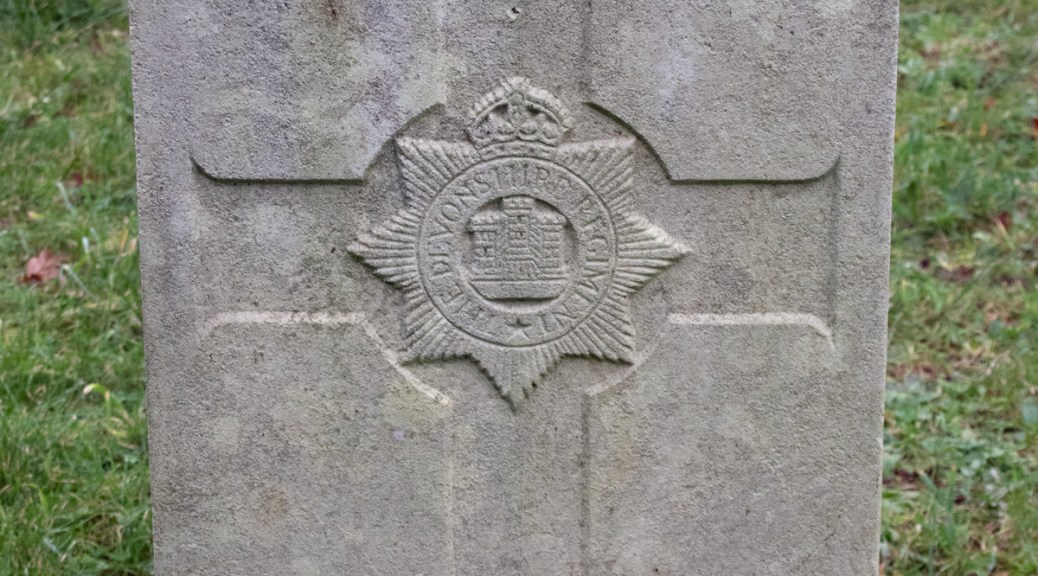
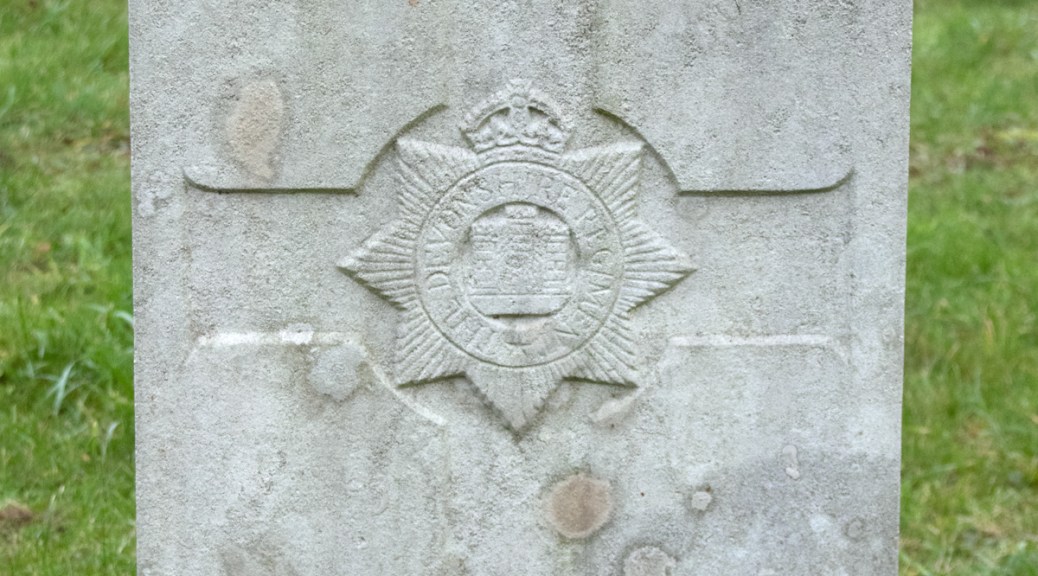
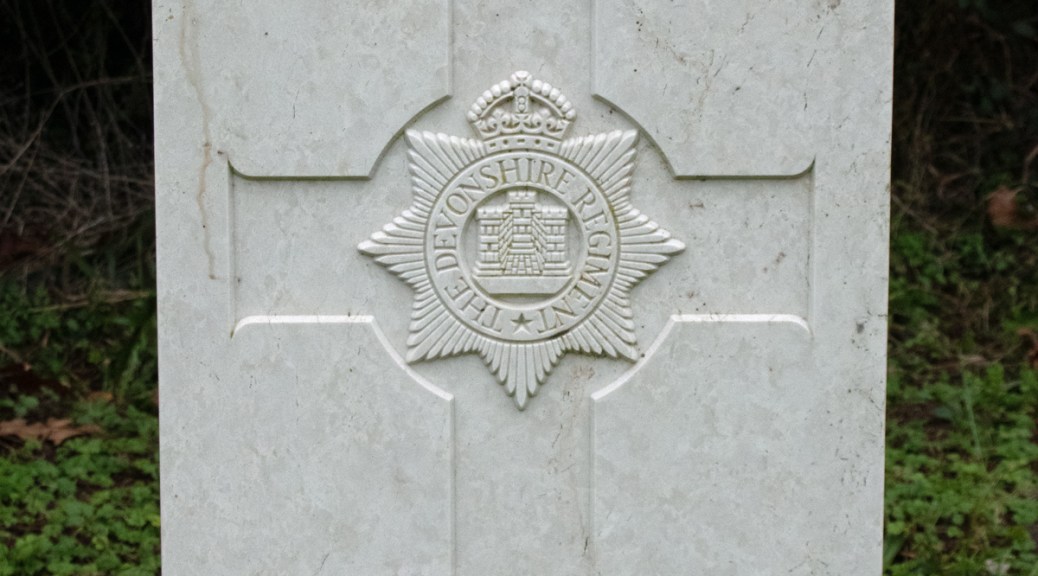
When the First World War broke out, John was working as a farm labourer. He signed up, joining the 7th Battalion of the Devonshire Regiment. His enlistment papers confirm that he had already been volunteering for the 8th Battalion of the same regiment. They also note that he stood 5ft 6ins (1.68cm) tall, weighed 140lbs (63.5kg) and, intriguingly, that he was of poor physical development.

Private Clarke’s time in the army was not destined to be a lengthy one. In January 1916, he was admitted to the Canadian Red Cross Hospital in Taplow, Buckinghamshire, suffering with neuralgia. A couple of months later, he was admitted again, this time with influenza.

Shortly afterwards John’s military service came to an end. He was dismissed as medically unfit due to a gastric ulcer; his final day in the army was 30th March 1916, and he had served for 175 days.

At this point, Private Clarke’s trail once again goes cold. He passed away on 3rd December 1918 – more than eighteen months after leaving the Devonshire Regiment – although there is no documentation to confirm the cause of his passing. He was 37 years of age.

John Clarke was laid to rest in the graveyard of St Nectan’s church in Ashcombe, Devon.