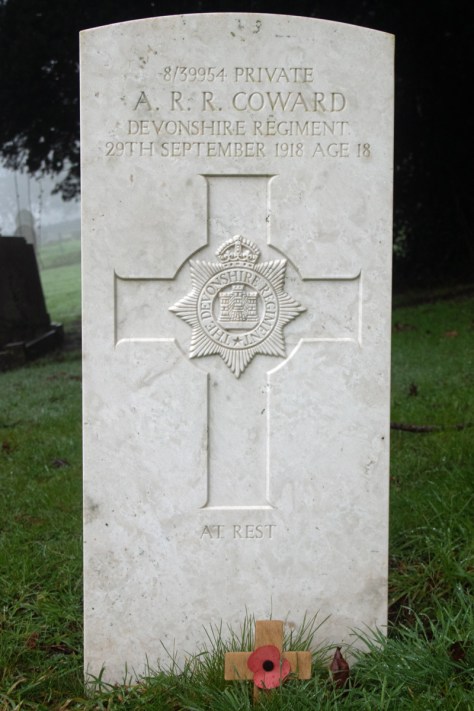
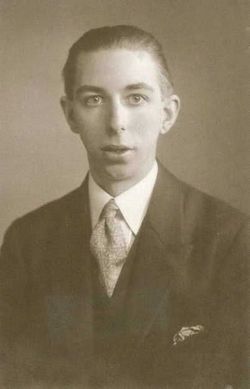
Albert Reginald Robert Coward was born on 26th August 1900, the middle of three children – all boys – for James and Florence Coward. James was a labourer and drayman for the railways, and the family lived in Shepton Mallet, Somerset.
Little remains of Albert’s military service records. His older brother Arthur was a Corporal in the Somerset Light Infantry. He died in France in April 1918, which may have been a contributing factor to his sibling’s decision to do his duty.
Albert enlisted in the 53rd Battalion of the Devonshire Regiment and, given his age, I would presume that this was as soon as he was able to – sometime in 1918.
Whether Private Albert Coward saw any military action is not known. He is listed as having passed away at a military hospital on 29th September 1918, although, as I have been unable to find a cause of death, it is likely to have been an illness, rather than an injury. Albert was aged just 18 years old.
Albert Reginald Robert Coward lies at rest in the cemetery of his home town.
Albert Reginald Robert Coward (courtesy of findagrave.com)
Corporal Arthur William James Coward is commemorated on the Arras memorial in France. He was 23 years old when he died.
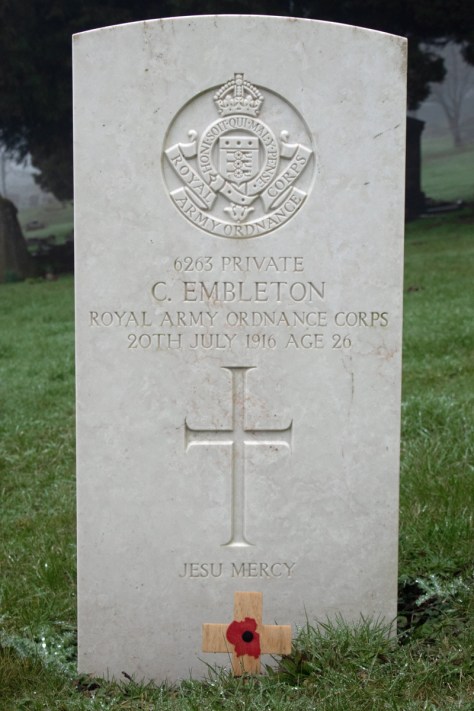
Charles Embleton was born in Alexandria, Egypt, in 1891. One of five children, his father John was a captain in the army, and his wife, Sarah was based wherever he was.
Military service was obviously in Charles’ blood. He joined up in 1908, and was assigned to the Army Ordnance Corps. After three years’ service, he was moved back to the Reserves.
Charles had met Mary Cooper, a baker’s daughter, from Farnham. They married in September 1911, and, two months later, Mary gave birth to their daughter, Florence. Her baptism records show that, by this time, Charles was working as a registry clerk for his former Corps.
When war broke out, Private Embleton was remobilised and by 14th August 1914, he was in France. His service abroad was brief, however. Within a fortnight he had been shipped back to England and there he stayed until he was medically discharged in March 1915.
While no cause for his dismissal is evident from his service records, his war pension document confirms that, when he passed away, it was from tuberculosis, contracted while on active service. It is reasonable to assume, therefore, what his lung condition was the cause for his initial discharge.
It seems that Charles and his family had relocated to the south west of England when his service was completed. It was here that he died – on 20th July 1916 – at the age of just 25 years old.
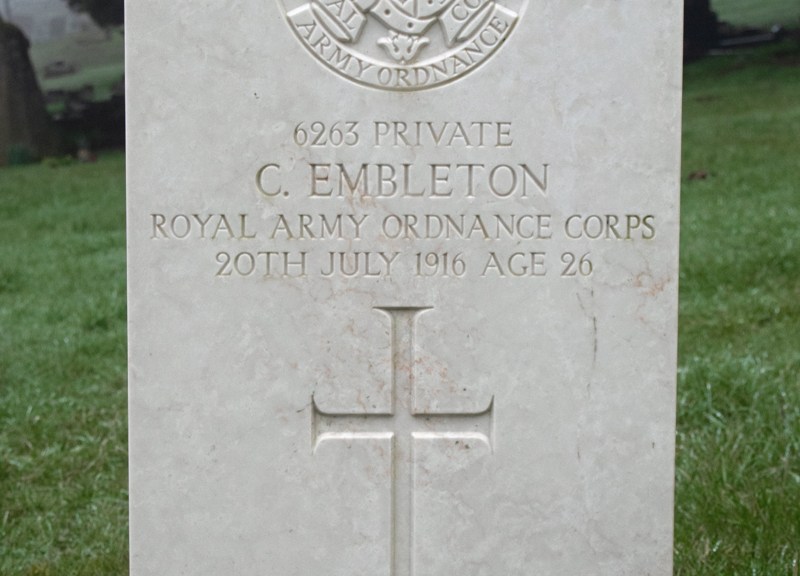
Charles Embleton lies at peace in Shepton Mallet Cemetery in Somerset.
William Charles Stevens was born in Wells in 1884. The eldest child of Alfred and Susan, William was one of eleven children. Alfred worked at the local paper mill, while William became a labourer, and found work as a stonemason.
William seemed keen to improve his prospects, however; he enlisted in the army at the start of 1903, serving in the Royal Field Artillery for a period of four years, before being demobbed to the reserves.
On Christmas Day 1907, William married Minnie Bailey; the census four years later gives the young couple as living in their home city. William, by now, was labouring on the railway, and the census shows, they had had a child, who had sadly passed away.
War was looming, and Gunner Stevens was recalled to duty in August 1914. Quickly posted overseas with the 23rd Brigade, he fell ill with myalgia and was shipped home to recover towards the end of the year.
Sent back to the front in 1915, William was promoted to Corporal and transferred to the 51st (Howitzer) Brigade. Sadly, his ‘tremble’ returned and he was sent back to England in October 1915. By this point, Minnie had given birth to their second child, a little girl they called Lilian.
Corporal Stevens’ condition continued, and he was medically discharged in March 1916. No further records exist, but it seems that he finally succumbed to the condition later that year. He passed away on 2nd November 1916, aged 32 years old.
William Charles Stevens lies at peace in the cemetery of his home town, Wells in Somerset.
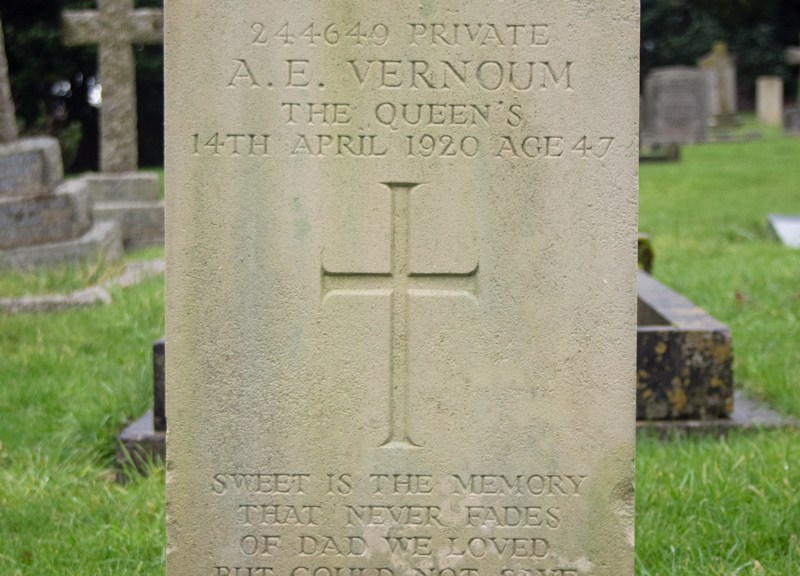
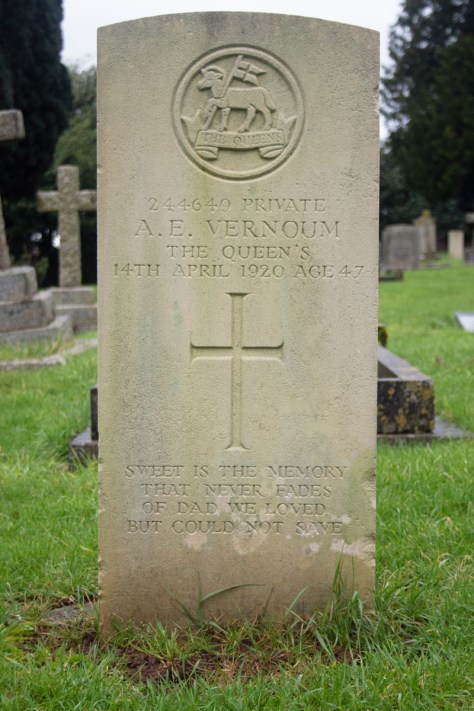
Arthur Edward Vernoum was born in 1874, the second of seven children to David and Sabina Vernoum. David worked on the railways, while Arthur went into labouring, as a stonemason.
He married Elizabeth Parker in 1896, and the couple settled in Wells, Somerset. They had four children – William, Samuel, Richard and Winifred.
Arthur’s military service records are a bit scarce; he enlisted in the Royal West Surrey Regiment (The Queen’s). Given his age – he was 40 when war broke out – if is likely that this was towards the end of the conflict.
While is troop served in many of the key battles of the Great War, there is no evidence whether Private Vernoum was involved – again, because of his age, it may well have been that he served as part of a territorial, rather than European force.
Arthur’s pension records show that he passed away on 14th April 1920, of a carcinoma of the tongue and a haemorrhage. He was 46 years old.
Arthur Edward Vernoum lies at rest in the cemetery of his home town, Wells in Somerset.
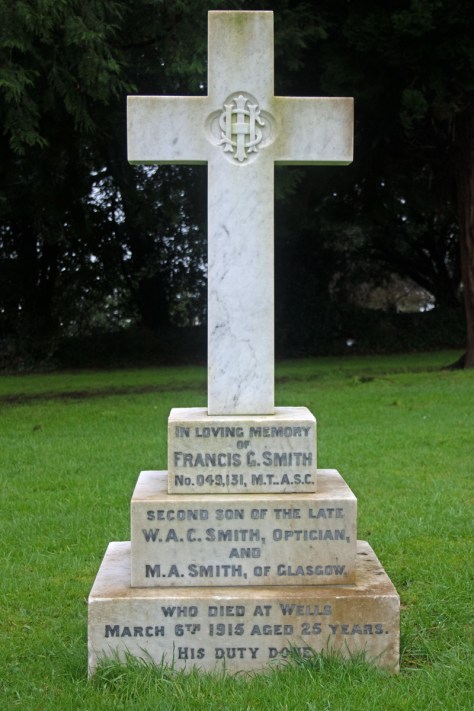
Francis George Smith was born in Glasgow in 1890. Records are scattered, but some of the pieces pull together to give an outline of his life.
The son of William and Mary Smith, Francis was the fourth of six children. His tombstone confirms that William had worked as an optician, but passed away when Francis was a young man.
Francis was an electrical engineer, and had assisted Mary in her business in Glasgow before signing up.
Private Smith enlisted early on in the war, “on February 24th of this year [1915], when he left his native city for London, where he joined the motor transport section of the Army Service Corps” [Wells Journal, Friday 12th March 1915].
Billeted in Wells, he had been assigned to the 133 Mechanical Transport Company. Within weeks of moving there, however, it seems that Francis fell ill. Sadly, his was a life cut too short, and he passed away from pneumonia on 6th March 1915, aged just 25 years old.
Francis George Smith lies at rest in the cemetery in Wells.
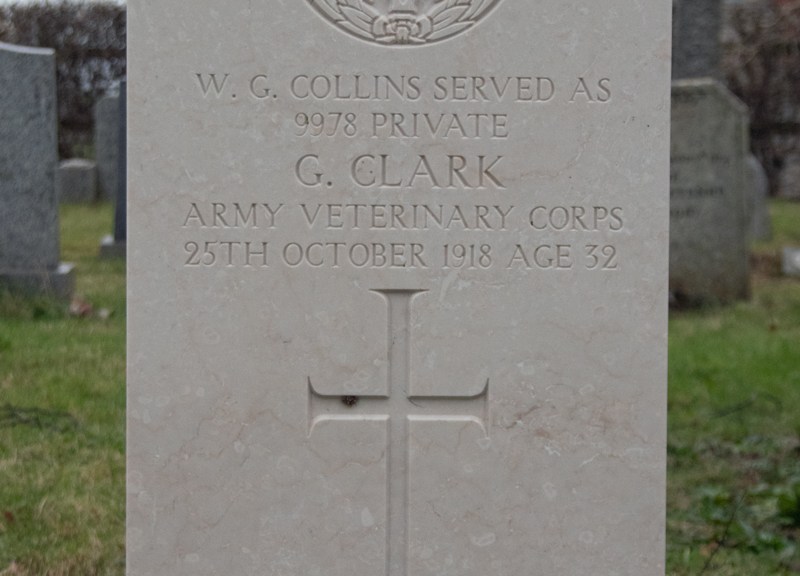
One of the things I have found during this research is that occasionally a mystery will come to light. In the case of the gravestone in the Somerset village of Coxley – nestled on the main road between Wells and Glastonbury – it was the very identity of a person buried there that threw me.
The headstone in question simply says “WG Collins served as Private G Clark in the Army Veterinary Corps”, but the research tools I normally use drew blanks.
Unfortunately, the Findagrave website does not have the burial listed under either name, so that too was a dead end.
The British Newspaper Archives site – a record of media across the UK covering 250 years – similarly has no entry for either name around the time of his death, which suggests it was either not ‘out of the ordinary’ (not headline-grabbing) or his death and funeral were just not submitted to the local paper.
Fold3 – which stores military records – has a record for 9978 Private Geoffrey Clark. The Register of Soldiers’ Effects confirms that a war gratuity was awarded to his sister, Ada Jane Waldron, after his death.
And, as it turns out, it was Ada who proved the key to the mystery of her brother. Working on the basis that Ada’s maiden name was Collins, I used Ancestry.co.uk to try and track her down. The site presented a family tree featuring both an Ada Jane Collins and, more importantly, a William George Collins, and the game was afoot…
William George Collins was born in the Somerset village of Coxley in the summer of 1889. He was the youngest of seven children – Ada was his oldest sister – to James Collins, an agricultural labourer, and his wife Jane.
Following the death of his mother in 1901, and his father a decade later, it’s evident that William wanted to make his way in the world. By the 1911 census, he had moved to Wales, working as an attendant at the Glamorgan County Lunatic Asylum. The asylum, which was in Bridgend, South Wales, was home to nearly 900 patients, and William acted as one of the 120 staff looking after them.
War was on the horizon, however, and the mystery surrounding William returned once more. Military records for William (or Geoffrey) are limited; he enlisted in the Royal Army Veterinary Corps in the summer of 1915 and was shipped to France in September of that year.
There is no record why he enlisted under the name Geoffrey Clark, nor does there seem to be any evidence of either names in his family. As to his passing, there is nothing to give a hint to how he died. All that can be confirmed for certain is that he passed away at the University War Hospital in Southampton on 25th October 1918, at the age of 32.
William’s probate records give his address as Railway Terrace in Blaengarw and show that his effects went to his sister, Ada.
William George Collins – also known as Geoffrey Clark – lies at peace in the graveyard of Christ Church, in his home village of Coxley.
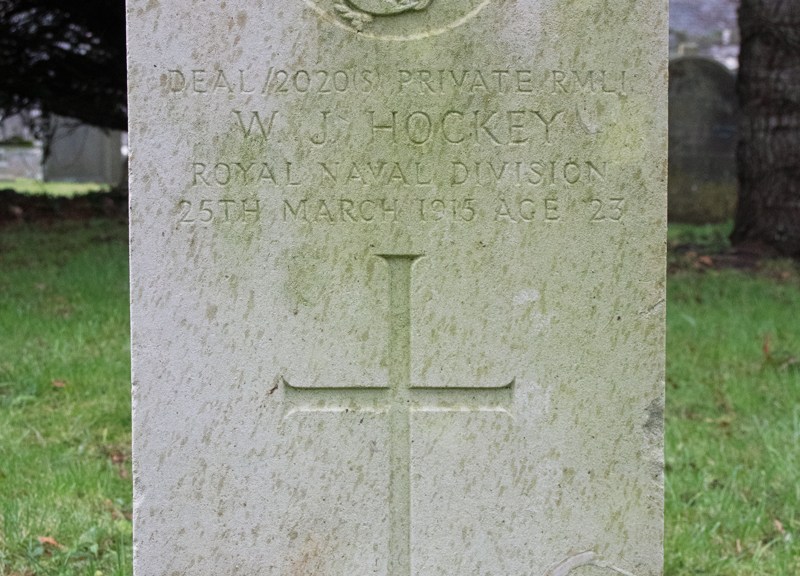
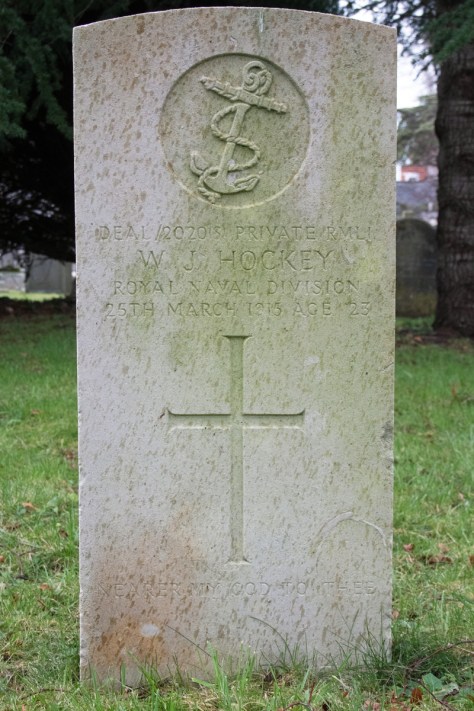
Wilfred James Hockey was born in September 1892, the sixth of nine children to William and Mary. William was the village butcher, but Wilfred followed his older brother Oliver into the gardening business.
Military records for Wilfred are difficult to locate, but it appears that there is a reason for this.
He enlisted in February 1915, joining the Royal Marine Light Infantry. His initial service took him to Crystal Palace in South London – then a naval training base.
Returning home on leave on 12th March, Private Hockey fell ill on his first evening at home. Quickly diagnosed with ‘spotted fever’ (or meningitis), he sadly passed away on 25th March. He was just 23 years of age.
Wilfred Hockey lies at rest in the graveyard of St Matthew’s Church in his home village of Wookey, in Somerset.
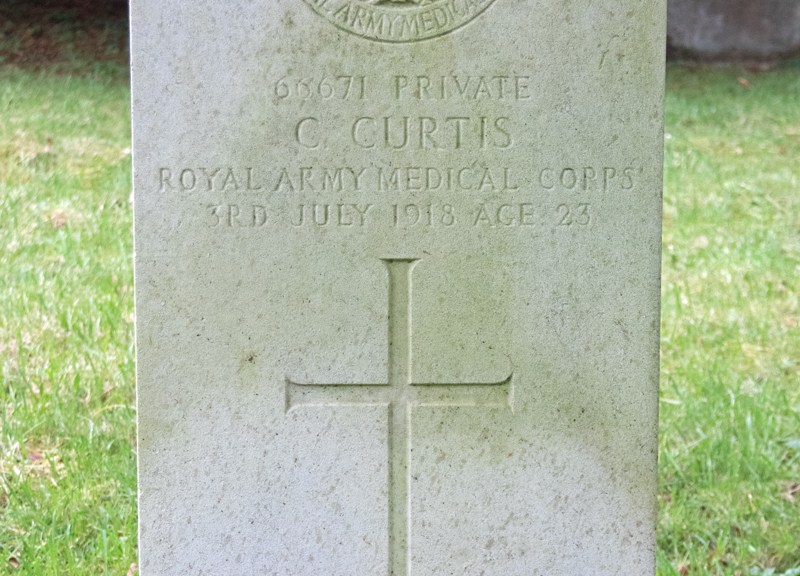
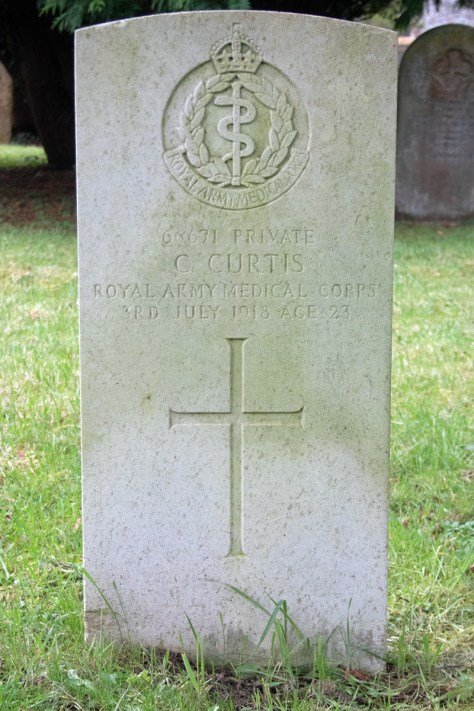
Charles Curtis was born in Wells, Somerset, in January 1894, one of fifteen children to Charles and Mary Jane Curtis. Charles Sr worked as a gardener in the Wells area, and, after leaving school, Charles Jr started work as a mill hand for the local paper mill (this would have been either St Cuthbert’s Mill in Wells, or the Wookey Hole Mill in the nearby village).
Charles enlisted in October 1915, joining the Royal Army Medical Corps. He was posted to France a month later and, while specifics of his military service are not readily apparent, Private Curtis was awarded the Victory Medal, the British Medal and the 1915 Star.
Charles was admitted to hospital on 1st November 1917 with an inflamed cervical gland (reported as Trench Fever), for which he underwent an operation. He remained hospitalised at Whalley Range for more than two months, and was passed for active service, having apparently recovered.
Private Curtis was suddenly taken ill again on 1st July, and his family telegrammed. His mother and one of his sisters boarded a train for the hospital – again in Whalley – but they had not gone far when word came that he succumbed to rheumatic fever. He was 24 years old.
Charles Curtis Jr lies at rest in the graveyard of St Matthew’s Church in the village of Wookey, Somerset.
A newspaper report of his funeral confirms that Charles was one of five brothers who had entered military service during the Great War. Amazingly, given that seven of the brothers ended up serving, Charles was the only one to die as a result of the war.
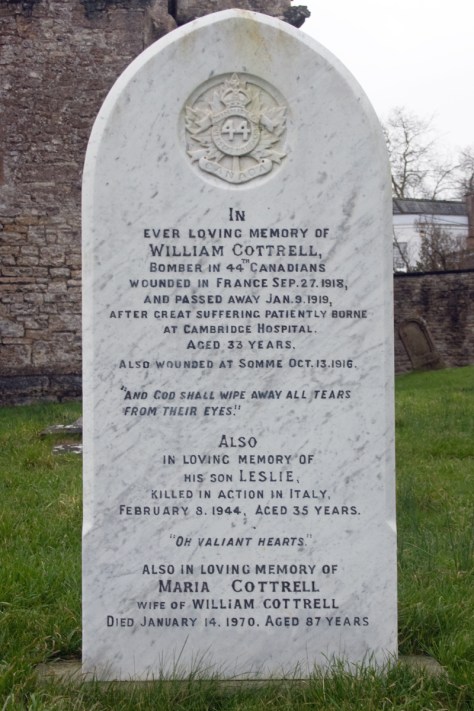
William Cottrell was born in April 1885, the third of twelve children to Henry and Annie Cottrell from Bampton, Devon. When William left school, he became an assistant to the village baker, but new opportunities lay ahead.
In May 1907, William married Maria Wall, the daughter of a stonemason from Wedmore in Somerset. With weeks, the young couple had embarked for a new life, boarding the Empress of Britain in Liverpool, setting sail for Canada.
Emigrating to Manitoba, William became a labourer, and he and Maria had three children – Leslie, Ronald and Kathleen.
War came, and William enlisted in the Canadian Expeditionary Force in August 1915. Shipped to England in the spring of the following year, Annie followed suit, returning to Somerset with the three children.
Private Cottrell was assigned to the 44th Battalion Canadian Infantry, setting off for France in August 1916, just weeks before his fourth child – Ruby – was born.
The battalion was involved in some of the fiercest fighting of the war, and it was during the Somme Offensive that William was shot in the left arm. Initially treated in the field, he was soon shipped back to England to recover in a military hospital in Epsom. Discharged after three months, he was returned to his battalion in early 1917.
The fierce fighting continued, and Private Cottrell was wounded again in October 1918. Further treatment back in the UK was needed, and he was admitted to the 1st Eastern General Hospital in Cambridge.
Details of the William’s injuries at the Somme are readily available, but information on his second lot of injuries is scarcer. They must have been pretty severe, however, as he was not discharged. He lost his final battle after four months, succumbing to his wounds on 9th January 1919. He was 33 years old.
William Cottrell lies at rest in the graveyard of St Mary’s Church in his widow’s home village of Wedmore, Somerset.
William’s gravestone is also a memorial to his eldest son, Leslie, who was killed during the Second World War.
Details of his military service are sketchy, but he enlisted in the Queen’s Own Royal West Kent Regiment. His battalion – the 1st – was involved in the fighting in Italy, and it was here that he lost his life. He was killed on 8th February 1944 and is buried in the Sangro River War Cemetery, in Abruzzo.
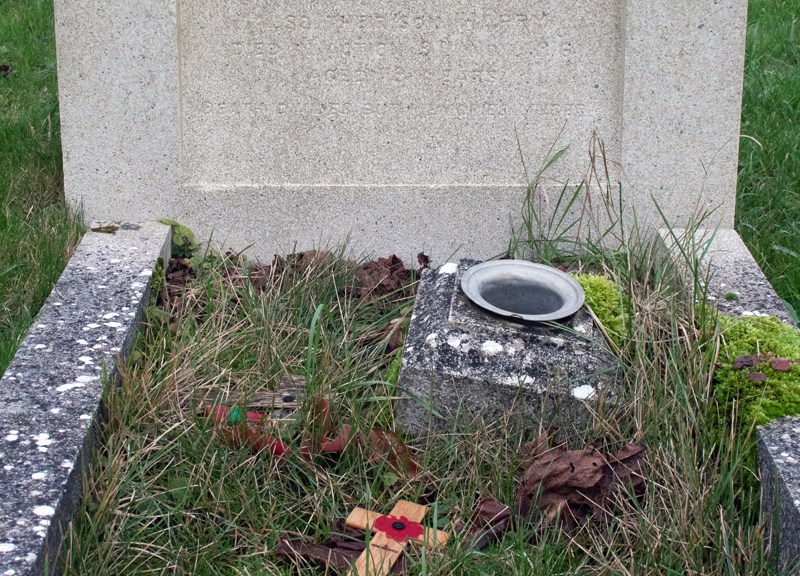
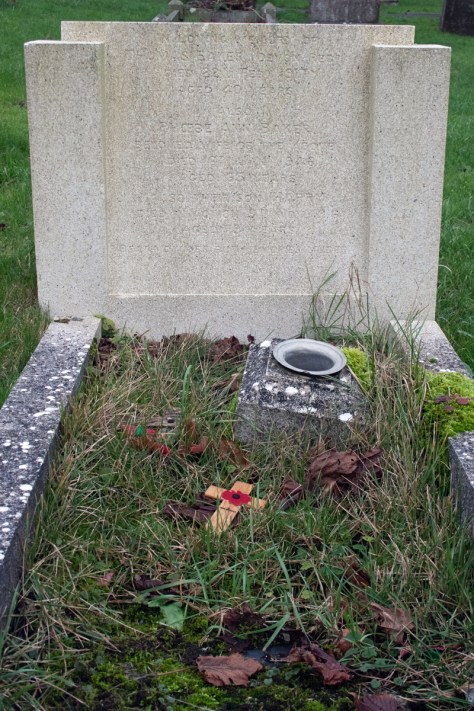
Thomas Baker was born in 1877, the youngest of four children – all boys – to John and Anna Baker from Meare in Somerset. John was a farm labourer, and it was rural trades that his four sons followed, Thomas himself also becoming a farm worker.
Thomas married in August 1896; Phoebe Ann Willis was also from Meare and was just seventeen when the couple married. While I am sure there was love involved, something more practical might have prompted such a young marriage as, six months later, the couple had their first child, Henry.
Thomas and Phoebe went on to have four children, three of whom – Henry, Florence and Amy – survived. By the time of the 1911 census, the family were living in their home village of Meare, with Henry following in his father’s – and grandfather’s – line of work.
Full details of Thomas’ military services are not available. He enlisted in the Devonshire Regiment as part of the 13th Works Battalion and, while there is no documentation to confirm when he joined up, it was probably early in 1917.
Thomas and Phoebe’s son Henry had enlisted in 1915, joining the Gloucestershire Regiment. It seems likely he fought on the Somme, and he was killed in action in November 1916, aged just 20 years old. It may have been this loss that prompted Thomas to do his duty, albeit on the Home Front.
Whenever it was that Private Thomas Baker had enlisted, it was Phoebe that was to suffer the ultimate price. Having already lost a child young, her boy had died in the fields of France, and her husband was also about to add to that loss.
Thomas contracted pneumonia in the winter of 1916-17, and passed away in a military hospital on 22nd February 1917. He was 40 years old.
Thomas lies at rest in the graveyard of the Church of the Blessed Virgin Mary & All Saints in his home village of Meare in Somerset.







 Death and Service