Tag Archives: shell shock

Ship’s Corporal Thomas Berry

Ship’s Corporal Thomas Berry

Details of the civilian life of Thomas Joseph Berry are a challenge to piece together. He is not recognisable in any census returns, and baptism records don’t tally either.

The main resource for building a picture of Thomas’ life is the service record for his time in the Royal Navy. This provides his date of birth – 6th May 1882 – and suggests that he was born in Hornsey, Middlesex. He was working as a cabinet maker when he enlisted, the document also confirming that he was 5ft 4ins (1.62m) tall, with brown hair, brown eyes and a fresh complexion.

Thomas began his naval career on 29th July 1898. Below the age to formally enlist, he was given the rank of Boy 2nd Class. Over the next eighteen months, his time was split between two training ships based in Devonport, Devon, HMS Impregnable and HMS Lion. In April 1899 he was promoted to Boy 1st Class.

In February 1900, Thomas moved to HMS Vivid, the Royal Naval Dockyard in Devonport. On 6th May he came of age, and was formally enrolled in the navy, receiving the rank of Ordinary Seaman. From this point his career took off and, over the next sixteen years, he would go on to serve on board fifteen ships, seeing the world.

At his annual reports, Thomas’ conduct was regularly identified as Very Good, and his commitment was reflected in the progress he made through the ranks. By June 1901, he had been promoted to Able Seaman Berry. The summer of 1907 saw him move up to Leading Seaman, and three years later, Thomas was a Petty Officer. In November 1911 he was made Ship’s Corporal 2nd Class, and by the following spring he had been promoted again, this time to Ship’s Corporal 1st Class.

Away from the Royal Navy, Thomas’ personal life was developing. Again there is little documentation to provide any specifics, but he married a woman called Albertine Elizabeth in the early 1910s. The couple went on to have a son, Bernard, who was born on 15th January 1913, and the family seemed to settle down in Paignton, Devon – a later record giving Albertine’s address as 3 Alma Terrace, Well Street.

When war broke out in the summer of 1914, Ship’s Corporal Berry was serving on board the protected cruiser HMS Blake. In February 1916, he was assigned to the battleship HMS Revenge which served in the English Channel.

By this point, Thomas’ health seemed to be taking a downturn. He was posted back to HMS Vivid on 7th March, but was then transferred to Devon County Asylum in Exminster, suffering from “general paralysis of the insane“. His condition worsened and he passed away on 29th April 1916: he was days away from his 34th birthday.

Thomas Joseph Berry’s body was brought back to Paignton for burial. He was laid to rest in the town’s cemetery.

Private Arthur Perkins

Private Arthur Perkins

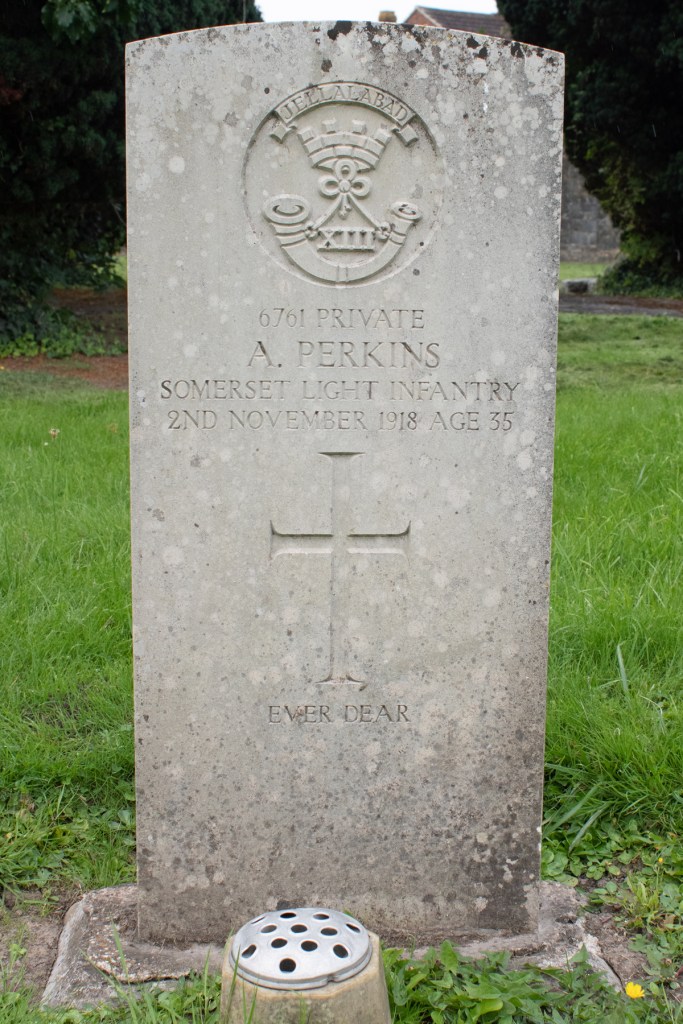
Arthur Perkins was born on 22nd April 1883, the seventh of eight children to James and Jane Perkins. James was a farm labourer who subsequently found work on the railways. The family were all born in Huntspill, Somerset, moving the few miles north to Highbridge when James’ work changed.

Arthur initially took on labouring work, but sought a more reliable career. On 26th February 1903, he enlisted in the army, joining the Somerset Light Infantry, for whom he had previously been a volunteer. His service records show that he was 5ft 7ins (1.7m) tall and weighed 122lbs (55.3kg). He had brown hair, hazel eyes and a fresh complexion, and his medical records note that he had a scar above his right eye.

Private Perkins was initially attached to the 2nd Battalion, remaining on home soil until September 1904. At this point, Arthur was moved to the 1st Battalion and, as a result, was sent to a unit in Quetta, India. He remained overseas for more than eighteen months, and, during his army career had a number of spells in hospital. He was admitted for bronchial catarrh in March 1904, a swollen stomach in December, a blistered foot in January 1905, syphilis in April and dyspepsia in September.

Arthur returned to Britain in May 1906, and at this point was stood down to reserve status. He returned to Somerset and, by the time of the 1911 census, was living with his older brother Harry and his family.

The Perkinses shared a small cottage in Benedict Street (at the time known as Station Road), Glastonbury. Arthur and Harry both laboured in a timber yard, while one of the yard’s engineers, William Webb, boarded with the family to bring an extra income in.

By the time war broke out in 1914, Arthur had moved back to Highbridge. He had taken up employment as a butcher, but this came to an end when he was mobilised on 5th August. Attached to the 1st Battalion of the Somersets again, Private Perkins was sent to France with his unit within weeks of the conflict being declared.

On the 18th September, Arthur was caught up in the Battle of the Aisne. He was wounded in the arm, and subsequently knocked unconscious by a shell burst nearby. From that point on, Private Perkins was dogged by a persistent tremor, which resulted in him being medically evacuated to Britain, and ultimately discharged from active service. “He had a functional tremor of the whole body. He he typically neurasthenic and depressed and convinced he will never be any better. No treatment is of the slightest avail.” [Medical discharge papers for Private Arthur Perkins: 26th June 1915]

Following Arthur’s discharge from the army, his trail goes cold. It is likely that he returned to Highbridge, although it is also likely that he spent periods of time – or longer – hospitalised because of his condition. He married a woman called Florence, although details of her are also scarce.

Arthur Perkins died through causes unknown on 2nd November 1918: he was 35 years of age. He was laid to rest in the cemetery of his home town, Highbridge.


Private George Taylor

Private George Taylor

George William Taylor was born on 14th July 1884 in Holcombe, Somerset. He was one of ten children, and his parents were John and Martha Taylor. John was a coal miner and for a while after finishing school, George followed his father to the pit. But he wanted bigger and better things, and was drawn to a career in the army.

On 16th September 1901, George enlisted in the Somerset Light Infantry. His service records confirm that he was 5ft 7ins (1.69m) tall, and weighed 131lbs (59.4kg). It was also noted that he had brown hair, grey eyes and a fresh complexion, and that he had a scar on his right shin and another on his left arm.

Private Taylor was assigned to the 2nd Battalion, and spent the next ten months training on home soil. In July 1902, however, he set off on his first big adventure, travelling to South Africa with his troop. He returned home in the spring of 1903, and spent the remainder of his seven years’ term of service on British soil.

On Christmas Day 1906, George married Ellen Hitchcock. She was the daughter of a blacksmith from Bath, and their marriage certificate adds further details to George’s life. He was living in Plymouth, Devon, when they married, and he gave his trade as a Bugler in the Somerset Light Infantry.

During the rest of his army contract, George had a number of admissions to hospital, for recurring conjunctivitis, a sprained ankle in November 1905 and a bout of scabies in January 1908. That autumn, having served for seven years, he was stood down to reserve status.

By the time of the 1911 census, George had settled back into civilian life. The young couple set up home in Holcombe, and George took up work back in the colliery there, where he was employed as a carter. A boarder helped them bring in a bit more money, but the document shows evidence of tragedy as it notes that Ellen had given birth to two children, but that both had died.

When war came to Europe in 1914, George was called back into active service. Initially assigned to the 1st Battalion of the Somerset Light Infantry, he arrived in France in July 1915. He only remained there for a matter of months, however, and, by October Private Taylor was back in Britain and reassigned to the 3rd Battalion.

It appears that his repatriation may have been for health reasons. On 31st January 1916, George was admitted to the 4th Southern General Hospital in Plymouth. The handwriting in the notes for this admission is difficult to read, but the basic headline is starkly clear: ‘bronchitis and subsequently mental’.

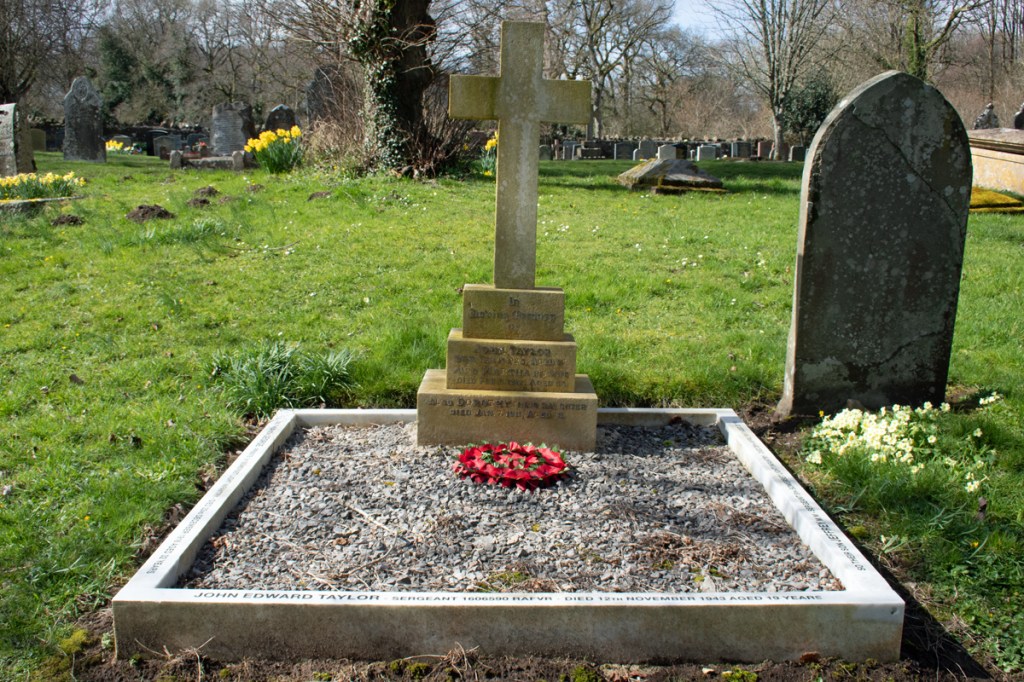
Private Taylor remained in hospital for a couple of weeks, before being moved to the Wells Asylum in Somerset. He was assessed by the military doctor after a couple of months’ treatment, and was declared unfit to continue in active service, due to ‘general paralysis of the insane’ or shellshock/PTSD as it is known today. His illness was wholly attributed to his military service, and sheds some light on what he must have gone through during his short time in France, compared to his previous seven years’ service. George’s last day in the army was on 13th April 1916, and he had served for a total of 14 years, 211 days.

George’s trail goes cold at this point. He passed away on 22nd December 1916, at the age of 32 years old. Although records do not confirm this, it seems likely that he died while he was still admitted to the asylum, as his death was recorded in Wells.

George William Taylor was brought back to Holcombe for burial. He was laid to rest in the family plot in the graveyard of St Andrew’s Church.


Lance Corporal James Toop

Lance Corporal James Toop

James Toop was born in the Somerset village of Galhampton on 13th January 1879. He was the fifth of eleven children to William and Elizabeth Toop. William was a farm labourer, and James followed his father’s line of work when he left school.

James disappears from documents for a while, only surfacing again in October 1914, when he enlisted for army service. At this point, he was working as a bricklayer, and notes that he had previously served in the Somerset Light Infantry. He is recorded as being 5ft 8ins (1.73m) tall, weighing 136lbs (61.7kg). He had brown hair, grey eyes, and gave his religion as Congregationalist. James also lied about his age, saying that he was 29 years and 9 months when, in fact, he would have been closer to 36 years old when he joined up.

Sapper Toop was assigned to the Royal Engineers, and spent nine months on home soil, during which time he was promoted to Lance Corporal. On 18th July 1915 he went to France, but returned just five days later.

Admitted to the Royal Victoria War Hospital in Netley, Hampshire, James was recorded as suffering the stress of campaign. He was moved to Napsbury War Hospital, near St Albans in Hertfordshire, after a couple of weeks. This institution – formerly the Middlesex County Asylum – was where servicemen suffering from shell shock were sent for rehabilitation, and Lance Corporal Toop joined the near 2,000 other residents.

James’ diagnosis was recorded as being neurasthenia with depression and, in October 1916, he was medically discharged from the army. The medical report noted that he had “had nervous breakdown, complained of vomiting of his food. Had defective memory. Had religious mania 5 years before enlistment.” While his condition was not the result of his war service, the medical board recorded that his mental debility has been aggravated by the strain.

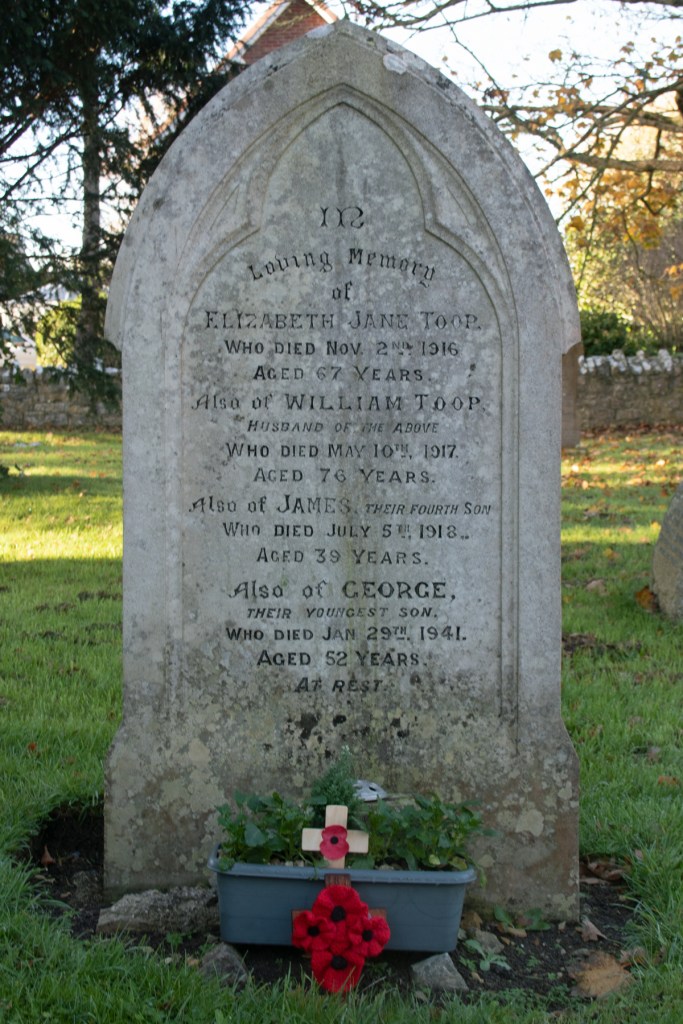
James falls off the radar again at this point. When he recovered, he returned to bricklaying for work. In 1916 his mother died, followed a year later by his father. Both were laid to rest in the family grave in St Mary Magdalene’s Church, Sparkford, Somerset.

James Toop died on 5th July 1918 at the age of 39 years old. He was also buried in the family plot, reunited with his parents far too soon.


Serjeant Tom Harris

Serjeant Tom Harris

Thomas Harris – known as Tom – was born on 13th October 1876, the only son of Edmund and Mary Harris. Edmund was an agricultural labourer from the Somerset village of Seavington St Mary, and this is where Tom was born and raised.

Mary had married Edmund in the spring of 1876, but had been married before; she was widowed when her previous husband, Alfred Vickery, died ten years before. They had had seven children of their own, half-siblings to Tom.

Edmund died in the Wells Lunatic Asylum when Tom was only six years old. When he left school, he found work as a farm labourer, but sought bigger and better things, even though he was now the only one of Mary’s children still living at home.

Tom enlisted in the Somerset Light Infantry in January 1893, and soon found himself overseas. During his sixteen years’ service, he spent seven years in India and six months fighting in the Second Boer War. Corporal Harris seems to have had a sickly time of it, and while in India, was admitted to hospital a number of times for fever, ague and diarrhoea, as well as a bout of conjunctivitis.

When Tom’s contract came to an end in 1909, he returned to Britain, setting up home in Newport, South Wales, where he found work as a sheet weigher at the local steel works.

Mary died of senile decay and cardiac failure in May 1910. She was 74 years old, and sadly passed away in the Chard Workhouse, in similar circumstances to her late husband.

In October 1913, Tom married Ada Long in Chard. She was the daughter of a shopkeeper, and the couple set up home in South Wales, where Tom was still working.

War, by now, was closing in on Europe, and Tom wanted to use his previous experience to serve his country once again. He enlisted on 20th August 1914 in Newport, joining the Devonshire Regiment as a Private, although he was quickly promoted first to Corporal and then to Serjeant. His service records show that he was 5ft 8ins (1.73m) tall, had blue eyes, brown hair and a tattoo of a Spanish girl on his right forearm.

After a year on the Home Front, Serjeant Harris was sent to Egypt in September 1915. On the way out, he contracted a severe cold, which left him deaf in his left ear. He was also suffering from varicose veins, which left him in pain in his right leg. He was treated for both conditions, and put on light duties for three months.

In November 1916, Serjeant Harris was supporting a food convoy when it came under attack. Buried in sand and wounded, he was laid up in a hole for two days and nights before help came. He was initially treated for shell shock in the camp hospital, but was eventually evacuated to Britain for treatment.

The incident had put too much of a strain on Tom, and he was medically discharged from the army in April 1917. While his medical report confirmed that the general paralysis he was suffering from was a result of the attack, it also noted on six separate occasions that he had previously suffered from syphilis, suggesting this may also have been a contributing factor to his mental state.

Tom was discharged initially to an asylum in South Wales, before returning home to Ada. The couple were soon expecting a child, and a boy, Sidney, was born in February 1918. By that summer, however, Tom’s condition had worsened enough for him to be admitted back to the Whitchurch Military Hospital in Cardiff.

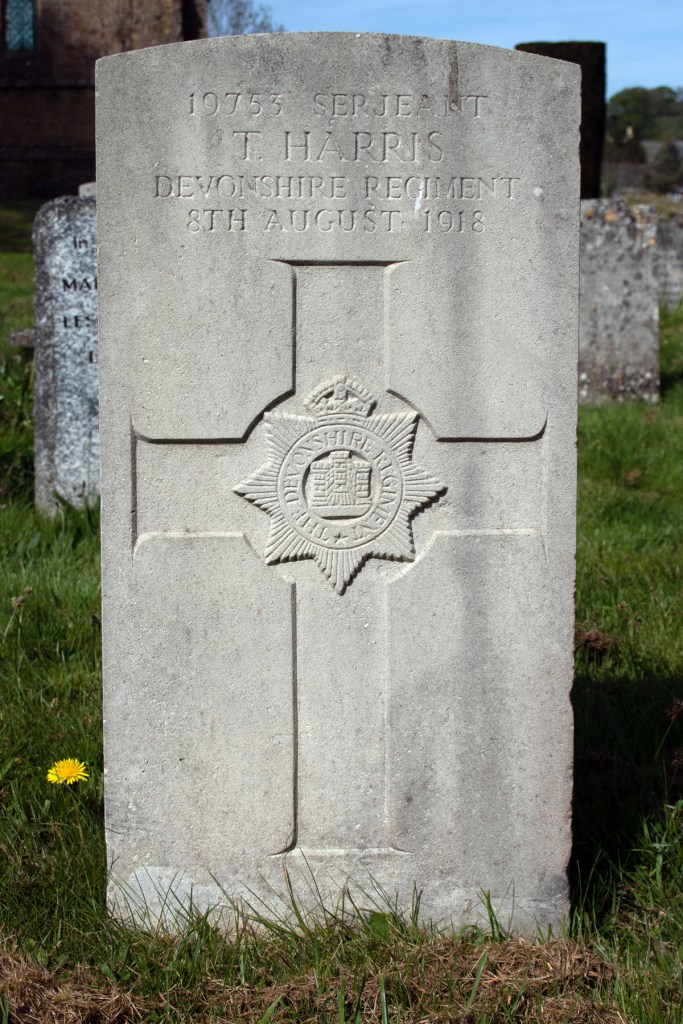
It was here that Tom passed away, dying from a combination of chronic phlebitis – an extension of the varicose veins he had previously complained of – and general paralysis on 8th August 1918. He was, by this point, 41 years of age.

Tom Harris was brought back to Somerset for burial. He was laid to rest – finally at peace – in Chard Cemetery.


Serjeant Tom Harris
(from ancestry.co.uk)

Lance Corporal Edmund Durnford

Lance Corporal Edmund Durnford

Edmund George Durnford was born in the spring of 1881 in the Somerset village of Pitcombe. The second oldest of twelve children, he was the oldest son to Edmund and Eliza Durnford. Edmund Sr was an agricultural labourer who travelled with the work – the 1891 census recorded the family living in Mells, near Frome.

When Edmund Jr left school, he found work at an ironmonger’s. He moved to Midsomer Norton and, in 1907, he married local carter’s daughter Bessie Welch. The young couple set up home in a terraced house on the road to nearby Radstock, and went on to have two children: Ian, who was born in 1908, and Ronald, born the following year.

War came to Europe, and Edmund was keen to play his part. He enlisted in the Royal Army Service Corps as a Driver, and was assigned to the 827th Company. Full details of his service are not available, but he remained a part of the territorial force and was promoted to Lance Corporal.

The local newspaper of the time reported on what became of Edmund:

Lance Corporal Edward [sic] G Durnford, Army Service Corps… son of Mr and Mrs EG Durnford… died suddenly on April 18 at Duston Hospital, Northampton, from shell shock and hemorrhage [sic] of the brain, was 38 years of age. The body was brought back from Northampton, and the deceased accorded a military funeral at Midsomer Norton last week.

Somerset Guardian and Radstock Observer: Friday 3rd May 1918

There are a couple of inconsistencies with the report. The newspaper has Edmund’s name wrong, while his pension record does not mention shell shock as the cause of death (it confirms the cerebral haemorrhage, but also cites a granular kidney). Given that Lance Corporal Durnford did not serve abroad, it seems unlikely that shell shock was a contributing factor.

The same article also places three of Edmund’s brothers in the war, and gives an insight into what had become of them before the conflict. Gunner Percy Durnford was with the Canadian Field Artillery, training in the South of England; Sergeant Major Arthur Durnford, of the Australian Light Horse, was based in Sydney; Bombardier Horace Durnford, of the Royal Garrison Artillery, had served in France, where he had been gassed, but was, at the time of his oldest brother’s death, based in Egypt.

Edmund George Durnford died in Northampton on 18th April 1918. He was 38 years of age. His body was brought back to Somerset, and he was laid to rest in the graveyard of St John the Baptist Church in Midsomer Norton.


Edmund’s younger son, Ronald, served in the Second World War. He joined the Royal Artillery, reaching the rank of Lance Bombardier. Ronald was serving in the Far East early in 1942, and for the next year, no news was heard of him.

However, contact was made in March 1943, confirming that Ronald had been captured by the Japanese, and was a prisoner of war in Borneo. Three months later, his wife, Kathleen, received a postcard from him, confirming he was a prisoner of war, well and unwounded.

Tragic news was quick to follow, however:

In last week’s issue it was stated that Mrs [Bessie] Durnford… had received through her daughter-in-law news that her son, Lance Bombardier Ronald Durnford, was a prisoner of war in Jap hands and was unwounded.

On Saturday she received the sorrowful news that he was dead in the following messages, which her daughter-in-law had sent on:

“I deeply regret to inform you a report has been received from the War Office, that [Ronald], who was reported a prisoner of war in Borneo Camp, had died from dysentery. The date of his death is not yet known, but you may rest assured as soon as any further information is received, I will immediately let you know.”

Somerset Guardian and Radstock Observer: Friday 30th July 1943

Lance Bombardier Durnford was laid to rest in the Labuan War Cemetery in Malaysia.


Further family tragedy, albeit with a life well-lived, was to follow as, on 6th September 1943, Bessie too died at the age of 86. She was laid to rest alongside Edmund in the family plot. Her obituary confirmed that “She leave a husband, seven daughters, and four sons to mourn her loss. One son and one daughter are in Canada, and one son in Australia, and one daughter and son in London.” [Somerset Guardian and Radstock Observer, Friday 17th September 1943]

Bessie had not, in fact, remarried: the husband was, in fact, the one who had died some 25 years before.


Private Wilfred Francis

Private Wilfred Francis

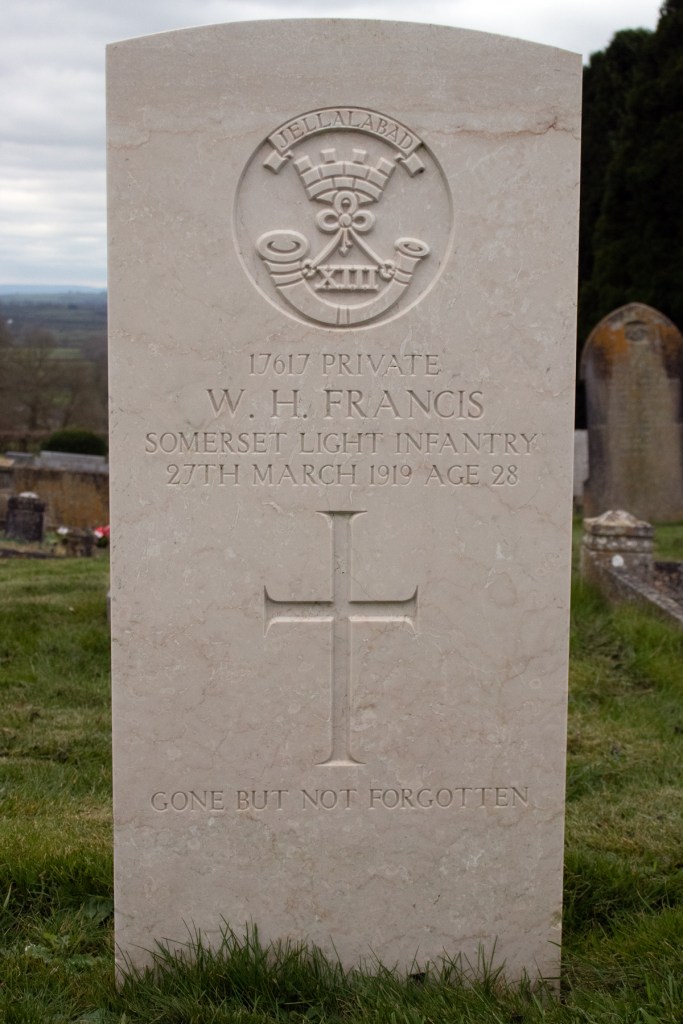
Wilfred Harry Francis was born in October 1890 in Castle Cary. He was the oldest of eight children to Edward and Rosina Francis, both of whom had also been born in the Somerset Town. Edward was a baker in his younger days, but, by the 1911 census he was employed as a builder’s labourer. Wilfred was recorded in the same document as a tailor.

War was coming to Europe, and Wilfred enlisted. He had been a volunteer in the Somerset Light Infantry, but on 6th April 1915, he made this a formal role. His service records show that he stood 5ft 6ins (1.68m) tall had light blue eyes and light brown hair.

Private Francis was assigned to the 6th Battalion and sent to France in the summer of 1915. His battalion was immediately thrown into the thick of the fighting at Ypres. The intensity of the battles of Hooge and Bellewaarde seemed to impact Wilfred as, on 7th October, he was admitted to the 4th London General Hospital, suffering from shell shock.

Wilfred was discharged after two weeks, and signed off as fit for light duties. It seems that he didn’t return to the Western Front, but instead was transferred to the 3rd (Reserve) Battalion of the regiment, based in Devonport.

The memories still seemed to haunt Private Francis, however. He was admitted to hospital again – this time the County of Middlesex Hospital in Napsbury, near St Albans – with mania. This time his ‘mental deficiency’ proved to much for the army, and he was discharged from military service on 18th July 1916. His discharge papers show that he gave the hospital as his address and recommended that he be admitted to a civil asylum.

Wilfred’s trail goes cold for the next few years. He seems to have been brought back to Somerset for ongoing treatment, but passed away in Wells on 27th March 1919; the cause of his passing is not known. He was 28 years of age.

Wilfred Harry Francis was laid to rest in the Castle Cary Cemetery, hopefully finding peace at last.


Gunner Albert Lloyd

Gunner Albert Lloyd

Albert Edward Prankard Lloyd was born in Somerset on 25th September 1893, in the Somerset village of Kewstoke (now a suburb of Weston-super-Mare). He was one of eight children to Jabez and Charity Lloyd. Jabez was initially a mason, but later went on to find work as a miner in South Wales. Charity worked as a laundress to help bring in extra money.

When Albert left school, he found employment as a labourer, remaining at home with Charity, with Jabez working away, and three of his sisters working as housemaids or laundresses. By 1911, however, he had moved to Wales with his father to work as a miner; steady employment that brought in a little more money because of the risks involved.

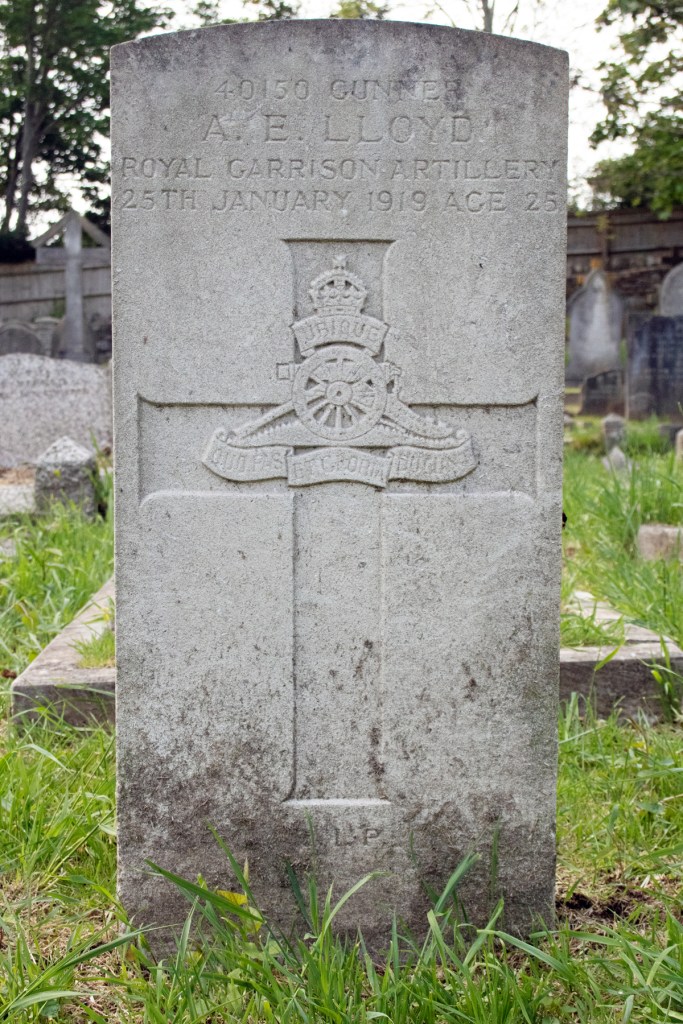
War, however, was on the horizon, and Albert enlisted before hostilities broke out. Joining up on 12th January 1914, his military records show him as standing 5ft 7ins (1.7m) tall and weighing in at 166lbs (75.3kg). He joined the Royal Garrison Artillery and, over the next five years, served three tours of duty in France, totalling just over three years on the Western Front.

Gunner Lloyd’s military service was not without incident, however. In November 1914 he was admitted to hospital for a week, suffering from shock. In April 1917, a shell exploded close to him and he was again found to be suffering from shock. His records note that, following the injury, he had had suicidal thoughts, and wished he was dead.

Just a month later, back on the battlefield, Albert received a gunshot wound to his right thigh. Nine months later, he was admitted to the Hermitage General Hospital in Higham, Kent for three weeks. (The ailment is a mystery, with just the term SCT Toe to identify it.)

When the Armistice came, Gunner Lloyd remained in France, finally returning home on 13th January 1919 ready to be demobbed. While not clear in his records, it seems that the initial ‘shock’ he had suffered from in 1914 had continued throughout the war.

One of the last comments on Albert’s service records is stark. “Found dead on Great Western Railway near Weston-super-Mare. 25.01.19“. Frustratingly, there is no other documentary evidence to expand on this curt phrase, no contemporary newspapers seem to have reported on the event, and nothing more than a scribbled police report was provided for the inquest (again, of which nothing remains).

It seems that the effects of five years of conflict proved too much for Gunner Lloyd; he committed suicide at the age of just 25 years old.

Albert Edward Prankard Lloyd lies at peace at last in the Milton Cemetery in his home town of Weston-super-Mare.


Corporal Wilfred Gillson

Corporal Wilfred Gillson

Wilfred Allen Gillson was born in 1888, the fourth of nine children – and one of eight boys – to George and Emma Gillson. George was a coachbuilder from Cornwall; Emma, whose maiden name was Allen, came from Derbyshire. The family were living in Torquay by the time Wilfred was born.

In 1895, George had moved the family to Bridgwater in Somerset, presumably as railway works had dried up in the coastal Devon town. By this time his oldest son, also called George, was working as a compositor, keying text for a printer. Wilfred was still at school, but his other two older siblings – William and Albert – were both working with their father, working on railway coaches.

Wilfred was also to follow in his father’s employment, and the 1911 census found him living in Bristol, boarding with the Cridland family, earning his keep a a carriage painter.

He joined up within weeks of war breaking out, enlisting in the Worcestershire Regiment on 20th September 1914. Private Gillson readily proved his worth, and was promoted to Lance Corporal after three months, and Corporal within a year of enlisting.

Corporal Gillson’s promotion coincided with his shipment abroad, and he served on the Western Front for eight months. Returning to England in March 1916, he subsequently transferred to the Devonshire Regiment, before being moved to the 4th Reserve Battalion in the spring of 1917.

Things were not right for Wilfred; he was reprimanded for neglecting his post on the night of the 26th May that year, before being medically discharged with neurasthenia in August.

The root of the matter is detailed in his discharge report; he was hospitalised at Neuve Chapelle in February 1916, suffering from shellshock, and it seems that he never really fully recovered.

Sadly, at this point Wilfred’s trail goes cold. He passed away on 10th November 1918, aged 30 years old.

Wilfred Allen Gillson lies at rest in St John’s Cemetery in Bridgwater, Somerset.


There are a couple of additional notes to Wilfred’s life.

During the war, Wilfred’s youngest brother, Thomas, fought with the Oxfordshire & Buckinghamshire Light Infantry. He was involved in the fighting in France, but died from wounds on 10th June 1918. He was just 18 years old, and is buried at Aire-sur-la-Lys, not far from Boulogne.

Given that Wilfred was one of eight brothers, all of whom would have been of fighting age during the war, it is lucky – although still a tragedy – that only he and Thomas died as a result of the conflict.

Sadly, Wilfred’s mother, Emma, passed away in the autumn of 1914, at 57 years of age. It might be a blessing, however, that she was not alive to see two of her sons suffer so.