Category Archives: story

Bombardier Harold Cornall

Bombardier Harold Cornall

Harold William Cornall was born on 16th August 1890 in Kingsteignton, Devon. He was the oldest of six children to William and Elizabeth Cornall. William worked as a carter and labourer for a tannery in the town, and, when he left school, this was where Harold also went for work.

In the autumn of 1912, Harold married Hilda Potter, from nearby Newton Abbot. The couple set up home and went on to have one child, a daughter called Winifred.

War broke out and, on 29th August 1914, Harold enlisted in the Royal Field Artillery. He was assigned to the A-Battery of the 90th (Howitzer) Brigade and was given the rank of Bombardier. He soon found himself in the thick of battle, as the brigade was sent to The Somme.

Bombardier Cornall was injured in the spine by some shrapnel, and medically evacuated to England in June 1916. Sadly, his injuries led to him becoming paralysed, and he passed away at the King George’s Hospital in London on 20th August 1916. He was just 26 years of age.

Harold William Cornall’s body was brought back to Devon; he was laid to rest in the graveyard of St Michael’s Church in his home town of Kingsteignton.


Private William Warren

Private William Warren

William Norrish Warren was born in Ashburton, Devon, on 24th April 1882, one of eight children to William and Irena Warren. William Sr worked as a woodsman and a farm labourer, and agriculture was a trade into which his son also went. There is a record that he found work as a railway porter, but this seems to have been only for a short while, and he soon resigned.

In the spring of 1915, William Jr married Olive Emmett, a carter’s daughter from the town. The couple went on to have a son, Alfred, who was born the following year.

War was on the horizon, however, and William enlisted, joining the 9th Battalion of the Devonshire Regiment by October 1915. He was given the role of Private, and, while full service details are not available, he definitely spent time abroad.

Private Warren was fighting on the Front in the spring of 1916, when, on 10th March, he was badly injured. He was medically evacuated to England and admitted to the Netley Hospital near Southampton for treatment. Sadly, his internal wounds proved too severe and he passed away from his injuries on 1st April 1916. He was just 33 years old.

William Norrish Warren’s body was brought back to Ashburton for burial. He was laid to rest in the graveyard of the town’s St Andrew’s Church.


Private Alfred Northway

Private Alfred Northway

Alfred William Winsor Northway was born on 3rd December 1870 in Barnstaple, Devon. He was the only child to farm labourer John Northway and his wife Susan. By the time Alfred was a few months old, John had moved the young family to Ashburton.

On 2nd March 1890, Alfred married Susanna Raddon in Newton Abbot. The couple went on to have eleven children – Susanna already had two children when they married; there is no indication as to whether they were also Alfred’s.

By the time they married, Alfred was working as a farm labourer. This was a job he continued to do to support his rapidly growing family. War was coming to Europe, however, and the stability of life in Ashburton was soon to change. During this time, he volunteered for the 3rd Battalion of the Devonshire Regiment and this stood him in good stead moving forward.

At least two of Alfred and Susanna’s sons enlisted when the First World War broke out; not to be outdone, Alfred also joined up on 11th September 1914. Assigned to the 11th (Reserve) Battalion of the Devonshire Regiment as a Private, there is no indication that he saw any time abroad. Instead it seems that he served at the regiment’s depot in Wareham, Dorset, supporting the Training Reserve.

By the end of 1916, Private Northway had fallen ill. Admitted to the Sidney Hall Hospital in Weymouth with pneumonia, sadly the condition got the better of him. He passed away on 3rd February 1917, at the age of 46 years old.

Alfred William Winsor Northway was brought back to Ashburton for burial. He was laid to rest in the graveyard of St Andrew’s Church in the town.


Chief Sick Berth Steward John Whiddon

Chief Sick Berth Steward John Whiddon

John Whiddon was born on 15th January 1876 in the Devon town of Ashburton and was one of seven children to John and Elizabeth Whiddon. John Sr was a general labourer, but when he left school, his son found work as a baker’s apprentice.

John was keen to better himself and so, at the age of 21, he enlisted in the Royal Navy. His service records confirm that he enlisted on 21st July 1897 for a period of 12 years. He was recorded as standing 5ft 6in (1.67m) tall, with light brown hair, blue eyes and a fair complexion.

John’s role was as a Sick Berth Assistant and, over the next few years he had a number of different postings. While some were on sea-going vessels, the majority of his time on shore. He served at the Haslar Hospital in Portsmouth, Plymouth Hospital and at HMS Vivid, the Royal Naval Dockyard in Devonport.

Sick Berth Assistant Whiddon certainly worked hard, though, and this paid off. In 1902 he was promoted to Sick Berth Steward and, in 1909, when his contract came to an end, he volunteered to stay on. Over the next seven years, John continued to do his duty, both on shore and at sea, and was again promoted, this time to Chief Sick Berth Steward.

At some point John married a woman called Catherine; sadly there is no information about her, other than that she had passed away by 1916.

In the autumn of 1916, John was serving on board HMS Powerful, when he contracted pneumonia. He was brought ashore and admitted to the Royal Naval Hospital in Plymouth, but sadly passed away from the illness on 30th December 1916. He was 40 years of age.

John Whiddon was brought back to Ashburton for burial. He lies at rest in the graveyard of St Andrew’s Church there.


Private John Peacock

Private John Peacock

John Peacock was born in Ashburton, Devon, in 1883. Details of his life are a little sketchy, but his parents were John and Mary Ann Peacock, and he was one of at least thee children. John Sr was an agricultural labourer, but his son wanted bigger and better things.

By the time of the 1911 census, John Jr had enlisted as a Private in the Royal Marine Light Infantry. No military records exist to confirm when he joined up or where he served. The census recorded him as being a patient in the Royal Naval Hospital in East Stonehouse although, again, there is no record of why he had been admitted.

The story of Private Peacock’s health seems to remain a thread through his life. The next document evident is his Pension Ledger Card. This confirms that he died on 31st May 1917, from what was described as general paralysis, often insane. He was 34 years of age.

John Peacock was laid to rest in the graveyard of St Andrew’s Church in his home village of Ashburton, Devon.


Private Hubert Hext

Private Hubert Hext

Hubert Hext was born in Ashburton, Devon, in September 1898. He was the youngest of three children to painter and decorator William Hext and his wife, Susan.

Little information is available on Hubert’s early life, and there is also scant detail about his military career. All that can be confirmed is that he enlisted on 6th May 1914, and joined the Devonshire Regiment as a Private.

He was initially assigned to the 5th Battalion – they sailed to India in October 1914 – but at some point transferred to the 14th (Labour) Battalion – which was in France by October 1916. Sadly, it’s not possible to identify exactly where Private Hext served.

The military documents available confirm that Hubert contracted tuberculosis and was discharged from the army on medical grounds. However, one records suggests this was on 25th October 1916, while another gives the date of 25th October 1917. Either way, Private Hext’s army career was over by the middle of the conflict.

Hubert returned home, and, for a while, his trail goes cold. Sadly, the next record for him is the confirmation of his passing. He died on 11th November 1918 – Armistice Day – at the tender age of just 20 years old.

Hubert Hext was laid to rest in the graveyard of St Andrew’s Church in Ashburton, Devon.


Pioneer James McDowell

Pioneer James McDowell

James Valentine McDowell was born in Ashburton, Devon, on 2nd January 1865. He was one of eight children to William and Louisa McDowell. William was a labourer, and this was a trade that James also took up when he left school.

In the summer of 1884, James was brought up to the Devon Assizes in Exeter, on the charge of attempted suicide. A local newspaper reported that:

It appeared that on June 13th the prisoner, fully dressed, was seen lying at full length in the Yeo, his head resting on a stone, but the remainder of his body was under water. The stream, however, was but three feet deep and six feet wide at this particular point, so the actual danger was not very great.

A witness seeing the position of the prisoner called upon him to come out of the water. He did so. He was very drunk. On leaving the Yeo, the prisoner proceeded towards the Dart, and on his way wished the witness to bid his father and mother good bye. Arrived at the Dart the prisoner attempted to throw himself into the water, but was prevented and handed over to the police.

When in custody the prisoner said this was the second time he had been in the water: next time should be more lucky. Subsequently, however, he stated that he only went to the Yeo for a wash, and this statement he now repeated.

The jury returned a verdict of not guilty, and his Lordship, in discharging the prisoner, advised him next time he wanted a bath not to get drunk beforehand, or he might find himself in deeper water than that in which he was discovered on the present occasion.

Western Times: Saturday 26th July 1884

The same Assizes saw trials for embezzlement, horse stealing, larceny, stack-burning and endeavouring to conceal the birth of a child. The alleged perpetrator of a count of buggery was found not guilty (his alleged offence not named in the same newspaper), while a Henry Davy, 51, was sentenced to 18 months’ hard labour for indecently assaulting a 6 year old girl.

The following year found James back on track. He married local woman Mary Ellen Ellery; the couple set up home in Ashburton and went on to have seven children. The family settled into a routine – James worked as a mason’s labourer; in his spare time, he joined the 3rd Devon Militia. His and Mary’s daughters found work as wool spinners, while their sons also got into labouring work.

War came to Europe in 1914; despite his age, James wanted to play his part. He enlisted when the call came, joining the Royal Engineers as a Pioneer on 19th August 1915. Within a week he was sent to France, and this is where he stayed for the duration of the war.

Pioneer McDowell returned to England on furlough on 2nd February 1919, and was waiting to be demobbed. However, tragedy struck before that became a reality, the same newspaper picking up the story some thirty-five years later:

An Ashburton man named James McDowell, aged about 56 years, a private in the Royal Engineers Labour Battalion, who joined up in August 1915, and had been in France continuously since that time, was found drowned in the mill leat of the the River Yeo at the rear of the cottages in Kingsbridge-lane early on Saturday morning.

He left his home at Great Bridge about 8:30 on Friday night for a short time. To get to the town he had to pass along by the river, which was running very high through the recent heavy rain, and it is supposed that he must have fallen in and had been washed down to where he was found, which was a considerable distance.

He had been demobilised, and was on furlough, and every sympathy is expressed for the family on their sad loss. Dowell [sic] who was well known and was of a jovial disposition, leaves a widow and grown up family.

Western Times: Monday 24th February 1919

Later that week, a summary of the inquest was printed:

Dr EA Ellis said he found a ragged cut over deceased’s left eyebrow, but otherwise there was no sign of violence. The cut was inflicted before death. A post mortem revealed that the cause of death was drowning. His theory was that deceased fell into the river, his head coming into contact with a stone, which inflicted the wound and caused unconsciousness. The spot where the accident was supposed to have happened, he thought, was unsafe and dangerous.

…the jury returned a verdict that the deceased was found drowned, caused by accidentally falling over the wall at the top of North Street… and they wished… to call the attention of the responsible authorities to the danger at this spot, and to the unsatisfactory state of the lighting there.

Western Times: Friday 28th February 1919.

Pioneer James Valentine McDowell drowned on 21st February 1919: he was 56 years of age. His body was laid to rest in the graveyard of St Andrew’s Church in his home village.


Ordinary Seaman Sidney Towills

Ordinary Seaman Sidney Towills

Sidney George Towills was born in Soho, London, on 14th May 1900. He was the youngest of two children to Henry and Maria Towills. Both had been born in Dorset, but Henry had found work as a constable for the Metropolitan Police and they had moved to London by the early 1890s.

The 1901 census recorded the family as living in Plaistow, but ten years later the family had moved back to Dorset, and were ensconced back in Maria’s home village of Abbotsbury.

When war broke out, Sidney was only 14 years old. He wanted to play his part, however, and as soon as he was able to enlist, he did so. He joined the Royal Navy on 9th April 1918 and, because of his age, was given the rank of Boy 2nd Class.

Sidney’s service records show that he was 5ft 9ins (1.75m) tall, had brown hair, blue eyes and a health complexion. He was assigned to the cruiser HMS Powerful and, on his eighteenth birthday, just over a month after enlisting, he was awarded the rank of Ordinary Seaman.

Tragically, Ordinary Seaman Towills’ service was not destined to be a long one. In June, he was admitted to the Royal Naval Hospital in Plymouth with empyema, a lung disease; he passed away from the condition on 2nd July 1918. He was barely 18 years of age and had served in the Royal Navy for 96 days.

Sidney George Towills was brought back to Abbotsbury for burial. He was laid to rest in the graveyard of St Nicholas’ Church in the heart of the village.


Private William Moore

Private William Moore

William John Moore was born in October 1893 in the Dorset village of Puncknowle. He was the second of four children to Richard and Elizabeth Moore. Richard was a farm labourer and Elizabeth’s family were all fishermen, but is was agricultural work that William sought out when he left school.

There is little direct information available about William’s life. When war came to Europe, he joined up, enlisting as a Private in the Dorsetshire Regiment at some point before April 1918. He served on home soil, and was based at one of the regiment’s depots on Salisbury Plain.

At some point late in 1918, Private Moore was admitted to the Military Hospital in Tidworth, although the cause for his admission is not known. Tragically, William died in the hospital on 13th October 1918. He was just 25 years of age.

William John Moore was laid to rest in the cemetery in his home village of Puncknole.


Senior Reserve Attendant George Cain

Senior Reserve Attendant George Cain

George Cain was born on 27th December 1896, and was one of eleven children to Edward and Florence Cain. Edward was a house painter from Richmond in Surrey, who passed away when George was a child, leaving Florence to raise the family. She found work as a shopkeeper in the town, and, when he left school, George was apprenticed to a printer to help bring in some extra money.

He had moved on to compositing – setting type – when war broke out. With conflict raging in Europe, George felt the need to play his part and, on 31st July 1915, he enlisted in the Royal Navy. His records show that he was 5ft 7ins (1.7m) tall, had dark brown hair, brown eyes and a pale complexion.

George was given the rank of Junior Reserve Attendant, supporting medical staff in the navy’s sick bays. After a couple of weeks at HMS Pembroke, the Royal Naval Dockyard in Chatham, Kent, he was posted to the town’s main hospital, where he remained for just under two years, and where he received a promotion to Senior Reserve Attendant.

In July 1917, George was reassigned to HMS Pembroke. That summer was particularly busy for the base, and temporary accommodation was set up in the Drill Hall; this is where George found himself billeted.

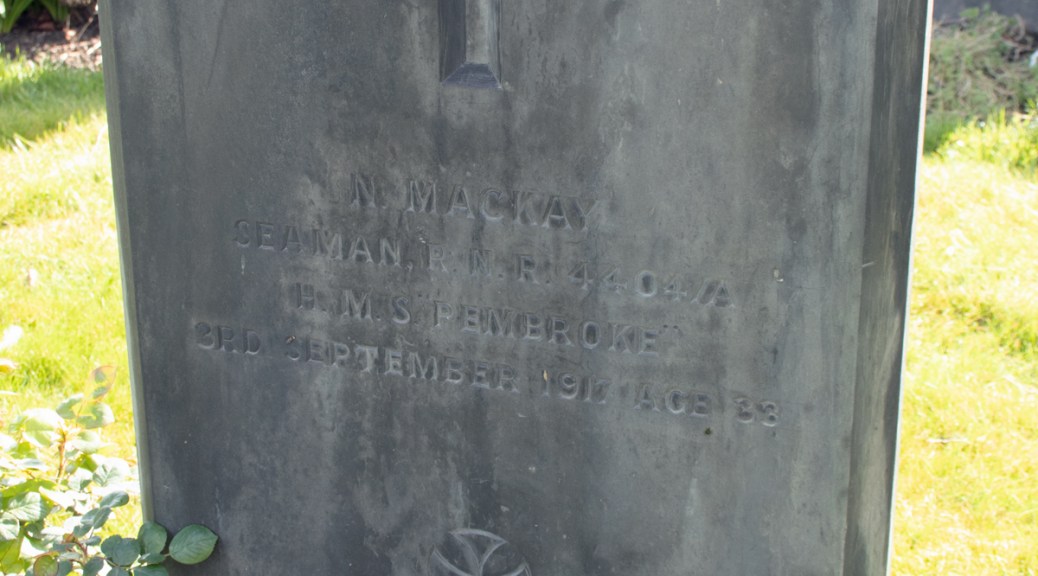
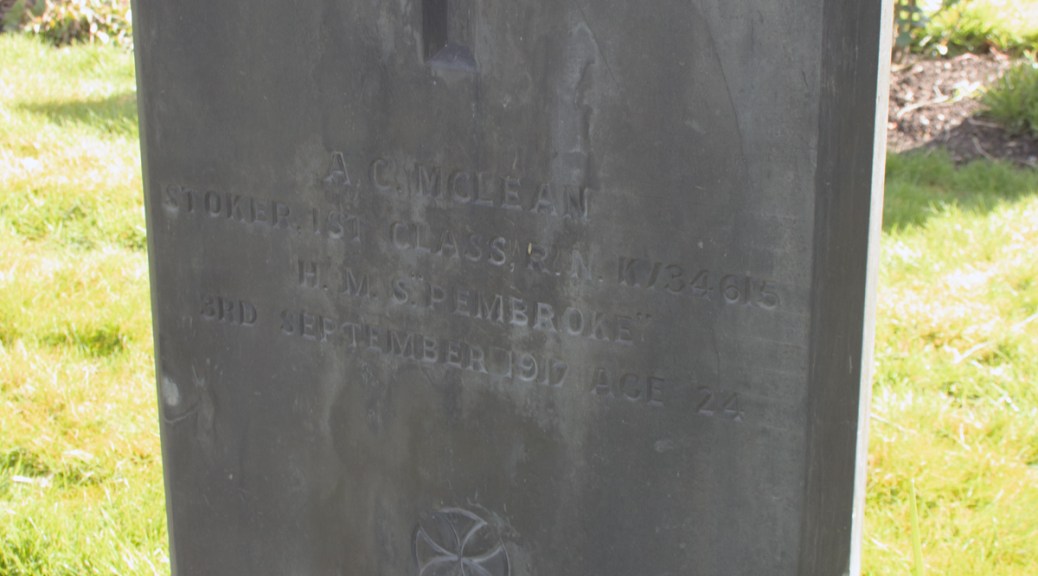
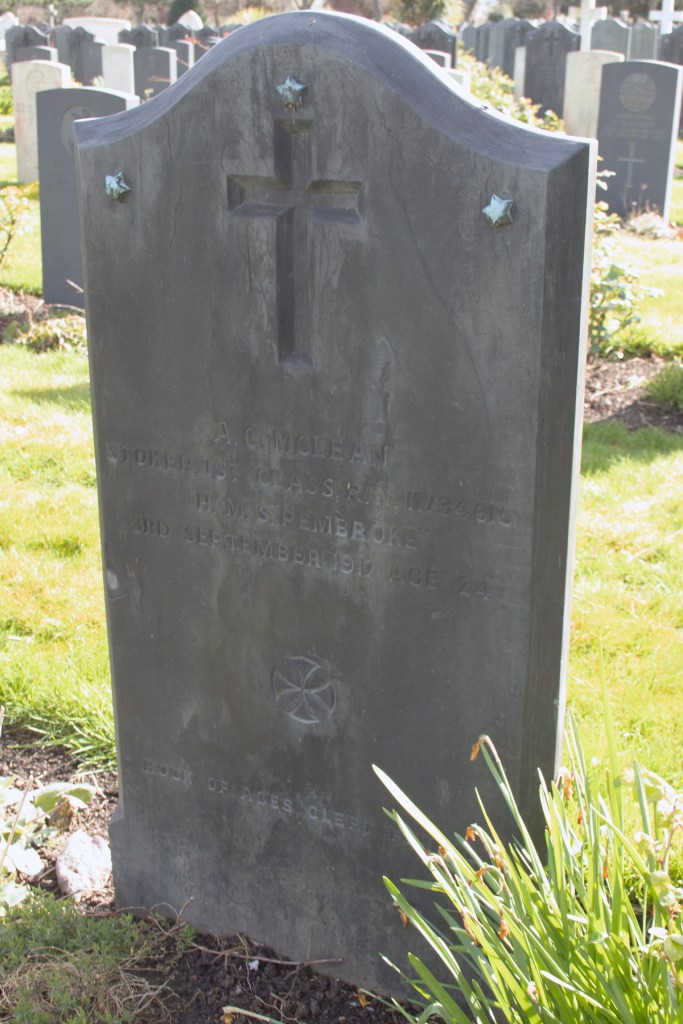
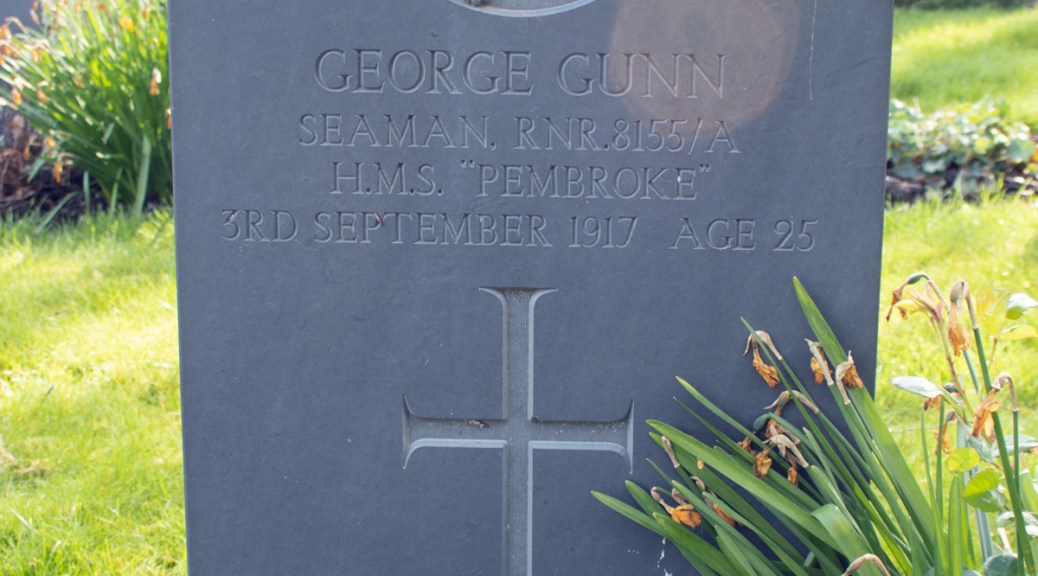
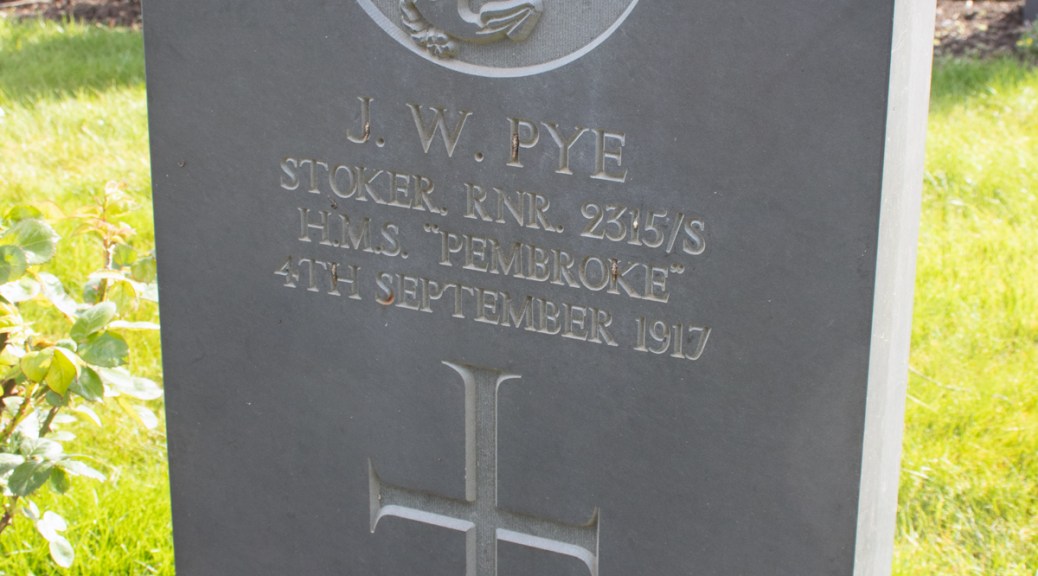
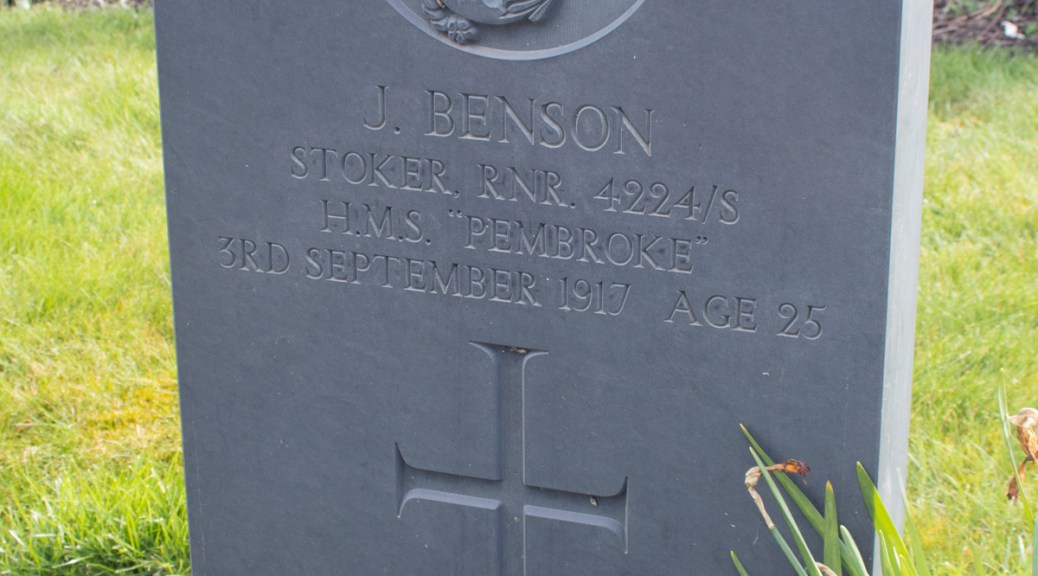
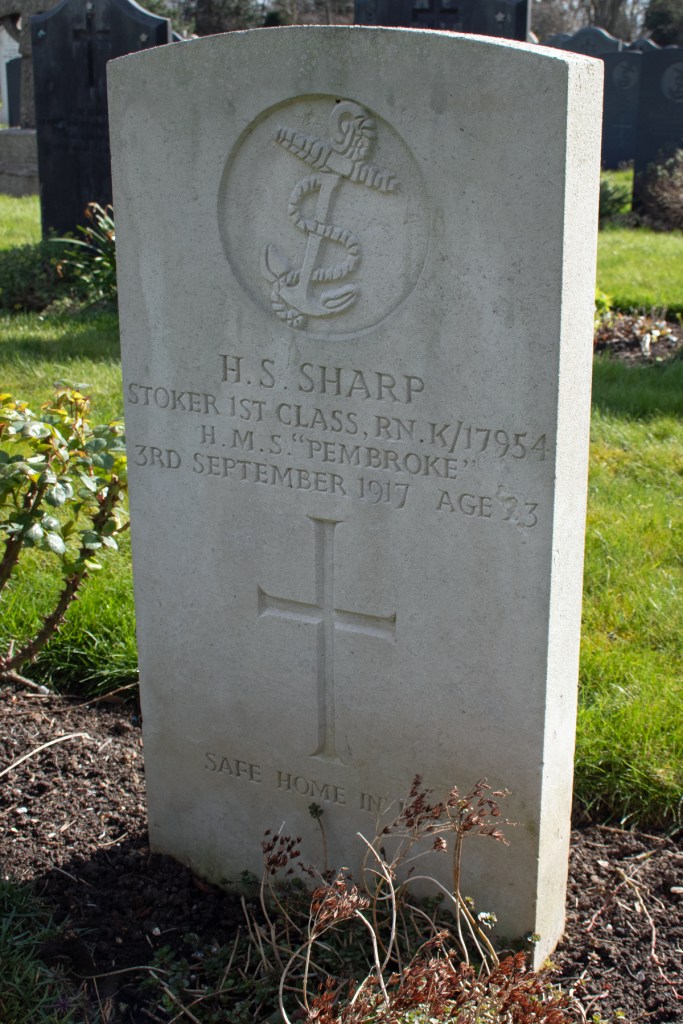
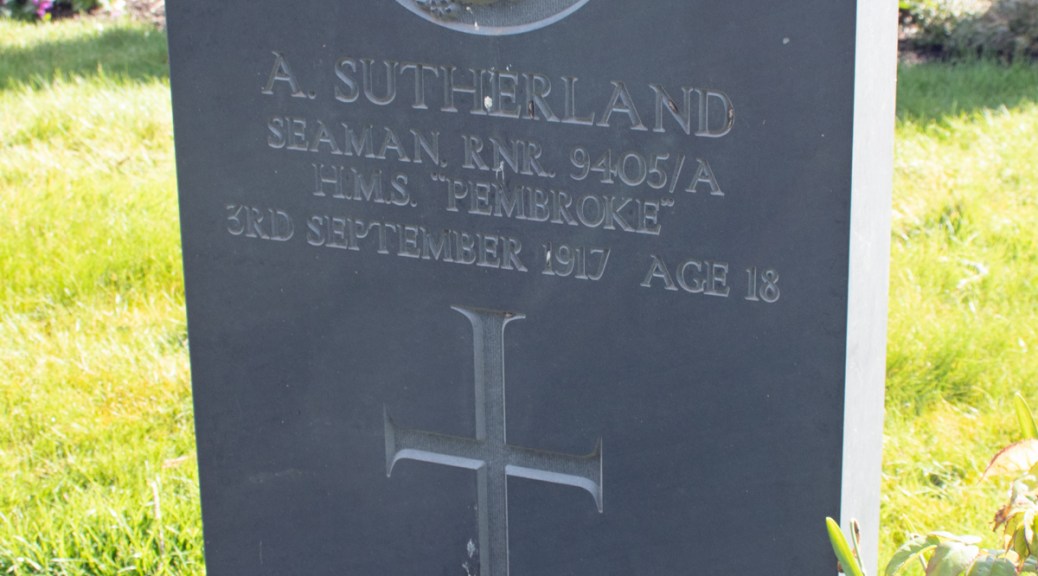
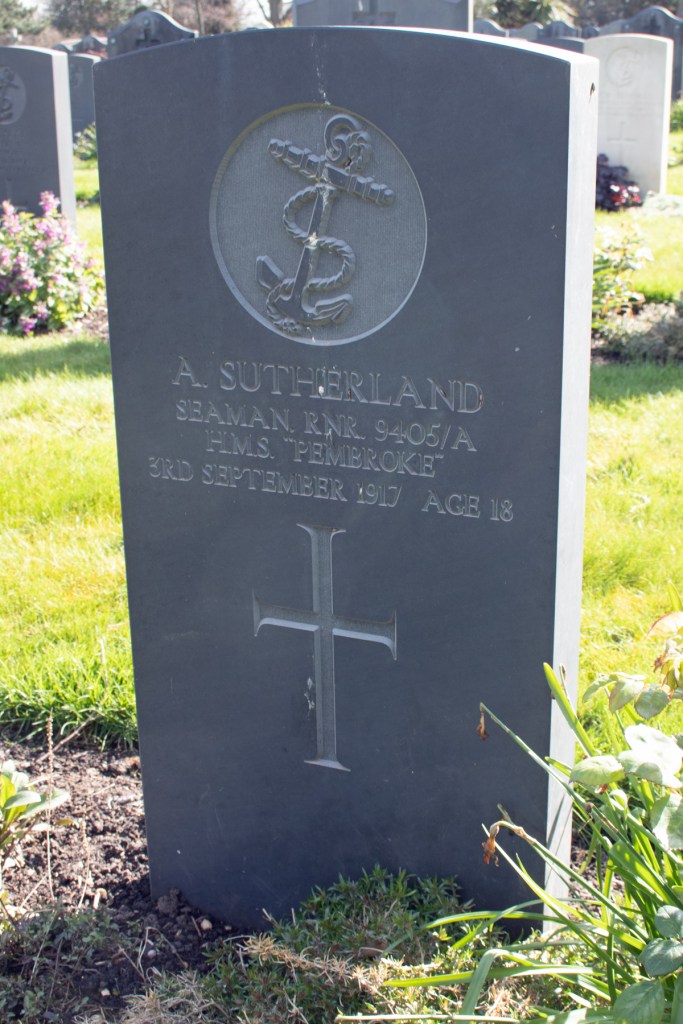
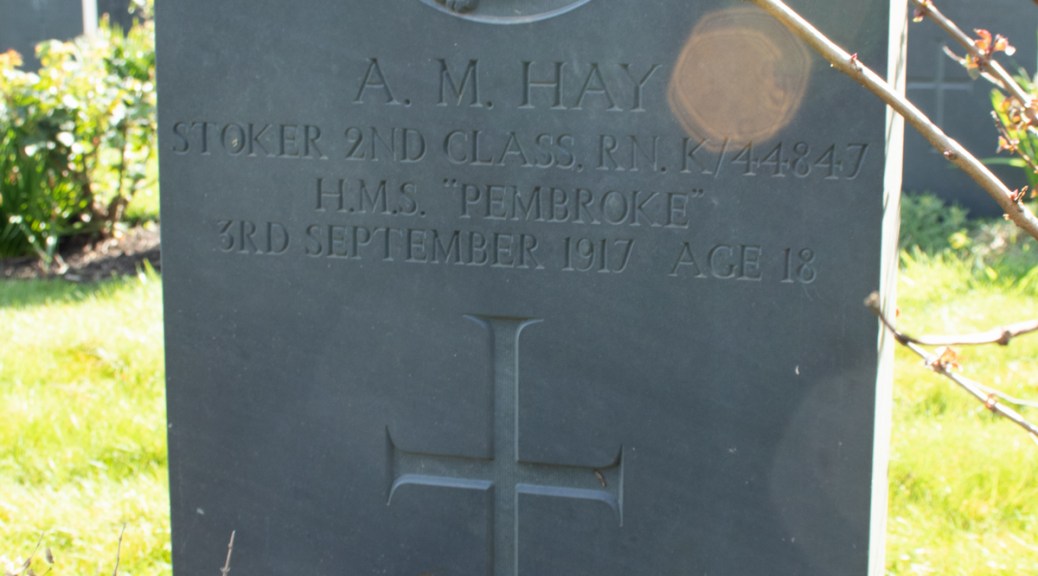
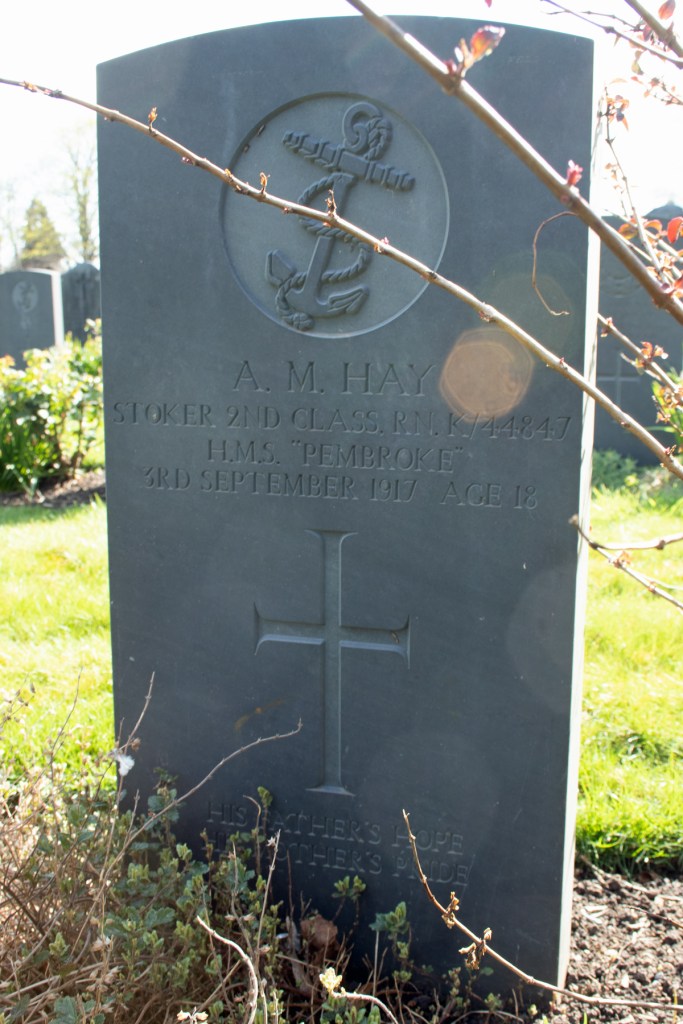
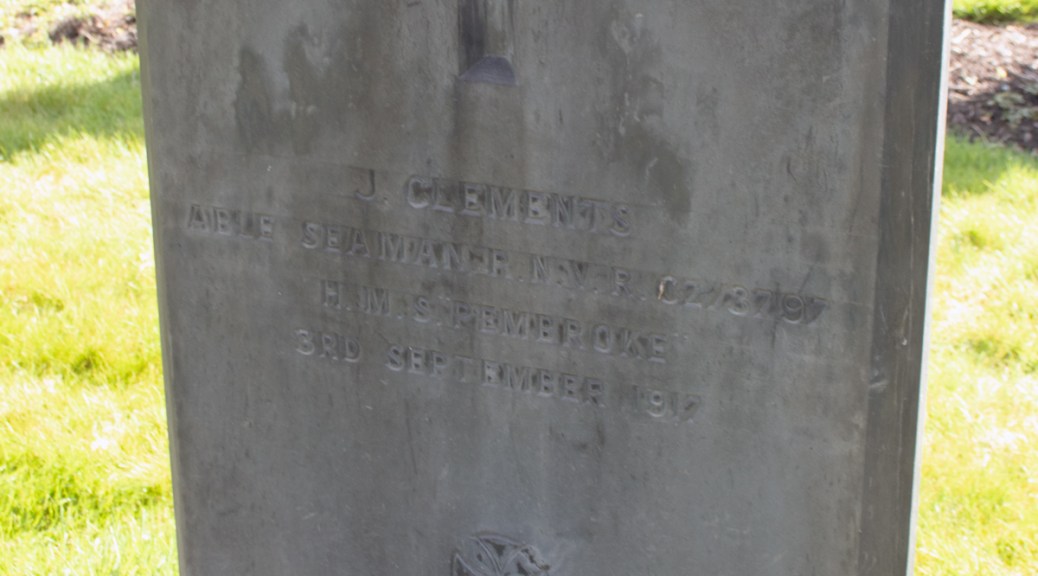
On the night of 3rd September 1917, Chatham suddenly found itself in the firing line as a wave of German aircraft bombed the town. The Drill Hall received a direct hit, and Senior Reserve Assistant Cain was injured. He was admitted to the hospital at which he had worked just weeks before, but died of his wounds the following day. He was just 20 years old.

George Cain was laid to rest in the Woodlands Cemetery in nearby Gillingham, along with the other servicemen who had perished during the Chatham Air Raid that night.