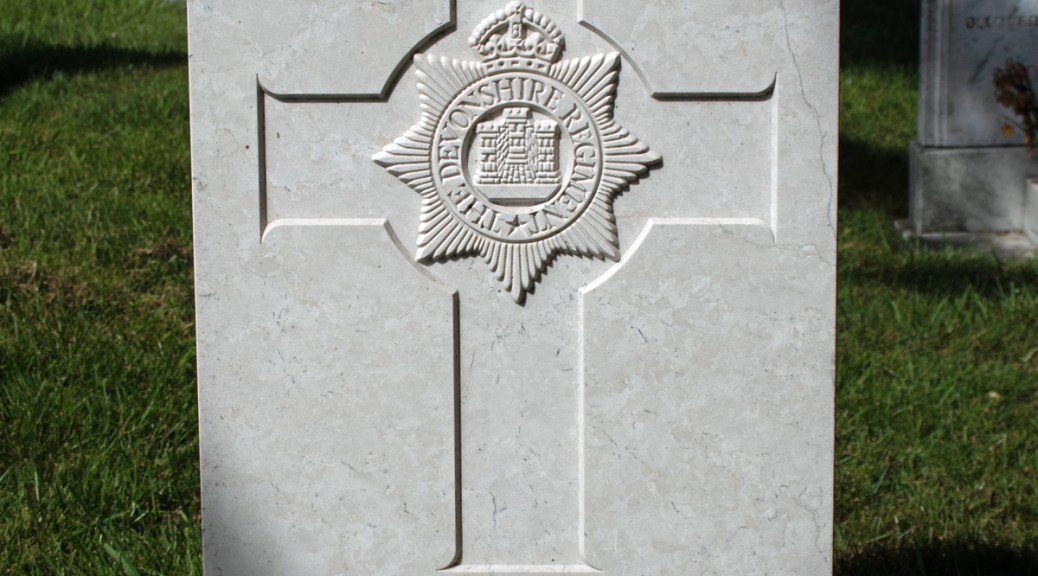
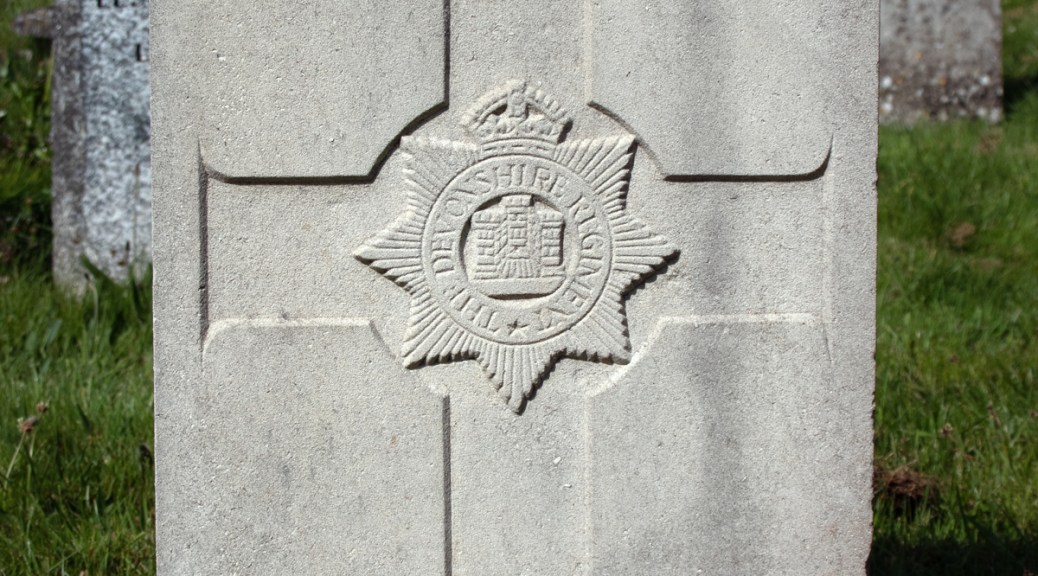
Joseph William Soper was born at the start of 1876, the third of eleven children to John and Elizabeth Soper. Both of his parents had been born in Dorset but it was in the Devon town of Axminster that their children were raised. John was a labourer, but, when he finished school, Joseph found work as an ostler or groom.
John passed away at the end of 1894, just months after his youngest son, Arthur, was born. Joseph, by this point, had found work as a postman, and, in the spring of 1897, he married Charlotte Annie Lee in his home town. The couple moved across the border to Somerset and settled in Chard. They went on to have a son, Arthur, who was born in the summer of 1900.
Postal work seemed not to have suited Joseph, and he made the move to labouring for a mason. Money appears to have been tight: the 1911 census recorded Charlotte working as a charwoman, while her younger brother, Herbert, was also lodging with them, and working as a grocer’s porter.
War was coming to Europe, but much of Joseph’s military career is a mystery. He had joined up by the autumn of 1916, and was assigned to the 13th (Works) Battalion of the Devonshire Regiment. He was based in Saltash and Plymouth, and served as part of the territorial force.
The only other documents available are Private Soper’s pension ledger and his entry on the Register of Soldier’s Effects. Both confirm that he died on 12th April 1917, and that the cause was “accidental injury received on active service“. Sadly, there is no further information about this. He was 41 years of age when he passed.
Joseph William Soper’s body was brought back to Somerset for burial. He lies at rest in Chard Cemetery, walking distance from where his widow and son still lived.
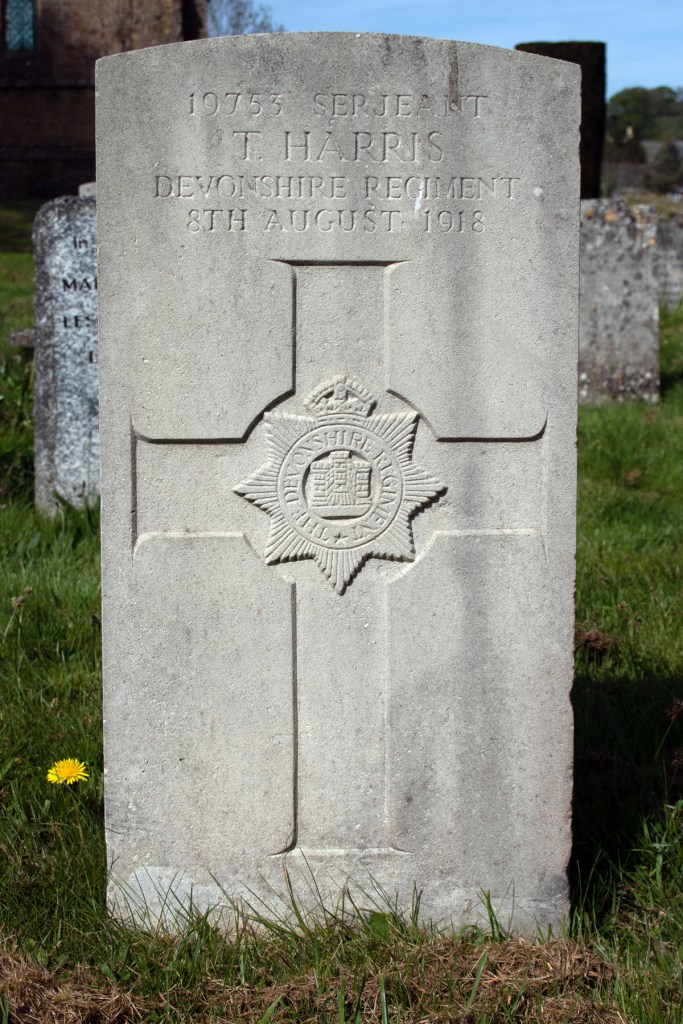
Thomas Harris – known as Tom – was born on 13th October 1876, the only son of Edmund and Mary Harris. Edmund was an agricultural labourer from the Somerset village of Seavington St Mary, and this is where Tom was born and raised.
Mary had married Edmund in the spring of 1876, but had been married before; she was widowed when her previous husband, Alfred Vickery, died ten years before. They had had seven children of their own, half-siblings to Tom.
Edmund died in the Wells Lunatic Asylum when Tom was only six years old. When he left school, he found work as a farm labourer, but sought bigger and better things, even though he was now the only one of Mary’s children still living at home.
Tom enlisted in the Somerset Light Infantry in January 1893, and soon found himself overseas. During his sixteen years’ service, he spent seven years in India and six months fighting in the Second Boer War. Corporal Harris seems to have had a sickly time of it, and while in India, was admitted to hospital a number of times for fever, ague and diarrhoea, as well as a bout of conjunctivitis.
When Tom’s contract came to an end in 1909, he returned to Britain, setting up home in Newport, South Wales, where he found work as a sheet weigher at the local steel works.
Mary died of senile decay and cardiac failure in May 1910. She was 74 years old, and sadly passed away in the Chard Workhouse, in similar circumstances to her late husband.
In October 1913, Tom married Ada Long in Chard. She was the daughter of a shopkeeper, and the couple set up home in South Wales, where Tom was still working.
War, by now, was closing in on Europe, and Tom wanted to use his previous experience to serve his country once again. He enlisted on 20th August 1914 in Newport, joining the Devonshire Regiment as a Private, although he was quickly promoted first to Corporal and then to Serjeant. His service records show that he was 5ft 8ins (1.73m) tall, had blue eyes, brown hair and a tattoo of a Spanish girl on his right forearm.
After a year on the Home Front, Serjeant Harris was sent to Egypt in September 1915. On the way out, he contracted a severe cold, which left him deaf in his left ear. He was also suffering from varicose veins, which left him in pain in his right leg. He was treated for both conditions, and put on light duties for three months.
In November 1916, Serjeant Harris was supporting a food convoy when it came under attack. Buried in sand and wounded, he was laid up in a hole for two days and nights before help came. He was initially treated for shell shock in the camp hospital, but was eventually evacuated to Britain for treatment.
The incident had put too much of a strain on Tom, and he was medically discharged from the army in April 1917. While his medical report confirmed that the general paralysis he was suffering from was a result of the attack, it also noted on six separate occasions that he had previously suffered from syphilis, suggesting this may also have been a contributing factor to his mental state.
Tom was discharged initially to an asylum in South Wales, before returning home to Ada. The couple were soon expecting a child, and a boy, Sidney, was born in February 1918. By that summer, however, Tom’s condition had worsened enough for him to be admitted back to the Whitchurch Military Hospital in Cardiff.
It was here that Tom passed away, dying from a combination of chronic phlebitis – an extension of the varicose veins he had previously complained of – and general paralysis on 8th August 1918. He was, by this point, 41 years of age.
Tom Harris was brought back to Somerset for burial. He was laid to rest – finally at peace – in Chard Cemetery.
William Charles Fuller was born on 31st January 1876 in Newton Abbot, Devon. He was the older of two children to Francis and Mary Fuller. Francis was a nurseryman, and gardening was a trade that both William and his brother followed him in.
Mary died in 1895 and Francis married a second time the following year, to a Mary Rogers. In July 1905, William married Ellen Bland, the daughter of the landlord of the Swan Inn in nearby Highweek. The couple went on to have a son, William, who was born the following year. William Sr continued his nursery trade through until the outbreak of war, while volunteering for the local defence corps.
When war came to Europe, William stood up to play his part. Full details of his service are not readily available, but it is clear that he had enlisted in the 13th (Works) Battalion of the Devonshire Regiment by the summer of 1916.
Private Fuller was based on home soil, serving in both Devon and Cornwall. However, he was billeted on Salisbury Plain by the start of 1917, and it was here that he fell ill. Having contracted influenza, William was admitted to the Fargo Hospital in Larkhill, Wiltshire; this was where he passed away on 25th January 1917. He was days short of his 42nd birthday.
William Charles Fuller’s body was brought back to Devon for burial. He was laid to rest in the family plot in the graveyard of St Mary’s Church in Wolborough, near Newton Abbot.
Frederick Charles Evelyn Liardet was born in Brighton, now a suburb of Melbourne, Australia, in 1888, and the eldest son of Wilbraham and Eleanor Liardet.
There is little further information about Frederick’s early life, but, when war broke out, he wanted to play his part for King and Country, and enlisted in the Devonshire Regiment.
He had an adventurous career… Having been twice wounded while on active service in France, he was appointed an instructor in the Balloon Section of the Royal Flying Corps.
Exeter and Plymouth Gazette: Tuesday 18th December 1917
On 23rd October 1915, Frederick married Kathleen Norah Liardet in Highweek, Newton Abbot, Devon. She was the daughter of a retired Lieutenant Colonel in the Royal Marine Light Infantry, and may have been a cousin (while their surname is unusual enough for there to be a connection, I have been unable to identify a specific connection). The couple went on to have a daughter, Barbara, who was born in 1917.
In 1916, while on a night flight with the Royal Flying Corps, the now Lieutenant Liardet was involved in an accident and badly injured. He returned to England to recover, he and Kathleen living with her family. While his health initially improved, he relapsed and passed away on 13th December 1917, aged just 29 years old.
Frederick Charles Evelyn Liardet was laid to rest in the graveyard of All Saints Church in his adopted home of Highweek, Devon.
Arthur Thomas Rendell King was born early in 1896, the oldest of six children to Thomas and Bessie King. Engine driver Thomas had been born in London, but, after marrying his wife the year before Arthur was born, he settled in Highweek near Newton Abbot, Devon.
When he left school, Arthur followed his father in working for Great Western Railways, working as a carriage cleaner at the town’s depot. War was on the horizon, however, and he enlisted in the Devonshire Regiment shortly after conflict was declared.
Private King was assigned to the 1st/5th Battalion and sailed for India in October 1914, arriving in Karachi a month later. After nearly three years, his regiment moved again, this time to Egypt, in advance of action in the Middle East.
Involved in the Battle of Nebi Samwil in November 1917, Arthur was badly wounded – and initially recorded as missing, presumed dead. However, he was found, and evacuated to England. Tragically, within hours of being admitted to a hospital on home soil on 31st January 1918, Private King died of his injuries. He had just turned 22 years of age.
Arthur Thomas Rendell King’s body was brought back to Devon for burial. He was laid to rest in the family grave in the graveyard of All Saints Church, Highweek.
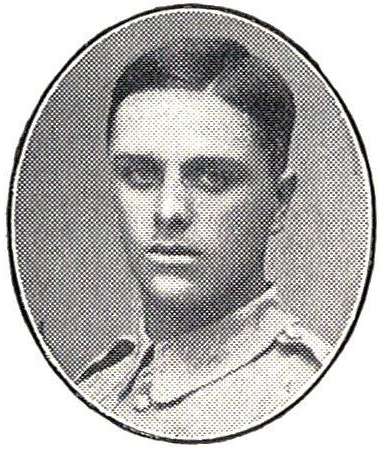
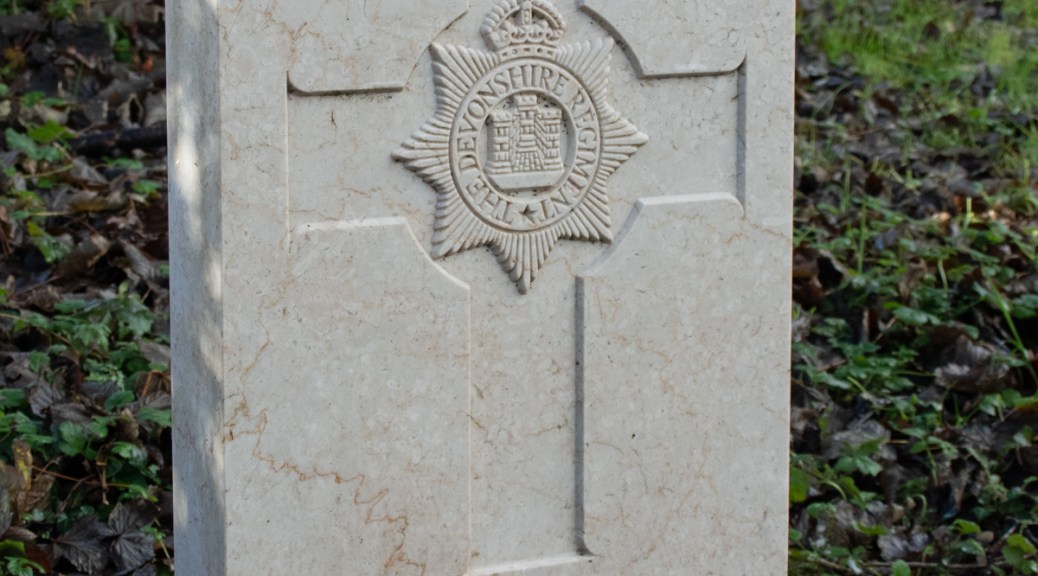
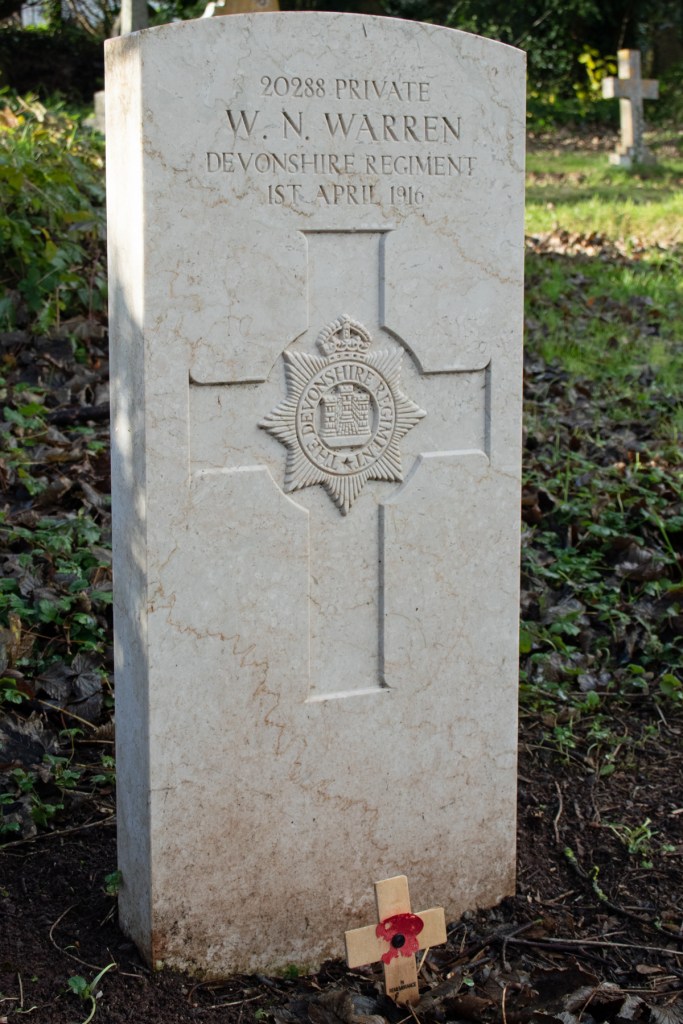
William Norrish Warren was born in Ashburton, Devon, on 24th April 1882, one of eight children to William and Irena Warren. William Sr worked as a woodsman and a farm labourer, and agriculture was a trade into which his son also went. There is a record that he found work as a railway porter, but this seems to have been only for a short while, and he soon resigned.
In the spring of 1915, William Jr married Olive Emmett, a carter’s daughter from the town. The couple went on to have a son, Alfred, who was born the following year.
War was on the horizon, however, and William enlisted, joining the 9th Battalion of the Devonshire Regiment by October 1915. He was given the role of Private, and, while full service details are not available, he definitely spent time abroad.
Private Warren was fighting on the Front in the spring of 1916, when, on 10th March, he was badly injured. He was medically evacuated to England and admitted to the Netley Hospital near Southampton for treatment. Sadly, his internal wounds proved too severe and he passed away from his injuries on 1st April 1916. He was just 33 years old.
William Norrish Warren’s body was brought back to Ashburton for burial. He was laid to rest in the graveyard of the town’s St Andrew’s Church.
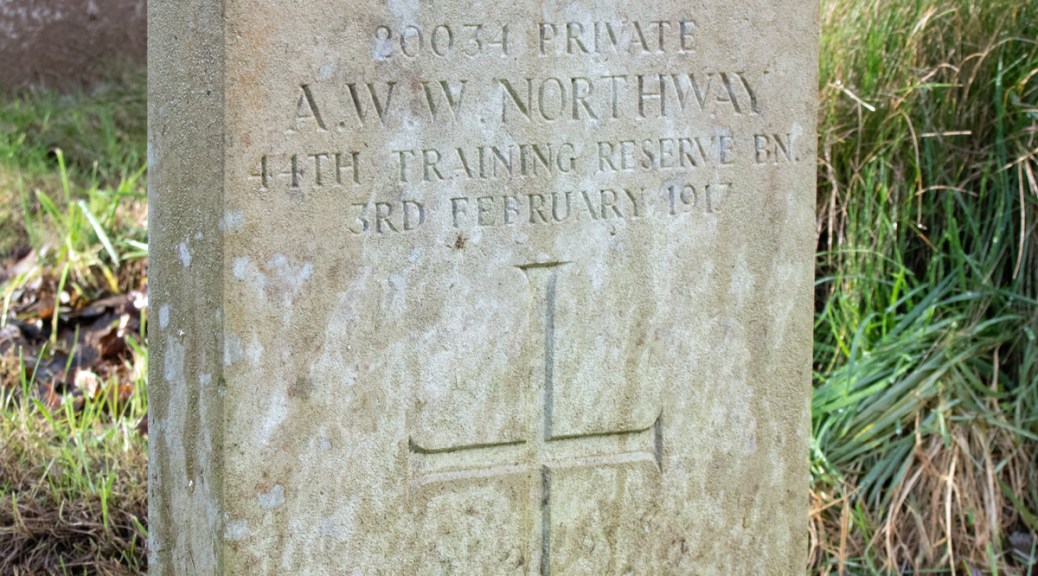
Alfred William Winsor Northway was born on 3rd December 1870 in Barnstaple, Devon. He was the only child to farm labourer John Northway and his wife Susan. By the time Alfred was a few months old, John had moved the young family to Ashburton.
On 2nd March 1890, Alfred married Susanna Raddon in Newton Abbot. The couple went on to have eleven children – Susanna already had two children when they married; there is no indication as to whether they were also Alfred’s.
By the time they married, Alfred was working as a farm labourer. This was a job he continued to do to support his rapidly growing family. War was coming to Europe, however, and the stability of life in Ashburton was soon to change. During this time, he volunteered for the 3rd Battalion of the Devonshire Regiment and this stood him in good stead moving forward.
At least two of Alfred and Susanna’s sons enlisted when the First World War broke out; not to be outdone, Alfred also joined up on 11th September 1914. Assigned to the 11th (Reserve) Battalion of the Devonshire Regiment as a Private, there is no indication that he saw any time abroad. Instead it seems that he served at the regiment’s depot in Wareham, Dorset, supporting the Training Reserve.
By the end of 1916, Private Northway had fallen ill. Admitted to the Sidney Hall Hospital in Weymouth with pneumonia, sadly the condition got the better of him. He passed away on 3rd February 1917, at the age of 46 years old.
Alfred William Winsor Northway was brought back to Ashburton for burial. He was laid to rest in the graveyard of St Andrew’s Church in the town.
Hubert Hext was born in Ashburton, Devon, in September 1898. He was the youngest of three children to painter and decorator William Hext and his wife, Susan.
Little information is available on Hubert’s early life, and there is also scant detail about his military career. All that can be confirmed is that he enlisted on 6th May 1914, and joined the Devonshire Regiment as a Private.
He was initially assigned to the 5th Battalion – they sailed to India in October 1914 – but at some point transferred to the 14th (Labour) Battalion – which was in France by October 1916. Sadly, it’s not possible to identify exactly where Private Hext served.
The military documents available confirm that Hubert contracted tuberculosis and was discharged from the army on medical grounds. However, one records suggests this was on 25th October 1916, while another gives the date of 25th October 1917. Either way, Private Hext’s army career was over by the middle of the conflict.
Hubert returned home, and, for a while, his trail goes cold. Sadly, the next record for him is the confirmation of his passing. He died on 11th November 1918 – Armistice Day – at the tender age of just 20 years old.
Hubert Hext was laid to rest in the graveyard of St Andrew’s Church in Ashburton, Devon.
George Franklin was born in the autumn of 1887, one of eleven children to James and Eliza. James was a farm labourer from North Newton, Somerset, and this is where the young family were raised. Given the rural location, it is no surprise that, when he left school, George followed his father and became an agricultural labourer.
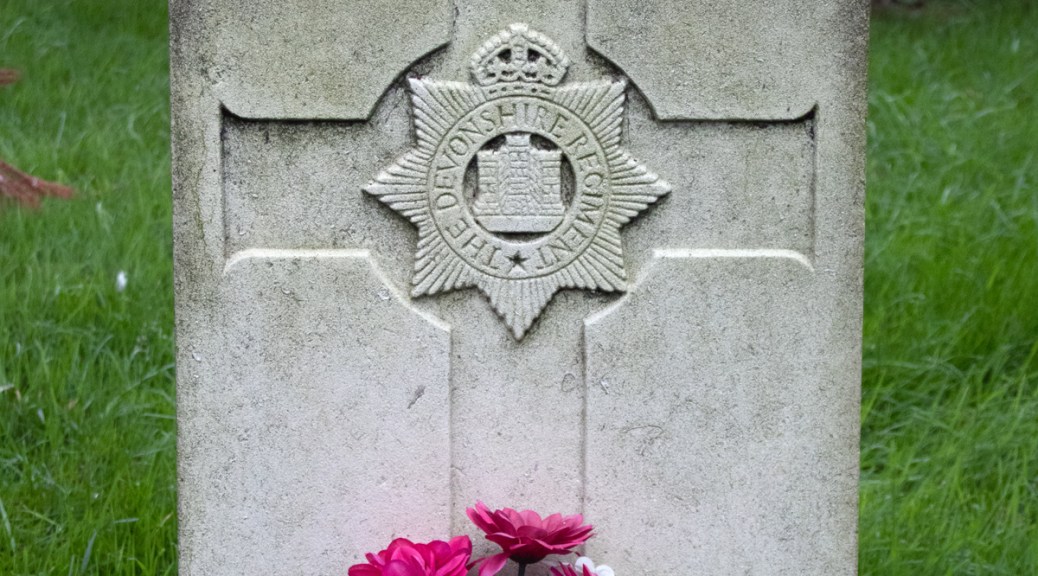
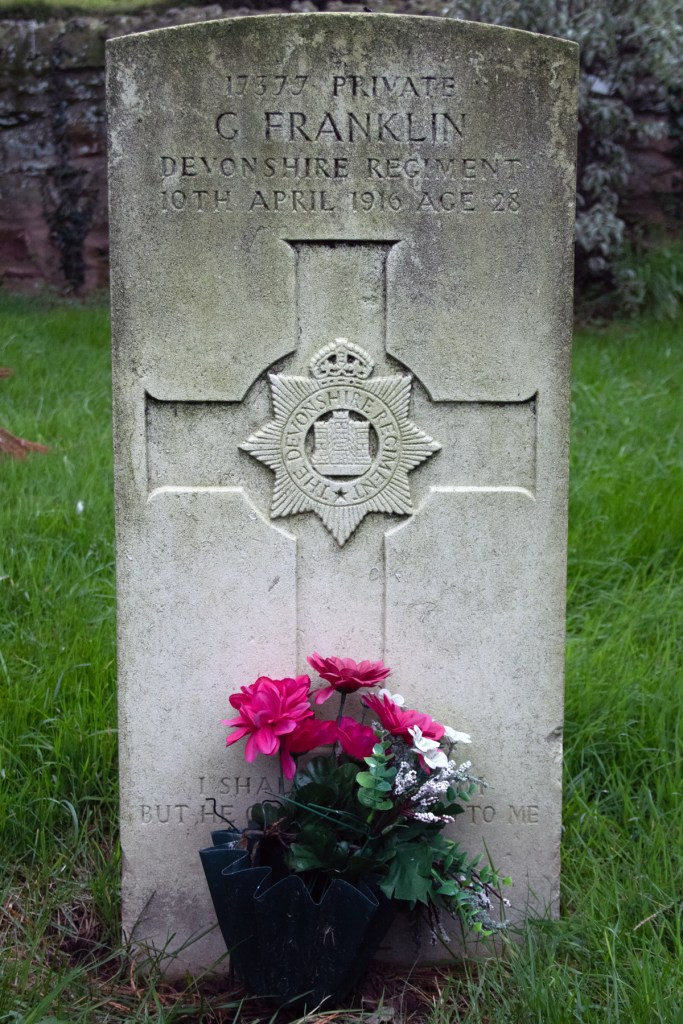
When war came to Europe, George was keen to play his part. Full details of his military service are not available, but he enlisted in the Devonshire Regiment as a Private. Little information is available about his role or where he was posted, and, sadly, the next set of documents relate to his passing.
Private George Franklin died on 10th April 1916, having been suffering from cerebro-spinal fever – meningitis. He was just 28 years of age. He was laid to rest in the graveyard of his village church, St Peter’s in North Newton.
Cuthbert William George Collard was born in the spring of 1899, one of nine children to William and Eliza Collard. William was an agricultural labourer from North Newton in Somerset, and this is where he and Eliza raised their family. While probably helping his father out as a child, Cuthbert found work at the local blacksmith’s when he left school.
Cuthbert was barely fifteen when war broke out in Europe, and so had to wait until April 1917 before he was of age to enlist. He joined the Devonshire Regiment, and his service records show that he was 5ft 2ins (1.57m) tall, had black hair, brown eyes and a pale complexion.
Assigned to the 4th (Reserve) Battalion, Private Collard served his time on home soil. While full details are not available, it appears that he contracted tuberculosis during his training. This was serious enough for treatment in a sanatorium to be recommended, and he was medically discharged from military service because of the lung condition on 9th January 1918. He had been in the army for just 280 days.
At this point, Cuthbert’s trail goes cold. Whether he was admitted for medical treatment is unclear, but it appears that he returned to North Newton. He passed away on 19th June 1919 at the family home, aged just 20 years old.
Cuthbert William George Collard was laid to rest in the graveyard of the village church, St Peter’s.