Category Archives: Devonshire Regiment

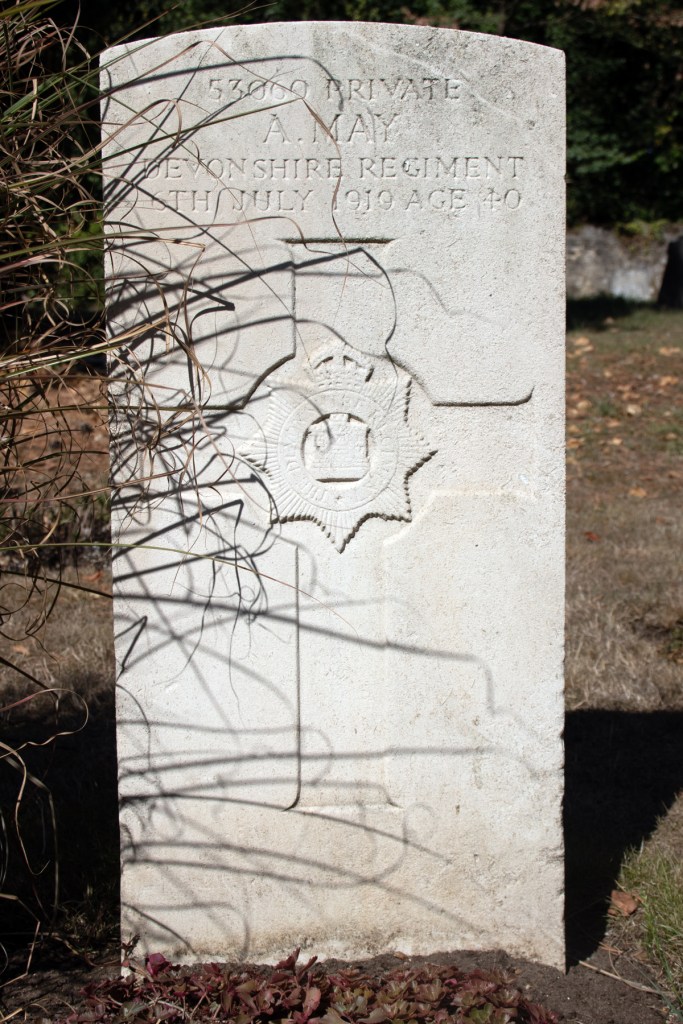
Private Arthur May

Private Arthur May

The life of Arthur May is a difficult one to uncover. Born in Aylesford, Kent, in the summer of 1879, he was baptised on 10th August, and only his mother’s name – Eliza May – recorded.

There is a record of an Arthur May from Aylesford in the 1881 census, but that gives his mother’s name as Ann (and the father’s as labourer William May). Twenty years later, the same Arthur may is listed as boarding with his sister and brother-in-law’s family in Halling, Kent, where he was working as a labourer in the local cement works. Again, however, it is impossible to confirm that this Arthur May is the one being sought.

Further records identify Arthur’s wife as a woman called Annie, although no marriage records remain to confirm a union.

Details of Private May’s war service is pretty limited, but he seems to have enlisted in the Devonshire Regiment in February 1917. He subsequently transferred to the 167th Coy Labour Corps and was sent to France, but returned to Britain a month later, having fallen ill. His condition turned out to be tuberculosis and he was medically discharged from the army in August 1917.

Private May’s medical report adds some tantalising detail to his military service. He is recorded as being 39 years and one month old, 5ft 9ins (1.75m) tall, with a pale complexion, blue eye and light brown hair. He had a tattoo on his left forearm and was working as a labourer, while living in Ditton, near Maidstone, in Kent.

The report also suggests that Arthur had initially enlisted in the Royal Naval Volunteer Reserve in November 1915. It notes that he was frequently disabled with shortness of breath and a cough during his fourteen months with the navy.

Arthur returned home after his discharge. While his trail goes cold, it is likely that his lung condition continued to dog his civilian life. On 6th July 1919, he passed away and, although no cause is freely recorded, as there is a lack of comment in contemporary local newspapers, illness would be a possible cause. He was 40 years of age.

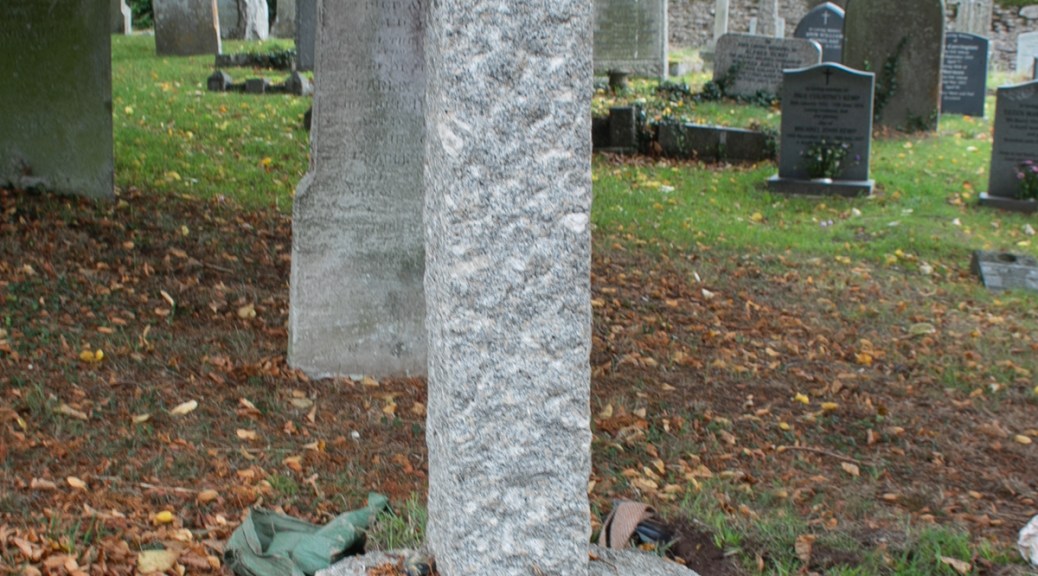
Arthur May was laid to rest in the graveyard of his local church, St Peter’s & St Paul’s in Aylesford, Kent.


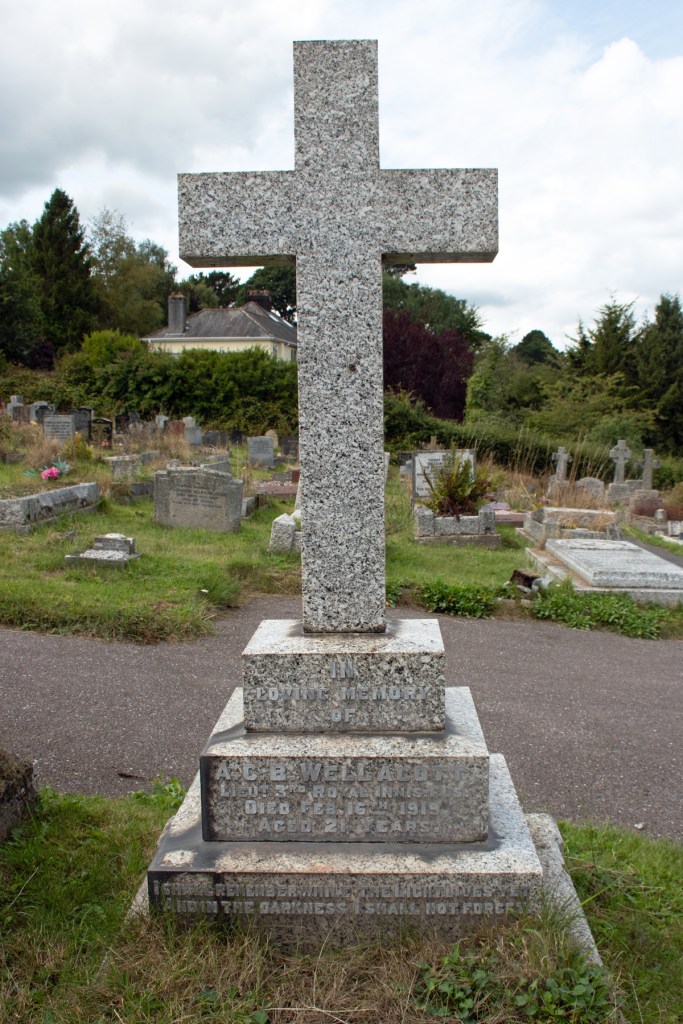
Lieutenant Arthur Wellacott

Lieutenant Arthur Wellacott

Arthur Cecil Baber Wellacott was born the summer of 1897, in the village of Bradworthy, North Devon. Ond of seven children, his parents were William and Ada Wellacott. William was the parish vicar and with his status came additional support for the family.

The 1901 census saw the vicarage employ three members of staff, and William was hosting two students as well as his and Ada’s own children. Ten years later, with Arthur and his younger brother William, boarding at a school in Bude, Cornwall, the Wellacott retinue remained in place.

On leaving boarding school, Arthur studied at Kelly College in Tavistock and, at around the same time his father took up a new post in Totnes. When Arthur left the college, he joined the 7th (Cyclist) Battalion of the Devonshire Regiment. He was subsequently given a commission in th 3rd Battalion of the Royal Inniskilling Fusiliers, and was based in Londonderry.

At Easter 1916, Lieutenant Wellacott took part in quelling the rebellion in Dublin, and was subsequently sent to France. In the battle for Contalmaison his platoon was gassed and buried, and Arthur was badly injured. Suffering from shell shock, the experience had a lasting impact on him “and from that time his health had given cause for anxiety…” [Western Morning News: Tuesday 18th February 1919]

Lieutenant Wellacott returned to England and he was billeted near Leeds. During the winter of 1918/1919, he contracted pneumonia, and was admitted to the Drax Hospital. Sadly, the condition was to prove too much for his already damaged lungs and he died on 16th February 1919. He was just 21 years of age.

Arthur Cecil Baber Wellacott was brought back to Devon for burial. He was laid to rest in the cemetery in Totnes, Devon.


Private George Garrett

Private George Garrett

George Garrett was born in early 1895 in Abbotskerswell, Devon. He was the oldest of five children to George and Annie Garrett. George Sr was a labourer and the family seemed to travel with his work: his and Annie’s younger children were born in Aldershot, Plymouth and London.

When he left school, George Jr found work as an errand boy – the family were back in Devon by this point. War was on the horizon, however, and he would feel compelled to play his part. Full details of his service are not available, but it is known that he enlisted in the Devonshire Regiment, and was assigned to the 2nd Battalion.

Private Garrett arrived in France in December 1915, and was soon entrenched on the Western Front. Hi battalion was caught up in the Battle of the Somme and George was badly injured, having received a gunshot wound to his spine.

Medically evacuated to Britain, his wounds proved too severe for him to return to duty, and he was discharged from the army on 28th December 1916. It is not clear whether he returned home, but it seems likely that he remained in hospital in Exeter. He would never recover from his injuries. He passed away at the hospital on 18th April 1917, at the age of 22 years old.

George Garrett was laid to rest in the graveyard of St Andrew’s Church in Ipplepen, Devon, where his family were, at that point, living.


Private Bernard Lane

Private Bernard Lane

Bernard Fred Lane was born in Wellington, Somerset, in the spring of 1880, and was the oldest of nine children to Frederick and Agnes Lane. Frederick was a house painter and, after a stint as a butcher, his son followed the same work. By the time of the 1901 census he was one of four boarders with the Hapgood family, living in Bournemouth, Dorset.

On 5th October 1901, Bernard married Annie Louisa Joyner. The couple wed in St Paul’s Church in Poole, but soon settled back in Wellington, and went on to have four children: Agnes, James, Mildred and Winifred.

War came to Europe in 1914, and Bernard wanted to play his part. Full details of his military service are not available, but it is clear that he had enlisted in the Devonshire Regiment by March 1918. At some point during the conflict Private Lane was assigned to the Labour Corps, and attached to the 312th Company.

Bernard was serving on Salisbury Plain by the autumn of 1918, and fell ill, although it is not clear what befell him. Admitted to the Fargo Military Hospital at Larkhill, Wiltshire, he passed away on 15th October 1918. He was 38 years of age.

Bernard Fred Lane was brought back to Somerset for burial. He was laid to rest in Wellington Cemetery, the resting place for several other members of his family.


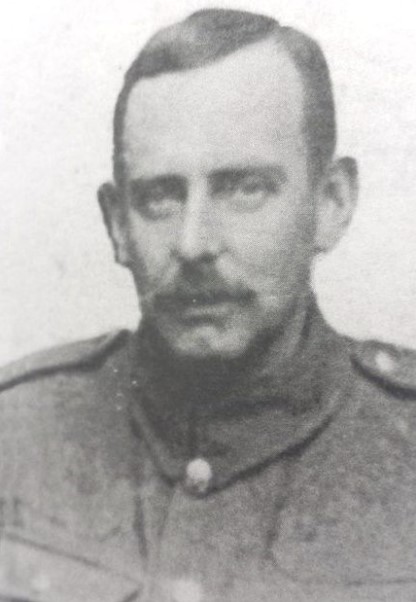
Private Bernard Lane
(from findagrave.com)

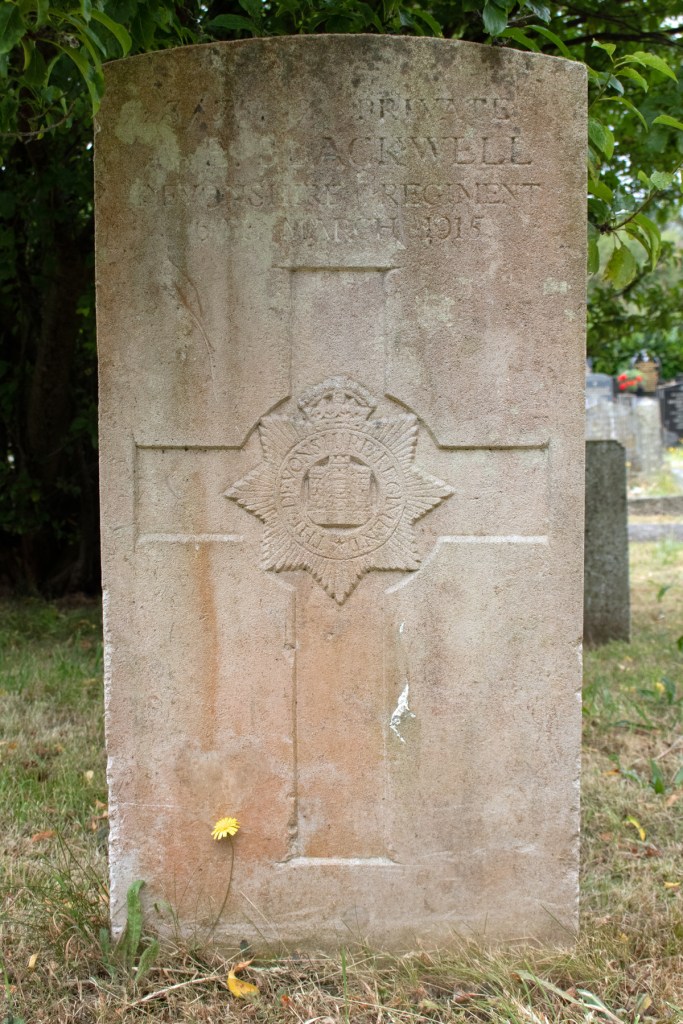
Private Albert Blackwell

Private Albert Blackwell

Albert Edward Blackwell was born in Corfe, Somerset, in the autumn of 1872. He was the third of eight children to Francis and Harriet Blackwell. Francis was a farm labourer, while Harriet supplemented their income by taking in washing. Albert didn’t follow in his father’s footsteps, however, but found work as a ropemaker when he left school.

On 21st September 1905, Albert married Mabel Hellen Fry, a factory hand and porter’s daughter from Wellington, Somerset. The couple began their married life living with Mabel’s parents, and went on to have five children. By the time of the 1911 census, Albert was working as a carter for a local coal merchant, but war was on the way.

There is little information available about Albert’s military service. He enlisted at the start of the conflict, joining the 9th Service Battalion of the Devonshire Regiment by September 1914. Private Blackwell was based at Aldershot, Hampshire, but his service was not to be a long one.

Albert was admitted to the Connaught Military Hospital near Marlborough, suffering from tuberculosis. This became bronchitis, and the lung conditions proved too much for Private Blackwell’s constitution to take. He passed away at the hospital on 6th March 1915, at the age of 42 years old.

Albert Edward Blackwell was brought back to Somerset for burial. He was laid to rest in Wellington Cemetery, not far from where Mabel was still living.


Now widowed, Mabel still had children to raise. In the spring of 1916, she married Alfred Barnfield, a greengrocer from Bath. He had served in the Coldstream Guards for two years, before he was discharged for misconduct in May 1911. Sadly, no further information is available for him and Mabel’s trail also goes cold at this point.


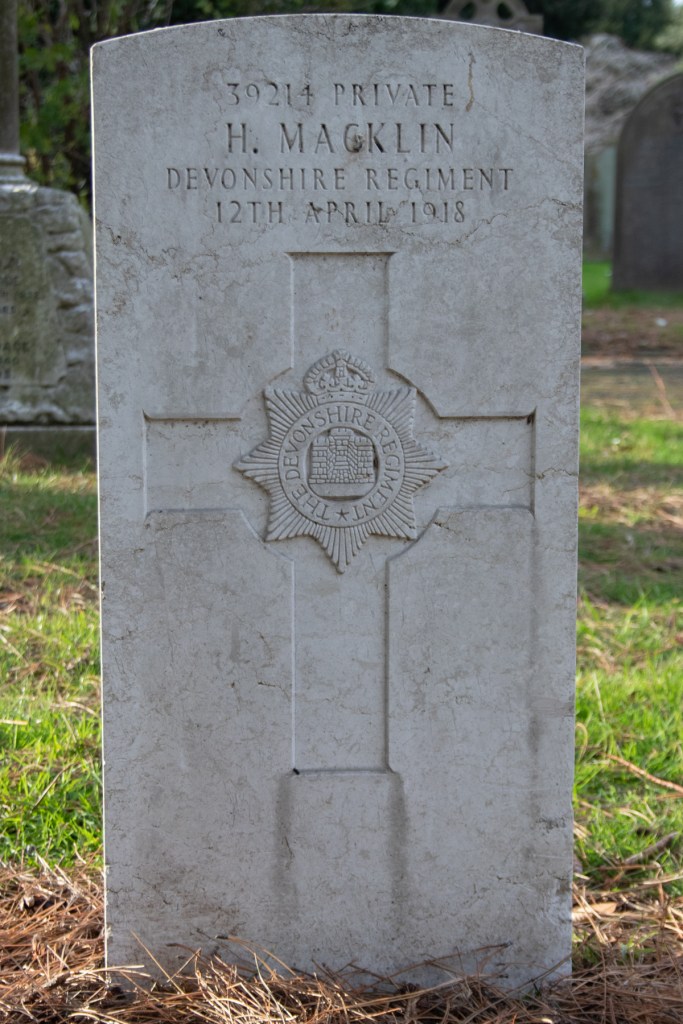
Private Herbert Macklin

Private Herbert Macklin

Herbert Macklin was born in Lambeth, Surrey, on 14th August 1897, the youngest of six children to Enos and Sarah Macklin. Enos was a general labourer and, after his mother died in 1909, Herbert worked around his school as a baker’s errand boy, to bring in a little more money for his family.

After Enos passed away in 1912, and with his older sisters all having families of their own, Herbert and his older brother William did what they could to survive, getting some support from the local poor school.

The outbreak of war gave the brothers a sense of purpose, and both enlisted. William joined the Royal Field Artillery, and was sent to France in September 1915.

Herbert, being six years younger than his brother, enlisted later than his sibling. He joined the Middlesex Regiment, on 10th May 1916, and his service records show that he was 5ft 4.5ins (1.64m) tall, 126lbs (57.2kg) in weight and had a fair physical development. While Herbert had a fair physical development, he was also recorded as having flat feet, which somewhat limited his army service.

Private Macklin transferred across to the Devonshire Regiment a few months after enlisting. He was then assigned to the regiment’s Labour Corps in the summer of 1917, and remained with them for the rest of his service.

While William was serving abroad, Herbert remained on home soil for the duration. By the spring of 1918, he was working in Kent, but was admitted to hospital in Faversham, suffering from acute tonsillitis. Sadly, this was to prove too much for Private Macklin’s body to take: he suffered cardiac failure, and died on 12th April 1918. He was 21 years of age.

Herbert Macklin was laid to rest in the Borough Cemetery of the town in which he passed, Faversham.


Tragedy was to strike again for the Macklin brothers: as the war moved into its closing months, Driver William Macklin was based in Salonika, Greece. He was not to see England’s shores again, sadly: he passed away on 23rd November 1918, aged just 27 years old.


Private Joseph Soper

Private Joseph Soper

Joseph William Soper was born at the start of 1876, the third of eleven children to John and Elizabeth Soper. Both of his parents had been born in Dorset but it was in the Devon town of Axminster that their children were raised. John was a labourer, but, when he finished school, Joseph found work as an ostler or groom.

John passed away at the end of 1894, just months after his youngest son, Arthur, was born. Joseph, by this point, had found work as a postman, and, in the spring of 1897, he married Charlotte Annie Lee in his home town. The couple moved across the border to Somerset and settled in Chard. They went on to have a son, Arthur, who was born in the summer of 1900.

Postal work seemed not to have suited Joseph, and he made the move to labouring for a mason. Money appears to have been tight: the 1911 census recorded Charlotte working as a charwoman, while her younger brother, Herbert, was also lodging with them, and working as a grocer’s porter.

War was coming to Europe, but much of Joseph’s military career is a mystery. He had joined up by the autumn of 1916, and was assigned to the 13th (Works) Battalion of the Devonshire Regiment. He was based in Saltash and Plymouth, and served as part of the territorial force.

The only other documents available are Private Soper’s pension ledger and his entry on the Register of Soldier’s Effects. Both confirm that he died on 12th April 1917, and that the cause was “accidental injury received on active service“. Sadly, there is no further information about this. He was 41 years of age when he passed.

Joseph William Soper’s body was brought back to Somerset for burial. He lies at rest in Chard Cemetery, walking distance from where his widow and son still lived.


Serjeant Tom Harris

Serjeant Tom Harris

Thomas Harris – known as Tom – was born on 13th October 1876, the only son of Edmund and Mary Harris. Edmund was an agricultural labourer from the Somerset village of Seavington St Mary, and this is where Tom was born and raised.

Mary had married Edmund in the spring of 1876, but had been married before; she was widowed when her previous husband, Alfred Vickery, died ten years before. They had had seven children of their own, half-siblings to Tom.

Edmund died in the Wells Lunatic Asylum when Tom was only six years old. When he left school, he found work as a farm labourer, but sought bigger and better things, even though he was now the only one of Mary’s children still living at home.

Tom enlisted in the Somerset Light Infantry in January 1893, and soon found himself overseas. During his sixteen years’ service, he spent seven years in India and six months fighting in the Second Boer War. Corporal Harris seems to have had a sickly time of it, and while in India, was admitted to hospital a number of times for fever, ague and diarrhoea, as well as a bout of conjunctivitis.

When Tom’s contract came to an end in 1909, he returned to Britain, setting up home in Newport, South Wales, where he found work as a sheet weigher at the local steel works.

Mary died of senile decay and cardiac failure in May 1910. She was 74 years old, and sadly passed away in the Chard Workhouse, in similar circumstances to her late husband.

In October 1913, Tom married Ada Long in Chard. She was the daughter of a shopkeeper, and the couple set up home in South Wales, where Tom was still working.

War, by now, was closing in on Europe, and Tom wanted to use his previous experience to serve his country once again. He enlisted on 20th August 1914 in Newport, joining the Devonshire Regiment as a Private, although he was quickly promoted first to Corporal and then to Serjeant. His service records show that he was 5ft 8ins (1.73m) tall, had blue eyes, brown hair and a tattoo of a Spanish girl on his right forearm.

After a year on the Home Front, Serjeant Harris was sent to Egypt in September 1915. On the way out, he contracted a severe cold, which left him deaf in his left ear. He was also suffering from varicose veins, which left him in pain in his right leg. He was treated for both conditions, and put on light duties for three months.

In November 1916, Serjeant Harris was supporting a food convoy when it came under attack. Buried in sand and wounded, he was laid up in a hole for two days and nights before help came. He was initially treated for shell shock in the camp hospital, but was eventually evacuated to Britain for treatment.

The incident had put too much of a strain on Tom, and he was medically discharged from the army in April 1917. While his medical report confirmed that the general paralysis he was suffering from was a result of the attack, it also noted on six separate occasions that he had previously suffered from syphilis, suggesting this may also have been a contributing factor to his mental state.

Tom was discharged initially to an asylum in South Wales, before returning home to Ada. The couple were soon expecting a child, and a boy, Sidney, was born in February 1918. By that summer, however, Tom’s condition had worsened enough for him to be admitted back to the Whitchurch Military Hospital in Cardiff.

It was here that Tom passed away, dying from a combination of chronic phlebitis – an extension of the varicose veins he had previously complained of – and general paralysis on 8th August 1918. He was, by this point, 41 years of age.

Tom Harris was brought back to Somerset for burial. He was laid to rest – finally at peace – in Chard Cemetery.


Serjeant Tom Harris
(from ancestry.co.uk)

Private William Fuller

Private William Fuller

William Charles Fuller was born on 31st January 1876 in Newton Abbot, Devon. He was the older of two children to Francis and Mary Fuller. Francis was a nurseryman, and gardening was a trade that both William and his brother followed him in.

Mary died in 1895 and Francis married a second time the following year, to a Mary Rogers. In July 1905, William married Ellen Bland, the daughter of the landlord of the Swan Inn in nearby Highweek. The couple went on to have a son, William, who was born the following year. William Sr continued his nursery trade through until the outbreak of war, while volunteering for the local defence corps.

When war came to Europe, William stood up to play his part. Full details of his service are not readily available, but it is clear that he had enlisted in the 13th (Works) Battalion of the Devonshire Regiment by the summer of 1916.

Private Fuller was based on home soil, serving in both Devon and Cornwall. However, he was billeted on Salisbury Plain by the start of 1917, and it was here that he fell ill. Having contracted influenza, William was admitted to the Fargo Hospital in Larkhill, Wiltshire; this was where he passed away on 25th January 1917. He was days short of his 42nd birthday.

William Charles Fuller’s body was brought back to Devon for burial. He was laid to rest in the family plot in the graveyard of St Mary’s Church in Wolborough, near Newton Abbot.


Lieutenant Frederick Liardet

Lieutenant Frederick Liardet

Frederick Charles Evelyn Liardet was born in Brighton, now a suburb of Melbourne, Australia, in 1888, and the eldest son of Wilbraham and Eleanor Liardet.

There is little further information about Frederick’s early life, but, when war broke out, he wanted to play his part for King and Country, and enlisted in the Devonshire Regiment.

He had an adventurous career… Having been twice wounded while on active service in France, he was appointed an instructor in the Balloon Section of the Royal Flying Corps.

Exeter and Plymouth Gazette: Tuesday 18th December 1917

On 23rd October 1915, Frederick married Kathleen Norah Liardet in Highweek, Newton Abbot, Devon. She was the daughter of a retired Lieutenant Colonel in the Royal Marine Light Infantry, and may have been a cousin (while their surname is unusual enough for there to be a connection, I have been unable to identify a specific connection). The couple went on to have a daughter, Barbara, who was born in 1917.

In 1916, while on a night flight with the Royal Flying Corps, the now Lieutenant Liardet was involved in an accident and badly injured. He returned to England to recover, he and Kathleen living with her family. While his health initially improved, he relapsed and passed away on 13th December 1917, aged just 29 years old.

Frederick Charles Evelyn Liardet was laid to rest in the graveyard of All Saints Church in his adopted home of Highweek, Devon.