


John Lawson Kinnear was born on 9th February 1890 in the Yorkshire village of Copgrove. The youngest of six children, his parents were Henry and Frances Kinnear. Henry was the vicar of St Bartholomew’s Church, and, at the time of the 1891 census, the family lived in the rectory with four servants: a governess, a cook, a housemaid and a nurse.
When he completed his schooling, John was drawn to a career in the military. His full service papers have been lost, but it is clear that he joined the King’s (Liverpool Regiment) with a commission. He held the rank of Second Lieutenant when he joined the battalion in October 1910, rose to Lieutenant in March 1913, and transferred to the Royal Flying Corps not long after the First World War broke out. By June 1915, he had been made a Captain.
By the time of the Royal Air Force’s foundation in April 1918, John had risen to the rank of Major. He had also been awarded both the Military Cross and the Distinguished Service Order. Attached to the 1st Training Squadron, he was based at East Boldre, Hampshire.
On 28th April 1918, Major Kinnear was piloting his Sopwith Camel, when it stalled at a height of 200ft and fell to the ground. John was killed instantly. The RAF Casualty Card noted: “The court having carefully considered the evidence, viewed the scene of the accident and examined the wreckage are of the opinion that the smash was caused by an error of judgement on the part of the pilot.”
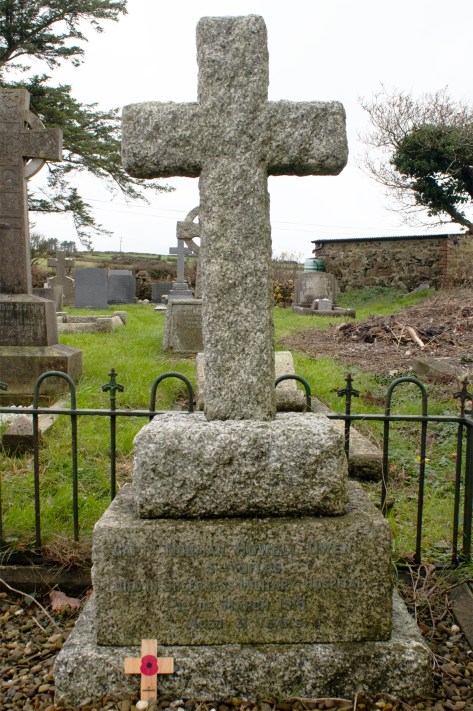
John Lawson Kinnear was 28 years of age when he died. His body was laid to rest in the graveyard of St Paul’s Church, East Boldre, not far from the airfield which he had called home.

(from findagrave.com)





 Death and Service