Tag Archives: 1916

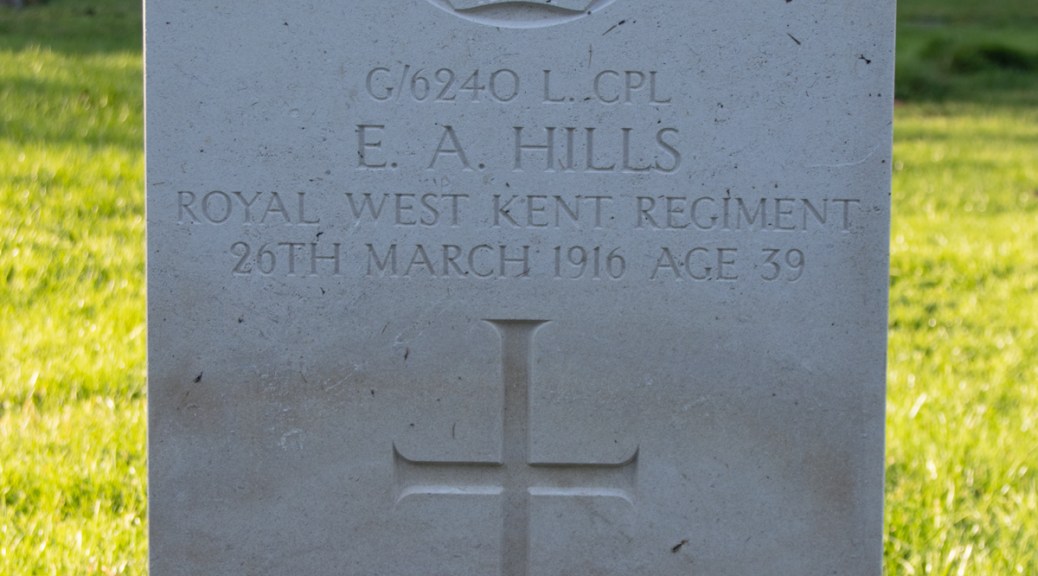
Lance Corporal Ernest Hills

Lance Corporal Ernest Hills

Ernest Albert Hills was born in December 1877, and was the fifth of ten children to Benjamin and Elizabeth Hills. Benjamin was a labourer for a brick maker from the Kent village of Upnor, but it was along the coast in Faversham that he and Elizabeth were to raise their young family.

When he left school, Ernest followed in his father’s footsteps, working in the local brick kiln. By the time of the 1911 census, however, he had moved to South East London and was boarding with his younger brother, William, working with him as a stoker for a Greenwich gas company.

War came to Europe, and Ernest wanted to play his part. On 20th April 1915, he enlisted, joining the Queen’s Own (Royal West Kent Regiment) as a Private. His service records give his height as 5ft 9.75ins (1.77m) and note that he had a scar on the right side of his abdomen.

Private Hills’ service was carried out on home soil: he was assigned to the 3rd (Reserve) Battalion, which was based in Maidstone and Chatham. Ernest was obviously well thought of: within six months of enlisting, he was promoted to Lance Corporal.

His good fortune was not to last for long, however, in the spring of 1916, he fell ill and, while at his family home in March, he passed away, having been suffering from Addison’s disease, a rare disorder of the disorder of the adrenal glands. He was 39 years of age.

Lance Corporal Ernest Albert Hills was laid to rest in the Faversham Borough Cemetery, not far from his family home, and where his father – who had passed away in 1903 – had also been laid to rest.


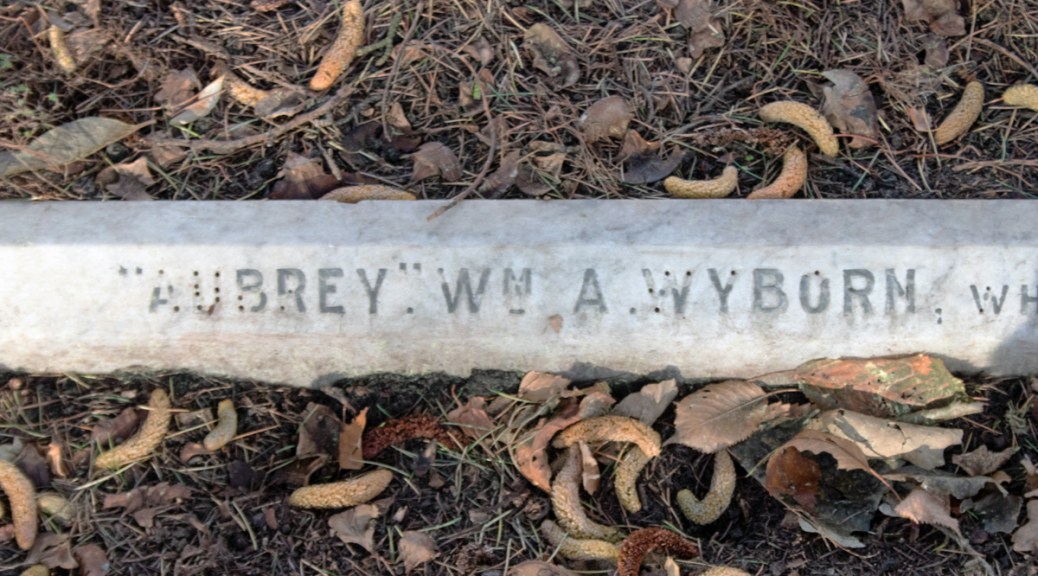
Gunner William Wyborn

Gunner William Wyborn

William Aubrey Wyborn was born on 15th November 1897, the middle of three children to farmer-cum-greengrocer-cum-butcher Henry Wyborn and his wife, Esther. The family lived in the Kent village of Tilmanstone, not far from Deal, but soon moved to Faversham in the north of the county.

William proved to be an astute student. After being a pupil at Faversham District Schools, he gained a scholarship to the towns Grammar School. He spent six years there, and proved to be a studious pupil, gaining a prize for maths. He was then granted a scholarship to the Sheffield School of Engineering, and, while studying for his degree there, war broke out.

William joined the West Lancashire Royal Field Artillery in June 1916 and was sent to Aldershot for training. sadly, Gunner Wyborn’s career was to be cut short – while training, he contracted diphtheria and pneumonia, passing away from a combination of the illnesses on 3rd November 1916. He was just short of his 19th birthday.

William Aubrey Wyborn was brought back to Kent for burial. He lies at rest in the family plot in the Faversham Borough Cemetery.


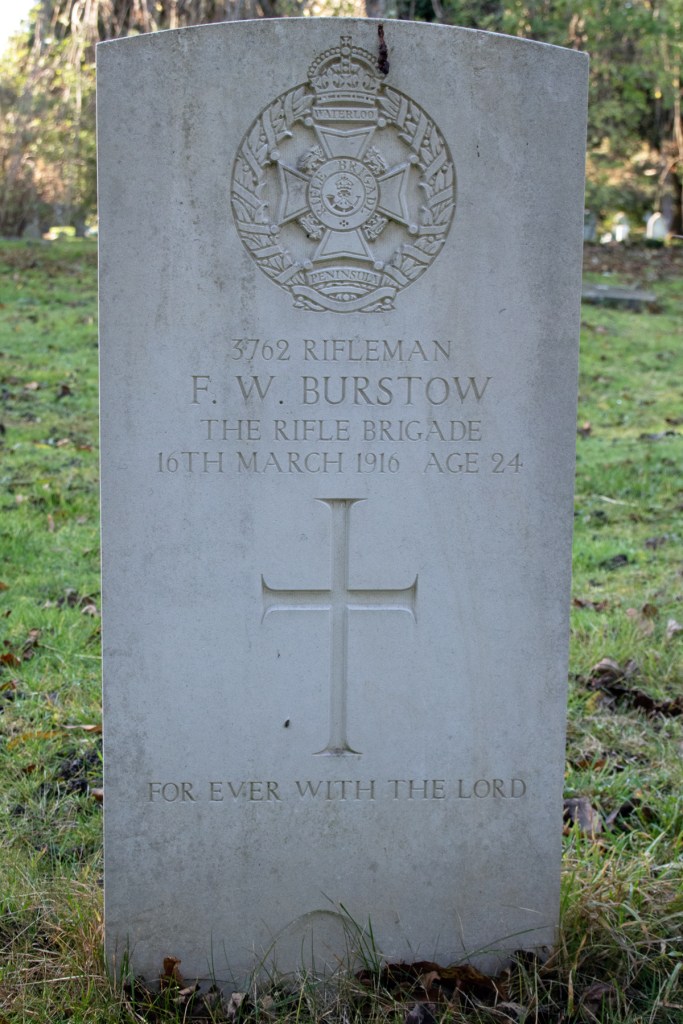
Rifleman Frederick Burstow

Rifleman Frederick Burstow

Frederick William Burstow was born in the summer of 1893, and was one of thirteen children. His parents were plasterer Alfred Burstow and his wife, Lydia. Both came from Sussex, and it was in Bexhill-on-Sea where they raised their family.

There is little documented about Frederick’s early life, but he sought a life outside of Sussex and, in around 1900, he enlisted in the 2nd Battalion of the Rifle Brigade, serving in India for a time.

Rifleman Burstow was still serving when, in August 1914, war was declared. His battalion was sent to France that November, and he ended up serving two terms on the Western Front.

In the summer of 1915, Frederick married Priscilla Epps. She was from Faversham, Kent, and this is where the couple set up home together.

It was while on his second term in France that Rifleman Burstow became ill. He had contracted enteric fever – also known as typhoid – and, at the beginning of 1916, he was sent home to recuperate. While here, Priscilla gave birth to a child, Alice.

Sadly, however, Frederick’s condition was to get the better of him: he passed away at home on 16th March 1916, at the age of just 24 years old.

Frederick William Burstow was laid to rest in the Borough Cemetery in his adopted home town of Faversham.


Rifleman Frederick Burstow
(from ancestry.co.uk)

Frederick was not the only Burstow family member to die during the war. His older brother, Arthur Edward James Burstow, fought on the Western Front with the 2nd Battalion of the London Regiment.

Private Burstow was caught up in the fighting in Arras in the spring of 1918, and was killed in action on 13th April. He was 38 years of age, and left behind a widow and six children.

Arthur Edward James Burstow is commemorated on the Ploegsteert Memorial in Belgium.


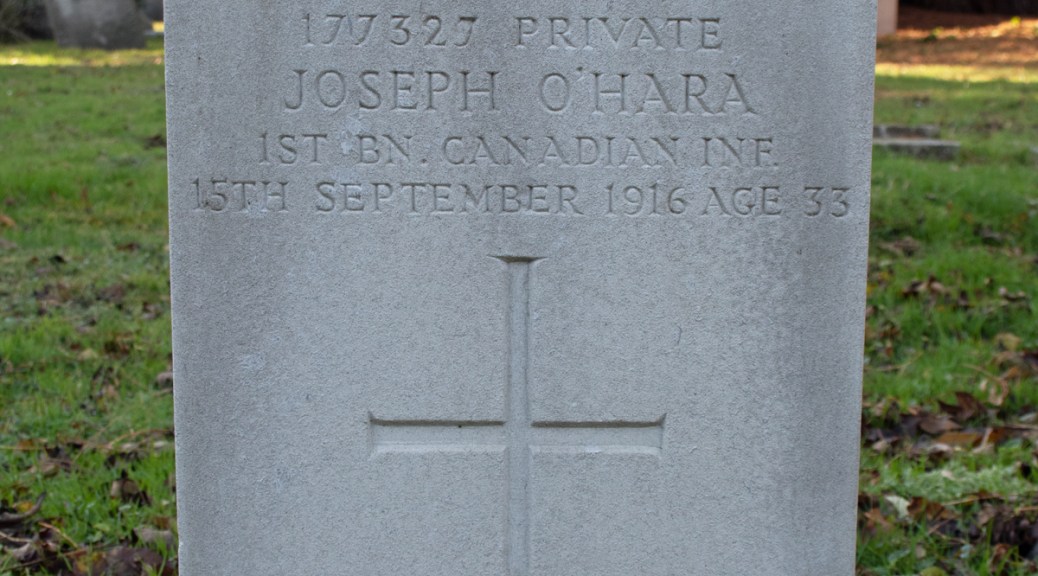
Private Joseph O’Hara

Private Joseph O’Hara

Joseph O’Hara was born in Manchester on 30th May 1882, the son of John and Kate O’Hara. There is little information available about his early life, although it is clear that at some point the family emigrated to Canada, settling in Toronto.

When war broke out, Joseph enlisted, joining the 1st Battalion of the Canadian Infantry. By 1916 Private O’Hara was not only back in Europe, but fighting on the Western Front. Details are scarce, but a contemporary newspaper sheds a little light on what happened to him next.

A contingent of 132 wounded men was detrained at Faversham last Friday morning. Forty-four of the number were taken to The Mount, seventy-one to Lees Court, and seventeen to Glovers (Sittingbourne).

With one exception the cases were all “sitting up” cases and were in a separate train by themselves. This train, however, was preceded by a train of “cot” cases which was going through to Chatham, but owing to the serious condition of one of the men – Joseph O’Hara, of the Canadian Expeditionary Force – the train was stopped at Faversham for his removal to the Mount Hospital. O’Hara had been badly wounded in both legs and he died at the Mount a few hours after his arrival there.

Faversham News: Saturday 23rd September 1916

Private Joseph O’Hara was 34 years of age when he passed away. He was laid to rest in the Faversham Borough Cemetery.


Private Joseph O’Hara
(from findagrave.com)

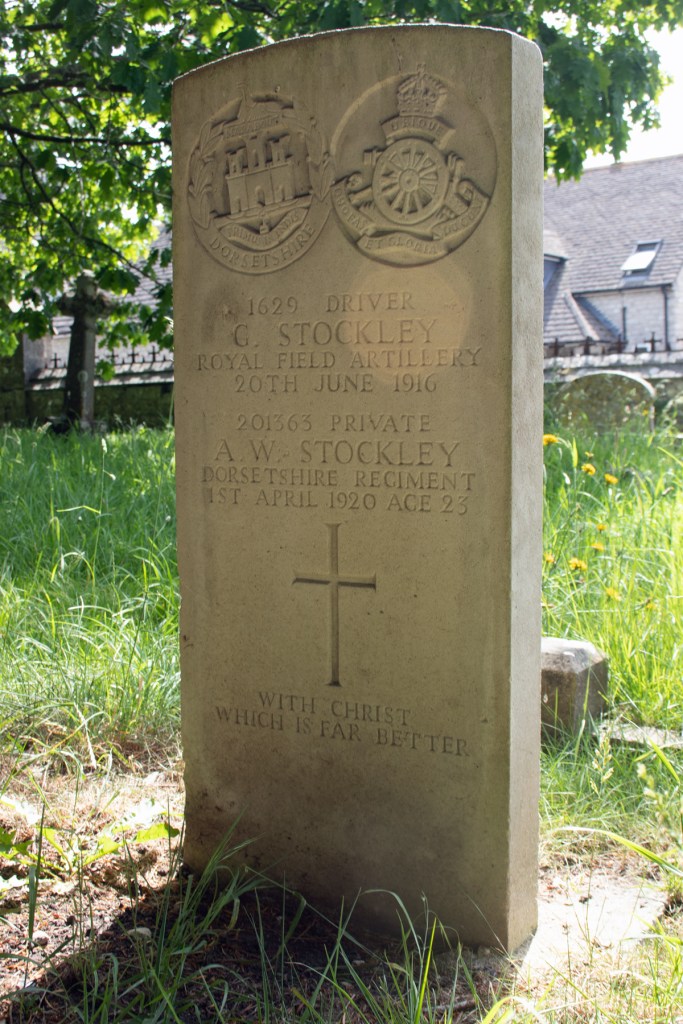
Driver George Stockley

Driver George Stockley

George Stockley was born in December 1888, one of twelve children to Frank and Mary Ann Stockley. Frank was a clay cutter from Dorset, and he and his wife raised their family in the picturesque village of Corfe Castle.

When he left school, George found work as a house painter but it seemed this was not to be a career. In March 1913, he married Lillian May Stockley, who had been born in Frome, Somerset, but who was working as a barmaid in nearby Weymouth. Later that year, the couple had a daughter, Georgina, and, by the time he enlisted two years later, George was working as a barman, and the young family were living in Bournemouth.

George had joined up on 10th February 1915, and was assigned to the 3rd/6th Hampshire Battery of the Royal Field Artillery. His service records show that he was 5ft 4ins (1.63m) tall, but they also confirm that, when he had his medical examination on 30th May, he was deemed as medically unfit for military service.

Sadly, there is no further information to confirm why Driver Stockley’s military career was cut so short. His trail goes for a year, until, on 20th June 1916, he passed away, aged just 27 years old. The cause of his passing is also lost to time

George Stockley was laid to rest in the Old Church Cemetery in his home town of Corfe Castle.


George shares his grave with his youngest sibling, Albert William Stockley, who died in April 1920. The brothers are commemorated on the same headstone.


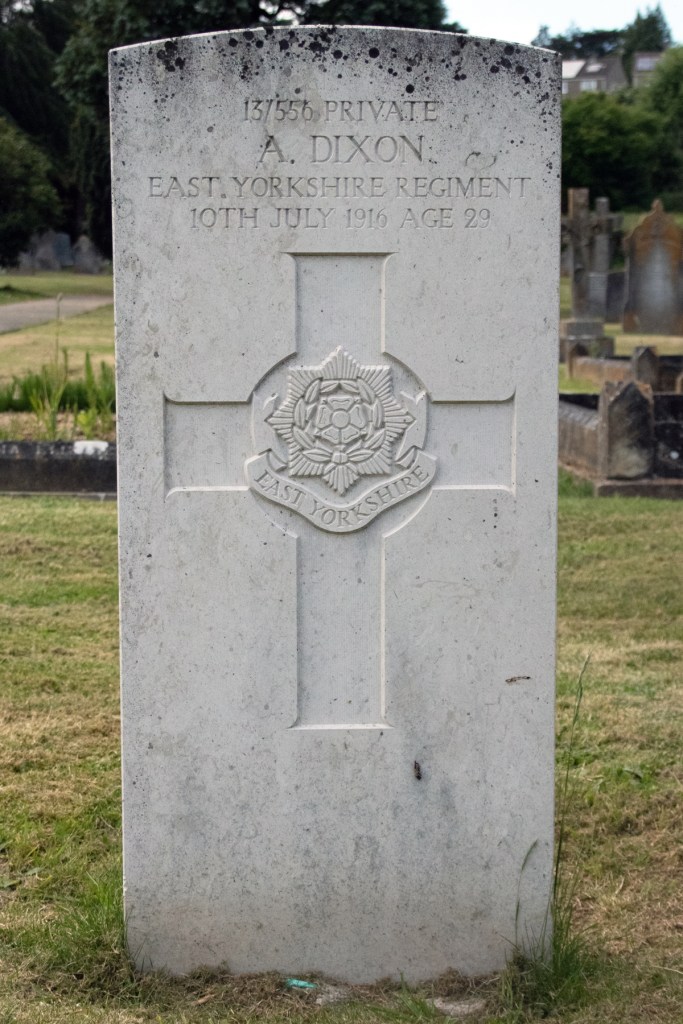
Private Alonsa Dixon

Private Alonsa Dixon

Alonsa Dixon was born in Kingston-upon-Hull, Yorkshire, in 1887, the oldest of seven children to Alonsa and Caroline Dixon. Alonsa Sr was a billiard marker, who raised his family in a small house near the city centre.

Alonsa Jr found work as an errand boy for a grocer when he left school, but went on to find work as a jobbing gardener. By the time of the 1911 census, he had moved out of home, and was boarding with cab driver George Gill and his family.

In April 1912, he married Edith Alice Gill. Trixie, as she was also known, was George’s daughter, and it seems likely that romance blossomed after Alonsa moved in. The couple went on to have a son, also called Alonsa, who was born the following year.

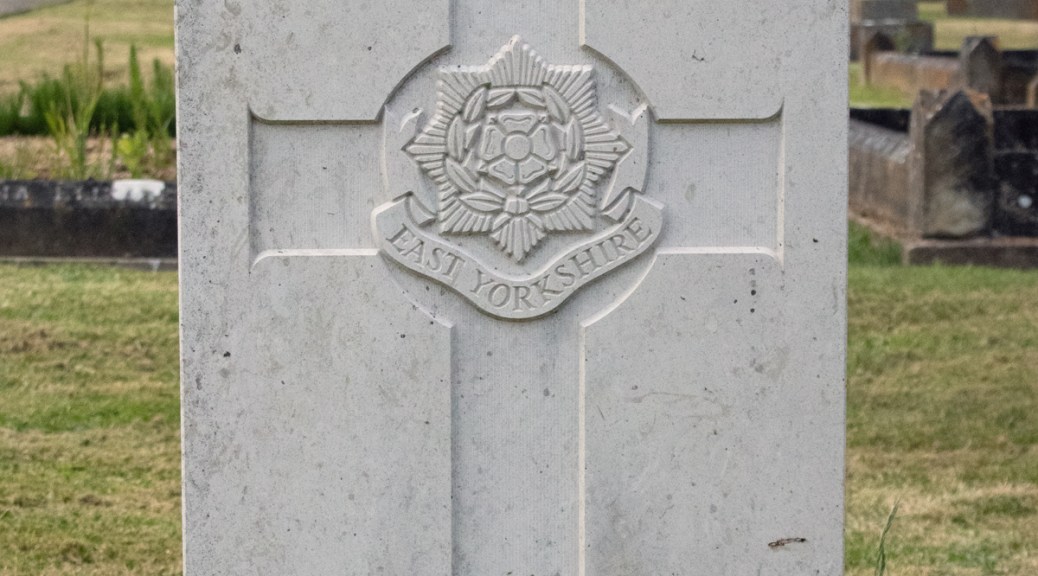
War was coming to Europe, and Alonsa was in one of the first waves of men to volunteer for King and Country. He enlisted in the East Yorkshire Regiment, and was assigned to the 13th Battalion. His service records show that he was 5ft 7.5ins (1.71m) tall, and weighed 144lbs (65.3kg). He was noted as being of good physical development.

Initially serving on home soil, Private Dixon was eventually dispatched overseas, arriving in Egypt in December 1915. Having spent just under three months in North Africa, he was moved to France in March the following year.

Alonsa had some health issues by this point, and was suffering from Bright’s Disease, or nephritis (inflammation of the kidneys). He was treated in a field hospital in Abbeville, but subsequently medically evacuated back to England for further care.

Private Dixon was admitted to the Monastery Hospital in Wincanton, Somerset in April 1916, but his condition proved too severe, and he passed away on 10th July 1916. He was just 29 years of age.

Alonsa Dixon was laid to rest in the cemetery of the town in which he passed away, Wincanton.


Private Alonsa Dixon
(from findagrave.com)

Private Harry Ashford

Private Harry Ashford

Harry Ashford was born in Sidford, Devon, on 2nd June 1880, the oldest of seven children to Samuel and Fanny Ashford. Samuel was a mason and Fanny worked as a lace worker managing this at the same time as raising her children. The family left Devon in the late 1880s, settling instead in Chard, Somerset.

After initially working as an errand boy, when Harry finished school he found employment as a house painter. He had met lace worker Ada Hancock by this point, and the couple married in Chard’s Methodist Church on 4th May 1901. The couple set up home in the same road as Harry’s parents, and went on to have a daughter, Nora, the following year.

By this point, storm clouds were brewing over Europe, however, and Harry felt the need to play his part. On 22nd September 1915, at the age of 35, he enlisted in the Royal Army Medical Corps. His service record shows that he stood 5ft 6ins (1.68m) tall and was of good physical development.

Private Ashford served on the Home Front, and was based at the Tweseldown Camp near Farnham, Surrey. He served there for a little over a year before he contracted nephritis – inflamed kidneys – and was admitted to hospital. Sadly, the condition proved too severe, and he died on 31st October 1916 from a cerebral haemorrhage. He was 37 years of age.

Harry Ashford’s body was brought back to Somerset for burial. He was laid to rest in the cemetery of his adopted home town, Chard.


Both of Harry’s parents passed away not long after he died – Samuel in 1919 and Fanny in 1920. Ada never remarried, and lived a reasonable life, passing away in Nottinghamshire in the autumn of 1932, at the age of 53 years old.


Gunner William Wellman

Gunner William Wellman

William Wellman was born in March 1890 and was one of nine children. His parents, road builder Thomas and collar machinist Eliza were both born in Somerset, and it was in Chard that they married and raised their family.

William and his siblings found work in the local lace industry – the 1911 census recorded most of the family in Chard, but William was boarding in Stapleford, Derbyshire, with his older brother Fred; both were working as lace hands.

War was coming to Europe, and, as a previous member of the territorial force of the Somerset Light Infantry, William was keen to play his part. In February 1915, he enlisted in the Royal Field Artillery: his records show that he was 5ft 7ins (1.69m) tall, had light brown hair, grey eyes and a slender build, weighing 129lbs (58.5kgs).

Gunner Wellman was sent to Wiltshire for training but, while in barracks, he fell ill. Having contracted tuberculosis of the kidney, he was admitted to a hospital in Sutton Veny. After two months’ treatment, his health did not improve sufficiently enough, and he was discharged from the army on medical grounds in February 1916.

William returned to Chard, but was not to get any better. He passed away at home on 1st April 1916; he was just 26 years old.

William Wellman was laid to rest in the cemetery of his home town, not far from his brother, Private Arthur Wellman.


William and Arthur were not the only two of the siblings to fight in the Great War.

Their youngest brother, Private Bert Wellman fought with the Somerset Light Infantry, and died in fighting in Mesopotamia on 22nd November 1915. He was just 20 years of age.


Private William House

Private William House

William Brewer House was born in Chard, Somerset, in the spring of 1888, one of eleven children to William and Minna House. William Sr was a farm labourer, and it was dairy work that William went into when he left school.

Little of William Jr’s life is documented. When war broke out, he stepped forward to play his part, enlisting in the 3rd (Reserve) Battalion of the Somerset Light Infantry at some point after October 1915. This particular troop was a territorial force, based primarily in Devon, and it is unlikely that Private House saw service overseas.

Sadly, the only other detail about his life is that relating to his passing. He was noted as having died on 8th April 1916 in the Military Hospital in Plymouth, although no cause is evident. He was just 28 years of age.

William Brewer House was brought back to Somerset for burial. He lies at rest in the Tatworth Cemetery near his home town of Chard.


William’s younger brother Frederick (known as Gordon) House also fought with the Somerset Light Infantry. He was killed in Mesopotamia in the spring of 1917.


Private Sam Mattocks

Private Sam Mattocks

Samuel Mattocks was born in Combe St Nicholas, Somerset, in 1885, one of six children to farm labourer George Mattocks and his wife, Anna. Sam sought a trade when he left school and soon found work as a butcher.

Documentation relating to Sam’s life is pretty scarce. When war broke out, he stepped forward to play his part, enlisting in the Army Service Corps (presumably because of his profession) by the start of 1916.

Private Mattocks was sent to Hampshire to work at one of the supply depots there. Sadly, this appears not to have been for long as, on 1st April 1916, he passed away at his base in Aldershot. No specific cause of death is evident – his records just note that he died ‘of disease’. He was 31 years old.

The body of Samuel Mattocks was brought back to Somerset for burial. He was laid to rest in the family plot in the graveyard of St Nicholas’ Church in his home village.