Tag Archives: 1916

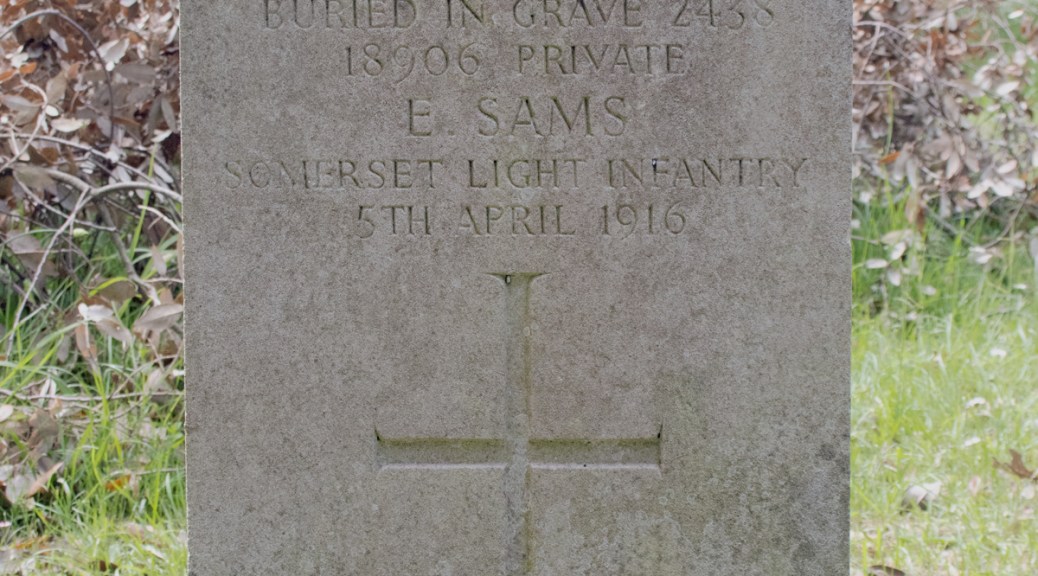
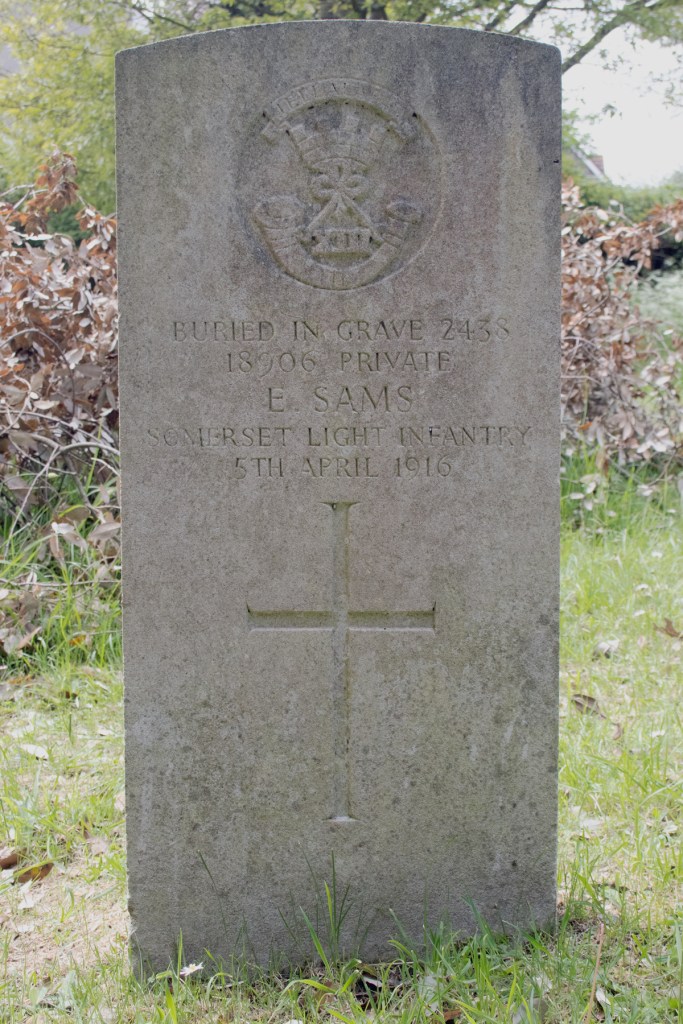
Private Edward Sams

Private Edwards Sams

In a corner of the Milton Cemetery in Weston-super-Mare, Somerset, stands the gravestone of Edward Sams. It gives little information away, other than the fact that he passed away on 5th April 1916, and that he served as a Private in the Somerset Light Infantry.

There is no documentation – military or otherwise – that can be concretely connected to Private Sams. None of the available documents for Edward Sams include the service number on his gravestone, and there is nothing to provide a definite date of birth or familial connections.

Sams was not an uncommon Somerset name at the start of the twentieth century, and there are a number men by that name called Edward in the area at the time. Again, however, the information is lacking that allows us to directly connect any of these names with the gravestone in the Weston-super-Mare cemetery.

There is nothing in any contemporary newspapers to suggest that Private Sams’ passing was anything out of the ordinary.

Sadly, therefore, he remains a name lost to history. Edward Sams, whoever he was, and however he died, lies at rest in a Somerset cemetery.

Private Alfred Howe

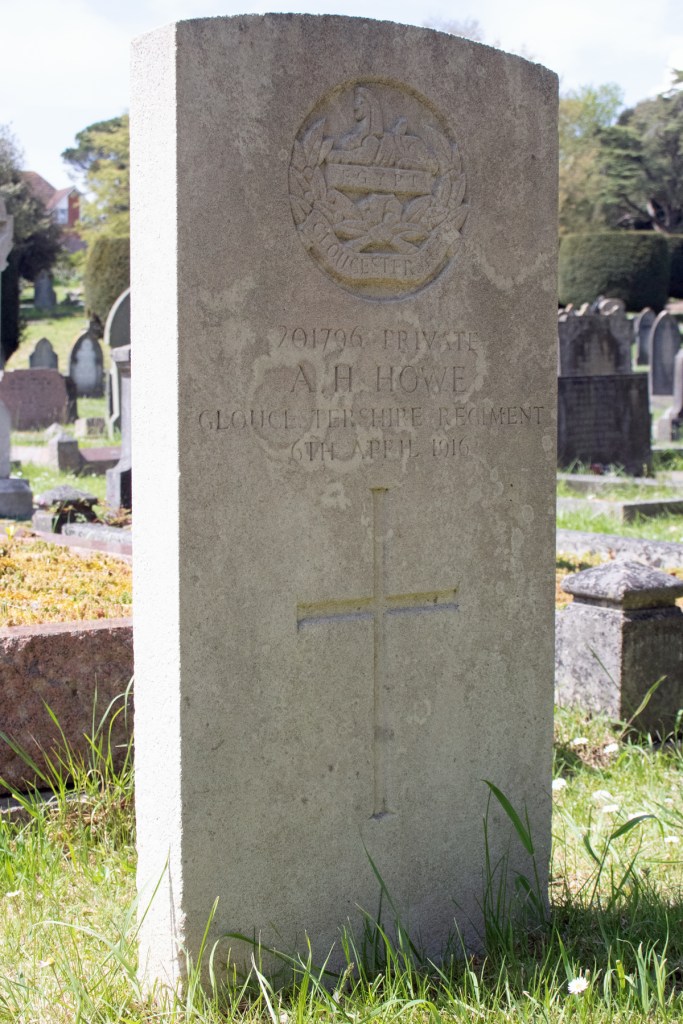
Private Alfred Howe

In the Milton Cemetery in Weston-super-Mare is a gravestone to Alfred Harry Howe. He seems destined, sadly, to be one of those servicemen whose stories are lost to time. The stone confirms that he died on 6th April 1916 and that he was a Private in the Gloucestershire Regiment. Further research adds that he was assigned to the 3rd/4th Battalion.

The UK Army Register of Soldier’s Effects gives his father’s name as William. It also confirms that he was not eligible for a war gratuity, as he had insufficient service; given the date of his death, it is likely, therefore, that he enlisted on or after October 1915.

Beyond this information, however, there is little documentation to confirm exactly who Alfred was. As there is no date or place of birth, it is difficult to get an exact match. There are at least three William/Alfred matches in the Somerset/Bristol area, but nothing to connect them to the headstone in Weston-super-Mare, and nothing to even confirm that Alfred was from the South West.

There is nothing in any contemporary newspapers to suggest that Private Howe’s passing was anything out of the ordinary.

Sadly, therefore, he remains a name lost to history. Alfred Harry Howe, whoever he was, and however he died, lies at rest in a Somerset cemetery.


Private Peter McDonald

Private Peter McDonald

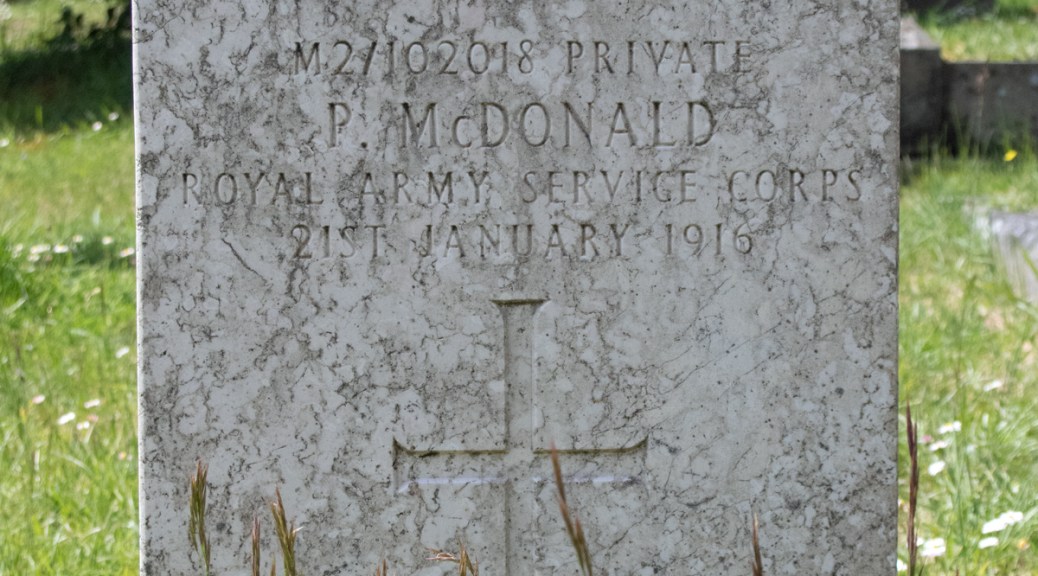
Peter McDonald was born in Tullamore, King’s County (now Offaly County), Ireland, on 28th May 1893 and was one of eight children to Michael and Mary McDonald. Michael had been in the army, and this seems to have been the route that Peter wanted to follow as well.

When he left school, however, he found work as a domestic servant at St Stanislaus College in his home town. War, by this time, was on the horizon, and so Peter was called on to other things.

Unfortunately, a lot of the documentation around Peter’s military service is no longer available. He enlisted in the Royal Army Service Corps; while an exact date for his enrolment is not available, this would appear to have been at some point in the first year of the conflict.

Private McDonald was assigned to the 341st Mechanical Transport Company. This was formed in May 1915, and was designated an Ammunition Park (which was in essence a fleet of lorries and a workshop for maintaining them). While full details of his time with the RASC is not available, Peter certainly came to be based in Weston-super-Mare, Somerset.

Considerable sensation was created at Weston-super-Mare on Friday evening, by a rumour which prevailed that a member of the Army Service Corps billeted in the town had been shot and another man wounded.

Inquiries revealed the fact that the rumour had some foundation, and it appears that some half-dozen members of the corps were attending their motor-bicycles in a shed at headquarters in Beach Road, when Lance Corporal Goldsmith produced an automatic Colt pistol, which he handed to Private McDonald for inspection.

In the course of the examination the weapon went off, and Goldsmith was shot in the leg. He at once took the revolved from McDonald, observing that he was unaware that it was loaded, and was apparently in the act of unloading it when it was again discharged, the bullet entering the lower part of McDonald’s abdomen, severing the main arteries.

Medical aid was at once procured. The unfortunate man died as the result of internal haemorrhage about an hour later.

Goldsmith was removed to hospital, but his injuries are not regarded as serious.

Somerset Standard: Friday 28th January 1916

Private Peter McDonald has passed away from a gunshot wound on 21st January 1916, at the age of just 22 years old. His body was laid to rest in the Milton Cemetery in Weston-super-Mare, where he had met his fatal accident.


Private McDonald’s pension record gives his cause of death as ‘explosion’, something of a misinterpretation of the evening’s events.


Stoker Petty Officer John Harriss

Stoker Petty Officer John Harriss

John Thomas Harriss was born on 22nd February 1878, one of seven children to George and Mary. George was a jeweller, who moved the family from London to Weston-Super-Mare when John was three or four years old.

Following in his father’s footsteps was not something John was going to do, and the move to the coast seemed to have sparked an interest in the sea. He enlisted for twelve years’ service in the Royal Navy in March 1900, working as a stoker.

After initial training at HMS Pembroke in Chatham, Kent, Stoker 2nd Class Harriss was assigned to HMS Terpsichore and, over the length of his service, he worked on a further ten vessels. During this time, he was promoted a couple of times, reaching the role of Leading Stoker by 1911, while he was serving aboard HMS Magnificent.

With war imminent, when John completed his period of service, his term was extended until the end of hostilities. He had, by the beginning of 1914, attained the rank of Stoker Petty Officer, and was assigned to HMS Russell.

After the start of the war, this ship was assigned to the Grand Fleet and worked on the Northern Patrol, and in November 1914, she bombarded German-occupied Zeebrugge. The following year, HMS Russell was sent to the Mediterranean to support the Dardanelles Campaign, though she did not see extensive use there.

On 27 April 1916 HMS Russell was sailing off Malta when she struck two mines laid by a German U-boat. Most of her crew survived the sinking, though 125 souls lost their lives. Stoker Petty Office Harriss was one of the survivors; his service records note that he was ‘commended for [the] great coolness shown on the occasion of the loss of HMS Russell’.

Brought back to the UK, John contracted pneumonia, and spent time at home with his family, in Weston-Super-Mare. It was here, sadly, that he was to succumb to the lung condition, and he passed away on 7th June 1916. He was 38 years old.

John Thomas Harriss lies at rest in Milton Cemetery in Weston-Super-Mare.


Private Sidney Watts

Private Sidney Watts

Sidney Gilbert Watts was born in 1892, one of five children to railway inspector Arthur Watts and his wife Laura. Initially brought up in the village of Congresbury, near Bristol, Arthur soon moved the family to nearby Taunton.

A likeable man, Arthur continued working for Great Western Railways. He also became involved in the Taunton Co-operative and Industrial Society and, for a number of years was the Chairman. Suddenly, and unexpectedly, however, on 20th January 1907, he collapsed and died from a heart attack.

Now widowed, Laura’s children rallied around her. Most of them had left school; her eldest, Reginald, was a school master, her older daughters Florrie and Mabel worked for a milliner and draper, and two lodgers moved in to help financially support her and her youngest daughter Evelyn.

By this time Sidney had followed in his father’s footsteps, and found work as a porter for GWR. He had moved to Hayle in Cornwall, where, according to the 1911 census, he was boarding with 33-year-old widow, Lizzie Richards, and sharing the house with another railway worker, Richard Crago.

Sidney seemed to be looking for something more. In February 1912, he enlisted as a Private in the Royal Army Medical Corps. He trained as a cook and, when war broke out, was sent out to France as part of the British Expeditionary Force.

In July 1915, Private Watts contracted pleurisy and was treated in a hospital in Boulogne. He was discharged for duty and assigned to a hospital ship, where he stayed for six months. While there, he contracted pneumonia and was bedridden for six weeks, his lung having collapsed.

Sidney was evacuated to England to recuperate. His health did not improve, however, and he was medically discharged from the army on 31st July 1916. A few months later, he was admitted to Cranham Lodge Sanatorium near Gloucester, but passed away on 24th September 1916. He was just 24 years old.

The body of Sidney Gilbert Watts was brought back to Taunton, and he was laid to rest in the St James Cemetery in the town.


Private Henry Cawley

Private Henry Cawley

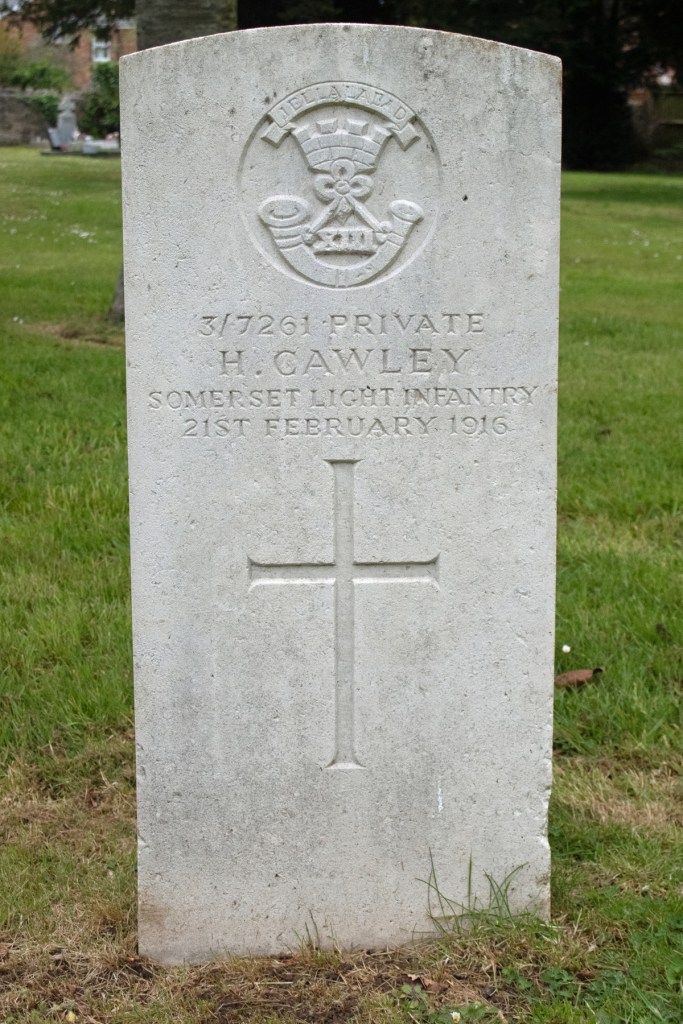
Henry Cawley was born in September 1871, one of eight children to John and Ann Cawley. John worked as a blacksmith in the village of Corfe, near Taunton, Somerset, but when Henry left school, he found work as a butcher’s assistant in Bristol.

Henry disappears from the radar for a while. John died in 1884, but the next information available for his son comes in the form of his war medals. This confirms that he enlisted in the Somerset Light Infantry in the summer of 1915, and that he was assigned to the depots as a Private. He was awarded the Victory and British Medals, as well as the 1915 Star, but then fell ill early in 1916.

Private Cawley was medically evacuated back to England, and was admitted to a sanatorium in Taunton. Sadly, whatever illness he contracted, he succumbed to, and he passed away on 21st February 1916, at the age of 45 years old.

Henry Cawley was laid to rest in St James’ Cemetery in Taunton.


Henry’s war pension was given to his mother, Ann. After her husband’s death, she continued to live in Corfe and, based on the available information, lived into her 80s.


Private Ernest Sedgbeer

Private Ernest Sedgbeer

Ernest John Sedgbeer was born in Taunton in the summer of 1891, the second of seven children to Henry and Alice Sedgbeer. Henry worked in a foundry, and his son joined him as a labourer.

By the time of the 1911 census, most of the nine members of the family disappear from the records – it is likely that these were lost – but both father and son are to be found living in South Wales – Henry working as a furnace stoker in the Rhondda, Ernest as a labourer below ground in Llanwonno, near Pontypridd.

Ernest seems to have had an opportunity to find other employment, and started work for Great Western Railways in February 1914. War was imminent, however, and a little over a year later, he had enlisted.

Ernest first joined the Duke of Cornwall’s Light Infantry as a Private, but transferred over to the Dorsetshire Regiment. He was certainly involved in fighting on the Western Front, although full details of his military service are not documented.

His records show that he was awarded the Victory and British Medals and the 1915 Star. Private Sedgbeer was wounded in July 1916 and medically evacuated back to England, where he was admitted to King’s Hospital in Lambeth. Sadly, he was to die of his injuries on 7th July 1916, aged just 25 years old.

Ernest John Sedgbeer lies at rest in the St James’ Cemetery in his home town of Taunton, Somerset.


The local newspaper reported on Private Sedgbeer’s funeral, although it seems to have attributed it to the wrong brother.

The death took place… on Friday last, of Private Charles Sedgebeer of the Dorset Regiment, who was severely wounded in the recent heavy fighting on the Western Front. Deceased was the second son of Mr and Mrs Henry Sedgebeer… and was employed on the railway before the war. His father and three brothers are on active service in France, and one brother in the Navy. The eldest brother has won the DCM.

Taunton Courier and Western Advertiser: Wednesday 19th July 1916

Ernest was indeed the second son of the family, but Charles was the oldest, and survived the war.


Larger memorial image loading...
Ernest John Sedgbeer
(from findagrave.com)

Private Percy Westcott

Private Percy Westcott

Percy George Westcott was born at the end of 1877, the eldest of six children to George and Elizabeth Wescott. George was a police constable, and brought the family up in the Somerset town of Frome.

After leaving school, Percy sought a trade and, by 1901, was living in the East End of London, working as a wheelwright, work he continued with until the start of the war.

In November 1911, Percy married Annie Maria Meineke, a widow with a young son. The couple set up home in Clapton, East London.

War was on the horizon, however, and Percy was keen to enlist. He volunteered for the Army Service Corps at the beginning of June 1915. His application was turned down, however, and the reason for his discharge given was “Not being likely to become an efficient soldier”.

Percy appears to have been undeterred, however, and by September 1915 had enlisted successfully. He joined the London Regiment as a Private, but this is as much as is documented about his military service.

Private Westcott’s next appearance in records is on the Army Register of Soldiers’ Effects. This confirms that he had served in the 3rd/10th Battalion, which was a territorial force. The document also identifies that he passed away on 20th March 1916, at the age of 38.

While a cause of death is not noted, the location given – the London Asylum, Colney Hatch – is perhaps more significant. As the name suggests, this was a mental health facility; which gives an indication as to the Private Westcott’s state at the time of his passing.

While Percy’s widow was still living in London, his body was taken back to Somerset to be laid to rest. Percy George Westcott is buried in St James’ Cemetery in Taunton, where his parents lived.


Private Charles Doble

Taunton St James

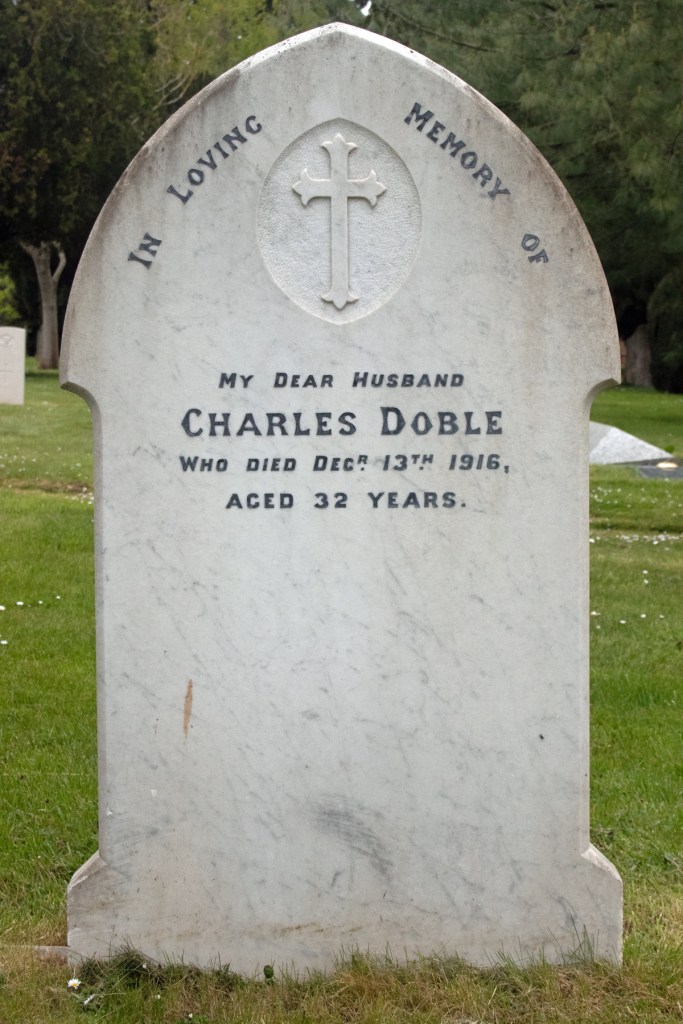
Charles Doble – also known as Charlie – was born 12th September 1884, the second of seven children to James and Mary Ann Doble from Dunkeswell in Devon. James was a carpenter, but on leaving school, Charles initially found work as an errand boy, before becoming employed as a porter at the Taunton and Somerset Hospital.

The 1911 census found Charles in the village of Cotford St Luke, working as an attendant at the Somerset and Bath Asylum. Housing more than 800 patients at the time, it is reasonable to assume that his duties would have been wide and varied.

Details of Charles’ military service are scarce. He enlisted in the Hertfordshire Regiment as a Private in April 1916, but soon transferred over to the 13th Battalion of the Royal Sussex Regiment.

In the spring of that year, Charles married Ethel Willmott; presumably this was before he was sent abroad, because he soon found himself on the Western Front.

His battalion was caught up in the Battle of the Boar’s Head, during with the Royal Sussex Regiment succeeded in capturing a section of the German front line trench and second line trench, before being pushed back because of mounting casualties and a lack of ammunition.

It seems likely that Private Doble was one of those injured on what became known as The Day Sussex Died, as he was evacuated back to England for treatment. Admitted to a military hospital in Stourbridge, sadly his wounds proved too much for Charles to bear; he passed away on 13th December 1916, at the age of 32 years old.

Charles Doble’s body was brought back to Taunton, and he was buried in the St James’ Cemetery in the town.


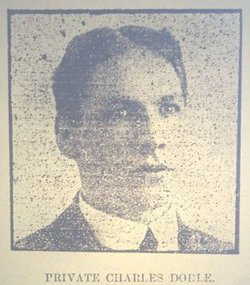
Charles Doble (from findagrave.com)

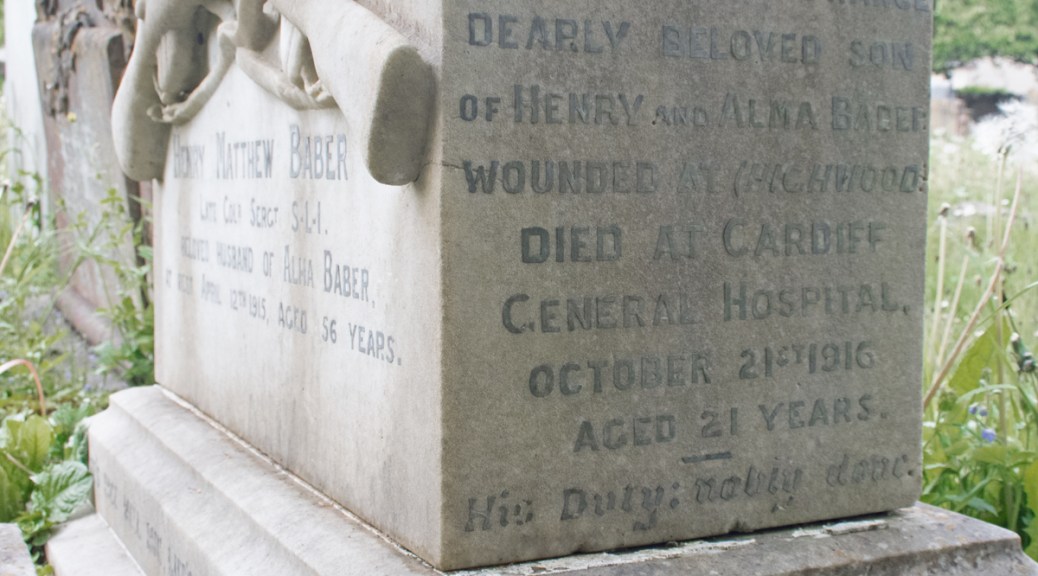
Private William Baber

Private William Baber

William Herbert Baber was born in May 1895, the oldest of six children to Henry and Alma Baber. By the time of William’s birth, Henry was an insurance agent for the Prudential insurance company and brought his family up in the Somerset village of Yatton. William’s father had been widowed early on, and so, in addition to his five younger siblings, he also had an older half-brother, also called Henry.

By the time of the 1911 census, William was working as a clerk in a coal office, and the family were living in a five room house not far from the village centre.

Little remains documented about William’s military service. He enlisted in the Somerset Light Infantry, but transferred to the 24th Battalion of the London Regiment. He was involved in the Battle of High Wood – part of the Somme offensive – and was wounded during the skirmish.

Evacuated back to home soil, Private Baber was treated in one of the military hospitals in Cardiff. Sadly, he was to succumb to his wounds, and passed away on 16th October 1916. He was just 21 years old.

William Herbert Baber lies at rest in the family grave in the churchyard of St Mary’s in Yatton.


William’s father Henry was also called up for war duty. You can read more about his story here.