Tag Archives: Stoker Petty Officer

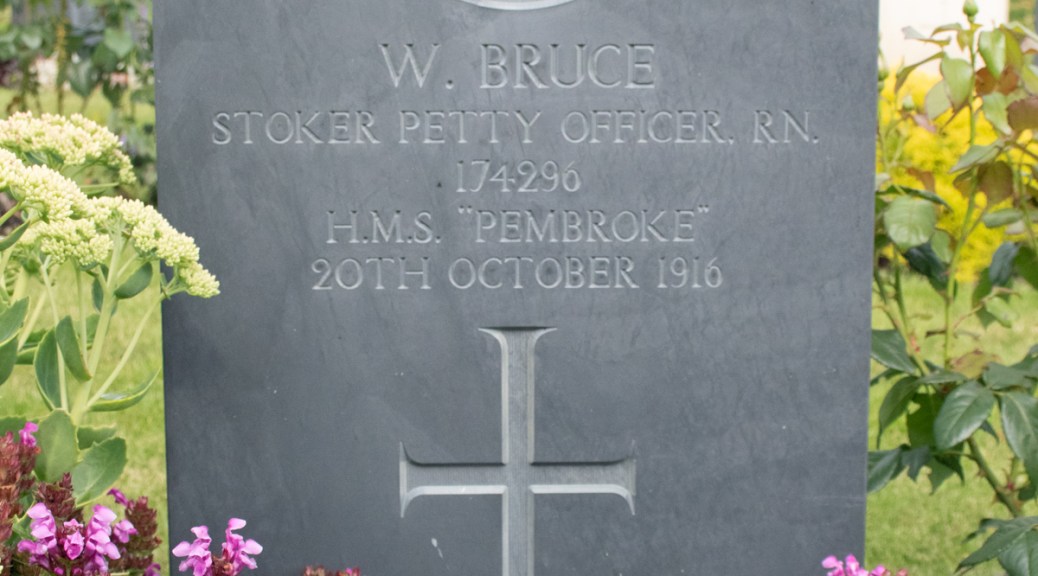
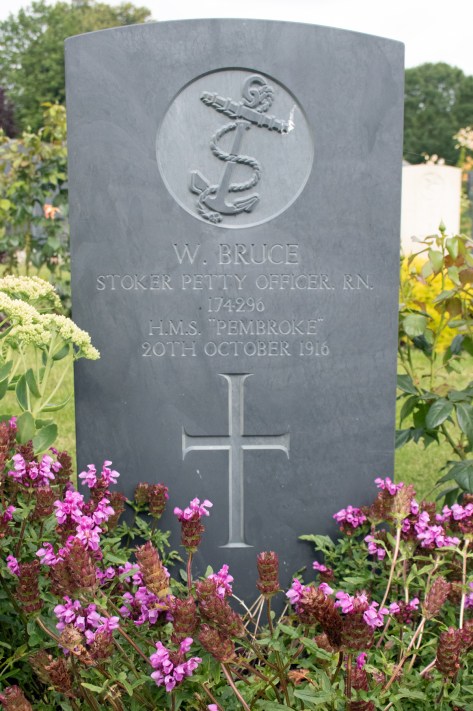
Stoker Petty Officer William Bruce

Stoker Petty Officer William Bruce

William Bruce was born in Chatham, Kent, on 3rd July 1873. The oldest of fourteen children, his parents were David and Sarah Bruce. David worked as a blacksmith in the local dockyard, and this is a job that William also followed when he finished his schooling.

For the early part of William’s life, the Bruce family lived on Fort Pitt Street, initially at No. 29, then, as the family grew, No. 42. Working as a blacksmith brought in a salary, but the navy offered William more of a career and, on 20th June 1893, he signed up.

Stoker 2nd Class Bruce’s service papers show that he was 5ft 4ins (1.63m) tall, with dark brown hair, brown eyes and a fresh complexion. He would spend a total of 13 years with the Royal Navy and, unsurprisingly, given where he was living, he would be based out of HMS Pembroke, the Royal Naval Dockyard in Chatham.

William spent six months at HMS Wildfire – the dockyard in Sheerness, Kent – during the summer of 1893, before returning to Pembroke. She would remain his home for the next three years, during which time he was promoted to Stoker 1st Class. His time back at Pembroke was not without incident, however, and he spent three days in the cells for an unconfirmed misdemeanour in August 1894.

On 14th January 1896, Stoker Bruce was given his first sea-going posting, on board the cruiser HMS Endymion. Over the remaining nine years of his initial contract, he would go on to spend time on three further ships. William’s commitment to the role was now becoming evident: he was promoted to Leading Stoker 2nd Class in October 1900, and Leading Stoker 1st Class less than four years later.

Away from the sea, love was blossoming for William. On 12th February 1900, he married Nellie Benster, a dressmaker and lady’s companion from Chatham. The couple took rooms at 145 Thorold Road, a home for the new bride while her husband was away at sea.

When Leading Stoker Bruce’s 12-year contract came to an end, he immediately renewed it. In August 1905, he was assigned to the battleship HMS Resolution, and he remained on board for the next nine months. William’s next assignment was another battleship, HMS Triumph, and he would be attached to her for nearly six years.

On 1st July 1906, William was promoted to Stoker Petty Officer. He retained this rank until December 1910, when he reverted to Leading Stoker. His papers hint at the cause for this demotion: his annual review had dropped from very good to merely good after he took the new role.

Over the next two years, Leading Stoker Bruce went on to serve on three further ships: the depot ship HMS Aquarius, the cruiser HMS Talbot and the sloop HMS Cadmus. By December 1912, William seems to have proved his mettle once more, and was promoted to Stoker Petty Officer again.

William remained on Cadmus for more than three years, returning to Chatham in the spring of 1916. Over the next few months, his health began to suffer and he was admitted to the town’s Royal Naval Hospital with pneumonia. The condition would get the better of him, and he passed away on 20th October 1916, at the age of 43 years old.

The body of William Bruce was laid to rest in the naval section of Woodlands Cemetery, Gillingham, Kent.
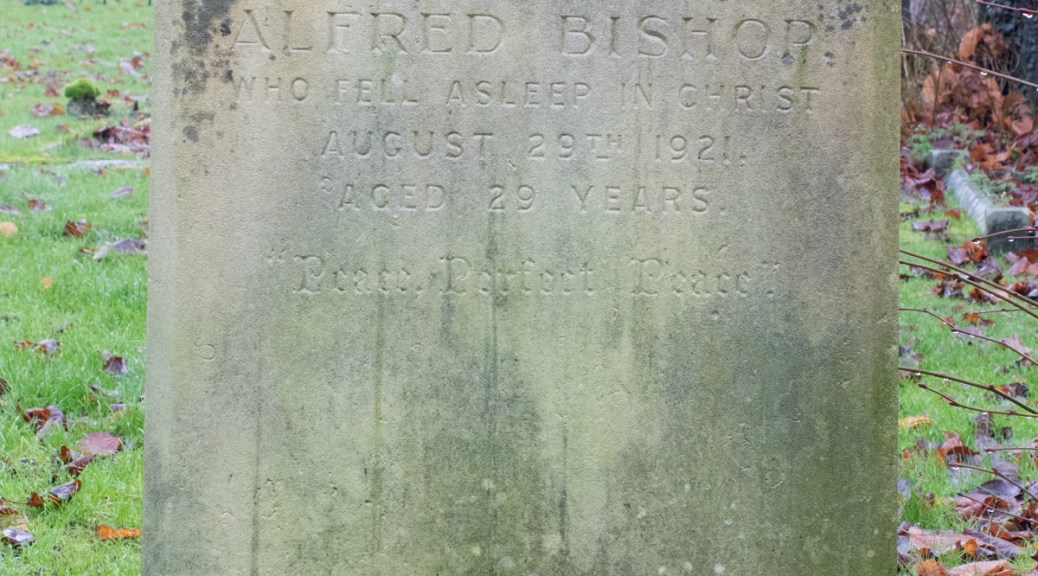
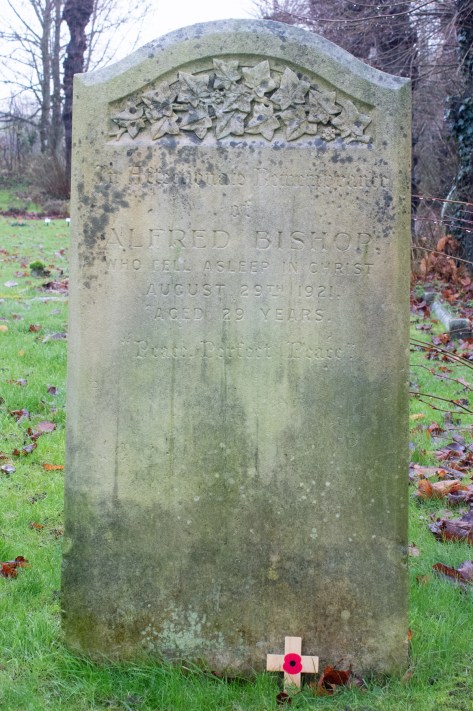
Stoker Petty Officer Alfred Bishop

Stoker Petty Officer Alfred Bishop

Alfred Bishop was born on 18th June 1892 in the Oxfordshire town of Burford. The oldest of eleven children, his parents were Samuel and Emily Bishop. Samuel was employed by a local tannery, and the 1901 census found the family living on Guildenford, to the east of the town centre.

Alfred would initially follow his father into the tannery, where he was employed as a harness maker. However, he had his sights set on bigger and better things and, on 24th January 1911, he enlisted in the Royal Navy. His service records show that he was just under 5ft 9ins (1.75m) tall, with brown hair, hazel eyes and a ruddy complexion. The document also noted a scar on his left groin following a varicocele operation.

Stoker 2nd Class Bishop was sent to HMS Pembroke, the Royal Naval Dockyard in Chatham, Kent, for his training. In August 1911 he was given his first posting, on board the cruiser HMS Black Prince. She would remain his home for the next nine months, during which he was promoted to Stoker 1st Class.

Over the next four years, Alfred would serve on five further vessels, returning to HMS Pembroke between each assignment. On 10th April 1916, he joined the crew of the cruised HMS Liverpool, and would remain with her for more than two years.

By this point Stoker Bishop’s annual reviews were increasingly positive, noting a very good character and a superior ability. This would pay off: in June 1916 he was promoted to Leading Stoker, with a rise to Stoker Petty Officer following two years later.

Alfred remained in the Royal Navy until 6th August 1919, when he was medically discharged with tuberculosis. By this point he had served for more than eight years, and had served on eight vessels.

Following his discharge, Alfred returned to Oxfordshire. The 1921 census found him living at 9a Markey Square with his wife, Eliza, and their five-month-old daughter, Bertha. There is little information about Eliza, but it seems likely that the couple met after her husband had returned home.

At this point, Alfred Bishop’s trail goes cold. He passed away on 29th August 1921, at the age of 29 years old. His body was laid to rest in the graveyard of St John the Baptist’s Church, in his home town of Burford.


Acting Chief Stoker Edward Stewart

Acting Chief Stoker Edward Stewart

Edward Thomas Stewart was born on 7th September 1880 in the Kent village of Sturry. The middle of three children, his parents were farm labourer James Stewart and his wife, Frances.

When he finished his schooling, Edward found work as a coachman, but he sought a life of adventure and, on 24th July 1899, he enlisted in the Royal Navy as a Stoker 2nd Class. His service records show that he was 5ft 7.5ins (1.71m) tall, with light brown hair, grey eyes and a fresh complexion.

Stoker Stewart was sent to HMS Pembroke, the Royal Naval Dockyard in Chatham, Kent, for his training, and remained there for the next eight months. He was then given his first assignment, on board the battleship HMS Sans Pareil. She became his home for the next year, during which time he was promoted to full Stoker.

Edward’s initial term of contract was for twelve years, and over that time he would serve on nine different vessels. Between voyages his shore home remained Pembroke, and he spent more than two years based there. By the summer of 1911, Edward had been promoted three times – to Stoker 1st Class in July 1906, Leading Stoker in March 1908, and Stoker Petty Officer in March 1910.

When his contract came to an end, Edward immediately re-enlisted. By this point, his records show that he had grown to 5ft 10.5ins (1.79m) tall, and had a scar on his nose.

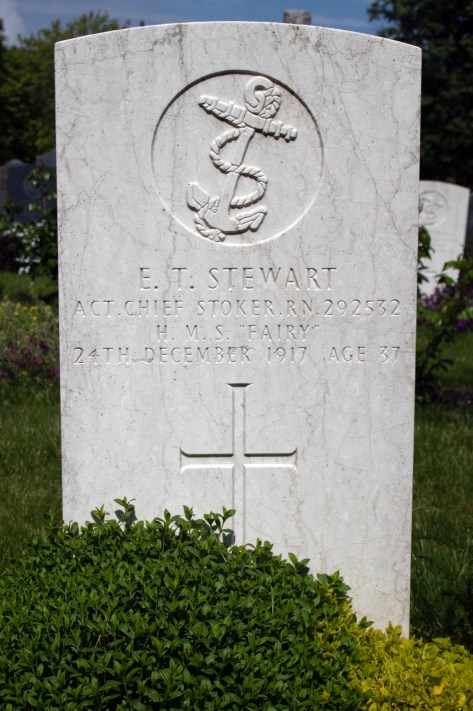
In the autumn of 1912, Stoker Petty Officer Stewart was assigned to the troop ship HMS Tyne. She would become the ship on board which he would spend the longest part of his career, not disembarking until 31st May 1917. He transferred to HMS Fairy, a destroyer, and with the move came a promotion to Acting Chief Stoker.

Attached to the Grand Fleet, Fairy was engaged in convoy work off the east coast. Edward’s time on board would not be a lengthy one, however. On 24th December 1917, he fell overboard, and was killed. He was 37 years of age. There is little additional information about the incident, although his service papers note that “no blame was attributable to anyone.”

Edward Thomas Stewart’s body was recovered, and brought back to Kent for burial. He was laid to rest in the naval section of Woodlands Cemetery, Gillingham, not far from the base he had called home for so long.


Stoker Petty Officer Henry Weller

Stoker Petty Officer Henry Weller

Henry Weller was born on 13th January 1877 in the village of Ashurst Wood, Sussex. The second of four children, his parents were John and Mary Weller. John was a farm labourer, and the 1881 census found the family living in a cottage on Brooklands Farm in East Grinstead.

Times look to have been tough for the Weller family. By the time of the next census, John, Mary and three of their children were lodging with Hartfield family. Henry, meanwhile, was living in Deptford, Kent, with James and Susannah Weller. He was noted as being a ‘cousin’, although his exact relationship is unclear. James’ nephew Joseph Weller, was also living with them. Just fourteen years of age, Henry was working as a general labourer, and the family were living at 21 Adolphus Street.

Labouring was an irregular way to being in money, and so Henry sought out a more regular career. On 18th November 1896 he signed up to the Royal Navy as a Stoker 2nd Class. His service records show that he was 5ft 4.5ins (1.64m) tall, with brown hair, brown eyes and a fresh complexion. He was also noted as having the letters HW tattooed on his left forearm, and shaking hands on his upper left arm.

Stoker Weller was sent to HMS Pembroke, the Royal Naval Dockyard in Chatham, Kent, for his training. He spent the next nine months split between there and HMS Wildfire – Sheerness Dockyard – learning his trade.

On 8th June 1897, Henry was assigned to the battleship HMS Victorious. Promoted to Stoker 1st Class three months after boarding, she would remain his home for the next three years. After a month aboard another battleship – HMS Revenge – he returned to Chatham.

Love blossomed and, on 8th July 1900, Henry married Alice Beldham, a dock worker’s daughter. The couple exchanged vows at All Saints’ Church, Rotherhithe, Kent, and moved in with Alice’s widowed father, George, at 12 Osprey Street. They went on to have three children: Henry, Harold and Ivy.

Newly settled, Henry seems to have voiced a preference to remain closer to home and, for the next couple of years he would remain based at HMS Pembroke. Alice relocated, and the family set up home at 51 King Edward Road, Gillingham, Kent. Close to the River Medway, the Wellers’ neighbours were all based at the docks, and, during her husband’s future absences, it is likely that Alice felt a sense of community.

After leaving HMS Pembroke, Henry was attached to the cruiser HMS Bacchante. Promoted to Leading Stoker 2nd Class, over the next six years, he would serve on three more ships, spending six-month stints back in Chatham in between assignments. In July 1903 he was promoted to Leading Stoker 1st Class, although he reverted to 2nd Class nine months later. Promoted again in June 1905, he took the rank of Stoker Petty Officer a year later.

Henry’s initial term of service came to an end in November 1908. He immediately re-enlisted, and remained in service until the spring of 1918.

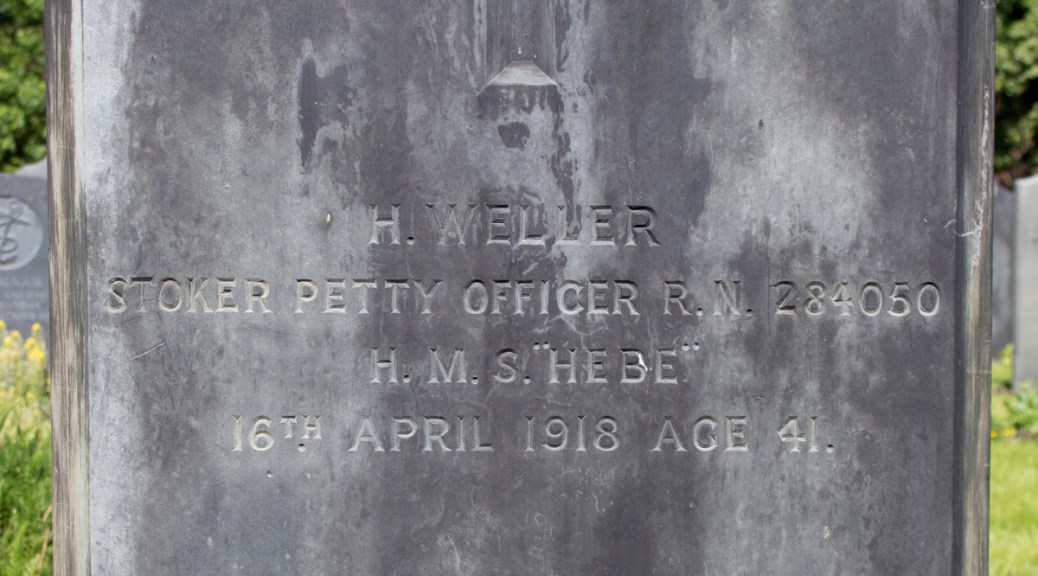
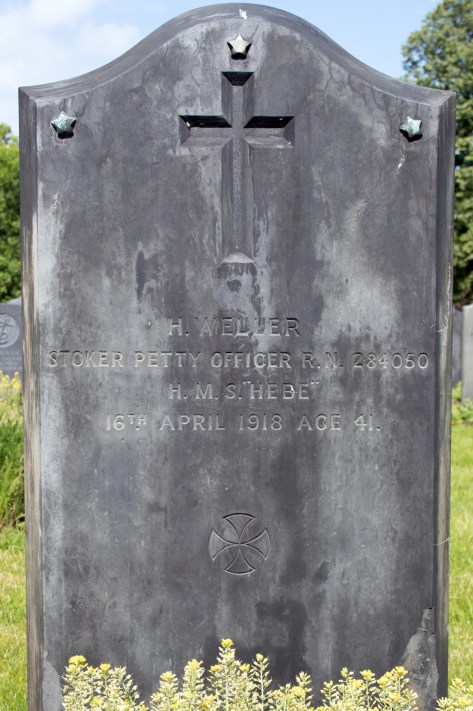
By this point Stoker Petty Officer Weller had been assigned to the torpedo gunboat HMS Hebe for more than thirty months. Patrolling the North Sea coast, on 12th April, she moored at the Alexandra Dock in Hull, Yorkshire. A later inquest outlined what happened next:

Joseph Taylor, a chief petty officer, said that about 11:55pm… [Henry] and he were going from the town to their ship… Witness struck a match to light his pipe. [Henry] walked on for about two yards, and then disappeared. Witness raised the alarm, and went tot he bottom of the dry dock, into which he found [Henry] had fallen, a distance of about 50 feet. They did not know the docks, has they had only come in that morning… If he (witness) had not struck the match they would both have gone over.

[Hull Daily Mail: Wednesday 17th April 1918]

Alive, but severely concussed, Stoker Petty Officer Weller was quickly taken to a local hospital. He was operated on, but his injuries were too severe. Henry passed away on 16th April 1918: he was 41 years of age.

The body of Henry Weller was taken back to Kent for burial. He was laid to rest in Woodlands Cemetery, Gillingham, a short walk from where Alice and their children were still living.


Stoker Petty Officer Albert Symes

Stoker Petty Officer Albert Symes

Albert Symes was born in Dorset on 6th March 1887. Details of his early life are a challenge to piece together, as his was not an uncommon name in the county – the 1891 census has at least two potential matches, and the 1901 record at least three.

The first concrete information for Albert is that of his military service. Having been working as a general labourer, he enlisted on the 22nd September 1906, joining the Royal Navy as a Stoker 2nd Class. His service records show that he was 5ft 5ins (1.65m) tall, with brown hair, blue eyes and a fresh complexion. He was also noted as having the letters BS (presumably for Bert Symes) tattooed on his right forearm.

The service document gives his place of birth as Yeovil, Dorset, although the town is actually in Somerset. The next census, taken in 1911, suggests he was born in the village of Bradford Abbas, three miles south east and over the Dorset border.

Stoker 2nd Class Symes was first sent to the training ship HMS Nelson. Based in Portsmouth, Hampshire, this is where Albert spent three months, before being assigned to the cruiser HMS Eclipse. Over the next nine years, Albert served on eight ships, returning to a land base – HMS Victory in Portsmouth – in between voyages.

Albert’s commitment to the job is evident – his character was continually noted as being Very Good, while his ability was Superior as each of his annual reviews. In May 1907 he was promoted to Stoker 1st Class; five years later he made Acting Leading Stoker, with a full promotion to the rank in June 1913; on 1st June 1915, while serving on board HMS Hampshire, Albert was promoted again, to Stoker Petty Officer.

Things would change rapidly for Albert, however. Within a matter of weeks, he had contracted pneumonia. He was transferred to the hospital ship Garth Castle, but the condition was to prove too severe. Stoker Petty Officer Symes passed away from the condition on 3rd October 1915: he was 28 years of age.

Albert Symes’ body was brought back to Dorset for burial. He was laid to rest in the peaceful graveyard of St Mary’s Church in the village of Bradford Abbas.


Stoker Petty Officer Charles Lavis

Stoker Petty Officer Charles Lavis

Charles Walter Lavis was born in Iowa, USA, on 2nd April 1888. The second of eleven children, his parents were James and Martha Lavis. The only census record Charles appears from – the return from 1901 – shows that James was an agricultural labourer from Long Sutton in Somerset. The family’s move to America seemed not to have lasted for long – Charles’ immediate siblings – Mabel, who was two years older, and George who was two years younger – were both born in Long Sutton.

Charles was drawn to a life of adventure and, on 11th April 1906, he enlisted in the Royal Navy. His service records confirm that he was 5ft 5ins (1,65m) tall, with brown hair grey eyes and a fresh complexion. As a Stoker 2nd Class, he was initially sent to the training ship HMS Nelson, before moving to what would become his shore base, HMS Victory, the Royal Naval Dockyard in Portsmouth, Hampshire.

Over the next year, Charles serves on HMS Hecla and HMS King Edward VII, where, on 17th May 1907, he was promoted to Stoker 1st Class. He remained on the King Edward VII for more than four years, before returning to Portsmouth in August 1911.

Back on shore, Stoker 1st Class Lavis was promoted to Leading Stoker, and spent the next nine months training for the role at HMS Fisgard, also in Portsmouth. He spent six months on the battleship HMS Revenge, before moving again to another battleship, HMS Britannia.

Charles spent two years on the Britannia, and it was while assigned to her that he got married. He wed Bessie Patten on 31st May 1914 in Martock, Somerset: the couple would go on to have a daughter, Eileen, who was born the following April.

It was while Charles was serving on HMS Britannia that was broke out. In November 1914, he returned to Victory for further training and, in the spring of 1915, he was promoted to Stoker Petty Officer.

Over the next three years, Charles served on three more vessels, before finally returning to Portsmouth in April 1918. The reason for his return was because of his health, and he was soon admitted to the Royal Naval Hospital in Haslar, Gosport, suffering from tuberculosis of the neck. The condition necessitated an operation, but Stoker Petty Office Lavis was not to survive the procedure. He suffered from heart failure, and died on 2nd May 1918. He had not long turned 30 years of age.

Charles Walter Lavis was taken back to Somerset for burial. He was laid to rest in the quiet graveyard of All Saints’ Church in Martock.


Records suggest that the Lavis family could not settle. Passenger lists from March 1912, show James and Martha travelling with nine children to Portland, Maine, before moving on to Huron in Ontario. James was still recorded as being a farm labourer, so it seems that opportunities for the family were better in North America than in Britain.

When war broke out, citizens of the Commonwealth were called upon to play their part and, despite being under age, Charles’ younger brother Arthur, stepped up to serve. Details of his time in the army are scarce, but he was assigned to the 14th Battalion of the Canadian Infantry. His troop set sail for Britain in October 1914: Arthur was just 14 years old at this point, and had lied when he joined up, giving his date of birth as 20th May 1897.

Private Arthur Lavis was in France by August 1916, taking up position on the Front Line at Coucelette. They met heavy troops, even before a full offensive got underway on 16th September. Ninety-two soldiers from the 14th Battalion were killed during the attack, Arthur included. He was just 16 years old, and his remains were never recovered. He is commemorated on the Vimy Memorial in France.


Stoker Petty Officer Henry Cordas

Stoker Petty Officer Henry Cordas

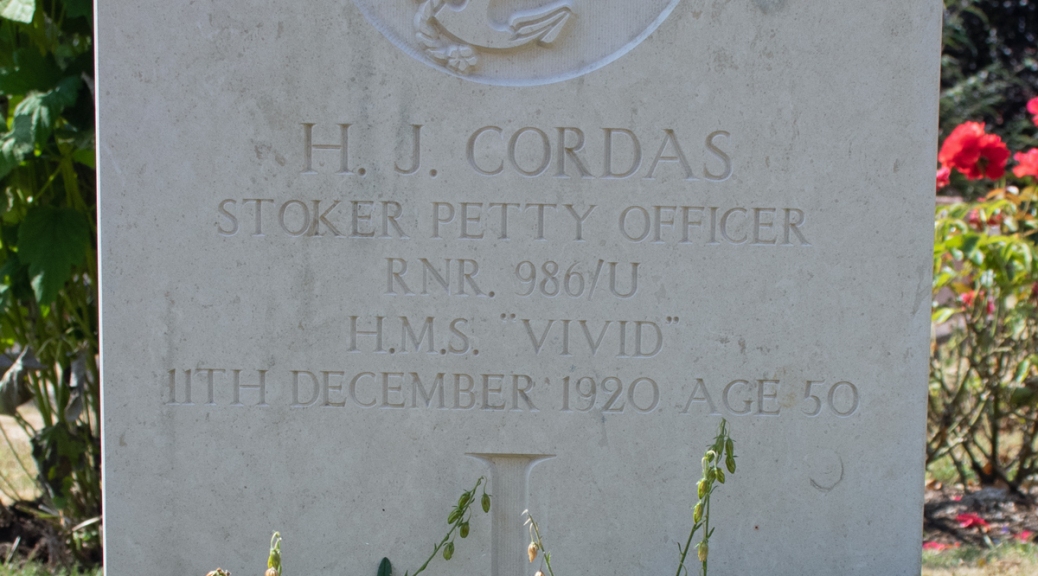
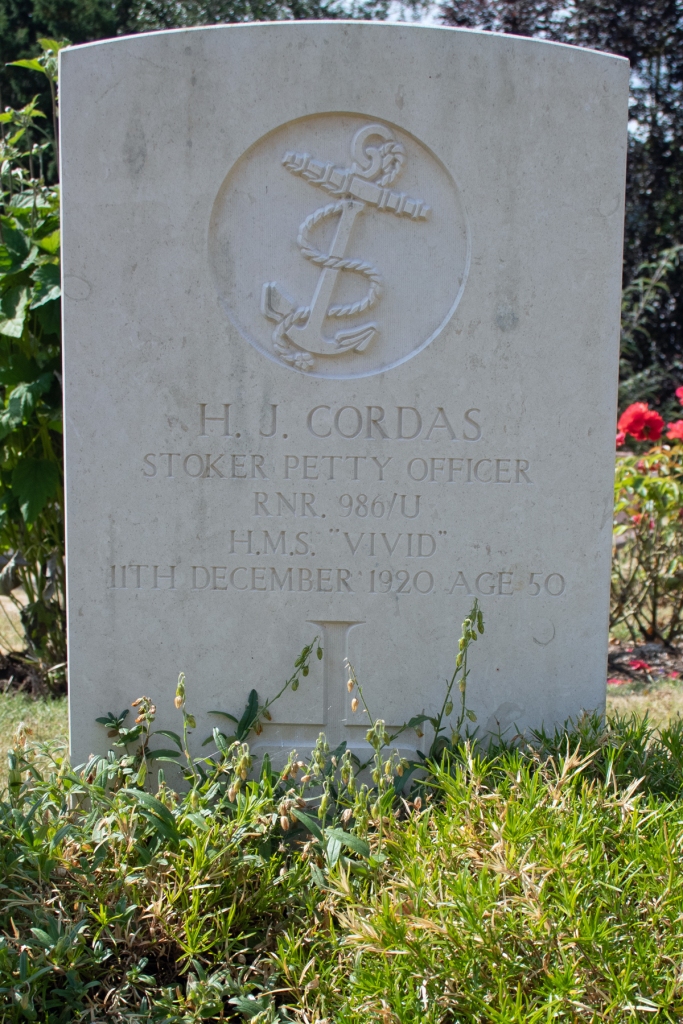
Much of Henry John Cordas’ early life is destined to remain a mystery. The first record for him is the 1881 census, which gives is his address as St Mary’s Orphanage in Heston, Middlesex, where he was one of 650 children.

The 1891 census recorded Henry as living in Humber Street, Grimsby, Lincolnshire, right next to the town’s docks. He is noted as being a fisherman, and is married to a woman called Mary, who was born in Deptford, Surrey.

The next available census record for Henry adds confusion to his story. The document, dating from 1911, confirms that he and Mary are now living in Hotwell Road, Bristol, Gloucestershire, again within spitting distance of the docks. Henry was employed as a marine fisherman in the merchant service. The document suggests that the couple had been married for ten years, and give Mary’s place of birth as Swansea, Glamorganshire.

While the document matches previous information for Henry, it seems unlikely that the Marys in the 1891 and 1911 censuses are one and the same. Either way, the couple were sharing their house with Mary’s niece, Ellen.

Henry seems to have joined the merchant fleet in a more official capacity in the autumn of 1900. His records show that he was 5ft 11ins (1.8m) tall, with blue eyes and a fair complexion. He served out of Bristol and, in the years leading up to the outbreak of war, he was assigned to a number of ships, travelling the Atlantic to Montreal and Jamaica, amongst other far-flung places.

When hostilities commenced, Henry was assigned to the Royal Naval Reserve. Over the next few years, he served on a number of ships, including the armoured cruisers HMS Suffolk and HMS Doris. He worked as a Stoker, but by the end of the conflict had been promoted to Stoker Petty Officer.

In December 1918, Henry’s service came to an end. He was, by now, based at HMS Vivid, the Royal Naval Dockyard in Devonport, but his health was suffering. Medically discharged with a combination of chronic bronchitis and rheumatic pain, he seems to have returned to Bristol.

On 6th December 1920, Henry was admitted to Bath War Hospital in Somerset, as he was coughing up blood. The plan was to transfer him to Greenwich Hospital in Surrey, but he suffered an aneurysm before that move could be made. He passed away on 11th December 1920, at the age of 50 years old.

The body of Henry John Cordas did not travel far for burial. He was laid to rest in the peaceful expanse of Bath’s Locksbrook Cemetery.


Petty Officer Stoker William Dyer

Petty Officer Stoker William Dyer

William Henry Dyer was born on 26th March 1895, in Bath, Somerset. He was the only child of William and Elizabeth Dyer. Elizabeth had had a son prior to her marriage to William Sr, and so William Jr had a half-brother, Sidney.

Elizabeth tragically passed away in December when her youngest was only a toddler. William Sr went on to marry again, to a Sarah Chivers. The couple went on to have a family of their own, giving William Jr and Sidney a further five half-siblings.

William Sr was a carman and, when his son left school, he also found carting work, the 1911 census recording him as being a milk carrier. He wanted bigger and better things, however, and, on 8th April 1913, a fortnight after his eighteenth birthday, he joined the Royal Navy.

William’s service records show that he was working as a van guard on the railway at the time of his enlistment. He was 5ft 7ins (1.7m) tall, with light hair, grey eyes and a fresh complexion. He joined as a Stoker 2nd Class, and was initially assigned to HMS Vivid, the Royal Naval Dockyard in Devonport.

After six months’ training, William was assigned to the dreadnought battleship HMS Ajax. She became his home for the next four years, patrolling the North Sea during the conflict and, in June 1916, was involved in the Battle of Jutland. During his time on board, William rose through the ranks, becoming Stoker 1st Class in August 1914, Leading Stoker in August 1916 and Petty Officer Stoker in October 1917.

In January 1918, William returned to HMS Vivid for a few weeks He was then given a new posting, on board HMS Sandhurst, based at Scapa Flow in the Orkneys. Petty Officer Stoker Dyer was to spend the next ten months here, albeit with a short break that autumn.

It was during this period of leave that William married Lily Sarah Bethia Durbin. She was the daughter of a miner, and the couple married in Clutton, Somerset. Their time together was to be brief, however, as William soon returned to Scotland.

It was while Petty Officer Stoker Dyer was back at HMS Sandhurst that he developed pneumonia. Sadly, the condition was to get the better of him. He passed away on board on 27th November 1918, at the age of just 23 years old.

William Henry Dyer’s body was brought back to Somerset for burial. He was laid to rest in St James’ Cemetery in Bath.


Lily had been a wife for just a matter of weeks, and was now left a widow. In 1926 she remarried, to baker and confectioner Albert Farmer. The couple lived a long and happy life, celebrating their 59th wedding anniversary before Albert died in 1985. Lily lived on, passing away in January 1997, at the ripe of age of 98 years old.


Stoker Petty Officer Wilson Woodbury

Stoker Petty Officer Wilson Woodbury

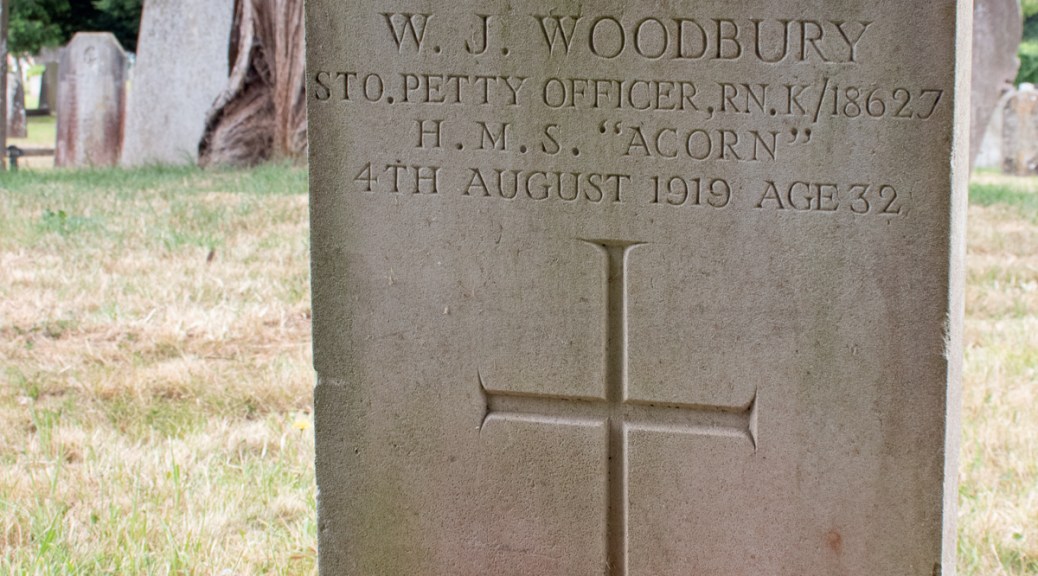
Wilson John Woodbury was born on 8th December 1888, and was the third of seven children to Daniel and Elizabeth Woodbury. Daniel was a chair maker from Wellington, Somerset, and this is where the family – including six boys and one girl – were raised.

By the time of the 1901 census, Daniel had had a change of career – he was now working as an oil presser. His and Elizabeth’s oldest three boys, Wilson included, had also found work, and were employed as wool spinners.

Elizabeth passed away in 1906, when Wilson was just seventeen years old. This may have pushed him to bigger and better things, and a career. On 13th August 1908, at the age of 19, he enlisted in the Royal Navy as a Stoker 2nd Class. His service record shows that he was 5ft 7.5ins (1.71m) tall, had light brown hair, blue eyes and a fresh complexion. It also noted that he had a tattoo of a cross on his right forearm.

Stoker Woodbury was initially trained at HMS Vivid – the naval dockyard at Devonport. On 9th February 1909, however, he was given his first posting, on board HMS Defence. He spent two years on board the armoured cruiser, and, gained a promotion to Stoker 1st Class.

During the remainder of his initial service, Wilson served on two further ships – HMS Sentinel and HMS Bellona – returning to Devonport between each posting. When he completed his five-year contract, Wilson voluntarily signed up for a further seven years with the Royal Navy.

As war came to Europe, Stoker Woodbury was given a number of assignments, on the battleships HMS Caesar and Lord Nelson, the cruisers HMS Blake and Apollo, and the depot ship HMS Blenheim. Further promotions followed – Leading Stoker in 1915 and Stoker Petty Officer two years later.

Wilson’s oldest brother, James, was serving in the Labour Corps during the conflict. Based in Northern France, he was assigned to the 720th Company, although further details are unclear. He almost survived the war unscathed, but contracted an illness of some description and died on 3rd November 1918, aged 34 years old. He was laid to rest in the Terlincthun British Cemetery in Wimille, France.

Stoker Petty Officer Woodbury returned home on leave in July 1919. The plan was to meet up with his fiancée who lived in Rockwell Green, near Wellington, but he instead turned up unexpectedly at his brother Fred’s home instead. Wilson said he had returned to Somerset because his girlfriend had broken off the engagement the previous week: the couple had been due to marry when he next came home on leave.

Fred told Wilson that she was not worth it, and they had gone drinking with a friend. Fred later said that on his previous leaves his brother had taken to drinking more than was good for him, but on that evening – Saturday 2nd August 1919 – he did not get drunk.

The following Monday, Stoker Petty Office Woodbury had taken himself down to the railway at Wellington, and been hit by a train. The action was deliberate, as, about his person were three letters. The first was to Daniel.

To My Dear Father,

Sorry to cause you any inconvenience or trouble, and please don’t worry about me, as I’m not fit to worry about. I have had this in mind for about a week. I can’t sleep and can’t eat, as I am broken-hearted, but not insane. This is through love. Now I must exit myself, and I am in great pain. Written at 4:15pm Sunday afternoon…

This is all I have to say in this world. Hoping you and my dear sister will soon forget their broken-hearted

Wilson John Woodbury.

Wilson’s second letter was to his only sister, Ivy. This included details of a parcel left on board his ship, in which was the ring he had given to his fiancée, which he asked that Ivy wear as a memory of him.

Knowing the implications of what he was doing, the third letter was addressed to the jury of the inquest.

My leave expires at 1pm, and my life expires just before by my own hand. I wait to get the chance to put a stop to my life. This would not have happened to bring disgrace on my relations. I am quite sane. Written at 2pm.

On the afternoon of Monday 4th August 1919, Wilson made his way to the Woodford crossing, a short distance from Wellington Railway Station.

…he waited by the side of the line at the crossing for a train, and as the Northern express approached he laid down with his head on the metals, being practically decapitated.

Taunton Courier and Western Advertiser: Wednesday 13th August 1919

The fiancée in question did attend Wilson’s inquest, although the Coroner did not think it was necessary to call her. The newspaper report referred to her, but not by name. She will remain a mystery.

Despite the evidence of his own hand, the inquest found that Stoker Petty Officer Woodbury had committed suicide while temporarily insane. He was just 30 years of age.

Wilson John Woodbury was laid to rest in the cemetery of his home town, Wellington.


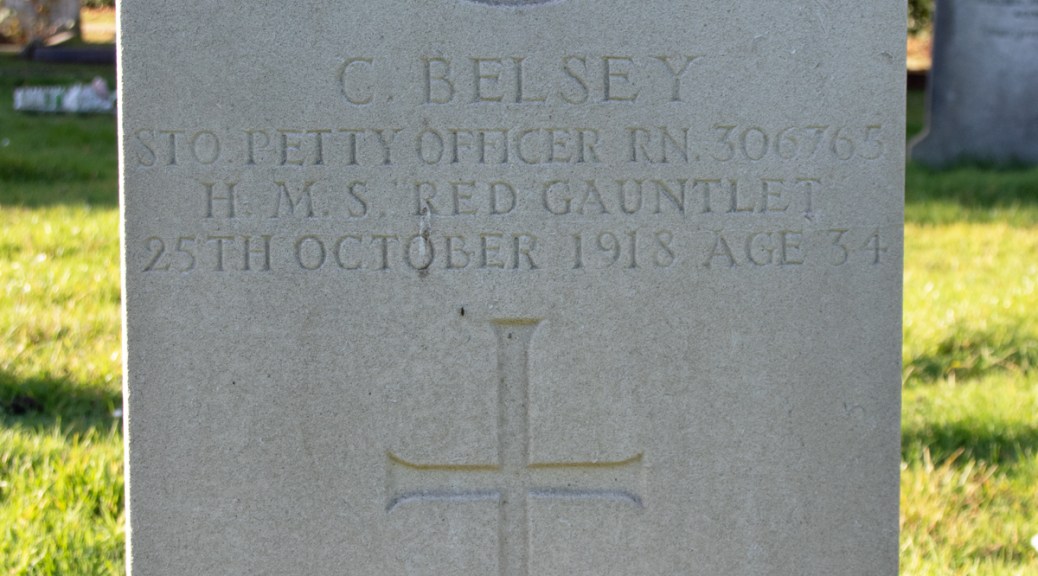
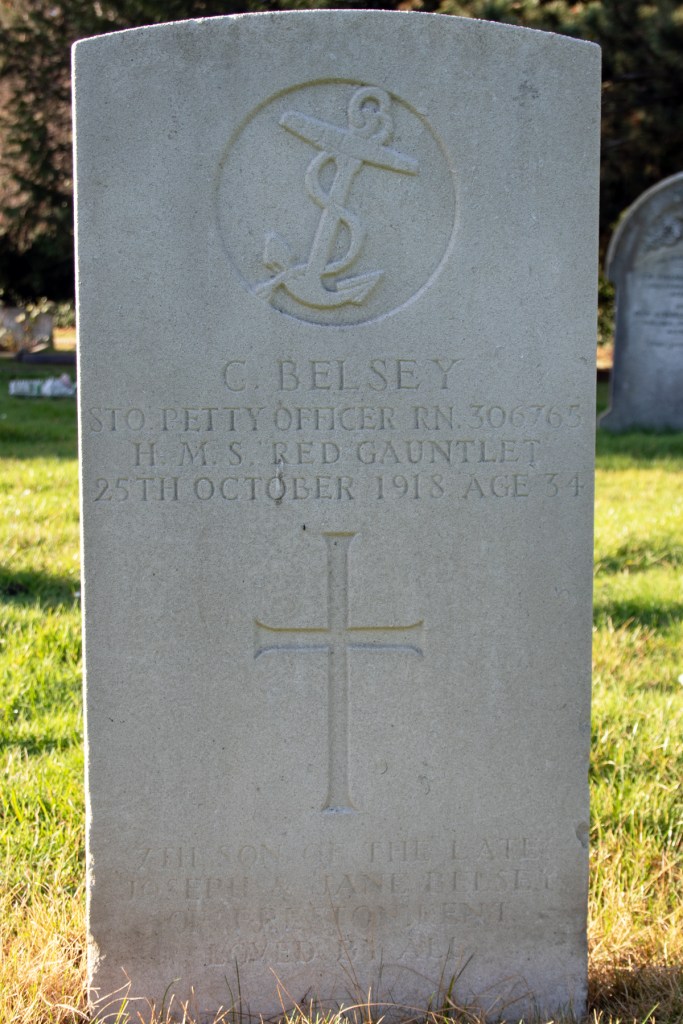
Stoker Petty Officer Christian Belsey

Stoker Petty Officer Christian Belsey

Christian Belsey was born on 12th February 1884 in the village of Preston, Kent. He was one of fourteen children to Joseph and Jane Belsey. Joseph was a farm labourer, and Christian followed suit on leaving school.

He wanted bigger and better things, however, and after his older brother Charles had sought out a life in the Royal Navy, he followed suit. Christian enlisted on 28th June 1904; his service records show that he was 6ft (1.83m) tall, had brown hair, brown eyes and a fresh complexion.

Stoker 2nd Class Belsey was based out of HMS Pembroke, the Royal aval Dockyard in Chatham, Kent, and this is where he returned to in between voyages. His first posting was on board the destroyer HMS Acheron, on board which he spent six months.

Over the twelve years of his initial service he was assigned to six different ships, rising through the ranks to Stoker 1st Class (in 1906), Leading Stoker (1911) and Stoker Petty Officer (1912).

When war broke out in August 1914, Christian was back in Chatham; he was soon assigned to HMS Laertes, a destroyer based out of Harwich, which patrolled the North Sea. She was involved in the attempt to head off the German attack on Yarmouth and Lowestoft in April 1916, during which, two of Christian’s colleagues, Stoker Ernest Clarke and Stoker Petty Officer Stephen Pritchard, were awarded the Distinguished Service Medal for their bravery under fire.

After three years on board Laertes, Christian was transferred to HMS Redgauntlet. He served on board for eighteen months until, in October 1918, he fell ill.

Admitted to a hospital in Samford, near Ipswich, Suffolk, Stoker Petty Officer Belsey was suffering from pneumonia. Sadly, the lung condition was to get the better of him, and he passed away on 25th October 1918, at the age of 34 years old,

Christian Belsey was brought back to Kent for burial. He was laid to rest in Faversham Borough Cemetery.