Tag Archives: Africa

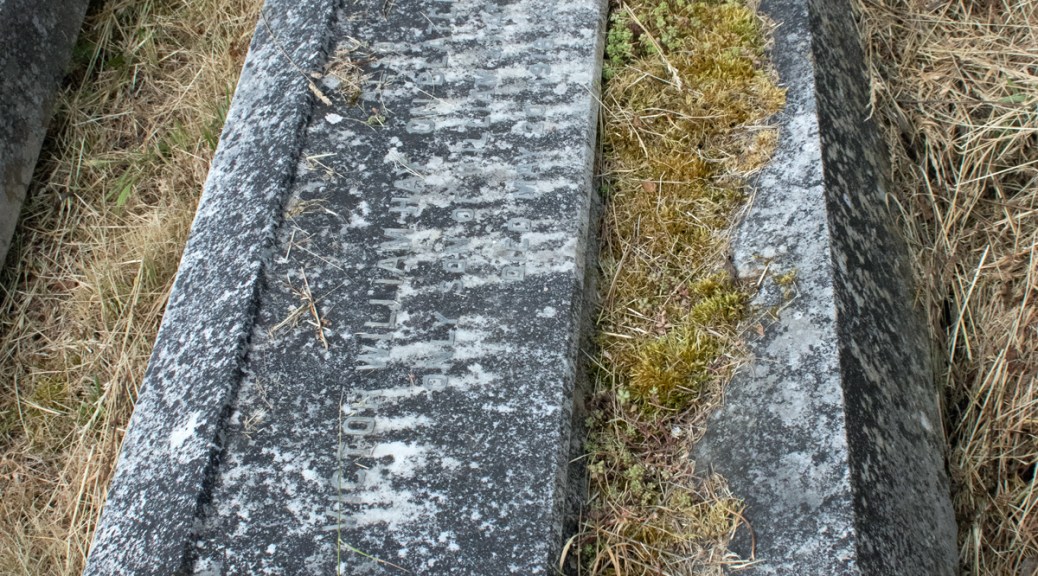
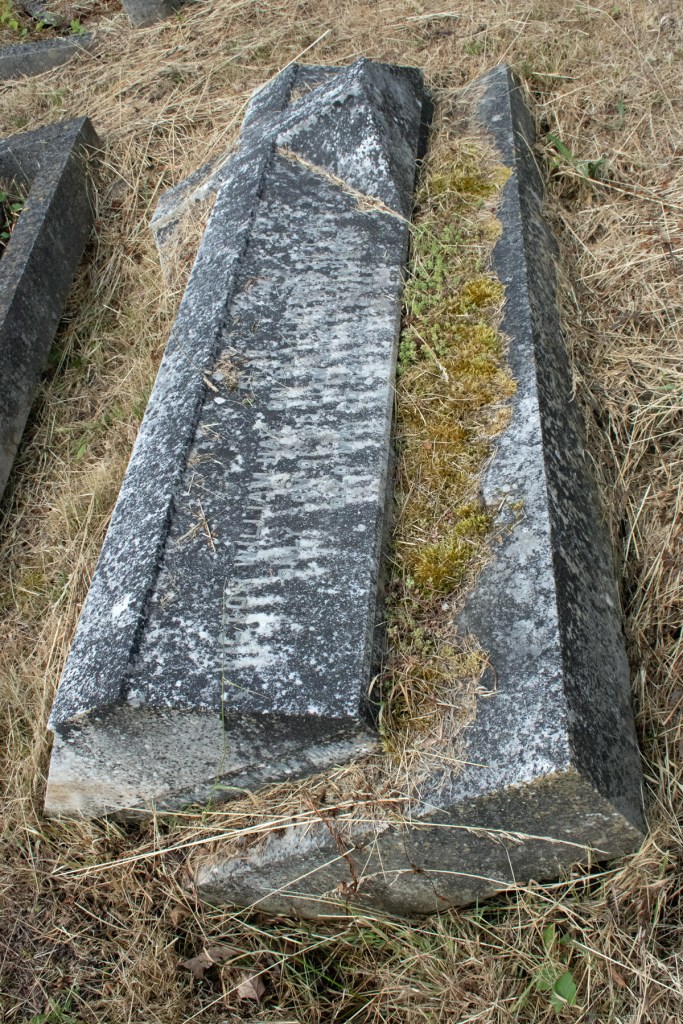
Private Victor Blatchford

Private Victor Blatchford

Victor William Haydon Blatchford was born in Bath, Somerset, on the 20th November 1897. The younger of two children, his parents were William and Kate Blatchford.

William was a draper, and the family lived in the bustling city centre, above the shop he and Kate ran. By the time of the 1911 census, the family were registered as living in 12 rooms at 52 & 53 Southgate Street. As well as the Blatchfords, four other people made up the household: draper’s assistants Edith Letts and Nellie Harris, milliner Florence Carke, and general domestic servant Ellen Heskins.

War came to Europe in the summer of 1914, and Victor was called upon to play his part. Full details of his military service have been lost to time, but a later newspaper report suggest he had enlisted early in 1916. William had died in October 1914, but it is unclear whether his son’s decision to enlist was related to his father’s passing.

Private Blatchford joined the Royal Army Service Corps, and was attached to the Mechanical Transport Depot in Norwood, Surrey. While information about his time in the regiment is no longer available, the same newspaper report hints at time spent overseas:

Private Victor WH Blatchford, ASC, MT, only son of Mrs William Blatchford, Okehampton Lodge, Kipling Avenue, died on May 20th, at Manor War Hospital, Epsom, from pneumonia, contracted in East Africa, after two years and three months’ active service. The funeral will be at Locksbrook Cemetery, and it is asked that no flowers be sent.

[Bath Chronicle and Weekly Gazette: Saturday 25th May 1918]

Victor William Haydon Blatchford died on 20th May 1918: he was just 20 years of age. He was laid to rest in Locksbrook Cemetery, Bath, alongside his father. When Kate passed away in 1941, she was also interred in the family plot.

Captain George Lee

Captain George Lee

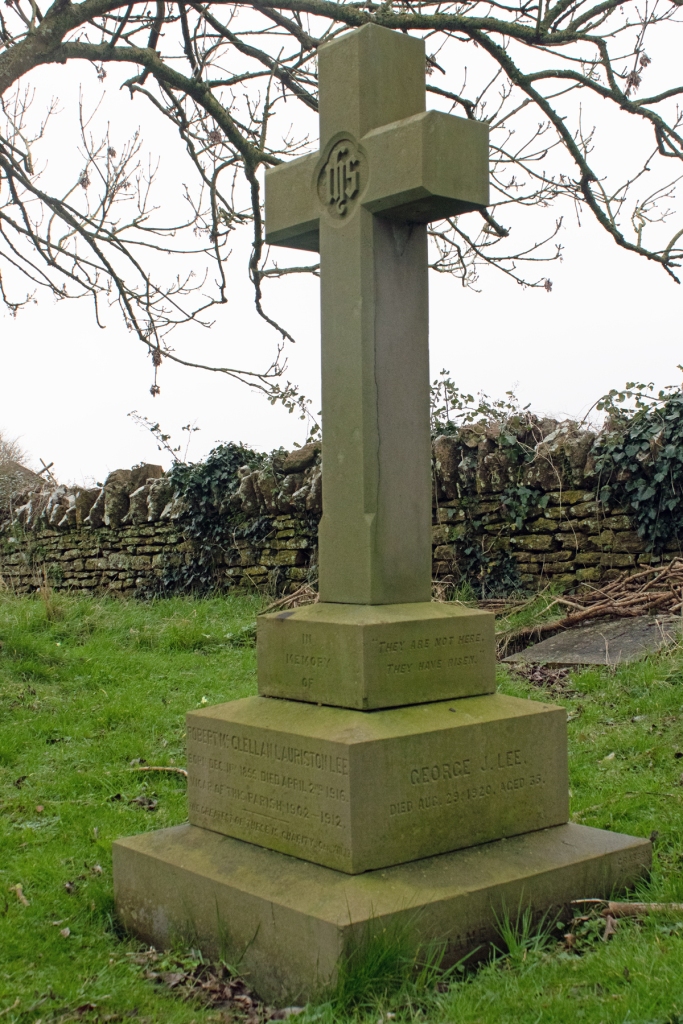
Anyone who attended the funeral of Captain George Lee, IMT (late Rifle Brigade), held in the churchyard of his old home, Yetminster, on Wednesday could not but have been impressed by the wonderful sense of peace and rest that pervaded the place. After a life of unique adventure in Africa, India, America, and Canada his worn and suffering body was laid to rest beside his beloved father. The solemn service was taken by his uncle, Red. EHH Lee (vicar of Whitchurch Canonicorum) and his cousin, Rev. E Hertslet (vicar of Ramsgate), and Rev. MJ Morgan (vicar of Yetminster), there being also present his old schoolfellow, Rev. J Lynes, and Rev. Hall, curate of Yetminster. Besides the chief mourners Captain Lee’s mother, sister and brother-in-law, there were many friends present and numerous villagers who had known him from boyhood. The coffin was attended throughout the service and for many hours before by his most faithful servant and friend, Rajab Ali Khan, who was with his master through India, Persia, Beluchistan, and Afghanistan, and came to England as his personal attendant when Captain Lee was sent home on sick leave. After the service in the churchyard Rajab, through the kindness of Mr Hall, who translated for him, was able to tell everybody what his master had been to him.

Dorset County Chronicle: Thursday 9th September 1920

George Johnston Lee was born in the summer of 1886, the second of four children to Reverend Robert Lee and his wife, Elizabeth. Robert was the vicar of St George’s Church in Fordington, Dorset, when George was born, but moved west to Toller Porcoram not long after he was born.

Tantalisingly little information about George’s early life remains. He does not appear on the 1901 or 1911 census records, and it is likely that he was already away travelling the world by this point. It seems clear that he followed a military, rather then a clerical, career and, by the end of the First World War he was serving in the Indian Army Reserve of Officers. Attached to the Rifle Brigade, George had reached the rank of Captain.

George’s father had become ill in the early 1910s, and having moved to St Andrew’s Church in Yetminster, he retired from the post in 1912. He and Elizabeth moved to Dorchester, but when he passed away in 1916, at the age of 59, his last wishes were to be buried in Yetminster, the village having held a special place in his heart.

Captain Lee survived the First World War, but, as the newspaper report suggests, he became unwell. George had contracted amoebic dysentery, and returned to England to recuperate. The condition was to prove too severe, and he passed away in London on 29th August 1920, at the age of 34 years old.

In accordance with the family’s wishes, George Johnston Lee’s body was taken back to Dorset, and he was laid to rest next to his father, in the tranquil St Andrew’s Churchyard, Yetminster.


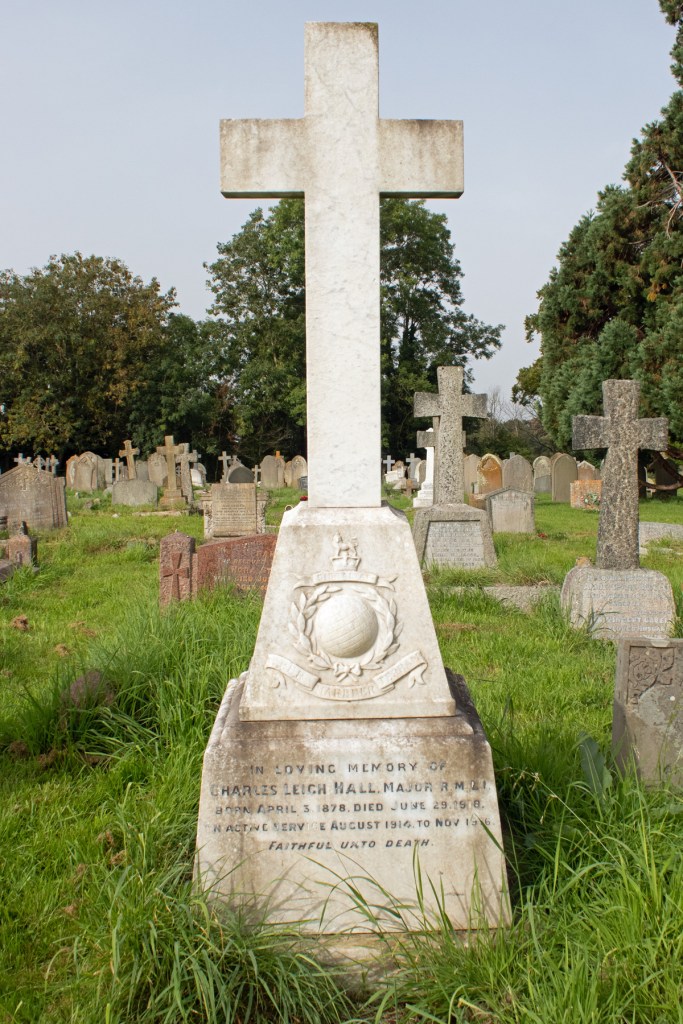
Major Charles Hall

Major Charles Hall

Charles Leigh Hall and his twin Maud, were born on 3rd April 1878 in Clifton, Gloucestershire. Two of eight children, their parents were Pedro and Anne Hall. Pedro, whose full name was Pedro Henrique Sinclair Hall, was better known as Henry, and was a mathematics tutor and Assistant Master at Clifton College, and it goes without saying that the Hall children had a educated upbringing.

Charles was always to be destined for great things. By the time of the 1901 census, when he was 22 years of age, he was a Lieutenant in the Royal Marines Light Infantry. Based on the cruiser HMS Amphion, he travelled the Pacific and, on the night the return was taken, was moored in Vancouver, Canada.

On 15th June 1910, Charles married Sophia Elinor Veale. Born in Caledon, South Africa, the couple wed in the village of Littleham, Devon. They set up home in Gosport, Hampshire – presumably as the now Captain Hall’s work was based from the docks there – and went on to have two children, Anthony and Nicholas.

By September 1915, Charles had been promoted again, this time to the rank of Major. His wartime service included a lot of work in Africa, including in Cameroon in 1914 – for which he was mentioned in Dispatches – German East Africa (Burundi, Rwanda and Tanzania today) in 1915 and Saadani (Tanzania) in 1916.

In October 1916, he was invalided out of the Royal Marine Light Infantry for reasons that are unclear, and returned to Britain from Simonstown, South Africa. While Charles seems not to have gone to sea any more, his experience was still respected, and, on 15th January 1917, he was promoted to Brigade Major.

The family settled back down in Portsmouth, Hampshire, and remained there for the next eighteen months. By the summer of 1918, Charles was in Bristol – either based at the docks there, or hospitalised in the city – and passed away on 29th July 1918. He was 40 years of age.

Sophia and her boys were still in Portsmouth, but Charles Leigh Hall was laid to rest in the graveyard of St George’s Church in Easton-in-Gordano, Somerset. The headstone incorrectly gives the month of death as June. Charles’ will divided his estate – £4467 (£318,000 in today’s money) – between his brother, Arthur, and Charles Garnett, a barrister, possibly as a trust for his sons.


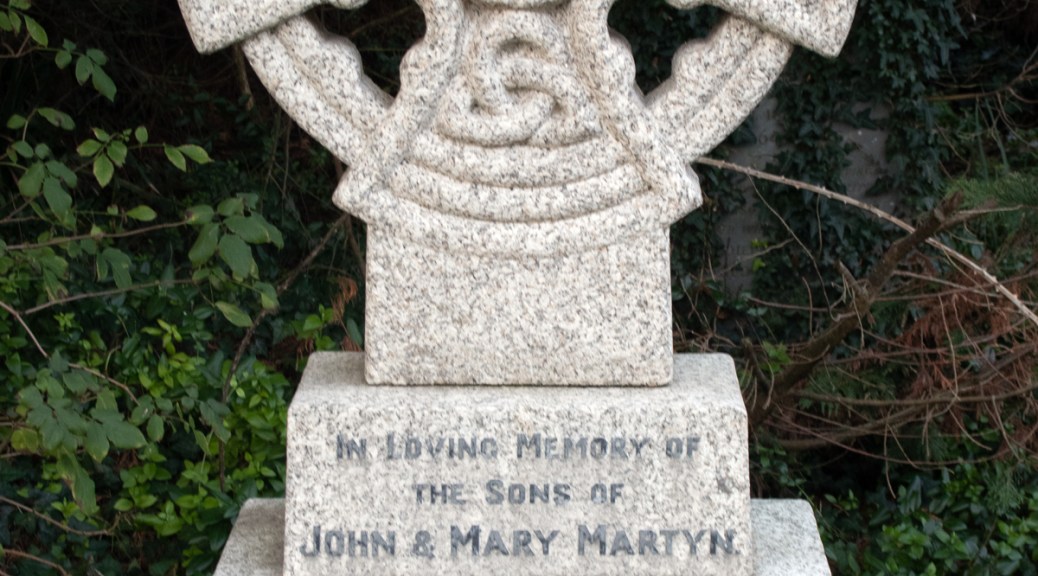
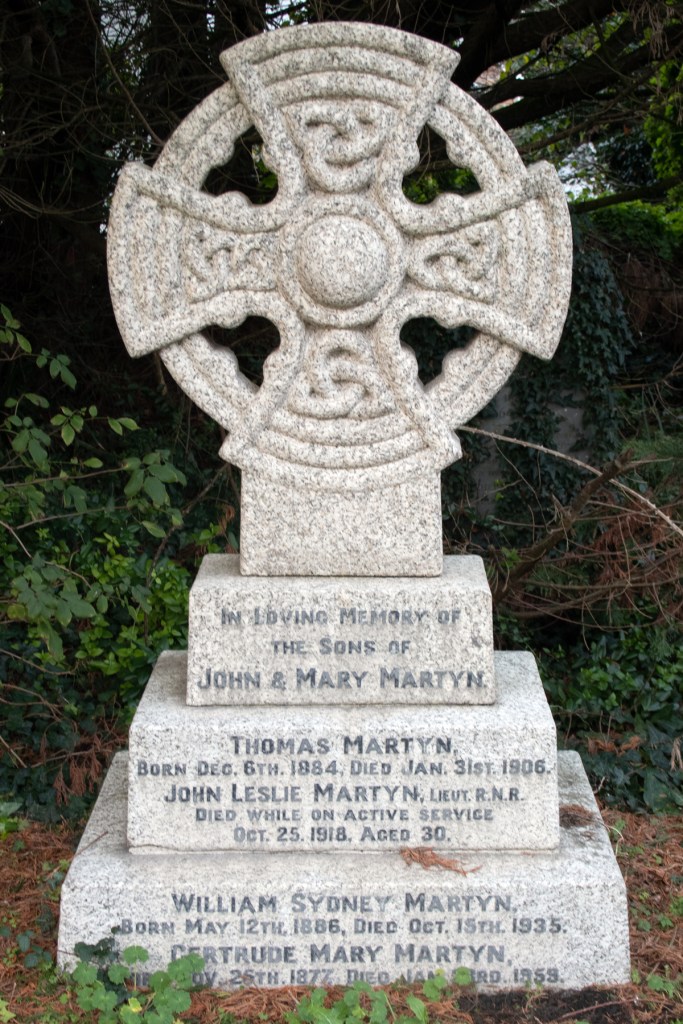
Lieutenant John Martyn

Lieutenant John Martyn

John Leslie Martyn was born in Egloshayle, Cornwall, on 15th February 1888. He was the youngest of five children, and was the third son to John and Mary Martyn. John Sr was a general merchant, and the household had a couple of live-in servants to help both with the household and the business.

When John Sr died in 1904, William, his middle son, took over the running of what was a decent family business.

John Jr, however, had sought another way of life and, was set on a life at sea. He enlisted on the training ship Conway in 1902. Based on the River Mersey, by the time of the 1911 census, he was boarding in the Sailor’s Home in Liverpool. The document confirms that he held the rank of Ship’s Mate in the merchant service, and it would seem that he was doing what he could to build on his skills.

On 26th August 1912, John received his certificate of competency to be the Master of a foreign-going ship. He received a commission in the Royal Naval Reserve, before joining the New Zealand Shipping Co. two years later. When war came to Europe, however, he was called back into naval service.

After serving a few months on the air defences in the Thames Estuary he sailed on his Majesty’s ship Laconia for the coast of German South-West Africa, where he remained. He became a Lieutenant in 1915, and in 1917 was given his first command of HMS Prattler. It is not too much to say that most promising young life has been given to his country.

Cornish Guardian: Friday 8th November 1918

In the summer of 1918, John came home on leave. On 25th July he married Lucy Dudfield in Stanway, Gloucestershire. Tragically, their married life was not to be a lengthy one.

Lieutenant Martyn returned to Devon, and, for reasons undetermined, was admitted to the Royal Naval Hospital in East Stonehouse, Plymouth in October. Whatever the cause of his ailment, he was not to survive it. He passed away while still admitted, on 25th October 1918. He was 30 years of age.

John Leslie Martyn’s body was taken back to Cornwall for burial. He was laid to rest in the family plot in Egloshayle Cemetery.


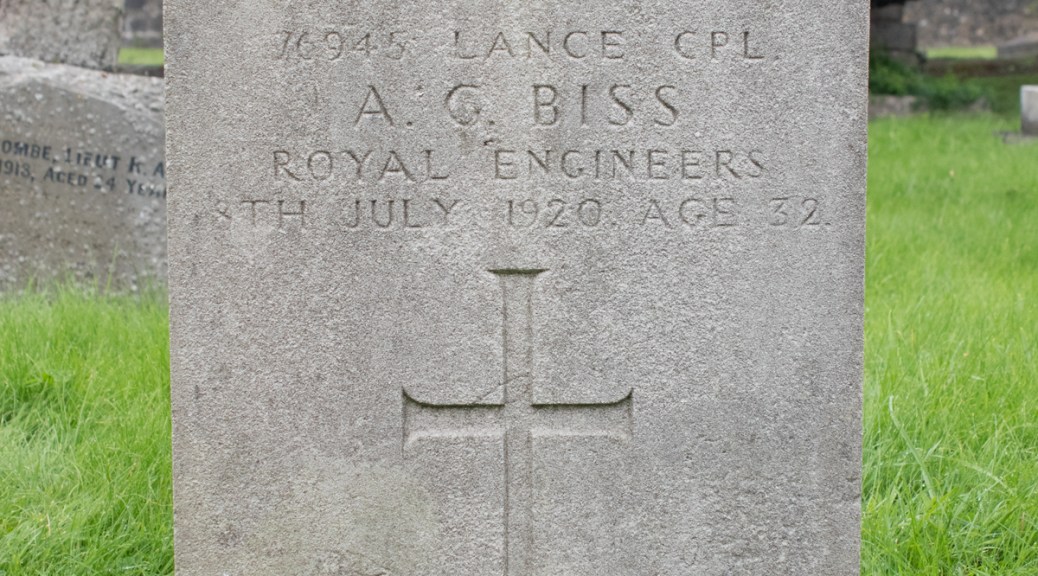
Lance Corporal Albert Biss

Lance Corporal Albert Biss

Albert Gillard Biss was born in Highbridge, Somerset, on 3rd July 1888. The middle of five children, he was the oldest surviving son of Richard and Rosanna Biss. Richard was a tin worker twelve years older than his wife and when he died, in September 1907, Rosanna was left to raise her family alone.

By the time of the 1911 census, Rosanna was living in a five-roomed cottage in Highbridge. Albert and his two younger brothers were living with her, and all three were working as building labourers to bring in money for the family. They also had a boarder, 87-year-old widow Henrietta Crandon, to bring in a little extra each month.

Albert was also saving up for other things. On 15th November 1911, he married Ada Alice Vincent. The couple went on to have three children – Albert Jr, Richard and Irene – before Ada’s untimely death in August 1915, just five weeks after Irene’s birth. At this point Albert had enlisted in the army, and it seems that his sister, Sarah, took on responsibility for her nephews and niece.

Albert was working as a telegraphist for the Post Office when he signed up. He had previously volunteered for the 3rd Somersets, but was assigned to the Royal Engineers when he enlisted. His service records show that he joined up in Weston-super-Mare, was 27 years and three months old, and stood 5ft 10.5ins (1.79m) tall.

Sapper Biss initially served on home soil, but was subsequently moved to the Base Signal Depot as part of the East Africa Expeditionary Force. He was promoted to Lance Corporal in April 1918, but over the next twelve months his health began to deteriorate.

On 6th April 1919, Albert was medically discharged from the army, suffering from a combination of malaria, epileptic fits and tuberculosis. He returned home to Somerset, and moved back in with Rosina. His sister Sarah was living in London by this point, and it is not clear whether Albert’s children came back to Highbridge or not.

Over the next year Albert’s health went from bad to worse. On 8th July 1920 he finally succumbed to a combination of pulmonary tuberculosis, acute nephritis, meningitis and uraemia. He had just turned 32 years of age.

Albert Gillard Biss was laid to rest in the sweeping grounds of Highbridge Cemetery.


After Albert’s death, his two sons fell under the guardianship of their aunt Sarah. Responsibility for Irene, however, was given to an Ebenezer and Eliza Monks, who lived in Clapham Common, London. The 1938 Electoral Register found Irene, who went by the name Monks-Biss, still living with here adopted family.